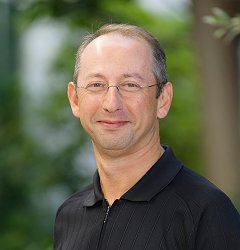
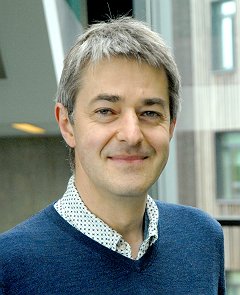
Mahsa Shirmohammadi is a CNRS researcher at Institut de Recherche en Informatique Fondamentale (IRIF) , Université de Paris. Her research focuses on verification, probabilistic models, infinite-state systems, automata theory, and numerical computation. Education : PhD from LSV, ENS de Cachan (France) and ULB (Belgium). Previous Affiliation : Postdoctoral researcher at University of Oxford (UK). Her work addresses stochastic games , timed automata , matrix groups , and algebraic computation . Recent publications analyze strategy complexity, synchronization in decision processes, and parametric algebraic problems. Key collaborators include Stefan Kiefer, Richard Mayr, James Worrell, and Patrick Totzke. Her research has been published in venues like ACM SIGLOG News, ICALP, LICS, and ISSAC. Contact: mahsa@irif.fr , +33 (0)1 57 27 92 29, Office 4017 (Sophie Germain building, Paris).
James Worrell is a Professor of Computer Science at the University of Oxford , with a focus on logic in computer science , linear dynamical systems , and automated verification . He is also a Fellow of Green Templeton College. His research spans theoretical computer science and formal methods , including work on metric temporal logic , probabilistic semantics , and category theory . His publications address decision problems , verification of linear dynamical systems , and automata theory . James has received the EPSRC Established-Career Fellowship for his work in linear dynamical systems verification . His recent papers include polynomial invariants , polyhedral escape problems , and skolem problem solutions . He has advised students such as Mehran Hosseini , Pascale Gourdeau , and Ventsislav Chonev , and teaches courses like Computational Learning Theory and Logic and Proof . His work appears in venues like ICALP , LICS , and SODA .
Marcin Jurdzinski is a Professor at the Department of Computer Science, University of Warwick, with a focus on algorithms, games, automata, and logic. His career spans institutions like the University of Aarhus, University of Paris 7, and UC Berkeley. Research interests include Parity games Stochastic games Timed automata Formal verification Game theory . Recent articles highlight work on parity games, stochastic systems, and timed automata, published in venues like SIAM Journal on Computing, LICS, and CAV. Keywords span Computer Science , Game Theory , and Formal Methods . PhD students mentored include Thejaswini K. S., Michail Fasoulakis, and Ashutosh Trivedi. Funded projects such as Solving Parity Games in Theory and Practice (2017-2021) reflect his research priorities.
Dr. Thomas Noll is an Associate Professor at the Department of Computer Science, RWTH Aachen University. He is a member of the Software Modeling and Verification Group (MOVES) led by Prof. Joost-Pieter Katoen. Research Interests Static Program Analysis for Software Optimization and Verification Compilation of Quantum Software Reliability, Safety, and Security of Hardware/Software Systems Formal Verification of Artificial Neural Networks He has supervised over 30 bachelor's and master's theses at RWTH Aachen University from 2002 to 2024, including topics on probabilistic model checking, neural network verification, and program analysis. His administrative roles include Examination Board membership for Computer Science (since 2012), QVM funds management (since 2024), and student advising across multiple disciplines. He has participated in over 40 program committees and organized 8 conferences/workshops since 2004, focusing on formal verification and software engineering applications.
Jörg Raisch is a Professor of Control Systems at the Technische Universität Berlin , affiliated with the Faculty IV - Electrical Engineering and Computer Science and the Institute for Energy and Automation Technology . He holds the chair of "Fachgebiet Regelungssysteme" since March 2006. Raisch studied "Technische Kybernetik" (Engineering Cybernetics) at Stuttgart University, Germany, and Control Systems at UMIST, Manchester, UK. He earned his Ph.D. in Chemical Engineering from Stuttgart University, followed by postdoctoral work at the University of Toronto and a DFG fellowship for his habilitation (1998). He established a research group at the Max Planck Institute for Dynamics of Complex Technical Systems in Magdeburg and served as an External Scientific Member since 2002. His research spans control theory , discrete event systems , max-plus algebra , and applications in energy systems and robotics . Recent work focuses on clock drift effects in low-inertia power systems , iterative learning control , and distributed control for microgrids . His publications highlight methodologies for timed event graphs , probabilistic behavioral distances , and wind turbine optimization . From 2007–2013, he represented Germany in the European Control Association (EUCA). He served on editorial boards of journals like Automatica and IEEE Transactions on Control Systems Technology . He held leadership roles in IFAC Technical Committee TC1.3 as Vice-Chair (2014–2017, 2020–present) and Chair (2017–2020) .
Alexandra Silva is a Professor of Computer Science at Cornell University with prior affiliations as a Royal Society Wolfson Fellow and Professor of Algebra, Semantics, and Computation at University College London . She leads a research group focusing on the modular development of specification languages and algorithms for models of computation, emphasizing coalgebra as a unifying mathematical framework. Research Interests Her work spans foundational and applied areas in theoretical computer science, including: Coalgebraic methods for formal verification Automata theory and learning algorithms Probabilistic programming and semantics Programming language design (e.g., NetKAT, Kleene Algebra with Tests) Concurrency theory and distributed systems Algebraic structures in computation Recent publications address network verification (StacKAT), symbolic automata learning, probabilistic regular expressions, and outcome logic for correctness/incorrectness reasoning. She is actively involved in organizing academic events like OPLSS 2025 and co-authoring foundational works in Formal Aspects of Computing and Theoretical Computer Science . Scientific Awards Distinguished Paper Award (ACM SIGPLAN POPL, 2020) Best Paper Award (RTA, 2015) She teaches courses on Kleene Algebra with Tests (KAT) and verification at summer schools like Marktoberdorf 2025 , and her research includes collaborations on probabilistic network verification (ProbNV) and stochastic system modeling.
Matteo Camilli is an Associate Professor in the Department of Electronics, Information and Bioengineering (DEIB) at Politecnico di Milano, Italy, where he leads research in software engineering and verification. His academic journey includes positions as Assistant Professor at Free University of Bozen-Bolzano and postdoctoral research at the University of Milan and University of Bergamo. His educational background includes a PhD in Computer Science (2015), MSc in Computer Science (2012), and BSc in Computer Science (2009), all from the University of Milan. His doctoral research focused on combining advanced abstraction techniques and big data approaches to address state explosion problems in formal verification. Camilli's research primarily centers on software verification, testing, and methods to improve dependability of autonomous, cyber-physical, service-based, and ML-enabled critical systems. His work spans formal methods, model-based testing, uncertainty quantification, and design-time/runtime verification with applications to complex distributed systems. His recent publications reflect a growing focus on explainable self-adaptation, quality assurance for LLM-based systems, and managing uncertainty in adaptive systems. His publication record includes papers in top journals (TOSEM, TAAS, JSS, EMSE) and conferences (ICSE, ISSRE, ICST, ICSA). He serves on program committees for prestigious conferences including ICSE, ICSA, ICST, and ECSA, and is on the steering committee for the International Workshop on Formal Approaches for Advanced Computing Systems (FAACS). Camilli actively contributes to the academic community through conference organization, including serving as Program Committee Member for numerous conferences and as Program Co-Chair for the Software Architecture track at ACM SAC. He also serves as guest editor for special issues on automated testing and dependable AI systems. His teaching portfolio at Politecnico di Milano includes Software Engineering 2, Software Engineering for Automation, and Distributed Software Development. Previously at Free University of Bozen-Bolzano, he taught Systems Engineering and Verification and Reliability for Dependable Systems.
Tevfik Bultan is a Professor and Chair of the Department of Computer Science at the University of California, Santa Barbara. His research focuses on software verification, program analysis, software engineering, and computer security. He directs the Verification Laboratory (VLab) and has authored over 100 refereed publications. Education Ph.D. in Computer Science, University of Maryland, College Park (1998) M.S. in Computer Engineering, Bilkent University (1992) B.S. in Electrical Engineering, Middle East Technical University (1989) Research Focus Bultan's work spans automated verification techniques, security vulnerability detection, quantitative program analysis, and symbolic execution. His lab develops tools for analyzing software systems with applications in cloud security, network protocols, and embedded systems. Awards and Honors ACM Distinguished Scientist (2016) NSF CAREER Award (2000) UCSB Outstanding Graduate Mentor Award (2016) ACM SIGSOFT Distinguished Paper Awards (2005, 2014) NATO Science Fellowship (1993) Professional Activities He has chaired program committees for top conferences including ICSE, FSE, and ASE. Currently serves as associate editor for ACM TOSEM and on steering committees for ISSTA, ASE, and ICSE. Regularly advises PhD students and postdoctoral researchers in verification and security. Laboratory Leads the Verification Laboratory (VLab) focusing on automated reasoning techniques for software systems. Current projects include symbolic analysis for vulnerability detection, quantitative information flow, and security policy verification.
Radu Calinescu is Professor of Computer Science at the University of York, UK, where he serves as Principal Investigator for the UKRI Trustworthy Autonomous Systems Node in Resilience and leads the Trustworthy Adaptive and Autonomous Systems and Processes (TASP) Research Team. His academic career includes previous positions as Lecturer in Computer Science at Aston University (2009-2012), Senior Researcher at the University of Oxford (2008-2009), and part-time Lecturer at Oxford (2005-2009). Professor Calinescu's research focuses on formal modelling, analysis, verification and controller synthesis for autonomous and self-adaptive systems, with particular emphasis on parametric and probabilistic model checking, automated and model-driven software engineering. His work applies these approaches to robotic, cyber-physical, embedded and service-based systems, with a strong commitment to using formal methods at runtime to enhance the resilience and safety of critical autonomous systems. His extensive publication record spans top-tier journals including IEEE Transactions on Software Engineering, Journal of Systems and Software, and Automated Software Engineering. His research demonstrates consistent focus on verification techniques for adaptive systems, with increasing attention to safety-critical applications in recent years. His work bridges theoretical formal methods with practical applications in robotics and autonomous systems. British Computer Society Distinguished Dissertation Award for his DPhil thesis on Autonomic-Independent Loop Parallelisation Principal Investigator for multiple major projects including Continual Verification and Assurance of Robotic Systems under Uncertainty (ORCA Hub/EPSRC), Safety of AI Techniques (AAIP/Lloyd's Register Foundation), and CSI:Cobot Program Committee Co-Chair for major conferences including SEFM 2021, SEAMS 2020, and SERENE 2019 Professor Calinescu actively supervises numerous PhD students and postdoctoral researchers, with current team members including Faisal Alhwikem, Xinwei Fang, Mario Gleirscher, James Harbin, and Colin Paterson. His research group is based at the Ron Cooke Hub in York, a purpose-built facility housing world-class research groups and startups. His former students have gone on to academic positions at institutions worldwide and industry roles at major technology companies.
Antonio Filieri is a Senior Applied Scientist at Amazon Web Services (AWS) and holds a Visiting Associate Professor position at the Department of Computing, Imperial College London. Previously, he was a tenured Associate Professor at Imperial College London (2022-2024) and Assistant Professor (2016-2022), and served as Assistant Professor at the University of Stuttgart between 2013 and 2015. His academic career spans over a decade with significant contributions to software engineering research. Dr. Filieri's research focuses on formal mathematical methods for software design, verification, self-adaptation, and security. His primary research areas include static analysis, privacy, and automated test generation for security; exact and approximate methods for probabilistic program analysis; control theory for adaptive software; quantitative verification and model checking; and runtime-efficient and incremental verification. His work bridges theoretical foundations with practical applications in industry settings, particularly in cloud computing and security domains. His recent publications demonstrate a strong focus on probabilistic methods for software analysis, security testing, and performance modeling. The research trends show increasing integration of formal methods with machine learning techniques, particularly in test oracle generation and neural network analysis. There's also a clear emphasis on scalability and practical applicability of verification techniques to real-world systems like serverless computing and microservices architectures. Dr. Filieri has received numerous prestigious awards for his contributions: Best Student Paper Award (2025) for 'Robust Probabilistic Model Checking with Continuous Reward Domains' ACM Distinguished Paper Award (2023) for 'Sibyl: Improving Software Engineering Tools with SMT Selection' Best Paper Award (2022) for 'Enhancing Performance Modeling of Serverless Functions via Static Analysis' Best Artifact Award (2017) for 'Self-adaptive video encoder: comparison of multiple adaptation strategies made simple' Most Influential Paper Award (awarded at SEAMS 2025) for 'Software Engineering Meets Control Theory' ACM SigSoft Distinguished Paper Award (2011) for 'Run-time Efficient Probabilistic Model Checking' Dr. Filieri has advised several PhD students including Donato Clun (2024), Runan Wang (2024), and Xiaotong Ji (expected 2025). His advising focuses on probabilistic program analysis, automated testing, and security verification. His research has been supported by significant grants from both academic and industry sources, enabling collaborations across multiple institutions and contributing to advancements in software engineering practices. While specific lab information isn't prominently featured in the provided materials, Dr. Filieri's work suggests strong connections with research groups focused on formal methods, software verification, and adaptive systems at both Imperial College London and AWS. His research often involves interdisciplinary collaboration between theoretical computer science and practical software engineering challenges.
Lars Grunske is a Professor in the Department of Computer Science at Humboldt University of Berlin, Germany. His academic career spans multiple institutions across Germany, Australia, and internationally, with a strong focus on research and conference participation in software engineering. His educational background includes a PhD in computer science from the University of Potsdam (Hasso-Plattner-Institute for Software Systems Engineering) in 2004. Professor Grunske's research interests center on modeling and verification of systems and software, with particular emphasis on automated analysis techniques. His work primarily focuses on probabilistic and timed model checking and model-based dependability evaluation of complex software intensive systems. He has made significant contributions to software testing, program repair, formal methods, and the application of machine learning techniques to software engineering problems. His publication record shows consistent contributions to top software engineering conferences over the past decade, with recent work exploring the intersection of AI/ML with traditional software engineering challenges. His research demonstrates an evolution from foundational model checking techniques toward more practical applications in software testing and repair. Boeing Postdoctoral Research Fellow Professor Grunske actively mentors through conference activities including chairing mentoring circles at ICSE 2021. He serves on numerous program committees for major software engineering conferences including ASE, ICSE, ESEC/FSE, and others, demonstrating his standing in the academic community. His involvement spans multiple roles from committee member to track chair and award committee positions. He maintains an active research laboratory focused on software verification and testing, as indicated by his departmental affiliation and research website.