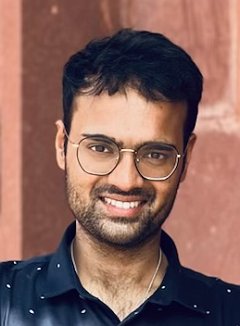
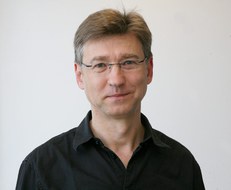
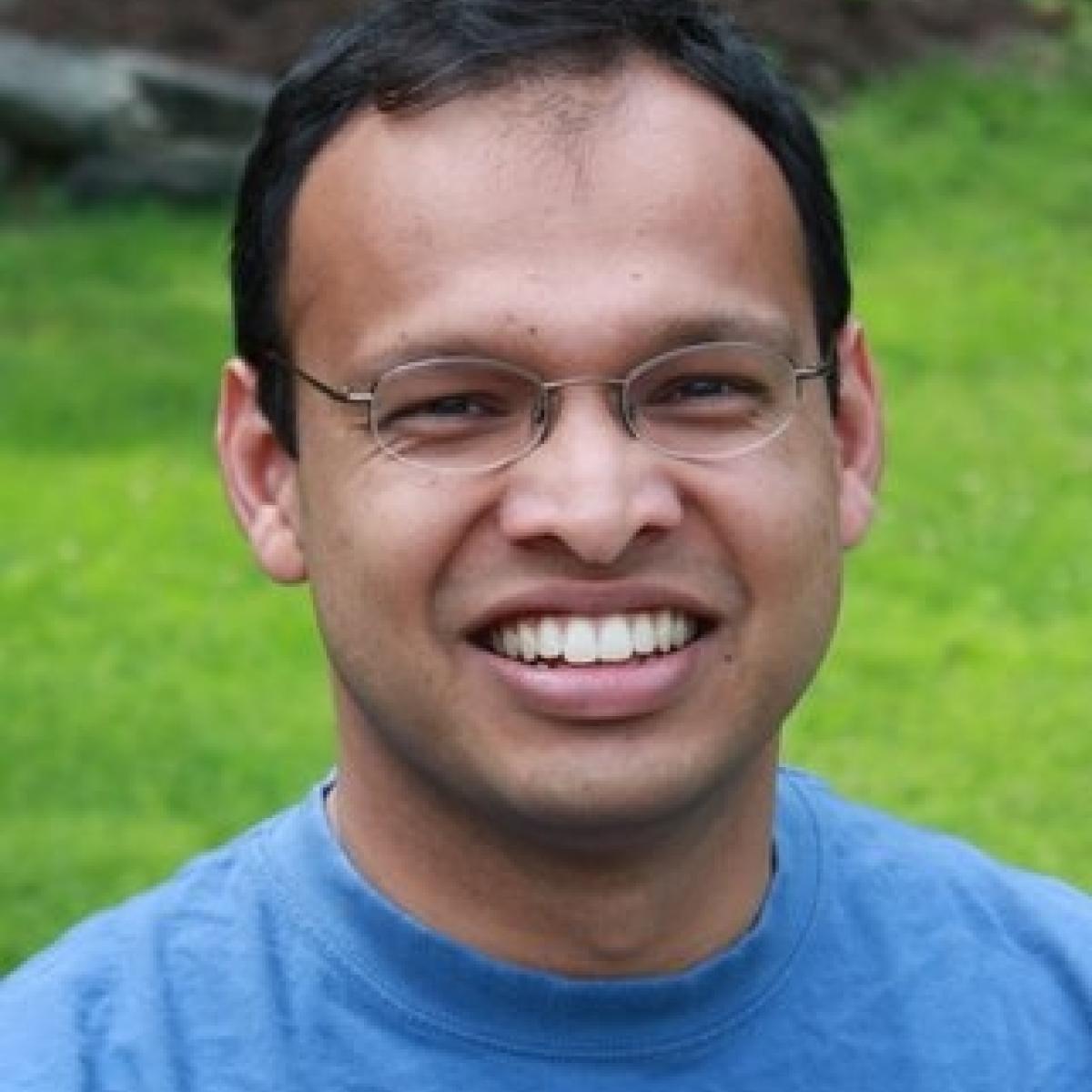
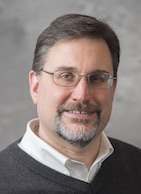
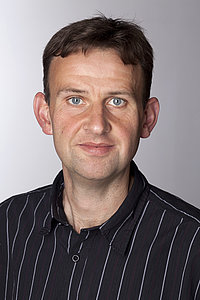
Professor Stephen Hicks is a Professor in Civil Engineering and Leader of the Civil and Environmental Engineering Discipline Stream at the School of Engineering, University of Warwick. He has held senior roles in research institutes like the Heavy Engineering Research Association (HERA) and the Steel Construction Institute (SCI), contributing to national and international standards development. Education: PhD (University of Cambridge, 1998), BEng (University of London, 1993) Research focuses on composite steel-concrete structures, structural reliability, and vibration serviceability. He leads teaching modules including ES3E1 Design Project and ES2C2 Civil Engineering Design. Key projects include Eurocode 4 revisions and steel-concrete composite systems development. Grants include leadership on Steel-CLT composite design (WSP UK) and EU-funded Eurocode 4 standardization projects. He chairs CEN Subcommittee SC4 for Eurocode 4 and contributed to Australasian standards like AS/NZS 2327. Engaged in governance roles with organizations such as EPD Australasia and Steel Construction New Zealand.
Umang Mathur is an Assistant Professor at the National University of Singapore's School of Computing, where he leads the FOCS Lab and is affiliated with PLSE@NUS. His research focuses on Formal Methods , Concurrency , and Decidability in Programming Languages and Software Engineering . PhD in Computer Science from the University of Illinois at Urbana-Champaign (advisor: Prof. Mahesh Viswanathan) Former Research Scientist at Facebook Inc. and Research Fellow at the Simons Institute Recipient of Google PhD Fellowship, 2024 CPP Distinguished Paper Award, 2023 ACM SIGPLAN Award, and ASPLOS 2022 Best Paper Award His recent work explores algorithmic techniques for detecting concurrency bugs , decidable program verification , and synthesis , with a focus on weak memory models, predictive monitoring, and automata-theoretic approaches. Articles span topics like causal concurrency, tree clock data structures, and probabilistic counting algorithms, reflecting interdisciplinary intersections of logic and systems research. Scientific Awards Google PhD Fellowship 2024 CPP Distinguished Paper 2023 ACM SIGPLAN Distinguished Paper 2022 ASPLOS Best Paper 2018 ESEC/FSE Distinguished Paper He advises PhD students in Formal Methods and supervises teams in the FOCS Lab. Teaching includes advanced modules on Automata Theory, Logic, and Verification at NUS.
Sotirios K. Goudos is a Professor at the Department of Physics, Aristotle University of Thessaloniki (AUTH), Greece, and Director of the ELEDIA@AUTH lab within the ELEDIA Research Center Network. His research focuses on antenna design, evolutionary algorithms, wireless communications, machine learning, and IoT applications. He holds a B.Sc. in Physics (1991), M.Sc. in Electronics (1994), Ph.D. in Physics (2001), and additional qualifications in Information Systems and Electrical Engineering. Prof. Goudos is a Senior Member of IEEE and serves as Editor-in-Chief of the Telecom open access journal (MDPI) and Associate Editor for IEEE Transactions on Antennas and Propagation, IEEE Access, and IEEE Open Journal of the Communication Society. He has organized multiple special issues in journals like EURASIP Journal on Wireless Communications and Networking and has authored/edited books on antennas and AI in networks. His awards include multiple IEEE Access Outstanding Associate Editor recognitions (2019–2023) and inclusion in Stanford University's top 2% scientists list (2020–2024). He teaches courses on telecommunications, Java programming, and microwave systems, and has supervised over two dozen master's students since 2009. His work spans antenna optimization, AI-driven communications, and IoT security, with contributions to 5G/6G, RIS systems, and smart agriculture. Prof. Goudos actively contributes to IEEE Greece Section leadership roles, including Secretary (2022) and Vice-Chair (2023–2024). His labs and teams focus on ELEDIA's research in electromagnetics, optimization, and AI applications.
Prof. Michael N. Smolka is a Professor in the Department of Psychiatry and Psychotherapy, focusing on neuro-cognitive mechanisms underlying addictive behaviors. His research employs longitudinal approaches to study addiction development, maintenance, and recovery, integrating computational modeling of behavior with functional MRI to map brain systems. Key areas include executive functions, decision-making, learning, and motivation. He contributes to research consortia such as SFB 940 and TRR 265. Research interests emphasize brain-behavior interactions in mental health, with studies on genetic risk factors, environmental influences, and neuroimaging correlates of psychiatric disorders. His work bridges clinical psychiatry with cutting-edge computational methods, aiming to develop diagnostic tools and personalized interventions. Recent studies explore machine learning applications for predicting substance use disorders and eating disorders, alongside investigations into developmental trajectories of brain morphology and cognitive control mechanisms. Publications highlight interdisciplinary approaches, linking genetic, environmental, and neurobiological factors to addictive behaviors and mental health outcomes. His contributions to frameworks like brain-derived nosology and diathesis-stress models reflect his commitment to advancing translational research in psychiatry.
Nikhil Bansal holds the prestigious Patrick C. Fischer Professorship of Theoretical Computer Science in the Department of Computer Science & Engineering at the University of Michigan's College of Engineering. His research program has established him as a leading figure in theoretical computer science, with significant contributions to algorithm design and analysis, particularly in discrete optimization problems. Bansal's research focuses on theoretical computer science with emphasis on design and analysis of algorithms for discrete optimization problems. His work spans multiple areas including discrepancy theory, approximation algorithms, randomized algorithms, combinatorial optimization, complexity theory, machine learning theory, and probability. He has made significant contributions to understanding the limits of approximation algorithms and developing novel techniques for combinatorial optimization problems. Analysis of Bansal's recent publications reveals a strong focus on discrepancy theory, online algorithms, and combinatorial optimization. His work often bridges theoretical computer science with discrete mathematics and probability theory. A recurring theme across his publications is the development of novel algorithmic techniques for solving NP-hard problems with provable guarantees. His research has evolved from foundational work in approximation algorithms to more recent contributions in quantum computing complexity and stochastic optimization. Patrick C. Fischer Professor of Theoretical Computer Science Bansal has advised numerous PhD students including Marek Elias, Shashwat Garg, and Greg Koumoutsous, as well as mentoring several postdoctoral researchers. He has served on editorial boards for top journals including Journal of the ACM, Theory of Computing, and Stochastic Models, and has been active on program committees for major conferences such as STOC, FOCS, SODA, and ICALP, including serving as chair for ICALP 2021. Bansal has organized multiple academic workshops including the STOC 2020 Workshop on Recent Advances in Discrepancy and Applications, several SDP Days at CWI Amsterdam, and the Semester on Bridging Continuous and Discrete Optimization at UC Berkeley in Fall 2017.
Nikhil Bansal is a Professor in Theoretical Computer Science at the University of Michigan, Ann Arbor. He earned his PhD from Carnegie Mellon University and previously worked at IBM Research, TU Eindhoven, and CWI Amsterdam. His research focuses on algorithm design, discrepancy theory, and combinatorial optimization. Education: PhD, Carnegie Mellon University Bansal's work bridges classical and quantum computing, with recent publications exploring k -Forrelation, vector balancing, and stochastic scheduling. His algorithmic approaches often combine geometric insights and probabilistic methods. Scientific Awards: Patrick C. Fischer Professor of Theoretical Computer Science NSF Career Award (2023) He has advised numerous PhD and postdoctoral researchers, including Marek Elias, Shashwat Garg, and Makrand Sinha. Bansal actively contributes to program committees (ICALP 2021, STOC 2020, FOCS 2018) and organizes workshops on discrepancy theory and optimization.
Jonathan Poggie is a Professor in the School of Aeronautics and Astronautics at Purdue University's College of Engineering, where he has been a faculty member since 2015. He previously spent over two decades at the Air Force Research Laboratory. His research group conducts high-fidelity simulations in hypersonic aerodynamics, turbulence, and plasma-based flow control, supported by major grants from DoD, DoE, AFOSR, and ONR. Ph.D., Mechanical and Aerospace Engineering, Princeton University, 1995 M.S.E., Mechanical and Aerospace Engineering, Princeton University, 1991 B.S., Mechanical Engineering, University of Rhode Island, 1988 Prof. Poggie's research focuses on high-speed fluid dynamics , particularly hypersonic flows , compressible turbulence , laminar-turbulent transition , and shock-wave/boundary-layer interactions . His group also investigates plasma-based flow control using electrical discharges. His work combines computational, experimental, and theoretical approaches to address challenges in aerospace vehicle design, especially for defense and space applications. The articles reflect a strong focus on computational fluid dynamics of high-speed flows, with particular emphasis on shock unsteadiness , boundary layer transition , and plasma actuation . The research spans from fundamental fluid mechanics to applied aerospace engineering, with increasing recent interest in military conflict modeling using fluid dynamics analogies. C. T. Sun Excellence in Research Award, 2023 University Faculty Scholar, 2023-2028 Outstanding Graduate Faculty Mentor Award, 2021 Elmer F. Bruhn Teaching Award, 2019 W. A. Gustafson Teaching Award, 2018 ASME Fellow, 2007 AIAA Associate Fellow, 2004 Prof. Poggie has advised 6 PhD students and 18 MS students at Purdue as of 2025. His research has been supported by multiple large-scale grants, including three DoD Frontier Projects and a DoE INCITE Award , providing supercomputing resources for high-fidelity simulations. He collaborates with researchers at The Ohio State University, Notre Dame, and various national laboratories. His group has developed novel approaches to operational mapping for military conflict analysis, creating continuous flow models of battlefield dynamics. The team has also secured two patents in hypersonic technology, one for inlet design and another for a hypersonic test facility. His research group investigates geometric imperfections in hypersonic vehicles (steps, gaps, roughness), laminar-turbulent transition prediction, and separation unsteadiness in shock-wave interactions. They use advanced computational methods like DDES and DNS, supported by massive computing allocations. The group has produced significant work on sidewall confinement effects , wall roughness , and gap flows in hypersonic configurations.
Doeun Choe is an Assistant Professor in the Department of Civil Engineering at New Mexico State University, where he has been serving since January 2021. His expertise spans the intersection of civil engineering, artificial intelligence, and structural reliability with applications to critical infrastructure systems. Education: Ph.D. in Civil Engineering/Structures (2007, Texas A&M University) M.S. in Architectural Engineering/Structural Engineering (2002, Inha University, South Korea) B.S. in Architectural Engineering (2000, Inha University, South Korea) Research Focus: Dr. Choe's work integrates Artificial Intelligence methodologies with traditional structural engineering to solve complex infrastructure challenges. His research in Probabilistic Modeling & Structural Reliability addresses corrosion effects on bridges and coastal structures, while his recent work focuses on Deep Learning applications for structural health monitoring of offshore wind turbines. The AISSRR research group he leads develops innovative approaches to enhance infrastructure resilience against extreme environmental conditions including seismic events and climate change impacts. Publication Trends: Dr. Choe's scholarly output demonstrates an evolving research trajectory from foundational reliability analysis (2008-2009 publications on corrosion effects) to advanced AI applications (2019-2021 work on deep learning for structural monitoring). His publications consistently address structural safety challenges through computational methods, with increasing emphasis on renewable energy infrastructure systems in recent years. The research spans civil engineering, computer science, and materials science disciplines. Academic Leadership: Dr. Choe leads the Artificial Intelligence for Structural Safety, Risk, & Reliability (AISSRR) research group at NMSU and has developed specialized coursework including the 'Artificial Intelligence for Civil Engineers' series (Machine Learning in Fall 2023 and Deep Learning in Spring 2024), which produces student projects applying AI techniques to real-world civil engineering problems.
Brian Ziebart is a Professor in the Department of Computer Science at the University of Illinois at Chicago. He earned his Ph.D. in Machine Learning from Carnegie Mellon University in 2010. Research Interests: Machine Learning, Robotics, Assistive Technologies, Human-Computer Interaction, Adversarial Prediction, Inverse Optimal Control, Structured Prediction. Key Grants: NSF CAREER (RI)-1652530, NSF EAGER (SCH)-1650900, NSF IIS-1526379, NSF III-1514126, Future of Life Institute grant, NSF NRI-1227495. Notable Awards: Best Paper Runner-Up (ECCV, 2012), Best Paper Award (ICML, 2011), CMU School of Computer Science Dissertation Honorable Mention (2011). Teaching & Leadership: Senior Lecturer at CMU, actively involved in mentoring students and leading research teams.
Christian Tominski serves as an apl. Professor (non-tenured) at the University of Rostock, holding the außerplanmäßige Professur for Human-Data Interaction within the Institute for Visual and Analytic Computing. His academic work spans teaching in Visual Computing and Computer Science programs, with active research contributions in data visualization and visual analytics. His research focuses on multi-variate data visualization, time-series and geo-visualization, graph visualization, and coordinated multiple views. He investigates interaction techniques including interactive lenses, visual comparison, navigation, and guidance mechanisms, alongside computational aspects such as efficient algorithms and asynchronous processing for visualization systems. Recent work emphasizes task-driven approaches and analytic support for interactive exploration. Analysis of his publication trends reveals strong emphasis on visual analytics for complex data structures, particularly in process mining and multivariate graphs. His work consistently explores guidance frameworks, progressive computation models, and novel interaction paradigms for large high-resolution displays, bridging theoretical foundations with practical applications in visual data analysis. Tominski holds professional roles as a member of the Faculty Council of IEF and the System Technical Group of Computer Science Institutes at the University of Rostock. He actively participates in the Informatik-Forum Rostock (INFO.RO), contributing to the regional computer science community through collaborative initiatives and knowledge sharing.
Hedyeh Beyhaghi is an Assistant Professor in the Department of Computer Science at the University of Massachusetts Amherst , affiliated with the Manning College of Information and Computer Sciences. She holds a PhD in Computer Science from Cornell University and completed postdoctoral research at the Toyota Technological Institute at Chicago , Northwestern University , and Carnegie Mellon University . Research Interests : Her work focuses on algorithmic game theory , mechanism design , machine learning theory , and algorithms under uncertainty . She investigates strategic agent behavior, fairness in algorithmic systems, revenue maximization in auctions, and optimization under stochastic constraints. Recent Publications address topics like the Strategic Perceptron , Pandora’s Box Problem , and Fair Incentive Design , reflecting trends in strategic learning , multi-agent optimization , and fairness-aware algorithms . These studies often intersect economics , machine learning , and theoretical computer science . Teaching : She teaches COMPSCI 611 - Advanced Algorithms , covering randomized algorithms, approximation techniques, and computational complexity. Weekly quizzes and biweekly assignments emphasize collaboration policies and academic integrity in algorithm design. PhD Advisee : Amirmahdi Mirfakhar. No scientific awards are currently documented.
Mihai Marasteanu serves as Professor and Miles Kersten Chair in the Department of Civil, Environmental, and Geo-Engineering at the University of Minnesota, with affiliations at the Center for Transportation Studies. His research bridges fundamental material science and practical pavement engineering solutions for Minnesota's infrastructure network. His primary research focuses on asphalt pavement engineering , specializing in fracture mechanics and viscoelasticity applied to low-temperature cracking analysis. Key interests include recycled material integration , asphalt binder-mixture property relationships , and innovative testing methodologies for quality control. His work emphasizes cost-effective solutions for local roads while advancing predictive models for pavement performance. Recent publications (2022-2024) demonstrate strong trends in asphalt mixture optimization , probabilistic density modeling , and nanomaterial-enhanced asphalt (e.g., graphene nanoplatelets). The research consistently targets Minnesota-specific challenges including cold-climate durability, recycled material validation, and field-compaction efficiency. Professor Marasteanu maintains active funding through 9 current projects including: Tools to improve asphalt pavement durability (MN DOT, 2025-2027) Asphalt lift thickness impact on density (MN DOT, 2024-2026) Sawing/sealing joints for cracking control (MN DOT, 2023-2026) EV data for pavement quality assessment (FHWA, 2023-2025) His national leadership includes coordinating pooled fund studies with Wisconsin, Iowa State, and Illinois researchers on low-temperature cracking. While specific lab names aren't documented, his team operates within University of Minnesota's testing facilities, utilizing advanced rheometers and computational models to validate size-effect theories and representative volume element concepts for asphalt mixtures.
Dr. Volkan Dedeoglu is an active researcher at Queensland University of Technology (QUT), specializing in blockchain technology and IoT systems within the School of Computer Science. His work focuses on developing privacy-preserving frameworks and trust architectures for distributed systems. Research Focus: Blockchain applications in IoT and cyber-physical systems Privacy-preserving data sharing and threat intelligence Decentralized trust and reputation management Secure data aggregation and marketplace frameworks His recent work explores cutting-edge applications like CypherChain for privacy-preserving data aggregation in blockchain-based demand response programs and Priv-Share for differential privacy in cyber threat intelligence sharing. These publications demonstrate a consistent focus on bridging theoretical blockchain innovations with practical cybersecurity challenges in IoT ecosystems. Collaborative Research: Dr. Dedeoglu frequently collaborates with QUT colleagues including Raja Jurdak, Salil Kanhere, and Sidra Malik, indicating active participation in QUT's distributed systems and cybersecurity research groups.
Prof. Dr. Rolf Wanka is a Professor at the Department of Computer Science, Friedrich-Alexander-Universität Erlangen-Nürnberg (FAU), specializing in efficient algorithms and combinatorial optimization. His research focuses on swarm intelligence, discrete optimization algorithms, and scheduling problems, particularly in timetabling and robotics applications. Education : Sc.D. (Dr. rer. nat.) in Computer Science His work includes theoretical and experimental analyses of particle swarm optimization (PSO) algorithms, addressing runtime complexity, stagnation behavior, and convergence properties. He has developed novel heuristics for timetabling and sorting problems, with applications in multi-robot systems and medical imaging. Notable collaborations include studies on Markov chain-based PSO and fairness in academic scheduling. Key trends in his recent publications span swarm intelligence , discrete optimization , and scheduling heuristics , with a focus on robust timetabling , runtime analysis , and stochastic algorithm behavior . While no explicit scientific awards are listed, his mentorship in the Max Weber-Programm highlights his advisory role in academia. His publications demonstrate interdisciplinary applications of algorithms in robotics , medical imaging , and parallel computing , leveraging both theoretical rigor and practical experimentation. The full description below provides exhaustive details on his academic contributions and affiliations.
Gert Zöller is an Associate Professor of Applied Mathematics at the University of Potsdam, specializing in statistical seismology and mathematical modeling of earthquake processes. He has held this position since 2018, following a period from 2008-2018 as a Research Associate and Lecturer at the Institute of Mathematics at the University of Potsdam. His research focuses on statistical and physical models for earthquakes and other natural disasters, seismic hazard assessment, and extreme value statistics. Dr. Zöller earned his Diploma in Physics from Rheinische Friedrich-Wilhelms-University Bonn in 1995, his Doctorate (Dr. rer. nat.) from the University of Potsdam in 1999, and completed his Habilitation (Dr. rer. nat. habil.) in 2006. His academic journey included visiting scholar positions at the University of Southern California and the University of California, Santa Barbara in 2005. He has been actively involved in several major research initiatives including the DFG Collaborative Research Center 1294 (Data Assimilation) since 2017 and the DFG Graduate School NatRiskChange (Natural hazards and risks in a changing world) from 2015-2024. His research centers on developing sophisticated statistical models for earthquake forecasting, particularly focusing on the Groningen gas field in the Netherlands where induced seismicity has been a significant concern. Dr. Zöller's work integrates physics-based models with statistical approaches to improve seismic hazard assessment, with recent publications exploring Bayesian methods, Gaussian process modeling, and spatio-temporal analysis of earthquake sequences. His publications span top journals including Journal of Geophysical Research, Geophysical Journal International, and Bulletin of the Seismological Society of America. Dr. Zöller serves as a reviewer for numerous prestigious scientific journals including Science, Geophysical Research Letters, and Journal of Geophysical Research. He was Associate Editor of Nonlinear Processes in Geophysics from 2006-2014 and served as Scientific Officer for 'Earthquake Hazards' in the European Geosciences Union from 2010-2014. His professional memberships include the Seismological Society of America, American Geophysical Union, and European Geosciences Union. Currently, Dr. Zöller teaches 'Mathematics II for Economists' and serves on the Mathematics Examination Board at the University of Potsdam. His ongoing research continues to contribute significantly to the field of statistical seismology and earthquake hazard assessment, with publications extending into 2025.