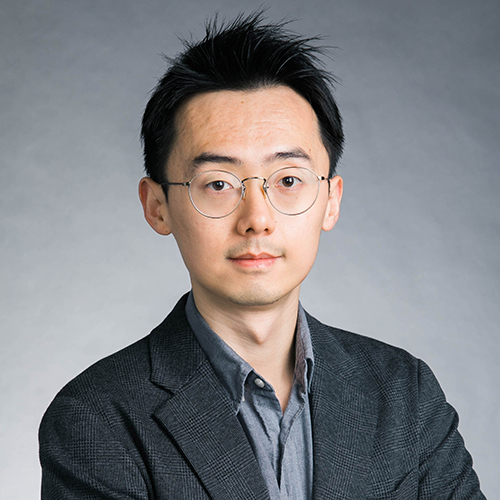
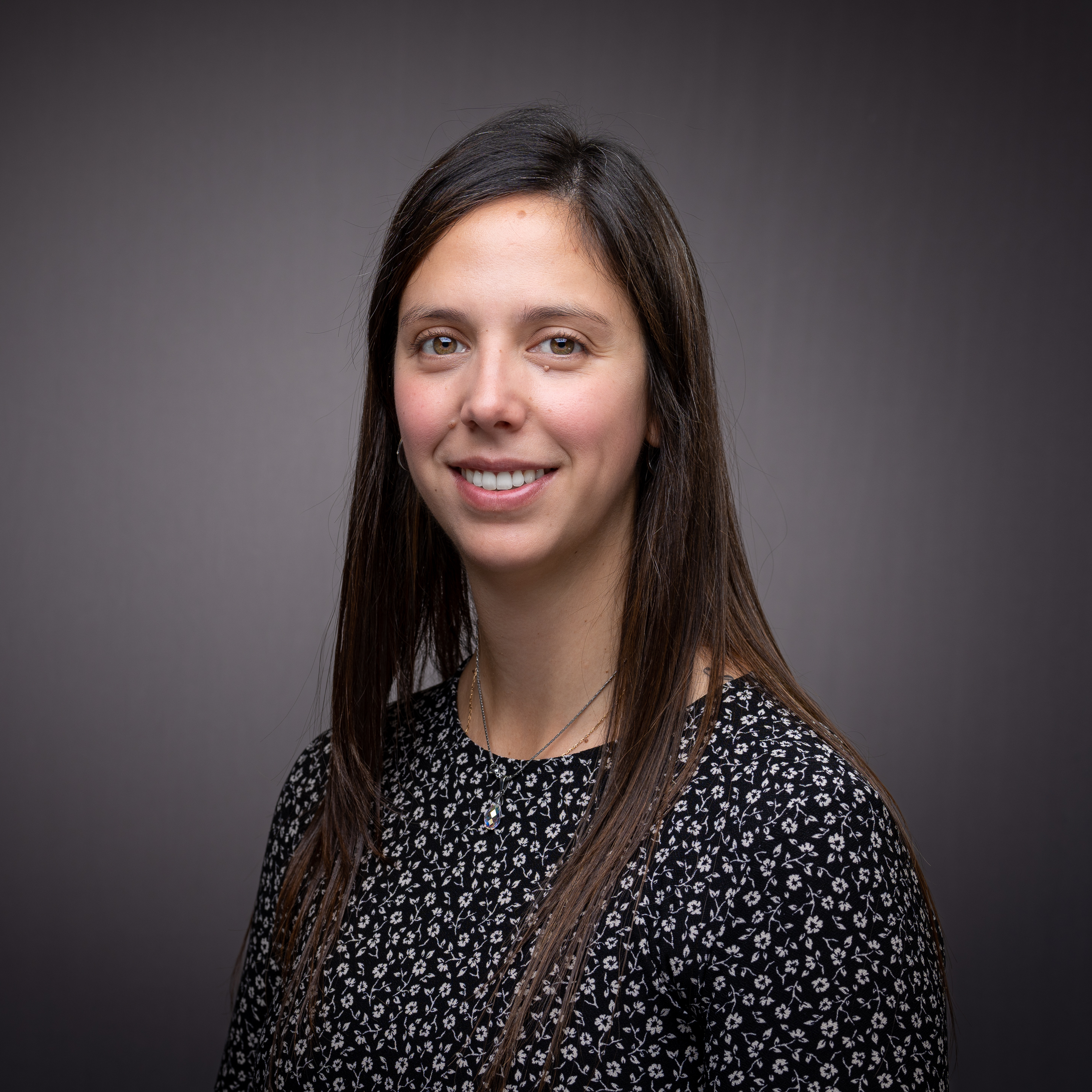
Giuliano Casale is a Professor in the Department of Computing at Imperial College London, leading the Quality of Service Research Lab (QORE). His research focuses on performance assurance, resource management, and fault-tolerance in distributed systems. He teaches courses on Probability and Statistics and Scheduling and Resource Allocation at undergraduate and Master’s levels. Casale’s work spans cloud computing, edge AI, and machine learning applications in system modeling. Key contributions include methodologies for performance engineering, anomaly detection, and automated resource management in large-scale systems. He actively participates in international conferences, delivering keynote speeches on topics such as performance evaluation and AI-driven systems. His research integrates queueing theory, machine learning, and generative models to address challenges in distributed software systems. Casale also engages in service activities like PhD admissions tutoring and collaborates on projects involving resilience planning and cloud service optimization. His lab, QORE, emphasizes practical solutions for real-world distributed systems, including edge federations and serverless architectures. Casale’s work bridges theoretical performance analysis with industrial applications, contributing to advancements in both academia and industry.
Abbas Edalat is a Professor of Computer Science and Mathematics at Imperial College London, and an Adjunct Professor at the Institute for Research in Fundamental Sciences, Tehran. He leads two research groups: Algorithmic Human Development and Continuous Data-Types and Exact Computation. His work spans computational mathematics, psychotherapy models, and exact real-number computation. Notably, he received the LICS 2017 Test-of-Time Award for foundational contributions to logic in computer science. Research interests include self-attachment psychotherapy, computational differential calculus, topology, and bisimulation in probabilistic systems. He has pioneered exact computation frameworks for real numbers, geometry, and dynamical systems, with applications in neuroscience and artificial intelligence. Professional activities include keynote talks at conferences like IJCNN and workshops on psychotherapy in Iran and the UK. Teaching includes advanced courses on dynamical systems, quantum computing, and computational techniques. He advises PhD students globally and chairs initiatives like the Science and Arts Foundation to expand educational access in developing nations. His interdisciplinary work bridges mathematics, computer science, and clinical psychology.
Prof. Donat Fäh is a faculty member at ETH Zurich's Institute of Geophysics, part of the Swiss Seismological Service (SED). His work focuses on advancing seismic hazard assessment and site response modeling in Switzerland and beyond. He leads interdisciplinary projects integrating geophysical surveys, machine learning, and empirical data to refine risk models for urban areas like Basel and Lucerne. Key contributions include developing the ERM-CH23 national earthquake risk framework and improving methodologies for nonlinear soil behavior analysis using KiK-net data from Japan. His research emphasizes high-resolution amplification mapping, subsurface characterization via ambient vibrations, and understanding glacial and subaqueous slope dynamics. Research interests span seismic site effects, soil mechanics, landslide stability monitoring, and the application of advanced geophysical inversion techniques. He collaborates internationally to enhance earthquake risk communication and building code compliance, particularly in low seismicity regions. Current efforts include refining 3D geophysical models for urban settings and exploring Bayesian methods for subsurface structure identification. His work bridges fundamental geophysical research with practical engineering solutions for infrastructure resilience. Advising and grants: No formal advisees or grant details are explicitly listed in the provided texts. His collaborative projects, however, suggest involvement in large-scale initiatives such as URBASIS and the Swiss strong-motion network modernization. Labs and teams: Prof. Fäh is affiliated with the Swiss Seismological Service (SED) and actively contributes to ETH Zurich’s seismic monitoring infrastructure. His team collaborates with institutions in Japan (KiK-net network) and applies cutting-edge geophysical techniques to study subglacial environments and lakebed geotechnics.
Mohamed-Slim Alouini is a Professor of Electrical Engineering and Associate Dean of the Computer, Electrical and Mathematical Science and Engineering (CEMSE) Division at King Abdullah University of Science and Technology (KAUST) in Saudi Arabia. He also serves as the Associate Vice President for Research and holds the UNESCO Chair in Education to Connect the Unconnected. With over 500 journal publications and more than 46,000 citations, he is a world-renowned expert in wireless communications who was elected IEEE Fellow in 2009 at the age of 39. Education: PhD in Electrical Engineering, California Institute of Technology (Caltech), 1998 MS in Electrical Engineering, Georgia Institute of Technology (Georgia Tech), 1995 Diplôme d'Etudes Approfondies (DEA) in Electronics, Université Pierre & Marie Curie (Sorbonne University), 1993 Diplôme d'Ingénieur, École Nationale Supérieure des Télécommunications (Télécom Paris Tech), 1993 Habilitation, Université Pierre & Marie Curie (Sorbonne University), 2003 Dr. Alouini is a world-renowned expert in wireless communication and networking with research interests spanning diversity combining techniques, MIMO systems, multi-hop/cooperative communications, optical wireless systems, cognitive radio, UAV communications, and advanced modulation schemes. His current focus addresses the technical challenges of uneven information and communication technology distribution, particularly targeting rural, low-income, disaster-prone, and hard-to-reach areas through integrated ground-airborne-space networks. His work bridges theoretical foundations with practical implementations to solve real-world connectivity problems. His recent publications (2020-2024) demonstrate a clear research trajectory toward integrated communication networks combining terrestrial, aerial, and space components. There's growing emphasis on UAV communications, satellite systems, optical wireless technologies, and rural connectivity solutions, with increasing integration of machine learning techniques for network optimization. His work shows consistent focus on addressing the digital divide, with several publications specifically targeting 6G challenges for connecting underserved populations and recycling existing infrastructure for enhanced rural connectivity. Scientific Awards: Member of the European Academy of Sciences and Arts (2019) Fellow of the African Academy of Sciences (2018) IEEE Fellow (2009) Abdul Hameed Shoman Award for Arab Researchers (2016) OIC Science & Technology Achievement Award (2017) Multiple recognitions as Highly Cited Researcher NSF CAREER Award (1999) Dr. Alouini has mentored numerous successful students and post-doctoral fellows who have secured positions at top institutions worldwide including Harvard, Caltech, Imperial College, and faculty positions at Korea University, Hanyang University, and universities across the Middle East. His December 2018 PhD graduate Qurrat-Ul-Ain Nadeem received the prestigious Marconi Society Paul Baran Young Scholars award, while post-doctoral fellows have won IEEE ComSoc Young Professionals Best Innovation Award and attended the Lindau Nobel Meeting. His Communication Theory Lab at KAUST drives significant research in wireless communications with funding supporting extensive publication output and innovative projects. Dr. Alouini leads the Communication Theory Lab at KAUST and holds the UNESCO Chair in Education to Connect the Unconnected, focusing specifically on technical solutions for connecting underserved communities. His lab works on integrated ground-airborne-space networks to bridge the digital divide, with particular emphasis on rural, low-income, and hard-to-reach areas. The team develops practical solutions using UAVs, satellite communications, and recycled infrastructure to provide cost-effective connectivity where traditional approaches fail.
Efstathia Bura is a Professor heading the Applied Statistics Research Unit (ASTAT) within the Institute of Statistics and Mathematical Methods in Economics at TU Wien's Faculty of Mathematics and Geoinformation. Her research focuses on dimension reduction techniques in regression and classification, high-dimensional statistics, and their applications in biostatistics, econometrics, and legal statistics. She leads projects like ProbInG (WWTF-funded) and the SecInt Doctoral College on statistical verification of cyber-physical systems. Her work integrates advanced statistical methodologies with interdisciplinary applications, emphasizing practical solutions for complex data challenges. Current projects explore probabilistic program analysis, security properties in cyber-physical systems, and dynamic econometric modeling. She collaborates internationally, with notable contributions to statistical theory and applications in law, healthcare, and telecommunications. Key research themes include time-varying regression models, sufficient dimension reduction for mixed predictors, and fusion of statistical methods with machine learning. Her publications bridge theoretical advancements and real-world problem-solving, reflecting her role as a leading academic in modern applied statistics. Her team includes postdocs and assistants working on WWTF and SecInt grants, focusing on probabilistic systems and statistical verification. While no formal student advisees are listed, her collaborative projects engage junior researchers in cutting-edge statistical research.
Noela Müller is an Assistant Professor in the Mathematics and Computer Science school at Eindhoven University of Technology . Her research focuses on Probability Theory , Random Matrices , and Random Graphs , with significant contributions to understanding the rank of sparse matrices and clique factors in probabilistic settings. Research Outputs : Published 22 works including journal articles and preprints. Collaborations : Active in international networks, particularly in sparse matrix analysis and probabilistic combinatorics. Her recent work explores sparse pooled data algorithms , random 2-SAT models , and sharp thresholds in random graphs , showcasing interdisciplinary applications in computer science, mathematics, and theoretical physics.
Marcel Böhme is a faculty member at the Max Planck Institute for Security and Privacy (MPI-SP) , leading the Software Security research group. His work focuses on foundational advancements in fuzzing , statistical program analysis, and scalable vulnerability discovery. Education: PhD from National University of Singapore (NUS) Research interests span: Statistical and causal frameworks for software testing Efficiency/Scalability of automated testing Fundamental limits of vulnerability detection Practical fuzzing technology (e.g., Entropic in LibFuzzer) Recent publications highlight trends in: Machine learning for security analysis Privacy-preserving statistical methods Future-proof security frameworks Protocol fuzzing with large language models Scientific accolades include: ERC Consolidator Grant (2024) NUS Outstanding Young Alumni Award (2022) ARC DECRA (2019) Multiple ACM Distinguished Paper Awards He serves as: Spokesperson for Research Group Leaders at Max Planck Society Guest Editor-in-Chief for ACM TOSEM PC Chair for ASE'25 and ISSTA'26
Daniel Roy is a Full Professor at the University of Toronto, holding cross-appointments in the Department of Statistical Sciences, Computer Science, Electrical and Computer Engineering, and the Department of Computer and Mathematical Sciences at UTSC. He is also a Canada CIFAR AI Chair and Research Director at the Vector Institute, reflecting his leadership in AI and machine learning research. His educational background includes a PhD, MEng, and BSc in Computer Science from MIT, where his doctoral work earned the MIT EECS Sprowls Award. Prior to joining Toronto, he was a Newton International Fellow at the Royal Society and a Research Fellow at Emmanuel College, University of Cambridge. His research centers on foundational principles in machine learning, statistics, and probabilistic reasoning. Key interests include statistical learning theory, Bayesian nonparametrics, probabilistic programming, and information-theoretic generalization. His work bridges theoretical computer science, mathematical logic, and applied probability. His recent publications, appearing in ICML, NeurIPS, COLT, and JMLR, reflect a strong focus on theoretical advances in generalization, online learning, and stochastic optimization. Themes include minimax rates, conditional mutual information, and the role of data in PAC-Bayes bounds. His group has made foundational contributions to probabilistic programming, including work on Church and the computability of conditional probability. NSERC Discovery Accelerator Supplement Ontario Early Researcher Award Google Faculty Research Award Newton International Fellowship MIT EECS Sprowls Award Daniel Roy advises numerous PhD students and postdoctoral researchers, many of whom have gone on to prestigious positions in academia and industry. His group actively collaborates with leading researchers in machine learning and statistics. He is also an Action Editor for the Journal of Machine Learning Research and Transactions of Machine Learning Research, underscoring his role in shaping the field. He leads a vibrant research group focused on theoretical machine learning and probabilistic modeling, and maintains active collaborations with institutions such as MIT, Cambridge, and the Vector Institute. He is also the founder and maintainer of the probabilistic-programming.org wiki, a key resource in the community.
Shixiang (Woody) Zhu is an Assistant Professor in Data Analytics at the Heinz College of Information Systems and Public Policy, Carnegie Mellon University. He holds a PhD in Machine Learning from Georgia Institute of Technology (2022) and B.S./M.S. in Computer Science from Beijing University of Posts and Telecommunications (2017). His research bridges machine learning, operations research, and statistics, focusing on sequential modeling, human-AI collaboration, and energy systems operations. He has received awards including the IEEE Power & Energy Society Best Paper Award (2025) and was a finalist for the INFORMS Wagner Prize (2021). Education : PhD in Machine Learning, Georgia Tech (2017–2022) B.S./M.S. in Computer Science, BUPT (2010–2017) His research emphasizes spatio-temporal data analysis , decision making under uncertainty , and applications to energy systems, healthcare, and public policy. Notable projects include optimizing police zone design (Wagner Prize finalist) and enhancing grid resilience through robust optimization. He actively collaborates with institutions like Argonne National Laboratory and NSF-funded projects. Awards : Best Paper Award, IEEE Power & Energy Society (2025) Gen-AI Fellows (2024) Finalist, INFORMS Wagner Prize (2021) Advising & Grants : Advises PhD students Zekai Fan, Wenbin Zhou, and others Recipient of Block Center Seed Grant (2024), NSF funding (2024) His work spans energy resilience, public policy optimization, and causal inference in social systems. He co-leads the INFORMS Data Mining Society and reviews for top journals like Operations Research and Management Science.
Dr. Sinno Jialin Pan is a leading researcher in machine learning and artificial intelligence at Nanyang Technological University, Singapore. His work focuses on domain adaptation, sentiment analysis, and efficient neural network optimization. Key research areas: Machine Learning, Domain Adaptation, Reinforcement Learning, Sentiment Analysis Recent publications demonstrate expertise in time-series classification (2025) using hierarchical domain adaptation, LLM efficiency (2025) through expert pruning, and graph generation (2024) via spectral diffusion. His work spans both theoretical advancements and practical applications in neural architecture optimization and adversarial learning. Scientific contributions include: 2025: Virtual-label hierarchical domain adaptation 2024: Spectral diffusion for graph generation 2024: Multilingual jailbreak analysis in LLMs Current trends show increasing focus on large language model optimization and robust neural architectures , with applications in fault diagnosis, recommender systems, and misinformation detection.
Rocio Lilen Segura is an Assistant Professor in the Department of Civil, Environmental and Sustainable Engineering at Santa Clara University's School of Engineering. She holds a Ph.D. in Civil Engineering from Sherbrooke University (2019) and a B.Sc. in Civil Engineering from Del Comahue National University (2013). Dr. Segura specializes in infrastructure resilience against extreme events and climate change, focusing on probabilistic risk assessment of critical infrastructure systems like dams and levees. Her work bridges civil engineering with machine learning and climate justice, integrating built, natural, and social systems to address environmental challenges. 2023 Severo Ochoa Mobility Programme grant 2019-2022 MITACS Accelerate industrial postdoc scholarship 2019 Léonard de Vinci medal and Scholarship Her research spans seismic risk reduction, surrogate modeling, and uncertainty quantification in dam engineering, with over 10 publications in journals like Advances in Civil Engineering and Water Journal. She previously collaborated with Hydro-Quebec during her postdoctoral research.
Professor Ole-Christoffer Granmo is a distinguished academic at the University of Agder, Norway, where he serves as Professor in the Department of Information and Communication Technology. He is the Founding Director of the Centre for Artificial Intelligence Research (CAIR) at the University of Agder, leading cutting-edge research in artificial intelligence and machine learning. Dr. Granmo obtained his master's degree in 1999 and his PhD in 2004, both from the University of Oslo. His academic journey has been marked by significant contributions to the field of AI, most notably the creation of the Tsetlin machine in 2018, for which he received the AI research paper of the decade award from the Norwegian Artificial Intelligence Consortium (NORA) in 2022. Professor Granmo's research primarily focuses on logical and causal world modeling across multiple modalities including images, sound, and natural language. His work spans logical auto-encoding, convolution, regression, transformer architectures, and reinforcement learning, all with the overarching goal of creating ultra-low-power artificial general intelligence through transparent logical learning and reasoning. His publications reveal a strong emphasis on interpretable AI systems, hardware implementations, and applications across diverse domains including cybersecurity, healthcare, social media analysis, and bioinformatics. AI Research Paper of the Decade (2022) - Norwegian Artificial Intelligence Consortium (NORA) Eight paper awards in machine learning Professor Granmo has coordinated over seven research projects and mentored 55+ master's students and nine PhD students. His leadership extends to co-founding the Norwegian Artificial Intelligence Consortium (NORA) and establishing two companies: Anzyz Technologies AS and Tsense Intelligent Healthcare AS. As an advisor at Literal Labs, he actively bridges academic research with practical industry applications, demonstrating his commitment to translating theoretical innovations into real-world solutions that address complex challenges across multiple sectors.
Stephen Turner is an Associate Professor of Data Science and Assistant Dean for Research at the University of Virginia School of Data Science . His work bridges genomics, data science, and national security , focusing on biosecurity, synthetic biology, conservation, and bioinformatics applications in human health . Previously, he was a faculty member in the UVA School of Medicine’s Department of Public Health Sciences (2011–2019) and directed the UVA Bioinformatics Core . Ph.D., Human Genetics, Vanderbilt University M.S., Applied Statistics, Vanderbilt University B.S., Biology, James Madison University Turner’s research spans computational approaches to biosecurity, biodiversity conservation, and human health . Recent publications highlight tools like the qqman and kgp R packages, PLANES for epidemiological modeling, and biorecap for bioRxiv preprint summarization. His work integrates large-scale sequencing, genome editing, and machine learning in conservation biotechnology and public health forecasting. Scientific contributions include applications in infectious disease forecasting , forensic genomics , and maternal-fetal biology . He has mentored interdisciplinary students and collaborated on NIH-funded research , while advising biotech startups at the intersection of academia, industry, government, and policy .
Markus Lange-Hegermann serves as Professor of Mathematics and Data Science at Ostwestfalen-Lippe University of Applied Sciences (TH OWL) since 2018 and holds a board position at the Institute for Industrial Information Technology (inIT). His career bridges academic research and industrial applications, with expertise in translating machine learning theory into practical engineering solutions for automation and manufacturing sectors. His educational foundation includes a Diplom (Master equivalent) in Computer Mathematics from RWTH Aachen University (2004-2008) followed by a Dr. rer. nat. (PhD equivalent) in algorithmic differential algebra (2008-2014). Prior to academia, he gained industry experience at FEV GmbH as an R&D engineer (2014-2017) and P3 automotive GmbH as a Data Science Consultant (2017-2018). Lange-Hegermann's research centers on probabilistic machine learning with distinctive emphasis on physics-informed approaches. He develops Gaussian process methodologies that incorporate differential equations to model time dependencies, uncertainties, and physical constraints in industrial systems. His work enables robust data-based modeling and optimization for cyber-physical systems, with applications spanning predictive maintenance, process control, and quality assurance in manufacturing. Analysis of his 15 most recent publications (2024-2025) reveals consistent innovation in physics-integrated machine learning, particularly using Gaussian processes to solve partial differential equations and optimal control problems. The research demonstrates strong industrial applicability across domains including medical imaging, material science, automotive engineering, and brewing processes, with recurring themes of anomaly detection in time-series data and uncertainty-aware decision making. His scientific contributions have earned significant recognition: Forschungspreis TH OWL (2024) Top reviewer award at NeurIPS (2023) Outstanding reviewer award at NeurIPS (2021) Best poster award at Bosch AI CON (2019) Borchers Plakette for outstanding dissertation (2014) Springorum Denkmünze for outstanding diploma (2009) As chairman of the Data Science study program and vice chairman of undergraduate examination boards, Lange-Hegermann actively shapes academic curricula while supervising graduate theses. His governance roles include serving on professorship search committees at multiple institutions and contributing to examination regulations. He maintains active research funding through collaborations with industrial partners and reviews proposals for initiatives like It's OWL and 3IA Côte d’Azur. Lange-Hegermann leads the Mathematics and Data Sciences research group within inIT, fostering collaboration between theoretical machine learning and industrial automation. He co-founded AICOmmunityOWL and the Informatics Europe working group on Data Analysis and Reporting, while organizing machine learning reading groups and data science hackathons to bridge academic research with industrial problem-solving.
Federica Sandrone is a Lecturer at the School of Architecture, Civil and Environmental Engineering (ENAC) at École Polytechnique Fédérale de Lausanne (EPFL), where she also serves as a Scientist at the Laboratory of Experimental Rock Mechanics (LEMR) within the Institute of Civil Engineering. Her academic career spans over 15 years with continuous contributions to tunnel engineering and rock mechanics research. Her research focuses on the intersection of rock mechanics and tunnel engineering, with particular expertise in tunnel pathology analysis, TBM performance in challenging geological conditions, and long-term tunnel behavior. Sandrone's work bridges theoretical analysis with practical engineering applications, addressing real-world problems in tunnel infrastructure management and maintenance. Her research methodology combines field investigations, laboratory testing, and numerical modeling to understand complex geomechanical behaviors. Analysis of her recent publications reveals a consistent focus on tunnel inspection methodologies, TBM performance prediction in difficult ground conditions, and the long-term behavior of tunnel structures. Her work has evolved from fundamental tunnel pathology studies to more advanced applications involving GIS integration, probabilistic modeling, and modern inspection techniques including laser scanning and image analysis. Engineer at SBB-Infrastructure (2008-present) responsible for Tunnels Management and Maintenance Assistant for Tunnel Engineering courses (2007-present) PhD supervision including Erika Paltrinieri's 2015 thesis on TBM performance Development of tunnel inspection methodologies and condition assessment procedures Her teaching activities include courses in Rock Mechanics and Underground Construction, where students learn about the mechanical behavior of rock materials, tunnel excavation and support design, planning and management of underground works, and risk assessment in tunnel construction.