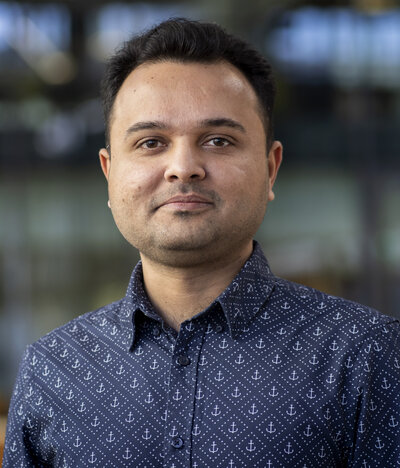
Didier Meuwly is a Full Professor of Forensic Biometrics at the University of Twente (since 2013) and Principal Scientist at the Netherlands Forensic Institute (NFI). His work focuses on automating and validating probabilistic evaluation of forensic evidence, particularly biometric traces. He has contributed to international standards via ISO Technical Committee 272 and served as Associate Editor for Forensic Science International . PhD in Forensic Speaker Recognition (University of Lausanne, 2000) Research spans forensic biometrics, likelihood ratios, AI validation, and gait/body analysis from surveillance footage. Recent work addresses ISO standards (21043), forensic AI explainability, and multimodal evidence evaluation. His publications emphasize empirical validation and statistical rigor. Key awards include: ENFSI Distinguished Forensic Scientist Award (2022) University of Lausanne Law Faculty Prize (2002) Active in global forensic networks, he chairs the ENFSI R&D Committee and collaborates across disciplines on digital evidence, biometric security, and forensic methodology.
Aaqib Saeed is an Assistant Professor in the Department of Industrial Design at Eindhoven University of Technology. His research focuses on Human-Centric AI, Federated Learning, Self-Supervised Learning, and Audio Understanding, with applications in Personal Health. He holds a PhD (cum laude) from TU/e and an MSc (cum laude) from the University of Twente. Education: PhD in Computer Science (cum laude), TU/e (2021) MSc in Computer Science (cum laude), University of Twente (2018) Research Interests: Development of robust federated learning frameworks for decentralized data Self-supervised learning for audio and physiological signal analysis AI-driven solutions for healthcare monitoring Key Contributions: DeltaMask: Reducing communication overhead in federated fine-tuning FedNS: Mitigating noisy decentralized data in federated learning Labeling Chaos to Learning Harmony: Handling label noise in FL Professional Experience: Visiting Industrial Fellow, University of Cambridge (2023) Research Scientist, Philips Research (2019–2023) Research Internships: Google Research, TNO/EIT Digital Awards: UT Scholarship (MSc) Cum Laude awards for both PhD and MSc Labs/Teams: EAISI Health, EAISI Foundational, Computational Design Systems.
Erik Quaeghebeur is an Assistant Professor at Eindhoven University of Technology's School of Mathematics and Computer Science, focusing on uncertainty modeling in artificial intelligence. His work spans probabilistic circuits, imprecise probability theory, and wind energy applications. PhD in Applied Mathematics (Ghent University, 2002-2009) Master's in Applied Mathematics (Université catholique de Louvain, 2001-2002) Master's in Physics Engineering (Ghent University, 1998-2001) Research interests include probabilistic modeling under uncertainty, with applications in AI and wind energy systems. His recent work explores tensor factorizations, equivariant graph neural networks, and scalable probabilistic circuits. Scientific contributions include 60 research outputs and 2 datasets . Awards encompass the ERCIM Alain Bensoussan Fellowship (2013), BOF Postdoc (2010), and B.A.E.F. Francqui Fellowship (2009). He serves on committees for the Society for Imprecise Probability and acts as editorial board member for related conferences. Foundations of Artificial Intelligence course (since 2020) Uncertainty Representations and Reasoning course (since 2021)
Raymond H. Cuijpers is an Associate Professor at Eindhoven University of Technology in the Human Technology Interaction group. His research focuses on Cognitive Robotics , Human-Robot Interaction , and Artificial Intelligence for cognitive agents, with applications in healthcare robotics and aging population support. PhD in Physics of Man from Utrecht University (2000) Postdoctoral research at Erasmus MC Rotterdam and Radboud University Nijmegen Key research areas include: Developing socially intelligent robots with proper social cue interpretation Hybrid AI approaches for real-world complexity handling Visual-haptic perception integration in human motor control Service robots for COPD patient assistance (KSERA project) Rescue robotics and tele-operation applications Recent research output (2025) includes studies on: Personalization in human-robot communication Optimal lighting for elderly visual perception Human-robot bonding mechanisms Interactive sensorized platforms for homecare (GUARDIAN) Audiovisual temporal integration in virtual environments He coordinates large-scale European projects like GUARDIAN and previously KSERA, contributes to sustainable development goals through healthcare robotics, and serves on editorial boards of leading journals including International Journal of Social Robotics . His work spans both technical robotics development and human-centric interaction studies.
Laura Toni is an Associate Professor in the Department of Electronic & Electrical Engineering at University College London (UCL). She serves as Director of the MSc in Telecommunications and Internet Engineering and the MRes in Telecommunications. Additionally, she is a Turing Fellow at the Alan Turing Institute and a member of ELLIS (European Lab for Learning and Intelligent Systems). Her research focuses on coding, streaming technologies, machine learning for immersive communications, decision-making under uncertainty, and large-scale signal processing. She leads the LASP (Learning And Signal Processing) group at UCL. Education: MSc (2005) and PhD (2009) from the University of Bologna, followed by postdoctoral research at UC San Diego and EPFL under Professors L. Milstein, P. Cosman, and P. Frossard. Key roles include Technical Program Chair at ACM MM 2022, Keynote Co-Chair at ACM MMSys 2022, and leadership in organizing workshops on graph-based machine learning and emerging technologies in performing arts. She is a Senior IEEE Member and holds editorial roles in IEEE Multimedia Magazine and EURASIP Journal on Signal Processing. Her work bridges communication systems and machine learning, with contributions to adaptive streaming, network optimization, and graph signal processing. She actively promotes diversity and inclusion in technical conferences, including roles as Diversity Chair at MMSys 2021 and PIMRC 2020.
Arno Siebes is Professor of Algorithmic Data Analysis in the Department of Information and Computing Sciences at Utrecht University's Faculty of Science. His research focuses on data mining methodologies, particularly pattern mining and Minimum Description Length (MDL) principles. Key research areas include: Developing efficient algorithms for pattern discovery Applying MDL to data characterization Creating interpretable models for complex datasets Addressing challenges in data science education Recent publications demonstrate applications in diverse domains including mobility analysis, genomic screening, and pandemic response. His work combines theoretical foundations with practical implementations for knowledge discovery.
Nikhil Bansal holds the prestigious Patrick C. Fischer Professorship of Theoretical Computer Science in the Department of Computer Science & Engineering at the University of Michigan's College of Engineering. His research program has established him as a leading figure in theoretical computer science, with significant contributions to algorithm design and analysis, particularly in discrete optimization problems. Bansal's research focuses on theoretical computer science with emphasis on design and analysis of algorithms for discrete optimization problems. His work spans multiple areas including discrepancy theory, approximation algorithms, randomized algorithms, combinatorial optimization, complexity theory, machine learning theory, and probability. He has made significant contributions to understanding the limits of approximation algorithms and developing novel techniques for combinatorial optimization problems. Analysis of Bansal's recent publications reveals a strong focus on discrepancy theory, online algorithms, and combinatorial optimization. His work often bridges theoretical computer science with discrete mathematics and probability theory. A recurring theme across his publications is the development of novel algorithmic techniques for solving NP-hard problems with provable guarantees. His research has evolved from foundational work in approximation algorithms to more recent contributions in quantum computing complexity and stochastic optimization. Patrick C. Fischer Professor of Theoretical Computer Science Bansal has advised numerous PhD students including Marek Elias, Shashwat Garg, and Greg Koumoutsous, as well as mentoring several postdoctoral researchers. He has served on editorial boards for top journals including Journal of the ACM, Theory of Computing, and Stochastic Models, and has been active on program committees for major conferences such as STOC, FOCS, SODA, and ICALP, including serving as chair for ICALP 2021. Bansal has organized multiple academic workshops including the STOC 2020 Workshop on Recent Advances in Discrepancy and Applications, several SDP Days at CWI Amsterdam, and the Semester on Bridging Continuous and Discrete Optimization at UC Berkeley in Fall 2017.
Dirk Thierens is an Associate Professor in the Department of Computer Science at Utrecht University's Faculty of Science, specializing in Intelligent Systems within AI & Data Science. His academic career spans over 25 years, with continuous publications from 1996 through 2025, demonstrating sustained research activity and leadership in his field. He maintains an active research program with numerous collaborations, most notably with Peter A.N. Bosman, indicating a long-standing productive research partnership. Thierens' research focuses on evolutionary computation, particularly model-based evolutionary algorithms, genetic algorithms, and optimization techniques. His work has evolved from foundational genetic algorithm research in the late 1990s and early 2000s to more specialized model-based approaches in recent years, including significant contributions to Gene-pool Optimal Mixing Evolutionary Algorithms (GOMEA). His expertise spans single-objective and multi-objective optimization, permutation problems, mixed-integer problems, and real-valued optimization. In recent years, his research has expanded into applications in machine learning, particularly semi-supervised learning and neural network optimization. His publication record shows a consistent output of high-quality research, with numerous papers in top conferences like GECCO and journals in evolutionary computation. His most recent work (2023-2025) demonstrates continued innovation in synthetic data generation, neural network combination techniques, and parameterless evolutionary algorithms. The breadth of his work spans theoretical algorithm development, benchmarking methodologies, and practical applications in healthcare and other domains. While no specific scientific awards are mentioned in the available information, his extensive publication record, tutorial contributions at major conferences, and sustained research productivity over multiple decades indicate recognition within the evolutionary computation community. His tutorial work at GECCO conferences suggests he is considered an authority on model-based evolutionary algorithms. Thierens maintains an active research laboratory focused on evolutionary algorithms and their applications, with recent work exploring the intersection of evolutionary computation and deep learning. His research continues to advance both theoretical understanding and practical applications of optimization techniques in complex problem domains.
Prof. Sander M. Bohte holds a part-time appointment as a Professor of Computational Neuroscience at the Swammerdam Institute for Life Sciences (SILS), University of Amsterdam, and is a researcher at the CWI Machine Learning group. His research focuses on computational models of neural information processing, emphasizing spiking neural networks, predictive coding, and reinforcement learning. He bridges computational neuroscience and machine learning, exploring how biological insights can improve neural network designs and vice versa. Key collaborations include work with Cyriel Pennartz (UvA), Pieter Roelfsema (NIN), and Steven Scholte (B&C). His applied research spans scientific machine learning applications in finance and genomics. He actively supervises MSc thesis students, prioritizing those from UvA, with projects ranging from biologically inspired neural architectures to efficient spiking network simulations. Research highlights include developing biologically plausible learning rules for deep networks, predictive coding models for sensory data, and spiking network models for working memory tasks. His work also addresses challenges in temporal dynamics and scalable neural computation, leveraging both theoretical and applied perspectives.
Reinder Haakma is a University Researcher at Eindhoven University of Technology in the Signal Processing Systems department. His work bridges biomedical engineering and machine learning , focusing on advanced signal processing techniques for healthcare applications. Research interests include: Photoplethysmography (PPG) signal decomposition Cardiovascular monitoring via wearable sensors Anomaly detection in physiological signals Improving pulse arrival time estimation Smartwatch-based cardiac arrest detection systems His contributions to rapid eye movement sleep analysis and heart rate variability align with UN Sustainable Development Goals for health innovation. Notable recognition includes the Best paper full paper award at IE 2018 for his work with Tax, van der Aalst, and Sidorova. Recent publications (2024-2025) demonstrate expertise in predictive coding algorithms, Gaussian modeling, and real-time physiological monitoring. Collaborations span cardiology (Dekker, Vullings) and human-computer interaction (Markopoulos) domains.
Maurice van Keulen is an Associate Professor affiliated with the University of Twente's research institutes including Datamanagement & Biometrics, Digital Society Institute, and TechMed Centre. His multidisciplinary work bridges computer science, healthcare, and social systems. Research Focus: Van Keulen specializes in artificial intelligence applications with emphasis on: Data management (quality, integration, probabilistic databases) Explainable AI and interpretable machine learning models Healthcare informatics (cancer prediction, medical imaging, outcome analysis) Natural language processing and social media analytics His recent work explores dynamic sparse training, meta-learning for data imputation, and ethical AI frameworks. Publication Trends: Recent articles (2023-2025) show strong focus on: Interpretable AI methods in healthcare diagnostics Robust machine learning under data corruption Meta-learning approaches for data preprocessing 3D medical imaging and reconstruction techniques Awards: Beste paper award (2018) for work on probabilistic data conditioning Supervision & Activities: Has supervised 14 research projects and serves on executive boards including EDBT (Extending DataBase Technology) and IFIP WG 2.6. Leads research on ethical dimensions of AI systems.
Frank Röttger is an Assistant Professor at Eindhoven University of Technology, specializing in Mathematical Statistics. His primary research focuses on graphical models, multivariate extremes, and statistical inference in high-dimensional settings. Research Interests : Extreme value theory, probabilistic graphical models, causal inference in extremes, and data-driven risk modeling. Awards : NWO Prize (Scientific) - 2024 Organized Activities : Eurandom Workshop on Graph Laplacians, Multivariate Extremes, and Algebraic Statistics (2024) Causality in Extremes Workshop (2024) Courses Taught : Dependence Modeling Foundations of Statistics Mathematical Statistics Contact : Email: f.rottger@tue.nl
Chigo Okonkwo is Full Professor and Chair of Secured Ultra High Capacity Transmission at the Department of Electrical Engineering , Eindhoven University of Technology. He leads the high-capacity optical transmission laboratory at the Institute for Photonics Integration and contributes to the Center for Quantum Materials and Technology Eindhoven (QT/e) . Academic Qualifications: MSc in Telecommunications and Information Systems, University of Essex (2002) PhD in Optical Signal Processing, University of Essex (2010) Research Interests: Professor Okonkwo focuses on: Maximizing capacity of single-mode fiber systems through advanced-coded modulation and Probabilistic/Geometrically shaped signals Developing Space Division Multiplexing (SDM) systems for Petabit/s transmission using multi-mode/multi-core fibers Quantum secure communications and cryptographic protocol development Optical vector network analyzer (OVNA) technology for SDM fiber characterization Free-space optical link deployment in urban environments Low-complexity digital signal processing algorithms Recent Publications Trends: His 15 most recent articles (2023-2025) demonstrate active research in: Quantum-classical network integration Extreme capacity fiber transmission (Petabit/s systems) Machine learning for optical diagnostics SDM fiber measurement technologies Hybrid QKD-PQC security frameworks Free-space optical urban communication Scientific Awards: Asia Communications and Photonics Conference (ACP) 2018 Best Paper Award European Conference on Optical Communications (ECOC) 2018 Student Paper Award Optica Student Paper Awards (2022) Corning Outstanding Student Paper Competition Finalist (2025) Advisory & Collaborations: Advisor to 8+ researchers including Menno van den Hout, Vincent van Vliet, and Thomas Bradley Technical Program Committee Member, European Conference on Optical Communications (ECOC) since 2014 Sub Committee Chair for Digital Signal Processing track at ECOC 2018 General Chair for OSA Advanced Photonics Congress on Signal Processing for Photonics Collaborates with EU projects (HOMTech, PhotonDelta) and industrial partners Co-founder and Chief Technology Officer of CUbIQ Technologies Laboratory & Infrastructure: Maintains the world-class High Capacity Optical Transmission Lab at TU/e, featuring: Advanced SDM fiber testing equipment Quantum communication research infrastructure Free-space optical link experimental setups Multi-core fiber amplification systems Coherent transmission testbeds Machine learning-enabled diagnostic tools
Bert de Vries is a Professor at the Signal Processing Systems Group at Eindhoven University of Technology (TU/e), where he has been employed since January 2012. He maintains a dual career, also working at GN Hearing in the hearing aids industry since April 1999, where he holds both research and managerial roles. His academic journey began at TU/e, where he earned his MSc in Electrical Engineering in 1986, followed by a PhD from the University of Florida in 1991. Between 1992 and 1999, he worked at Sarnoff Research Center in Princeton, NJ, contributing to diverse signal and image processing projects. Professor de Vries's research centers on Bayesian Machine Learning, with particular focus on the Free Energy Principle and its applications to engineering problems. His work bridges theoretical neuroscience with practical signal processing systems, especially in biomedical applications. He directs the BIASlab research team at TU/e, which develops probabilistic programming tools including RxInfer.jl, ForneyLab.jl, GraphPPL.jl, ReactiveMP.jl, and Rocket.jl. His research spans active inference, variational message passing, probabilistic programming, and Bayesian neural networks, with applications ranging from hearing aids to multi-agent systems. Analysis of his recent publications reveals a strong trend toward practical implementations of Bayesian inference frameworks, particularly through Julia-based probabilistic programming tools. His work shows increasing focus on active inference applications, message passing algorithms, and the intersection of Riemannian geometry with probabilistic modeling. The research demonstrates consistent progression from theoretical foundations toward real-world engineering applications, particularly in biomedical signal processing and autonomous systems. Professor de Vries teaches a graduate-level course on Bayesian Machine Learning at TU/e and actively contributes to open-source software development through his GitHub profile (bertdv), with recent activity as recent as August 2025. His research team has developed several influential probabilistic programming libraries that have gained significant attention in the machine learning community. The BIASlab research group continues to advance the state of the art in Bayesian inference methods with applications in hearing technology, robotics, and signal processing.
Mitra Nasri is an Assistant Professor at the Eindhoven University of Technology, affiliated with the College of Engineering's Department of Electrical Engineering. She contributes to the High Tech Systems Center and EAISI Foundational, focusing on interconnected resource-aware intelligent systems. Research Focus: Real-Time Systems, Scheduling Algorithms, Embedded Systems, Fault-Tolerant Computing, and Cyber-Physical Systems. Key Contributions: Development of scheduling frameworks for multi-rate task chains, response-time analysis techniques, and containerization strategies for real-time distributed applications. Her recent work includes advancements in weakly-hard timing constraints, parallel global scheduling, and cloud integration for embedded systems. She actively collaborates on projects like SAM-FMS and COMP4DRONES. Scientific Awards: Best Paper Award - RTAS 2022 Best Paper Award - RTNS 2016 Outstanding Paper Awards at RTAS 2017, 2022 and RTSS 2020 She teaches courses in Real-Time Systems, Operating Systems, and Automotive Software, and participates in organizing conferences like Embedded Systems Week and CompSys.