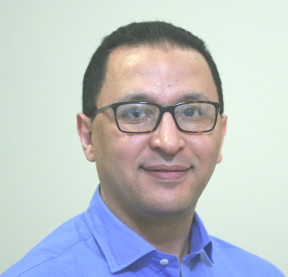
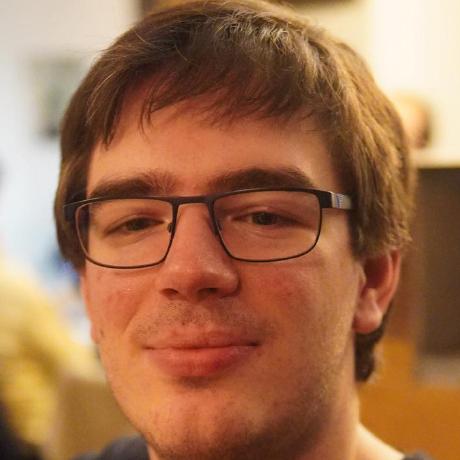
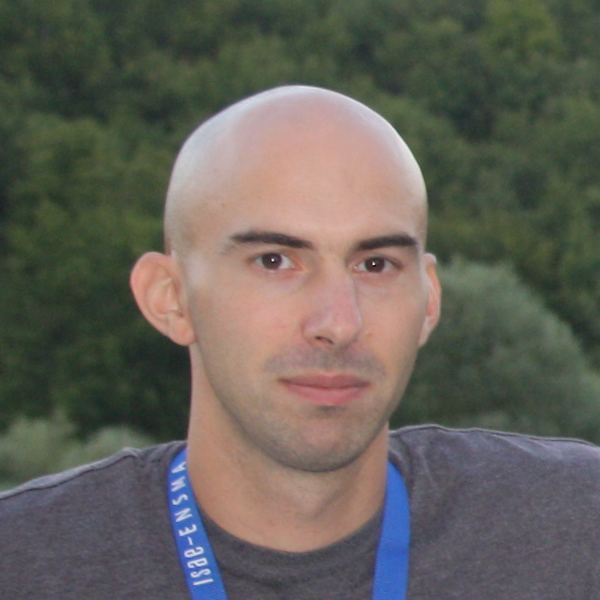
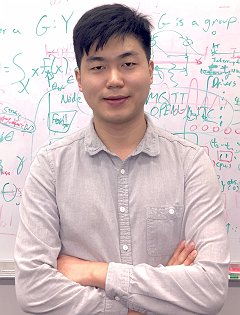
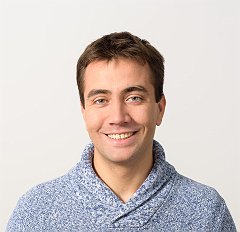
Bas Spitters is an Associate Professor at the Department of Computer Science, Aarhus University, Denmark. He leads the Concordium Blockchain Research Center and the Blockchain workpackage in Digit , and contributes to Aarhus University's Quantum Campus initiative. His research spans Homotopy Type Theory , Formal Verification , and High-assurance cryptographic software . He develops proof assistants like Coq for applications in probabilistic programming , blockchain security , and quantum computing . Recent article trends focus on verified compilation (CertiCoq-Wasm), smart contract certification (ConCert), and applications of HoTT to probabilistic and blockchain systems. Key keywords include Formal Methods , Blockchain , Quantum Computing , and Cubical Type Theory . Scientific awards and grants: AFOSR grant (2018-2021) for Homotopy Type Theory in probabilistic computation Villum Foundation grant (2015-2019) for Guarded Homotopy Type Theory NWO VENI grant (2010-2013) for Reasoning and Computing DIAMANT researcher grant Advising and collaboration: Advised PhD students: Benjamin Salling Hvass, Jakob Botsch Nielsen, Andreas Aagaard Lynge, Soren Eller Thomsen, Martin Bidlingmaier Collaborated on computer-verified exact analysis, smart contracts, and quantum logic Organized workshops: TYPES workshop , HACS , and DMV Mini-Symposium
Francesco Gavazzo is an Assistant Professor at the Department of Mathematics, University of Padua. His research focuses on theoretical computer science, particularly in programming language semantics, computational effects, relational reasoning, and inductive/coinductive methods. PhD in Computer Science and Engineering, with Honor Mention MSc in Logic and Computer Science BA in Philosophy His work bridges formal methods with practical applications in program equivalence, quantitative semantics, and effect systems. Recent contributions include frameworks for effectful program distancing and relational theories of effects. Scientific awards include recognition by the Accademia delle Scienze dell'Istituto di Bologna (Top 10 in Science) and the Best Italian PhD Thesis in Theoretical Computer Science (EATCS Italian Chapter). He serves on program committees for POPL and ICFP.
Hiroshi Unno is a Professor at Tohoku University 's Research Institute of Electrical Communication and a Visiting Professor at the National Institute of Informatics. He has served on program committees for major conferences like POPL , PLDI , ICFP , and CAV . Dr. Unno's research focuses on Programming Languages Software Verification Artificial Intelligence Higher-Order Model Checking Refinement Type Systems Temporal Logic His recent work (2023-2025) includes advancements in algebraic effects , probabilistic program verification , and prophecy-based type systems . Key contributions appear in POPL , PLDI , and ICFP journals. Scientific awards include Distinguished Paper Award at POPL 2024 Distinguished Paper Award at POPL 2023 PPL 2014 Best Paper Award He leads development of tools like RCaml , Thrust , and EffCaml for refinement type checking. Current projects involve Kakenhi grants 20H04162 and 25H00446 . Dr. Unno actively contributes to academic communities through Program Committee roles at AAAI, CAV, and SAS Editorial work for IPSJ Transactions Organizing PPL Summer School (2022)
Ohad Kammar is a researcher at the University of Edinburgh , actively contributing to programming language theory, denotational semantics, and algebraic effects. His work bridges theoretical foundations with practical implementations. Research Themes : Type-driven development, concurrency, probabilistic programming, normalization algorithms, and algebraic effects. Conference Involvement : Committee member in Diversity, Equity and Inclusion , Student Research Competition , and LAFI tracks at POPL; program committee roles in ICFP, APLAS, PEPM, and HOPE. Publications : Focus on denotational semantics, effect handlers, relaxed memory concurrency, and dependently-typed probabilistic models.
Alexandra Silva is a Professor of Computer Science in the Department of Computer Science at Cornell University's College of Engineering. She joined Cornell as faculty in 2021 after previously serving as a Royal Society Wolfson Fellow and Professor of Algebra, Semantics, and Computation at University College London. Her research spans programming languages, formal verification, and theoretical computer science, with particular focus on Kleene Algebra with Tests (KAT), probabilistic programming, and automata theory. She has held numerous leadership roles in major programming languages conferences including POPL, PLDI, and ICFP. Dr. Silva completed her PhD at Centrum Wiskunde & Informatica (CWI) in Amsterdam under the supervision of Jan Rutten and Marcello Bonsangue, with her thesis entitled "Kleene coalgebra" defended in December 2010. Prior to her PhD, she was an undergraduate student at University of Minho in Portugal, where she completed a 5-year Mathematics and Computer Science degree in May 2006. Her research focuses on the modular development of specification languages and algorithms for models of computations, often from the unifying perspective offered by coalgebra. She has made significant contributions to Kleene Algebra with Tests, probabilistic programming semantics, network verification, and automata learning. Her work bridges theoretical foundations with practical verification tools, particularly in the domain of Software-Defined Networking where her NetKAT framework has gained significant attention. Analysis of her recent publications reveals a strong trend toward unifying frameworks for program verification, particularly through her development of Outcome Logic which provides foundations for both correctness and incorrectness reasoning. Her work increasingly integrates probabilistic and concurrent aspects of programming languages, with applications to network verification and security. The NetKAT ecosystem remains a central theme, with extensions to infinite state verification, symbolic execution, and learning-based approaches. Distinguished paper award for Guarded Kleene algebra with tests: verification of uninterpreted programs in nearly linear time (POPL 2020) Dr. Silva advises a large research group with numerous PhD students, postdocs, and undergraduate researchers. Her group has produced significant work in programming languages theory, verification, and applications to networking. She has secured substantial research funding through various grants that support her work on formal methods for network verification and probabilistic programming. Her mentoring approach emphasizes both theoretical depth and practical impact, with many of her students moving to prestigious academic and industry positions. Her research group, spanning both Cornell University and University College London, focuses on developing theoretical foundations for programming languages with practical applications in network verification, probabilistic systems, and program analysis. The group maintains active collaborations with researchers at CWI, University of Oxford, and other leading institutions in programming languages and formal methods.
Christine Tasson is a Professor of Computer Science at ISAE-SUPAERO in Toulouse, France, where she holds a position in the DISC Department. She maintains an associate affiliation with LIP6 in Paris and was elected junior member of the prestigious Institut Universitaire de France (IUF) in 2021. Her academic credentials include: PhD in Computer Science from Paris Diderot University (2009) HDR (Habilitation à Diriger des Recherches) from University of Paris Cité (2018) Tasson's research program integrates theoretical computer science with critical systems engineering. She investigates Programming Languages through denotational/categorical semantics frameworks, advances Probabilistic programming models, and develops formal methods for Reactive and synchronous systems. Her work provides mathematical foundations for reliable distributed computing in aerospace contexts, emphasizing verifiable system design. Her significant recognition includes: Junior membership in the Institut Universitaire de France (IUF), 2021 Current research is supported by active grants: JCJC ANR project: "Species, Syntax and Semantics Emergence" Mairie de Paris project: "Reactive Systems, Linear logic and Semantics" She leads the "Engineering for Critical Systems" research group within DISC, focusing on systems engineering processes and models for aerospace applications where mathematical rigor meets engineering precision in safety-critical environments.
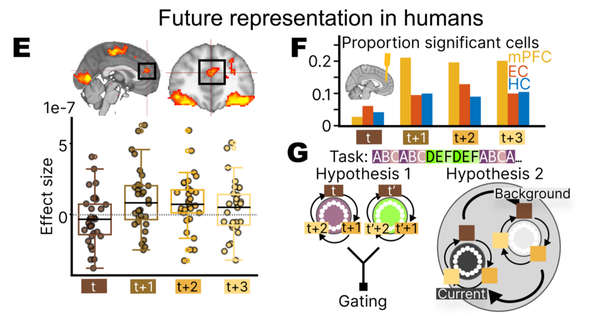
Mathias Sablé-Meyer is a Postdoctoral Researcher at University College London's Sainsbury Wellcome Centre, working in Tim Behrens's lab. He completed his PhD under the supervision of Stanislas Dehaene at PSL/Collège de France and NeuroSpin, CEA, where he investigated humans' ability to manipulate highly abstract structures, particularly focusing on the perception of geometry. His research spans cognitive neuroscience, computational modeling, and experimental psychology, with a focus on understanding the mechanistic implementation of compositional mental representations. He employs methodologies including MEG, fMRI, behavioral experiments, and computational models to investigate how humans mentally represent abstract structures like geometric shapes, language, and mathematical concepts. Sablé-Meyer's work reveals fascinating insights about human cognitive uniqueness, particularly in geometric perception compared to non-human primates. His recent research examines sequence processing mechanisms and aims to establish foundations for mechanistic implementations of Language of Thought models. He has published in top journals including Cognitive Psychology , Trends in Cognitive Sciences , PNAS , and Journal of Neuroscience . Glushko Dissertation Prize from the Cognitive Science Society (2023) As a supervisor, he co-advises Master's students including Maxime Cauté, who is exploring cross-modal representation of sequences, and is involved with several other students including Svenja Kuchenhoff, Amy Wong, and others. His lab follows open science principles, with code systematically published on the Open Science Framework alongside articles. His research program bridges cognitive science, neuroscience, and artificial intelligence, with implications for understanding both human cognition and developing more human-like AI systems. He maintains active collaborations across institutions including UCL, Collège de France, MIT, and École Normale Supérieure.
Dr. Aly I. El-Osery is a Professor and Chair of the Electrical Engineering Department at New Mexico Tech, where he also serves as Dean of Graduate Studies. With a complete educational background from the University of New Mexico (B.S., M.S., and Ph.D. in Electrical Engineering), Dr. El-Osery has established himself as a prominent researcher and educator in multiple engineering disciplines. His research spans several interconnected fields: Structural Health Monitoring of civil infrastructure and aerospace systems Inertial Navigation Systems and sensor fusion techniques Wireless communication systems and power control algorithms Fuzzy logic applications in engineering systems Image processing and enhancement Dr. El-Osery's publication record shows a consistent trajectory of high-impact research, with recent work focusing on advanced sensor networks for infrastructure monitoring, multi-IMU configurations for precise navigation, and innovative approaches to damage detection in critical structures. His work bridges theoretical developments with practical engineering applications. His professional service includes leadership roles as Senior IEEE member, General Co-chair for IEEE SoSE Conference 2015, and Program Co-Chair of the IEEE SMC (2011). He serves as a technical reviewer for multiple prestigious journals and has organized significant professional workshops. Dr. El-Osery maintains active laboratory work through the Intelligent Systems and Robotics Group, where students engage in cutting-edge research on autonomous systems, sensor networks, and navigation technologies. The lab environment emphasizes both theoretical understanding and practical implementation skills.
Loïc Adam serves as an Associate Professor in Data Engineering at ISAE-ENSMA since 2024, concurrently holding a lecturer position in Digital Information. Previously, he was an ATER at Université de Technologie de Compiègne (2023-2024) where he taught operational research and data analysis courses. He completed his PhD in Computer Science at UTC in 2023 and currently serves on ENSMA's improvement council and scientific expertise commission (2025-2027). His research spans decision theory under risk and uncertainty, with core expertise in incremental preference elicitation, multicriteria decision-making, and uncertainty modeling through possibility theory and belief functions. He actively investigates information fusion, machine learning applications, and game-theoretic approaches to preference learning, focusing on resolving inconsistent preferences and developing robust decision support frameworks under severe uncertainty. Adam's publication record (2020-2024) reveals consistent contributions at the intersection of artificial intelligence and decision science, particularly in preference modeling and uncertainty quantification. His work demonstrates methodological innovation in applying possibility theory to inconsistency resolution and developing imprecise probabilistic models for label ranking, with publications spanning top venues in AI, fuzzy systems, and decision theory. Scientific Awards: No major awards or fellowships were documented in the source material. He currently supervises M2 intern Aicha AIT HAMMOUCH on auto-detection of erroneous models through personalized data elicitation in uncertain environments. As a member of LIAS Laboratory's Data Engineering team, he collaborates across ENSIP (University of Poitiers) and ISAE-ENSMA sites, contributing to interdisciplinary projects that bridge theoretical decision science with real-world engineering applications in control systems and real-time data processing.
Brice Chardin is an Associate Professor in Data Engineering at ISAE-ENSMA since 2013, affiliated with the LIAS (Laboratoire d'Ingénierie des Applications de la Connaissance et des Systèmes) Data and Model Engineering team. His work bridges academic research and industrial applications, focusing on data management solutions for critical systems. His research spans clustering algorithms under dissimilarity constraints , RDF query relaxation for explaining empty/overabundant results, pattern mining through the RQL language, and energy data management . Key projects include Chronos (a NoSQL system for industrial sensor data) and collaborations with energy companies SRD and Nexeya for predictive consumption analysis. Recent publications (2021-2024) emphasize constrained clustering techniques and cooperative query processing for RDF knowledge bases, revealing a strong trend toward practical solutions for industrial data challenges. His work integrates machine learning with database theory to address real-world data imperfections. PhD in Computer Science from INSA Lyon (2011) Postdoctoral position at LIRIS (2012-2013) on ANR DAG project Specialized in industrial data management since 2011 EDF collaboration Chardin actively supervises academic projects including drone simulation with Ardupilot and Smart Data mining initiatives. His industrial partnerships focus on energy sector applications, particularly predictive analysis for electricity distribution and storage systems. Current work involves developing clustering algorithms with error bounds and query relaxation frameworks for semantic web technologies.
Xin Zhang serves as an Assistant Professor in the Department of Computer Science and Technology within the School of Electronics Engineering and Computer Science at Peking University. His academic profile demonstrates deep engagement with programming languages and software engineering research communities through active participation in major conferences including ASE, SPLASH/OOPSLA, PLDI, and ICSE. Dr. Zhang's research focuses on the synergistic relationship between program analysis and machine learning. He investigates how ML/AI techniques can enhance traditional program analysis methods while simultaneously developing program analysis approaches to improve the interpretability, fairness, robustness, and safety of AI systems. His work spans probabilistic program analysis, abstraction refinement techniques, Bayesian modeling for program semantics, and applications of graph neural networks to static analysis problems. His publication record shows consistent contributions to top venues from 2016 through 2025, with recent work emphasizing Bayesian program analysis, abstraction refinement methods, and the intersection of formal methods with machine learning. The trajectory of his research demonstrates increasing sophistication in combining traditional program analysis techniques with modern AI approaches. Dr. Zhang actively contributes to the academic community as a program committee member for major conferences including ASE, SAS, PLDI, and SPLASH. His service includes reviewing, session chairing, and committee participation across multiple venues, reflecting his standing in the programming languages and software engineering communities.
Đorđe Žikelić is an Assistant Professor of Computer Science at the School of Computing and Information Systems at Singapore Management University (SMU) in Singapore. He completed his PhD in 2023 at the Institute of Science and Technology Austria (ISTA) under Krishnendu Chatterjee and Petr Novotný, receiving both Outstanding PhD Thesis and Outstanding Scientific Achievement awards. Prior to his doctorate, he earned bachelor's and master's degrees in mathematics from the University of Cambridge. His educational background includes: PhD in Computer Science, Institute of Science and Technology Austria (ISTA), 2023 Bachelor's and Master's in Mathematics, University of Cambridge Dr. Žikelić's research focuses on advancing formal methods to ensure software and AI systems are correct, safe, and trustworthy. His work bridges theoretical aspects of formal reasoning about probabilistic systems with practical automated verification methods. His primary research interests span three interconnected areas: Program Analysis and Verification: He develops techniques for analyzing probabilistic programs, numerical programs, and efficient quantifier elimination methods, addressing fundamental challenges in verifying complex software systems. Trustworthy AI and Safe Autonomy: He creates formal verification frameworks for learning-enabled control systems and neural networks, ensuring AI operates safely in uncertain environments through methods like runtime monitoring and certificate repair. Probabilistic System Verification: He explores broader applications including bidding games on graphs and blockchain protocol analysis, extending formal methods to novel domains beyond traditional finite-state verification. His publication trajectory shows a consistent progression from theoretical foundations to practical applications, with recent work increasingly focused on integrating formal verification with machine learning. His 2024-2025 publications demonstrate growing expertise in verifying learning-based systems and developing practical tools like PolyQEnt for quantified entailment solving. His scientific achievements have been recognized with: Outstanding PhD Thesis Award at ISTA Outstanding Scientific Achievement Award at ISTA Distinguished Paper Award at FM 2024 Dr. Žikelić serves on program committees for major conferences including TACAS, PLDI, AAAI, and CAV. He actively mentors through the Programming Languages Mentoring Workshop (PLMW) at PLDI 2025. His research group at SMU focuses on developing novel algorithms for verifying correctness of programs and AI systems, with current projects spanning formal methods, artificial intelligence, and programming languages.
Professor Nick Chater serves as Professor of Behavioural Science within the Behavioural Sciences Group at Warwick Business School (WBS), University of Warwick. His academic profile spans cognitive science, behavioral economics, and decision-making psychology, with significant contributions to understanding the fundamental mechanisms of human thought and behavior. Chater's research interests encompass cognitive science, behavioral economics, and the psychology of decision-making. He has pioneered work challenging traditional views of deep, unconscious mental processes, most notably through his influential 2018 book "The Mind is Flat: The Remarkable Shallowness of the Improvising Brain." His research program investigates how people process information, make decisions under uncertainty, and develop language and social coordination mechanisms. Key themes include the role of noise in cognition, Bayesian approaches to modeling human thought, and the application of behavioral insights to public policy design. Chater's extensive publication record reveals a strong trend toward interdisciplinary integration of computational modeling with empirical research. His recent work demonstrates consistent engagement with cutting-edge developments across cognitive science, particularly in Bayesian cognitive modeling and behavioral public policy. The S-Frame agenda for behavioral public policy research represents a systematic approach to translating behavioral insights into policy design. His collaborative network spans psychology, economics, linguistics, and artificial intelligence, reflecting the interdisciplinary nature of modern cognitive science. As an educator, Chater teaches "Behavioural Sciences for the Manager" for Executive MBA programs and "Judgement and Decision Making" for various MSc programs at Warwick Business School. His teaching focuses on applying behavioral science principles to business contexts, helping students understand how cognitive biases and heuristics influence managerial decision-making. His work on coordination in dynamic interactions and moral cognition provides valuable insights for understanding organizational behavior and team dynamics.