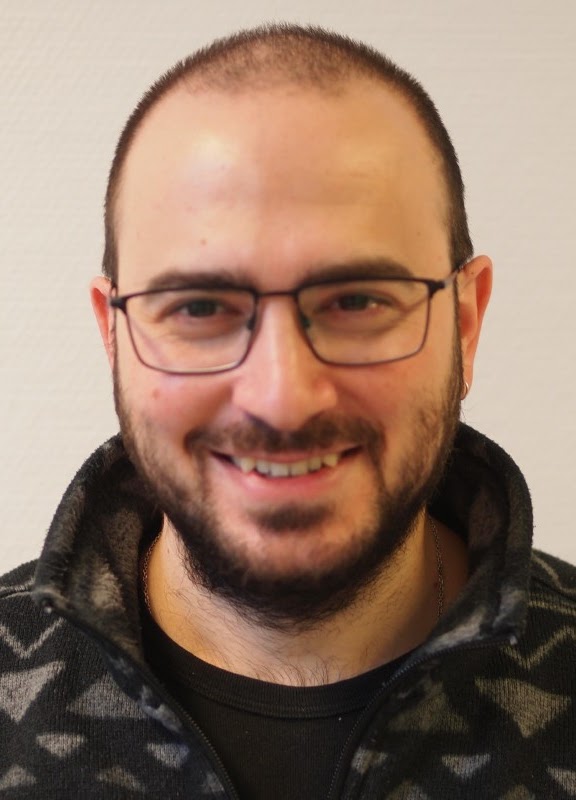
Ole Winther is Professor in High dimensional biological data analysis/Machine learning at the Department of Biology, University of Copenhagen and Professor in Data science and complexity at DTU Compute, Technical University of Denmark. He serves as CRO and co-founder of raffle.ai, CTO and co-founder of FindZebra, Head of ELLIS Unit Copenhagen, and co-PI of the Machine Learning for Life Science Center. His research spans Bioinformatics , Machine Learning , and AI for Science , focusing on applying deep learning to biological sequence analysis, latent variable models, and medical NLP. Winther's work develops predictive and generative models for bioinformatics, with significant contributions to protein localization tools (SignalP, DeepLoc, DeepTMHMM), single-cell genomics, and novel deep learning architectures like variational autoencoders and diffusion models. Analysis of Winther's recent publications (2023-2025) reveals a strong trend toward integrating protein language models with traditional bioinformatics approaches and applying diffusion models to scientific problems. His work bridges theoretical machine learning advancements with practical applications in biology and medicine, particularly in protein sequence analysis, medical search engines, and scientific simulation acceleration. Winther currently supervises a diverse research group including Panagiotis Antoniadis, Rachael M. DeVries, Jun Wang, Beatrix M. G. Nielsen, Felix G. Teufel, Irene R. Rodriguez, Anders Christensen, and Christopher Heje Grønbech. His former students have established successful careers at institutions including Google, Apple, and various startups, with notable alumni like Casper Sønderby (Google Brain) and Søren Sønderby (Apple). He leads significant research initiatives including the ELLIS Unit Copenhagen and the Machine Learning for Life Science Center, while maintaining active industry partnerships through his co-founded companies raffle.ai (enterprise search using NLP) and FindZebra (search engine for rare diseases). His teaching includes Deep Learning courses at both DTU (02456) and University of Copenhagen (NDAK24002U).
Georgios Arvanitidis is an Associate Professor at the Technical University of Denmark (DTU) in the Department of Applied Mathematics and Computer Science, specifically within the Section for Cognitive Systems (CogSys). He has established himself as a leading researcher in geometric machine learning, focusing on the application of differential geometry principles to enhance machine learning models. His work bridges theoretical mathematics with practical applications in artificial intelligence, with particular emphasis on understanding the geometric structure of data manifolds and latent spaces. Dr. Arvanitidis completed his educational journey with a Bachelor's degree from the Department of Informatics at the Aristotle University of Thessaloniki, followed by a Master's degree in Computer Science from Saarland University supported by the Max Planck Institute for Informatics. He earned his PhD at DTU's Cognitive Systems section under the supervision of Søren Hauberg, with additional research experience at Philipp Hennig's Probabilistic Numerics group. Prior to his current position as associate professor, he was a PostDoc at the Max Planck Institute for Intelligent Systems working with Bernhard Schölkopf. Dr. Arvanitidis's research primarily focuses on differential geometry in machine learning , where he explores how geometric structures can enhance representation learning and statistical modeling. His work in generative models investigates how learning the geometry of data manifolds can improve deep learning architectures. In the domain of deep learning theory , he examines why deep learning models generalize effectively on unseen data, with particular attention to the curvature properties of loss landscapes. His research in approximate Bayesian inference applies geometric principles to improve uncertainty quantification in neural networks. Through his innovative approaches, Dr. Arvanitidis has established himself as a leading researcher in geometric machine learning, contributing to both theoretical foundations and practical applications across various domains including robotics and life sciences. The publication trends of Dr. Arvanitidis reveal a consistent and evolving focus on geometric approaches to machine learning problems. His recent work (2023-2025) demonstrates increasing sophistication in applying Riemannian geometry to deep learning architectures, with particular emphasis on latent space geometry, optimization on manifolds, and geometric interpretations of neural network behavior. A notable pattern is the progression from foundational work on geometric representations to more applied research in areas like robotics and causal inference. His publications span top-tier conferences including NeurIPS, ICML, ICLR, and AISTATS, reflecting the high impact of his research. The interdisciplinary nature of his work is evident in collaborations across mathematics, computer science, and robotics domains, with recent papers addressing challenges in multimodal sampling, safety guarantees for dynamical systems, and counterfactual explanations. Dr. Arvanitidis has received several notable scientific awards and recognitions: Sapere Aude starting grant from the Independent Research Fund Denmark (DFF) GADL funding i-Rase, Pathfinder, and EIC (European Innovation Council) funding Best reviewer award for NeurIPS 2019 Best reviewer award for NeurIPS 2018 Best student paper award at Robotics: Science and Systems (R:SS) 2021 Dr. Arvanitidis actively mentors PhD students and researchers, currently supervising Alejandro Valverde, Johanna Gegenfurtner, and Albert Kjøller Jacobsen. He has previously co-supervised Alison Pouplin's PhD and worked with research assistant Georgios Pantis. His group receives substantial funding through multiple prestigious grants including the Sapere Aude starting grant from the Independent Research Fund Denmark, as well as European Innovation Council funding. He has been instrumental in creating opportunities for students interested in geometric machine learning, offering BSc and MSc thesis projects focused on generative models, deep learning theory, and optimization techniques. Dr. Arvanitidis also contributes significantly to the academic community as a reviewer for top conferences including ICLR and TMLR, and as an area chair for NeurIPS, ICML, AISTATS, and UAI. He co-organized the Machine Learning Summer School 2020 in Tübingen, further demonstrating his commitment to education and community building. Dr. Arvanitidis leads a vibrant research group focused on geometric machine learning within the Cognitive Systems section at DTU. His team includes multiple PhD students working on cutting-edge research at the intersection of differential geometry and artificial intelligence. The group has developed notable software tools, including the "geometric_ml" GitHub repository with over 70 stars, which contains implementations for applying Riemannian geometry in machine learning. His research has practical applications in robotics, where geometric approaches enable more robust motion planning, as evidenced by his work on "Reactive Motion Generation on Learned Riemannian Manifolds" which received a best student paper award. Additionally, his methodologies have found applications in life sciences, as mentioned in his 2022 AISTATS paper. The collaborative nature of his work is evident through extensive partnerships with researchers at institutions including the Max Planck Institute for Intelligent Systems, University of Cambridge, and various European universities. His recent news items indicate active engagement with the academic community through talks, conference presentations, and ongoing supervision of new PhD students joining his group.
Manfred Jaeger is an Associate Professor at the Department of Computer Science, Technical Faculty of IT and Design, Aalborg University. His research focuses on Artificial Intelligence , Bayesian Networks , and Graph Neural Networks , with significant contributions to probabilistic reasoning and relational learning. University: Aalborg University School: Technical Faculty of IT and Design Department: Department of Computer Science Jaeger's research explores inductive and probabilistic reasoning , statistical relational learning , and model checking . His recent work integrates heterogeneous graph neural networks with relational Bayesian network encodings to enhance reasoning capabilities in complex systems. Key trends in his publications include relational deep learning , probabilistic inference , and graph-based modeling . He has contributed to applications in social network community detection , reinforcement learning for MDPs , and latent variable models for graph learning . Jaeger collaborates on projects involving incomplete data analysis , modularization of complex tasks , and probabilistic logic . His datasets on multi-multi-instance learning networks are publicly available for research use.
Christoffer Olling Back is a Postdoctoral Researcher at the Department of Computer Science (Faculty of Science, University of Copenhagen) specializing in Human-Centred Computing . His work bridges applied and theoretical machine learning, focusing on probabilistic inference, stochastic processes, and computability theory. Education PhD in Computer Science (2017-2020) - University of Copenhagen MSc in Artificial Intelligence (2010-2011) - University of Edinburgh BA in Psychology (w/ Computer Science) (2004-2008) - Lewis and Clark College Current research explores predictive workflow models using location data through the iAware project (collaboration with Systematic, PowerNet, and Bispebjerg Hospital). Previous work investigated ERP system datasets in the DIREC consortium. His publications span topics in process mining, probabilistic modeling, and healthcare informatics. Recent achievements include 15 research outputs (2024-2016) covering process discovery, workflow simulation, and entropy-based log analysis. Collaborations with institutions like Roskilde University and industry partners demonstrate interdisciplinary impact. Scientific Awards Dean's List (2007) Nordea Fonden Scholarship (2010) As an educator, he serves as guest lecturer, assistant teacher, and tutor in computer science, machine learning, and software engineering. His professional background includes industry roles at ServiceNow Denmark ApS (2021-2024) and Gekkobrain (2020-2021).
Thomas Dyhre Nielsen is a Professor (MSO) in the Department of Computer Science at Aalborg University . He is a member of the Distributed, Embedded and Intelligent Systems (DEIS) research group and contributes to the Artificial Intelligence and Machine Learning team at the university. His primary research interests lie in the theoretical and applied aspects of probabilistic graphical models , machine learning , and deep generative models . His work spans from foundational methods for learning and inference to the development of frameworks for solving complex decision problems. He is the co-author of the authoritative textbook Bayesian Networks and Decision Graphs . His recent research output reveals a strong trend towards interdisciplinary applications. His 15 most recent publications demonstrate significant work in bioinformatics , using graph neural networks and variational autoencoders for metagenomic binning, and in urban infrastructure , applying reinforcement learning and probabilistic models to optimize stormwater and wastewater management systems. He also has impactful research in healthcare , developing Bayesian network models for clinical risk prediction. Senior area editor for the International Journal of Approximate Reasoning . Principal or Co-Investigator on research projects such as the AMIDST project (developing a Java toolbox for scalable probabilistic machine learning) and PGM 2020 (organizing the International Conference on Probabilistic Graphical Models). Actively supervising research, as evidenced by a current opening for a PostDoc position in probabilistic machine learning. Professor Nielsen leads a research lab focused on probabilistic machine learning, which is part of the larger DEIS and AI/ML teams at Aalborg University. His group develops and applies advanced models to real-world problems in environmental science, healthcare, and intelligent systems.
Søren Wengel Mogensen is an Associate Professor at the Department of Finance, Copenhagen Business School, Denmark. His research focuses on developing advanced statistical and machine learning methodologies for complex systems analysis. Research Interests: Dr. Mogensen's work spans causal inference, stochastic processes, survival analysis, and time-series modeling. Key themes include: Causal discovery algorithms for industrial and biological systems Graphical representations of dependencies in high-dimensional data Time-varying mediation in survival contexts Bayesian networks for cascade modeling Publication Trends: His recent articles (2021-2025) demonstrate a strong emphasis on theoretical-statistical innovation with applications in healthcare, industrial monitoring, and computational finance. Dominant methodologies include kernel-based independence tests, continuous-time Bayesian networks, and constrained stochastic process modeling.
Theo Rüter Würtzen serves as an Instructor in the Department of Computer Science at the University of Copenhagen, specializing in causal inference and machine learning methodologies. His research focuses on: Developing algorithms for causal structure learning Quantifying uncertainty in graphical models Advancing probabilistic reasoning frameworks Optimizing adjustment identification techniques His 2024 UAI conference publication introduces a novel distance metric for causal discovery, demonstrating significant contributions to machine learning theory with applications in high-dimensional data analysis. This work reflects current trends in interpretable AI and robust causal inference methods.
Teddy Groves is a Tenure Track Researcher at the Novo Nordisk Foundation Center for Biosustainability, Technical University of Denmark (DTU), focusing on quantitative modeling of cell metabolism and computational methods. His work bridges systems biology, machine learning, and biotechnology. Research Themes : Quantitative cell metabolism, neurovascular coupling, CRISPR-based apoptosis resistance, and data-driven bioreactor optimization. Supervision : Actively supervises PhD students in projects related to human glycolysis, multiscale modeling, and cyanobacteria enzyme allocation. Key Contributions : Developments in Bayesian regression, high-dimensional pathway visualization, and CRISPR knockouts in CHO cells.
Michael Riis Andersen is an Associate Professor at the Department of Applied Mathematics and Computer Science, DTU Compute , Technical University of Denmark. His research focuses on Bayesian statistics, Gaussian processes, variational inference, and probabilistic programming, with applications in computer vision, natural language processing, and spatio-temporal modeling. His recent work includes: (1) Bayesian optimization with uncertainty-aware frameworks, (2) recommender systems balancing accuracy with editorial constraints, (3) geometry-aware transformers for geospatial analysis, and (4) scalable inference methods for neural networks and Gaussian processes. Many articles explore variational inference and probabilistic programming to enhance computational reliability and efficiency. Research keywords : Bayesian Statistics, Variational Inference, Machine Learning, Computer Vision, Probabilistic Programming, Spatio-Temporal Modeling.
Raúl Pardo Jimenez is an Associate Professor in the Department of Software Engineering at the IT University of Copenhagen, affiliated with the Software Quality Research (SQUARE) group. His research focuses on formal methods and privacy engineering, with particular emphasis on probabilistic programming and privacy risk quantification in data analytics. His research spans three interconnected domains: Formal verification of privacy compliance systems like GDPR implementation Probabilistic modeling for quantitative privacy risk assessment Open source sustainability impacts on software quality metrics Recent publications demonstrate a consistent focus on developing rigorous computational methods for privacy preservation, with works appearing in Springer's Lecture Notes in Computer Science and Empirical Software Engineering journals. He leads the REIDENT project (2018-2022), funded by Villum Fonden, which developed Bayesian probabilistic programming approaches for reidentification risk assessment in sensitive datasets.
Anders Læsø Madsen is a Professor at the Department of Computer Science , part of The Technical Faculty of IT and Design at Aalborg University . His research focuses on probabilistic graphical models, with a particular emphasis on Bayesian networks and their applications in industrial and environmental domains. Current affiliation: Aalborg University Research areas: Bayesian networks, probabilistic inference, decision support systems, data stream modeling His recent work spans control room engineering , where AI systems aid human operators, and environmental risk assessment using probabilistic models of pharmaceutical impacts. He also contributes to artificial intelligence in power grid monitoring , addressing anomaly detection through Bayesian reasoning. Publications from 2024-2025 demonstrate interdisciplinary applications, including electricity grid data validation , explainable AI frameworks , and pharmaceutical risk modeling . These works integrate probabilistic methods with domain-specific challenges in energy systems, industrial automation, and environmental science.
Christoph Matheja is an Associate Professor at the Technical University of Denmark , affiliated with the Department of Applied Mathematics and Computer Science . His work focuses on formal verification, probabilistic programming, and software systems engineering. Research Highlights : Operational semantics for probabilistic programs, fixed-point characterizations of rewards in MDPs, and data-driven Petri net modeling for process mining. Publications span formal verification techniques, probabilistic programming paradigms, and tools for process mining, emphasizing interdisciplinary applications in computer science and software engineering. Scientific Awards : POPL 2021 Distinguished Paper Advising & Grants : Supervises PhD students in automated reasoning about randomized algorithms, with project funding active from 2023 to 2026. Professional Activities : Serves on committees for ACM SIGPLAN Symposium on Principles of Programming Languages (2022–present), International Conference on Computer Aided Verification (2023–present), and Formal Methods Symposium (2022–present). Organizer of the 2022 Workshop on Verification of Probabilistic Programs.
Philipp Georg Haselwarter is an Assistant Professor at the Department of Computer Science , Aarhus University . His expertise lies in programming languages , formal verification , and cryptographic proofs . His research interests include Higher-order probabilistic programming Separation logic for program analysis Modular cryptographic proofs in Coq Resource-aware and cost-bounded formal methods Key trends in his recent publications span Formal verification techniques for probabilistic and cryptographic systems Integration of separation logic with cost and error analysis Development of frameworks like SSProve for cryptographic proofs Applications of type theory and higher-order logic in programming languages