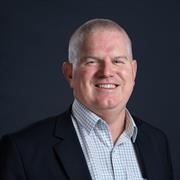
Dr. Roberto Puch-Solis is a Principal Investigator at the Leverhulme Research Centre for Forensic Science , affiliated with the University of Dundee . His work focuses on probabilistic decision support systems, forensic statistics, and computational methods in forensic analysis. Expertise: Forensic genetics, DNA profiling, gas chromatography-mass spectrometry (GCMS), convolutional neural networks (CNNs), and Y-STR mutation modeling. Key Contributions: Development of open-access software ( MUCalc ), segmentation datasets for firearm analysis, and ground truth datasets for drug profiling. Collaborations: Active in interdisciplinary networks, with partnerships in digital forensics, analytical chemistry, and machine learning. Research Trends: Recent work integrates deep learning for forensic image analysis (e.g., shoeprint matching, cartridge case segmentation) and statistical frameworks for DNA evidence interpretation. Applications span firearms identification, drug quantification, and crime scene reconstruction. Activities: Delivered invited talks on probabilistic systems, served as an external examiner, and participated in neural network training workshops.
Cheryl J. Hapke is a Research Professor at the University of South Florida's College of Marine Science, specializing in coastal geology. She holds a Ph.D. in Coastal Geology and serves as Coordinator for the Florida Coastal Mapping Program, an initiative to deliver high-resolution bathymetric data across Florida's coastal waters within a decade. Her research addresses coastal hazards like inundation, storms, and erosion through geomorphic evolution studies of barrier islands, rocky coasts, and estuarine systems. Academic Rank: Research Professor University: University of South Florida School: College of Marine Science Role: Coordinator, Florida Coastal Mapping Program Dr. Hapke's work emphasizes probabilistic frameworks for forecasting coastal resilience, leveraging multibeam bathymetry and LiDAR technologies. Her research spans global coastal systems, with a focus on Fire Island (NY), Tampa Bay (FL), and the California coast, addressing sediment budgets, shoreline change, and storm impacts. The Florida Coastal Mapping Program supports applications in navigation, restoration, fisheries management, and community resilience planning. Dr. Hapke's recent publications highlight advancements in bathymetric data collection, morphodynamic modeling, and coastal hazard adaptation tools. Her interdisciplinary approach integrates remote sensing, historical data, and numerical models to understand coastal vulnerabilities and inform policy decisions.
Associate Professor Andrea Taschetto is a climate scientist at the Climate Change Research Centre within the Faculty of Science at the University of New South Wales (UNSW). She holds a PhD in Physical Oceanography from the University of São Paulo (USP), Brazil, where she also completed her MSc and BSc in Physics. She is recognized for her research on climate variability and ocean-atmosphere interactions, with particular focus on El Niño Southern Oscillation (ENSO) and its impacts on regional climate patterns. Dr. Taschetto's research interests center on understanding how oceans affect regional climate, with specific emphasis on climate variability, atmospheric teleconnection patterns, interactions across tropical ocean basins, and future climate projections. Her work explores how large-scale sea surface temperature patterns impact rainfall variability and drought over Australia and other regions. She is particularly interested in how different types of ENSO influence atmospheric circulation, regional climate, and interact with other oceanic basins. Her research has significant implications for understanding and predicting climate extremes and their impacts on water resources and agriculture. Her recent publications demonstrate a strong focus on Australian climate extremes, ocean basin interactions, drought mechanisms, and climate model evaluation. Her work frequently appears in high-impact journals including Nature Reviews Earth and Environment, Geophysical Research Letters, and Journal of Climate. She has made significant contributions to understanding the connections between tropical climate variability and Australian rainfall patterns, as well as the mechanisms behind major drought events. Australian Academy of Science Dorothy Hill Award for excellence in Earth sciences research ARC Future Fellowship (2017) ARC Post Doctoral Fellowship (2010) São Paulo Research Foundation (FAPESP) Fellowship, Brazil (2010) UNSW Gold Star Award (2009) Dr. Taschetto actively supervises PhD students including Nicholas Grosfeld, Michael Eabry, Annette Stellema, Sebastian McKenna, Quincy Forest, and Iara Scricco. She has been involved in numerous research grants, including the ARC Centre of Excellence for Climate Extremes (2022-2024) and the ARC Future Fellowship project 'Tropical ocean interactions and implications for regional climate' (2017-2021). She serves on the CLIVAR Pacific Regional Panel and is an Associate Editor for the Journal of the Southern Hemisphere Earth System Science. As the CCRC Undergraduate Coordinator at UNSW, she also teaches CLIM1001/GENS0401 - Introduction to Climate Change, an online course for first-year undergraduate students.
Kostas Spyrou is a Visiting Professor in the Department of Naval Architecture, Ocean and Marine Engineering at the University of Strathclyde, Faculty of Engineering. His academic work centers on maritime safety, risk assessment, and ship behavior under extreme conditions. His research interests include: Probabilistic modeling for fire safety onboard ships Risk-based design frameworks in marine environments Ship maneuverability and survivability in extreme astern seas Safety improvement strategies for bulk carriers and other vessels Interplay between design, operation, and environmental conditions The published articles highlight a consistent focus on enhancing maritime safety through quantitative risk analysis and system-level design improvements. His work spans both theoretical modeling and practical application in naval architecture. Key themes include fire safety protocols, emergency response systems, and dynamic vessel performance under adverse weather. He served as Principal Investigator on the ONR-NICOP Research Grant (2013–2017), which advanced knowledge in onboard safety systems. This project underscores his leadership in externally funded research initiatives. He is affiliated with the following research environment: Naval Architecture, Ocean and Marine Engineering Research Group, University of Strathclyde
Qianru Guo serves as an Adjunct Professor in the Department of Civil and Urban Engineering at NYU's Tandon School of Engineering, while maintaining her primary role as Senior Consulting Engineer at Simpson Gumpertz & Heger Inc. (SGH) with over 10 years of specialized experience in performance-based fire protection design and structural fire engineering. Her academic credentials include: Ph.D. in Structural Engineering from University of Michigan, Ann Arbor M.S. in Civil Engineering and Mechanical Engineering from University of Michigan, Ann Arbor B.S. in Civil Engineering from Tongji University, Shanghai, China Dr. Guo's research pioneers the integration of probabilistic methodologies with structural fire engineering, focusing on reliability analysis of fire-exposed structures through advanced computational techniques. Her work develops inverse modeling for heat release rate determination, stochastic finite element methods for fire resistance evaluation, and performance-based design frameworks that redefine safety standards. She addresses critical gaps in predicting structural behavior under fire by quantifying uncertainties in material properties, fire scenarios, and structural responses. Analysis of her publication trajectory reveals consistent methodological evolution from fundamental reliability theory (2011-2013) toward practical performance-based design applications (2014-2018). Her research consistently bridges computational mechanics with fire safety engineering, emphasizing probabilistic safety assessment and code-compliant reliability calibration across residential and commercial structures. Based at 6 MetroTech Center, 4th Floor, Brooklyn, NY 11201, her professional activities integrate academic research with real-world engineering practice to advance fire-resilient infrastructure design.
Naser Kazemi Eilaki is an Assistant Professor at the Department of Civil Engineering and Environmental Sciences, Western Norway University of Applied Sciences. His work focuses on structural reliability, risk assessment, and infrastructure resilience against natural disasters including floods, earthquakes, and fires. Risk Analysis Fire Safety Engineering Water/Wastewater Network Risk Machine Learning Applications Offshore Structure Fatigue Analysis His research integrates advanced optimization algorithms like Harmony Search and Particle Swarm Optimization with artificial neural networks to develop reliability models for civil infrastructure. Key applications include corrosion risk assessment in pipelines, bridge pier scour reduction using gabion obstacles, and passive defense strategies for utility networks. Recent publications highlight trends in hybrid computational methods for structural reliability. These works combine probabilistic modeling with evolutionary algorithms, addressing challenges in seismic risk assessment, fire safety, and water loss prevention through pipeline integrity analysis. As an active academic, he contributes to resilience engineering through interdisciplinary approaches that bridge civil engineering and computational risk analysis frameworks.
Dr. Jesús R. Jiménez-Octavio is an Associate Professor in the Department of Mechanical Engineering at the School of Engineering (ICAI) of Comillas Pontifical University. He specializes in computational mechanics, biomechanics, road safety, and dentistry, with a focus on finite element analysis and computational fluid dynamics. As Academic Deputy Director at ICAI, he bridges academic leadership with multidisciplinary research. PhD in Industrial Engineering (2009), Comillas Pontifical University BSc in Industrial Engineering (2004), Comillas Pontifical University Research Interests : His work spans biomedical engineering (computational biomechanics, dental tissue characterization), railway systems (catenary-pantograph dynamics, wind load modeling), and automotive safety (seatbelt design, e-scooter injury analysis). He integrates numerical methods with experimental validation. Publication Trends : Recent articles emphasize biomechanics (vertebral injury modeling, dental stress analysis), railway engineering (dynamic cable systems), and safety simulation (impact scenarios). Cross-disciplinary themes include pandemic mobility analysis and AI in transportation safety. Scientific Awards : Honorary Distinction for Best Doctoral Thesis in Engineering (2010) Talgo Award for Technological Innovation (2010) 3rd National Sika Award for Adhesion Technology (2004) Multiple Erasmus and Marie Curie Fellowships Grants and Projects : Leads research on e-scooter safety , dental implant biomechanics , and high-speed railway dynamics . Collaborates with institutions like Mapfre CESVIMAP, European Rail Agency, and Mercedes-Benz Technology Group. Labs and Teams : Co-founder of the MOBIOS Lab (Mobility, Biomechanics, and Health Research), integrating AI, urban mobility, and injury prevention studies.
Dr. Carina da Silva is an academic researcher and educator at the Institute of Computer Science, University of Münster, within the Department of Mathematics and Computer Science. She holds the position of Akademische Rätin, a tenured academic role combining research and teaching responsibilities, equivalent to Assistant Professor. Her work focuses on formal methods and probabilistic verification in hybrid systems. Institution: University of Münster School: Department of Mathematics and Computer Science Department: Department of Computer Science Email: carina.dasilva@uni-muenster.de Office: Room 215, Einsteinstraße 62, 48149 Münster, Germany Dr. da Silva's research centers on the development and application of statistical model checking and Monte Carlo simulation techniques for analyzing stochastic hybrid systems, particularly hybrid Petri nets and stochastic hybrid automata. Her work enables rigorous dependability evaluation of complex systems such as battery-powered and critical infrastructures. She actively supervises bachelor’s and master’s theses and teaches courses including Simulation and Statistical Model Checking, as well as an advanced seminar on scientific work for computer science students. Her research is frequently published in top-tier venues like ACM Transactions on Modeling and Computer Simulation, NASA Formal Methods, and QEST. The most recent publications demonstrate a consistent trajectory in optimizing reachability analysis, rare event simulation, and model transformation, with a strong emphasis on formal correctness and computational efficiency. She is also involved in collaborative benchmarking efforts such as the ARCH competition, contributing to the evaluation and advancement of stochastic verification tools. Ursula von Euch Grant (2024) Recognized in Ausgezeichnete Informatikdissertationen 2021 Dr. da Silva is actively involved in academic governance, serving as a deputy member of the Department Council for Mathematics and Computer Science, representing academic staff. She returned from parental leave in March 2024 and continues to supervise theses and offer seminars. While specific advisee names are not listed, she regularly invites students to work on topics such as simulation frameworks, uncertainty quantification, convergence analysis, and integration of empirical data in model checking. She is not part of a named lab but collaborates closely with researchers like Prof. Anne Remke and contributes to the broader formal methods and embedded systems research groups at Münster.
Matthias Volk is an Assistant Professor at Eindhoven University of Technology's Formal System Analysis group since October 2023. Previously, he was a postdoctoral researcher at the University of Twente and obtained his PhD from RWTH Aachen University with a thesis on Dynamic Fault Trees. He was also a doctoral researcher in the Research Training Group UnRAVeL and contributed to the ERC project FRAPPANT. His research focuses on formal methods for safety-critical systems , specializing in probabilistic model checking, dynamic fault tree analysis, and reliability engineering. Key application domains include railway safety, autonomous systems, and infrastructure reliability. He develops tools like the Storm model checker, stormpy, and pycarl. Volk's publications emphasize fault tree methodologies and probabilistic verification , with consistent focus on reliability engineering applications. His work demonstrates strong cross-pollination between theoretical computer science and industrial safety applications. Awards: Best Paper Award at FMICS 2019 (railway infrastructure reliability) Prof. C.V. Ramamoorthy Best Paper Award at SRDS 2017 (self-stabilizing algorithms) He has supervised 9+ students on topics including fault tree analysis, Petri nets, and model checking. Current advisees include Daniel Basgöze and Markus Miliats. He leads research in the Formal System Analysis group and contributes to the Storm model checker development team.
Patrick Covi is a Research Fellow at the Department of Civil, Environmental and Mechanical Engineering, Università degli Studi di Trento. His work focuses on hybrid testing and multi-hazard analysis, particularly steel structures subjected to seismic and post-earthquake fire scenarios. PhD in Civil Engineering (2021) Master's in Structural Engineering (2017) Bachelor's in Civil Engineering (2014) Diploma in Surveying (2010) Research interests include: hybrid testing methodologies, multi-hazard structural analysis (fire following earthquakes), nonlinear thermomechanical modeling of steel structures, and computational mechanics. His work leverages finite element analysis, GIS, and 3D printing technologies. Recent publications emphasize steel frame resilience under combined seismic and fire loads, hybrid simulation algorithms, and novel probabilistic frameworks for multi-hazard assessment. Collaborative projects span Europe, including institutions like ETH Zurich and BAM Berlin. 2020: Best Student Paper Award at Structure in Fire 2020 conference Active in the SERA (Seismology and Earthquake Engineering Research Infrastructure Alliance for Europe) project, contributing to work packages on multi-hazard testing (WP6 TA1), innovative methodologies (WP27), and risk modeling (WP26). International research periods include University at Buffalo (2022), BAM Berlin (2019), and ETH Zurich (2018).
Nigel B. Kaye is a Professor of Civil Engineering at Clemson University , within the College of Engineering, Computing and Applied Sciences (CECAS) . His expertise lies in environmental fluid mechanics, wildfire dynamics, and heat/mass transport phenomena, with applications spanning from urban environments to wildland fire safety. Education: B.E. (1994) – University of New South Wales, Sydney, Australia Ph.D. (1998) – University of Cambridge, Cambridge, United Kingdom Research Focus: Nigel's work integrates theoretical fluid mechanics with practical environmental challenges. His primary areas include: Environmental Fluid Mechanics: Studying pollutant dispersion and heat transfer in buildings and urban canopies. Wildfire Dynamics: Investigating firebrand transport mechanisms and mitigation strategies using sprays. Stratified Flows: Analyzing mixing processes in buoyancy-driven flows. Publications Trends: His recent publications (2016–2020) emphasize interdisciplinary approaches, combining experimental wind-tunnel studies with numerical modeling. Key themes include green infrastructure (green roofs), wildfire safety, and lake thermal dynamics, reflecting a commitment to both environmental sustainability and hazard mitigation. Professional Memberships: American Society of Civil Engineers (ASCE) American Physical Society (APS) Americas Association for Wind Engineering International Association for Fire Safety Science Teaching & Engagement: Nigel teaches undergraduate and graduate courses in fluid mechanics and stormwater management, fostering engineering identity through integrated communication curricula. His office is located in 218 Lowry Hall , Clemson University.
Professor Ron Wakefield is the Dean of the School of Property, Construction and Project Management and Associate Deputy Vice Chancellor, International at RMIT University. He holds a Professorship in Construction and has held leadership roles globally, including at Virginia Polytechnic Institute and State University and UNSW Sydney. His research focuses on construction information technology, industrialization of construction, occupational health and safety, and renewable energy integration. He has received several awards, including Excellence in Scholarship (Virginia Tech, 2003) and the Certificate of Teaching Excellence (Virginia Tech, 2001). Wakefield's academic journey includes roles as Program Director for the Cooperative Research Centre’s Built Assets project and Director of Virginia Tech’s Environmental Design and Planning PhD program. His work spans industrialized building systems, safety training efficacy, and BIPV design optimization. He has supervised over 17 research projects, including studies on renewable energy adoption and blockchain in construction. Education: Graduate Research Assistant at Princeton University (1985–1987), prior to academic roles. Awards: Multiple recognitions for scholarship, teaching, and contributions to construction safety and innovation. Research Themes: BIPV systems, construction automation, and sustainable urban energy solutions. He collaborates internationally on projects like the CIB World Building Congress and advises on renewable energy transitions (e.g., Bendigo’s energy feasibility study). His recent publications address VR-based safety training, reinforcement learning for virtual power plants, and fire safety in BIPV systems.
Dr. Mark Thyer is an Associate Professor in Civil and Environmental Engineering at the University of Adelaide, affiliated with the School of Architecture and Civil Engineering under the Faculty of Sciences, Engineering and Technology. His research focuses on enhancing hydrological, environmental, and water resource models through physical-statistical approaches. He specializes in flood/drought risk assessment, predictive uncertainty quantification, and behavioral water use modeling for urban water management. Dr. Thyer has over 17 years of research experience and is internationally recognized for his work on Bayesian approaches to quantify uncertainty in hydrological predictions. He has authored over 30 journal papers in top-tier water resources journals and secured research grants totaling over $5 million. His collaborations include institutions like CSIRO, the Australian Bureau of Meteorology, and the Goyder Institute for Water Research. Key contributions include leading the eWater CRC project to develop the Behavioral End-Use Stochastic Simulator (BESS) for household water use modeling, integrated into eWater’s Urban Developer tool. He also serves as an Associate Editor for the Australian Journal of Water Resources and reviews for top international journals and ARC grants. His recent work emphasizes seamless subseasonal streamflow forecasting, probabilistic modeling of ephemeral catchments, and smart stormwater storage systems to mitigate urban flooding. He actively engages in consultancy for water authorities, including Hunter Water Corporation and the Wimmera Mallee Pipeline Project.
Professor Jacqueline Christmas is a faculty member at the University of Exeter's Department of Computer Science. Her research spans interdisciplinary domains including maritime engineering, computer vision, machine learning, oceanography, and biomedical engineering. Institutional Affiliation: University of Exeter Core Expertise: Computer vision, machine learning, environmental monitoring Specialized Areas: Maritime engineering applications, sea state estimation, biometric recognition Collaborations: Active in Exeter Marine and Environmental Intelligence networks Her recent publications focus on sea wave prediction using radar data, computer vision applications in archaeology, and advanced Bayesian learning methods. Articles demonstrate expertise in environmental remote sensing, biometric security systems, and maritime engineering challenges, particularly in oceanographic and aerospace recovery contexts. She contributes to environmental intelligence initiatives through interdisciplinary research and maintains a strong publication record across statistical modeling, image analysis, and predictive systems.
Georgios Balomenos is an Adjunct Assistant Professor in Civil Engineering at McMaster University. His academic work focuses on structural reliability, infrastructure resilience, and probabilistic modeling of structural systems under extreme loads. With over 50 publications in the last decade, he maintains an active research profile in civil engineering mechanics. Dr. Balomenos's research interests span several key areas of structural engineering: Earthquake engineering and seismic vulnerability assessment Bridge safety and infrastructure durability modeling Probabilistic analysis of structural systems Multi-hazard impact assessment Structural component behavior under extreme loads Infrastructure management using advanced computational methods His work consistently addresses complex challenges in structural reliability through innovative analytical frameworks. Analysis of Dr. Balomenos's recent publications reveals a strong focus on developing computational frameworks for infrastructure vulnerability assessment. His work frequently employs probabilistic methods, finite element analysis, and machine learning techniques to model structural behavior under diverse hazard scenarios including earthquakes, blasts, fires, and coastal hazards. The publications demonstrate consistent application of fragility modeling across different infrastructure systems. In teaching, Dr. Balomenos has instructed several core civil engineering courses including: Engineering Risk and Reliability (CIVENG 707, 2020-2022) Engineering Mechanics: Dynamics (CIVENG 2Q03, 2020-2022) Structural Dynamics and Seismic Design (CIVENG 4DD4, 2021-2022) Specialized Studies in Civil Engineering (CIVENG 704, 2020) Seismic Design of Structures (CIVENG 4ED4, 2019) This demonstrates substantial involvement in both fundamental mechanics and specialized structural engineering instruction.