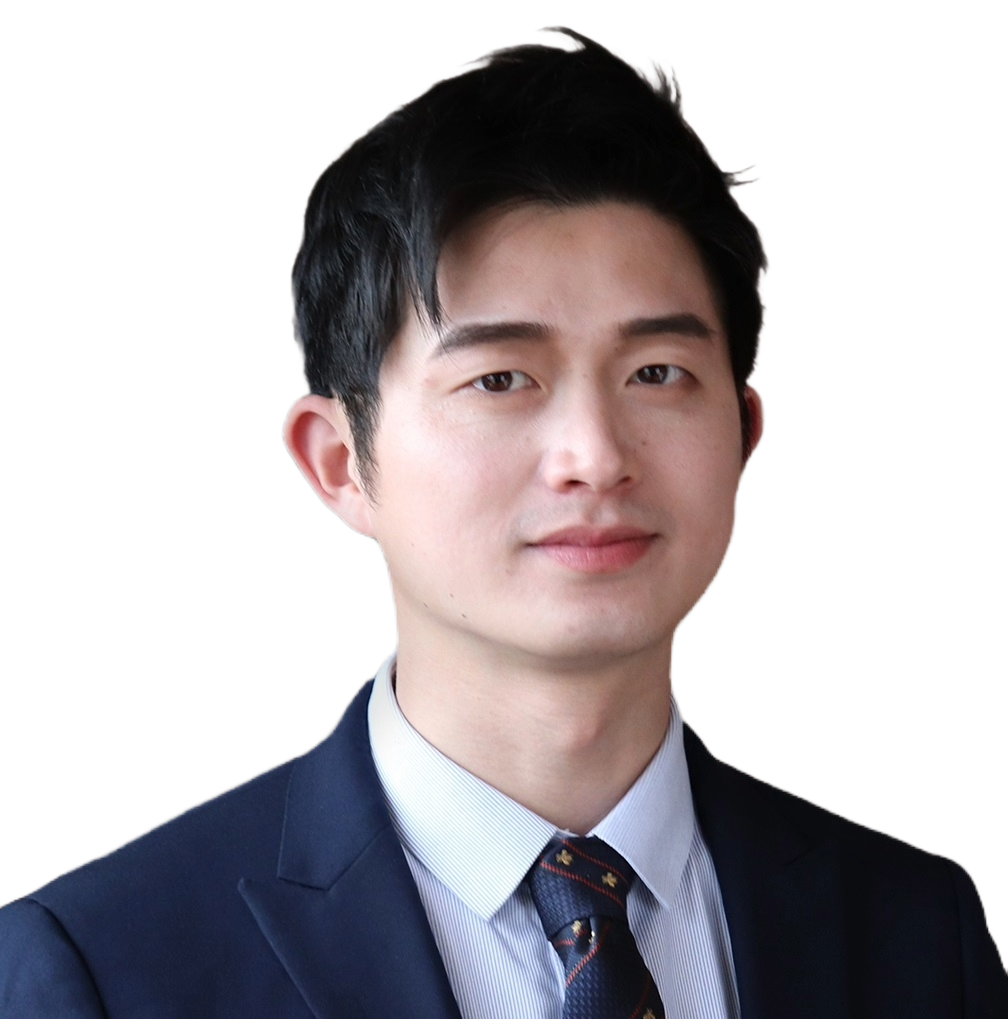
Dr. Roberto Puch-Solis is a Principal Investigator at the Leverhulme Research Centre for Forensic Science , affiliated with the University of Dundee . His work focuses on probabilistic decision support systems, forensic statistics, and computational methods in forensic analysis. Expertise: Forensic genetics, DNA profiling, gas chromatography-mass spectrometry (GCMS), convolutional neural networks (CNNs), and Y-STR mutation modeling. Key Contributions: Development of open-access software ( MUCalc ), segmentation datasets for firearm analysis, and ground truth datasets for drug profiling. Collaborations: Active in interdisciplinary networks, with partnerships in digital forensics, analytical chemistry, and machine learning. Research Trends: Recent work integrates deep learning for forensic image analysis (e.g., shoeprint matching, cartridge case segmentation) and statistical frameworks for DNA evidence interpretation. Applications span firearms identification, drug quantification, and crime scene reconstruction. Activities: Delivered invited talks on probabilistic systems, served as an external examiner, and participated in neural network training workshops.
Prof. Monika Sester is a distinguished Professor and Executive Director of the Institute of Cartography and Geoinformatics at Leibniz University Hannover, within the Faculty of Civil Engineering and Geodetic Science. She also serves as Spokesperson for the Leibniz Research Center FZ:GEO and holds multiple leadership roles including Faculty Information Officer (FIO) for the Faculty of Civil Engineering and Geodetic Science, Ombudsman for Good Scientific Practice, and Exchange Coordinator for Geodetic Science and Geoinformatics. Her research focuses on the intersection of geospatial information science, cartography, and urban mobility. Prof. Sester's work spans several key areas: Geospatial data processing and analysis Cartographic representation and visualization Urban mobility and transportation systems Spatial data uncertainty and quality Digital mapping technologies and applications Historical map analysis and interpretation Prof. Sester's recent publications demonstrate a strong focus on applying advanced computational techniques to geospatial problems. Her work shows increasing emphasis on machine learning applications for map analysis, urban mobility optimization, and 3D spatial modeling. She has been particularly active in researching applications of deep learning for historical map interpretation, urban mobility patterns, and spatial uncertainty visualization. Her contributions to the field have been recognized through leadership positions in major research initiatives: Executive Director, Institute of Cartography and Geoinformatics Spokesperson, Leibniz Research Center FZ:GEO Faculty Information Officer, Faculty of Civil Engineering and Geodetic Science Ombudsman for Good Scientific Practice Member of multiple academic committees including the Admissions and Examination Board Prof. Sester actively collaborates with students and researchers across multiple projects focused on geospatial information systems, urban mobility, and cartographic visualization. Her leadership extends to guiding research directions within the Leibniz Research Center FZ:GEO, which brings together interdisciplinary expertise to address complex spatial challenges.
Daniel Boley is a Professor and Distinguished University Teaching Professor at the University of Minnesota, within the College of Science and Engineering, Department of Computer Science and Engineering. He serves as the Director of Graduate Studies for the Graduate Program in Data Science, which offers a Master's of Science and a Post-Baccalaureate Certificate. His office is located in Kenneth H. Keller Hall at 4-225C. Professor Boley's research spans computational methods in linear algebra, scalable data mining algorithms, and applications in systems biology and bioinformatics. His work focuses on scalable algorithms for convex optimization in machine learning, analysis of networks and graphs from metabolic biochemical networks, and wireless device networks. He has made significant contributions to numerical linear algebra methods for control problems, parallel algorithms, and iterative methods for matrix eigenproblems. His research interests also include algebraic models in systems and evolutionary biology, and biochemical metabolic networks. His recent publications demonstrate a strong focus on applying graph theory and network analysis to diverse domains including robot swarms, medical imaging (particularly for glioblastoma and COVID-19 diagnosis), and metabolic network analysis. His work bridges theoretical computer science with practical applications in biology and medicine, with a consistent emphasis on developing scalable computational methods. The trend shows increasing interdisciplinary collaboration, particularly with medical researchers. Distinguished Member by the ACM Top university award for post baccalaureate, graduate and professional education Distinguished University Teaching Professor title Professor Boley has advised numerous PhD students including Tatiana Lenskaia (2021), Shaozhe Tao (2018), Ham Ching Lam (2014), and others dating back to 1994. His research has been supported by various grants enabling work on scalable computation of elementary pathways through metabolic networks, Markov models of viral evolution, and scalable data mining algorithms for text analysis. He has developed software tools for clustering, dot plot visualization, and educational graphics. Professor Boley directs the Graduate Program in Data Science and has been involved in projects such as the Principal Direction Divisive Partitioning (PDDP) Project. His research group develops practical implementations of theoretical advances, including the PDDP clustering algorithm, Dot.py genome viewer, and various educational graphics tools for introductory programming courses. He maintains active collaborations across disciplines, particularly in bioinformatics and medical imaging applications.
Thomas Nagler is a Professor at the Department of Statistics, Faculty of Mathematics, Computer Science and Statistics at Ludwig Maximilian University of Munich (LMU Munich). He also serves as a principal investigator at the Munich Center for Machine Learning (MCML), where he leads research at the intersection of mathematical statistics and machine learning. Nagler received his academic training at Technical University of Munich (TU Munich), earning a BSc in Mathematics (2009-2012), followed by an MSc in Mathematical Finance (2012-2014), and ultimately a PhD in Mathematical Statistics (2014-2018). Prior to his current position at LMU Munich, he held assistant professor positions at TU Delft (2021-2022) and Leiden University (2019-2021). Professor Nagler's research focuses on developing novel statistical methods with theoretical guarantees and scalable algorithms. His work spans high-dimensional dependence modeling, particularly using vine copulas, statistical machine learning, time series and functional data analysis, and statistical computing. He emphasizes creating methods that can be practically implemented and applied to solve real-world problems across diverse domains. An analysis of Nagler's recent publications reveals a strong emphasis on vine copula methodology, uncertainty quantification in machine learning, and applications to climate science and epidemiology. His work bridges theoretical statistics with practical implementation, often resulting in open-source software tools that make advanced statistical methods accessible to practitioners. The interdisciplinary nature of his research is evident in collaborations spanning climate modeling, healthcare, and finance. While specific awards are not detailed in the available information, Nagler's research impact is evident through his significant contributions to statistical methodology and his active engagement with the research community through open-source software development. As a principal investigator at MCML and Professor at LMU Munich, Nagler leads a research group focused on advancing statistical methodology for complex data analysis. His GitHub profile indicates active collaboration with students and researchers, with several followers from LMU Munich and other institutions. His research program appears to be well-funded through the MCML and university resources, supporting both methodological development and application-focused projects. Nagler maintains strong ties with the computational statistics community through his leadership of the VineCopula and pyvinecopulib projects, which provide essential tools for dependence modeling. His work with the Munich Center for Machine Learning positions him at the forefront of interdisciplinary research combining statistical theory with practical machine learning applications.
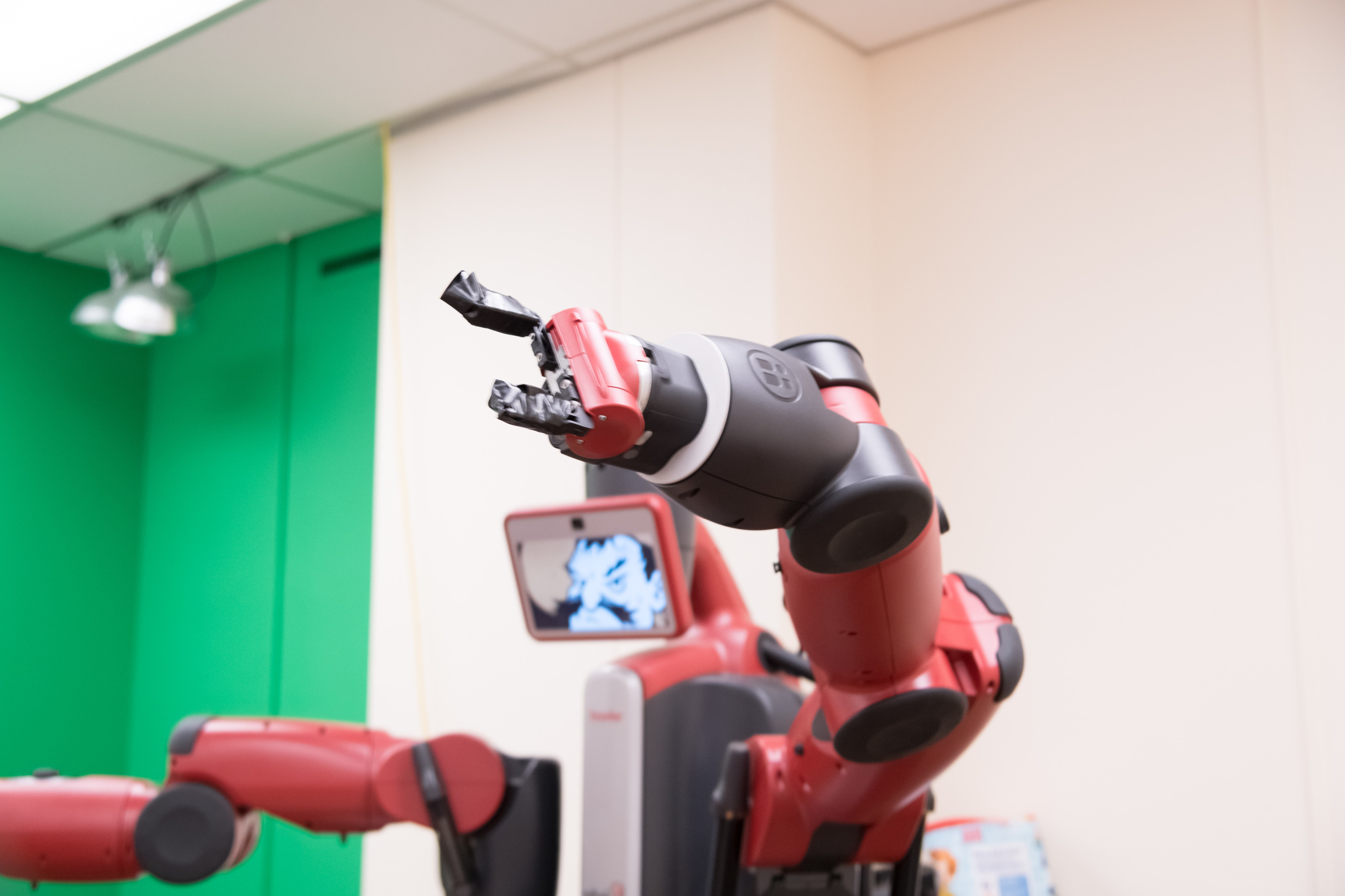
Christopher Crick is an Associate Professor in the Department of Computer Science at Oklahoma State University. He leads the Robotic Cognition Laboratory, focusing on grounding developmental psychology and cognitive science in embodied AI systems, while improving robotics through human cognition-inspired models. University: Oklahoma State University Department: Computer Science Academic Rank: Associate Professor Email: chris.crick@okstate.edu, chriscrick@cs.okstate.edu Research Interests: Artificial Intelligence Cognitive Science Human-Robot Interaction Atmospheric Sciences (via UAV applications) Machine Learning Medical Informatics Scientific Activities: NSF-funded research in robotics, UAVs, and AI Professional memberships: Cognitive Science Society, ACM, AAAS Editorial roles and conference reviewing in robotics and AI Lab: Robotic Cognition Laboratory
Dr. Yanan Fan is a Senior Principal Research Scientist at CSIRO's Data61 and an Adjunct Professor of Statistics at the University of New South Wales (UNSW). His research focuses on Bayesian models, computational methods for real-world problems, and interdisciplinary applications in fields like medical imaging, cosmology, and climate science. He holds a PhD in Statistics from the University of Bristol and has over 20 years of academic experience at UNSW's School of Mathematics and Statistics. Education: PhD in Statistics, University of Bristol, UK Undergraduate Degree in Mathematics, University of Melbourne Research Interests: Fan develops Bayesian semiparametric models, approximate Bayesian computation (ABC), and scalable computational methods for medical imaging (e.g., PET), cosmology, and climate modeling. He also investigates gender bias in educational evaluations and leads initiatives like the Data4Good stream of UDASH. His work emphasizes practical problem-solving through advanced statistical techniques. Leadership & Contributions: As Team Leader of Bayesian Computational Methods and Applications at Data61, he drives innovation in statistical methodologies. He has served on the Scientific Committee of MATRIX research institute and as an Associate Editor for major statistical journals. His projects include probabilistic climate projections and bias analysis in student evaluations. Labs & Groups: Active member of the StatML Group and leader of the Bayesian Computational Methods team, focusing on integrating machine learning and statistical computing.
Dr. Tapabrata Chakraborty is a Principal Research Fellow at University College London (UCL) Cancer Institute and an Honorary Associate Professor in UCL's Department of Medical Physics and Biomedical Engineering. He serves as Lead Tutor for Information Engineering at the University of Oxford's Engineering Science Department and is a non-stipendiary Fellow of Linacre College, Oxford. As Theme Lead for the Alan Turing Institute's partnership with Roche, he drives advancements in transparent AI for precision healthcare. He is an invited expert on Responsible AI with the Global Partnership on AI (GPAI) and an Associate Editor for Springer Nature Computer Science . His research focuses on developing reliable AI systems for biomedicine, particularly leveraging multimodal data (imaging, clinicogenomics) in cancer research. He emphasizes explainable AI mechanisms, personalized uncertainty quantification, and ethical AI governance. His work has led to tools like 2dSpAn-Auto for spine analysis and frameworks like Pan-Ret for retinal disease detection. Education: PhD (details unspecified) Key Roles: Turing-Roche Partnership Lead, GPAI Advisor, HEA/IET Fellow His publications highlight breakthroughs in medical AI, including uncertainty quantification and multimodal data fusion. He advocates clinician-AI collaboration and policy-driven AI safety. Current projects include fair AI for skin lesion classification and drug discovery via synthetic data generation. Awards: HEA Fellowship, IET Fellowship Team Leadership: Oversees early-career researchers at Turing/UCL
J. Riley Edwards is an Assistant Professor in the Department of Civil and Environmental Engineering at the University of Illinois Urbana-Champaign (UIUC), leading track infrastructure research at the Rail Transportation and Engineering Center (RailTEC). He holds a Ph.D. and M.S. from UIUC and a B.E. from Vanderbilt University. His career includes roles from Lecturer (2007) to Assistant Professor (2023), with prior positions as Research Scientist and Senior Lecturer. Edwards' research focuses on railway infrastructure, including track system design, material performance, and AI-driven inspection technologies. He has advised numerous graduate and undergraduate students, contributing to RailTEC's mission of advancing rail engineering education and industry collaboration. His work spans over 150 peer-reviewed articles, with recent contributions emphasizing track buckling analysis, fastening system optimization, and data-driven infrastructure monitoring. Notable awards include the TRB William W. Millar Award (2024) and Progressive Railroading Rising Star Award (2015). Edwards is actively involved in professional societies like AREMA and TRB, organizing international symposia and serving on technical committees. Edwards has led major projects funded by agencies like FRA and FTA, advancing resilient track components, wireless sensing systems, and smart mobility solutions. His lab work includes field testing, laboratory experiments, and computational modeling to address challenges in heavy-haul, transit, and high-speed rail systems.
Venkatesh Saligrama is a Professor in the Department of Electrical and Computer Engineering at Boston University, with affiliations in Systems Engineering, the Center for Information and Systems Engineering, and the College of Arts & Sciences’ Computer Science division. He holds a PhD from MIT (1997) and leads the Data Science & Machine Learning Lab. His research focuses on Machine Learning, Video Analysis, Statistical Signal Processing, and Network Science, with notable contributions to vision-language models, bandit algorithms, and synthetic data strategies. He has received prestigious awards like the NSF CAREER Award (2005) and Presidential Early Career Award (2003). His teaching includes courses on signals, stochastic processes, and digital communication systems. Saligrama’s work bridges theoretical foundations and applied systems, emphasizing efficient learning under constraints. His recent publications explore zero-shot detection, data-efficient pretraining, and safe optimization techniques. Beyond academia, his research impacts domains like autonomous systems, healthcare prediction, and cybersecurity. He actively contributes to editorial roles, conferences, and interdisciplinary initiatives, fostering collaborations across engineering and computer science.
Giulia Di Nunno is a Professor in the Department of Mathematics at the University of Oslo, specializing in stochastic analysis and its applications to finance and risk management. She also holds an adjunct professorship at the Norwegian School of Economics (NHH). Her research focuses on stochastic calculus, control theory, financial modeling, and energy finance, with a particular interest in dynamic risk measures. She has led major projects like the STORM initiative on time-space risk models and is involved in interdisciplinary research on sustainability and energy markets. Di Nunno has served as President of the Scientific Council of CIMPA and is an associate editor for several prestigious journals, including Finance and Stochastics and Stochastics . Her work bridges theoretical advancements with practical applications in finance and energy sectors. Education: PhD in Mathematical Statistics (University of Pavia, 2003), Degree in Mathematics (University of Milan, 1998). Research Groups: Risk and Stochastics, STORE (completed). Key Projects: SURE-AI (AI-driven risk modeling), Unruly Sustainability (interdisciplinary research), STORM (ToppForsk project). Editorial Roles: Associate Editor for Finance and Stochastics , DEAF , FMF , and others. Her publications emphasize stochastic processes, volatility modeling, and risk measurement, with recent contributions on time-changed dynamics and applications to energy finance. She actively contributes to the international academic community through research networks like AMaMeF and ModSimFIE.
Anaïs Couasnon is a PhD researcher at the Department of Water and Climate Risk, Institute for Environmental Studies (IVM), Vrije Universiteit Amsterdam, part of the Faculty of Science. Her research focuses on compound flood risk modeling, probabilistic methods, and global hazard assessment under climate change. She is supervised by Dr. Philip Ward and Dr. Hessel Winsemius as part of a VIDI project. Education: MSc in Hydraulic Engineering (TU Delft, 2017); BSc in Civil Engineering (McGill University, 2010). Research interests include probabilistic modeling, multivariate dependence analysis, flood risk management, and climate impacts on coastal-riverine interactions. She contributes to global datasets like COAST-RP and socio-hydrological benchmarking. Key activities include: Developing frameworks for compound flood risk assessment Modeling extreme sea-level events and storm surges Collaborating on global hazard frameworks and disaster risk reduction strategies Contributions to datasets include: COAST-RP dataset Panta Rhei socio-hydrological benchmark dataset
Anish Sevekari is a Postdoctoral Associate at the University of Pittsburgh. His research focuses on machine learning, algorithms, optimization, and theoretical computer science. He investigates topics such as neural network training dynamics, generative models, algorithmic analysis beyond worst-case scenarios, and efficient inference techniques. His work bridges theoretical foundations with practical applications in areas like probabilistic modeling and combinatorial optimization. Key research interests include normalizing flows, ensemble methods, score-based learning, stochastic optimization, and combinatorial algorithms. His recent publications explore acceleration of NCE convergence, progressive ensemble distillation, and provable benefits of score matching. He has published extensively in top-tier venues, with a focus on theoretical guarantees and practical efficiency. His research trends emphasize bridging gaps between machine learning and traditional algorithmic analysis, particularly in probabilistic frameworks and high-dimensional data problems. No scientific awards or grants are explicitly mentioned in the provided information.
Matthew Thorpe is an Associate Professor in the Department of Statistics at the University of Warwick and a member of the European Laboratory for Learning and Intelligent Systems (ELLIS). His research focuses on applying methods from applied analysis—including partial differential equations (PDEs), calculus of variations, and optimal transport—to machine learning and data science challenges. He has organized workshops such as the 'Machine Learning in Infinite Dimensions' at ETH Zurich and the 'LMS-Bath Symposium on Inverse Problems and Artificial Intelligence in Medicine.' Thorpe currently seeks PhD students for his research projects. His work bridges theoretical mathematics with practical applications in data-driven fields. Thorpe's research interests include manifold learning in Wasserstein space, PDE-based approaches to data science, and convergence analysis of graph-based learning algorithms. He has contributed to understanding the impact of imputation quality on machine learning models and developed novel transportation distances for pattern recognition. His interdisciplinary approach integrates mathematical rigor with advancements in artificial intelligence. He has co-organized the One World Seminar Series on the Mathematics of Machine Learning and remains active in promoting collaborative research initiatives. Despite no explicitly listed awards, his prolific publication record reflects sustained academic impact. Thorpe’s advising focuses on training students in the intersection of applied mathematics and modern data science techniques.
Dr. Robert Lieck is an Assistant Professor in the Department of Computer Science at Durham University. He holds a PhD from the Machine Learning and Robotics Lab (now Learning and Intelligent Systems Lab) in Stuttgart/Berlin, Germany, and completed a postdoctoral position at the Digital and Cognitive Musicology Lab at EPFL, Switzerland. His research focuses on interdisciplinary applications of machine learning and artificial intelligence, with particular emphasis on cognitive modelling, music cognition, and ethical AI. Education: PhD in Machine Learning and Robotics, Stuttgart/Berlin, Germany (2012–2017) MSc Physics and Philosophy, Freie Universität Berlin Research Interests: Probabilistic Modelling (Bayesian inference, graphical models) Neuro-Symbolic Modelling (differentiable parsing algorithms) Structure Learning (feature discovery, hierarchical systems) Applications in music analysis, medical imaging, and autonomous systems Ethical implications of AI in policy and legislation Publications: Recent work includes advancements in deep reinforcement learning for diabetes management, recursive Bayesian networks, and computational models of musical expectancy. His research bridges theoretical AI with practical applications in musicology and healthcare. Students: Supervising four postgraduate students: Ishaq Ibrahim, Megan Finch, Ningxiang Xie, Xiaotang Zhang Labs: Active contributor to the Digital and Cognitive Musicology Lab (EPFL) and Durham's Computer Science research groups.
Dr. Zhang Pin is a Presidential Young Professorship (PYP) Assistant Professor in the Department of Civil and Environmental Engineering at the National University of Singapore (NUS). He previously held roles at the University of Cambridge as a Royal Society Newton International Fellow, Department Teacher, and Wolfson College Research Associate. His research group focuses on explainable AI for science, intelligent computational mechanics, uncertainty quantification, granular mechanics, coastal infrastructure resilience, and digital twins. Dr. Zhang earned his PhD from The Hong Kong Polytechnic University (2022), with a visiting scholar year at the University of Oxford. He holds a Master of Engineering (2019) and a Bachelor of Engineering (2016) from Hunan University and Hefei University of Technology, respectively. His research interests include: Explainable AI for scientific modeling Physics-informed machine learning Uncertainty quantification in geotechnical systems Micro/macro-scale granular mechanics Resilient coastal infrastructure design Digital twin technologies Notable achievements include recognition as a World’s Top 2% Scientist (2023-2024), PolyU PhD Thesis Merit Award, and the prestigious Royal Society Newton International Fellowship. His work bridges computational methods with geotechnical engineering challenges, emphasizing practical AI applications. Dr. Zhang has advised students like He GF and Wu HN, and his research has been published in top-tier journals such as Computer Methods in Applied Mechanics and Engineering and Géotechnique . He actively contributes to professional bodies including the British Geotechnical Association and International Society for Soil Mechanics (ISSMGE).