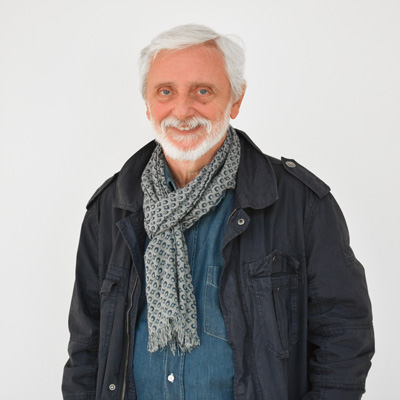
Professor Sven Schewe is affiliated with the University of Liverpool, focusing on finite games of infinite duration and automata over infinite structures. He emphasizes collaborative research and teaching, though admits to challenges in maintaining web pages. EPSRC grant (2017-2021) for Parity Games EPSRC grant (2015-2019) for Energy Efficient Control DST (UK) grant (2018-2020) for AI Test Metrics EU grant (2017-2019) for Parametrised Verification Leverhulme Trust grant (2011-2012) for Probabilistic Systems EPSRC grant (2010-2013) for Markov Decision Processes His research spans formal verification, game theory, probabilistic systems, and secure computation. Key publications include work on parity games, adversarial training, and multi-party querying. He serves as a reviewer for major conferences and journals, including ACM Transactions on Computational Logic and IEEE Symposiums. Scientific awards include the Dr. Eduard Martin Preis (2009) and the GI Dissertation Award (2009). He supervises theses on topics like semantic testing for neural networks, symbolic discrete control, and power grid frameworks. As PhD Admission Tutor for Computer Science, he contributes to academic governance. His recent articles highlight collaborations in AI security, chemical space exploration, and automata theory.
Dave Andersen is an Associate Professor at the School of Computer Science, Carnegie Mellon University , with research focusing on memory and power-efficient computing, robust distributed systems, and networked environments. He also serves as CTO of Enriched Ag . Education: Ph.D. and M.S. in Computer Science from MIT (2001, 2004), B.S. in Computer Science and Biology from the University of Utah (1995). Research Trends: Explores systems design in the post-Moore's Law era, emphasizing concurrency, low-latency geo-replicated storage, and RDMA in datacenters. Key projects include MemC3, Eiger, Cuckoo Filter, and FAWN. Teaching: Courses in Advanced OS, Distributed Systems, Low-Power Computing, and Network Security. Professional Service: Program committee roles at SOSP, NSDI, SIGCOMM, and DARPA ISAT advisory group. Personal: Active in running, climbing, and outdoor activities with detailed route guides for Pittsburgh and Boston.
Spartacus Coletta serves as a PartTime Lecturer at Sapienza University of Rome, teaching in the Master's Degree in Digital Transition Management program for the 2025/26 academic year. His role bridges academic instruction with extensive public-sector IT expertise. His academic credentials include: Doctor of Mathematics (1982) from Sapienza University of Rome's Faculty of Mathematical and Physical Sciences, thesis: "PROBABILISTIC ANALYSIS OF ALGORITHMS ON GRAPHS" Advanced Training Course in Semantic Technologies (Ontological Analysis) (2015) from the Faculty of Information Engineering, Computer Science and Statistics Research focuses on ontological representation of work processes and reality modeling, extending to database design, open data, big data, and AI-driven knowledge systems. His professional projects demonstrate applied ontology development in public administration contexts, particularly in tax processing, customs automation, and state asset management systems.
Işıl Dillig is an Associate Professor of Computer Science at the University of Texas at Austin, where she leads the UToPiA research group. Her academic career spans over a decade of significant contributions to programming languages research, particularly in program analysis, verification, and synthesis. Dr. Dillig received all her academic degrees (BS, MS, and PhD) from Stanford University before joining the faculty at UT Austin. Her educational background established the foundation for her innovative research approach that bridges theoretical computer science with practical applications. Her research focuses on developing techniques to make software systems more reliable, secure, and easier to build through advanced program analysis, verification, and synthesis methods. She has pioneered approaches that combine symbolic reasoning with machine learning to tackle complex software engineering challenges across multiple domains including security, databases, and programming language theory. Her work demonstrates exceptional depth in creating practical tools that address real-world software development problems while maintaining strong theoretical foundations. Analysis of Dr. Dillig's publication record reveals a consistent trajectory of innovation in program synthesis, with recent work expanding into neurosymbolic approaches that bridge neural networks with formal methods. Her research shows strong connections between theoretical foundations and practical applications, particularly in security-critical systems, database technologies, and blockchain applications. The evolution of her work demonstrates increasing sophistication in handling complex program structures while maintaining practical usability. Dr. Dillig has received prestigious recognition for her research contributions: Sloan Fellowship NSF CAREER award As a dedicated educator and research leader, Dr. Dillig has served in significant roles including Program Chair for PLDI 2022 and Steering Committee member for PLDI. She has mentored numerous students through her UToPiA research group, guiding research in program synthesis, verification, and analysis. Her work has been supported by substantial research grants that have enabled innovative projects at the intersection of programming languages and security. Dr. Dillig leads the UToPiA (UT Austin Programming, Languages, and Analysis) research group, which focuses on developing novel techniques for program analysis, verification, and synthesis. The group maintains strong collaborations with industry partners and academic institutions worldwide, translating theoretical advances into practical tools that address real software engineering challenges.
Laure Petrucci is a Professor at Sorbonne Paris Nord University, affiliated with the Networks and Telecommunications Department and the LoVe (Logic and Verification) team at LIPN (Paris Nord Computer Science Laboratory, CNRS UMR 7030). She also serves as Deputy Scientific Director of CNRS for Normandy. Her research specializes in formal verification of concurrent systems using Petri nets and parameterized models, with a focus on combating state-space explosion through distributed algorithms. Her work spans formal methods , distributed systems , and model checking , emphasizing practical applications in network verification and synthesis. Recent publications explore controller synthesis for timed games, probabilistic model checking, and SMT-based analysis of Petri nets, reflecting a consistent focus on scalable verification techniques. She teaches undergraduate and master's courses in networks, databases, and programming at IUT Villetaneuse (France) and the University of Science and Technology of Hanoi (Vietnam).
Maria Halkidi is an Associate Professor in the Department of Digital Systems at the University of Piraeus, Greece, where she conducts cutting-edge research in data mining and machine learning with over two decades of academic experience. Her educational background includes: Bachelor's degree in Informatics from the University of Piraeus (1997) Master's degree from Athens University of Economics and Business (1999) Ph.D. from Athens University of Economics and Business (2003) Dr. Halkidi's research focuses on fundamental and applied aspects of data mining, particularly recommender systems, graph data mining, cluster validity assessment, and distributed data mining. Her work bridges theoretical frameworks with practical implementations in sensor networks, social media, and real-time analytics, contributing significantly to algorithmic development in these domains. Analysis of her recent publications reveals a strong trajectory toward fairness and diversity optimization in recommender systems, alongside innovative approaches to graph clustering quality assessment and scalable sentiment analysis. Her research consistently addresses real-world challenges in dynamic data environments, with increasing emphasis on multi-stakeholder optimization and privacy-aware recommendation frameworks. Scientific awards: No specific awards or honors were documented in the provided materials. Dr. Halkidi has participated extensively in National and European-funded research projects, including a prestigious Marie-Curie fellowship at the University of California, Riverside. She serves on program committees for major international conferences in data mining and machine learning, demonstrating active community engagement. While specific graduate students aren't listed in the source materials, her professorial role indicates ongoing mentorship of Master's and Ph.D. candidates. She maintains active research affiliations with the Network oriented systems & services lab and the DataStories research group at the University of Piraeus, where she collaborates on interdisciplinary projects involving big data analytics, social network analysis, and distributed systems.
Radu Calinescu is Professor of Computer Science at the University of York, UK, where he serves as Principal Investigator for the UKRI Trustworthy Autonomous Systems Node in Resilience and leads the Trustworthy Adaptive and Autonomous Systems and Processes (TASP) Research Team. His academic career includes previous positions as Lecturer in Computer Science at Aston University (2009-2012), Senior Researcher at the University of Oxford (2008-2009), and part-time Lecturer at Oxford (2005-2009). Professor Calinescu's research focuses on formal modelling, analysis, verification and controller synthesis for autonomous and self-adaptive systems, with particular emphasis on parametric and probabilistic model checking, automated and model-driven software engineering. His work applies these approaches to robotic, cyber-physical, embedded and service-based systems, with a strong commitment to using formal methods at runtime to enhance the resilience and safety of critical autonomous systems. His extensive publication record spans top-tier journals including IEEE Transactions on Software Engineering, Journal of Systems and Software, and Automated Software Engineering. His research demonstrates consistent focus on verification techniques for adaptive systems, with increasing attention to safety-critical applications in recent years. His work bridges theoretical formal methods with practical applications in robotics and autonomous systems. British Computer Society Distinguished Dissertation Award for his DPhil thesis on Autonomic-Independent Loop Parallelisation Principal Investigator for multiple major projects including Continual Verification and Assurance of Robotic Systems under Uncertainty (ORCA Hub/EPSRC), Safety of AI Techniques (AAIP/Lloyd's Register Foundation), and CSI:Cobot Program Committee Co-Chair for major conferences including SEFM 2021, SEAMS 2020, and SERENE 2019 Professor Calinescu actively supervises numerous PhD students and postdoctoral researchers, with current team members including Faisal Alhwikem, Xinwei Fang, Mario Gleirscher, James Harbin, and Colin Paterson. His research group is based at the Ron Cooke Hub in York, a purpose-built facility housing world-class research groups and startups. His former students have gone on to academic positions at institutions worldwide and industry roles at major technology companies.
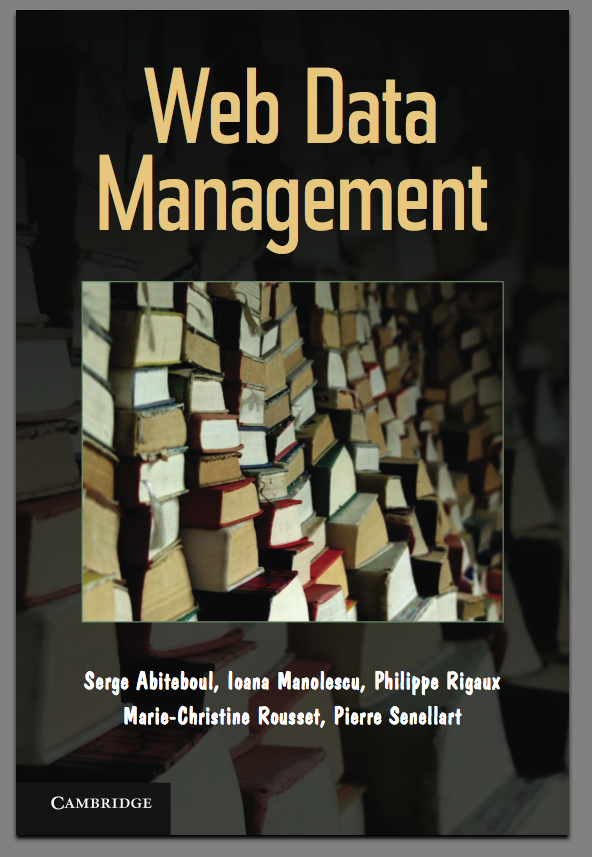
Marie-Christine ROUSSET is a Professor of Computer Science at the University of Grenoble Alpes (UGA) in France, where she is a member of the LIG (Laboratoire d'Informatique de Grenoble) in the SLIDE group. Previously affiliated with Paris-Saclay (LRI), she has established herself as a leading researcher in Knowledge Representation and Information Integration. She holds the distinguished position of Senior member of the Institut Universitaire de France (IUF) (2011-2016, renewed for 2016-2021) and serves as co-responsible for the chair Explainable and Responsible AI within MIAI Grenoble Alpes. Her research focuses on ontology-based data access, logic-based mediation between distributed data sources, query rewriting using views, data linkage, and distributed reasoning for the Semantic Web. She skillfully combines artificial intelligence and database techniques to address complex information integration challenges, with applications spanning biomedical informatics, educational technology, and trustworthy AI. Her work demonstrates consistent innovation from foundational research to practical implementations, as evidenced by her co-authorship of the book 'Web Data Management' published by Cambridge University Press. Professor ROUSSET's recent publications (2019-2022) reveal a growing emphasis on data privacy, RDF graph anonymization, and interactive ontology engineering, while maintaining her strong contributions to semantic web technologies and knowledge representation. Her research shows increasing attention to trustworthy AI concerns, aligning with her leadership roles in relevant projects. Scientific Recognition Senior member of Institut Universitaire de France (IUF) (2011-2016, renewed for 2016-2021) Junior member of Institut Universitaire de France (IUF) from 1997 to 2002 Chevalier de l'Ordre National du Merite (July 11, 2011) EurAI Fellow (nominated ECCAI Fellow in 2005) Best Paper Award at AAAI'96 for 'Verification of Knowledge Bases based on Containment Checking' Professor ROUSSET maintains an active role in the scientific community through editorial work and organizational leadership. She serves on the Editorial Board of Communications of the ACM (CACM) and has held significant roles including PC chair of EGC 2019, Workshops co-Chair of WWW 2018, and Area Chair of IJCAI 2017. Her consistent service on program committees of major international conferences demonstrates her standing in the field. Her laboratory, the SLIDE group within LIG, focuses on semantic web technologies, knowledge representation, and data integration. The group maintains strong connections with the international research community and participates in collaborative projects addressing cutting-edge challenges in artificial intelligence and data management, with particular emphasis on trustworthy and explainable AI systems.
Brice Chardin is an Associate Professor in Data Engineering at ISAE-ENSMA since 2013, affiliated with the LIAS (Laboratoire d'Ingénierie des Applications de la Connaissance et des Systèmes) Data and Model Engineering team. His work bridges academic research and industrial applications, focusing on data management solutions for critical systems. His research spans clustering algorithms under dissimilarity constraints , RDF query relaxation for explaining empty/overabundant results, pattern mining through the RQL language, and energy data management . Key projects include Chronos (a NoSQL system for industrial sensor data) and collaborations with energy companies SRD and Nexeya for predictive consumption analysis. Recent publications (2021-2024) emphasize constrained clustering techniques and cooperative query processing for RDF knowledge bases, revealing a strong trend toward practical solutions for industrial data challenges. His work integrates machine learning with database theory to address real-world data imperfections. PhD in Computer Science from INSA Lyon (2011) Postdoctoral position at LIRIS (2012-2013) on ANR DAG project Specialized in industrial data management since 2011 EDF collaboration Chardin actively supervises academic projects including drone simulation with Ardupilot and Smart Data mining initiatives. His industrial partnerships focus on energy sector applications, particularly predictive analysis for electricity distribution and storage systems. Current work involves developing clustering algorithms with error bounds and query relaxation frameworks for semantic web technologies.
Xin Zhang serves as an Assistant Professor in the Department of Computer Science and Technology within the School of Electronics Engineering and Computer Science at Peking University. His academic profile demonstrates deep engagement with programming languages and software engineering research communities through active participation in major conferences including ASE, SPLASH/OOPSLA, PLDI, and ICSE. Dr. Zhang's research focuses on the synergistic relationship between program analysis and machine learning. He investigates how ML/AI techniques can enhance traditional program analysis methods while simultaneously developing program analysis approaches to improve the interpretability, fairness, robustness, and safety of AI systems. His work spans probabilistic program analysis, abstraction refinement techniques, Bayesian modeling for program semantics, and applications of graph neural networks to static analysis problems. His publication record shows consistent contributions to top venues from 2016 through 2025, with recent work emphasizing Bayesian program analysis, abstraction refinement methods, and the intersection of formal methods with machine learning. The trajectory of his research demonstrates increasing sophistication in combining traditional program analysis techniques with modern AI approaches. Dr. Zhang actively contributes to the academic community as a program committee member for major conferences including ASE, SAS, PLDI, and SPLASH. His service includes reviewing, session chairing, and committee participation across multiple venues, reflecting his standing in the programming languages and software engineering communities.
Ibrahim Dellal is a Lecturer in Data Engineering at ISAE-ENSMA, France, affiliated with the LIAS laboratory. His research focuses on semantic web technologies, particularly query processing over uncertain RDF knowledge bases. He addresses critical problems like empty answers and overabundant query results through cooperative approaches that explain and refine unsuccessful queries, contributing significantly to knowledge representation and database systems. Education: PhD in Computer Science from ISAE-ENSMA (2019) on managing large knowledge bases with incomplete and uncertain data Research Interests: Data Engineering and Semantic Web Technologies Uncertainty Handling in Knowledge Bases Cooperative Query Processing Query Result Explanation and Refinement RDF Systems and Knowledge Representation His 2017-2020 publications demonstrate consistent focus on cooperative query answering for uncertain RDF knowledge bases, specifically tackling the empty answer problem through explanation generation and the overabundant answers problem via query refinement. These works advance semantic web and database research by bridging user interaction with automated query optimization under data uncertainty. He is an active member of the Data Engineering team at LIAS laboratory, which operates across ISAE-ENSMA's Chasseneuil campus and collaborates with teams in Automatic Control and Real Time systems for interdisciplinary engineering research.
Kijung Shin is an Associate Professor at KAIST (Korea Advanced Institute of Science and Technology), holding dual appointments in the Kim Jaechul Graduate School of AI and the School of Electrical Engineering (Computer Division). He leads the Data Mining Lab and teaches multiple courses including Graph Mining and Social Network Analysis, Data Mining and Search, and other foundational courses in electrical engineering and AI. Education Ph.D. in Computer Science, Carnegie Mellon University (February 2019) M.S. in Computer Science, Carnegie Mellon University (December 2017) B.S. in Computer Science and Engineering, Seoul National University (August 2015) B.A. in Economics (Double Major), Seoul National University (August 2015) Research Interests Professor Shin's research primarily focuses on data mining, graph algorithms, and network science, with particular expertise in hypergraph analysis, tensor decomposition, and graph neural networks. His work bridges theoretical foundations with practical applications, developing algorithms that can efficiently analyze complex real-world networks. His recent research has expanded into multimodal learning, integration of large language models with graph neural networks, and applications in recommendation systems, satellite imagery analysis, and biological data analysis. His approach combines rigorous mathematical analysis with practical implementation, resulting in numerous open-source software tools that have been widely adopted in both academia and industry. His research has significant implications for social network analysis, fraud detection, recommendation systems, and scientific discovery in various domains. Research Trends Professor Shin's recent publications show a clear trajectory toward more complex network structures, particularly hypergraphs that capture higher-order interactions beyond simple pairwise relationships. His work increasingly integrates traditional graph algorithms with deep learning approaches, especially focusing on how graph neural networks can be improved and made more interpretable. There's also a growing emphasis on practical applications in areas like satellite imagery analysis, medical data, and recommendation systems that address real-world challenges. Scientific Awards Received the PAKDD Best Survey Paper Award for 'Multi-Behavior Recommender Systems: A Survey' (2025) Selected as one of the best short paper candidates of ACM RecSys 2024 (top 7) for 'Revisiting LightGCN' (2024) Selected for oral presentation (2.6% of accepted papers) at AAAI 2024 for 'VITA: 'Carefully Chosen and Weighted Less' Is Better in Medication Recommendation' (2024) Received the IEEE ICDM Best Student Paper Runner-up Award for 'TensorCodec: Compact Lossy Compression of Tensors without Strong Data Assumptions' (2023) Received the SIGKDD Best Research Paper Award and CogX Award for Best Student Paper in AI for 'FRAUDAR: Bounding Graph Fraud in the Face of Camouflage' (2016) Received the Best Senior Thesis Award from Seoul National University (2015) Received the Samsung Humantech Paper Award (1st in Computer Science) (2015) Teaching and Mentoring Professor Shin has taught multiple graduate and undergraduate courses at KAIST since 2019, including Graph Mining and Social Network Analysis, Data Mining and Search, and foundational courses in electrical engineering. He has also co-organized tutorials at major conferences including AAAI, KDD, ICDM, and CIKM on advanced topics in hypergraph neural networks and real-world hypergraph analysis. As the leader of the Data Mining Lab, he mentors numerous graduate students and postdoctoral researchers, fostering a collaborative research environment that has produced significant contributions to the field of data mining and network analysis. Research Leadership Professor Shin leads the Data Mining Lab at KAIST, which focuses on developing novel algorithms for analyzing complex networks and high-dimensional data. The lab has produced numerous influential software tools including D-Cube, M-Zoom, CoreScope, and DenseAlert, which are widely used in both academic research and industry applications. His research group maintains active collaborations with institutions worldwide and has received funding from various sources to support their innovative work in data mining and network analysis.
Emanuela Dreassi is a Full Professor of Statistics at the University of Florence, where she currently serves as Director of the Department of Statistics, Computer Science, and Applications 'G. Parenti' (DiSIA) from November 1, 2024, to October 31, 2028. She is affiliated with the School of Economics and Management and has held various institutional roles including Director of the Bachelor's Program in Statistics (2014-2022) and Vice-President of the School of Economics and Management (2019-2022). Her research spans hierarchical Bayesian models and spatial statistics, with methodological advancements in specifying and estimating models for multilevel data, missing data, and latent variable models. She has made significant contributions to robust analysis in small area estimation, compatibility of conditional distributions, semicontinuous data modeling, Bayesian predictive inference, and knockoffs construction. Her work bridges theoretical statistics with practical applications in epidemiology, environmental studies, and medical research. Dreassi's recent publications (2020-2025) reveal a strong focus on methodological innovations in Bayesian statistics, spatial analysis, and knockoff filters for variable selection. She has published extensively in top statistical journals while also collaborating on interdisciplinary research in medical fields including plastic surgery and epidemiology. Her work demonstrates a consistent trajectory of advancing statistical methodology while maintaining strong connections to real-world applications across multiple domains. As an active referee for numerous prestigious journals including Biometrics, Journal of the Royal Statistical Society, and Statistics in Medicine, Dreassi contributes significantly to the scholarly community. She has coordinated research units for PRIN and HORIZON2020 projects and participated in numerous national and international conferences as organizer, scientific committee member, and session chair.
Hans Jakob Larsen is a Forensic Geneticist at the Department of Forensic Genetics within the Institute of Forensic Medicine, University of Copenhagen's Faculty of Health Sciences. With over 25 years of continuous service since 1999, he conducts forensic DNA analysis, manages crime case investigations, and provides expert testimony in Danish courts. His educational background includes: Master of Science (cand. scient.) from University of Aarhus (1992) Ph.D. in Molecular Biology from University of Aarhus (1994) Specialized training in Forensic Statistics (2005) and DNA analysis techniques Larsen's research centers on forensic DNA methodologies, specializing in mitochondrial DNA sequencing, STR analysis, and complex DNA mixture interpretation. His work bridges molecular biology and criminalistics, developing protocols for biological trace evidence analysis and statistical evaluation of DNA evidence. Recent publications demonstrate increasing focus on international collaborative frameworks for standardizing DNA mixture interpretation and software validation in forensic laboratories. His publication trends since 2015 show concentrated efforts in probabilistic genotyping systems (STRmix™) and expert software development (EDNA), addressing critical challenges in low-template DNA and mixture deconvolution. The 2025 ReAct project represents current work establishing cross-laboratory standards for DNA recovery analysis under activity-level propositions. Larsen has managed forensic laboratories (5-16 technicians) and temporarily led the Crime Case Section (20 academics, 40 technicians). His teaching portfolio includes specialized courses for Danish police on biological trace analysis and seminars for legal professionals on DNA evidence interpretation. He contributed to the 2005 Thai Tsunami Victim Identification operation and maintains active casework involvement.