Jianwen Su is a Professor at the University of California, Santa Barbara, USA, with a distinguished career spanning over three decades in Computer Science , particularly in Database Systems , Business Process Management , and Web Services . Their research bridges theoretical foundations with practical applications, focusing on data-centric process modeling , formal verification , and spatio-temporal data analysis . Key contributions include the design of artifact-centric workflow models , temporal constraint languages , and query systems for uncertain data . Recent work integrates machine learning with proteomic analysis for stress biomarker discovery and LLM-based extraction of structured data from clinical reports. Notable scientific recognition includes the 2019 ACM PODS Alberto O. Mendelzon Test-of-Time Award . Collaborations span institutions globally, with frequent co-authorship in journals like Information Systems , ACM Transactions on Management Information Systems , and conferences such as BIBM and TIME .
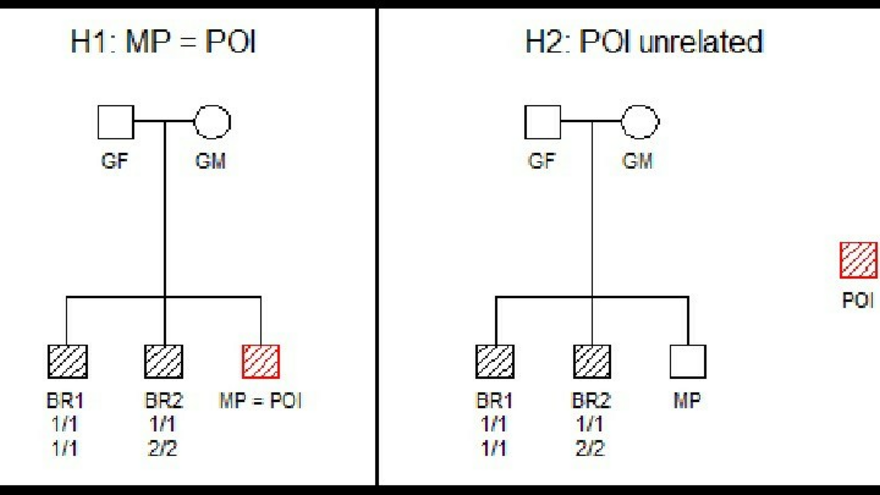
Thore Egeland is a Professor at the Norwegian University of Life Sciences (NMBU), specializing in forensic genetics and biostatistics. He is renowned for co-developing the Familias software, a tool for inferring familial relationships through DNA analysis, which has been pivotal in solving high-profile cases like the identification of missing children in Argentina. His work bridges statistical rigor with real-world applications in forensics, ecology, and disaster victim identification. Egeland has been awarded an international prize for his contributions to research and education, emphasizing both technical innovation and pedagogical outreach. He has led workshops across Latin America and Europe, promoting accessible biostatistical training for forensic practitioners. Education: While specific academic qualifications are not detailed, his role as a Professor indicates advanced degrees in statistics, genetics, or related fields. Collaborations with institutions like the University of Gothenburg and the National Board of Forensic Medicine in Sweden highlight his interdisciplinary expertise. Research Interests: Egeland’s work focuses on statistical methods for forensic genetics, including DNA mixture analysis, kinship inference, and the impact of genetic factors like mutations and inbreeding on forensic accuracy. His Familias software addresses challenges such as degraded DNA and large-scale identification efforts, with applications ranging from criminal investigations to ecological studies (e.g., bear population analysis). He emphasizes the importance of open-source tools and their validation to maintain reliability across diverse contexts. Future Directions: Egeland is adapting Familias to handle emerging technologies like whole-genome sequencing and addressing challenges such as secondary DNA transfer. His research also explores ethical implications of DNA databases and the evolving role of forensic genetics in global justice systems. Awards: International Research and Education Prize (2023), awarded during the 28th International Society for Forensic Genetics Congress in Prague. Advising & Grants: While no specific advisees are listed, his collaborative work with researchers like Daniel Kling and Petter Mostad underscores mentorship in advancing forensic methodologies. Funding and grants are inferred through his participation in international conferences and software development initiatives. Labs & Teams: Central to his work is the development and maintenance of the Familias software, supported by a network of collaborators across universities and forensic agencies. His training programs in Latin America and Europe reflect a commitment to building global forensic expertise.
Prof. Christoph Berkholz is a University Professor and head of the Algorithms Group at the Institute for Theoretical Computer Science within the Department of Computer Science and Automation at Humboldt-Universität zu Berlin since August 2022. He holds a PhD from RWTH Aachen University (2014) and completed postdoctoral research in Stockholm, Berlin, and Berkeley. Prior to his current role, he served as a Junior Professor of Logic and Complexity at Humboldt-Universität, leading the DFG-funded Emmy Noether Junior Research Group on Representation Complexity of Enumeration and Counting Algorithms. His research focuses on theoretical computer science, particularly algorithmic methods and their fundamental limits. Core questions driving his work include conditions for efficient algorithms, structural differences between 'light' and 'heavy' input instances, and the capabilities/limitations of algorithmic strategies. Research applications span query optimization in databases, SAT solving, and constraint solving. He has published ~30 papers and actively participates in program committees for AI, theoretical computer science, and database systems conferences. Prof. Berkholz's group investigates methods ranging from classical decision problems (e.g., propositional logic satisfiability) to dynamic algorithms supporting efficient updates. Key application areas include probabilistic databases and SAT/constraint-solving data structures. No specific awards are listed, though his Emmy Noether Research Group indicates significant grant recognition.
Michael Coble is Associate Professor at the University of North Texas Health Science Center's College of Biomedical Sciences, directing research at the Center for Human ID. His work focuses on DNA mixture interpretation, probabilistic genotyping, and forensic marker development for challenged samples. Recent publications include population studies of STR markers in Nigerian populations (2023), X-chromosomal forensic applications (2023), and new semi-continuous mixture interpretation methods (2022). Research consistently advances forensic DNA analysis through statistical methods and marker system innovation.
Chris Cramer is a Research Professor at the Center for Earthquake Research and Information (CERI) at the University of Memphis. He holds a B.S. from the University of Puget Sound (1969) and M.S. and Ph.D. degrees from Stanford University (1973, 1976). His career spans 30 years with the California Division of Mines and Geology (now California Geological Survey) and the U.S. Geological Survey before joining CERI. Dr. Cramer’s research focuses on probabilistic seismic hazard analysis, strong ground motion effects, fault geometry visualization, and innovative educational tools using 3D printing and virtual reality (VR). He pioneered the creation of scaled 3D-printed models of California’s fault system to address public misconceptions and developed VR platforms to explore fault dynamics and rupture propagation. Recent projects include a New Zealand fault system model and immersive VR experiences for earthquake education. His articles emphasize the integration of advanced visualization technologies, such as VR and 3D printing, with geophysical research and educational outreach. Key themes include fault dip angle visualization, rupture front propagation analysis, and the application of these tools to subduction zones, geothermal areas, and historical earthquakes like the 2010 El Mayor-Cucapah event. Dr. Cramer has no listed scientific awards but has advised Vis Lab interns (e.g., Michael Methvin, Dianne Pham) who presented projects at AGU and SCEC meetings. His work extends to creating educational tools for K-12 audiences, such as the 2020 collaboration with Manila Junior-High robotics students. Labs/Teams: He leads the CERI Visualization Lab (founded 2019), focusing on geophysical VR/3D printing applications. The lab collaborates with institutions like UC Riverside and leverages facilities like the Creat’R Lab for printing. Ongoing projects aim to expand 3D printing to global fault systems and develop a 3-credit VR course for university education.
Peter Stuckey is a Professor in the Faculty of Information Technology at Monash University and project leader at Data61 CSIRO laboratory. His pioneering research focuses on constraint programming and discrete optimization. He holds B.Sc and Ph.D degrees in Computer Science from Monash University. Research interests include discrete optimization, programming languages, constraint solving algorithms, bioinformatics, and constraint-based graphics. His work extends to applications in databases, timetabling, and system security, with industry collaborations including Oracle and Rio Tinto. Recent publications focus on optimization techniques for transport routing, explainable AI, multi-agent systems, and signal processing. Awards include the Google Australia Eureka Prize and Woodward Medal.
Dr. Lihu Chen is a Research Fellow in the Department of Computing at Imperial College London's Faculty of Engineering, specializing in fact checking, data science, and large language models. His work bridges generative AI, knowledge graphs, and biomedical informatics, focusing on model interpretability and robustness. He contributes to projects like Pub-Guard-LLM for detecting fraudulent biomedical articles and YAGO 4.5, a knowledge base with advanced taxonomy. His research also explores query-relevant neuron identification in LLMs and efficient entity disambiguation systems. Key research interests include uncertainty estimation in AI systems, lightweight neural architectures, and applications in healthcare. He co-organized the GenAIK workshop on generative AI and knowledge graphs, reflecting his interdisciplinary approach to advancing AI's societal impact.
Kris Hauser is a Professor in the Department of Computer Science at the University of Illinois at Urbana-Champaign (UIUC), with affiliate appointments in the Departments of Electrical and Computer Engineering and Mechanical Science and Engineering. He holds a PhD in Computer Science from Stanford University and B.A. degrees in Computer Science and Mathematics from UC Berkeley. Prior to UIUC, he served as faculty at Indiana University (2009–2014) and Duke University (2014–2019), where he founded the Intelligent Motion Lab. He has also consulted for Waymo since 2019 and is the Director of the Coordinated Sciences Lab Robotics Group at UIUC. His research focuses on robot planning and control, semi-autonomous systems, and applications in intelligent vehicles, medical robotics, and legged locomotion. Key methodologies include optimization, probabilistic methods, AI, and physics simulation. His work bridges theory with real-world applications, such as robotic surgery, warehouse automation, and autonomous driving. Prof. Hauser has received notable awards including the NSF CAREER Award, Siebel Scholar Fellowship, and multiple Amazon Research Awards. He actively engages in teaching advanced robotics courses at UIUC and has contributed to open-source robotics frameworks like the Klamp't package. His lab emphasizes interdisciplinary collaboration, with projects ranging from UV disinfection robots to telepresence avatars.
Marco Guarnieri is an Associate Research Professor at the IMDEA Software Institute in Spain. He holds a PhD in Computer Science from ETH Zurich (2017), an MSc in Computer Engineering from the Università degli Studi di Bergamo (2012), and a BSc in Computer Engineering from the same institution (2010). His research focuses on secure hardware-software co-design, microarchitectural side-channel attacks, and formal methods for verifying security guarantees. Education : PhD in Computer Science, ETH Zurich (2017) MSc in Computer Engineering, Università degli Studi di Bergamo (2012) BSc in Computer Engineering, Università degli Studi di Bergamo (2010) Research Interests : Security, privacy, programming languages, formal methods, and microarchitectural security. His work emphasizes practical systems for securing sensitive data storage and processing, with recent focus on leakage contracts for open-source processors and automated testing of secure speculation countermeasures. Awards : Best Paper Award at CCS 2024 for work on leakage contracts for RISC-V processors Distinguished Paper Award at CCS 2023 for Spectre attack detection Best Paper Award at S&P 2021 for hardware-software contracts for secure speculation Grants & Advising : He leads a research group at IMDEA, actively mentoring PhD students and postdocs in hardware-software security. His projects include AMuLeT (automated testing of secure speculation) and LeaVe (verifying leakage contracts). Labs/Teams : IMDEA Software Institute’s security research group, focusing on cross-layer hardware-software security solutions.
Dr. Andrej Stankovski is a researcher at the Reliability and Risk Engineering department of ETH Zürich. His work focuses on assessing risks and reliability in critical infrastructure systems, particularly power grids and nuclear energy facilities. Key research areas include climate risk quantification, cascading failure analysis, and socio-technical vulnerabilities in energy systems. He has developed novel methodologies for blackout event analysis and maintains a curated database of nuclear safety incidents. His research integrates multi-disciplinary approaches combining probabilistic modeling, data analytics, and socio-technical systems thinking. Notable contributions include frameworks for energy transition impact assessment, cross-sector climate risk comparisons, and multi-hazard security evaluations of transmission systems. Dr. Stankovski collaborates with industry partners and policymakers to translate technical insights into actionable resilience strategies. Publications span high-impact journals and conference proceedings, with a focus on empirical analyses of blackout events, nuclear fuel cycle optimization, and infrastructure vulnerability mapping. His work frequently addresses the intersection of technical systems and societal impacts, emphasizing equitable energy access and disaster resilience for vulnerable populations.
Subramanian Ramanathan is a researcher at the School of Computing, National College of Ireland , specializing in affective computing, multimodal behavior analysis, and human-computer interaction. His work spans machine learning, computer vision, and neuro-signal processing. Key research areas: Affective Computing, Deep Learning, Stress Detection, Depression Biomarkers Notable collaborations: Roland Göcke, Abhinav Dhall, Nicu Sebe His publications focus on: EEG-based cognitive load estimation Head motion pattern analysis for mental health Deepfake detection systems Audio-visual saliency prediction Transformers in behavioral modeling Stress detection via multimodal fusion Recent work includes medical imaging applications for autism detection and computational advertising systems using emotion recognition. He contributes to open science through dataset creation (SALSA, DECAF) and collaborative research in affective computing.
Dr. Jinli Cao is a full-time Associate Professor in the Department of Computer Science and Information Technology at La Trobe University. She holds a BSc from Hebei University, China, and a PhD from the University of Southern Queensland, Australia (1997). Her research focuses on evolutionary computing, data privacy, deep learning for vulnerability assessment, and decision support systems. She has published over 150 papers in top venues such as VLDB and IEEE Transactions series. Dr. Cao leads an ARC-funded project on software vulnerability risk discovery and has secured three ARC grants. She has supervised 11 PhD, 2 Master’s, and 57 Honours students, many of whom work in academia and industries like Oracle and Commonwealth Bank. Teaching contributions include developing courses in databases, data warehouses, and artificial intelligence. Research Interests: Privacy-preserving data publishing and optimization Evolutionary algorithms for dynamic data partitioning Deep learning applications in cybersecurity and healthcare Graph-based machine learning for access control and anomaly detection Decision support systems and top-k query processing Her recent articles explore cutting-edge topics like privacy-preserving spatial crowdsourcing tasks, graph neural networks for traffic prediction, and cybersecurity frameworks for vulnerability prioritization. Awards include competitive ARC grants totaling $450,000 (2023-2025). She actively serves as an Associate Editor for Health Information Science and Systems and has examined over 100 PhD theses across Australian universities. Teaching highlights: Developed 20+ courses including Database Management Systems, Data Warehousing, and Artificial Intelligence. Coordinates units like Decision Support Systems and Intermediate Programming in Java.
David Koslicki is an Associate Professor at the Department of Biology, Pennsylvania State University, with affiliations in Computer Science and Engineering and the Huck Institute of the Life Sciences. He holds a BS in Theoretical Mathematics from Washington State University (2006) and a PhD in Mathematics from Penn State (2012). His postdoctoral training includes roles at Drexel University and the Mathematical Biosciences Institute. His research focuses on developing algorithms for analyzing high-throughput genomic data, particularly metagenomics. Key interests include compressive sensing, probabilistic methods, and optimization for microbial community analysis. He leads the CAMI benchmarking initiative and co-organizes the Computational Genomics Summer Institute. Notable awards include the 2018 College of Science Impact Award and teaching recognitions from Oregon State and Penn State. Education: BS in Theoretical Mathematics, Washington State University (2006) PhD in Mathematics, Penn State (2012) His lab's work spans algorithm development for metagenomic analysis, microbial community dynamics, and synthetic microbiota studies. Recent projects include FracMinHash-based similarity metrics, Prokrustean graph methods, and tools like sourmash v4. Collaborations emphasize interdisciplinary computational biology and standardization efforts. Awards: 2018 College of Science Impact Award (Oregon State) 2016 Carter Award Nominee (Oregon State) 2011 Teaching Recognition (Penn State) His contributions include software frameworks for metagenomic benchmarking (CAMI) and translational medicine tools (ARAX, RTX-KG2). Active in knowledge graph development and drug discovery applications through initiatives like the Biomedical Data Translator Program.
Prof. Ralf Möller is a Professor of Artificial Intelligence in Humanities at the University of Hamburg's Faculty of Humanities, Department of Philosophy. He leads the Institute of Humanities-Centered Artificial Intelligence (CHAI) and serves as spokesperson for the 'Data Linking' research field within the Cluster of Excellence ‘Understanding Written Artefacts’ (UWA, 2019–2025). His research focuses on intellectics, causal and probabilistic-relational models, and AI applications in humanities, emphasizing sustainable data management and multimodal foundation models. He heads the Data Linking Lab and the CHAI Institute, overseeing projects like the TAMAR initiative for manuscript research. His work bridges technical AI advancements with humanities needs, addressing challenges in data curation, federated information systems, and ethical AI integration. He contributes to interdisciplinary collaborations, including ethics committees and cultural heritage preservation initiatives. Key research themes include lifted inference in probabilistic graphical models, temporal data prediction, and synergistic OCR-LLM systems for damaged documents. His projects emphasize scalability, sustainability, and human-centered design principles. Supervising doctoral candidates in AI and humanities intersections, he advocates for AI systems grounded in cultural and ethical considerations. Labs/Teams: CHAI Institute, Data Linking Lab. Current Projects: UWA Cluster (2019–2025), Data Linking Infrastructure development, Humanities-Centered AI applications. Grants include leadership roles in institutional and collaborative research funding.
Ladan Tahvildari is a Full-time Professor in the David R. Cheriton School of Computer Science at the University of Waterloo. Her research focuses on software engineering, self-adaptive systems, cloud computing, and test case prioritization. She leads the Software Technologies Applied Research Laboratory (STAR Lab), emphasizing hands-on industry collaboration and practical software solutions. Her work spans over two decades, with notable contributions to adaptive software systems, runtime adaptation frameworks (GRAF), and cloud modeling (StratusML/Adoop). She has pioneered techniques for flaky test detection (FlaKat), spatiotemporal auto-scaling (STaleX), and POMDP-based uncertainty management for security systems. Key research areas include: Self-protecting software systems Component-based software evolution Defect detection and prioritization Autonomic computing decision models Cloud infrastructure optimization Her recent work bridges academia and industry through hands-on learning approaches and frameworks like Semeru Cloud Compiler for performance enhancement. She has served as workshop chair for ACSOS 2023 and contributed to IBM tool integration in educational curricula. Her lab focuses on transforming theoretical concepts into practical tools like StarMX for self-managing systems and ReLACK for VoIP steganography. Current efforts emphasize adaptive machine learning frameworks and scalable microservice architectures.