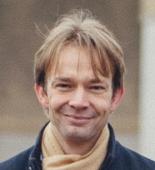
Melvyn R.W. Hamstra is a Full Professor at IÉSEG School of Management in France since 2023. His academic career includes roles as Associate Professor (2021–2023) and Assistant Professor (2020–2021) at IÉSEG, as well as Assistant Professor positions at the University of Maastricht (2015–2020) and the University of Amsterdam (2013–2015). He holds a Ph.D. in Behavioural and Social Sciences from the University of Groningen (2013), preceded by a Master’s (2009) and Bachelor’s (2007) in Psychology from the same institution. Research Interests : His work centers on organizational behavior, leadership, and employee motivation, with a strong emphasis on regulatory focus theory, employee voice dynamics, and knowledge management. Key themes include how leadership styles (e.g., promotion vs. prevention focus) influence team innovation, conflict resolution, and workplace morale. Publication Trends : Recent publications (2025–2024) explore topics such as gender bias in leadership evaluation, financial stress and counterproductive behavior, ethical conflict in teams, and the dual-edged role of humor in workplace negotiations. His longitudinal studies on religious engagement and life satisfaction, as well as theoretical models on knowledge withholding, highlight interdisciplinary breadth. Teaching : He contributes to bachelor and master’s programs at IÉSEG, focusing on leadership development, positive leadership, and organizational learning.
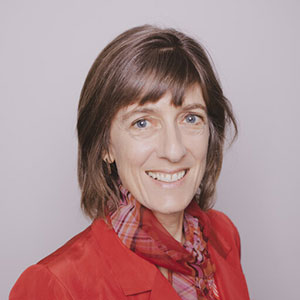
Wim Gevers is a faculty member at the Université libre de Bruxelles (ULB) and leads the CS4S – Cognitive Control & Sleep laboratory within the CRCN research centre. His work bridges cognitive psychology, neuroscience and sleep research to understand how the brain exerts control over thoughts and actions and how sleep contributes to these processes. Research Interests Cognitive Control & Metacognition: Investigating how subjective experiences such as confidence and the "urge-to-err" guide strategic adjustments in behaviour. Working Memory & Ordinal Cognition: Examining how order information is maintained and manipulated, and how these processes relate to mathematical competence. Sleep, Memory & Decision Making: Exploring how sleep-dependent consolidation influences motor learning and decision strategies. Across his 2022–2025 publications a clear trend emerges: a focus on metacognitive monitoring —how humans evaluate their own cognitive states—and the role of emotional and temporal context in shaping those evaluations. Studies range from reaction-time introspection and confidence judgements in perceptual tasks to the impact of aging and depression on metacognitive accuracy. Doctoral Supervision & Mentoring Whitney Stee (PhD 2024) – Sleep-dependent structural brain reorganization & motor learning Gaia Corlazzoli (PhD 2024) – Subjective experience in decision-making Myrtille Dewulf (PhD 2023) – Ordinal coding mechanisms in working memory Rebeca Sifuentes-Ortega (PhD 2023) – REM sleep and memory reactivation All dissertations were defended at ULB, Faculté des Sciences psychologiques et de l’éducation, with Wim Gevers formally listed as Promotor . Laboratory & Collaborative Networks As head of CS4S, Gevers coordinates a multidisciplinary team that combines behavioural experimentation, EEG/MEG, computational modelling and sleep polysomnography. The lab is embedded in the larger CRCN ecosystem, fostering collaborations with groups such as CO3 (consciousness), LCLD (language & deafness), and UR2NF (neurofunctional imaging).
Chao Ma is a Lecturer at the Research School of Management, Australian National University (ANU). He holds a Doctor of Philosophy, MPhil, Master of Business, and BBA in Human Resource Management from ANU and HKBU. His research focuses on Human Resource Management (e.g., perceived overqualification, career development) and Organisational Behaviour (e.g., leadership, unethical pro-organisational behaviour). He has supervised research students and contributed to over 22 peer-reviewed articles since 2016, exploring topics like AI in HR, knowledge-sharing platforms, and leadership dynamics. His work often examines cross-cultural contexts, particularly in China, addressing themes such as temporary worker integration, follower behaviour under authoritarian leadership, and the dual effects of overqualification on workplace outcomes. Collaborations span international scholars, focusing on topics like employee voice, humility in leadership, and stress management in multi-employment environments. Chao Ma's research bridges theoretical frameworks with practical implications for managing modern organisational challenges, emphasizing ethical leadership, employee well-being, and leveraging technology in HR practices. His recent studies highlight AI's role in improving migrant worker conditions and resolving knowledge-sharing dilemmas in digital platforms.
Professor Helena Cooper-Thomas is a faculty member at Auckland University of Technology (AUT), holding the position of Professor of Organizational Behavior in the AUT Business School. She also holds honorary positions at the University of Auckland and the University of Waikato, reflecting her broad academic influence in Aotearoa New Zealand. Her research and teaching focus on organizational behavior, with an emphasis on employee development and workplace relationships. Her research interests include: New employee adjustment and organizational socialization Proactive behavior and work engagement Workplace wellbeing and quality of working life Workplace friendships and person-organisation fit Quantitative and qualitative research methods Professor Cooper-Thomas's recent publications explore themes such as workplace gossip, psychological contracts, job crafting, and sustainability in organizations. Her work often investigates the social dynamics of onboarding, the role of leadership in psychological safety, and the impact of environmental practices on employee wellbeing. She employs both empirical and methodological approaches, contributing to both theoretical and practical understanding in organizational psychology. She has received scientific recognition including: Best Paper Award, Group & Organization Management (2024) Best Paper selected by the Careers Division of the Academy of Management (2023) Professor Cooper-Thomas is actively involved in mentoring and supervising graduate students at both Master’s and PhD levels, with recent projects covering topics such as broken psychological contracts, psychological safety for racial minorities, and menopause in the workplace. She contributes significantly to academic service as a Representative-at-Large for the Academy of Management’s Organizational Behavior Division (2022–2025) and as a member of the Royal Society Te Apārangi Marsden Panel for Economics and Human Behaviour (2022–2024). She also serves on editorial boards for the Journal of Business and Psychology and Journal of Managerial Psychology, and regularly reviews for top journals and grant agencies. Her outreach includes public engagement through articles in The Conversation and NZ Management magazine, translating research into practical leadership insights. She has collaborated with institutions across Europe, North America, and Asia, and has been a visiting scholar at the University of Toronto, Cass Business School, Tilburg University, and Exeter Business School. She co-organizes the annual Aotearoa New Zealand Organisational Psychology and Organisational Behaviour Conference, fostering scholarly exchange nationally.
Prof. Daantje Derks is a Full Professor at the Erasmus School of Social and Behavioural Sciences, specializing in Work and Organisational Psychology. His research focuses on workplace behavior, technology’s impact on work-life balance, agile team effectiveness, and job crafting. He has contributed extensively to understanding how organizational practices influence employee well-being and performance. Key research areas include: Agile teams and resource mobilization Technology-assisted work and its psychological effects Work-life boundary management Counterproductive work behaviors Recent work highlights include advancing theories on team resilience, analyzing smartphone use’s role in workplace stress, and evaluating policy guidelines for remote work. His studies often employ diary methods and meta-analyses to explore daily dynamics and long-term trends. Derks has supervised 5 academic works and collaborates internationally on organizational psychology topics. His research bridges theoretical frameworks (e.g., JD-R model) with practical applications for workplace design and policy-making.
Dr. Freek van Ede is an Associate Professor at the Faculty of Behavioural and Movement Sciences, Vrije Universiteit Amsterdam, specializing in Cognitive Psychology. He leads the Proactive Brain Lab, focusing on how the brain prepares for upcoming behavior through attention and working memory. His research employs EEG, eye-tracking, and virtual reality to study dynamic cognitive processes. Education: PhD in Cognitive Neuroscience (Cum Laude), Radboud Universiteit Nijmegen (2014) MSc in Cognitive Neuroscience (Cum Laude), Radboud Universiteit Nijmegen (2009) BSc in Psychology, University of Utrecht (2007) Research Interests: His work investigates how attention and working memory interact with anticipation, timing, and action. Key methodologies include EEG, eye-tracking, and virtual reality. Recent projects explore stimulus-driven selective attention and how visual working memories are prepared for action. Grants & Awards: NWO Vidi Grant (2023–2028, €800,000) ERC Starting Grant (2020–2025, €1.5 million) Young Investigator Award, CNS (2023) Early Career Awards from BACN and NVP (2023, 2022) Lab & Teams: He directs the Proactive Brain Lab, emphasizing innovative experimental designs and interdisciplinary approaches. The lab welcomes motivated students at all levels.
Prof. Ute-Christine Klehe is a Full Professor in Work and Organizational Psychology at Justus-Liebig-University Giessen (Germany) since October 2011, with prior tenured positions at the University of Amsterdam (2009-2011 as Associate Professor; 2005-2009 as Assistant Professor). She has conducted visiting research at Ghent University (2010) and maintains affiliations with the Academy of Management, Society of Industrial and Organizational Psychology (SIOP), and European Association of Work and Organizational Psychology (EAWOP). Ph.D. in Organizational Behaviour and Human Resource Management (University of Toronto, 2003) Diplom in Psychology (Philipps-Universität Marburg, 2000) Research focus spans career adaptability, job search dynamics, personnel selection validity, refugee labor market integration, and psychological assessment. Her work combines individual self-regulation with organizational factors, examining transitions across the lifespan. Recent publications emphasize: Career adaptability profiles and transitions Refugee integration barriers Age discrimination effects Psychopathy in workplace contexts Goal achievement strategies Scientific contributions include: 2017 Best Symposium Award (Academy of Management Careers Division) 2017 Highly Commended Award (Career Development International) 2014-2020 DFG grants for faking in selection & transparency effects Editorial roles in Journal of Organizational Behavior , Human Performance , and Journal of Vocational Behavior Grants and projects demonstrate €400,000+ funding for initiatives like TWOPAC training (2024-2025) and cross-European collaborations. She supervises funded PhD candidates and contributes to policy-oriented publications like SIOP White Papers.
Jiayin Guan is a Doctoral Researcher at Loughborough University's School of Design and Creative Arts, specializing in Inclusive Design and User-Centred approaches to wellbeing and behaviour change. He holds dual degrees in Industrial Design from Tsinghua University (China), completing both a Bachelor's and Master's degree. His research focuses on designing interventions to promote physical activity among older adults, with a particular emphasis on inclusive methodologies and sustainable behavior change. During his Master's studies, he collaborated on industry-government projects with organizations like P&G, Hisense, and CRRC, gaining practical experience in applying design solutions to real-world challenges. His work bridges academic research with practical implementation, aiming to address the unique needs of aging populations through innovative design strategies. Key research interests include gerontology, health promotion, and the intersection of technology with aging populations. His publications analyze factors influencing physical activity participation, develop novel intervention models, and explore ageing models for promoting active lifestyles. These studies emphasize both theoretical frameworks and actionable design solutions for policymakers and activity organizers. While no formal awards or grants are listed, his work contributes to critical areas of public health, aiming to enhance quality of life through design innovations.
Dr. Josanne van Dongen is an Associate Professor of Forensic Psychology at the Erasmus School of Social and Behavioural Sciences, Erasmus University Rotterdam, where she leads the forensic education in the Forensic and Legal Psychology master’s program. She is the director of the SAFER Lab, conducting research on empathy, psychopathy, and violence risk using electrophysiological and brain stimulation techniques. Erasmus University Rotterdam Erasmus School of Social and Behavioural Sciences Department of Clinical Psychology SAFER Lab (Director) Her research focuses on understanding the neurocognitive underpinnings of antisocial and dark personality traits, particularly psychopathy and the Dark Tetrad, and their relationship with empathy, impulsivity, and paraphilic behaviors. She investigates how brain modulation techniques like transcranial direct current stimulation can inform intervention strategies to reduce aggression and violence risk. Her work bridges clinical, forensic, and neuroscience domains. Recent publications explore deception in psychopathy, neural correlates of impulsivity in dark personalities, paraphilic behaviors, and early predictors of externalizing behavior in youth. Her research is highly interdisciplinary, combining behavioral, electrophysiological, and cross-cultural methods. Notable recognition includes the Early Career Award from the International Association of Forensic Mental Health Services (2017). She has served on the association’s Board of Directors and chairs the International Scientific Council of the Expertise Centre of Forensic Psychiatry in the Netherlands. Early Career Award, International Association of Forensic Mental Health Services (2017) Dr. van Dongen has received multiple research grants and contributes extensively through editorial work, including peer-review for the International Journal of Forensic Mental Health. She has chaired international symposia and presented at professional and academic conferences on threat assessment and psychopathy. She supervises research, including doctoral theses, and is involved in developing forensic psychological interventions. She leads the SAFER Lab, a multidisciplinary research group focused on Social Affective and Forensic Electrophysiological Research, aimed at promoting a safer society through scientific innovation in forensic mental health.
Aykut Berber is a Professor of Management and Organisation at the University of the West of England's Bristol Business School. His research spans critical HRM studies, focusing on historical management thought, workplace inclusion, power dynamics, and qualitative methodologies. Institution: University of the West of England School: Bristol Business School Academic Rank: Professor Email: aykut.berber@uwe.ac.uk Research Interests: As a leading scholar in critical management studies, Berber investigates: Historical evolution of management thought (Taylorism, Fayolism) Contemporary workplace inclusion and diversity Proactive work behaviors and job crafting Power structures and leadership dynamics Qualitative research methodologies Intersection of historical analysis with modern organizational development Recent Publications (2012-2024): His work spans interdisciplinary themes connecting organizational theory with historical analysis, including studies on: HR differentiation and inclusion Proactive workplace behaviors Power dynamics in managerial interactions Historical comparative studies of management doctrines Entrepreneurial risk management Resilience in organizational contexts
Prof. Arnold Bakker is a Full Professor of Work and Organizational Psychology at Erasmus University Rotterdam, leading the Work and Organizational Psychology research group. He also serves as Secretary General of the Alliance for Organizational Psychology and holds adjunct professorships at Lingnan University (Hong Kong). His research focuses on positive organizational behaviors such as work engagement, flow, and job crafting, emphasizing the JD-R (Job Demands-Resources) theory co-developed with Evangelia Demerouti. Key contributions include internet applications like the Job Demands-Resources Monitor and the Happiness Indicator. Bakker’s work bridges theory and practice, addressing employee well-being and organizational health. He has authored over 500 publications in top-tier journals and serves on editorial boards such as Journal of Organizational Behavior . Research Interests : Positive organizational phenomena, burnout prevention, work-life balance, and interventions for sustainable employability. His work integrates motivational processes with recovery mechanisms to enhance workplace vitality. Recent Trends in Articles : Focus on playful work design, AI’s impact on job design, and global validation of scales like the International Work Addiction Scale. His recent work explores neuroscientific underpinnings of engagement and recovery, such as video gaming’s role in post-work recovery. Awards : APS Fellow (2013), Thomson Reuters’ Most Influential Scientific Minds (2013–present). Labs/Teams : Coordinates international collaborations via the JD-R research network, developing evidence-based interventions for organizations. His lab emphasizes empirical validation of scales and cross-cultural applicability.
Dr. Antonio Andriella is a Postdoctoral Researcher at the Institut de Robòtica i Informàtica Industrial (IRII), a joint research center of the Spanish National Research Council (CSIC) and Technical University of Catalonia (UPC). He is an incoming Tenured Scientist at IRII expected to start by the beginning of 2026. Previously, he was a Research Scientist at Pal Robotics awarded with a Marie Skłodowska-Curie cofund fellowship in the H2020 project PRO-CARED (no.801342), and a Postdoctoral Researcher at the Artificial Intelligence Research Institute (IIIA) working on the Value-Aware Artificial Intelligence (VALAWAI) project. His educational background includes: PhD in Control, Robotics and Vision (2022) from Institut de Robotica i Informatica Industrial, CSIC-UPC MEng in Artificial Intelligence (2009) from Sapienza, University of Rome BSc in Computer Engineering (2006) from Sapienza, University of Rome Dr. Andriella's research focuses on creating proactive, personalized robots that can tailor their behavior to individual needs and preferences. His work spans Human-Centered Robotics , Socially Assistive Robotics , Robot Personalisation , Proactive Behaviour , and Explainable Robotics . He investigates how robots can explain their decisions to help users build clearer mental models of these systems, ultimately making robots more transparent and understandable. His research has significant applications in healthcare, particularly for elderly care and cognitive training. His recent publications demonstrate a strong focus on applying robotics to healthcare challenges, particularly in cognitive training for elderly patients with cognitive impairments. His work bridges theoretical AI approaches with practical applications in real-world environments, emphasizing user experience, personalization, and explainability across various contexts including frailty assessment, customer service interactions, and therapeutic applications. His scientific achievements have been recognized with prestigious awards: Georges Giralt award for the best European PhD thesis from euRobotics AIHUB.CSIC prize for the best AI PhD Thesis from the AI Hub of the Spanish National Research Council (CSIC) Dr. Andriella has been actively involved in multiple research projects including SWEET (Social aWareness for sErvicE roboTs), ROSPIA, FRAILWATCH, and DEMETER 5.0. He has organized workshops on trust, AI, ethics and personalization at major conferences including HRI, RO-MAN and ICSR, and has served as guest editor for journals such as International Journal of Social Robotics, Frontiers in Robotics and AI, and Paladyn Journal of Behaviour and Interaction Studies. His research group focuses on developing the CARESSER framework (aCtive leARning agEnt aSsiStive bEhaviouR) for in situ learning of robot social assistance, with applications in cognitive training therapy and elderly care. Current projects are exploring robot-assisted frailty assessment systems, dataset reliability for HRI research, and multilingual intent recognition on social robots, demonstrating his commitment to both theoretical advancements and practical implementations in the field.
Dr. Wiebke Doden is a Senior Lecturer in Organisational Behaviour at King’s Business School, specializing in Human Resource Management and Employment Relations. She previously held a postdoctoral position at the London School of Economics and Political Science, supported by a Swiss National Science Foundation (SNSF) mobility grant. Education: Doctor of Science in Work and Organisational Psychology (ETH Zurich), Diploma in Psychology (Otto-von-Guericke University) Her research bridges two core streams: career development (navigating career challenges) and self-regulation at work (proactive resource management). Themes include career transitions, job insecurity, employability, job crafting, and psychological contracts, emphasizing interactions between individuals and socioeconomic environments. Recent publications explore longitudinal, multi-level analyses of career plateau effects, relational job crafting dynamics, and employability in the post-job security era. Her work adopts mixed-method approaches and has been featured in The Atlantic and WirtschaftsWoche . Scientific Awards: Mobility grant from the Swiss National Science Foundation (SNSF) She serves on the editorial board of the Journal of Organizational Behavior and has published in top-tier journals like Annual Review of Organizational Psychology and Journal of Vocational Behavior .
Ronald Bledow is an Associate Professor of Organisational Behaviour & Human Resources at the Lee Kong Chian School of Business, Singapore Management University. He holds a Ph.D. in Organizational Psychology (with Highest Honors) from the University of Giessen (2010). His research focuses on affect and self-regulation, creativity and innovation, leadership dynamics, and multilevel organizational processes. Notable projects include the DYNAVITY joint Singapore-German research initiative and grants from the German Federal Ministry of Education and Singapore's Ministry of Education. His work bridges psychological mechanisms with organizational outcomes, emphasizing how temporal factors (e.g., chronotype alignment, sleep quality) and leadership behaviors influence creativity, work engagement, and procrastination. Key contributions include demonstrating how time pressure and positive affect compensate for self-regulatory failures and revealing inverted-U relationships between action-state orientation and creativity under low autonomy. Awards include the Deutsche Gesellschaft für Psychologie Dissertation Award (2011) and Outstanding Reviewer recognition from the Academy of Management. His research spans entrepreneurship self-efficacy dynamics, ambidextrous leadership, and the temporal patterns of team innovation. Current strategic priorities include digital transformation's impact on organizational creativity and well-being. His academic service includes grant peer reviews and contributions to journals like Journal of Applied Psychology and Academy of Management Journal . He maintains active collaborations with institutions such as Ulm University (Germany) and Amsterdam Business School.
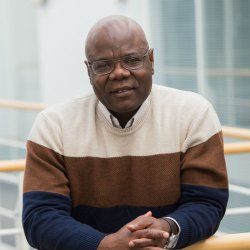
Professor Samuel Aryee is a Professor of Organisational Behaviour and Human Resource Management at Surrey Business School, University of Surrey. He joined the institution in November 2016 and currently serves as Director of the Doctoral Programme. Prior to joining Surrey, Professor Aryee held faculty positions at the National University of Singapore, Hong Kong Baptist University, Aston University, and King's College London, where he also served as Director of the Doctoral Programme at both Aston Business School and KCL's School of Management and Business. Professor Aryee earned his PhD and MA from McMaster University and BA (Hons) from University of Ghana, Legon. His extensive academic career spans multiple continents, reflecting his expertise in cross-cultural organizational behavior. Professor Aryee's research focuses on several key areas in organizational behavior and human resource management. His primary interests include: Strategic Human Resource Management and High-Performance Work Systems Services Management and Customer Service Performance Organizational Justice, Workplace Trust, and Employee Voice Work-Family Interface and Family Supportive Work Environments Workplace Safety and Employee Well-being Cross-cultural organizational behavior and leadership His research examines these topics through various theoretical lenses including self-determination theory, social exchange theory, conservation of resources theory, and psychological ownership frameworks. Professor Aryee's work often investigates the mediating and moderating mechanisms that explain how organizational practices and leadership behaviors influence employee attitudes, behaviors, and performance outcomes. Professor Aryee's extensive publication record demonstrates a consistent focus on understanding the links between human resource practices, leadership, and performance outcomes at multiple levels of analysis. His research frequently examines how psychological mechanisms such as need satisfaction, psychological empowerment, and psychological ownership mediate the relationships between organizational practices and outcomes. His work spans various industries including banking, hospitality, and public service sectors across multiple countries. Professor Aryee has served as Associate Editor for the Journal of Occupational and Organizational Psychology and Human Relations, and on the editorial boards of prestigious journals including Academy of Management Journal, Journal of Applied Psychology, Human Relations, Journal of Management Studies, and Management and Organization Review. As Director of the Doctoral Programme at Surrey Business School, Professor Aryee plays a significant role in mentoring and guiding PhD students through their research journey, contributing to the next generation of organizational scholars.