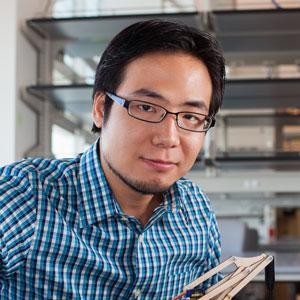
Xiaofan (Fred) Jiang is an Associate Professor of Electrical Engineering at Columbia University and an Affiliate in the Computer Science Department. He serves as Co-Chair of the Smart Cities Center at the Data Science Institute and Vice Chair of ACM SIGEnergy. His research spans intelligent embedded systems, mobile/wearable computing, Internet of Things, and connected health. Education B.Sc. (2004), M.Sc. (2007), Ph.D. (2010) in Electrical Engineering and Computer Science from UC Berkeley His work focuses on City-scale energy footprint tracking with real-time analytics Privacy-preserving wearable systems for urban safety AI-driven thermal comfort estimation in buildings Magnetic-based indoor localization Smart plug meters and energy analytics LLM integration for medical diagnostics Recent publications highlight trends in Reconfigurable drone systems for physical-digital interfaces Transformer architectures for speech and sensor data Generative AR for sensor data visualization Multi-modal physiological data analysis Programless smart home interfaces Scientific Awards NSF Graduate Fellowship Vodafone-US Foundation Fellowship NSF CAREER Award Students Jingping Nie (Ph.D., UNC Chapel Hill faculty from 2025) Minghui (Scott) Zhao (Ph.D. candidate, ACM SRC winner) Qijia Shao (Ph.D., now at HKUST) and active lab members contributing to ACM HumanSys, SenSys, and MobiCom publications.
Claudio Buongiorno Sottoriva is a Research Fellow in Public Management at Bocconi University, with a focus on healthcare and public sector organizational behavior. His work addresses challenges in peripheral healthcare systems, strategic HR management, and public sector reforms. Recent publications explore topics such as healthcare workforce dynamics, civil service recruitment gaps, and strategic personnel management in public institutions. His research spans both empirical and theoretical analyses of public administration challenges. For collaboration or inquiries, you may contact him at claudio.buongiorno@unibocconi.it .
Dr. Amit Shukla is an Associate Professor in the Department of Management Sciences at the Indian Institute of Technology Kanpur (IIT Kanpur), where he has been serving since 2015. Previously, he was faculty at IIM Shillong (2014-15). His academic journey includes an FPM from IIM Lucknow (2015), MBA from IIM Lucknow (2010), and B.Tech. from ISM Dhanbad (2001). He specializes in Organizational Behavior, Human Resource Management, and Marketing, with research focusing on psychological ownership, citizenship behavior, and sustainable marketing practices. Education: FPM (IIM Lucknow) - 2015. PhD thesis: "Conceptualization of Psychological Ownership: Development of Scale and Nomological Network." MBA (IIM Lucknow) - 2010 B.Tech. (ISM Dhanbad) – 2001 (Gold Medal as Batch Topper) Dr. Shukla's research spans multiple domains within organizational behavior and marketing: Emerging Employment Relationship Citizenship Behaviour and Psychological Ownership Positive Organizational Behavior Academic Excellence and Student Empowerment Talent and Performance Management Sustainable and Digital Marketing Strategies His recent work has increasingly focused on the impact of remote work, digital transformation in marketing, and sustainability practices in developing economies, particularly in the African context. Dr. Shukla's recent publications (2021-2025) demonstrate a clear evolution in his research focus. Initially centered on psychological ownership and organizational behavior in Indian contexts, his work has expanded to include cross-cultural studies in Africa, sustainable marketing practices, and the impact of digital technologies on consumer behavior. His 2024-2025 publications particularly emphasize sustainable business practices, digital marketing effectiveness, and the psychological aspects of remote work - reflecting contemporary organizational challenges. The geographic scope of his research has broadened significantly, with numerous collaborations focused on African business contexts. Scientific Awards and Recognitions: Joint recipient, Best Paper Recognition at 85th AoM Meeting 2025 Joint recipient, Best Paper Award at IMRC 2024 at IIM Ahmedabad Member, Editorial Advisory Board, 'Business Perspectives' (Sage) Recipient, Excellence in Teaching Award at IIT Kanpur in 2020-21 Recipient, Gold Medal as Batch Topper during B. Tech. at IIT (ISM) Dhanbad 2001 Dr. Shukla has been actively involved in numerous short-term training programs, particularly through the ITEC (Indian Technical and Economic Cooperation) initiative with the Ministry of External Affairs. He has conducted multiple workshops on "Strategic Human Resource Management for Organizational Excellence," "Leadership in the Modern Business Context," and "Fundamentals of HR Analytics" for international participants. His professional affiliations include Certified HR Analyst (Aon Hewitt), Member of National Academy of Psychology (NAOP), and Indian Academy of Management (INDAM). He has also served as a consultant for organizations including LIC, IOCL, and NEPA.
Dr. Taylor Brydges is a Research Principal at the Institute for Sustainable Futures (ISF) at the University of Technology Sydney (UTS), where she joined in September 2019 initially as a Visiting Scholar before transitioning to her current role. As part of the Resource Stewardship team, she focuses on sustainable production and consumption, the circular economy, and the fashion industry. She works closely with Dr. Monique Retamal on the project "Sustainable Fashion in Australia and sectoral resilience during the pandemic" and supports the work of the Product Stewardship Centre of Excellence. Dr. Brydges' educational background includes an Honours Bachelor of Arts in Urban Studies (with Minors in Political Science and Sociology) and a Master of Arts in Human Geography from the University of Toronto. She completed her PhD in Human Geography at Uppsala University in Sweden. Dr. Brydges' research interests span sustainable production and consumption, circular economy principles, fashion industry sustainability, environmental policy, environmental politics, and life cycle assessment. Her work critically examines how sustainable practices can be implemented across the fashion value chain, from material innovation to consumer behavior. She investigates the challenges and opportunities of transitioning to more sustainable fashion systems, with particular attention to the role of design, business models, and policy interventions. Her publication record demonstrates a strong focus on sustainable fashion systems, with particular emphasis on circular economy implementation, material innovations, and consumer behavior. Recent work explores the wellbeing economy framework for fashion, textile recycling challenges, and the role of digital platforms in sustainable consumption. Her research often takes a comparative international approach, examining practices across Australia, Sweden, Canada, and other global contexts. Dr. Brydges has secured significant research funding, including serving as the sole Principal Investigator on the project "Circular is the New Black: Investigating the Implementation of Circular Economy Principles in the Swedish Fashion Industry," funded by the Swedish Research Council from 2018-2021. This project was carried out at Stockholm University, Sweden and the Institute for Sustainable Futures, Australia. As part of the Resource Stewardship team at ISF, Dr. Brydges contributes to collaborative research efforts focused on sustainable resource use and circular economy transitions. Her work bridges academic research with practical applications for industry and policy stakeholders.
Maja Dyhre Foldal is a Postdoctoral Fellow at the RITMO Centre for Interdisciplinary Studies in Rhythm, Time and Motion (University of Oslo). She is affiliated with the Endestad Brain Imaging Group (EBIG) and FRONT neurolab research teams. Education : PhD in Cognitive Neuroscience (University of Oslo, 2021) Master of Philosophy in Psychology (University of Oslo, 2015) Bachelor in Psychology (University of Oslo, 2013) Research Focus : Investigates how the brain predicts future events using EEG and auditory experiments. Key areas include predictive timing , temporal regularities , attention modulation , and electrophysiological mechanisms of cognitive control. Her work explores how musical rhythms influence neural dynamics and selective attention. Publication Trends : Recent articles examine beta oscillations , orbitofrontal cortex lesions , and attentional synchronization with rhythmic stimuli. Subfields span auditory perception , neural oscillations , and cognitive resilience in working memory. Labs & Teams : Active member of the RITMO Centre (University of Oslo), contributing to interdisciplinary studies on rhythm and cognition. Collaborates with the Endestad Brain Imaging Group and FRONT neurolab on predictive timing and cognitive control projects.
Anne Håkansson is a Professor at the Department of Informatics , UiT The Arctic University of Norway . Her research bridges Artificial Intelligence and Cyber-Physical Systems with applications in mHealth and Smart Energy Systems . Current research focuses on proactive health promotion via digital twins and wearables. Explores robust reasoning in autonomous systems and smart nudging for behavioral change. Recent work includes AI for battery digitalization and multi-agent collision avoidance in dynamic environments. She contributes to Springer and Procedia Computer Science publications, with emphasis on context-aware AI and sustainable technologies . Active in the Open Distributed Systems (ODS) and Computational Analytics and Intelligence (CAI) research groups, and involved in projects like Better Balance in Informatics (BBI) and the Nudge Project .
Katarzyna Mierzejewska is a researcher at the University of Warmia and Mazury in Olsztyn, affiliated with the Department of Ichthyology and Aquaculture and Animal Bioengineering. Her scientific discipline spans Zootechnics and fishing, with a focus on fish parasitology, telemetry, and population dynamics. Parasitological studies of fish (Gobiiformes and others) Fish telemetry using hydroacoustics and radio telemetry Fish population analysis and invasive species monitoring Cross-disciplinary work in digital transformation and CSR in energy SMEs Her recent publications highlight interdisciplinary research trends, including parasite-host interactions, telemetry-based fish behavior studies, and organizational agility in the energy sector. She has co-supervised one PhD student and serves as a promoter for doctoral research. The department’s infrastructure supports telemetry studies, parasite research, and energy sector analyses.
Antony Paulraj is a Full Professor of Operations and Supply Chain Management at NEOMA Business School, where he contributes to the Information Systems, Supply Chain & Decision Making department. His extensive academic career spans teaching across undergraduate, masters, and doctorate programs, along with significant involvement in executive education initiatives across the UK, Europe, and India. Professor Paulraj earned his PhD in Operations Management from Cleveland State University in Ohio, USA. His research portfolio demonstrates deep expertise in supply chain management with a particular focus on sustainable practices, strategic sourcing, and supply chain innovation. His professional background includes over ten years of experience as an information technology consultant in the USA prior to entering academia. His scholarly contributions reveal a consistent focus on the intersection of operational excellence and sustainability. Recent publications (2023-2025) demonstrate particular interest in supply chain resilience, sustainable supply chain management practices, digital transformation in supply networks, and international buyer-supplier relationship dynamics. His work frequently addresses contemporary challenges such as geopolitical risks, environmental sustainability, and the impact of digital technologies on supply chain operations. Professor Paulraj's research appears in premier journals including Journal of Operations Management, Research Policy, International Journal of Operations and Production Management, Journal of Supply Chain Management, and Journal of Business Ethics. His publication record spans over two decades with consistent output demonstrating enduring scholarly contribution to the field. His teaching extends beyond traditional academic programs to include numerous executive education initiatives across multiple continents, reflecting his commitment to translating academic insights into practical business applications. His consulting background provides valuable industry perspective that informs both his research and teaching methodologies.
ZHANG Xiaomeng serves as Associate Professor of Organizational Behavior at Cheung Kong Graduate School of Business (CKGSB), holding multiple administrative leadership positions including Associate Dean for EMBA Program, Associate Dean for Inclusivity, Diversity and Equity, Executive Academic Director for Executive Education, and Director of the Research Center for Leadership, Behavioral Science & Inclusivity. Prior to joining CKGSB, she was a tenured Associate Professor at the Kogod School of Business at American University in Washington DC. Her educational background includes a PhD from the R.H. Smith School of Business at University of Maryland, College Park, where she received the Frank T. Paine Award for outstanding academic achievement, and a BA with emphasis in Economics and Business Administration from Sun Yat-sen University, China. Professor Zhang's research focuses on leadership, creativity, and motivation, with particular interest in how these areas interconnect in organizational contexts. Her work examines corporate governance, C-suite motivation, empowerment dynamics, and interactional relationships that influence workplace effectiveness. She has developed frameworks for understanding introvert creativity, gender-neutral leadership (H.E.R. leadership), and team behavioral integration in R&D environments. Her publication record shows a consistent focus on leadership-creativity relationships, with recent work exploring gender dynamics in executive leadership, workplace ostracism effects on creativity, and the interplay between task complexity and relational practices in Chinese business contexts. Her research often bridges Western organizational theories with Eastern business practices. Highly Cited Chinese Researchers of 2020 by Elsevier Highly Cited Chinese Researchers of 2019 by Elsevier Best Proceeding Paper Award, Academy of Management (2015) Kogod Business School Faculty Award for Outstanding Research (multiple years) National Science Foundation Grant recipient Professor Zhang teaches across multiple programs including Principles of Management, Organizational Behavior, Management of Organization and Human Capital, and International Business Practices in China. She has received numerous teaching awards including the Krowe Teaching Award Finalist recognition. Her media engagement includes significant coverage in BBC, Sina Finance, and Business Insider, particularly regarding leadership during the COVID-19 pandemic. She leads the Research Center for Leadership, Behavioral Science & Inclusivity at CKGSB, which has produced influential research on psychological resilience during work resumption after lockdowns.
Nastassia Josephine Hajal serves as an Assistant Clinical Professor in the Department of Psychiatry and Biobehavioral Sciences at the David Geffen School of Medicine, University of California, Los Angeles. Her research focuses on the intersection of child development, parental emotion regulation, and family systems, with particular emphasis on military-connected families and trauma transmission across generations. Dr. Hajal's research interests span multiple domains including child psychology, parenting dynamics, military family systems, trauma and stress transmission, pediatric mental health, and developmental neuroscience. Her work bridges clinical psychology with neurophysiological approaches, examining how parental emotional processes influence child development and socioemotional outcomes. She has developed expertise in studying emotion regulation within family contexts and identifying biomarkers that may inform intervention targets. Her publication record reveals consistent scholarly contributions since 2009, with increasing focus on military families and virtual intervention approaches in recent years. The research trajectory shows progression from foundational studies on HPA axis functioning and aggression in children to more applied work on trauma-informed interventions for military families. Key publication themes include parental emotion regulation as a mechanism for child socialization, biomarkers in parenting research, and innovative virtual home visiting programs for early childhood intervention. Principal Investigator: Interrupting the Intergenerational Transmission of Traumatic Stress: Identifying Parental Targets for Intervention by Looking Under the Skin (NIH K08HD097277, 2019-2023) Co-Principal Investigator: Neurophysiological and behavioral dynamics of emotion in mothers with infants (NIH F31HD070705, 2012-2013) Dr. Hajal maintains an active collaborative network, primarily with Blair Paley, Patricia Lester, and other UCLA researchers specializing in military family systems and child development. Her work has significant implications for developing targeted interventions to support at-risk families and improve early childhood mental health outcomes, particularly within military communities.
Dr. Lujie Peng serves as Assistant Professor in the MSW Department at Morgan State University's School of Social Work, based in the Health and Human Services Center, Room 504, Baltimore, MD. Her academic credentials include: PhD from University of Maryland School of Social Work MSW from Nanjing University School of Social and Behavioral Sciences, China Bachelor of Laws in Social Work from Nanchang University School of Public Administration, China Dr. Peng's research examines American attitudes toward social welfare and criminal justice policies, with emphasis on evidence-based interventions for substance misuse and violence prevention. Her work integrates comparative welfare state analysis and community-engaged approaches to advance health equity, particularly through public health literacy initiatives targeting vulnerable populations.
Jean-Pierre Dumazert is an Associate Professor and Director of the Human Resources and Management Department at Excelia Business School (Excelia Group) in La Rochelle, France, a role he has held since 2011. He joined Excelia in 2010 after 15 years in HR consulting for medium/large companies, specializing in change management and HR standardization projects. His academic credentials include: Doctorate in Management Sciences (2009), Paul Valéry University Montpellier 3 DEA in Management Sciences (2004), AUREP Clermont-Ferrand DESS in Marketing (1998), University of Montpellier Dumazert’s research centers on Human Resources Management, Diversity and Inclusion, and Organizational Behavior, with emphases on transgender workplace inclusion, knowledge hiding dynamics, paternal gatekeeping, and virtual environment applications (e.g., massively multiplayer games) to leadership practices. His teaching philosophy actively reduces screen time to foster student creativity and collaborative spirit. Analysis of his 2017–2024 publications reveals consistent interdisciplinary trends: blending gender studies with HR management (e.g., identity transitions to motherhood), examining ethical dilemmas in knowledge sharing, and leveraging gaming metaphors for real-world team leadership. Over 60% of his recent work addresses diversity challenges, particularly intersectional identities and systemic discrimination. Administratively, he serves as Excelia’s Diversity Representative (since 2019), previously directed the Diversity & Talent Chair (2014–2018), and holds memberships in FNEGE (since 2014) and AFMD (since 2016). His work directly informs institutional anti-discrimination mechanisms and gender equality initiatives.
Dr. Ashley Gluchowski is a Research Fellow at the University of Salford's School of Health & Society, specializing in clinical exercise physiology and strength training implementation for aging populations. As a certified special population specialist and behavior change expert, she leads innovative research bridging exercise science with public health to address muscle weakness in older adults. Her academic journey includes: BMSc with Honours Specialisation in Medical Science from Western University, Canada MSc in Medical Science (Pharmacology & Physiology) from McMaster University, Canada PhD from Auckland University of Technology, New Zealand focusing on eccentric resistance training in older adults Dr. Gluchowski's research employs co-design methodologies to develop strength training awareness campaigns, implement evidence-based guidelines across diverse settings, and create technology-enabled solutions for strength training participation. Her work addresses critical gaps in public and professional awareness of strength training guidelines, with the goal of embedding evidence-based practices into workplaces, community spaces, and healthcare systems to promote proactive health management in later life. Analysis of her recent publications reveals a cohesive research trajectory focused on implementation science for strength training in aging populations, with particular emphasis on awareness gaps, effective messaging strategies, and brief interventions suitable for primary care and community settings. Her interdisciplinary approach integrates exercise physiology, behavior change theory, and public health policy to tackle the significant challenge of muscle weakness as a predictor of mortality and disability. Dr. Gluchowski actively supervises PhD students in areas including strength training awareness, mass media messaging, policy implementation, and behavior change strategies for middle-aged and older adults. She currently leads three major research projects: BA/Leverhulme Small Grants: Developing brief muscle-strengthening interventions for primary care (2025-2027) ATTAIN Pump Prime Award: Overcoming awareness barriers for evidence-based exercise in later life (2025) START Project: Strength Training Awareness and Referral Technology (2023-2024) Her research contributes to multiple UN Sustainable Development Goals, particularly those related to healthy aging, quality education, economic growth through reduced healthcare burden, and reducing health inequalities across diverse populations.
Dr. Melanie Karthaus serves as a Researcher in the Experimental Ergonomics department at the Leibniz Research Centre for Working Environment and Human Factors (IfADo) in Dortmund, Germany. She operates within the Ergonomics research division under Department Head Prof. Dr. Edmund Wascher, focusing on age-related cognitive changes in complex tasks like driving. Her work bridges neuroscience, psychology, and human factors engineering to address challenges in an aging workforce and driving population. Her research centers on cognitive aging processes, particularly examining how executive functions change with age and impact real-world activities. Key areas include: Age-related differences in driving behavior and safety Neurophysiological correlates of cognitive load using EEG Compensatory strategies for aging drivers Monotony and fatigue effects across the lifespan Human-robot collaboration design principles Current projects investigate neural mechanisms underlying proactive versus reactive driving behaviors in older adults through the Dortmunder-Bonner Longitudinal Study (DoBoLSiS). Her publication analysis reveals consistent focus on driving safety across aging populations, with recent expansion into human-robot collaboration. Methodologically, she specializes in mobile EEG applications within realistic environments, contributing to neuroergonomics field validation. Collaborative patterns show sustained partnership with the IfADo Ergonomics team, particularly with Wascher, Getzmann, and Reiser across multiple high-impact studies.
Wajda Wikhamn serves as Associate Professor in the Department of Communication and Culture at BI Norwegian Business School, where she has been employed since 2018. Her academic career shows steady progression from PhD candidate to associate professor at University of Gothenburg (2004-2018) before joining BI. Her scholarly profile centers on organizational behavior and human resource management with particular expertise in talent management systems and their psychological impacts on employees. Dr. Wikhamn's educational foundation includes a PhD in Business Administration from University of Gothenburg (2008), following which she held successive academic positions at the same institution. Her research interests span talent management, sustainable HR practices, innovation dynamics, gender diversity in R&D settings, and the psychological mechanisms underlying employee responses to organizational practices. Analysis of her recent publications (2019-2023) reveals consistent focus on how organizational practices affect employee psychological states and performance outcomes. Her work frequently employs theoretical frameworks from social identity theory, psychological contract theory, and conservation of resources theory, with methodological approaches ranging from multi-study constructive replications to longitudinal case studies. A recurring theme examines the tension between organizational demands (like after-hours communication expectations) and employee well-being. Her research has appeared in leading journals including Work & Stress , Human Resource Management Journal , and International Journal of Human Resource Management , demonstrating strong engagement with both theoretical development and practical implications for organizations. Current work shows particular attention to digital workplace boundaries and the nuanced impacts of talent designation systems. Dr. Wikhamn maintains active research collaborations with scholars across Scandinavia and internationally, as evidenced by her co-authored publications with researchers from multiple institutions. Her work bridges academic theory and practical HR applications, particularly in Scandinavian business contexts where she examines how organizational practices affect employee experiences and organizational outcomes.