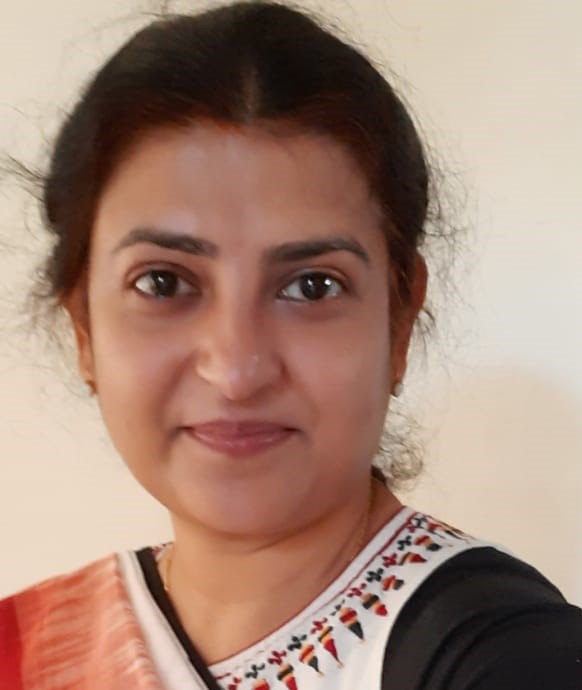
Barbara Caputo is a Full Professor at Politecnico di Torino, leading the VANDAL Laboratory and directing the AI@PoliTo Interdepartmental Lab. She holds a double affiliation with the Italian Institute of Technology (IIT) and has held roles at Idiap-EPFL and Sapienza University. Her research focuses on AI, computer vision, domain adaptation, and federated learning. She contributes to national AI policy, including the Italian Strategy on AI and the National PhD on AI for Industry 4.0. She is an ERC Laureate and ELLIS Fellow, co-founding ELLIS society. Her work spans visual place recognition, action recognition, and cross-domain learning. Education: PhD in Computer Science from KTH Royal Institute of Technology (2005). Major roles include Rector’s Advisor on AI at PoliTo, Board Member of ELLIS, and coordinator of the AI & Industry 4.0 vertical in the National PhD program. Awards include ERC Laureate (2017), ELLIS Fellow (2019), and Inspiring Fifty Italy (2018). Her research emphasizes federated learning, domain adaptation, and AI ethics. Recent articles explore domain generalization, resource-efficient federated models, and AI-environment interactions. She collaborates with institutions like MUR, CNR, and the European Commission on AI policy and tech initiatives.
Dino Pedreschi is a Full Professor of Computer Science at the University of Pisa, affiliated with the Department of Computer Science (DI-UNIPI). He co-leads the Pisa KDD Lab, a joint research initiative between the University of Pisa and the Italian National Research Council’s Institute of Information Science and Technology, one of the earliest labs focused on data mining and knowledge discovery. His research spans Big Data Analytics , Social Network Analysis , Human Mobility Analysis , Privacy-by-Design , Explainable AI (XAI) , and ethical data mining . He is a pioneer in privacy-preserving data mining and has contributed significantly to understanding societal impacts of AI and big data. Recent publications highlight trends in explainable AI , fairness-aware data mining , urban mobility modeling , and socio-economic nowcasting , reflecting a strong interdisciplinary focus combining computer science, social science, and policy. Notable scientific awards include: Google Research Award on Privacy (2009) University of Pisa Ordine del Cherubino (2017) Pedreschi has played leadership roles in major conferences such as ECML/PKDD (Co-Chair 2004), ICDM (Vice-Chair 2005), and ICDE (Vice-Chair 2014). He founded the Business Informatics MSc program at the University of Pisa to train interdisciplinary data scientists. He has been a visiting scientist at the University of Texas at Austin, CWI Amsterdam, UCLA, and the Barabási Lab at Northeastern University. He actively contributes to European research initiatives including SoBigData++, FAIR, and TAILOR, and has advised on AI policy, including testimony before the Italian Parliament on AI and labor markets. He is a key member of the Pisa KDD Lab, a leading research group in data science and AI ethics, fostering collaboration between academia and public institutions.
Andrea Santilli is a Research Scientist at Nous Research and holds a PhD in Computer Science from GLADIA at Sapienza University of Rome. His research focuses on large language models (LLMs), robustness, reliability, and multimodal learning. He previously worked at Apple MLR, Hugging Face’s BigScience, and Pi School. He earned his MSc and BSc in Computer Science from Tor Vergata University and Sapienza. Education: PhD in Computer Science, Sapienza University of Rome (2024) MSc in Computer Science, University of Roma Tor Vergata (2020) BSc in Computer Science, University of Roma Tor Vergata (2018) Research Interests: Santilli’s work spans LLM robustness , mechanistic interpretability , multimodal neural databases , and instruction-tuning . He introduced Parallel Jacobi Decoding and contributed to projects like BLOOM, Camoscio, and Fauno. His research bridges syntax-aware NLP, privacy-preserving LLMs, and cross-modal alignment. Publications: His work includes advancements in 3D-text latent space alignment (CVPR 2025), evolutionary merging (ICML 2025), and efficient decoding (ACL 2023). Over 15+ peer-reviewed papers span venues like ACL, CVPR, and ICLR. Awards: Received the Emanuele Pianta Award for his MSc thesis on continual language learning with syntax-based episodic memory. Grants & Projects: Winner of ‘Machine Learning Algorithms for Translation’ grant (2022), developing Parallel Decoding Co-PI for ‘Multimodal AI for 3D Analysis’ (2021) with Ecole Polytechnique Labs & Teams: Active in GLADIA (Sapienza), Apple MLR, and Hugging Face’s BigScience initiative. Core contributor to open-source projects like PromptSource and BLOOM.
Alberto Monge Roffarello is an Assistant Professor (RTDb) at the Department of Control and Computer Engineering (DAUIN), Politecnico di Torino, where he is a member of the e-Lite Research Group. He teaches courses including Human-AI Interaction, Digital Wellbeing, and Web Applications across multiple degree programs such as Computer Science and Systems Engineering, Computer Engineering, and Film and Media Engineering. His research centers on Human-Computer Interaction, with a strong focus on Digital Wellbeing and End-User Development in the Internet of Things . He investigates how users can personalize smart environments through trigger-action programming and how design patterns in digital interfaces—such as Infinite Scroll and Never-Ending Autoplay—exploit psychological vulnerabilities to capture attention. His work aims to empower users with tools for self-control, meaningful interaction, and habit mitigation. The recent publications highlight a consistent trajectory in digital self-control tools , attention-aware design , and semantic recommendation systems for IoT. His research bridges theoretical analysis with practical tools, including conversational agents (HeyTAP), debugging platforms (EUDebug, My IoT Puzzle), and ontologies (EUPont) to lower the barrier for non-technical users. Scientific contributions include: Systematic review of digital self-control tools (TOCHI 2022) Typology of Attention-Capture Damaging Patterns (CHI 2023) Design frameworks for meaningful interactions (AVI 2022) Behavioral interventions for smartphone habits (TiiS 2021) He actively supervises PhD students—Francesca Russo, Robert Everett Schwartz, and Luca Scibetta—on topics ranging from AI for education to digital wellbeing in high-schools. His work is supported by competitive research projects such as EMPATHY - Empathetic Mobility Platform . He has contributed to multiple national and international collaborations, notably with Santa Clara University (USA). Alberto leads and participates in research initiatives within the e-Lite - Intelligent and Interactive Systems group, focusing on intelligent interfaces, user empowerment, and ethical design. His lab develops tools that translate high-level user intentions into executable IoT rules, promote digital literacy, and support conscious technology use.
Diana Gratiela Berbecaru is an External Collaborator and External Lecturer at the Department of Control and Computer Science (DAUIN), Politecnico di Torino, where she contributes to teaching and research in cybersecurity and digital identity. She is affiliated with the TORSEC Security Group and actively participates in EU-funded research projects such as Q-FENCE, focusing on quantum-resistant cryptography. She teaches core courses including Security and Privacy for Digital Identity Frameworks and Information Systems Security , and has been recognized with the Italian national scientific habilitation as Associate Professor in 2025, affirming her academic standing. Full Name: Diana Gratiela Berbecaru University: Politecnico di Torino Department: Department of Control and Computer Science (DAUIN) Academic Rank: Associate Professor (habilitated) Teaching Status: Part-time External Lecturer Email: diana.berbecaru@polito.it Her research focuses on cybersecurity, identity management, and trusted computing, with specific interests in authentication, authorization, data privacy, network security, and trusted computing in distributed and IoT environments. She investigates practical implementations of digital identity systems using the eIDAS infrastructure, certificate validation, TLS security, and post-quantum cryptography. Her work bridges theoretical security models with real-world deployment challenges. Her recent publications (2022–2025) reflect a strong focus on TLS security, X.509 certificate analysis, anomaly detection using AI, remote attestation for IoT, and post-quantum migration strategies. These works are published in high-impact venues such as IEEE Access, IEEE ISCC, and ARES, indicating active and influential contributions to the cybersecurity research community. The research trend shows a consistent emphasis on practical tools and frameworks for enhancing trust and security in digital systems. Scientific Awards and Recognition: Italian National Scientific Habilitation as Associate Professor (Abilitazione Scientifica Nazionale, II fascia), 2025 She serves as an Associate Editor for IEEE Transactions on Network and Service Management and IEEE Access , and as a Guest Editor for Electronics and Computer Networks . She chairs and co-chairs international workshops such as TrustAICyberSec and IMTrustSec, and is a frequent member of program committees for major conferences including ARES, IDC, and ISCC. These roles demonstrate her active engagement in academic leadership and knowledge dissemination. Labs and Research Groups: TORSEC - Security Group (DAUIN): Core research group focusing on cybersecurity, trusted systems, and digital identity.
Li Li is a Professor of Software Engineering at Beihang University , China. Previously, he served as an ARC DECRA Fellow and Senior Lecturer at Monash University , leading the SMart software Analysis and Trustworthy computing (SMAT) research lab at the Department of Software Systems and Cybersecurity. His academic journey includes a Ph.D. in Software Engineering from the University of Luxembourg (2016), supervised by IEEE Fellow Prof. Yves Le Traon and Dr. Jacques Klein. Research Interests Li's research focuses on Mobile Software Engineering (Mobile Security, Quality Assurance) and Intelligent Software Engineering (SE4AI, AI4SE). He applies static code analysis , dynamic program testing , and machine/deep learning to enhance software security and reliability. Key areas include Android API evolution, automated patch validation, and multi-language code analysis frameworks like Scalpel for Python. Scientific Recognition ARC DECRA Fellowship Rising SE Research Star Top-5 Most Impactful Early Career SE Researchers (2020, 2017) 5 Best/Distinguished Paper Awards across PLDI, WWW, ASE, MSR, and SANER Academic Contributions He has contributed to foundational Android analysis tools (e.g., AndroZoo++, DroidRA) and developed scalable systems for distributed program analysis (Seads). His work appears in top venues like ICSE, ESEC/FSE, ASE, ISSTA, POPL, and TSE.
Chiara Bodei is an Associate Professor at the Department of Computer Science, University of Pisa. She specializes in cybersecurity, formal methods, and programming languages. Her teaching responsibilities include courses such as 'Programming Fundamentals with Laboratory' and 'Security Methods and Verification' at both undergraduate and graduate levels. She has contributed to research in automotive cybersecurity, IoT security, and formal analysis of software systems. Her work emphasizes secure communication protocols, privacy policies in automotive data, and context-aware security mechanisms. She collaborates with industry and academia on projects related to software-defined vehicles and IoT security. Her research has been published in top-tier conferences and journals, focusing on practical and theoretical advancements in computer security and formal methods. Research Interests: Cybersecurity, Formal Methods, Automotive Systems Security, IoT Security, Programming Languages, Context-Aware Systems. She has co-authored numerous papers on topics such as vehicular communication security, secure automotive protocols, and privacy in IoT systems. Teaching: Bodei has taught courses like 'Fondamenti di Programmazione' (undergraduate), 'Security Methods and Verification' (graduate), and 'Language-Based Technology for Security' (master’s level) across multiple academic years. She emphasizes practical programming skills and theoretical foundations in her courses. Labs/Teams: Her work is supported by the Department of Computer Science labs at the University of Pisa, focusing on applied research in cybersecurity and formal systems.
Anna Monreale is an Associate Professor in the Department of Computer Science at the University of Pisa and a key member of the Knowledge Discovery and Data Mining Laboratory (KDD-Lab), a joint research group with the Information Science and Technology Institute of the National Research Council (ISTI-CNR) in Pisa. Her academic career is rooted in the University of Pisa, where she completed her Bachelor's, Master's, and Ph.D. in Computer Science. Her research focuses on privacy-preserving data analytics, with core interests in big data analytics, social network analysis, spatio-temporal mining, and explainable AI. She is particularly known for her work on privacy-by-design in data mining and evaluating privacy risks in analytical processes. Her research bridges technical innovation with ethical and legal considerations in data science. Her recent publications reveal a strong trend toward explainable AI, privacy in federated learning, and risk assessment in mobility and health data. She actively contributes to developing methods for explaining black-box models, assessing privacy exposure, and balancing privacy, utility, and fairness in AI systems. Privacy by Design Ambassador (2014) ISTI-CNR Young++ Researcher Award (2014) Monreale has advised and co-chaired several international workshops, including PriSMO, PinSoDa, and MoKMaSD, and serves on editorial boards such as Transactions on Data Privacy. She teaches advanced data mining, big data ethics, and database systems across multiple graduate and undergraduate programs. She is involved in major EU projects like SoBigData, XAI, TAILOR, and HumMingBird, reflecting her leadership in data science and AI ethics. She is affiliated with the KDD-Lab, a prominent research group focused on knowledge discovery, social mining, and big data analytics, contributing to both theoretical advances and real-world applications in privacy-aware data science.
Francesco Greco is a Research Fellow and Ph.D. student at the University of Bari Aldo Moro's Computer Science Department, actively contributing to the Interaction, Visualization, Usability & UX (IVU) Laboratory under Prof. Maria Francesca Costabile. He completed a visiting research position at King's College London's Cybersecurity (CYS) group from October 2023 to March 2024 under Prof. Luca Viganò's supervision. His academic qualifications include: Master's degree in Computer Science (2022, University of Bari, full marks with honors) Bachelor's degree in Computer Science and Digital Communication (2020, University of Bari - Taranto, full marks with honors) Greco's research centers on Human-Computer Interaction and Usable Security , with specialized expertise in End-User Development , Internet of Things security , Computer Vision , and eXplainable AI for cybersecurity . His work develops human-centered security tools that translate technical findings into actionable user protections, particularly through phishing detection systems that generate intuitive explanations. Analysis of his 15 recent publications (2023-2025) reveals a cohesive research trajectory focused on XAI-driven security interventions . Key themes include timing optimization for phishing warnings, human factors in cybersecurity incidents, and LLM-based educational tools. His work consistently bridges theoretical HCI principles with practical security applications, as demonstrated by tools like APOLLO for phishing email analysis. Greco actively collaborates within the IVU Lab ecosystem and maintains international partnerships, including his recent work at King's College London. His research output demonstrates significant contributions to usable security frameworks and cybersecurity education methodologies.
Dr. Dipanwita Thakur serves as Assistant Professor at the Department of Computer Engineering, Modeling, Electronics and Systems (DIMES) at the University of Calabria, Italy since July 2023. She is an active member of the European Cooperation in Science & Technology (COST Action CA22104) focusing on cybersecurity and serves in the IEEE Future Networks Working Group for Artificial Intelligence/Machine Learning. Previously, she held a 15-year Assistant Professor position at Banasthali University, Rajasthan, and has industry experience at TechMahindra and C-DAC. Education: Ph.D. in Smart Healthcare from West Bengal University of Technology, Kolkata M.Tech. in Software Engineering from Banasthali Vidyapith MCA from NIELIT, Government of India B.Sc. from University of Calcutta Her research pioneers Green Artificial Intelligence with emphasis on energy-efficient federated learning and smart healthcare applications. She develops privacy-preserving human activity recognition systems using multimodal data fusion, focusing on performance evaluation and environmental sustainability. Her work bridges theoretical machine learning with practical healthcare solutions, optimizing AI systems for reduced carbon footprint while maintaining clinical efficacy through hardware-algorithm co-design and quantization techniques. Recent publications reveal a strong trajectory toward sustainable AI, with increasing focus on energy-aware federated learning frameworks, multimodal medical segmentation, and non-IID data handling. Her work consistently addresses the critical balance between model accuracy, convergence speed, and energy consumption across edge devices, with growing emphasis on quantization techniques and hardware-algorithm co-design for real-world deployment. Scientific Awards: Elevated to IEEE Senior Member (2024) Dr. B.C. Roy Memorial Scholarship for outstanding 10th Board results (1992) Student Science Seminar Award by West Bengal Government (1990) Dr. Thakur actively mentors students as evidenced by her congratulations to advisee Farwa for paper acceptances. She serves as Associate Editor for Information Fusion (Elsevier) and IEEE Sensors Journal, and holds editorial roles at Scientific Reports. Her research is advanced through COST Action CA22104 and IEEE working groups, though specific grant details aren't listed in the source material. She has organized key workshops including Green-Aware AI 2024 and Green Federated Learning at IJCNN 2025. She leads research within the MONAI community on data quality and federated learning, and contributes to IEEE IoT and Future Networks initiatives. Her work with the COST Action CA22104 Behavioral Next Generation in Wireless Networks connects cybersecurity with sustainable AI development, while her Missouri S&T visiting scholar position focuses on energy optimization for federated learning systems.
Agostino Cortesi is a Full Professor at Ca' Foscari University of Venice , affiliated with the Department of Environmental Sciences, Informatics and Statistics. He serves as Rector's Delegate for Research Quality Assessment and Deputy Coordinator of the Scientific Committee for the Innovation Ecosystem Project. His academic career includes a PhD in Applied Mathematics and Informatics from the University of Padova (1992), a postdoctoral fellowship at Brown University, and visiting professor roles at institutions such as the University of Illinois and École Normale Supérieure Paris. Research interests focus on software engineering , static analysis , security applications , and abstract interpretation . He has pioneered techniques for formal verification of software systems and explored cybersecurity in e-Government and robotics. His work spans over 200 publications in top journals and conferences (e.g., ACM TOPLAS, IEEE TSE, POPL, PLDI). Key contributions include advancements in abstract domains for behavioral property verification and security-oriented analysis frameworks. He has held leadership roles including Vice-Rector at Ca' Foscari, Dean of Computer Science programs, and Chair of the Department of Computer Science. Cortesi coordinates EU Horizon 2020 projects (e.g., Families_Share €1.6M) and regional initiatives like CEVID (€360K). He founded Factors , a university spin-off focused on robotic systems verification, which won the 2020 Veneto SmartCup ICT Prize. Education: PhD in Applied Mathematics and Informatics (1992, University of Padova) Editorial Roles: Co-Editor-in-Chief of Springer’s 'Services and Business Process Reengineering', and member of editorial boards for 'Computer Languages' and others Grants: Over €3M in EU and regional funding for projects in cybersecurity, Industry 4.0, and digital innovation Teaching includes courses on Software Correctness , Data Programming , and Computer Networks across Computer Science and Management programs. His research lab actively engages in industrial partnerships with Cisco, Leonardo, and AGID (Italy’s Digital Agency).
Massimo Poncino is a Full Professor at the Department of Control and Computer Science (DAUIN) within the Faculty of Engineering at Politecnico di Torino. He serves as Scientific Advisor for the STMicroelectronics partnership and coordinates basic engineering subjects. A Senior Member of IEEE since 2012 and Fellow since 2012, he has served on editorial boards for IEEE Transactions on Computer-Aided Design, IEEE Design & Test of Computers, and ACM Transactions on Design Automation. Education: Laurea in Electronic Engineering (1989) and PhD in Computer and Systems Engineering (1993) from Politecnico di Torino Academic Career: Visiting Scientist University of Colorado (1993-1994), Researcher at Politecnico di Torino (1995-2001), Associate Professor at University of Verona (2001-2004), Full Professor at Politecnico di Torino (2006-present) His research focuses on energy-efficient digital systems , including design automation of SoCs, hardware-aware AI, battery management, cyber-physical systems, and embedded systems. Recent publications highlight advancements in digital twins for batteries , low-power neural network deployment , and IoT privacy . Scientific Awards: Recognition of Service Award - ACM (2013) Certificate of Appreciation - IEEE Circuits and Systems Society (2006, 2008, 2009) IEEE Fellow (2012-) Research Involvement: EU H2020, VI/VII Framework Programs evaluator Scientific Director for projects: Approxim@ction, EMBAI, DISLO-MAN, DAMASCO Member of EDA research group Teaching: Course director for Energy Management for IoT (2019-2025) Lecturer for Computer Science courses (2003-2025)
Giuseppe Desolda is an Associate Professor at the Computer Science Department of the University of Bari Aldo Moro , where he has been since July 2, 2022. He leads research at the Interaction, Visualization, Usability & UX (IVU) Lab , focusing on Novel Interaction Techniques , Internet of Things development, and Usable Security . His work includes coordinating the PRIN PNRR DAMOCLES project (2022-2025) on human-centric cybersecurity and leading Work Package 1 of PNRR SERICS. PhD in Computer Science from University of Bari Co-author of over 110 publications Associate Editor for IEEE Access Journal Research interests span Human-Computer Interaction (HCI), End-User Development (EUD) for IoT, and Usable Security systems. His recent work explores AI-driven usability evaluation, voice-based 3D modeling, and GDPR-compliant software frameworks. Article trends show focus on phishing mitigation , smart environment customization , and privacy-by-design methodologies. Publications appear in TOCHI , FGCS , IJHCS , and BIT . Scientific achievements include: Selected for Heidelberg Laureate Forum (2019) LARE spin-off grant (EUR 50,000, 2013) He supervises PhD students Andrea Esposito and Francesco Greco, and has advised multiple funded research projects (PRIN DAMOCLES, DevProDev, PNRR SERICS). Teaching roles include courses on Human-Centered AI, IoT Security, and Web Programming across undergraduate and graduate programs.
Dr. Domenico Ciuonzo is an Assistant Professor at the University of Naples Federico II , Department of Electrical Engineering and Information Technologies. His research focuses on Information Fusion , Statistical Signal Processing , Wireless Sensor Networks , Network Analytics , Artificial Intelligence , and Wireless Communications . He actively explores applications in deep learning , encrypted traffic classification , and IoT security . His recent work emphasizes explainable AI , quantum machine learning , and class incremental learning for network intrusion detection. Over 30+ publications span topics like decision fusion in MIMO systems , mobile app traffic analysis , and cybersecurity for IoT . He is also involved in dataset development (e.g., MIRAGE-APP× ACT-2024) and algorithmic frameworks for encrypted traffic classification . Key research trends include: Optimizing holographic communication systems and reconfigurable intelligent surfaces for wireless networks Developing attack-adaptive intrusion detection systems resilient to emerging threats Advancing quantum computing applications in network monitoring and prediction His research integrates statistical signal processing with modern AI techniques , addressing challenges in data privacy , network security , and resource-constrained environments .
Igor Bisio is a Full Professor at the Department of Naval, Electrical, Electronics, and Telecommunications Engineering (DITEN) at Università di Genova. His research focuses on IoT-driven structural health monitoring, microwave imaging for biomedical applications, and wireless surveillance systems. Teaches courses on telecommunications, IoT, and machine learning Pioneers low-cost IoT solutions for SHM and post-stroke rehabilitation Develops microwave tomography techniques for pediatric stroke diagnostics Advances privacy-preserving Wi-Fi-based crowd monitoring Recent research trends include edge AI integration, compressive sensing for vibration analysis, and multi-class object tracking in aerial scenes. He also explores UAV-based monitoring systems, WiFi fingerprinting for localization, and Banach space inversion models for electromagnetic imaging. His work spans interdisciplinary domains combining electrical engineering, biomedical applications, and wireless network security.