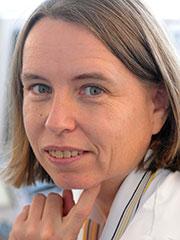
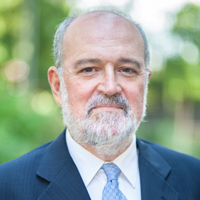
Andreas Ekelhart is a Researcher at TU Wien's Department of Information and Software Engineering. His work focuses on cybersecurity, cyber-physical systems, and industrial control systems. He specializes in developing frameworks like SLOGERT for automated log analysis and Kyrstal for attack discovery using knowledge graphs. His research also explores digital twin technology for threat detection and semantic web applications in machine learning systems. Key contributions include the VloGraph framework for distributed security log analysis and the QualSec approach for automated security risk identification in production systems. He collaborates on standards like AutomationML and emphasizes privacy-preserving data analysis through semantic architectures.
Mohamed Khamis is an Associate Professor at the University of Glasgow , specializing in Human-Computer Interaction (HCI) with a focus on Human-centered Security and Eye Tracking for privacy protection. His research spans Pervasive Displays , Usable Security , and User Privacy in immersive environments. PhD from Ludwig Maximilian University of Munich (LMU) Supervised by Florian Alt and Andreas Bulling Research Interests: Usable Security and Privacy Designing Gaze-based Systems Thermal Attacks and Shoulder Surfing Mitigation Security in Public Displays and Virtual Reality Recent Publications demonstrate expertise in: Drone Interaction and Proxemics Privacy Scales for Measuring Granular Constructs Gaze-enabled Mobile Authentication Multimodal Security Systems Deepfake Privacy Applications XR Dark Patterns Analysis Scientific Contributions: Recipient of multiple Honorable Mention Awards at CHI and MobileHCI Funding from EPSRC for thermal imaging research Keynote speaker at ECCV 2020 Open Eyes Workshop Co-organizer of ETRA workshops on Eye-Gaze for Security
Edgar Weippl is a Professor at the Faculty of Computer Science, University of Vienna, where he serves as Vice Dean and Head of the Research Group Security and Privacy. His work spans cybersecurity, blockchain, and machine learning, with teaching roles in information security and software security courses. Current Positions: Vice Dean (Faculty of Computer Science), Head (Security and Privacy Research Group), Deputy Head (Neuroinformatics & Knowledge Engineering Groups) Research Interests: Cybersecurity, blockchain, IoT security, code obfuscation, privacy technologies, reinforcement learning, and socio-technical systems security Selected Publications: Focus on blockchain privacy, VoWiFi security, code obfuscation, and reinforcement learning applications
Christiane Woopen is a Professor for Ethics and Theory of Medicine at the University of Cologne , where she serves as Executive Director of the Cologne Center for Ethics, Rights, Economics, and Social Sciences of Health (ceres) . Her leadership extends to roles such as Head of the Research Unit Ethics and former Vice-Dean for Academic Development and Gender at the Medical Faculty, University Hospital Cologne. Educational Background: Medical degree from the University of Bonn, followed by specialization in gynecology and obstetrics before transitioning to bioethics. Her research focuses on ethical dimensions of reproductive medicine, neuroethics, personalized medicine, genome editing, and health in the digital age . She leads international projects addressing aging, health literacy, and AI governance. Recent publications emphasize genome editing policy, AI in healthcare, and ethical challenges of deep brain stimulation , reflecting her interdisciplinary approach to bioethics. Scientific Awards: Federal Cross of Merit 1st Class (2018) Member, European Academy of Sciences and Arts (2014) She has held advisory roles in national and international ethics bodies, including the European Group on Ethics in Science and New Technologies and UNESCO's International Bioethics Committee. Her leadership in ceres involves fostering research on aging, health literacy, and digital transformation, with a commitment to public engagement and interdisciplinary collaboration.
Anja Feldmann is Director at the Max Planck Institute for Informatics in Saarbrücken and Professor of Internet Network Architectures at Technische Universität Berlin (since 2006). Previously she held a full professorship at Technische Universität München (2002–2006) and conducted research at AT&T Labs Research , Saarland University , and Carnegie Mellon University , where she earned her Ph.D. in 1995. Education Ph.D. in Computer Science, Carnegie Mellon University, 1995 M.Sc. in Computer Science, Carnegie Mellon University, 1991 Diplom in Computer Science, Universität Paderborn, 1990 Research Interests Anja Feldmann’s research centers on measurement-driven understanding of the Internet. She tackles challenges such as software-defined networking , cloud-network interactions , performance debugging , and traffic characterization . A growing focus is the privacy and security of networked systems, evidenced by recent studies on online tracking, DNS security, and disinformation ecosystems. Her group designs scalable measurement platforms that combine passive and active monitoring , programmable data planes , and machine-learning analytics to dissect phenomena ranging from terabit-scale traffic to covert tracking on illegal streaming sites. Recent Publication Themes The 2021-2025 publications reveal a methodological evolution toward large-scale, longitudinal measurement . Topics include: Impact of global events (COVID-19, CrowdStrike outage) on Internet traffic Cross-country tracking ecosystems and privacy leaks DNS root and routing plane stability and security ML-driven real-time monitoring at terabit speeds Disinformation campaigns on encrypted messaging platforms Scientific Awards Gottfried Wilhelm Leibniz Prize (2011) – Germany’s highest research honor Berliner Wissenschaftspreis (2011) Elected Member of the German National Academy of Sciences Leopoldina (2009) Advising & Grants While individual student names are not listed, Prof. Feldmann leads a vibrant team at MPI-INF’s Internet Architecture department. She has supervised numerous doctoral candidates and post-doctoral researchers whose work is reflected in the co-authored papers. Funding sources include the German Research Foundation (DFG) via the Leibniz Prize and EU Horizon projects, although explicit grant numbers are not provided in the source material. Labs & Teams She heads the Internet Architecture department at MPI-INF, located at the Saarland Informatics Campus . The department operates state-of-the-art measurement infrastructure—including programmable switches, honeynets, and global vantage points—to support empirical network science.
Sonia Livingstone is a Professor of Social Psychology at the London School of Economics and Political Science , where she has served since 2003 as a full professor in the Department of Media and Communications. She is a renowned scholar in digital media, children's rights, and social psychology, with a career spanning over three decades. BSc in Psychology (1982), University College London DPhil in Social Psychology (1987), University of Oxford Her research examines how digital technologies reshape children's identities, communication rights, and everyday practices, focusing on risks and opportunities in online environments. She has led major initiatives like EU Kids Online , Global Kids Online , and the Digital Futures Commission , which advocate for child-centered digital design. The 2025 articles highlight her work on children's digital rights , media literacy , platformization of family life , and mental health implications of digital engagement . Her projects emphasize qualitative experiences over quantitative 'screentime' metrics. Scientific Awards Officer of the Order of the British Empire (OBE), 2014 Academia Europaea Erasmus Medal, 2019 Honorary Doctorates: University of Montreal, Erasmus University Rotterdam Fellow of the British Academy (FBA), Royal Society of Arts, Royal Danish Academy of Sciences Livingstone co-founded the MSc in Media and Communications at LSE and served as former head of her department. She collaborates with institutions like the 5Rights Foundation , Connected Learning Research Network , and Harvard's Berkman Center . Her blog Parenting for a Digital Future bridges academia and public discourse.
Univ.-Prof. Dr. Martin Spitzer holds the Chair of Civil Law and Civil Procedure at the Vienna University of Economics and Business (WU Wien), where he has been a full professor since 2011. He serves as Program Director for Business Law and Institute Director at WU. Professor Spitzer is Editor-in-Chief of the Austrian Jurists' Journal (ÖJZ) and the Austrian Legal Archives (ÖJA), and co-editor of prominent legal commentaries including the ABGB commentary ("KBB"). His academic work spans both traditional civil law topics and modern commercial legal challenges. Professor Spitzer's research interests focus on the intersection of substantive and procedural civil law, with particular emphasis on banking law, inheritance law, insolvency law, collective legal protection, credit security law, tort law, and contract law. His work often takes comparative and historical perspectives, examining how civil law principles apply in contemporary commercial contexts. He has published extensively across all fields of civil and civil procedure law, with recent work exploring digitalization of legal processes, climate change liability, and human rights violations in global supply chains. His recent scholarly output demonstrates a clear trend toward addressing contemporary legal challenges through traditional civil law frameworks. Many publications examine how digital transformation impacts civil procedure, with particular focus on video hearings and electronic evidence. Other significant themes include banking regulation in times of crisis, consumer protection in financial services, and the evolving relationship between administrative decisions and civil proceedings. His work consistently bridges theoretical legal scholarship with practical applications for legal professionals. Excellent Teaching Award (2021, 2020, 2016) Innovative Teaching Award (2017) Insolvency Law Prize (Main Prize, 2014) Cardinal Innitzer Promotion Prize (2012) Walther Kastner Main Prize (2012) Capital Markets Prize (2012) Professor Spitzer plays a significant role in legal education through his position as Program Director for Business Law at WU Vienna. He co-founded Austria's best-selling legal textbook series (PSK, Bürgerliches Recht) with Stefan Perner, now in its 7th edition. He has supervised numerous doctoral students and research assistants who contribute to the chair's publication projects. Beyond academia, he maintains strong connections with legal practitioners through continuing education events for the judiciary and legal profession, including the Vienna Civil Court Day and Austrian Lawyers' Civil Law Day. His work extends to media commentary, expert opinions for public and private clients, and projects addressing social responsibility such as pharmaceutical supply chain resilience. The chair under Professor Spitzer organizes several major scientific events including the Banking Law Forum (since 2019), Forum for Civil Law (since 2016), Private Law Course including Civil Procedure (since 2014), Insurance Law Day (since 2021), Vienna Civil Court Day (since 2019), and Vienna Civil Law Day (since 2023). These events bring together academics, practitioners, and judges to discuss current developments in civil law. The chair also houses the editorial team for the Austrian Jurists' Journal and oversees publication of standard commentaries on key Austrian legal codes.
Johanna Ullrich is a Professor at the University of Vienna's Faculty of Computer Science and a Key Researcher at SBA Research in Vienna. She leads the Research Group Communication Technologies and serves as Head of the Networks and Critical Infrastructures Security Group at SBA Research. Her academic journey includes positions as Principal Investigator & Manager of Third Party Funded Projects at the University of Vienna and Post-Doctoral Researcher at the Christian Doppler Laboratory for Security and Quality Improvement in the Production System Lifecycle. Her educational background includes a PhD sub auspiciis praesidentis in Computer Science from TU Wien (2013-2016), an MSc in Automation Engineering from TU Wien (2010-2013), and a BSc in Electrical Engineering from TU Wien (2007-2010). She also holds a Venia Docendi for Computer Engineering from the University of Vienna. Ullrich's research focuses on the intersection of computer science and classical engineering, with particular emphasis on network security, IPv6 measurement experiments, and critical infrastructure protection. Her groundbreaking work demonstrated vulnerabilities in the IPv6 Privacy Extension that led to modifications in major client operating systems, protecting millions of users. She is renowned for her research on cyber-physical attacks against power grids, showing how coordinated load attacks can destabilize electrical infrastructure. Her work spans both theoretical security frameworks and practical implementations with significant real-world impact. Her publication record reveals a consistent trajectory from fundamental network security research toward increasingly complex interdisciplinary investigations at the boundary of computer science and physical infrastructure. Recent work emphasizes AI/ML applications for network security, power grid resilience, and socio-technical approaches to cybersecurity. Her research demonstrates a progression from protocol-level security (IPv6) to system-level security (cloud, IoT) and now to infrastructure-level security (power grids, critical national infrastructure). 2nd in the Faculty of Computer Science's Best-of-the-Best Ranking 2024 Category Third Party Funding Nomination for the Hedy Lamarr Prize 2019 and 2020 Scholarship of Excellence 2018 Research Prize of the Dr. Maria Schaumayer Foundation 2018 Promotio Sub Auspiciis Praesidentis 2017 Diploma Thesis Award of the City of Vienna 2013 Ullrich actively contributes to the academic community through extensive grant acquisition and service. She has secured numerous research projects including SPyCoDe (Semantic and Cryptographic Foundations of Security and Privacy by Compositional Design), DynAISEC (Adaptive AI/ML for Dynamic Cybersecurity Systems), and Q-Crit (Quantum-Safe Critical Infrastructure for Austria). Her leadership extends to committee roles including Program Committee Member of IEEE Symposium on Security and Privacy (S&P) 2024 and Technical Program Chair of Network Traffic Measurement and Analysis Conference (TMA) 2023. At SBA Research, she leads the Networks and Critical Infrastructures Security Group, which investigates security challenges at the intersection of digital networks and physical infrastructure. The group conducts both theoretical research on security frameworks and practical measurements of real-world systems. Their work combines network measurement techniques with power systems engineering to develop comprehensive security approaches for critical infrastructure.
Hüseyin Kaya Akyüz is a researcher at the Faculty of Social Sciences , specifically within the Department of Science and Technology Studies . His work spans Bioethics , Genomics , and Big Data ethics, addressing complex intersections between technology, society, and medicine. Education: B.Sc., MSc Key Research Areas: Ethical frameworks for biobanking, genomic data privacy, AI in healthcare, and public health policy. Research Trends : A significant portion of his work focuses on ethical, legal, and social implications (ELSI) of emerging technologies, particularly in genomic research and AI-driven diagnostics . His recent publications highlight challenges in data identifiability and dynamic consent in rapidly evolving sociotechnical environments. Scientific Awards : Dissertation Completion Fellowship (2019) uni:docs Fellowship (2016) Engagement & Collaborations : Actively involved in science communication , he co-organized the 4S Annual Meeting 2019 and delivered talks on topics like "Scientists' Bestsellers: Alternative Spaces for Doing Science by Communicating" and "Hype, Risk, Modesty, and FAQs in Science" . His collaborations extend across Europe, focusing on genomic data governance and AI ethics .
Univ.-Prof. Dr. Franz-Stefan Meissel is a full Professor of Roman Law with a focus on European Private Law Development at the Faculty of Law, University of Vienna. He serves as Vice-Dean of the Faculty, Director of the Institute for Roman Law and Ancient Legal History, and holds visiting professorships at institutions including University of Paris Cité, Paris Panthéon-Assas, Montpellier, Roma Tor Vergata, and Cologne. His research bridges Roman law, comparative legal history, and post-war restitution practices. Academic Leadership includes directing the University of Vienna Summer School (2007-present), chairing the Vienna Legal History Society (2001-2002, 2017-2018), and spearheading doctoral programs like the Vienna Doctoral Academy "Communicating the Law" (2016-2020). He co-founded the University of Vienna Law Review and edits the Journal of Legal History of the Savigny Foundation (Romance Studies). Research Focus centers on Roman law's influence on European private law Historical and comparative analysis of quasi-contractual liability (negotiorum gestio) Art restitution under Nazi and post-war contexts Evolution of property transfer doctrines Fin de siècle Viennese jurisprudence Legal gender studies intersections Scientific Awards include the Figdor Prize (1994), Premio Boulvert (2004), and Gold Medal from University Federico II (2004). He was elected a full member of the Academia Europaea (MAE) in 2023. Additional Roles encompass participation in advisory committees (Leopold Museum Provenance Issues, 2010-2020), editorial boards, and international academic networks. Contact: Mag. iur. (1988), Dr. iur. (1993), Habilitation (2000), Institute for Roman Law, University of Vienna (Schenkenstraße 8-10, 3rd floor).
Professor Robert Kert is a full Professor of Criminal Law and Criminal Procedure Law at Vienna University of Economics and Business (WU Wien) since 2013. He holds a habilitation (2017) and a doctorate (2001) from the University of Vienna. His expertise spans European and Austrian criminal law, financial criminal law, and legal comparative studies. He has led significant projects, including a European Commission study on legislative reforms regarding illicit drug trafficking. Kert is actively involved in EU legal initiatives, serving as President of the Austrian Association for European Criminal Law and a member of international legal associations. His research focuses on penal sanctions, cross-border criminal proceedings, corporate liability, and environmental criminal law. Over 250 publications since 1995 highlight his contributions to legal academia. Awards include the 2001 teaching authorization award for criminal law. Kert advises on EU legal frameworks and collaborates internationally on comparative law projects, emphasizing the intersection of national and EU criminal justice systems.
Edgar Weippl is a Professor at the Department of Information and Software Engineering, Faculty of Informatics, TU Wien. His primary research focuses on cybersecurity, blockchain technology, and privacy-preserving systems. He leads the Network Lab, investigating topics such as cryptocurrency security, usable privacy mechanisms, and decentralized systems' incentives. Key contributions include analyzing blockchain fork economics, cryptocurrency wallet usability, and incentive manipulation attacks on Proof-of-Work systems. His work bridges theoretical advancements with practical applications in AI governance, digital twins, and industrial automation security. Affiliations: TU Wien (2019–present), Network Lab Lead Education: Dr.techn. (PhD in Technical Sciences), Mag.rer.soc.oec. (Master of Social and Economic Sciences) Research interests span cryptographic protocols, decentralized systems, and user-centric security. He has advised over 20 graduate students on topics like fuzzing embedded protocols, blockchain topology analysis, and privacy-preserving anomaly detection. His recent work emphasizes sustainable development goals (SDGs) through secure AI integration and ethical AI governance frameworks.
Stefan Rass is a full Professor at Alpen-Adria-Universität Klagenfurt (AAU), with additional affiliation at Johannes Kepler University Linz (JKU). He holds the academic title Univ.-Prof. (Universitätsprofessor) and possesses advanced degrees including PD (Privatdozent), Dipl.-Ing. (Diplom-Ingenieur), and Dr. (Doctor). His research spans multiple institutions and projects, with a focus on security and risk management through game theory applications. Professor Rass's research interests center around Security and Risk Management, Decision and Game Theory for Security, Security Infrastructures (including Key Distribution and Management, PKI, and Authentication), Unconditional and network security, Applied Quantum Cryptography, and Complexity Theory and Statistics in Security. His work bridges theoretical computer science with practical security applications, particularly in quantum networks and critical infrastructure protection. His recent publications demonstrate a strong trend toward interdisciplinary security research, combining game theory with quantum cryptography, robotics security, and AI-powered penetration testing. The articles reveal increasing focus on practical applications of theoretical security concepts, with notable work in quantum networks, deniable encryption techniques, robotics security benchmarking, and AI-assisted security testing. His research shows consistent evolution from theoretical foundations toward real-world implementation challenges. Professor Rass leads multiple ongoing research projects including Machine Learning for Risk Management, Safe and Secure Robotic Systems Engineering (SEEROSE), Simulation and analysis of critical network infrastructures in cities (ODYSSEUS), and security for cyber-physical value networks Exploiting smaRt Grid systems (synERGY). These projects, primarily funded by FFG (Austrian Research Promotion Agency), demonstrate his leadership in securing critical infrastructure and developing next-generation security frameworks.
Jasmin Wachter is a Researcher at the Institute for Artificial Intelligence and Cybersecurity at Alpen-Adria-Universität Klagenfurt. Her work focuses on interdisciplinary research at the intersection of cybersecurity, machine learning, and game theory. She holds a Diplom-Ingenieur (Dr.) and dual undergraduate degrees (BSc, BA), reflecting her multidisciplinary background. Her research interests span critical areas such as IT security, data science, cryptology, and risk management. She contributes to advancing methodologies for secure systems, adversarial modeling in cybersecurity, and ethical AI frameworks. Her recent publications highlight innovations in attack graph modeling, security game theory applications, and human-robot collaboration safety protocols. While currently affiliated with the Faculty of Technical Sciences, her work emphasizes both foundational research and practical solutions for modern cybersecurity challenges. She is actively involved in the institute's research initiatives, though no specific awards or student advisement roles are documented in the provided materials.
Joan Enric Ricart Costa serves as Carl Schroeder Chair Professor of Strategic Management at IESE Business School, University of Navarra, where he has held continuous academic positions since 1984. His institutional roles include former Director of the Doctoral Program (1995-2006), Associate Dean for Research (2001-2006), and Chairman of the Strategic Management Department (1993-2016). Industrial Engineer, Industrial Organization, Universitat Politécnica de Catalunya (1978) Ph.D. Industrial Engineering, ETSEIT (1982) Master of Science, Kellogg Graduate School of Management (1982) Ph.D. Managerial Economics, Kellogg Graduate School of Management (1984) Ph.D. Economics and Management equivalence (1985) Ricart's research focuses on strategic management with particular emphasis on business model innovation, sustainability strategy, and urban governance. His work bridges theoretical frameworks with practical applications in public-private partnerships and offshoring strategies. He has pioneered relational business model approaches for sustainable development and developed evaluation frameworks for SDG-aligned infrastructure projects. Analysis of his recent publications reveals a strong trend toward sustainable urban development, with increasing focus on public-private partnerships (2019-2025), business model renewal in digital contexts (2020-2024), and ethical governance frameworks (2018). His work demonstrates consistent evolution from traditional strategic management toward integrated sustainability approaches. Fellow of Strategic Management Society, European Academy of Management, and International Academy of Management (2012) SMS Service Award (2019) EFMD First Prize for Best Case in International Business (1997) Joan Sardà Dexeus Prize for Best Book on Managerial Economics (1997) Top 10 Most-Cited Article in Long Range Planning (2007-2011) As Academic Director of the UN Center of Excellence of PPP for Cities and Co-Academic Director of IESE Cities in Motion, Ricart leads major research initiatives analyzing urban governance and sustainable development. His grant-funded projects include the IESE Cities in Motion Index (2025) and multi-city comparative studies on urban economic development. He has supervised numerous doctoral theses and led international research collaborations through the Strategic Management Society and European Academy of Management. Ricart co-founded and directs the Cities in Motion research center, which produces the biennial Cities in Motion Index analyzing 170+ global cities across economic, social, governance, and environmental dimensions. His team collaborates with municipal governments worldwide to implement evidence-based urban policy frameworks.