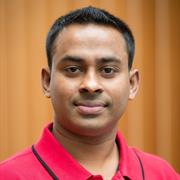
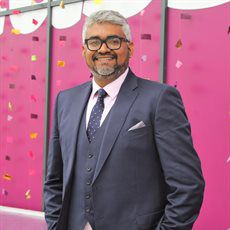
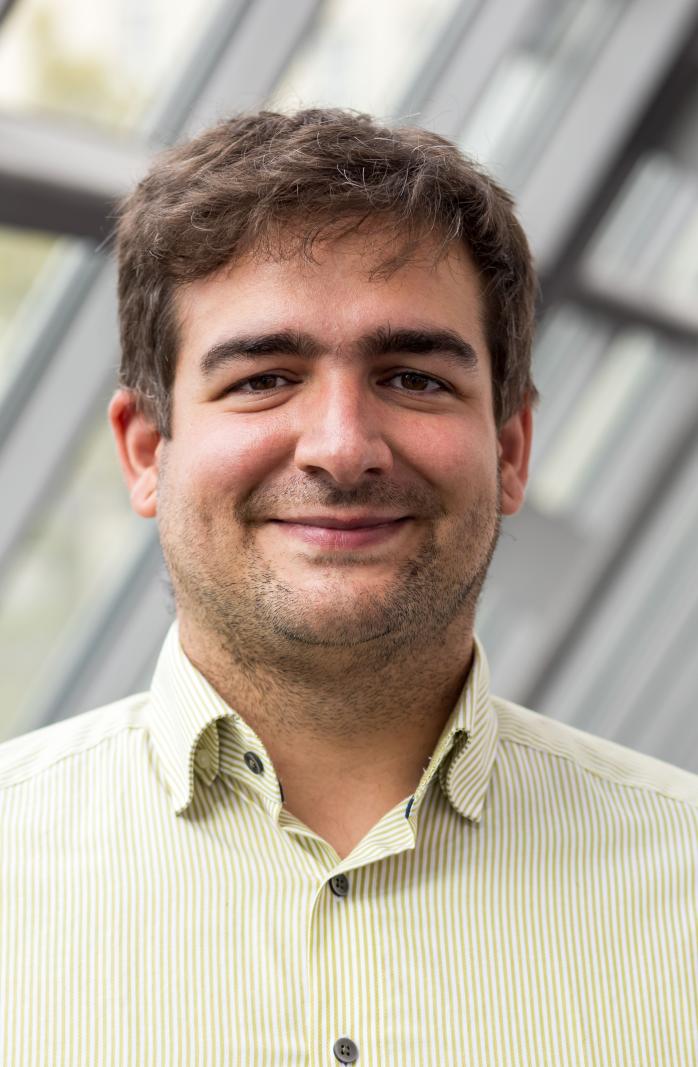
Deanna House is an Assistant Professor in the Information Systems and Quantitative Analysis department at the University of Nebraska at Omaha's College of Information Science and Technology. She co-directs the Nebraska Deterrence Lab and serves as a research fellow for NSRI, along with mentoring the USSTRATCOM Fellows program. Her academic journey includes a PhD in Information Systems from the University of Texas at Arlington and prior roles in Human Resources as a Business Systems Analyst. Bachelor of Science, Bellevue University, Management of Human Resources (2002) Master of Science, University of Nebraska at Omaha, MIS (2006) PhD, University of Texas at Arlington, Information Systems and Operations Management (2013) Dr. House specializes in behavioral cybersecurity, privacy, and quantitative risk management, with a focus on deterrence in critical infrastructure. Her research bridges individual user behavior with organizational and governmental security strategies. Recent publications highlight trends in cybersecurity education, phishing behavior, AI ethics, and infrastructure protection. She has contributed to journals like Computers & Security and Journal of Cybersecurity , with 2025 work on DoD cyber deterrence. NSRI Research Fellow Her teaching covers Risk Management, Cybersecurity, and Systems Analysis, utilizing tools like Visual Paradigm Online for technical diagrams. She actively presents at conferences such as ICIS and DSI, advocating for ethics and workforce development in technology.
Georgios Kavallieratos is an Associate Professor at the University of Oslo's Institute of Transport Economics, specializing in the Section for Autonomous Systems and Sensor Technologies. His research focuses on cybersecurity in maritime systems, cyber-physical systems, and risk management. He actively contributes to the DESSI project on energy system security infrastructure. His research interests include maritime cybersecurity, cyber-physical system security, and the intersection of safety and security in autonomous systems. His work addresses threats to navigation systems, smart farming, and satellite communications, with a focus on developing risk assessment frameworks and robust cybersecurity controls. Recent publications emphasize maritime cybersecurity trends, integrated navigation system protection, and threat analysis in emerging technologies like Dairy Farming 4.0. He co-authored foundational papers on cyberattack defenses for autonomous ships and cybersecurity requirements for Shipping 4.0. Current projects involve enhancing societal awareness of cybersecurity risks and improving incident response strategies for critical infrastructure. His work bridges theoretical cybersecurity principles with practical applications in transportation and industrial systems.
Associate Professor Nalin Arachchilage is a leading academic in Cyber Security at RMIT University's School of Computing Technologies. He holds an honorary role at the University of Warwick and advises DEFSAFE Cyber Security Inc. His research focuses on usable security, privacy engineering, and AI-driven cybersecurity solutions. Key roles include revamping RMIT's Master of Cyber Security program and leading the Usable Security Engineering group at UNSW ADFA. Education: PhD in Cyber Security (Brunel University), Postdocs at Oxford and UBC. Research spans interdisciplinary areas including HCI, machine learning for threat modeling, and serious games for security education. He has published extensively in top venues like ACM CCS and SOUPS, contributing to global standards like OWASP. Leadership: Previously Assistant Head of School (Research) at the University of Auckland, and Director of the MProfStuds in Digital Security. Active in program committees for major conferences (ACM CCS, SOUPS). Current supervision includes 5 PhD students across RMIT and Auckland. Media Impact: Featured in Sky News Australia, ABC, and TVNZ. Collaborations with HP and Facebook. Awards include impactful contributions to security frameworks and standards. Teaching: Coordinates courses like INTE2625 (Cyber Security) and COSC2738 (Human-Centric Cyber Security). Supervises projects on topics like blockchain security and responsible AI. Non-Academic Roles: Chair of the Academic Board at Canberra Business & Technology College (2020-2021). Advisor to DEFSAFE, focusing on novel cyber-security products.
Dr. Fahad Ibrahim is an Assistant Professor in the Department of Marketing at Birmingham Business School, University of Birmingham. He holds a PhD in Management from the University of Hull and has prior academic experience as a Lecturer at Swansea University and a Teaching Fellow at the University of Birmingham. He is a Fellow of the Higher Education Academy (FHEA) and actively contributes to research and teaching in marketing. Education: PhD in Management, University of Hull, 2019 MSc in Marketing Management, University of Hull, 2010 Bachelor of Business Administration (BBA), North South University, Bangladesh, 2009 His research focuses on consumer research, digital marketing, service marketing, strategic marketing, innovation, and big data & AI in marketing . He also explores topics in employee relations, occupational health and safety, and institutional theory as they relate to marketing practice. His methodological approach includes both quantitative and qualitative research methods. Dr. Ibrahim has published in top-tier journals such as the Journal of Travel Research , Journal of Business Research , and Technological Forecasting and Social Change . His recent work examines innovation in international firms, the impact of security threats on tourism, privacy in online health communities, and consumer behavior toward superfoods. His research demonstrates a consistent trend in understanding consumer and organizational behavior in digital and global contexts. Scientific Awards: Journal of Travel Research Charles R. Goeldner Article of Excellence Award, 2024 University Studentship Award, University of Hull He has successfully supervised a PhD student to completion and welcomes inquiries from prospective PhD students. He also serves as an ad hoc reviewer for several academic journals. His industry experience includes working as a Strategy Development Manager in advertising, with campaigns for major brands like Coca-Cola, Lafarge Holcim, and Chevron, including a global strategic campaign adopted in 64 countries. Dr. Ibrahim teaches courses such as Problem Solving and Strategic Marketing, Digital and Innovative Marketing, and Branding in the Digital Age. He is not associated with any specific lab or research center mentioned in the text, but his work is deeply integrated into the academic and industry-facing missions of the Birmingham Business School.
Danny McGowan is Professor of Finance and Head of the Department of Finance at Birmingham Business School, University of Birmingham . He holds a PhD in Economics from the University of Nottingham and has a strong academic background in economics and finance. Education: PhD in Economics, University of Nottingham, 2010 MSc in Economics, University of Bristol, 2007 BSc in Economics, University of Bristol, 2003 His research centers on applied microeconomics with a focus on financial intermediation, banking, mortgage markets, and household finance . He frequently employs quasi-experimental methods to study the impact of regulation, competition, and institutional frameworks on financial institutions and markets. His recent work explores the societal determinants of wealth inequality, lending, and entrepreneurship, as well as the effects of deposit market competition and mortgage default. His publication record is impressive, with articles in leading journals such as the Review of Financial Studies , Journal of Financial and Quantitative Analysis , and Journal of Financial Intermediation . The recent articles show a consistent trend in analyzing bank conduct, risk management, regulation, and the real effects of financial markets , often using natural experiments and policy changes as identification strategies. Research Funding and Recognition: Principal Investigator on a ~£400,000 Leverhulme Research Project Grant Over £500,000 in research funding from ESRC, British Academy, and Leverhulme Trust Research cited in House of Commons inquiries and by media outlets Advising and Grants: He has successfully advised four PhD students to completion, all of whom have secured academic positions. His research is supported by major grants from UK research councils, demonstrating the significance and impact of his work in the field of finance. Professional Engagement: He is an active member of leading professional associations including the American Finance Association, American Economic Association, European Finance Association, and Royal Economic Society, and regularly presents his work at international conferences.
Hervé Debar is a Professor and head of the Telecommunications Networks and Services (RST) department at Télécom SudParis. His research focuses on network and information system security, including SIEM systems, automated threat mitigation, SDN security, and resilience against cyber attacks. He coordinates major European projects like NECOMA (EU-Japan cybersecurity collaboration) and PANOPTESEC (industrial control systems security). Research interests span SIEM frameworks, intrusion detection, risk management, and defense mechanisms for critical infrastructures. His work emphasizes practical implementation through projects like MASSIF (SIEM decision support systems) and DEMONS (privacy-aware network monitoring). Recent articles address TLS protocol analysis, DDoS mitigation with SDN, honeypot models, and risk assessment for healthcare systems. He supervises multiple PhD students and collaborates with industry partners via CIFRE theses. His research group is part of SAMOVAR (CNRS UMR 5157). Teaching includes leading the Networks and Systems Security master's program, emphasizing hands-on training with industry partnerships. He actively recruits postdocs and engineers for cybersecurity research.
Caren Cooper is a Professor at North Carolina State University in the Department of Forestry and Environmental Resources, College of Natural Resources. Her research focuses on geospatial analytics to study bird ecology, environmental hazards, and equity in environmental data. She leads the Public Science Lab, developing participatory programs to engage volunteers in large-scale environmental data collection. Her work emphasizes racial and economic disparities in environmental risks and the representativeness of scientific data. Research interests include urban forest ecosystem services, citizen science methodology, and ethical frameworks for participatory projects. Notable projects include Crowd the Tap to assess lead plumbing disparities and the IDEAL Guide for inclusive science initiatives. Cooper has secured grants totaling over $2M from NSF, DoD, and other agencies for projects addressing environmental justice, STEM diversity, and citizen science infrastructure. Her publications span ethics in citizen science, participatory science design, and environmental equity. Cooper collaborates with organizations like the Citizen Science Association and SciStarter to advance equitable practices. She teaches courses on science communication and public engagement, leveraging interdisciplinary approaches at NC State. Labs/Teams: Public Science Lab, IDEAL Working Group. Key grants include 'Advancing Capacity for a Resilient NC Sentinel Landscape' ($124K) and 'Iterative Improvement of IDEAL Participatory Science' ($1.1M).
Jeffrey P. Kahn is the Robert Henry Levi and Ryda Hecht Levi Professor at Johns Hopkins University, with a primary appointment in the Department of Health Policy and Management at the Johns Hopkins Bloomberg School of Public Health. He is a core faculty member at the Johns Hopkins Berman Institute of Bioethics, where he leads research on the ethical, legal, and social implications of emerging biomedical technologies. PhD, Georgetown University, 1989 MPH, Johns Hopkins Bloomberg School of Public Health, 1988 Dr. Kahn’s research focuses on bioethics and public health, with particular expertise in ethics and genomics, research ethics, science policy, and the governance of digital health technologies. His work addresses critical questions about informed consent, equity in access to genomic medicine, public trust in biobanking, and the ethical use of data in public health surveillance. He has led major initiatives such as the Genomic Uses in Infectious Diseases and Epidemics (GUIDE) project and research on digital contact tracing governance. His recent publications reveal a strong trend toward interdisciplinary scholarship, integrating insights from law, policy, history, and social sciences to address complex challenges at the intersection of genetics, infectious diseases, and public health. Themes include anticipatory governance of genome editing, regulatory innovation for rare diseases, and ethical frameworks for decentralized biobanking and digital health applications. Member, Delta Omega Honorary Society in Public Health, Alpha Chapter (Johns Hopkins Bloomberg School of Public Health), 2014 Robert Henry Levi and Ryda Hecht Levi Professor of Bioethics and Public Policy, 2011–present Dr. Kahn has mentored numerous scholars and contributed to national and international policy discussions on bioethics. He has received continuous research funding for projects exploring the ethical dimensions of biobanking, genomic surveillance, and public engagement in science. His leadership extends to collaborative networks such as the BRIDGES Collaboratory, which advances ethical, legal, and social studies at the nexus of infectious and genetic diseases. He is actively involved in research centers including the Johns Hopkins Berman Institute of Bioethics and leads projects that integrate ethics into public health practice and policy development.
Prof. Dr. Matteo Große-Kampmann is a faculty member at Hochschule Rhein-Waal, serving as Professor of Distributed Systems within the Faculty of Communication and Environment. His research and teaching are centered on building secure, resilient, and reliable digital systems, with a strong emphasis on integrating information security from the earliest stages of system design. He is based at the Kamp-Lintfort Campus and actively leads research in the Cloud Resilience Lab. His research interests span a wide range of cybersecurity domains, including information security awareness, healthcare IT security, mobile and 5G/6G network security, threat modeling, and privacy in smart devices. He advocates for a proactive, design-first approach to security, particularly in increasingly interconnected environments. His work combines technical depth with human factors, examining both system-level vulnerabilities and user behavior in cyber risk contexts. The recent publications reflect a strong focus on applied cybersecurity research, with trends in mobile network penetration testing, privacy in wearables, governmental cybersecurity communication, and security in healthcare and childcare technologies. His work frequently appears in top-tier venues such as DSN, PETS, ESORICS, and ACSAC, often in collaboration with students and international researchers. His scientific contributions have been recognized with awards including an Honorable Mention Award at the International Conference on Mobile and Ubiquitous Multimedia (2024) and a Best Paper Candidate at the ACM Web Conference 2022. He also contributes to the academic community as a reviewer and technical program committee member for major security conferences including NDSS, PETS, ESORICS, and ACSAC. Prof. Große-Kampmann actively supervises bachelor's and master's theses, encouraging students to explore topics such as post-Darknet marketplaces, AI in cybersecurity education, and flood of information challenges. He emphasizes ownership, preparedness, and learning through failure, fostering independent research skills. He collaborates with students and industry partners on practical projects, particularly in the areas of penetration testing and security analysis. He is involved in several research initiatives, most notably the Cloud Resilience Lab , where he and his team investigate real-world security and privacy issues in modern digital systems. His work bridges academic research with practical applications, often receiving media attention, such as coverage in Wired , EFF , and Die Zeit for his study on childcare app security.
Professor Asif Gill is Head of Discipline for Software Engineering at the School of Computer Science, University of Technology Sydney (UTS), where he was promoted to Professor of Computer Science in January 2024. He also serves as Director of the DigiSAS Research and Innovation Lab and is actively involved in the Global Big Data Technologies Centre at UTS. As a founder of both the DigiSAS Lab and the Future Generation Enterprise Architecture Community of Practice (FGEA CoP), he has established integrated teaching-research-engagement frameworks that translate academic research into practical applications while enhancing graduate employment opportunities. Professor Gill's research interests span Adaptive Enterprise Architecture , Agile Software Development , and Design Science Research & Innovation , with a particular focus on architecting large-scale data-intensive enterprise software systems. His work addresses challenges across academia, industry, government, and society, with significant contributions to AI systems architecture, digital identity management, and enterprise knowledge graphs. His applied research has resulted in numerous collaborations with organizations including the Reserve Bank of Australia, Revenue NSW, Capsifi, Data Zoo, and the NSW Department of Planning, Industry and Environment. His publication record includes 3 books and over 190 articles in major academic journals such as IEEE Transactions on Professional Communication, Information and Management, and Information Systems. His recent work demonstrates a consistent focus on cutting-edge topics in enterprise architecture, AI systems, and digital identity, with multiple publications appearing in 2024-2025. His research trajectory shows a clear evolution from foundational work in agile software development toward more sophisticated integration of AI, enterprise architecture, and data governance. Fellow of the Australian Computer Society (ACS) Fellow of DSE (ESCP Center for Design Science in Entrepreneurship) Senior Member IEEE Associate Editor, IEEE Transactions on Technology & Society Associate Editor, Springer Nature Discover Data journals Member, Data Sharing Committee, IFIP Technical Committee 8.1 Member, Standards Australia Software and Systems Engineering Committee IT-015 Professor Gill has successfully secured numerous research grants from 2019-2026, totaling significant funding for projects related to digital identity, enterprise architecture, and AI systems. His approach emphasizes industry-academia collaboration, with many projects involving direct partnerships with government agencies and industry organizations. He has supervised multiple PhD and Master's students through industry-sponsored scholarships and maintains active collaborations with researchers across multiple institutions. Leading the DigiSAS Research and Innovation Lab, Professor Gill has created an environment that bridges theoretical research with practical implementation. The lab focuses on developing frameworks and tools for adaptive enterprise architecture, with particular emphasis on AI-enabled systems, data governance, and digital identity solutions. His work on the Data Satellite Architecture represents a significant contribution to combating data pollution in federated digital ecosystems.
Quentin Covert serves as a Lecturer at The Beacom College of Computer & Cyber Sciences, Dakota State University, designing and delivering courses in Cyber Defense, Cyber Operations, and Computer Science at both graduate and undergraduate levels. His academic background includes: Ph.D. Candidate in Cyber Defense, Dakota State University M.S. in Computer Science, Dakota State University (2019) B.S. in Computer Science, University of Nebraska – Lincoln (2018) Covert specializes in data privacy frameworks, with research centered on Data Privacy Ontology to structure privacy concepts within cybersecurity systems. His teaching emphasizes practical applications of information security management, directly supporting the college's focus on defensive cyber operations and risk mitigation strategies. Professionally, he consults for international organizations on privacy data mapping and develops software tools for third-party security risk management, bridging academic theory with real-world implementation challenges. While his role involves course instruction and curriculum development, the provided text specifies no formal student advising relationships or research grants. His prior five years as a graduate assistant and adjunct professor at Dakota State University demonstrate progressive institutional engagement.
Nikos Komninos is a researcher at City, University of London , specializing in cybersecurity, network security, and privacy-preserving systems. His work spans Internet of Things (IoT) , mobile ad hoc networks , and cloud computing security. Research Areas : Cybersecurity frameworks, machine learning for threat detection, quantum-resistant encryption, and privacy-preserving authentication systems. His recent publications focus on ransomware detection under concept drift, DDoS mitigation in IoT, and attribute-based encryption for fog computing. He has contributed to IEEE Transactions and journals like Computers & Security , with a trend toward real-time adaptive security systems and Bayesian risk assessment .
Sébastien Lanctôt is a Full Professor at the Faculty of Law, Université de Sherbrooke, teaching and researching in Insurance Law, Civil Liability, and the General Theory of Obligations since 2007. His legal practice focuses on civil and commercial litigation, particularly insurance law. Education: LL.B., LL.M., and LL.M. (Common Law) from Université de Montréal D.C.L. and Ph.D. from McGill University Research Interests: His work bridges insurance law with civil liability, obligations, and emerging challenges like climate change, genomic data privacy, and technological impacts on risk assessment. He explores interdisciplinary intersections between law, science, and ethics. Scientific Awards: Prix d’excellence professorale André-Morel (2006-2007) Insurance Law - Lawyer of the Year (2021, Lawyer Monthly Legal Awards) Prix de la Fondation du Barreau du Québec (2018) Grants: Recipient of funding from the Autorité des Marchés Financiers, Fondation du Barreau du Québec, and Chambre des notaires du Québec for projects on climate change impacts, digital learning platforms, and scientific evidence in legal proceedings.
Mohammad Shojafar (M'17-SM'19) is an Associate Professor at the Institute for Communication Systems within the Faculty of Engineering and Physical Sciences at the University of Surrey , UK. He has secured over £1.9M in research funding as Principal Investigator for projects like ORAN-TWIN (EPSRC), PRISENODE (MSCA-IF), TRACE-V2X (MSCA-SE), and D-XPERT (Innovate UK), among others. Previously held positions include Senior Researcher at University of Toronto and Toronto Metropolitan University, Senior Researcher at Italian universities (Telecom Italia Mobile), and Postdoc at University of Padua Key affiliations: Associate Editor for IEEE Transactions on Network and Service Management, Intelligent Transportation Systems, Green Communications and Networking, and Consumer Electronics Magazine Research Specialism: 5G/6G Security and Privacy Open-RAN Security Green Networking Adversarial Machine Learning Applied Cryptography Publication Trends: Focus on Open RAN security challenges (bearer context migration poisoning, KPI poisoning attacks), IoT/Fog security (GAN-based attacks, distributed intrusion detection), Lightweight Cryptography (multi-signature protocols, authentication schemes), and AI-driven Network Optimization (federated learning, reinforcement learning applications). Recent work addresses security in vehicular networks, smart grids, and video streaming frameworks. Scientific Recognition: Marie Curie Individual Fellowship (MSCA-GF-IF) Intel Innovator ACM Professional Member Sustainability Fellow at Institute for Sustainability IEEE Senior Member Supervision: Currently supervising 6 PhD students and has graduated 5 PhD/MSc students since 2021. Active in 5G/Open RAN security research with over 20 related publications since 2022.
Michael Sirivianos is an Associate Professor at the Cyprus University of Technology (CUT), where he serves as Dean of the School of Engineering and Technology. He holds a PhD in Computer Science from Duke University (2010) and leads research in cybersecurity, disinformation detection, and social media analysis. He coordinates multiple EU-funded projects including ReCRED (Horizon 2020) and ENCASE (Marie Curie RISE), securing over €3M in research funding. Research Focus His work spans: Cybersafety : Detection of cyberbullying, hate speech, and inappropriate content targeting children Trust Systems : Device-centric authentication and blockchain applications Disinformation Analysis : Graph-based detection of fake news and state-sponsored manipulation Scalable Systems : Distributed databases and network infrastructure Achievements & Recognition Best Paper Award (2019) for work on state-sponsored disinformation Distinguished Paper (2018) for fringe web community analysis Spotlight Session recognition (2020) for child protection research Featured in NYT, Washington Post, and Wired for YouTube content analysis Leadership Co-directs the Network Systems Research Lab, serves on the Board of CYENS Centre of Excellence, and coordinates the Fact-check Cyprus Centre against Disinformation.

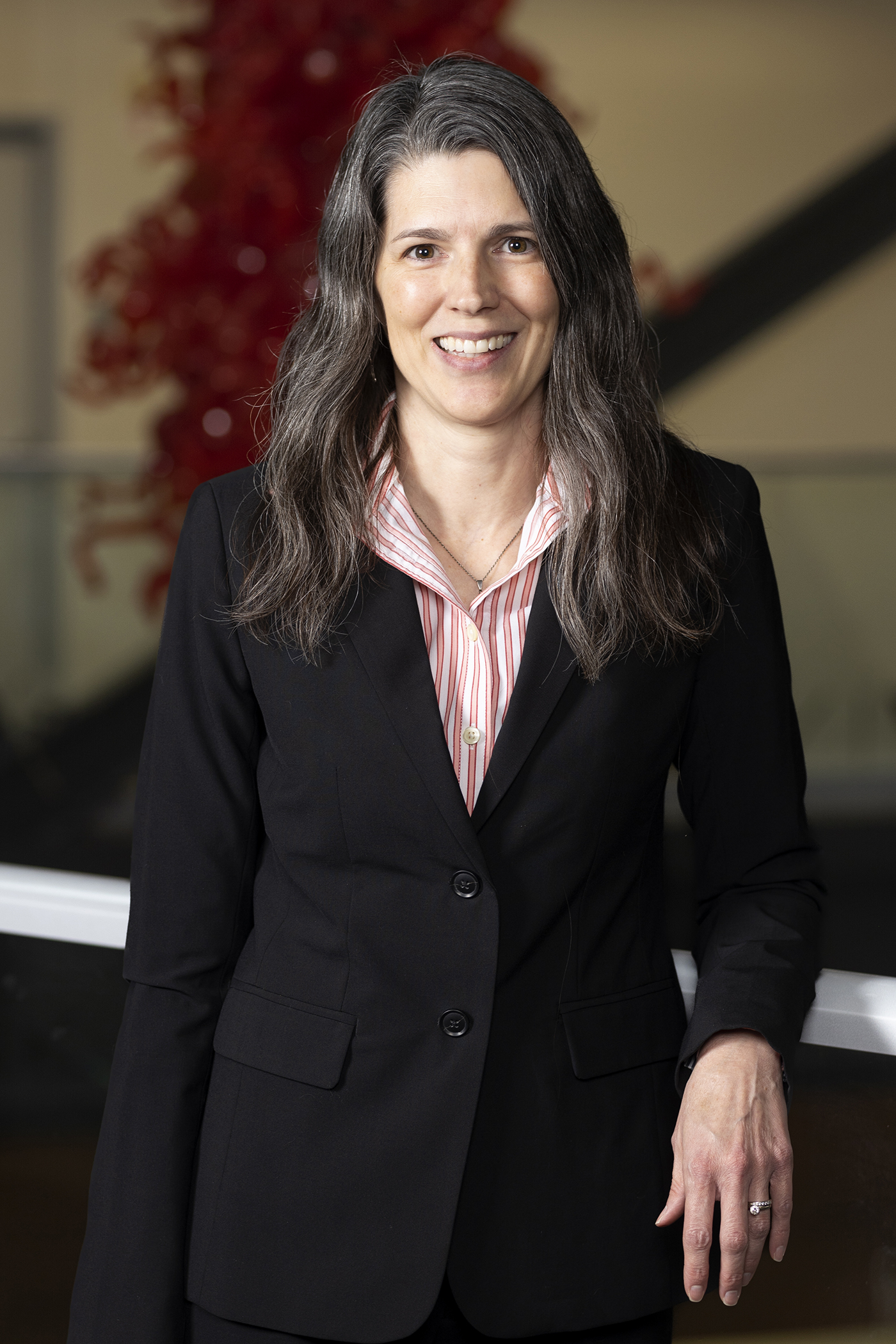
/georgkav/georg.jpg)