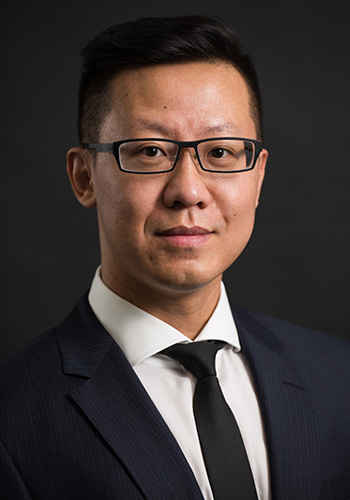
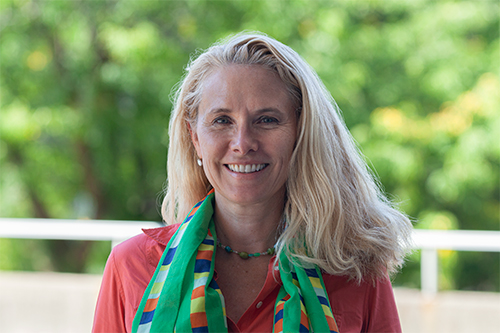
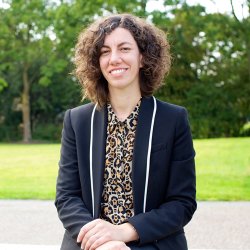
Dr. Xin Fu is a Professor in Electrical and Computer Engineering at the University of Houston's Cullen College of Engineering, holding a PhD from the University of Florida. His research spans computer architecture, energy-efficient systems, machine learning acceleration, and hardware reliability, with applications in edge computing and quantum systems. Awarded the NSF CAREER Award and named Miller Scholar, he leads innovations in heterogeneous computing architectures. Research focuses on optimizing hardware-software co-design for AI workloads, with current projects in federated learning optimization, quantum computing reliability, and neural network acceleration. Recent publications demonstrate cross-cutting work in mobile AI deployment, adversarial defense mechanisms, and quantum error correction. Honors include: NSF Faculty Early CAREER Award (2014) Four-time recipient of competitive NSF research grants Miller Scholar recognition for teaching and research excellence
Dr. Miao Pan is an Associate Professor in the Department of Electrical and Computer Engineering at the Cullen College of Engineering, University of Houston. He directs the PAN Lab (panlab.ece.uh.edu) focusing on wireless networking, security, and IoT applications. His educational background includes a B.S. in Electrical Engineering from Dalian University of Technology (2004), M.S. from Beijing University of Posts and Telecommunications (2007), and Ph.D. from the University of Florida (2012). Dr. Pan's research spans privacy-preserving deep learning, wireless networking, machine learning applications in communications, underwater systems, and cognitive radio networks. His interdisciplinary approach combines theoretical foundations with practical implementations in emerging technologies. Recent publications demonstrate strong focus on federated learning optimizations, wireless sensing innovations, and security mechanisms for next-generation systems. Key trends include energy-efficient mobile AI, robust authentication methods, and adaptive underwater networking solutions. Honors include: NSF CAREER Award (2014) 5 IEEE Best Paper Awards (2015-2019) University of Florida Graduate Fellowship (2007) He leads multiple federally funded projects and advises graduate researchers in wireless systems and security. The PAN Lab collaborates with industry partners to translate research into practical solutions for IoT and 5G/6G networks.
Prof Julia Davidson serves as Executive Director of Research at the University of East London’s Institute for Connected Communities, focusing on cybercrime prevention, child protection, and online safety. Her work bridges criminology, psychology, and technology, addressing risks such as virtual reality exploitation, youth cybercrime, and data privacy violations. She has authored over 50 publications, including influential reports like the VIRRAC Toolkit Report and European Youth Cybercrime Study . Davidson collaborates with global organizations like Ofcom and the NSPCC to shape policies on child online protection and GDPR compliance. Her research emphasizes interdisciplinary approaches to safeguarding vulnerable populations through evidence-based strategies. Research Interests : Cybersecurity, child victimization, mental health, data privacy, and youth risk behaviors. Her studies often highlight intersectional challenges, such as how marginalized youth in Africa access healthcare or how online grooming intersects with mental well-being. Recent Trends : Recent articles analyze virtual reality risks, youth hacking motivations, and GDPR’s economic impact. Her work underscores the need for adaptive policies to address emerging digital threats while balancing corporate accountability and individual rights. Grants & Collaborations : Davidson leads projects funded by the European Commission and UK government, including the CC-DRIVER Policy Brief and Child Online Protection in Rwanda . She advises on global cybersecurity frameworks and has testified before parliamentary committees on digital safety. Labs & Teams : Her research is conducted through the Institute for Connected Communities, fostering partnerships with law enforcement, tech firms, and NGOs to translate academic findings into actionable solutions.
Omar Haider Chowdhury is a SUNY Empire Innovation Scholar and Associate Professor in the Department of Computer Science at Stony Brook University. Previously, he was an Assistant Professor at the University of Iowa where he received the Dean's Scholar Award. He completed his postdoctoral research at Cylab, Carnegie Mellon University and Purdue University. His educational background includes a Ph.D. in Computer Science from the University of Texas at San Antonio under the supervision of Prof. Jianwei Niu and Prof. William H. Winsborough (deceased), and undergraduate education in Computer Science and Engineering at the Bangladesh University of Engineering and Technology (BUET). Chowdhury's research focuses on Computer Security and Privacy, with particular emphasis on applying formal verification, automated reasoning, runtime verification, programming languages, software engineering, and human-computer interaction techniques to solve practical security problems. His work addresses security challenges in SSL/TLS, X.509 PKI, Cellular Networks, Wi-Fi, Internet-of-Things (IoT), and Regulatory Compliance. He is also interested in fundamental problems in automated reasoning and formal verification. His recent publications demonstrate a strong focus on applying formal methods to practical security problems, with particular emphasis on cellular networks (4G/5G), IoT systems, and cryptographic protocols. His research shows a consistent pattern of bridging theoretical verification techniques with real-world security implementations, resulting in enhancements to widely used protocols like 4G LTE, 5G, and WPA2 enterprise. His scientific contributions have been recognized with numerous awards including: 2023 Test of Time Award, ACM SACMAT 2022 Dean's Scholar Award, University of Iowa 2021 Best Paper Award (Runner Up), ACM CCS 2020 Best Paper Award, ACNS 2019 DARPA Young Faculty Award Multiple Best Paper Awards at IEEE DASC, ACSAC, and NDSS Chowdhury has successfully mentored several PhD students including Dr. Moosa Yahyazadeh (now at Apple Inc.), and currently advises students including Joyanta Debnath, Muhammad Daniyal Pirwani, and Aliakbar Sadeghi. His research has been funded by both National Science Foundation (NSF) and Defense Advanced Research Projects Agency (DARPA), including a prestigious DARPA Young Faculty Award. His group's findings have directly influenced improvements in widely used security protocols and cryptographic libraries. He leads a research group focused on high-assurance software design and implementation, recently teaching courses on these topics at Stony Brook University. His research group combines expertise in formal methods, security analysis, and practical implementation to tackle emerging security challenges in modern computing systems.
Roberto Abadie is an Assistant Professor at the University of Wisconsin-Madison School of Education, specializing in medical anthropology with a focus on health inequalities and social stratification. His research examines marginalized populations, particularly people who inject drugs (PWID), and addresses ethical issues in public health and clinical trials. Abadie holds a Ph.D. in Anthropology from the Graduate Center, CUNY, and completed a postdoctoral fellowship in bioethics at the Mayo Clinic. His work is funded by the NIH/NIDA and the Greenwall Foundation. His research interests include: Health disparities in marginalized communities Research ethics and participant protection Social determinants of HIV/HCV epidemics Drug policy and harm reduction strategies Abadie’s publications highlight the intersections of substance use, public health crises, and structural inequities. His award-winning book *The Professional Guinea Pig* critiques the exploitation of research participants in clinical trials. Key awards: Best Book of the Year Award (Medical Sociology Section, British Sociological Association) His work has informed grants and policy recommendations on opioid use disorder treatment, fentanyl-related risks, and post-disaster health systems in Puerto Rico. He advocates for ethical research practices and equitable healthcare access.
Lyn van Swol is a Professor of Communication Science at the University of Wisconsin–Madison, with office hours available Tuesdays and by appointment. Her research focuses on factors influencing information acceptance during interactions, including group information sharing, advice utilization, persuasive messaging, chatbot communication, and environmental communication strategies. She holds a Ph.D. in Social Psychology with a minor in Quantitative Psychology from the University of Illinois (1999), an M.A. in Social Psychology from the same institution (1995), and a B.A. in Psychology (summa cum laude) from Loyola University (1993). Dr. van Swol's current projects examine emotional contagion in chatbot interactions, group discussion effects on climate change attitudes, and applying advice communication research to environmental contexts like forestry, aquatic invasive species, and PFAS mitigation. Her work emphasizes how peer groups establish norms through discussion to encourage pro-environmental behaviors. Her scholarly recognition includes multiple top paper awards from the National Communication Association (NCA) and International Communication Association (ICA), notably the Dennis Gouran Research Award (2007, 2018, 2021) and top three paper awards in group communication spanning 2005-2022. She co-edited the Oxford Handbook of Advice (2018) and teaches courses including Communication in Complex Organizations (CA 575), Theory and Practice of Persuasion (CA 368), and Theory in Communication Science (CA760).
Associate Professor Benjamin Turnbull is Deputy Head of School at UNSW Canberra's School of Systems & Computing. His research focuses on cybersecurity, simulation, and emerging technologies, aiming to develop decision support systems for cyber resilience. He leads large-scale research projects funded by organizations like CSIRO, Australian Defence Force, and the US Naval Research Laboratory, totaling over $3 million AUD in grants. Teaching contributions include co-creating the Bachelor of Cyber Security program and directing multiple postgraduate cybersecurity offerings. His educational design emphasizes industry-relevant courses, from undergraduate to executive programs like the UNSW Online Cyber Security Masters. He has extensive experience in curriculum design, content development, and online education. Research interests span cyber situation awareness, secure simulation platforms, and automated learning from big datasets. Notable projects include the UNSW-MG24 microgrid cybersecurity dataset and frameworks like OQFL (quantum-based federated learning) for intelligent transportation systems. His work bridges theory and practice, with outputs including software tools and policy recommendations for cyber resilience in critical infrastructure. Key collaborations include the Cyber Cooperative Research Centre and DST Group. He has authored over 100 peer-reviewed publications, focusing on IoT security, blockchain-enabled learning, and cyber-physical-social systems resilience. His grants emphasize applied research with direct societal impact, such as mitigating supply chain cyber risks and enhancing microgrid cybersecurity.
Matthew J. Salganik is the Alexander Stewart 1886 Professor of Sociology at Princeton University, with affiliations in the Office of Population Research and the Center for Statistics and Machine Learning. His research focuses on computational social science, social networks, and the ethical implications of algorithmic prediction. He has contributed to methodologies for estimating hidden populations, improving survey techniques, and advancing machine learning applications in public health and cultural studies. Research Interests: Social networks, computational methods, algorithmic prediction, cultural markets, differential privacy Awards: Outstanding Article Award (2×), Outstanding Statistical Application Award Funding Sources: NSF, NIH, UNAIDS, Russell Sage Foundation Salganik’s work bridges academia and industry, with visiting roles at Cornell Tech, Microsoft Research, and the New York Times. He emphasizes reproducibility in research, leading initiatives like the Fragile Families Challenge, and publishes widely in journals such as Science and PNAS . His book Bit by Bit: Social Research in the Digital Age explores modern social research methodologies. Current projects include validating mortality predictions using machine learning and exploring the ethics of life outcome forecasting. He serves on the Board of Mathematica and advocates for transparent reporting standards in computational science.
Dr. Luc Rocher is a UKRI Future Leaders Fellow and Senior Research Fellow at the Oxford Internet Institute (OII), University of Oxford. They are also affiliated with Kellogg College and Imperial College London’s Data Science Institute. Their work focuses on algorithmic accountability, privacy-enhancing technologies, and the societal impacts of AI. Rocher leads the Synthetic Society Lab, investigating how to make technology accountable to the public, and the Observatory of Anonymity, an international tool assessing re-identification risks. Their research bridges technical and social science approaches, including statistical modeling, adversarial machine learning, and interactive tools. Education: PhD from Université catholique de Louvain (2019), prior roles at Imperial College London, ENS de Lyon, and MIT Media Lab. Awards include the UKRI Future Leaders Fellowship and recognition from institutions like the European Commission and OECD. Rocher has published in top journals/conferences (Nature Communications, Usenix Security, WWW) and contributed to policy discussions on AI regulation. Advising: Current students include Andrew Bean (DPhil), Lujain Ibrahim (DPhil), Juliette Zaccour (DPhil), and others. Grants funded by UKRI, EPSRC, and the John Fell Fund. Research emphasizes privacy risks in digital data, pricing algorithms, and public sector AI systems. Labs/Teams: Synthetic Society Lab (public interest AI), Observatory of Anonymity (global re-identification risks). Recent work includes demonstrating flaws in traditional anonymization methods and advocating for privacy-preserving frameworks.
Kieron O'Hara is an Associate Professor in Electronics and Computer Science at the University of Southampton. He is a founding contributor to Web Science, focusing on digital modernity's societal, economic, and political impacts. His work explores privacy preservation in AI/ML contexts, trust dynamics in networked societies, and internet governance. He co-authored seminal works like A Framework for Web Science (2006) and Four Internets (2021), and chairs UKAN's anonymisation network. He has held roles at the Ministry of Justice's transparency panel and serves as editor of Foundations and Trends in Web Science . Research Groups: Web and Internet Science, Centre for Democratic Futures External Roles: Speaker for 'Four Internets: The Ethics and Geopolitics of the Internet' (2019) His research interests include anonymisation techniques, data geopolitics, and the ethical implications of emerging technologies. Notable awards include Best Paper prizes at ACM Web Science (2016) and Best Oral Presentation at Sensecam (2012). Current projects focus on provenance/anonymization frameworks and national identity system analysis, funded by the Alan Turing Institute.
Diarmaid Harkin is Associate Professor of Criminology at Deakin University's School of Humanities and Social Sciences, specializing in cyber-security from social science perspectives. Research examines spyware markets, surveillance law impacts, technology-facilitated abuse, and cyber-policing challenges. Current projects include studies on technology-facilitated abuse in Pacific nations, CCTV impacts on domestic violence survivors, and law enforcement responses to cybercrime. Awards include the British Society of Criminology's Policing Network Prize (2017) and Brian Williams Prize (2015). Funded research totals over $1M from ARC, DFAT, and VicHealth. Education: PhD in Criminology Professional: Stream leader at Deakin Cyber Research and Innovation Centre Consulting: World Bank, Asian Development Bank on security frameworks
Dr. Carla Bonina is Associate Professor in Entrepreneurship and Innovation at the University of Surrey Business School , with affiliations to multiple research centers including the Surrey Centre for the Digital Economy , Surrey Institute for People-Centred AI , and Latin American Open Data Initiative (ILDA). Her work bridges technology, policy, and sustainable development with a focus on Latin America. PhD in Management - London School of Economics and Political Science MSc in Public Administration - Centro de Investigación y Docencia Económicas (CIDE), Mexico City BSc in Economics - University of Buenos Aires, Argentina Research explores digital platform governance in international development, AI policy frameworks, and open data ecosystems in Latin America. She investigates how digital transformation intersects with social innovation and equitable development . Recent work analyzes data justice mechanisms and algorithmic bias in public service delivery. Key contributions include comparative OGD platform studies across Buenos Aires, Mexico City, and Montevideo. Her DIODE network research examines digital economies in developing countries. As co-PI for Audio Commons Initiative , she pioneered open audio content frameworks for creative industries. Mid-Career Researcher of the Year (Surrey Business School, 2021) Impact Award for digital government work (University of Surrey, 2020) Fellow, Surrey Institute for People-Centred AI Principal Researcher, ILDA Active in digital policy advisory for World Bank, OECD, and IDRC. Coordinates Por Mi Barrio urban governance case studies and contributes to UNESCO Open Science frameworks. Recent Surrey Speaks podcast (2023) discusses AI's role in social inequality dynamics.
Prof. Dr. Luis Aguiar is an Associate Professor in the Department of Business Administration at the University of Zurich, Switzerland, and a DSI Professor at the University’s Digital Society Initiative (DSI). He holds a PhD in Economics from Universidad Carlos III de Madrid and previously served as a Research Fellow at the European Commission’s Joint Research Center. His expertise lies in the economics of digitization, focusing on digital markets, media industries, and the impact of technological change on firms and consumers. Educational Background: PhD in Economics, Universidad Carlos III de Madrid MSc in Economics, Finance and Management, Universitat Pompeu Fabra Bachelor’s in Economics, University of Geneva Research Focus: Luis investigates how digitization transforms consumer behavior and market structures in digital media sectors, with particular attention to online platforms, music streaming, and intellectual property policies. His work employs advanced econometric methods to analyze welfare effects, platform power dynamics, and content distribution trends. Key Contributions: His research has been published in top journals like the Journal of Political Economy and Information Systems Research , and has received significant media coverage from outlets such as The Economist and Forbes . He currently co-edits Information Economics and Policy and leads the Swiss National Science Foundation-funded project on online platforms' power dynamics. Professional Roles: DSI Professor, Digital Society Initiative (UZH) Fellow of the CESifo Research Network Labs & Teams: His research is anchored in UZH’s Department of Business Administration and the DSI, collaborating with interdisciplinary teams to address societal challenges posed by digital transformation.
Stacey Steele is an Associate Professor at the Melbourne Law School and Associate Director (Japan) at the Asian Law Centre, University of Melbourne. She has been affiliated with the Asian Law Centre since 1997, specializing in financial services regulation, privacy law, and comparative insolvency frameworks. Her work bridges Japanese and international legal systems, with extensive contributions to education programs for Japanese legal professionals. Stacey’s academic roles include teaching insolvency law, corporate finance, and Japanese legal studies. She pioneered a short-course program for Japanese law students (2004–2017) and annual programs for Japanese judicial visitors. Her research focuses on cross-border insolvency, privacy law in crises, and legal education reforms in Asia. Her publications span peer-reviewed articles and edited volumes, including Match-Fixing in Sport: Comparative Studies (Routledge, 2018) and co-authored works on Japanese insolvency law. Stacey also advises on privacy compliance and cybersecurity strategies as a practicing lawyer. Professional affiliations include the Melbourne Centre for Commercial Law and leadership in the Urasenke Melbourne Chapter of Chanoyu (Japanese tea ceremony). Her work reflects a commitment to interdisciplinary legal scholarship and practical policy solutions.
Professor Guido Noto La Diega is a Professor of Law, Technology, and Innovation at the University of Strathclyde's School of Law within the Faculty of Humanities and Social Sciences. He leads the LLM/MSc Law, Technology, and Innovation program and mentors a research team focusing on the intersection of law, technology, and innovation. His expertise spans European, Italian, and British legal frameworks for IoT, AI, robotics, blockchain, and cloud computing. He holds a PhD in Private Law from the University of Palermo and a postdoc in Cloud Computing Law from Queen Mary University of London. Research Interests: IoT governance, AI regulation, consumer protection, intellectual property law, and data protection. Key Projects: Leads the AHRC-DFG funded 'From Smart Technologies to Smart Consumer Laws' and contributed to the EU's AI in Education guidelines. International Recognition: Cited by the EU Court of Justice's Advocate General, House of Lords, and World Economic Forum. External Roles: Fellow at the Nexa Center, Research Associate at UCL's Blockchain Tech Centre, and member of the European Data Protection Board. His work emphasizes socially just and sustainable innovation, advocating for legal frameworks that protect consumers while fostering ethical technological advancement. Notable publications include Internet of Things and the Law , an open-access book addressing IoT's legal challenges.