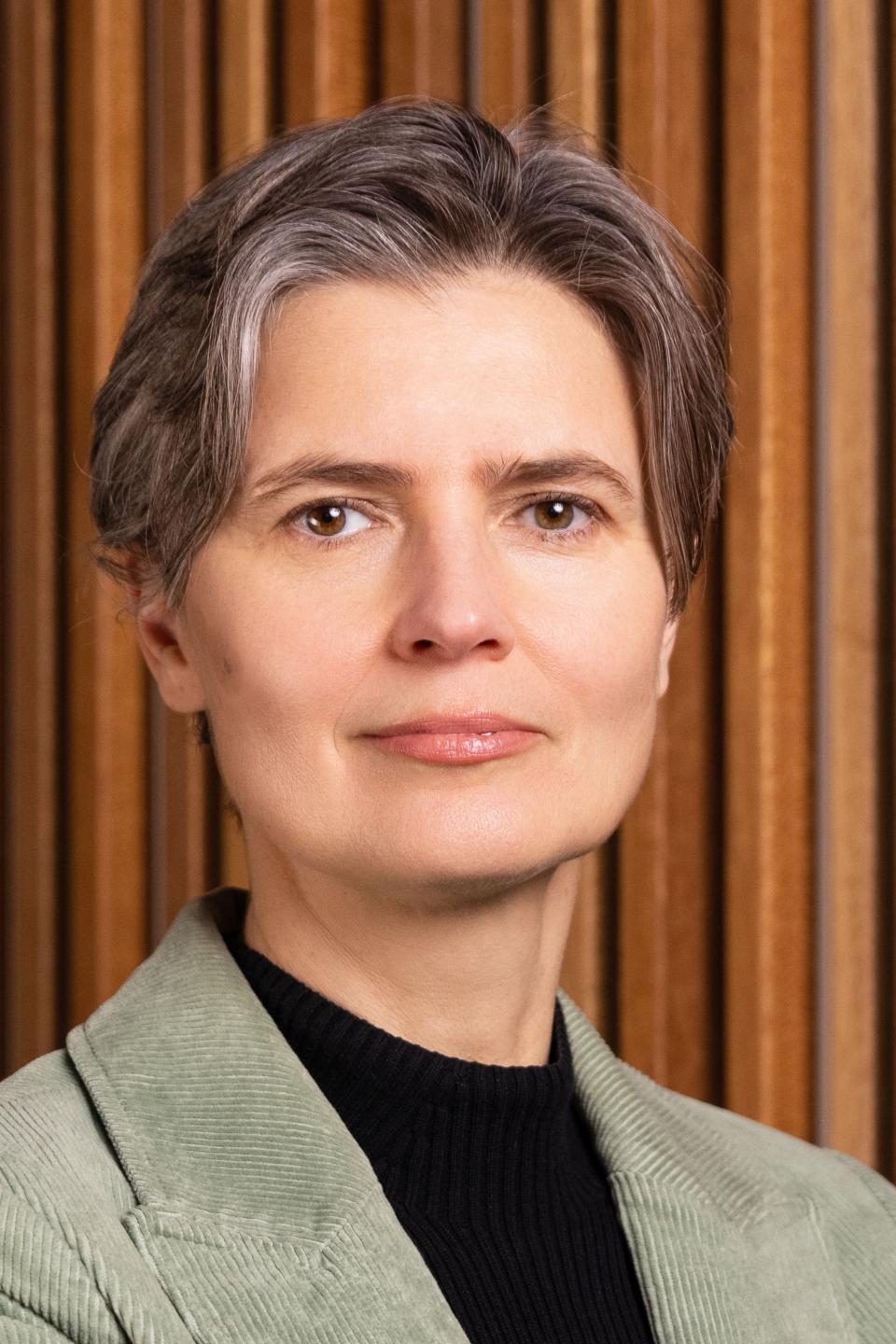
Natalia Andrienko is a Professor of Computer Science at City University London and Lead Scientist in the Knowledge Discovery department at Fraunhofer-Institut für Intelligente Analyse- und Informationssysteme. Her work bridges visual analytics with mobility data science and machine learning, focusing on human-in-the-loop systems for pattern discovery and spatiotemporal data exploration. Professor, Computer Science, City University London (2013-present) Lead Scientist, Knowledge Discovery, Fraunhofer Institute (1997-present) Research interests center on visual analytics methodology for spatiotemporal data, human-centered machine learning, and mobility pattern analysis. She develops frameworks for interactive dashboards, trust visualization in ML, and semantic exploration of location-based data, with a focus on scalable and privacy-respecting techniques. Her recent publications investigate hybrid human-machine discovery of movement patterns, contextual visual analytics for multivariate events, and the integration of temporal periodization with spatial analysis. Articles emphasize applications in sports analytics, transportation systems, and collaborative visual analysis workflows. Key collaborations include work with Gennady Andrienko and Salvatore Rinzivillo. She has contributed to journals like Visual Informatics , IEEE Transactions on Visualization and Computer Graphics , and International Journal of Cartography , maintaining active research output across visual analytics, mobility science, and geospatial data modeling.
Jilles Vreeken is a Professor of Computer Science at Saarland University and tenured faculty at the CISPA Helmholtz Center for Information Security, where he leads the Exploratory Data Analysis research group. He is also an ELLIS Fellow and Faculty of the Saarbrücken Unit on AI and ML. His work bridges theoretical foundations with practical applications in causal inference, unsupervised learning, and exploratory data analysis. Dr. Vreeken's research focuses on developing theory and algorithms for answering fundamentally exploratory questions about data: "what is going on in my data?", "what causes what and how?", and "what can we learn from this model?" without making unnecessary or unjustified assumptions. He takes a principled approach based on information theory to identify what is worth knowing, then develops efficient algorithms for extracting useful interpretable results. His work spans causal inference under realistic conditions (including hidden confounding, selection bias, and non-i.i.d. data), summarizing complex data and models in understandable terms, and combining these threads to create more robust and useful models across diverse data types. His recent publications demonstrate a strong trend toward causal discovery in increasingly realistic settings, including non-stationary time series, event sequences, and scenarios with hidden confounders. He has made significant contributions to federated learning, interpretable machine learning, and pattern mining. His work consistently applies information-theoretic principles to develop methods that are both theoretically sound and practically useful for extracting insights from complex data. Dr. Vreeken has received numerous prestigious awards including: IEEE ICDM'18 Tao Li Award for Excellence in Research IEEE ICDM'18 Best Paper Award UdS-CS'15 Busy Beaver Teaching Award ACM SIGKDD'11 Best Student Paper Award ACM SIGKDD'10 Doctoral Dissertation Runner-Up Award ECML PKDD'09 Best Student Paper Award As an advisor, Dr. Vreeken has mentored numerous doctoral researchers to completion, including Dr. Osman Ali Mian, Dr. David Kaltenpoth, Dr. Boris Wiegand, Dr. Sebastian Dalleiger, Dr. Janis Kalofolias, Dr. Jonas Fischer, Dr. Alexander Marx, Dr. Panagiotis Mandros, Dr. Kailash Budhathoki, Dr. Roel Bertens, Dr. Koen Smets, and Dr. Michael Mampaey. He has secured significant research funding as PI for multiple projects including "AI for Prediction and Therapy Guidance in Acute Stroke" (HAICU, 2025-2028), "Neuro-Explicit Models of Language, Vision and Action" (RTG, DFG, 2023-2028), and "Crushing Antimicrobial Resistance using Explainable AI" (HAICU, 2021-2024). Dr. Vreeken leads the Exploratory Data Analysis (EDA) research group at CISPA, which focuses on developing theory and algorithms for discovering novel insights from data, learning inherently interpretable models, and drawing reliable causal conclusions. The group has produced numerous influential algorithms and frameworks in causal inference, pattern mining, and exploratory data analysis, with applications spanning healthcare, materials science, and cybersecurity.
Christian Desrosiers is a Research Professor at the Department of Software Engineering and IT, École de technologie supérieure (ÉTS), with a Ph.D. from Polytechnique Montréal. His research focuses on data mining, machine learning, and computer vision, particularly in medical imaging and optical network analysis. Research Units: Zebra Research Chair in Computer Vision for Industrial Applications, LIVE – Interventional Imaging Laboratory, LIVIA – Imaging, Vision and Artificial Intelligence Laboratory Research Axes: Intelligent and autonomous systems, Health technologies His expertise spans medical image analysis, domain adaptation, and computer vision. Recent publications highlight advancements in 3D point cloud learning, MRI harmonization, domain generalization, and real-time segmentation networks. Scientific awards include the prestigious Zebra Research Chair. He has co-supervised over 30 graduate students in topics ranging from optical network diagnostics to brain imaging and machine learning applications.
Adriana Iamnitchi is a Full Professor and Key Domain Chair for Computational Science at Maastricht University's Faculty of Science and Engineering, affiliated with the Department of Advanced Computing Sciences. Her research focuses on computational social science, social media dynamics, and misinformation detection. Her primary research interests include: Analysis of coordinated information campaigns across social platforms Development of LLM-based synthetic data generation for social media research Polarization quantification in multi-community networks Policy compliance frameworks for digital regulation (e.g., EU's Digital Services Act) Ethical AI applications for content moderation and transparency Her recent publications (2023-2025) demonstrate strong focus on: Cross-platform disinformation detection using multimodal embeddings Generative AI for synthetic social media datasets Quantitative analysis of toxicity monetization in creator economies Regulatory compliance automation for content transparency
Anna Wilbik is a Professor in Data Fusion and Intelligent Interaction at the Department of Advanced Computing Sciences, Faculty of Science and Engineering, Maastricht University (The Netherlands). Her research bridges data understanding and human-machine synergy in complex systems, focusing on multi-criteria decision making, explainable AI, and data fusion techniques. PhD in Computer Science (with honors), Systems Research Institute, Polish Academy of Science (2010) Postdoctoral Fellow, University of Missouri (2011) Stanford University TOP500 Innovators Program Alumnus Research Pillars: Intelligent human-machine interaction for joint decision making Data fusion methods for heterogeneous data integration Contextualized multi-criteria decision frameworks Fuzzy logic and linguistic summaries for explainability Federated learning systems Article Trends: Recent work focuses on intuitionistic fuzzy sets for knowledge-intensive processes, federated learning with uncertainty handling, and linguistic summarization techniques for interpretable AI. She actively explores explainability , collaborative business models , and driver behavior analysis through attention-based models. Professional Leadership: Vice-chair of IEEE Fuzzy Systems Technical Committee Organizer of IEEE World Congress on Computational Intelligence (2024)
Patrick Jaillet is the Dugald C. Jackson Professor in the Department of Electrical Engineering and Computer Science at MIT's School of Engineering. He holds joint appointments with the Laboratory for Information and Decision Systems (LIDS), the Operations Research Center (ORC), the Operations Research and Statistics Group at MIT Sloan, and the Department of Civil and Environmental Engineering. Previously, he served as Head of Civil and Environmental Engineering at MIT (2002-2009) and Chair of the Department of Management Science and Information Systems at UT Austin (1997-2002). Dr. Jaillet's research focuses on online optimization and learning, sequential decision-making under uncertainty, and security and resilience in complex networks. His work spans theoretical foundations in optimization and machine learning with applications in transportation, online market analytics, and network security. He has developed mathematical frameworks for problems involving uncertainty, dynamic resource allocation, and strategic behavior in complex systems. His recent publications reveal strong trends in bridging theoretical optimization with practical machine learning applications. Key themes include Bayesian optimization for black-box functions, online learning with limited information, mechanism design for resource allocation, and network security applications. His work increasingly integrates large language models with traditional optimization techniques, reflecting the evolving landscape of AI-driven decision-making systems. Fulbright Scholar (1990) Fellow of the Institute for Operations Research and Management Science (INFORMS) Best Applications Paper Award at ICAPS 2019 Long-standing Associate Editor for top journals including Operations Research and Transportation Science Dr. Jaillet has advised over 40 doctoral students who now hold prominent positions in academia and industry, including faculty positions at MIT, Georgia Tech, and ETH Zurich, and research scientist roles at Amazon, Microsoft Research, and Google. His research has been consistently funded by major agencies including NSF, ONR, AFOSR, and international partners like Singapore NRF, with current projects focusing on learning algorithms for autonomous security and fundamental tradeoffs in optimization. He leads a vibrant research group spanning MIT's EECS department and ORC, with current funding supporting work on neural bandits, federated optimization, and network security applications. His research group operates at the intersection of theory and practice, with strong connections to industry through collaborations with IBM, Microsoft, Google, and various transportation and technology companies. The group maintains active partnerships with international institutions, particularly through SMART in Singapore, reflecting Dr. Jaillet's global research impact.
Kuljeet Kaur is a Professor in the Department of Electrical Engineering at École de technologie supérieure (ÉTS) in Montreal, Canada. Her research is conducted through the LACIME (Communications and Microelectronic Integration Laboratory), a renowned research unit focusing on communications and microelectronic integration. She maintains an active research program with numerous publications and student supervision activities. Professor Kaur's research spans multiple interconnected domains focused on next-generation computing and communication systems. Her primary research axes include Sensors, Networks and Connectivity; Intelligent and Autonomous Systems; and Software Systems, Multimedia and Cybersecurity. Within these broad areas, she specializes in Cloud Computing, Edge/Fog Computing, Internet of Things (IoT), Cybersecurity, Privacy, Federated Learning, and Energy Management. Her work bridges theoretical foundations with practical implementations in intelligent transportation systems, healthcare applications, and smart grid technologies. Analysis of Professor Kaur's recent publications reveals a strong focus on security and privacy challenges in emerging computing paradigms. A significant portion of her work addresses federated learning approaches that maintain data privacy while enabling collaborative AI model training. Her research also demonstrates expertise in edge computing architectures, particularly for IoT applications, with emphasis on energy efficiency and security. The publications show consistent interdisciplinary collaboration across computer science, electrical engineering, and transportation domains. Professor Kaur actively supervises multiple graduate students at various levels. Her supervision portfolio includes doctoral candidates working on topics like decentralized AI networks and secure federated learning, as well as master's students focusing on edge AI for IoT applications, sensor drift compensation, and zero trust architecture for IoT. She also guides project students working on practical implementations of AI for smart grid optimization and secure IoT protocols. Her research is conducted within the LACIME laboratory, which brings together researchers working on everything from micro- and nanofabrication processes to communication protocols and signal processing. The lab provides a transdisciplinary environment where Professor Kaur's work on cyber-physical systems and secure communications benefits from complementary expertise in integrated circuit design and microsystems.
Tara Salman is an Assistant Professor in the Department of Computer Science at Texas Tech University , focusing on distributed systems, blockchain technology, and security/privacy in next-generation networking applications. Her research bridges scalable distributed systems, AI, and security to address challenges in healthcare and financial systems. Research Interests: Distributed, intelligent, and secure networking applications Blockchains and scalable distributed systems Distributed artificial intelligence Security and privacy techniques Publication Trends: Recent work emphasizes federated learning, blockchain security, multi-cloud environments, and quantum blockchain applications. Her research combines machine learning, deep learning, and distributed consensus mechanisms to enhance security in heterogeneous networks.
Mahdi Fazeli is an Associate Professor at the School of Information Technology, Halmstad University, Sweden, specializing in hardware security and trust, energy-efficient computing, and embedded and cyber-physical systems. His academic journey began with a Ph.D. in Computer Engineering from Sharif University of Technology, Iran, in 2011. His career progression includes positions as Associate Professor at Bogazici University (2019-2021) and Iran University of Science and Technology (2016-2019), and Assistant Professor at the same institution (2011-2016). His research interests focus on hardware security and trust, reliable VLSI circuits and systems, energy-efficient computing, and dependable embedded systems. His work bridges the gap between theoretical security concepts and practical implementations in real-world systems, particularly in IoT and embedded environments. He has established himself as a leading researcher in Physical Unclonable Functions (PUFs), hardware trojans detection, and energy-efficient security solutions for resource-constrained devices. His publication record shows a clear progression and deepening expertise in hardware security, with recent work focusing on cutting-edge applications in edge computing, vehicular networks, and IoT security. His 2023-2025 publications demonstrate significant contributions to magnetic memory-based security primitives, anomaly detection systems, and energy-efficient security mechanisms. Throughout his career, Fazeli has led multiple research initiatives including the Dependable Systems and Architecture Lab (DSA) and the Networked and Embedded Systems Lab at Iran University of Science and Technology. His leadership extends to heading the Hardware Group and serving as Vice Chair for Educational Affairs, demonstrating his commitment to both research excellence and academic administration.
Laurent Condat is a Senior Research Scientist at King Abdullah University of Science and Technology (KAUST) in Saudi Arabia, where he conducts research in optimization algorithms and their applications. He is affiliated with the College of Engineering, Department of Computer Science, and has previously held research positions at CNRS in France, working at GREYC in Caen and GIPSA-Lab in Grenoble. Dr. Condat received his PhD in 2006 from Grenoble Institute of Technology, followed by a 2-year postdoc in Munich, Germany. He was recruited as a permanent researcher by CNRS in 2008 and has been on leave from CNRS since November 2019 to work at KAUST. In February 2025, he was promoted to 'chargé de recherche hors classe' (senior research scientist) by CNRS. His research focuses on deterministic and stochastic optimization algorithms, convex relaxations, and applications to machine learning, signal and image processing. His work spans theoretical foundations of optimization methods to practical implementations for distributed and federated learning systems. He has developed several influential algorithms including RandProx, TAMUNA, and LoCoDL that address communication efficiency in distributed optimization. His recent publications demonstrate strong trends in communication-efficient distributed optimization, with particular emphasis on federated learning, compression techniques, and local training methods. His work bridges theoretical optimization with practical machine learning applications, showing consistent innovation in algorithmic design for large-scale problems. Best reviewer award at AISTATS 2025 Meritorious Service Award from Mathematical Programming Stanford's list of world's top 2% most influential scientists Dr. Condat has co-supervised PhD students including Daniele Picone and Julien Baderot. He serves as an Associate Editor for IEEE Transactions on Signal Processing and has presented his work at numerous international conferences including plenary talks at major optimization workshops. His research is supported through KAUST funding and collaborative projects with researchers worldwide.
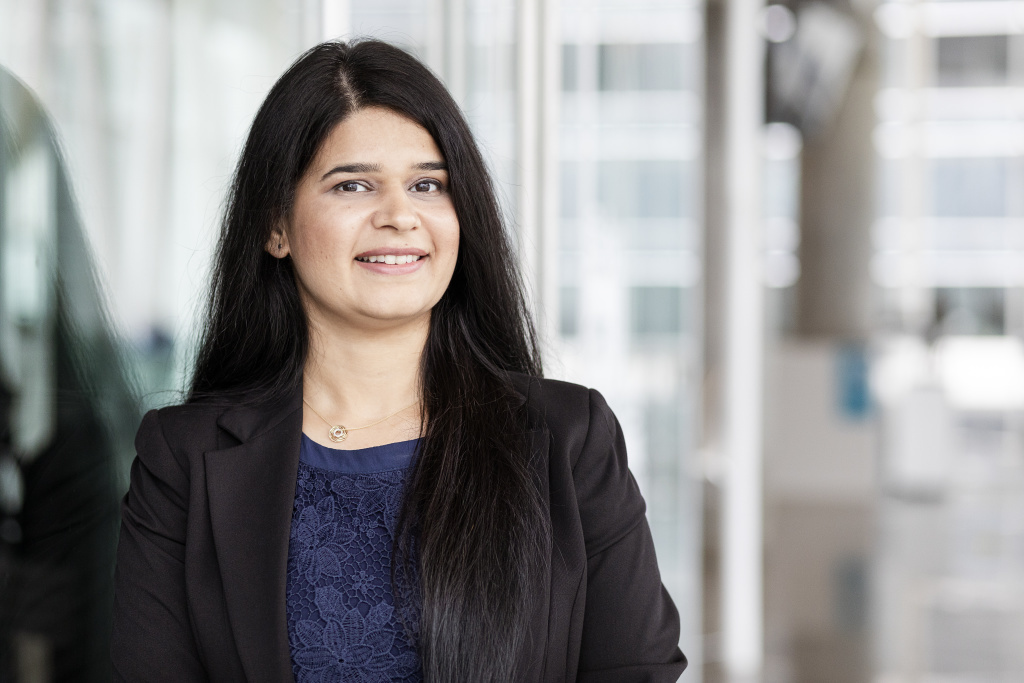
Dr. Shweta Singh serves as an Assistant Professor of Information Systems and Management at Warwick Business School, University of Warwick. She concurrently holds prestigious appointments as a Fellow at the Warwick Institute for Global Sustainability Development (IGSD) and a Behavioral Data Science researcher at The Alan Turing Institute in London. Her academic journey includes a Ph.D. in Information and Decision Sciences from the Carlson School of Management at the University of Minnesota, complemented by dual Master's degrees in Computer Science and Applied Economics from the same institution. Ph.D. in Information and Decision Sciences, University of Minnesota Master's in Computer Science, University of Minnesota Master's in Applied Economics, University of Minnesota Dr. Singh's research centers on developing ethical and responsible artificial intelligence systems that address societal challenges. Her work specifically targets mitigating AI bias, creating explainable AI frameworks, and leveraging technology to combat societal injustice. She investigates how digital platforms, sharing economy models, and IT outsourcing create business value while ensuring these technologies promote sustainability and reduce inequalities. Her innovative approach combines technical AI expertise with deep social awareness, particularly focusing on gender equality and child protection in digital spaces. Her publication record demonstrates consistent high-impact contributions to Information Systems Research, International Conference on Information Systems, and related venues. The trajectory of her work shows increasing focus on practical applications of responsible AI, with recent projects addressing online child safety and human trafficking prevention. Her research increasingly intersects with policy development, as evidenced by her contributions to UK Parliamentary Office of Science and Technology briefs. Doctoral Dissertation Fellowship, University of Minnesota McNamara Fellowship, University of Minnesota Social Impact Project of the Year shortlist (2023) Asian Women of Achievement Award finalist (2023) British Indian Awards finalist (2019) Top 5 Women in Tech for Good Award shortlist (2022) Inspiring 50 UK recognition (2025) Dr. Singh actively mentors students and has been recognized with the Staff Social Inclusion Award (2024) for her teaching excellence. Her advisory roles extend beyond academia to include the UN Women UK delegation for the Commission on the Status of Women and the Advisory Board of AI retail company 'Love the Sales'. She serves as an external collaborator for Boston Consulting Group's Henderson Institute, bridging academic research with industry applications. Through her leadership in the ISM-Analytics (ISMA) Group at Warwick, Dr. Singh fosters interdisciplinary collaboration focused on creating socially responsible technological solutions. Her work with the IGSD specifically targets UN sustainability goals related to reducing inequalities and promoting inclusive societies through responsible AI implementation.
Sergiu Nisioi is an Associate Professor at the Faculty of Mathematics and Computer Science, University of Bucharest, with expertise in computational linguistics, machine translation, and text simplification. He bridges cognitive science with NLP through eye-tracking and EEG research, while also exploring sound art and digital autonomy via initiatives like HYPHA.ro. Current projects include PN-IV-P2-2.1-TE-2023-2007 (text complexity/readability), Legal Document Processing , and Europarl Dialectal Corpora Research spans computational psycholinguistics , LSTM-based translation models , and algorithmic composition for sound art His work integrates interdisciplinary methodologies, combining EEG signal processing for architecture data with the University of Architecture, and DSP for ecological projects at chlorophylla.live.
Simon Oya is an Assistant Professor in the Department of Electrical and Computer Engineering at the University of British Columbia (UBC), Faculty of Applied Science. He holds a PhD in Information Technologies and Communications from the University of Vigo (Spain) and was previously a postdoctoral fellow at the Cryptography, Security and Privacy (CrySP) group at the University of Waterloo. His educational background includes: BSc, MSc, PhD from University of Vigo (Spain) Simon Oya's research focuses on designing and evaluating privacy-enhancing technologies with strong privacy and utility guarantees. He approaches privacy problems from a statistical perspective, using theoretical tools from signal processing and information theory to quantify privacy leakage and develop effective defenses. His primary research areas include: Privacy-preserving searchable encryption Machine learning privacy (particularly membership inference attacks) Anonymous communication systems Location privacy Differential privacy His publication record demonstrates a consistent focus on analyzing and improving privacy mechanisms across various domains. His recent work has particularly emphasized the intersection of machine learning and privacy, as well as advancing techniques for searchable encryption. His research methodology typically involves developing statistical models to understand privacy leakage and designing optimization-based approaches to improve privacy-utility tradeoffs. His notable scientific contributions include developing attacks against searchable encryption schemes to better understand their privacy limitations, and designing improved privacy mechanisms for location-based services. His work on statistical disclosure attacks against anonymous communication systems has also been influential in the field. As an educator, he teaches CPEN 442: Introduction to Cybersecurity at UBC. He actively seeks motivated graduate students interested in privacy research, particularly those with strong backgrounds in statistics, machine learning, or optimization.
Fengqing Maggie Zhu is an Associate Professor at the Elmore Family School of Electrical and Computer Engineering within Purdue University , West Lafayette campus. Her research spans image processing , video compression , computer vision , and smart health , with notable contributions to learned image compression , 3D reconstruction , and nutrition analysis via computer vision . Educational background: BS in Electrical Engineering, Purdue University (2004) MS in Electrical and Computer Engineering, Purdue University (2006) PhD in Electrical and Computer Engineering, Purdue University (2011) Her work focuses on developing machine learning-based compression techniques for 2D/3D images and videos, with applications in food portion estimation , wearable dietary monitoring , and virtual reality facial expression tracking . She explores structured pruning , mixed precision quantization , and continual learning to create efficient, robust systems for edge-cloud collaboration. The 2025-2024 article collection reveals concentrated efforts in learned image compression (with 8 papers on quantization, pruning, hierarchical VAEs), food-related computer vision (12+ papers on portion estimation, databases, classification), and 3D reconstruction (MetaFood3D dataset, ICP-3DGS algorithm). Emerging themes include privacy-preserving AI for wearable cameras and class-incremental learning frameworks. Contact: zhu0@purdue.edu
Sadegh Talebi is a Tenure Track Assistant Professor in the Machine Learning Section at the Department of Computer Science, University of Copenhagen . His research focuses on theoretical aspects of reinforcement learning, Markov decision processes, online learning, stochastic multi-armed bandit problems, and resource allocation in networks. Education BSc in Electrical Engineering (minor: Electronics) from Iran University of Science and Technology (IUST) (2004) MSc in Electrical Engineering (minor: Communication Systems) from Sharif University of Technology (2006) PhD in Electrical Engineering from the Department of Automatic Control at KTH Royal Institute of Technology (supervised by Alexandre Proutiere and Mikael Johansson) Research Specializes in theoretical foundations of reinforcement learning and online learning Key contributions in stochastic optimization, MDPs, and bandit algorithms Collaborates on applications in resource allocation and quantum computing Publications include high-impact work on offline RL, differentially private exploration, and scalable MDP solutions in journals like Neural Processing Letters and conferences such as NeurIPS and UAI.