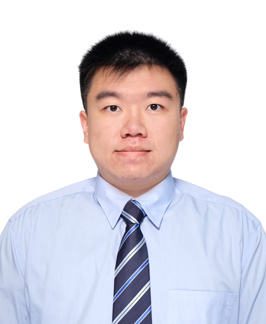
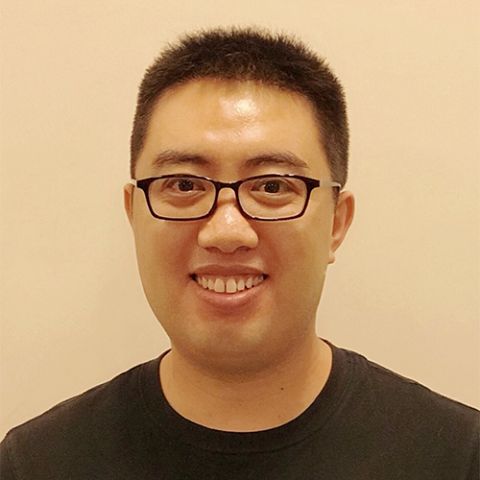
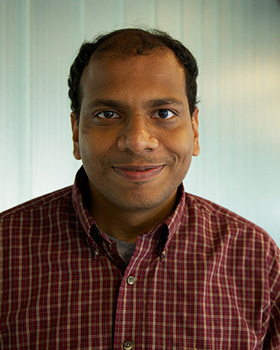
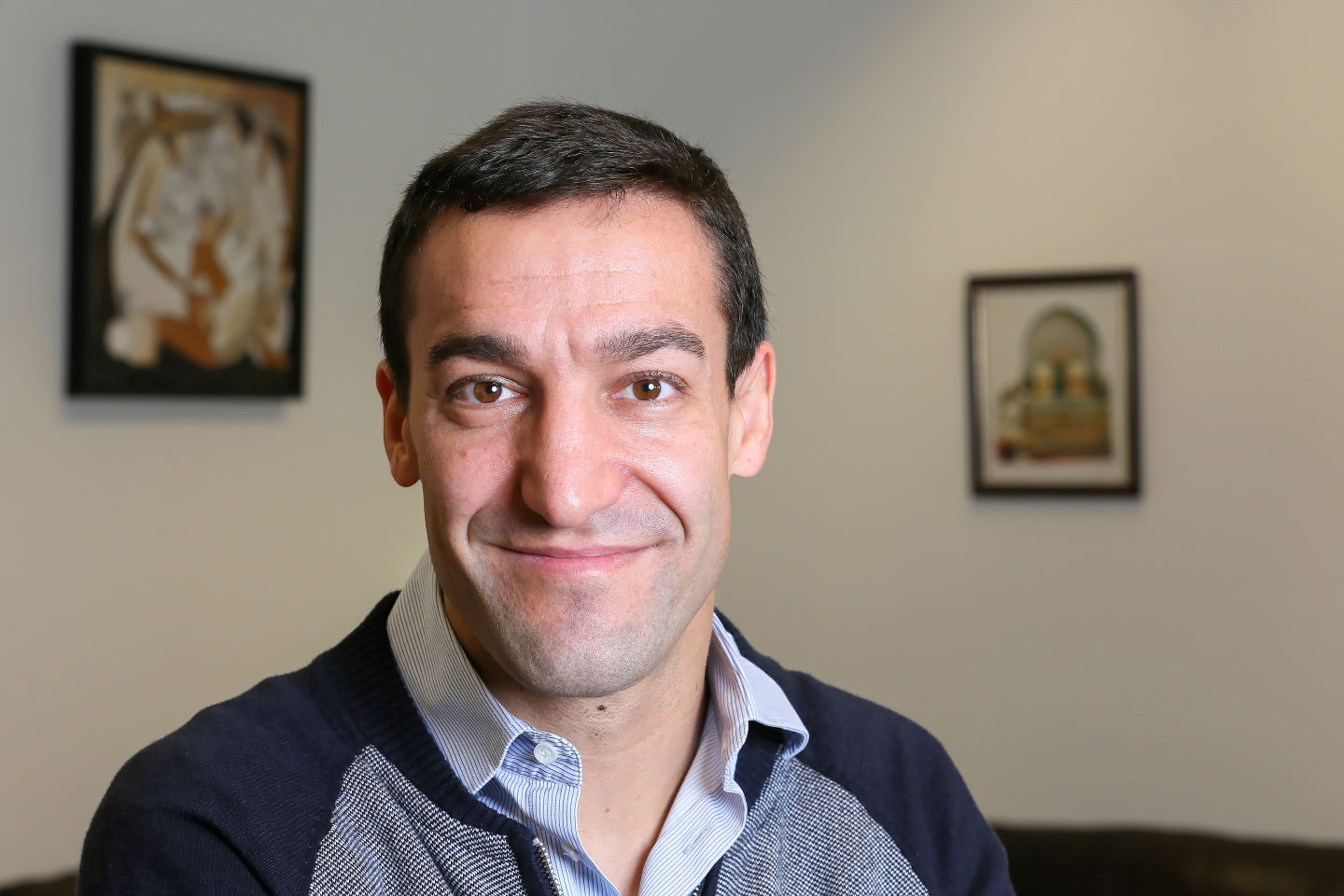
Christopher Brooks is an Assistant Professor at the University of Michigan's School of Information, specializing in educational technologies and data science education. He directs the Educational Technology Collective (etc), a multidisciplinary research group focused on learning analytics, educational data mining, and collaborative learning systems. His work bridges computer science and education, with a focus on improving teaching methods through AI-driven tools and platforms. Research Interests: Development and impact assessment of educational technologies Predictive modeling for student success Data science pedagogy Privacy in smart home technologies Publications reflect a focus on learning analytics, MOOC design, and educational AI, with notable contributions to conferences like CHI, LAK, and AIED. Awards include multiple best paper recognitions. Teaching includes applied data science courses at UMich and Coursera. He leads the Master of Applied Data Science (MADS) program and collaborates with institutions like Microsoft to build AI-driven educational tools.
Ioannis Theodoridis is a Professor at the Department of Informatics, University of Piraeus, and Director of the Data Science Laboratory under the School of Information and Communication Technologies. His research focuses on data science, particularly large-scale data management and analysis, with applications in maritime informatics, spatiotemporal data, and mobility patterns. He holds editorial roles at ACM Computing Surveys and has contributed to numerous international conferences and journals. As a project leader in Horizon 2020 initiatives, he has coordinated research on data-driven solutions for maritime safety and urban mobility. He earned his Diploma (1990) and PhD (1996) in Electrical and Computer Engineering from the National Technical University of Athens (NTUA). His work includes developing scalable systems for maritime route forecasting (e.g., GMSA), frameworks for vessel trajectory prediction (e.g., VesselVision), and platforms like i4sea for fisheries monitoring. Contact: ytheod@unipi.gr .
Ka Ho Chow is an Assistant Professor in the Department of Computer Science at the University of Hong Kong, part of the School of Computing and Data Science. He holds a PhD from Georgia Institute of Technology and was previously a research scientist at IBM Research. His research focuses on the intersection of machine learning, cybersecurity, and scalable systems, emphasizing trustworthy AI and defense against security/privacy threats in federated learning, large language models, and visual recognition systems. Key achievements include IBM PhD Fellowship (2022) and Croucher Scholarship (2021). Education: PhD in Computer Science from Georgia Tech (2020), advised by Prof. Ling Liu. His work spans algorithmic optimization, infrastructure resilience, and adversarial machine learning. Current research explores attack-resilient solutions for centralized/federated learning and AI system vulnerabilities. Recent articles highlight innovations in federated learning security, gradient inversion attacks, backdoor detection, and privacy-preserving techniques. He has openings for PhD students interested in AI security and trustworthy systems. His lab collaborates on projects involving blockchain fraud detection (ZipZap), facial recognition privacy (Personalized Masks), and graph neural network robustness. Awards: IBM PhD Fellowship (2022), Croucher Scholarship (2021). Active in guiding PhD candidates and advising on microservices cloud migration (Atlas/SCAD systems). Research outputs include over 30 peer-reviewed papers spanning cybersecurity, AI ethics, and distributed learning frameworks.
Professor TAN Ah Hwee is a Full-time Faculty member and Lee Kong Chian Professor of Computer Science at the School of Computing and Information Systems (SCIS) at Singapore Management University (SMU). He serves as the Associate Dean (Research) in SCIS and leads research in Artificial Intelligence, Machine Learning, and Health Informatics. His work spans neural networks, multi-agent systems, and healthcare applications such as Mild Cognitive Impairment prediction. He holds a PhD from Boston University (1994). Research Focus: His research integrates adaptive resonance theory, federated learning, and spatial-temporal modeling. Key areas include knowledge graph refinement, episodic memory systems for Activity of Daily Living (ADL) prediction, and explainable AI in multi-agent reinforcement learning. He also develops technologies for aging-in-place support and social media analytics. Recent Contributions: Recent work emphasizes hierarchical multi-agent models (HiSOMA), federated learning frameworks (FedART), and AI-driven health monitoring systems. His publications address challenges in self-organizing neural networks, context-aware reinforcement learning, and medical diagnostics through ambient sensing. Advising & Impact: Advises students like TEH Seng Khoon and Cassandra TAN Hui Ming. His projects include the eHealthPortal for elderly support and Silver Assistants for aging-in-place solutions. Research outputs bridge theoretical advancements in AI with real-world applications in healthcare and smart environments.
Fenglong Ma is an Associate Professor at Pennsylvania State University, affiliated with the Institute for Computational and Data Sciences and the Center for Socially Responsible Artificial Intelligence. His research focuses on data mining, healthcare informatics, machine learning, natural language processing, and multimodal learning. He holds a Ph.D. from the University at Buffalo (2019) and degrees from Dalian University of Technology. His work addresses challenges in federated learning, medical AI, adversarial robustness, and multimodal systems. Key contributions include innovations in quantization for large language models, federated knowledge injection, and medical vision-language benchmarking. Recent publications explore topics like collaborative fairness in federated learning, robust medical vision-language models, and adversarial attack mitigation. His research bridges theory and practical applications in healthcare, cybersecurity, and personalized recommendation systems. He leads the PSU Data Science Lab and collaborates on projects involving AI ethics, multimodal data integration, and scalable medical foundation models.
Prof. Dr.-Ing. Jörg Rainer Noennig is Professor of Digital City Science at HafenCity University Hamburg (HCU) and Head of the WISSENSARCHITEKTUR Laboratory of Knowledge Architecture at TU Dresden. With a background in architecture (Bauhaus Universität Weimar, Waseda University Tokyo), he practiced in Tokyo before transitioning to academia. He has held visiting professorships in Italy, France, Russia, and Japan. His research focuses on digital urban systems , including smart cities, participatory planning, and knowledge architecture. He explores AI applications in urban design, agent-based simulations for mobility, and transdisciplinary frameworks for sustainability. Recent projects include TOSCA (open-source urban tools), SmartFly (eVTOL integration), and MICADO (migrant integration platforms). Publications emphasize data-driven urban methodologies , spanning synthetic data generation, pedestrian modeling, and sustainable infrastructure design. His work integrates materials science (e.g., auxetic structures) with digital twins for resilient cities. Awards include the Grand Prix of the European Association for Architectural Education (EAAE). He leads Hamburg’s Digital City Science team and coordinates international collaborations, including Indo-German urban development projects. He directs the WISSENSARCHITEKTUR Laboratory , focusing on knowledge synthesis for urban innovation. Courses taught at HCU include 'Knowledge Architecture', 'Digital City Science', and 'Smart City Technologies'.
Ashish Khisti is an Associate Professor at the University of Toronto's Department of Electrical and Computer Engineering (ECE), where he directs the Signals, Multimedia and Algorithms Laboratory (SMA Lab). He holds the Canada Research Chair (Tier II) and maintains affiliations with the Vector Institute for Artificial Intelligence. His research bridges communication systems, information-theoretic security, and machine learning, with a focus on real-time streaming and privacy-preserving algorithms. Research Trends: Recent publications emphasize streaming codes for latency-sensitive networks , machine learning-driven compression , and privacy mechanisms in federated learning . Scientific Recognition: Canada Research Chair (Tier II), 2012 and 2017 renewal Cisco Research Center Award, 2017 Ontario Early Researcher Award, 2012 Best Paper at NeurIPS 2021 Deep Generative Models Workshop Academic Contributions: Supervised PhD students Ahmed Badr, Farrokh Etezadi, and Si-Hyeon Lee. Served as Associate Editor for IEEE Transactions on Communications (2012-2015) and IEEE Transactions on Information Theory (2015-2018). Labs & Collaborations: Leads the Signals, Multimedia and Algorithms Laboratory, collaborating with institutions like KAUST, Texas A&M University (Qatar), and the Vector Institute. Organized workshops at BIRS and IEEE conferences.
Daniel Livingstone is a researcher at The Glasgow School of Art (GSA) specializing in the application of games and 3D technologies to enhance learning and public engagement. His work spans medical visualization, heritage interpretation, and broader educational technology domains. Current PGR supervisee: Shaojie Ni (AR & Gamification in Museums) Email: D.Livingstone@gsa.ac.uk Research Themes : Serious games, virtual reality, 3D anatomical modeling, disease education, digital heritage preservation, and AI-driven simulations. Highlights include AR tools for rheumatology engagement, VR applications in diabetes management, and digital reconstructions of historical surgical instruments. Article Trends : Focus on merging immersive technologies with healthcare education, heritage storytelling, and interdisciplinary applications of game engines. Recurring keywords: Augmented Reality , 3D Visualization , Medical Education , Public Health , Virtual Environments .
David Atienza is a Professor in the Department of Electrical Engineering at the School of Engineering, Swiss Federal Institute of Technology in Lausanne (EPFL), renowned for pioneering embedded systems education and research in ultra-low power computing. His innovative teaching methods, including using Nintendo DS consoles and smartphones to teach embedded systems, earned him the 2015 EPFL Teaching Award in Electrical Engineering. His research focuses on Embedded Systems , Edge AI , and Wearable Healthcare , with breakthroughs in energy-efficient hardware-software co-design for biomedical applications. Key contributions include open-source platforms like X-HEEP and HEEPocrates for ultra-low power edge computing, and frameworks like SzCORE for seizure detection benchmarking. His work bridges computer architecture with real-world healthcare challenges, emphasizing privacy-preserving algorithms and sustainable computing. Recent publications (2023-2025) reveal a dominant trend toward biomedical edge AI and sustainable computing , with 70% of articles targeting healthcare wearables (seizure detection, cough monitoring) and 30% addressing energy efficiency in data centers and edge devices. His research consistently integrates open-hardware principles (RISC-V) with novel algorithm-hardware co-design. Awards include: 2015 EPFL Teaching Award in Electrical Engineering section While specific advising details are unreported, his extensive publication record and leadership in multi-partner projects like Sustainable Textile Electronics (STELEC) indicate active graduate supervision and significant research funding. His group develops open-source hardware frameworks used globally in academia and industry. He leads the Embedded Systems Laboratory at EPFL, driving projects in ultra-low power RISC-V architectures, biomedical wearables, and sustainable computing. Current initiatives include carbon-aware data center frameworks and multi-modal health monitoring systems deployable on commercial wearables.
Jeffrey C. F. Ho is an Associate Professor at the School of Design, The Hong Kong Polytechnic University. He serves as Deputy Specialism Leader of Interaction Design and Chairman of the School Learning & Teaching Committee. His research centers on virtual reality (VR) and interaction design, applying social science principles to influence attitudes and behaviors through immersive technologies. He leads projects in VR applications for safety training, virtual museums, and healthcare, and collaborates with the Asian Lifestyle Design Lab and the Technology and Social Behavior Lab at the University of Illinois at Urbana-Champaign. PhD in Communication, City University of Hong Kong MSc in Human-Computer Interaction with Ergonomics, University College London MPhil in Computer Science, The University of Hong Kong BEng in Software Engineering, The University of Hong Kong Ho’s research explores VR’s role in perspective-taking experiences, focusing on empathy, prosocial behavior, and spatial cognition. His work bridges VR with public health, education, and cultural preservation, such as designing VR environments for elderly care and dietary reflection. His recent publications highlight trends in generative AI ethics, beginner-friendly design software, and spatio-social impacts in VR applications. His articles span virtual reality games, VR safety training, and interactive museum design, with keywords like Virtual Reality, Human-Computer Interaction, and Cultural Preservation. Key subfields include immersive technology, social behavior analysis, and ethical design frameworks. UGC Teaching Award - Nominee (2024) Best Paper Award, EAI ArtsIT 2020 (2020) Exemplary Teaching and Learning Award - Merit (2024) QS Reimagine Education Awards 2024 - Global Education Award (2024) QS Reimagine Education Awards 2024 - Gold Award in Smart Omnichannel Campus (2024) Ho has secured grants from Hong Kong’s Research Grant Council, including HK$678,607 for immersive VR construction safety training (2024–2026) and HK$741,961 for VR safety education focusing on accident victims (2021–2023). He contributes as a reviewer for journals like Universal Access in the Information Society and Frontiers in Psychology , and leads teaching initiatives in information architecture and interactive media design.
Dr Pengpeng Hu is a Senior Lecturer in Fashion Technology at the Department of Materials, The University of Manchester, UK. His research focuses on geometric deep learning, 3D human body reconstruction, point cloud processing, and smart textiles, bridging fashion technology with biomedical and engineering applications. Associate Editor: IEEE Transactions on Neural Networks and Learning Systems, IEEE Transactions on Automation Science and Engineering Academic Editor: PLOS ONE Editorial Board Member: Scientific Reports Programme Chair: 25th UK Workshop on Computational Intelligence Area Chair: 35th British Machine Vision Conference His work advances vision-based measurement systems, wearable technology, and 3D scanning for clothing and healthcare. Recent publications include innovations in MXene-based electronic textiles, 4D hand measurement extraction, and anthropometric analysis from depth images. Recipient of the Emerald Literati Award for an outstanding paper in 2019 Dr Hu accepts self-funded PhD students in areas like 3D human reconstruction, point cloud processing, and smart textiles. His editorial roles and conference leadership highlight his influence in computational intelligence and machine vision communities.
Samuel McDermott is an Associate Teaching Professor at the Department of Chemical Engineering and Biotechnology , University of Cambridge. He serves as the Sensor CDT Programme Manager , focusing on interdisciplinary research in healthcare, biotechnology, and open-source hardware. His research spans machine learning applications in medical imaging , laboratory automation , and web-of-things (WoT) integration for scientific equipment. Recent work emphasizes federated learning in healthcare, blood cell morphology classification, and low-cost diagnostic tools. Key article trends include: deep diffusion models for malaria detection , open-source microscopy platforms like OpenFlexure, and AI-driven clinical data generalization . His projects often combine 3D-printed hardware and IoT-enabled laboratory systems .
Florian Leiser is a Professor at the Chair of Information Infrastructures (led by Prof. Dr. Ali Sunyaev) at Technical University of Munich's Heilbronn campus. His research focuses on human-AI collaboration, privacy-preserving algorithms, and explainability in machine learning systems. Current research areas include Hybrid Intelligence, Human-centered Generative AI (LLMs), Federated Learning, and Health Information Systems Recent publications demonstrate expertise in Explainable AI for medical imaging LLM hallucination detection Federated learning architectures Human-in-the-loop systems Healthcare data applications He contributes to teaching through Human-Centered Artifact Design courses Collaborative teaching roles in machine learning Supervising student projects
Dr. Volkan Dedeoglu is an active researcher at Queensland University of Technology (QUT), specializing in blockchain technology and IoT systems within the School of Computer Science. His work focuses on developing privacy-preserving frameworks and trust architectures for distributed systems. Research Focus: Blockchain applications in IoT and cyber-physical systems Privacy-preserving data sharing and threat intelligence Decentralized trust and reputation management Secure data aggregation and marketplace frameworks His recent work explores cutting-edge applications like CypherChain for privacy-preserving data aggregation in blockchain-based demand response programs and Priv-Share for differential privacy in cyber threat intelligence sharing. These publications demonstrate a consistent focus on bridging theoretical blockchain innovations with practical cybersecurity challenges in IoT ecosystems. Collaborative Research: Dr. Dedeoglu frequently collaborates with QUT colleagues including Raja Jurdak, Salil Kanhere, and Sidra Malik, indicating active participation in QUT's distributed systems and cybersecurity research groups.
Dinesh Manocha is a Distinguished University Professor of Computer Science at the University of Maryland, with joint appointments in the Department of Electrical and Computer Engineering and the University of Maryland Institute for Advanced Computer Studies (UMIACS). He is also affiliated with the Maryland Robotics Center and the Institute for Systems Research. His educational background includes a Ph.D. in Computer Science from the University of California at Berkeley (1992) and a B. Tech in Computer Science and Engineering from the Indian Institute of Technology, Delhi, India (1987). Professor Manocha's research spans multiple domains with significant emphasis on: Computer Graphics and Visualization Robotics and Motion Planning Virtual and Augmented Reality Systems Geometric Computing Algorithms AI Applications for Autonomous Systems High Performance Computing His extensive publication record shows consistent innovation in multi-agent navigation, collision avoidance algorithms, and applications in virtual environments. Recent work focuses on trajectory prediction for autonomous vehicles and physics-based simulation for immersive experiences, with algorithms integrated into industry-standard systems like ROS (Robot Operating System). Among his numerous honors, Professor Manocha is recognized as: ACM, IEEE, AAAS, and AAAI Fellow Member of the IEEE VGTC Virtual Reality Academy Recipient of the Pierre Bézier Award from the Solid Modeling Association University of Maryland Distinguished University Professor Multiple best paper awards across premier conferences He has supervised 54 PhD students throughout his career and currently advises numerous graduate researchers. His research has attracted significant funding from NSF, Google, Amazon, Facebook, and industry partners. Notably, he co-founded Impulsonic, a company developing physics-based audio simulation technologies acquired by Valve Corporation in 2016. Professor Manocha leads the GAMMA research group, which continues to advance geometric algorithms with applications across multiple disciplines.