Carmela Troncoso is an Associate Professor at École Polytechnique Fédérale de Lausanne (EPFL), heading the Security and Privacy Engineering Lab (SPRING Lab) in the School of Computer and Communication Sciences. She holds a PhD in Engineering from KU Leuven (2011) and has held academic roles at IMDEA Software Institute and Gradiant, along with postdoctoral research at COSIC Group. Research Focus: Security and privacy engineering, machine learning's societal impact, privacy-enhancing technologies, and decentralized privacy-preserving systems. Publications: Her work spans top venues like IEEE S&P, CCS, NeurIPS, and PETS, with recent emphasis on adversarial robustness, proximity tracing, and privacy metrics. Awards: IEEE S&P Distinguished Paper Award (2022) EPFL Latsis University Prize (2022) Caspar Bowden Award Runner-up (2021) CNIL-INRIA Privacy Protection Award (2017) ERCIM PhD Thesis Award (2011) She supervises active PhD students and collaborates with institutions like ICIJ. Her lab's SPRING Lab website details current projects.
Roberta Bardini is a Fixed-term Assistant Professor at Politecnico di Torino, Department of Control and Computer Science (DAUIN), within the College of Computer, Film, and Mechatronics Engineering. She holds the scientific disciplinary sector IINF-05/A - Information Processing Systems (Area 0009 - Industrial and Information Engineering) and is actively involved in teaching across multiple engineering programs including Computer Engineering, Biomedical Engineering, and Aerospace Engineering. Her research focuses on applied artificial intelligence, bioinformatics, and computational biology , with particular emphasis on systems biology applications. Her work bridges computer science with biological and medical domains, addressing challenges in cancer modeling, neuronal systems, and biomedical applications. She applies computational approaches to understand complex biological phenomena and develop innovative solutions for healthcare and biotechnology. Her recent publications (2024-2025) reveal a strong focus on computational biology tools, AI applications in tumor resistance modeling, neuronal concept transformation, and security for neuromorphic systems. These works demonstrate interdisciplinary research spanning bioinformatics, computational neuroscience, and AI-driven biomedical solutions with practical applications in cancer research and biomanufacturing. Dr. Bardini serves as a supervisor for PhD students Alessio Caviglia and Filippo Marostica in the Artificial Intelligence program (40th cycle, 2024-present). She is actively involved in the BESOS_RP research project (2024-2027), an innovative tool for analyzing welfare and sustainability for Piedmontese cattle breeders, funded through regional research grants. Additionally, she has contributed to the Horizon Europe NEUROPULS Project. She holds two significant patents: a computerized method for generating culture protocols for biomanufacturing, and a method for computer simulation of the ontogeny of biological systems (with optional culture protocol generation), developed with colleagues Alfredo Benso, Stefano Di Carlo, Gianfranco Michele, and Maria Politano. These patents reflect her expertise in computational biology and bio-manufacturing applications.
Dr Theodora Koulouri is a Senior Lecturer in the Department of Computer Science at Brunel University London, within the College of Engineering, Design and Physical Sciences. She joined Brunel in 2017 after previously working at King’s College London. Her research and teaching focus on human-centred AI, conversational systems, and intelligent interactive technologies. Research Interests: Dr Koulouri's work centers on developing intelligent systems that are usable, transparent, and trustworthy. Her primary research areas include: Human-Centred AI Conversational AI and User Interfaces Usability, UX, and Human Factors Collaborative and Explainable AI Systems She applies these to real-world domains such as customer service, recruitment, healthcare, and public infrastructure. Her research has been funded by Innovate UK, EPSRC, and internal grants, with a strong emphasis on responsible and privacy-preserving AI. She has led multiple projects developing LLMs that comply with regulatory standards in banking and customer service, multilingual conversational agents, and AI tools for data labelling and auditing. Scientific Awards and Recognition: Fellow of the Higher Education Academy (FHEA) Parliamentary Academic Fellowship with the House of Commons Advising and Grants: Dr Koulouri is the first supervisor for two EPSRC-funded PhD researchers. She has secured significant research funding as Principal Investigator on multiple Innovate UK Smart Grants and KTP projects, totaling over £1.5 million. Her projects involve partnerships with industry leaders in cybersecurity, AI startups, Transport for London, and the aviation sector. Laboratories, Teams, and Collaborations: She collaborates with interdisciplinary teams across academia and industry. Her work involves close partnerships with a German cybersecurity company, a UK AI startup, the House of Commons Research Team, and Transport for London. She is embedded in a vibrant research group within the Computer Science department focusing on AI, HCI, and data science.
Emily Mary Weitzenboeck is a Professor of Law at the Oslo Business School, Faculty of Social Sciences, Oslo Metropolitan University (OsloMet). She holds a PhD in Law from the University of Oslo (2010), a Doctor of Laws (LLD) from the University of Malta (1993), and an LLM from the University of Southampton (1994). She is qualified to practice law in both Norway and Malta. Her research focuses on the intersection of law and digital technology, with key interests in privacy and data protection law , contract law , electronic commerce law , consumer protection in the online world , and legal issues related to Big Data and AI . She is actively involved in research projects such as Crossbow: Crossing and Managing Boundaries between Work and Non-Work – Co-creating Healthy Teleworking , which explores the challenges and opportunities of telework. Her recent publications reveal a strong trend in analyzing regulatory frameworks for digital transformation in public and private sectors, particularly GDPR implementation, anonymization of unstructured data, algorithmic governance, and the legal implications of telework. Her work appears in journals such as International Journal of Law in Context , Computer Law and Security Review , and Administrative Sciences , as well as in book chapters and policy reports. Scientific Awards: No scientific awards listed in the provided text. She has contributed to policy dissemination through invited commentaries, panel discussions, and conference presentations, including engagements with the European Law Institute and the Council of Europe. While her collaborative research involves scholars like Cathrine Egeland and Diego Praino, no formal advisees or students are listed. She is not part of any lab, but her work is embedded in research groups related to public administration and governance.
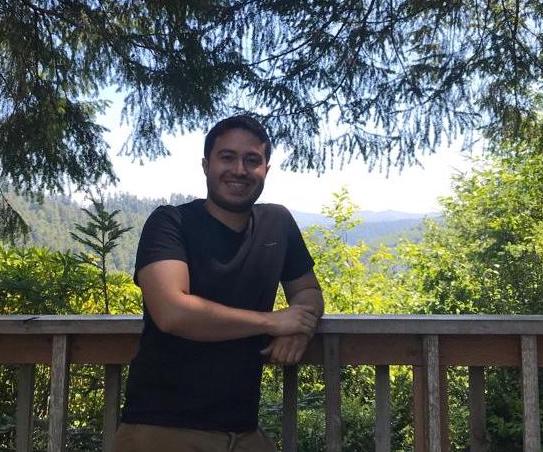
Josef Noll is a Professor at the Department of Technology Systems, University of Oslo, specializing in digital transformation and societal security. His research bridges wireless networks (2G-6G), IoT security, and sustainable development, with a focus on reducing the global digital divide through initiatives like the Basic Internet Foundation. Education & Background: PhD from Ruhr-Universität Bochum with industry experience at Siemens (Germany), European Space Agency (Netherlands), and Telenor (Norway). His technical expertise spans integrated circuit design, satellite remote sensing, and mobile service innovation. Research Focus: Digital inclusion strategies for emerging economies Measurable security frameworks for IoT and autonomous systems 6G network development for societal sustainability Wireless sensor networks in extreme environments (Arctic) Mobile applications for health monitoring and environmental sensing Publications: Research demonstrates strong cross-disciplinary trends, with recent work emphasizing privacy-preserving energy systems (23%), digital health interventions (20%), IoT security metrics (18%), 6G infrastructure (15%), and sustainable development frameworks (12%). Collaborations & Projects: Leads the CPS Lab for Cyber-Physical Systems and co-founded the Basic Internet Foundation. Key projects include the European SCOTT initiative (57 partners) and Gemini Centre for IoT. Collaborates globally with institutions like FFI, NILU, and industrial partners (Kongsberg, ABB). Advising: Mentors international PhD students from Bangladesh, Pakistan, Hungary, and other regions where Telenor operates mobile networks.
Matthew Lentz is an Assistant Professor of Computer Science at Duke University, where he has been employed since Fall 2021. He is affiliated with the Duke Systems Group within the Department of Computer Science under Trinity College of Arts & Sciences. Prior to joining Duke, he served as a Postdoctoral Researcher at VMware Research Group and maintains an affiliation as an Affiliated Researcher . Education: Ph.D. in Computer Science from University of Maryland, College Park (2020), advised by Bobby Bhattacharjee External Relationships: Collaborations with Broadcom and ongoing postdoctoral work with VMware Dr. Lentz's research operates at the intersection of systems, networking, and security. His work includes: Developing abstractions and tools for secure, trustworthy software systems Improving performance in modern networking and machine learning applications Exploring network performance measurement and security threat analytics Advancing GPU-as-a-Service infrastructure (via NSF CC* Compute grant 2024-2026) Research trends show consistent focus on: System security (endpoint security, verification, privacy-preserving communication) Networking optimization (service mesh, collective communication, mobile networks) Machine learning systems (inference optimization, MoE training, heterogeneous computing) Mobile computing (Bluetooth beacons, peripheral control, contact tracing) Scientific Awards: NSF CC* Compute grant for GPUs-as-a-Service infrastructure (2024) Advising & Grants: Advises current PhD students Alexander Du, Chenyang Liu, and Luka Duranovic while serving as co-advisor for Yongji Wu (now at UC Berkeley). Collaborates with Danyang Zhuo and Kartik Nayak.
MARIA ANGELES CIFREDO CHACON is a Professor at Universidad de Cádiz, affiliated with the Department of Automatic, Electronic Engineering, Computer Architecture and Networks. Her research focuses on Computer Architecture and Technology , particularly in FPGA , Embedded Systems , and Magnetic Measurements . Doctorate in 2010 from Universidad de Cádiz Her recent work includes advancements in low-noise magnetic measurement systems for CubeSats and innovative applications of augmented reality in STEM education. She has contributed to privacy-preserving data collection protocols and neuromorphic platforms . Her publications span space technology , educational methodologies , and hardware security , reflecting interdisciplinary expertise in electronics and computational systems.
Angel Quiros Olozabal is an Associate Professor at the University of Cadiz, affiliated with the Department of Automatic, Electronic, Computer Architecture and Networks Engineering. His research focuses on hardware development, FPGA optimization, and circuit design, with applications in Boundary Scan (JTAG) test automation, power quality monitoring, neuromorphic systems, and biomedical devices like TMS coils. His work spans diverse subfields including digital signal processing, electromagnetic modeling, and educational technologies. Key methodologies involve VHDL synthesis, boundary element analysis, and real-time system implementation. Current research trends emphasize privacy-preserving data collection protocols, thermal modeling for medical devices, and low-cost embedded platforms for circuit emulation. Scientific awards are not explicitly mentioned in the provided data. No student advisement records were found. For collaboration or inquiries, his email is angel.quiros@uca.es .
Muslum Ozgur Ozmen serves as an Assistant Professor in the School of Computing and Augmented Intelligence at Arizona State University, where his research centers on enhancing security and privacy for emerging computing platforms and their physical-world interactions. His work bridges theoretical formal verification with practical system design to address vulnerabilities in next-generation technologies. Dr. Ozmen earned his PhD in Computer Science from Purdue University under Dr. Z. Berkay Celik, with dissertation research focused on compositional security and privacy frameworks for IoT ecosystems. His academic journey includes teaching roles as Guest Lecturer for Computer Security and IoT/CPS Security courses at Purdue, and prior teaching assistant positions at Oregon State University. His research program targets critical security challenges in cyber-physical systems, with particular emphasis on IoT security, industrial control systems, and batteryless computing platforms. Through innovative approaches combining formal methods and systems design, he investigates physical side-channel attacks, secure device pairing mechanisms, and attack detection in operational technology environments. Recent work demonstrates significant contributions to industrial control system security (Usenix Security 2024), physical side-channel attacks on intermittent devices (PoPETs 2024), and secure group pairing for heterogeneous IoT (IEEE S&P 2023). Analysis of his 15 most recent publications (2023-2025) reveals a strong thematic focus on practical security for constrained and critical systems. Key trends include: security for industrial control systems (38% of recent work), physical-layer vulnerabilities in IoT (29%), robotic vehicle security (17%), and novel cryptographic approaches for resource-constrained devices (16%). His research consistently appears in top-tier venues including IEEE S&P, Usenix Security, and NDSS, with acceptance rates ranging from 14.5% to 29%. Dr. Ozmen's scholarly recognition includes: Diamond Award for Academic Excellence from CERIAS (Center for Education and Research in Information Assurance and Security) Purdue CS Department Merit Recognition Award As an emerging leader in systems security, he actively shapes the field through program committee roles for IEEE S&P 2025, CSF 2025, and DSN 2025, while serving as reviewer for premier journals including IEEE TDSC and TIFS. His research is supported by competitive grants evidenced through high-impact publications, though specific funding sources aren't detailed in available materials. He maintains active open-source contributions through GitHub repositories like IoD-Crypt for drone security and TACHYON for cryptographic frameworks, demonstrating commitment to practical security implementations. Dr. Ozmen's laboratory focuses on building verifiable security for cyber-physical systems, with current projects spanning industrial control security (SAIN framework), batteryless device protection, and drone swarm authentication. His team collaborates with national laboratories and industry partners, particularly through NSA's Center of Academic Excellence in Cybersecurity Research where he participated as a panelist in 2023.
Eirini Eleni Tsiropoulou is an Associate Professor in the School of Electrical, Computer and Energy Engineering at Arizona State University . She previously held the same rank at the University of New Mexico, where she also served as Computer Engineering Area Chair and Director of Recruiting and Admissions. Her research integrates game theory, reinforcement learning, network economics, and optimization to enable resilient, intelligent operation of complex cyber-physical systems, with emphasis on next-generation wireless networks, smart grids, and Internet of Things ecosystems. Education Ph.D. Electrical and Computer Engineering, National Technical University of Athens, 2014 MBA Techno-economics, National Technical University of Athens, 2010 Diploma Electrical and Computer Engineering, National Technical University of Athens, 2008 Research Focus Dr. Tsiropoulou’s PROTON Lab (Positioning, Resilience, Optimization, Trust, and Network Economics) develops decision-making frameworks that combine game-theoretic modeling with multi-agent reinforcement learning to address resource orchestration, security, and economic efficiency in highly dynamic, multi-stakeholder systems. Core application domains include 5G/6G wireless heterogeneous networks Concentrated solar power and smart-grid energy management UAV-assisted edge computing and emergency response IoT device authentication and privacy-preserving data sharing Blockchain-based decentralized oracles and energy trading markets Publication Impact Her 2024-2025 output is characterized by symbiotic system design, where sensing, communication, and control co-evolve via game-theoretic incentive mechanisms and learning-based adaptation. Recent papers emphasize federated learning security, resilient positioning & timing, and market-driven resource allocation in energy and communication networks. Scientific Awards & Honors Research and Creative Works Leader Award, UNM, 2023 Early Career Award, IEEE ComSoc Internet Technical Committee, 2019 NSF CRII Award, 2019 N2Women “Rising Stars in Networking and Communications,” 2017 Five Best Paper Awards (WCNC 2012, ADHOCNETS 2015, WMNC 2019, INFOCOM 2019, BRAINS 2020) IEEE Senior Member, 2021 Dean’s Excellence Award, UNM School of Engineering, 2021 Junior Faculty Teaching Excellence Award, UNM, 2018 Editorial & Leadership Roles Associate/Area Editor: IEEE Transactions on Green Communications and Networking, IEEE Transactions on Machine Learning in Communications and Networking, IEEE Transactions on Network Science and Engineering, IEEE Networking Letters, IEEE IT Professional, IEEE Transactions on Consumer Electronics, IEEE Vehicular Technology Magazine, IEEE Wireless Communications Magazine, IEEE/ACM Transactions on Networking Co-Chair, N2 Women Community, IEEE Communications Society General/TPC Chair or Vice-Chair for IEEE INFOCOM, ICC, Globecom, SECON, WCNC, LANMAN, WiMob, and numerous other flagship conferences Research Group & Funding Her PROTON Lab currently includes 10 PhD students and is funded by the U.S. National Science Foundation, Department of Energy, Sandia National Laboratories, and industry partners, with cumulative awards exceeding $2 million since 2019.
Dr. Abdelkader Ouda is an Associate Professor in the Department of Electrical and Computer Engineering at the University of Western Ontario, with over three decades of experience in academia and the software industry. He holds a Ph.D. in Computer Science from Western University (2005), an M.Sc. in Computer Science and Pure Mathematics from Ain Shams University (1993), and a B.Sc. (Hons) in the same disciplines from Ain Shams University (1986), graduating with the highest honor (96.80%). His research spans information security, cryptography, network security, big data security and privacy, and data analytics . He leads the Information and Computer Networks Security (iCNS) Research Laboratory, focusing on innovative solutions for IoT, fog–cloud computing, and behavioral biometrics. His recent work includes developing the ADG Engine for synthetic data generation and HSM4SSL for intra-domain security. Dr. Ouda’s publications highlight advancements in authentication protocols, lightweight IoT security frameworks, database benchmarking, and machine translation . His industry experience includes 14 years in software development, project management, and system analysis, which he integrates into his teaching of courses like Software Design, Algorithms & Data Structures, and Information Security. He also contributes to engineering accreditation through the CEAMS application. Key trends in his articles include secure communication in hybrid architectures, energy-efficient IoT protocols, and reinforcement learning for continuous authentication . His work bridges academic theory with practical applications, emphasizing efficiency and scalability in modern computing environments.
Tobias Werner, M.Sc., is an active researcher at the IAPG Institute of the University of Oldenburg, specializing in geospatial data analysis and spatio-temporal systems. His work bridges theoretical research and practical applications in GIS, digital tachograph analysis, and 3D metrology, with significant contributions to projects funded by governmental bodies like the Federal Office for Cartography and Geodesy. Werner's research focuses on geospatial data management, spatio-temporal analytics, and privacy-aware route reconstruction. His expertise spans machine learning applications in sovereign cloud environments, participatory GIS development, and sustainable geospatial toolboxes for rural transformation. He collaborates extensively with institutions including Leibniz University Hannover on cutting-edge geospatial initiatives. Recent publications reveal a strong trajectory toward cloud-based geospatial processing, real-time data stream management for autonomous systems, and privacy-preserving methodologies in transportation data. His work consistently leverages open-source tools like OpenStreetMap and SpatiaLite while addressing critical challenges in data sovereignty and temporal analysis. Scientific Awards: No scientific awards listed in available documentation Werner contributes to multiple funded projects including "Evaluation of driving data from digital tachographs" (Central Criminal Investigation Department), "The temporal change of geodata" (Federal Office for Cartography and Geodesy), and "Northwest Lower Saxony Sustainable New (4N): Geo-Toolbox" (Lower Saxony Advance). No thesis supervision activities are documented. He operates within the Laboratory for optical 3D metrology, collaborating with senior researchers like Prof. Dr. Thomas Brinkhoff on geospatial data transformation frameworks. His technical leadership manifests in developing specialized applications for route reconstruction from tachograph data and creating the Geo-Toolbox platform for sustainable rural development, demonstrating applied research impact across law enforcement, cartography, and environmental planning domains.
Ihab Francis Ilyas is a Professor at the University of Waterloo , affiliated with the Cheriton School of Computer Science . He currently holds the Thomson Reuters Research Chair in Data Quality and is on leave while serving as a Distinguished Engineer, Proactive Intelligence at Apple Inc. . He has co-founded two successful startups— Inductiv (acquired by Apple) and Tamr —and is a Fellow of the Royal Society of Canada , IEEE Fellow , and ACM Fellow . Research Interests : AI for Data Quality and Curation Knowledge Graphs Large-Scale Data Integration Information Extraction Managing Uncertain Data Data Cleaning Error Detection and Repair Probabilistic and Uncertain Data Management Scientific Awards and Recognitions : C.C. Gotlieb Computer Award, 2024 IEEE Fellow, 2021 ACM Fellow, 2020 NSERC-Thomson Reuters Industrial Research Chair, 2018 Google Faculty Award, 2014 Ontario Early Researcher Award, 2008 IBM CAS Faculty Fellow, 2006–2010 Taha Hussein Medal (Egyptian Ministry of Education), 1990 Leadership and Service : Board of Trustees, VLDB Endowment (2016–2021) Vice Chair, ACM SIGMOD (2016–2021) Co-founder, Inductiv (acquired by Apple) and Tamr Co-author of the leading text Data Cleaning (ACM Books) Lead developer of the HoloClean open-source data repair system Contributor to Saga , a next-generation knowledge construction platform at Apple Publications and Trends : His recent research focuses on AI-driven data cleaning, knowledge graph construction, and scalable data integration systems. Collaborative works span probabilistic inference, differentially private data synthesis, error detection, and HTAP workloads. His publications appear in top venues like SIGMOD , VLDB , and ICDE .
Ms. Uju Madububa Mbachu is a Visiting Instructor at the University of Southern Mississippi, specializing in cybersecurity, machine learning, and project management. Her academic work bridges theoretical and applied research in computing and security domains. Degree: Master of Science in Computer Science from National Open University of Nigeria (2017) Her research focuses on privacy-preserving technologies for emerging systems like the Internet of Vehicles and smart grids, leveraging hardware acceleration and machine learning. She also explores predictive modeling for mental health diagnostics. Recent publications highlight her contributions to secure authentication protocols, traffic management systems, and mental health prediction algorithms. Key themes include IoT security, physical unclonable functions, and data aggregation. Professional Affiliations: Project Management Institute Women in Cybersecurity Institute of Electrical and Electronics Engineers (IEEE) Louis Stokes Mississippi Alliance for Minority Participation She teaches courses in computer science, cybersecurity, and IT project management, emphasizing practical applications in computing and ethical frameworks.
Florian Matthes is a Professor of Software Engineering for Business Information Systems at the Technical University of Munich (TUM), specifically within the TUM School of Computation, Information and Technology. Born in 1963, he has established himself as a leading researcher in software engineering, business information systems, and their applications across various domains. Prof. Matthes' research focuses on business information systems and software engineering, with particular emphasis on natural language processing applications in medical, legal, and enterprise contexts, privacy-enhancing technologies for digital platforms, and blockchain-based systems engineering. His work bridges theoretical computer science with practical industry applications, as evidenced by his co-founding of several successful IT startups including CoreMedia AG (1996), infoAsset AG (1999), Tr8cy UK Ltd (2018), and silver AI GmbH (2024). His publication record demonstrates consistent research productivity with over 400 research outputs spanning from 1990 to the present, with significant activity in recent years (2023-2025). His work spans multiple subfields including privacy-enhancing technologies, natural language processing, blockchain systems, and agile software development methodologies. The research shows a clear trend toward addressing contemporary challenges in AI ethics, data privacy, and the integration of emerging technologies into business information systems. Ernst Denert Award for Software Engineering 2022 Prof. Matthes has held significant leadership roles including Head of the Software Architecture working group of Gesellschaft für Informatik, membership on the advisory board of the Ernst Denert foundation for software engineering, and organization of several international conferences. He previously served as Dean of Studies at the Faculty of Computer Science at TUM until 2010 and has been a venture ambassador of the TUM Venture Labs since 2020. His academic journey began at J.W. Goethe University in Frankfurt (graduated 1988), followed by a doctorate at the University of Hamburg in 1992, and research at Digital Equipment Systems' research center in Palo Alto (1992-93). He was a professor at TU Hamburg-Harburg from 1997 to 2002 before joining TUM. His work demonstrates strong industry-academia collaboration through his startup activities and advisory roles, reflecting his commitment to translating research into practical applications while maintaining academic rigor.



%20/jnoll/josefnoll-web.jpg)