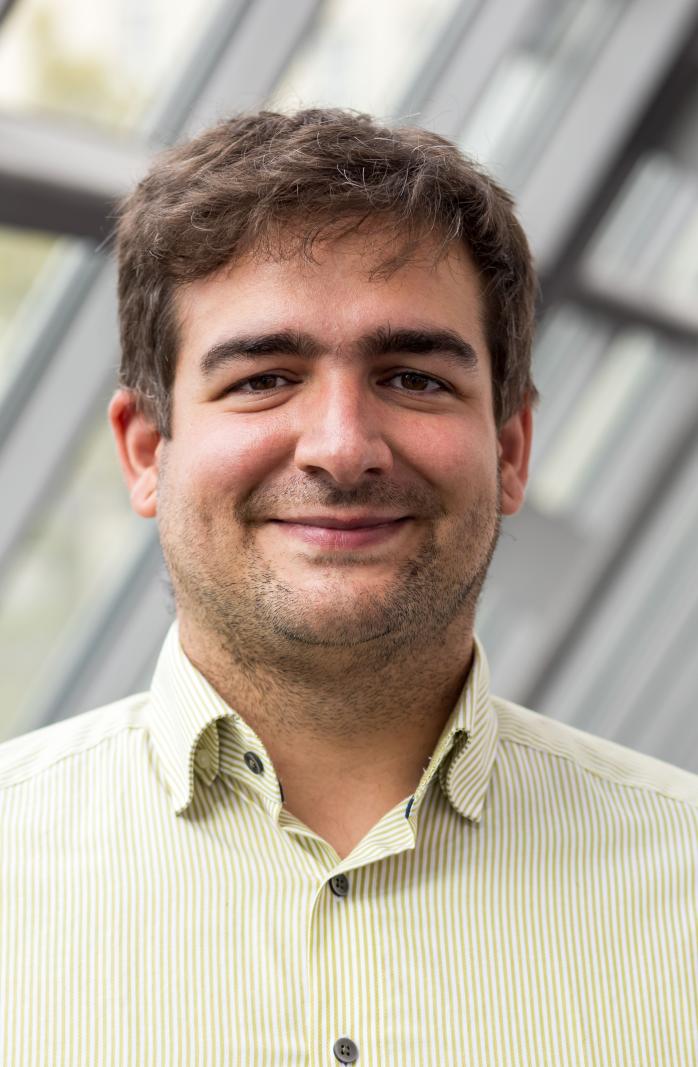
Prof. Bryan Ford leads the Decentralized/Distributed Systems (DEDIS) lab at EPFL. He focuses on secure decentralized systems, including blockchain technology, privacy, and systems security. He earned his Ph.D. from MIT and held faculty positions at Yale University and EPFL. His work spans distributed consensus protocols, peer-to-peer networking, and privacy-preserving systems. Key projects include QuePaxa (timeout-free consensus), UIA (global connectivity for mobile devices), and MedCo (secure healthcare data sharing). He advises numerous PhD students and contributes to open-source projects like Bitcoin collective signing and privacy networks like Riffle. Education: Ph.D., MIT; Postdoctoral work at Yale Research interests include blockchain scalability, consensus algorithms, and cryptographic privacy. His lab develops systems like TRIP for coercion-resistant voting and F3B to mitigate blockchain front-running. His work on NAT traversal and peer-to-peer protocols (e.g., STUN/ICE) remains foundational in network architecture. He emphasizes practical, auditable security solutions such as CertiKOS and atomic cross-chain transactions (Atom). Notable contributions: CoSi (collective signing), OmniLedger (sharded blockchain), and privacy-preserving protocols like PURBs (Protected Unsealable Recursive Boxes). His lab collaborates with Swiss Post to audit e-voting systems and designs democratic cryptocurrencies like PoPCoin.
Christian Rossow is Faculty at CISPA – Helmholtz Center for Information Security in Dortmund, Germany, where he leads the System Security research group. He holds dual academic appointments as a professor in the Computer Science department at Saarland University and as an honorary professor at TU Dortmund University. His research spans systems, software, and network security, with a focus on cyber attacks, defenses, and privacy. Research Interests: His primary research areas include software and system security (e.g., exploitation techniques, compiler-assisted defenses, AI-assisted (in)security), network security (e.g., DDoS mitigation, attack attribution, traffic analysis), and cybercrime (e.g., malware analysis, data-driven studies). He emphasizes foundational research with practical applications. Publication Trends: His recent work (2023–2025) shows a strong focus on microarchitectural attacks (e.g., cache side-channels, prefetcher analysis), browser and web security (e.g., sandbox escapes, CSS fingerprinting), network protocol vulnerabilities (e.g., TCP spoofing, infinite loops), and applied cryptography (e.g., ISA extensions for key management). His research consistently targets top-tier venues like IEEE S&P, USENIX Security, ACM CCS, and NDSS. Distinguished Paper Award at IEEE EuroS&P 2021 Best Student Paper Award at MIT Spam Conference 2010 Advising and Grants: He actively supervises PhD students and postdoctoral researchers, with alumni placed in industry (NVIDIA, Crowdstrike, Continental) and academia. His research is supported by major grants including EU H2020 SISSDEN, BMBF-funded BOB, DFG-funded anonymous communication, and RAMSES. He regularly serves in leadership roles in the community, including PC Chair for RAID 2022/2023 and USENIX WOOT 2018, and Track Chair for ACM CCS 2026. Labs and Teams: He leads the System Security research group at CISPA, a world-leading institution for security and privacy. The group comprises talented full-time researchers and focuses on cutting-edge research with strong individual supervision and worldwide collaborations.
Amol Deshpande is a Professor in the Department of Electrical Engineering and Computer Sciences at the University of California, Berkeley, College of Engineering. With over 160 publications spanning from 2000 to 2025, his research has significantly impacted the database systems community. His work bridges theoretical foundations with practical systems, evidenced by numerous publications in top-tier venues including SIGMOD, VLDB, and ICDE. Professor Deshpande's research focuses on database systems, with particular expertise in graph databases, data management, probabilistic databases, query optimization, and data provenance. His work addresses fundamental challenges in managing complex data, including efficient graph analytics, dataset versioning, streaming data processing, and privacy-preserving data management. Recent research directions include entity-relationship abstractions beyond traditional relations, standalone catalog engines for large data systems, and graph theoretical approaches to dataset versioning. His publication trends show a consistent focus on evolving database technologies, with early work on probabilistic databases and query optimization, transitioning to graph analytics and data provenance, and more recently addressing modern challenges in data cataloging, privacy-first data management, and serverless stream processing. His research spans both theoretical contributions (e.g., approximation algorithms for stochastic optimization) and practical systems building (e.g., RStore, TreeCat). Professor Deshpande has mentored numerous PhD students who have become active researchers in the database community, including Hui Miao, Souvik Bhattacherjee, and Konstantinos Xirogiannopoulos. His collaborative work spans across institutions, with frequent collaborations with researchers from MIT, University of Maryland, and other leading institutions. His research has been supported by major funding agencies and has influenced both academic research and industry practices in data management. The evolution of his work reflects the changing landscape of data management, from traditional relational systems to modern graph and streaming data challenges.
Max Planck Institute of Colloids and InterfacesGermany
Jelena Mirkovic serves as Principal Scientist at USC Information Sciences Institute (USC/ISI) and Research Associate Professor at the University of Southern California's Thomas Lord Department of Computer Science. She has held faculty positions at USC since 2010, progressing from Research Assistant Professor to her current role as Research Associate Professor since 2017, while also serving as Project Leader at USC/ISI. Her educational background includes: PhD in Computer Science from UCLA (2003) MS in Computer Science from UCLA (2000) B.Sc. in Computer Science from University of Belgrade, Serbia (1998) Mirkovic's research spans network security, human-centered attacks, and cybersecurity experimentation infrastructure. Her work focuses on critical security challenges including botnets, denial-of-service attacks, IP spoofing, vulnerability scanning, and user-centric privacy. She has pioneered methodologies for security experiments and led major infrastructure projects including the DETER testbed and SPHERE (Security and Privacy Heterogeneous Environment for Reproducible Experimentation). Analysis of her recent publications reveals consistent innovation across multiple security domains. Her work demonstrates strong technical depth in DDoS defense systems (particularly DNS protection), binary vulnerability analysis, privacy-preserving systems, and security experimentation infrastructure. A notable trend is her focus on bridging theoretical security concepts with practical implementation through large-scale testbeds and real-world data analysis. Her significant scientific achievements include: IEEE Senior Member distinction Best paper award at IEEE COMSNETS 2023 for DNS DDoS defense research Mirkovic has secured substantial research funding as Principal Investigator or Co-PI on numerous grants from NSF, DHS, and other agencies. Current major projects include SPHERE (Security and Privacy Heterogeneous Environment for Reproducible Experimentation), DISCERN (Datasets to Illuminate Suspicious Computations), and modernizing DeterLab education infrastructure. She has successfully led multiple REU sites focused on cybersecurity education and workforce development. She directs the STEEL (Security Research Lab) at USC/ISI, which develops innovative security solutions through interdisciplinary research in network security, human factors in security, and cybersecurity experimentation infrastructure. The lab emphasizes practical implementations that address real-world security challenges while advancing theoretical understanding of security systems.
Dr. Yang Zhang is a tenured Professor at the CISPA Helmholtz Center for Information Security . His research focuses on Trustworthy Machine Learning , emphasizing privacy, safety, and security , with additional work on measuring misinformation and unsafe online content like hateful memes. He has published extensively at top conferences (CCS, NDSS, Oakland, USENIX Security) and received multiple awards including the Busy Beaver Award (2022) and NDSS Distinguished Paper Award (2019) . Research Interests : Trustworthy Machine Learning LLM Security, Privacy, and Safety Misinformation and Hate Speech Detection Social Network Analysis Recent Publications examine synthetic data auditing, hate speech detection in LLM-generated content, and privacy risks in curriculum learning, spanning conferences like USENIX Security , IEEE S&P , and ACM CCS . His work often intersects AI security with ethical considerations . Scientific Awards : Busy Beaver Award for “Privacy of Machine Learning” (2022) NDSS Distinguished Paper Award (2019) CCS Best Paper Runner-Up (2022) Best Machine Learning and Security Paper in Cybersecurity Award (2025) Best Paper Finalist at CSAW Europe (2023, 2024) Students in his group include Yixin Wu , Xinyue Shen , and Yiting Qu , the latter recently completing their Ph.D. defense. He actively recruits MSc and PhD students and has contributed to iDRAMA Lab for meme-related research.
Zheng Yang is a Professor at Tsinghua University's School of Software, with significant research contributions in cryptography, cybersecurity, and privacy-preserving systems. His work spans multiple institutions including collaborations with University of Helsinki's Secure System Group and Chongqing University of Technology. He maintains active research in both theoretical and applied security domains, with particular focus on industrial applications. Professor Yang's research interests center on cryptographic protocols, authentication mechanisms, and security for emerging technologies. His work addresses critical challenges in Cyber-Physical Systems security, Industrial Internet of Things protection, and privacy-preserving computation. He has made significant contributions to secure key exchange protocols, authentication systems, and defenses against sophisticated network attacks including DDoS mitigation strategies. His research bridges theoretical cryptography with practical implementations for resource-constrained environments. Analysis of Professor Yang's recent publications reveals a strong trend toward practical security solutions for industrial and embedded systems. His work increasingly focuses on balancing security with performance constraints in Cyber-Physical Systems and Industrial IoT environments. Key research themes include lightweight cryptography for resource-constrained devices, privacy-preserving location services, and novel authentication mechanisms that maintain security while minimizing computational overhead. His publications demonstrate consistent innovation in adapting cryptographic techniques to real-world security challenges. Professor Yang has established himself as a leading researcher through his extensive publication record in top security venues including IEEE Security & Privacy, USENIX Security, and ACM conferences. His work has been published consistently in high-impact journals and conferences, demonstrating sustained research productivity and influence in the security community. Professor Yang maintains active research collaborations with numerous institutions globally, evidenced by his extensive co-authorship network. His research has attracted significant funding for projects addressing critical security challenges in emerging technologies. His work on secure authentication protocols and privacy-preserving systems has practical applications across multiple industry sectors. Professor Yang leads research initiatives focused on secure Cyber-Physical Systems and Industrial IoT security. His laboratory work emphasizes practical implementations of cryptographic protocols for real-world systems, with particular attention to performance constraints in embedded environments. Current research directions include secure communication for programmable logic controllers, privacy-preserving location services, and adaptive defenses against sophisticated network attacks.
Prof. Dr. Matteo Große-Kampmann is a faculty member at Hochschule Rhein-Waal, serving as Professor of Distributed Systems within the Faculty of Communication and Environment. His research and teaching are centered on building secure, resilient, and reliable digital systems, with a strong emphasis on integrating information security from the earliest stages of system design. He is based at the Kamp-Lintfort Campus and actively leads research in the Cloud Resilience Lab. His research interests span a wide range of cybersecurity domains, including information security awareness, healthcare IT security, mobile and 5G/6G network security, threat modeling, and privacy in smart devices. He advocates for a proactive, design-first approach to security, particularly in increasingly interconnected environments. His work combines technical depth with human factors, examining both system-level vulnerabilities and user behavior in cyber risk contexts. The recent publications reflect a strong focus on applied cybersecurity research, with trends in mobile network penetration testing, privacy in wearables, governmental cybersecurity communication, and security in healthcare and childcare technologies. His work frequently appears in top-tier venues such as DSN, PETS, ESORICS, and ACSAC, often in collaboration with students and international researchers. His scientific contributions have been recognized with awards including an Honorable Mention Award at the International Conference on Mobile and Ubiquitous Multimedia (2024) and a Best Paper Candidate at the ACM Web Conference 2022. He also contributes to the academic community as a reviewer and technical program committee member for major security conferences including NDSS, PETS, ESORICS, and ACSAC. Prof. Große-Kampmann actively supervises bachelor's and master's theses, encouraging students to explore topics such as post-Darknet marketplaces, AI in cybersecurity education, and flood of information challenges. He emphasizes ownership, preparedness, and learning through failure, fostering independent research skills. He collaborates with students and industry partners on practical projects, particularly in the areas of penetration testing and security analysis. He is involved in several research initiatives, most notably the Cloud Resilience Lab , where he and his team investigate real-world security and privacy issues in modern digital systems. His work bridges academic research with practical applications, often receiving media attention, such as coverage in Wired , EFF , and Die Zeit for his study on childcare app security.
Konstantinos Markantonakis is a Professor of Information Security in the Department of Information Security at Royal Holloway, University of London, where he also serves as Director of the Smart Card and IoT Security Centre and the Transformative Digital Technologies, Security and Society Catalyst. He is a leading figure in embedded systems and IoT security, with extensive research and consultancy experience. BSc (Hons) in Computer Science, Lancaster University, 1995 MSc in Information Security, Royal Holloway, 1996 PhD in Smart Card Security, Royal Holloway, 2000 MBA in International Management, Royal Holloway, 2005 His research focuses on securing embedded and cyber-physical systems, including smart cards, mobile devices, drones, automotive systems, and IoT. He investigates trusted execution environments, side-channel analysis, secure protocols, and hardware-software binding. His work bridges theoretical security and practical implementation, often uncovering zero-day vulnerabilities in consumer devices. The recent publications highlight a strong trend in trusted computing, remote attestation, secure embedded systems, and privacy-preserving technologies. His research integrates blockchain for secure energy trading, develops frameworks for edge machine learning, and advances forensic techniques for damaged storage media. He also explores covert channels in mobile and cloud environments, demonstrating a deep understanding of both offensive and defensive security. Best Paper Award Markantonakis has led major research projects such as EXFILES (forensic extraction from encrypted smartphones), Future TPM (quantum-resistant trusted modules), and the Academic Centre of Excellence in Cyber Security Research. He has supervised numerous PhD students and delivered keynotes at international conferences. His consultancy work has impacted financial institutions, transport operators, and mobile platform security. He leads the Smart Card and IoT Security Centre, a research hub focusing on practical security for connected devices. The centre conducts cutting-edge research in side-channel attacks, secure application execution, and forensic analysis, contributing significantly to both academic and industrial advancements in cybersecurity.
Nele Mentens is a full professor at both KU Leuven and Leiden University, where she leads cutting-edge research in applied cryptography, hardware security, and secure embedded systems. At KU Leuven, she is affiliated with the Faculty of Engineering Technology and the Electrical Engineering Department (ESAT), leading the Emerging Technologies, Systems & Security (ES&S) research group at the Diepenbeek campus. Simultaneously, she holds a full professorship at Leiden University’s Leiden Institute of Advanced Computer Science (LIACS), focusing on applied cryptography and security. She has been instrumental in numerous national and international research initiatives, including Horizon Europe and NWO-funded projects. Full Professor, KU Leuven (since 2023) Full Professor, Leiden University (since 2020) Associate Professor, KU Leuven (2014–2023) Post-doctoral Researcher & Lecturer, KHLim / KU Leuven (2007–2014) Ph.D. in Engineering Science, KU Leuven (2007) M.Sc. in Electrical Engineering, KU Leuven (2003) Her research focuses on secure and efficient hardware design, particularly for cryptographic applications on FPGAs, reconfigurable architectures, IoT security, and neuromorphic computing. She explores physical attack resistance, side-channel analysis protection, and trusted computing architectures, with applications in healthcare, industrial monitoring, and endpoint AI. Her work bridges theoretical cryptography with practical hardware implementations, emphasizing energy efficiency and real-time performance. The 15 most recent publications reflect a strong trend toward secure, energy-efficient, and intelligent embedded systems. Topics include neuromorphic AI accelerators, trusted IoT architectures, dynamic reconfiguration for side-channel protection, and secure medical data processing. These works span disciplines such as computer architecture, cybersecurity, digital design, and embedded systems, with a focus on hardware-software co-design and real-world deployment. Nele Mentens has received recognition for her contributions, including: Best Paper Award, DATE'16 Best Paper Nomination, AsianHOST'17 Best Paper Award, CHES'19 She has supervised over 15 Ph.D. students and post-docs, both current and former, and has served as principal investigator in approximately 25 funded research projects. Her work has attracted significant grants from Horizon Europe, NWO, FWO, and national innovation programs. She actively contributes to the academic community through editorial roles in top journals and leadership in major conferences. Nele Mentens leads the ES&S research group at KU Leuven and collaborates closely with LIACS at Leiden University. Her team includes Ph.D. students, post-docs, and research experts working on projects like NimbleAI, NeuroSoC, and TrustedIoT. She has also established secure electronics labs through infrastructure grants and maintains strong international ties with institutions such as EPFL, Ruhr University Bochum, and ETH Zurich.
Max Planck Institute for Security and PrivacyGermany
Yuhong Nan is an Associate Professor in the School of Software Engineering at Sun Yat-sen University, China, specializing in software security and privacy leakage analysis for emerging platforms including IoT, mobile systems, and blockchain. Previously a Post-doctoral Research Associate at Purdue University under Prof. Dongyan Xu, she builds practical security tools to detect and mitigate vulnerabilities in real-world systems. Dr. Nan earned her PhD from Fudan University in 2018 supervised by Prof. Min Yang. Her academic journey spans rigorous research in security engineering with emphasis on empirical validation and tool development for complex platform ecosystems. Her research program focuses on uncovering systemic security flaws through innovative analysis techniques. Key contributions include vulnerability detection in smart contracts (e.g., state dependencies, reentrancy), privacy leakage analysis in mobile/IoT ecosystems, and countermeasures against deceptive UI patterns. She employs hybrid approaches combining static/dynamic analysis, machine learning, and large-scale empirical studies to develop deployable security solutions. Analysis of her 15 most recent publications (2023-2025) reveals dominant themes in blockchain security (60%), particularly smart contract/DApp vulnerabilities, with significant work in mobile privacy (30%) and cross-platform threats (10%). Her methodology consistently leverages fine-grained static analysis, semantic enrichment, and feedback-driven fuzzing, yielding tools like SmartAxe and Midas that have influenced industry practices. Dr. Nan actively mentors graduate researchers with 17 advisees including Tencent-employed graduates, and serves as a trusted reviewer for premier journals (IEEE TDSC, TMC, TOPS) and conference committees (ASIACCS, ICICS). Her leadership in security communities bridges academic research with practical defense mechanisms. At Sun Yat-sen University, she directs a high-output research group that collaborates with industry partners to address evolving threats in decentralized systems, maintaining her position among top publishing authors in USENIX Security, CCS, and NDSS venues through rigorous technical innovation.
Önder Askin is a Research Assistant at Ruhr University Bochum's Institute of Statistics, specializing in differential privacy and statistical inference. His research develops frameworks for quantifying and verifying privacy guarantees in data analysis systems. Academic background includes a Master's in Mathematics from Ruhr University Bochum (2019). Research establishes mathematical foundations for privacy preservation, particularly developing methods to evaluate Rényi differential privacy bounds in black-box settings. Publications address statistical quantification of privacy parameters and general-purpose auditing techniques. Current work advances f-Differential Privacy estimation methods for practical algorithm deployment.
Ha Dao Thi Thu is a Postdoc researcher at the Max Planck Institute for Informatics in the Internet Architecture department, Germany. She previously held roles such as JSPS Research Fellow at the National Institute of Informatics, Japan, and Lecturer/Teaching Assistant at the University of Information Technology (VNUHCM–UIT), Vietnam. Educational background: PhD in Informatics from SOKENDAI (School of Multidisciplinary Sciences), Japan (2019-2022) MSc in Computer Science from VNUHCM–UIT (2016-2019) B.Eng in Computer Networks & Communications from VNUHCM–UIT (2011-2016) Her research focuses on online privacy , data protection , and network/web security , particularly analyzing cookie mechanisms, behavioral advertising, and privacy measurement frameworks. Recent work includes studies on cookie partitioning, illegal streaming tracking, and SSO login systems. She has served on program committees for PETS (2024-2026) and PAM (2023-2025), and contributed to journals/conferences like IEEE Access and AINTEC. Scientific recognition includes the NII Best Student Award 2022 and JSPS Fellowships for Young Scientists 2022 .
Jochen Schäfer is a Researcher and PhD Student at the University of Mannheim, affiliated with the School of Business Informatics and Mathematics and the Theoretical Informatics and IT Security Group. His research focuses on cybersecurity, blockchain security, cryptocurrency privacy, and digital learning technologies. He has contributed to multiple peer-reviewed publications addressing topics such as privacy-preserving record linkage, cryptocurrency exchange vulnerabilities, and customer review analysis for Bitcoin address inference. Teaching responsibilities include leading tutorials and exercises for courses like Praktische Informatik I , Blockchain Security , and team projects on cryptocurrency forensics. He has also supervised student theses, though specific advisee names are not listed. His scientific contributions span both academic conferences (e.g., PETS, ACSAC) and specialized journals (e.g., International Journal of Network Management). Recent work emphasizes adversarial attacks on privacy mechanisms and blockchain-based systems. No formal awards are noted in the provided text. Research activities are conducted under the Arbeitsgruppe Theoretische Informatik und IT-Sicherheit, focusing on practical applications of theoretical computer science to real-world cybersecurity challenges. Media engagements include contributions to SWR/Tagesschau and NDR/funk on topics like Citrix security vulnerabilities and Bitcoin transaction tracking.
Schloss Dagstuhl - Leibniz Center for InformaticsGermany
Daniel Demmler is an Assistant Professor at Darmstadt University of Technology's Department of Computer Science, specializing in privacy-preserving protocols and cryptographic systems. His research focuses on practical implementations of secure multi-party computation, homomorphic encryption, and privacy-preserving machine learning frameworks. Dr. Demmler's primary research interests lie in making cryptographic protocols practical for real-world applications. His work spans secure multi-party computation, threshold homomorphic encryption, federated learning security, and defenses against property inference attacks. He has made significant contributions to frameworks like MOTION for mixed-protocol computation and Noah's Ark for threshold-FHE systems. His research bridges theoretical cryptography with practical implementation challenges, focusing on efficiency and real-world applicability. Analysis of his recent publications reveals a strong focus on threshold cryptography and privacy-preserving machine learning. His work shows increasing sophistication in balancing security guarantees with computational efficiency, particularly in distributed settings. The trend indicates growing interest in quantum-resistant cryptographic approaches and defenses against emerging machine learning privacy threats. Best Paper Award at SECRYPT 2021 Distinguished Paper Award at CCS 2018 Dr. Demmler leads the Cryptology and Privacy Research Group at TU Darmstadt, collaborating extensively with international researchers in the field. His team focuses on developing practical implementations of advanced cryptographic protocols that can be deployed in real-world systems while maintaining strong security guarantees. Current projects include threshold homomorphic encryption systems and privacy-preserving machine learning frameworks.
Max Planck Institute for Security and PrivacyGermany
Dr. Seongmin Lee is a researcher at the Max Planck Institute for Security and Privacy, specializing in software security and program analysis. Their work bridges theoretical and practical aspects of software testing, with a particular focus on automated testing techniques, dependency modeling, and genetic improvement. Research interests include: Software Security Software Testing and Fuzzing Program Analysis and Slicing Machine Learning Applications in Software Engineering Genetic Algorithms for Code Optimization Statistical and Causal Analysis of Code Behavior Recent publications (2016–2025) demonstrate a trajectory from foundational work on GPU parameter optimization to cutting-edge research on LLM-driven regression testing. Key trends include: Statistical modeling of software behavior Machine learning for bug classification and optimization Approximate analysis techniques for scalability Advancements in greybox fuzzing and coverage prediction Application of causal inference to mutation testing