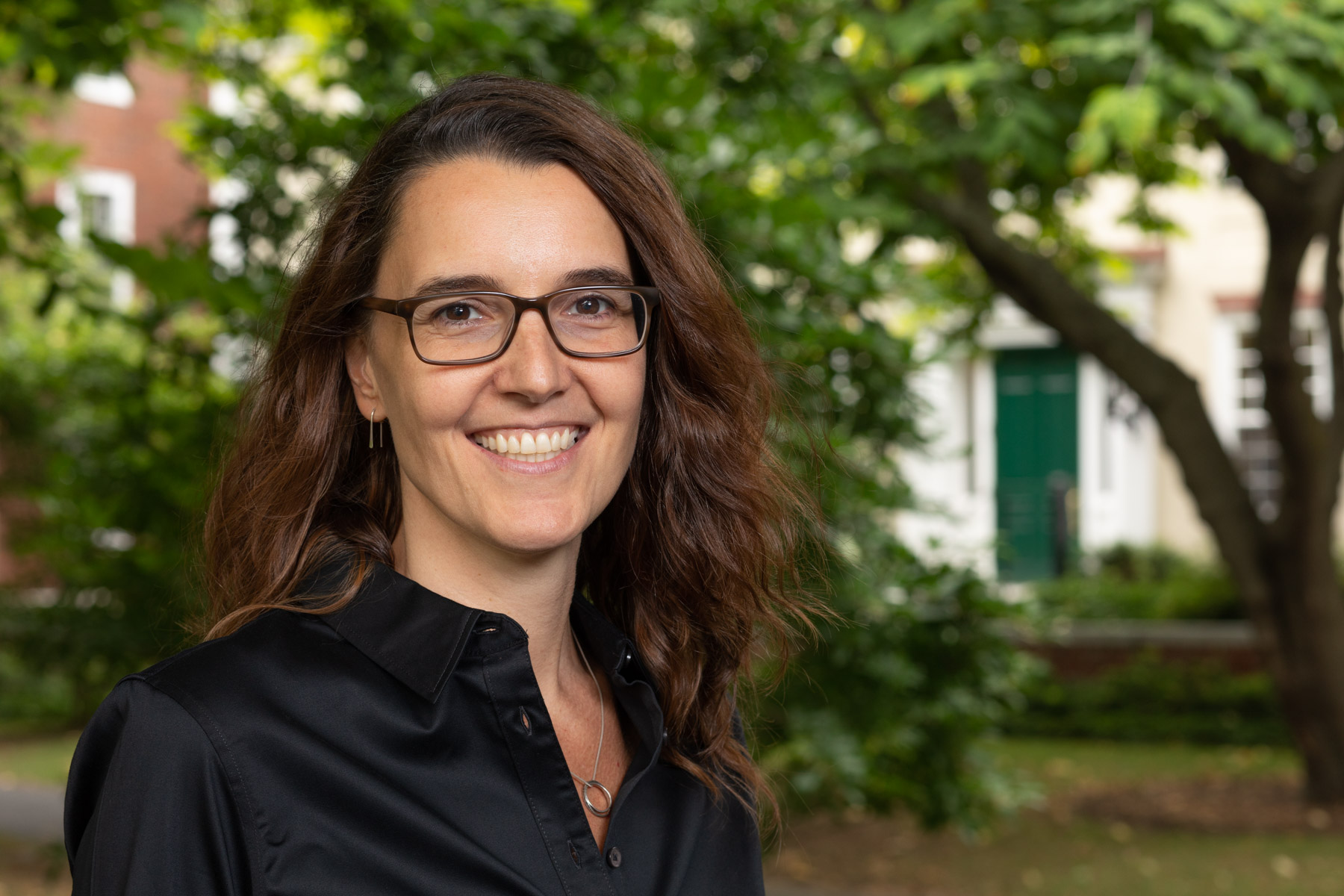
Eva Ascarza is a Professor of Business Administration in the Marketing Unit at Harvard Business School (HBS) . She co-founded the Customer Intelligence Lab at HBS's D 3 Institute, focusing on responsible and effective customer data utilization. Research Interests include: Customer retention and churn analysis Algorithmic bias in marketing AI Field experimentation (A/B testing) for targeting optimization Customer lifetime value (CLV) modeling Dynamic personalization strategies Scientific Awards and Recognitions: 2023 Weitz-Winer-O'Dell Award (winner) 2022 Paul E. Green Award (PNAS publication) 2020 Marketing Science Institute (MSI) Scholar 2019 Erin Anderson Award for Emerging Female Scholar 2018 Paul E. Green Award (JMR publication) 2014 Frank M. Bass Outstanding Dissertation Award Her articles demonstrate cutting-edge applications of statistical modeling , Bayesian methods , and fair AI frameworks in modern marketing challenges.
Janne Lindqvist is an Associate Professor at the Department of Computer Science, Aalto University. His research bridges security engineering, human-computer interaction (HCI), and privacy, with a focus on making security systems usable and user-centric. University: Aalto University Department: Department of Computer Science Rank: Associate Professor Email: janne.lindqvist@aalto.fi Lindqvist’s work spans security engineering , privacy systems , and user research , emphasizing practical authentication methods, password management, and human behavior in security contexts. He explores how users interact with systems like TPM APIs, gesture passwords, and mobile authentication mechanisms. Recent publications highlight trends in authentication systems , ubiquitous computing security , and mobile user behavior . Key themes include biometric authentication, gesture-based security, and balancing usability with cryptographic robustness. CHI'25 Honorable Mention Award CHI'24 Best Paper Award His research integrates empirical studies with technical implementations, such as analyzing password forgetting patterns and developing acoustic sensing for vehicle detection (e.g., Auto++, BO-Ear). Collaborative efforts span machine learning, psychology, and embedded systems.
Arvind Narayanan is a Professor of Computer Science at Princeton University and Director of the Center for Information Technology Policy (CITP). His research focuses on the societal impact of digital technologies, particularly artificial intelligence, with emphasis on policy implications, fairness, and privacy. He leads interdisciplinary efforts connecting technical research with real-world policy challenges. Dr. Narayanan earned his Ph.D. from the University of Texas, Austin in 2009. His academic journey has established him as a leading voice in the critical examination of AI systems and their societal consequences. Narayanan's research spans multiple domains where technology intersects with society. His work on AI includes critical analysis of AI capabilities versus marketing claims (AI Snake Oil), fairness in machine learning systems, and the reproducibility crisis in ML-based science. In privacy research, he led the Princeton Web Transparency and Accountability Project which uncovered how companies track users online, developing the OpenWPM tool used in over 100 studies. His early work demonstrated fundamental limits of de-identification techniques and how machine learning reflects cultural stereotypes. His recent publications reveal a consistent focus on demystifying AI capabilities while identifying genuine opportunities and risks. Narayanan's work bridges technical computer science with policy relevance, emphasizing the importance of evidence-based approaches to AI governance. His research increasingly addresses the limitations of prediction systems, the challenges of evaluating AI systems, and the need for transparency in foundation models. Presidential Early Career Award for Scientists and Engineers (PECASE) Privacy Enhancing Technologies Award (twice recipient) Privacy Papers for Policy Makers Award (three-time recipient) TIME's inaugural list of 100 most influential people in AI 2025 Graduate Mentoring Award Narayanan is recognized as an exceptional mentor, receiving Princeton's Graduate Mentoring Award in 2025. His policy engagement extends to congressional testimony, advisory roles, and frequent media commentary. He has secured significant research funding supporting his work on web transparency, AI policy, and cryptocurrency analysis. His research group has produced influential tools like OpenWPM for web privacy studies and contributed to foundational textbooks on cryptocurrencies and fairness in machine learning. At Princeton, Narayanan leads the Web Transparency and Accountability Project, a major research initiative that has conducted large-scale measurements of online tracking across millions of websites. He also co-founded and directs the CITP's AI Policy Initiative, which brings together researchers from multiple disciplines to address pressing AI governance questions. His work frequently involves collaboration with social scientists, legal scholars, and policymakers to develop practical solutions to technology governance challenges.
Na Du is an Assistant Professor in the Department of Informatics and Networked Systems at the University of Pittsburgh's School of Computing and Information. She holds a PhD in Industrial & Operations Engineering from the University of Michigan (2021) and a Graduate Certificate in Data Science. Her research focuses on human factors in smart cities, human-centered computing, and user experience design. She is affiliated with the Intelligent Systems Program, Pitt Cyber, and the Center for Governance and Markets. Education: PhD in Industrial & Operations Engineering (University of Michigan, 2021); Undergraduate in Psychology (Zhejiang University). Research emphasizes explainable AI, human-AI teaming, and smart technologies. Recent grants include funding from Honda Research Institute and Pitt Cyber Accelerator for projects on emotions in Human-AI interaction and Metaverse privacy awareness. Her work has been recognized with awards like the HFES Best Paper Award and the IOE Outstanding Student Award. Advising includes PhD students and researchers in human factors and UX design. The HAT Lab under her leadership explores interdisciplinary challenges in human-computer interaction and smart systems.
Stefan Bechtold is a Full Professor of Intellectual Property at ETH Zurich since 2013 and Associate Vice President IP Policy (2023–2026). He is affiliated with the ETH AI Center and serves on global advisory boards including the Academic Advisory Board of the German Federal Ministry for Economic Affairs and Climate Action. His interdisciplinary research bridges law, economics, and computer science.
Prof. Dr. Pinar Yolum Birbil is a leading researcher in Responsible AI at the Faculty of Science , Utrecht University . Her work bridges Artificial Intelligence , Privacy and Data Protection , and Software Agents , focusing on Human-Centered AI and Trustworthy Systems . She is part of the AI & Data Science and Responsible AI research groups. PhD in Computer Science, North Carolina State University (2003) MS in Computer Science, North Carolina State University (2000) BSc in Computer Engineering, Marmara University (1998) Her research explores Privacy Preservation in collaborative systems, Computational Theory of Mind for human-agent coordination, and Norm-Based AI Systems . Recent projects include the Hybrid Intelligence Center and tools like PANOLA for privacy support. She investigates how AI can balance user autonomy , ethical norms , and societal values in applications ranging from urban planning to healthcare. Her scientific publications (2023-2025) span topics like Explainable Privacy , Trust in Hybrid Teams , and AI for Diabetes Management , appearing in venues such as JAIR , AAMAS , and ACM TOIT . She emphasizes collaborative AI , with contributions to multiagent simulations and privacy-preserving mechanisms . Scientific Awards : NC State University Alumni Hall of Fame (2017) Woman Entrepreneur of the Year (Microsoft Turkey & KAGIDER, 2017) Bogazici University Academic Encouragement Award (multiple years) Best Paper Award at ESAW 2009 She supervises a dynamic research group with PhD students working on Hybrid Intelligence , Computational Ethics , and Privacy Modeling . Her projects often involve interdisciplinary collaboration with institutions like TNO and the Transforming Cities Hub .
Dr. Euijin (Alley) Choo is an Assistant Professor in the Department of Computer Science at the University of Alberta, specializing in data-driven cybersecurity and big data analytics. Her research focuses on AI-based cybersecurity solutions, anomaly detection in network traffic, and adversarial attacks on federated learning systems. She holds a Ph.D. from North Carolina State University and has held roles at Qatar Computing Research Institute, Korea University, and the University of Missouri-Rolla. Education: Ph.D., Computer Science, North Carolina State University (2015) M.S., Computer Science & Engineering, Korea University (2008) B.S. Dual Degree in Computer Science & Mathematics, Korea University (2006) Research Interests: Security and big data analysis intersections Federated learning security and privacy Anomaly detection in network logs and enterprise systems Malware/phishing detection using graph inference AI-driven threat intelligence aggregation Recent Grants: Mitacs Accelerate Program Grant: Fraud Detection in Financial Graphs ($60,000, 2025) National CyberSecurity Consortium Grant: IntruderInsight ($2M, 2025-2027) NSERC Discovery Grant: Threat Detection Framework ($180,000, 2025-2031) Awards: Best Paper Award at DBSEC 2015 NSERC Early Career Researcher Award (2025) Provost Fellowship (NC State, 2009-2010) Labs/Teams: Leads the Data-driven Network and Cyber Security (DANS) Lab, focusing on federated learning defenses, compromised entity detection, and malicious domain analysis.
Huining Li is an Assistant Professor in the Department of Computer Science at North Carolina State University . Her research focuses on Internet of Things (IoT) , cybersecurity , and mobile computing , with a specialized emphasis on mobile health (mHealth) technologies. Education: Ph.D. in Computer Science and Engineering from University at Buffalo (2024). Her work addresses privacy-preserving sensing mechanisms , biomarker measurement , and fairness in dynamic mobile environments , developing systems for chronic wound care, Parkinson’s disease management, and mental health therapy. Recent publications highlight innovations in mmWave biometrics , machine learning for health diagnostics , and non-contact monitoring . Scientific Awards: Best Paper Awards (SenSys 2019, BodyNet 2021, ICHI 2022) Best Paper Candidate (SenSys 2022) Harold O. Wolf Achievement Award (2024) EECS Rising Star (2023) NIH mHealth Training Institute Scholar (2025) She teaches courses in Mobile Health Systems and Applications and Computer Networks , and actively serves on NSF panels , TPC committees (ACM MobiSys, IEEE-EMBS BSN), and as Associate Editor for journals like Elsevier Smart Health.
Professor Rainer Böhme is a prominent academic in the field of IT security and privacy at the University of Münster's School of Business and Economics, Department of Information Systems. He also holds a professorship for Security and Privacy at the University of Innsbruck's Institute of Computer Science. His research spans multiple dimensions of digital security, with particular expertise in steganography, digital forensics, privacy-enhancing technologies, and the economic aspects of cybersecurity. Dr. Böhme earned his Doctoral Degree from TU Dresden's Faculty of Computer Science in 2008, following studies in Communications, Economics and Computer Science at Technische Universität Dresden and Université Paris XII. His academic journey includes positions as Assistant Professor at the University of Münster (2010-2015), Postdoctoral Fellow at the International Computer Science Institute in Berkeley (2009-2010), and Scientific Staff at TU Dresden's Chair of Privacy and Data Security. His research interests focus on steganography and steganalysis, digital forensics, privacy-enhancing technologies, security and usability, economic and behavioral aspects of information privacy, virtual currencies, and the economics of information security. His work bridges technical security mechanisms with economic and behavioral considerations, creating a unique interdisciplinary approach to cybersecurity challenges. Analysis of his recent publications reveals a strong trend toward the economics of security, particularly regarding blockchain technologies, cryptocurrency, and privacy valuation. His work increasingly examines the intersection of technical security mechanisms with market dynamics, regulatory frameworks, and user behavior. The research spans theoretical game-theoretic models, empirical studies of user behavior, and practical applications in digital forensics and privacy protection. Program Co-Chair, Financial Cryptography and Data Security (2015) Program Co-Chair, New Security Paradigms Workshop (NSPW) (2015) General Chair, 8th International Conference on IT Security Incident Management & IT Forensics (2014) Organizer and Program Co-Chair, 1st Workshop on Bitcoin Research (2014) Associate Editor, Electronic Commerce Research (since 2013) Associate Editor, EURASIP Journal on Information Security (since 2013) Professor Böhme has supervised multiple Master's theses in Information Systems, including work on static code analysis for smart contracts, remote maintenance protocol security, and application protection requirements in retail banking. His research is supported by significant grants from the German Federal Ministry of Research, Technology and Space, the DFG, and the EU FP7 program, with projects focusing on digital forensics, privacy-enhancing technologies, and cryptocurrency crime prevention. He leads the IT Security Research Group at the University of Münster, which investigates theoretical and applied aspects of information security with particular emphasis on the economic dimensions of security decisions.
Rosa I. Arriaga is an Associate Professor in the School of Interactive Computing at Georgia Institute of Technology, where she directs the Ubicomp Health and Wellness Lab. Her research focuses on Human-Computer Interaction (HCI), Ubiquitous Computing, and mHealth, with applications in mental health, chronic disease management (e.g., diabetes), and pediatric asthma care. She designs technology systems to improve patient engagement, continuity of care, and clinician-patient communication. Research Areas: Chronic Care Management PTSD Therapy Support (PECSS project) Diabetes Management (DUCSS project) mHealth System Design AI in Healthcare Key Projects: PECSS: Leverages ubiquitous computing and machine learning to address clinical challenges in PTSD therapy. DUCSS: A diabetes management system to streamline patient education and self-monitoring, particularly for underserved populations. ZenVR: A virtual reality system for meditation education, validated through longitudinal studies. Teaching: Teaches undergraduate courses in HCI and graduate courses in Human-Centered Computing (HCC). Her Coursera course Intro to User Experience Design has over 50K learners. Grants & Partnerships: Funded by GT-Emory AI Humanity, American Diabetes Association, and Georgia Center for Diabetes Translation Research. Collaborations with Emory University, University of Rochester, and medical professionals. Labs & Teams: Leads the Ubicomp Health and Wellness Lab, fostering interdisciplinary research with graduate and undergraduate students focusing on health technology innovation.
Maher Elshakankiri is an Assistant Professor, Teaching Stream at the University of Toronto's Faculty of Information. He holds a Ph.D. in Computer Engineering from Ain Shams University (Egypt), followed by a postdoctoral fellowship at the University of Regina. His research focuses on IoT, Wireless Sensor Networks (WSN), and pedagogical integration of technology and gaming. He has supervised over 100 student projects and authored a book on WSNs. Education: Ph.D. in Computer Engineering, Ain Shams University, Egypt M.Eng., B.Eng. in Engineering, Ain Shams University, Egypt Postdoctoral Fellowship, University of Regina, Canada Research Interests: IoT in healthcare, agriculture, and sports Active learning classrooms and technology in education Wireless communication protocols (V2V, UAV, RFID) Leadership & Grants: Director, Bachelor of Information (BI) Program (2024–present) Coordinator, Information Systems and Design (ISD) Concentration (2023) SSHRC Grant: 'Gaming in teaching towards a more inclusive class' (2022–2023) Professional Activities: Member, SCC IoT & Digital Twins Standards Committee Reviewer for journals including Wireless Networks , Telematics and Informatics , and Computational Intelligence Technical Program Committee member at multiple conferences Teaching: Courses include INF1340 (Programming for Data Science), INF1005/1006 (IoT Workshops), and INF452 (Information Design Coding).
David Martens is a Professor of Data Science at the University of Antwerp , where he directs the Applied Data Mining Research Group within the Faculty of Business and Economics . He also serves as Chair of the Department of Engineering Management and Director of the Antwerp Center on Responsible AI . His academic work spans data mining , interpretable machine learning , and the societal impact of AI . PhD in Applied Economic Sciences (KU Leuven, 2008) Director, Antwerp Center on Responsible AI Chair, Department of Engineering Management Martens' research focuses on responsible AI and data ethics , with applications in finance, public policy, and behavioral analysis. His recent publications emphasize counterfactual explanations , LLM interpretability , and privacy implications in AI systems. His articles reveal trends in Explainable AI (XAI) , including narrative-driven explanations , graph neural networks , and ethical challenges like monetization risks and algorithmic bias. Keywords span Computer Science , Artificial Intelligence , and Behavioral Data . Martens is a leading voice in data science ethics , authoring the book Data Science Ethics: Concepts, Techniques, and Cautionary Tales (Oxford University Press, 2022). He combines academic rigor with industry experience, having consulted for banks, telecom firms, and startups in fraud detection and digital advertising .
Bram Duivenvoorde is an Associate Professor at the Molengraaff Institute for Private Law , Utrecht University , specializing in advertising law , consumer law , and e-commerce . He holds a PhD from the University of Amsterdam (2014) and combines academic research with practical legal experience, including roles as an attorney-at-law at Hoogenraad & Haak (2014-2020) and interim legal counsel at Heineken International (2018). His work focuses on digital society , personalized marketing , and AI regulation in consumer contexts. Education : PhD (UvA, 2014), LLM (Utrecht, 2009), LLB (Utrecht, 2007) Key Research Areas : Advertising Law, Consumer Law, Digital Regulation, EU Law, Personalized Marketing Recent publications analyze generative AI , deepfakes , and DSA compliance , emphasizing consumer protection in evolving digital landscapes. He supervises PhD candidates Thijs Kelder and Jorn Torenbosch and leads the LLM Honours Programme . Duivenvoorde contributes to European consumer law through RENFORCE initiatives and serves as Editor for journals like Intellectuele Eigendom en Reclamerecht .
Gene Tsudik is a Distinguished Professor of Computer Science at the University of California, Irvine (UCI), with a career spanning over two decades. He obtained his Ph.D. in Computer Science from the University of Southern California (USC) in 1991, focusing on access control in the Internet. His research spans multiple areas including computer and network security, applied cryptography, and digital privacy, with a recent emphasis on database privacy, genomic privacy, and usable security. His notable contributions include the Inter-Domain Policy Routing (IDPR) protocol, KryptoKnight for network security, and Tree-Based Group Key Agreement protocols. He has over 210 publications and 8 patents. From 2002 to 2007, he served as Associate Dean of Research and Graduate Studies at UCI's School of Information and Computer Sciences and currently directs the UCI Secure Computing and Networking Center (SCONCE). Research Keywords : Cybersecurity, Cryptography, Privacy, Network Security, Digital Signatures, Genomic Data Protection. Scientific Awards : IEEE Fellow (2012), ACM Fellow (2014), AAAS Fellow (2016), Fulbright Senior Scholar (2007), and IFIP Fellow (2020). Professor Tsudik has supervised 18 PhD students and held visiting positions at universities across Europe and Asia. His recent publications focus on secure hardware attestation, biometric authentication, and social media data privacy.
Yuvraj Agarwal is a Professor in the School of Computer Science at Carnegie Mellon University , where he leads the SYNERGY Labs . His research focuses on Systems and Networking with emphasis on Embedded Systems , Security , and Energy Efficiency in computing environments. He has been recognized with the NSF Expeditions in Computing Award for Computational Decarbonization research and multiple best paper awards. Education : PhD in Computer Science from University of California, San Diego Research Leadership : Founder/Director of SYNERGY Labs; Executive Director of NSF Expeditions in Variability (2010-2013) Research Trajectory : Recent publications highlight his work on Privacy-preserving smart classroom systems (EduSense, ClassID) IoT security labeling frameworks Audio privacy protection mechanisms Computational decarbonization of infrastructure His research combines hardware-software co-design with societal impact considerations. Scientific Recognition : NSF Expeditions in Computing Award for CoDec (2024) Ubicomp/IMWUT Distinguished Paper Award (2024) CHI Best Paper Honorable Mention (2022) Advising & Collaboration : Mentors students in IoT systems , privacy research , and green computing . Collaborates with institutions including University of Massachusetts Amherst and industry partners like Johnson Controls. Grants include NSF funding for multi-university research initiatives.