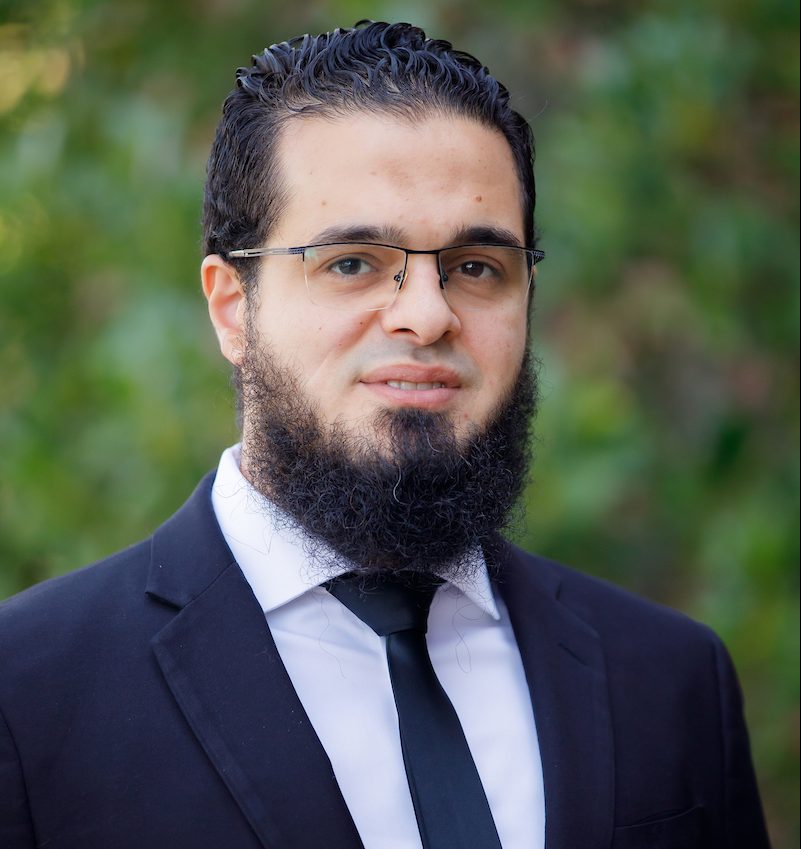
Dr. Ahmad Alsharif is an Assistant Professor in the Department of Computer Science at the University of Alabama's College of Engineering. His research expertise spans applied cryptography, IoT security, cyber-physical systems security, and blockchain applications. He received his B.S. and M.S. in Electrical Engineering from Benha University, Egypt, and Ph.D. in Electrical and Computer Engineering from Tennessee Tech University. Research focuses on security challenges in critical infrastructure systems including smart grids, IoT networks, and UAV systems. Current projects investigate privacy-preserving machine learning techniques, adversarial attack resilience, secure data marketplaces, and attack detection mechanisms for distributed energy systems. His work combines cryptographic protocols with machine learning for trustworthy systems. Awards include the NSF Research Initiation Initiative Grant (NSF CRII) and Young Innovator Award from Egyptian Industrial Modernization Center.
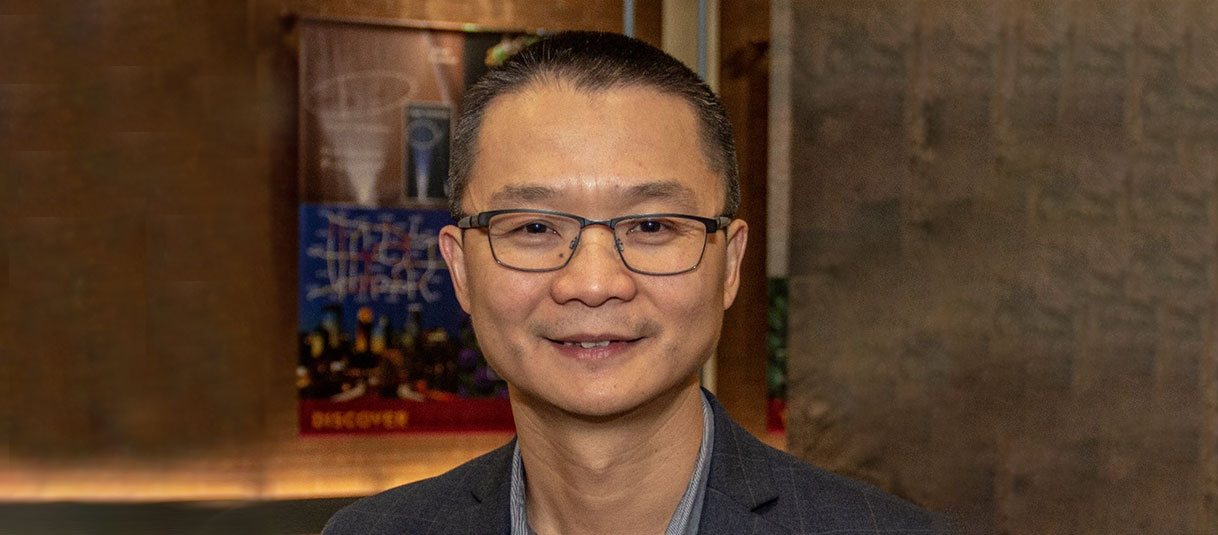
Marco Nie is a Professor and Chair of the Department of Civil and Environmental Engineering at Northwestern University, where he has been a faculty member since 2006. His research focuses on Transportation Systems Analysis, emphasizing interdisciplinary approaches that integrate optimization, network science, traffic flow theory, economics, and statistics to address complex interactions between human activities, infrastructure, and urban networks. He teaches three courses: an undergraduate/graduate introduction to transportation engineering, and two graduate courses on analytical and computational tools for surface transportation systems design. Education: Marco Nie earned a BS in Structural Engineering from Tsinghua University (Beijing), followed by graduate studies in Transportation at the National University of Singapore (NUS), and a PhD in Transportation from the University of California, Davis. Research interests include improving transportation efficiency, sustainability, and equity through policy and technology. Recent work explores autonomous vehicles, modular transit systems, congestion pricing, and data-driven solutions for EV charging and ride-hail platforms. He has expressed challenges in securing research funding, noting its critical role despite inherent flaws in evaluating research impact through monetary metrics. Scientific Awards: He received the 2021 Transportation Science Meritorious Service Awards . Marco also serves on editorial boards, including Service Science (2023), and actively publishes on topics like urban mobility, freight logistics, and policy analysis. Advising & Grants: While no specific students or grants are listed, he highlights the importance of funding mechanisms for research. His work often involves collaborations with sponsors and stakeholders to address real-world transportation challenges. Labs/Teams: Affiliated with the Center for Science and Protection of Engineered Environments and engages in interdisciplinary research groups focusing on sustainable and equitable urban systems.
Prashant Shenoy is a Distinguished Professor and Associate Dean in the College of Information and Computer Sciences at the University of Massachusetts Amherst. He has been on the faculty since 1998 and heads the Laboratory for Advanced Systems Software while directing the Center for Smart and Connected Society. His research focuses on systems issues for distributed systems ranging from large server clusters to networks of small sensors. Shenoy received his PhD in Computer Science from the University of Texas at Austin in 1998, following an MS from the same institution in 1994. He earned his BTech in Computer Science and Engineering from the Indian Institute of Technology, Bombay in 1993. His academic progression at UMass Amherst has been from Assistant Professor (1998-2004) to Associate Professor (2004-2009) to Professor (2009-2020) to Distinguished Professor (2020-present). His primary research interests include distributed systems, networking, cloud and edge computing, mobile computing and Internet of Things, and energy and sustainability. Over the past decade, his work has increasingly focused on computational decarbonization, as evidenced by his recent $12 million NSF Expedition award in this area. His research group maintains several important resources including the UMass Trace Repository, UMass CS Weather Station, BenchLab, and Smart* Dataset. Shenoy's publications reflect a progression from foundational distributed systems work to increasingly sustainability-focused research. His recent work centers on carbon-aware computing, energy optimization, and computational decarbonization across various computing domains including cloud, edge, and IoT systems. ACM Fellow (2019) AAAS Fellow (2018) IEEE Fellow (2013) ACM Sigmetrics Test of Time Award (2016) NSF Career Award recipient Conti Research Fellowship recipient Lilly Foundation Teaching Fellow As an educator, Shenoy has consistently taught Distributed and Operating Systems (Compsci 677) and has mentored numerous PhD students who have received awards and gone on to successful careers. He serves as the founding Chair of the ACM Special Interest Group on Energy (SIGEnergy) and has organized numerous conferences including serving as PC chairs for the ACM Symposium on Edge Computing in 2025. His research has secured significant funding, including a recent $12 million NSF Expedition in Computational Decarbonization awarded in May 2024. Shenoy leads the Laboratory for Advanced Systems Software at UMass Amherst and directs the Center for Smart and Connected Society. He serves on editorial boards of several journals including ACM Transactions on IOT (TIOT), ACM Modeling and Performance Evaluation of Computing Systems (TOMPECS), and ACM Transactions on the Web (TWEB).
Kaiwen Sun is an Assistant Professor in the Luddy School of Informatics, Computing, and Engineering at Indiana University Bloomington. Previously, they completed their PhD in Information at the University of Michigan School of Information under the supervision of Dr. Florian Schaub and Dr. Chris Brooks. Their academic background includes an M.S. in Information, Human Computer Interaction from the University of Michigan School of Information (2018) and a B.S. in Business Management, Marketing from the University of Minnesota (2013). Dr. Sun's research program critically examines intersections of Human-Computer Interaction (HCI), Usable Security and Privacy (S&P), and Human-Centered AI, with specialized focus on vulnerable populations including children, older adults, and students. Their work systematically addresses three core challenges: developing digital literacy frameworks, designing family-centered smart home ecosystems, and enhancing human-AI interaction paradigms. Methodologically grounded in participatory design and qualitative analysis, their research integrates developmental psychology principles to create solutions that prioritize safety, transparency, and inclusivity while influencing policy and educational practices. Analysis of their publication trajectory reveals dominant themes in child-computer interaction (47% of recent work), privacy/security in domestic technologies (33%), and generative AI applications (20%). Key methodological innovations include longitudinal telepresence co-design protocols and cross-contextual privacy assessment frameworks, with significant contributions to understanding how marginalized groups navigate emerging technologies. Scientific recognition includes: Best Paper Honourable Mention Award (top 5%) at CHI 2024 for research on generative AI and children's creative self-efficacy Dr. Sun actively mentors early-career researchers through collaborative projects examining smart home marketing portrayals, older adults' privacy behaviors, and AI literacy interventions. Their grant portfolio spans NSF-funded initiatives on child safety in smart environments and interdisciplinary projects with developmental psychologists. Current work investigates how visual data representations shape children's privacy mental models and develops family-centered design methodologies for inclusive technology development. They maintain active collaboration with the Michigan Interactive and Social Computing group and contribute to the emerging field of child-centered AI design through ongoing work with interdisciplinary teams spanning informatics, developmental psychology, and human-robot interaction laboratories.
Dr. Suranga Seneviratne is a Senior Lecturer in Security at the School of Computer Science, University of Sydney. He holds a PhD from the University of New South Wales (2015) and a Bachelor's degree from the University of Moratuwa, Sri Lanka (2005). Before academia, he worked in telecommunications for six years. His research focuses on cybersecurity, particularly privacy and security in mobile systems, AI applications in security, and behavioral biometrics. He has developed tools like an app security rating system and intrusion-free authentication methods. Key awards include the ACM Mobicom 2015 Gold Prize, NASSCOM Technical Innovation Award, and IESL NSW Engineering Excellence Award (all 2015). Current research students include Pasindu Marasinghe (Multi-Objective Optimization in Flat Glass Cutting Production), Braylon SHU (Efficient Parameter Tuning for Large Language Models), and Gaurav VERMA (Threats and Defenses in IoT Wireless Protocols). Grants include funding from the Australian Research Council, NSW Network for Cyber Security, and Google Research. His work spans collaborations with the NSW Smart Sensing Network and the University of Technology Sydney. Labs/Teams: Collaborates with the Centre for Distributed and High-Performance Computing and the NSW Smart Sensing Network (NSSN).
Aftab Ahmad is a Professor in the Department of Computer Science at the City University of New York (CUNY), specializing in cybersecurity and machine learning applications. He holds a Doctor of Science from George Washington University. His research focuses on developing machine learning algorithms for cyber threat intelligence (CTI) and public health prediction, along with designing secure generative deep learning models resistant to reverse-engineering. Key research areas include: Cybersecurity frameworks and privacy-preserving architectures Generative adversarial networks (GANs) with embedded security features Biomedical signal analysis and human body channel modeling Secure wireless protocols for critical infrastructure His publication trends emphasize: Privacy metrics and data protection mechanisms Smart grid and IoT security Neuroscience-inspired machine learning models Wireless network vulnerability assessments No scientific awards or grants were explicitly mentioned in the provided texts. He teaches advanced courses in computer security and network forensics at undergraduate and graduate levels. No advising relationships or lab affiliations were detailed in the available information.
Tanel Kerikmäe is a Full Professor of European Legal Policy and Law & Technology at TalTech School of Business and Governance. He serves as Director of the Law School and holds affiliations including foreign membership at the Ukrainian Academy of Legal Sciences and academic fellowships at NUS Law School's TRAIL Centre. His career spans over three decades, with tenures at institutions like the University of Cambridge, Nagoya University, and Paññāsāstra University of Cambodia. Education includes a PhD in European Legal Systems (2009) and advanced qualifications from Universities of Helsinki, Oxford, and Tartu. His research focuses on governance with new technologies, AI regulation, and EU Digital Market Law, with contributions to over 596 publications. Research interests emphasize future governance frameworks, legal challenges of AI, and e-governance innovations. Recent articles address disinformation in the metaverse, EU-Vietnam trade strategies, and digital sovereignty mechanisms. Awards include Doctor Honoris Causa from Jaroslav Mudryi National Law University and recognition from the Turkish Association of Law & Technology. He advises governments on digital policy, including Estonia’s AI strategy and space law. Editorial roles include Chief Editor of TalTech Journal of European Studies (Scopus-indexed). Active in 60+ international networks, he coordinates doctoral programs in Law and Digital Technologies.
Dr Clare J FitzGerald is a Lecturer in Management & Organisation at King’s Business School, King’s College London. She holds a PhD in Public Administration from North Carolina State University and previously served as a Research Fellow at the University of Oxford’s Blavatnik School of Government. Her research focuses on public service delivery, governance transitions, and the role of legal frameworks in enabling public value creation. She has led evaluations for UK government departments and is a Fellow of Advance HE. Education: PhD in Public Administration (North Carolina State University, 2016), Master’s in Public Administration (North Carolina State University). Her work is funded by UK Research & Innovation and has been published in journals like Public Money & Management and Public Management Review. She co-authored the book Public Contracting for Social Outcomes (Cambridge University Press, 2024). Research interests include outcomes-based contracting, public procurement, performance management, and emergency response. She has received the 2017 Innovations in American Government Award for the iThrive mobile application. Current projects explore resilience in public service partnerships and pandemic-era procurement reforms. Grants: ESRC-funded projects on pandemic procurement and VCSFE support needs Awards: 2017 Innovations in American Government Award Labs/Teams: Collaborates with the Blavatnik School of Government and UK government agencies on policy evaluations.
Eric Wustrow is an Associate Professor in the Department of Electrical, Computer & Energy Engineering at the University of Colorado Boulder , affiliated with the College of Engineering and Applied Science . His research focuses on network security, internet censorship, and cryptographic protocols. Contact: ewust@colorado.edu , Phone: 734-330-8702, Office: ECCR 1B13. Academic Rank: Associate Professor Department: Electrical, Computer & Energy Engineering University: University of Colorado Boulder Eric Wustrow's research explores methods to measure and circumvent internet censorship, analyze network vulnerabilities, and enhance privacy in digital communications. His work includes studying the Great Firewall of China, DNS and TLS security, and developing anticensorship tools like ShadowTLS and WATER. He also investigates cryptographic weaknesses in network devices and secure hardware implementations. Recent publications examine the effectiveness of anticensorship tools, the impact of IPv6 on information controls, and vulnerabilities in encrypted protocols. His studies include speculative execution attacks, DNS censorship measurement, and techniques to exploit transient errors in TLS for key compromise. These works highlight evolving network threats and countermeasures. Eric's research has been supported by grants such as the CAREER: Combating Censorship from within the Network (2022) and SaTC: CORE: Medium: Collaborative: Studying the Impact of IPv6 on Information Controls and Censorship Circumvention (2020). These projects focus on developing network-level solutions to censorship and security challenges.
Najarian R. Peters is an Associate Professor of Law and Linda D. Ferrell and Richard C. Tombari Honors Faculty Fellow at the University of Kansas School of Law. She is also a faculty associate at the Berkman Klein Center for Internet and Society at Harvard University since 2018. J.D., Notre Dame Law School (2006) B.A., Xavier University of Louisiana (2002) Her research focuses on privacy law, child law, home-education, emerging technology, and legal history. She explores the intersection of race, gender, and technology in legal contexts, with a particular emphasis on Black liberation and privacy rights. Her work includes the recently developed course AI, Ethics and the Law and the Wellness in Democracy series co-hosted since 2022. Her publications span topics like FERPA compliance, AI governance, and racial privacy traditions. Notable works include the 2024 Kansas Personal Injury Law treatise and forthcoming 2027 books on privacy and Black liberation. She founded the PrivacyPraxis conference (2020) and actively presents at global academic forums. Linda D. Ferrell and Richard C. Tombari Honors Faculty Fellow (2023) Professor Peters teaches courses on torts, privacy law, and AI governance. She has contributed to journals like Michigan Journal of Race & Law , University of California Law Review , and Seton Hall Law Review . Her research addresses systemic legal issues, including healthcare privacy, social media data risks, and historical legal precedents.
Yongfeng Zhang is an Associate Professor in the Department of Computer Science at Rutgers University. He is also the Director of the AIOS Foundation . His research focuses on Machine Learning, Data Mining, Recommender Systems, and Explainable AI , with notable contributions to fair and personalized AI, AI for science, and social good. Education and Experience: PhD in CS (2011–2016) from Tsinghua University Postdoc at UMass Amherst (2016–2017) Joined Rutgers as Assistant Professor (2018), promoted to Tenured Associate Professor (2024) Research Interests: Machine Learning, Data Mining, Information Retrieval, Recommender Systems, Natural Language Processing, ML Systems, AI Agents, Explainable AI, Fairness, and AI for Science. Recent Achievements: Received the 2024 ACM SIGIR Test of Time Award, 2024 Presidential Teaching Excellence Award, and multiple NSF grants. He has advised over 15 PhD students and led projects on trustworthy AI, generative recommendation, and causal inference. Awards: 2024 ACM SIGIR Test of Time Award 2021 NSF CAREER Award 2015 Microsoft PhD Fellowship Grants & Labs: Led NSF grants on explainable AI, conversational recommendation, and neural-symbolic AI. Active in the AIOS platform development and multiple research labs.
Professor Cristiana SAPPA is a Full Professor at IÉSEG School of Management, specializing in Intellectual Property Law and Open Data policies. She holds PhDs in Private Law from Università degli Studi di Pavia, Italy, and Université Paris Sud, France. As Head of the Innovation and Entrepreneurship Track, she focuses on legal frameworks governing cultural heritage, digital single market regulations, and data protection. Her research bridges intellectual property with emerging technologies like augmented reality and the Internet of Things. Key publications address copyright challenges in cultural digitization and legal strategies for public sector information reuse. She has received the 2018 Best Thesis Award at the International Summer School of Cyber Law. Teaching includes intellectual property law and business law courses, emphasizing legal tools for innovation. Education: PhD in Private Law, Università degli Studi di Pavia, Italy (2009) PhD in Private Law, Université Paris Sud, France (2009) Professional Experience: 2012–2014: Professor, ESCP Europe, Paris 2010–2012: Post-doc researcher, University degli Studi, Torino Key Research Areas: Cultural Heritage Law DSM Directive Compliance Open Data Governance Trademark Strategies in Fashion Awards: Best Thesis, International Summer School of Cyber Law (2018)
Martin Albrecht is a Professor of Cybersecurity and Chair of Cryptography in the Department of Informatics at King's College London, Faculty of Natural, Mathematical & Engineering Sciences. He is also a Principal Research Scientist for SandboxAQ, demonstrating his strong industry-academia connections in the cybersecurity field. His research focuses on lattice-based cryptography, post-quantum cryptography, applied cryptography, social foundations of cryptography and information security, and computational mathematics. Albrecht's work bridges theoretical cryptography with practical security concerns, examining cryptographic implementations 'in the wild' and addressing vulnerabilities in widely used communication platforms like WhatsApp, Telegram, and Matrix. His Erdős–Bacon Number is 6, reflecting his interdisciplinary connections. Recent publications reveal a strong trend toward practical cryptographic analysis of real-world systems while advancing theoretical foundations of post-quantum cryptography. His work spans from breaking end-to-end encryption implementations to developing new lattice-based cryptographic primitives resistant to quantum computing threats. Much of his recent research addresses the urgent need for quantum-resistant cryptography as demonstrated by his European-funded project developing algorithms to protect data encryption against future quantum computers. IEEE Symposium on Security and Privacy distinguished paper award (2023) for work revealing security vulnerabilities in popular chat platforms Major European funding (2023) for advancing encryption technology against quantum computing threats Professor Albrecht leads the Cybersecurity research group at King's which studies design, modeling, analysis, verification and testing of networks and systems, and is part of the Security Hub that consolidates security-related research. His work has demonstrated critical vulnerabilities in widely used platforms including WhatsApp, Matrix, and Nextcloud, with findings reported as recently as July 2025 regarding WhatsApp's persistent vulnerabilities. He has supervised numerous PhD students and maintains active collaborations across the cryptographic research community. Through his open-source projects including FPLLL, FPyLLL, G6K, Lattice Estimator, M4RI, and M4RIE, Albrecht has made significant contributions to the cryptographic tools ecosystem, providing researchers and practitioners with essential resources for lattice-based cryptography and computational mathematics.
Ginger Zhe Jin is the Neil Moskowitz Professor of Economics at the University of Maryland, College Park. She has held significant roles including Director of the FTC Bureau of Economics (2016–2017) and Senior Principal Economist at Amazon (2019–2020). Currently, she serves as a Managing Editor of the International Journal of Industrial Organization and a Research Associate at NBER since 2012. PhD in Economics from UCLA (2000) Her research focuses on information asymmetry and its solutions, spanning applications such as e-commerce, health economics, data regulation, and consumer protection. Supported by grants from the National Science Foundation, the Sloan Foundation, and the Washington Center for Equitable Growth, her work has been cited in major media outlets like the New York Times and Wall Street Journal . Recent publications address algorithmic pricing, GDPR impacts on venture investment, and tech mergers. She co-founded Hazel Analytics (2014) and became a Senior Consultant to Compass Lexecon (2025), emphasizing the practical application of her research. Key awards: NBER affiliation, Industrial Organization Society board member Jin advises PhD students Lixi Wang, Sarah Maria Anastasia Webb, and Jingyi Xing. Her lab work includes experimental studies on consumer ratings, peer-to-peer lending, and blood donation policies.
Andrea Saracino is an Associate Professor specializing in cybersecurity, privacy-preserving technologies, and machine learning applications. His research focuses on enhancing security in IoT systems, smart homes, and mobile devices, with a particular emphasis on Android malware detection and usage control frameworks. He has received the IEEE TCCPS Early-Career Award 2023 for his contributions. Key projects include the SIFIS-Home initiative for privacy in globalized smart homes and the ACE framework for access control. His work addresses challenges in balancing privacy, utility, and explainability in machine learning models, particularly in image and tabular data analysis. He actively explores cybersecurity in emerging domains like software-defined vehicles and industrial control systems.