Lisa Armstrong is an Assistant Professor at the Craig Newmark Graduate School of Journalism, University of California, Berkeley. A renowned investigative journalist, she focuses on criminal justice reform, human rights, and public health in incarcerated populations. Her reporting has appeared in The Intercept , The New Yorker , and Rolling Stone , with extensive coverage of HIV/AIDS in post-earthquake Haiti, systemic injustices in U.S. prisons, and the psychological impacts of solitary confinement. She has produced documentaries such as Little Boy Lost and reported via grants from The Pulitzer Center, NYU, and the Carter Center. Education & Experience: 12 years as Associate Professor at Craig Newmark School of Journalism Reported globally: Sierra Leone, Kenya, Philippines, and Haiti (2010–2014) Research Interests: Armstrong’s work bridges journalism and activism, emphasizing: Investigating racial disparities in sentencing Documenting health crises in prisons Training journalists on ethical reporting of marginalized communities Awards & Recognition: National Press Club’s Joan Friedenberg Award (Online Journalism) 2021 Knight-Wallace Reporting Fellowship 2019 United States Artists Fellow in Writing Teaching & Impact: Teaches courses like Berkeley Changemaker: Creating New Models for Journalism and Feature Writing . Her work with The Marshall Project highlighted pandemic-era prison policies, while her documentaries blend art and advocacy to drive systemic change.
Gretchen Purser is an Associate Professor of Sociology at Syracuse University’s Maxwell School of Citizenship and Public Affairs. She also serves as Director of the Law, Society and Policy Integrated Learning Major, Research Co-Director of Advocacy and Activism, and Senior Research Associate at the Center for Qualitative and Multi-Method Inquiry and PARCC (Program for the Advancement of Research on Conflict and Collaboration). Her research focuses on precarious work, urban poverty, and housing struggles, employing ethnographic and community-based methodologies. Purser holds a Ph.D. from UC Berkeley and a B.A. from Smith College, with postdoctoral fellowships at UC Davis and the American Academy of Arts and Sciences. She has received multiple awards for scholarship and teaching, including the 2020 Excellence in Graduate Education Award and the John Russo and Sherry Linkon Award for Best Published Article. Her work examines labor market dynamics, reentry housing for formerly incarcerated individuals, and tenant organizing. She co-leads the Robert Wood Johnson Foundation-funded study on tenant organizing in Syracuse. Purser teaches courses on sociological theory, urban poverty, and ethnography, and has supervised numerous student projects. She actively collaborates with community organizations like the Workers’ Center of Central New York and the Syracuse Tenants Union, advocating for social and economic justice. Her recent publications address housing inequality, neoliberal poverty management, and the intersections of labor and punishment. Awards highlight her contributions to both academia and public sociology, including editorial roles at Critical Sociology and Research in the Sociology of Work . Her advocacy extends to policy, such as championing Good Cause Eviction laws to protect tenants from retaliatory evictions and excessive rent hikes. Grants and collaborations underscore her commitment to bridging research and community action, particularly in marginalized urban communities.
Anna Haskins is an Andrew V. Tackes Associate Professor in the Department of Sociology at the University of Notre Dame. Her research focuses on the interplay between social institutions—particularly the criminal legal system, education system, and family dynamics—in shaping social stratification and inequality. She has conducted extensive work with the Future of Families & Child Wellbeing Study, examining educational outcomes, intergenerational impacts, and racial disparities. Her recent projects explore how schools engage with system-involved families and the role of college-in-prison programs. Dr. Haskins is a former elementary school teacher and has been funded by the William T. Grant Foundation, Ford Foundation, and National Science Foundation. She currently serves as co-investigator for the Future of Families Study and co-editor of the Sociology of Education journal. Education: No formal education details provided in the text. Known to have prior experience as an elementary school teacher. Research Interests: Dr. Haskins' work centers on stratification and inequality , sociology of education , and the social consequences of mass incarceration . She investigates how incarceration histories affect children’s educational trajectories and family well-being, emphasizing race and urban contexts. Her studies highlight systemic barriers faced by marginalized communities and advocate for interdisciplinary interventions. Articles & Trends: Her publications (2017–2023) consistently address incarceration’s collateral consequences, particularly on children’s schooling and family stability. Recent work emphasizes racialized constraints in educational access and policy reforms to mitigate institutional harms. Earlier studies explored school mobility, cognitive development impacts, and neighborhood effects. Grants & Awards: Funded by major institutions but no explicit awards listed. Active in securing grants for interdisciplinary research and interventions targeting incarcerated parents’ families. Labs/Teams: Collaborates with the Future of Families Study and co-edits the Sociology of Education . Engaged with researchers in criminology, education policy, and child welfare to advance systemic solutions.
Dr Jenni Ward is an Associate Professor in Criminology at Middlesex University, within the Faculty of Business and Law and the Department of Law and Social Sciences. Her research focuses on criminal court sentencing, particularly for 18-25-year-old 'young adults,' youth transitions from state care, and therapeutic jurisprudence in drug courts. She has collaborated with institutions like HMP Wandsworth Prison on educational initiatives and evaluated probation services such as the Newham Y2A Hub. Ward holds a PhD in Criminology from Goldsmiths College (2007), specializing in rave culture drug use and dealing. Her teaching includes courses on prisons, comparative criminal justice systems, and urban criminology. Ward's work spans qualitative research and policy analysis, addressing issues like drug markets, prison education, and social justice intersections with criminal justice systems. Her recent articles emphasize youth sentencing reforms and the role of problem-solving courts. Her research also explores care leavers' transitions to independent living and the efficacy of resettlement services like Prisoners Abroad. Ward supervises doctoral students, including David Ellison and Terrance Belfon, focusing on criminal justice system reforms. She has been funded by the UK Ministry of Justice for evaluations of youth transition programs.
Katharina Swirak is a Lecturer and Deputy Head of the Department of Sociology and Criminology at University College Cork (UCC). Her research focuses on intersections of welfare and criminal justice policy, youth justice reform, and participatory methodologies. She co-founded the Inside-Out Prison Exchange Program in Cork Prison, fostering dialogue between incarcerated individuals and university students. Her work emphasizes abolitionist frameworks, penal voluntarism, and reintegration challenges. Key projects include collaborative research with Cork Alliance on post-prison lives and policy advising for Ireland’s National Youth Justice Strategy. She has received multiple grants and awards, including the UCC Excellence in Teaching Award (2020) and a Charlemont Grant (2018). Education: PhD in Social Policy (UCC, 2013), MSc in Comparative Politics (LSE, 2002), BA in Social Science (Utrecht, 2001) Professional Roles: Member of UCC’s Centre for Criminal Justice & Human Rights, Sociological Association of Ireland, and editorial advisory panels for journals like Youth Justice Outreach: Former Board Member of Churchfield Community Trust, stakeholder in prison-university partnerships, and policy advisor for youth justice reforms Her research bridges academia and activism, prioritizing marginalized voices through participatory action research and policy advocacy. Key themes include carceral state critique, rehabilitation policy, and decolonizing criminology.
Jean Kjellstrand is an Associate Professor in the Counseling Psychology program at the University of Oregon College of Education, with additional appointments in Couples and Family Therapy, Family and Human Services, and Prevention Science. Her research focuses on positive youth development and interventions for children in vulnerable situations, particularly those affected by parental incarceration. Dr. Kjellstrand's educational background includes: PhD in Social Work from Portland State University MSW in Social Work (Mental Health concentration) from the University of Wisconsin BA in Mathematics with a minor in Education from Carleton College Her research centers on the impact of parental incarceration on children, examining risk transmission mechanisms and developing interventions to support families during and after incarceration. As a prevention scientist, she employs mixed methods to study individual, family, and community factors, informed by her prior career as a social worker. Recent publications (2021-2024) highlight her focus on social support during reentry, gender and racial equity in programming, and the effects of the COVID-19 pandemic on foster care alumni. Her work integrates criminology, psychology, and public health to address systemic inequities. Dr. Kjellstrand's scientific awards include: Fulbright U.S. Scholar, Tampere, Finland (2023-2024) Excellence in Teaching Award, College of Education, University of Oregon (2020-2021) NIMH Child Intervention, Prevention, and Services (CHIPS) Fellow (2013) Fulbright Scholar, Umeå, Sweden (2007-2008) She mentors doctoral students in Counseling Psychology and Prevention Science, though not accepting new students for 2026-2027. Her grant portfolio includes NIH-funded research on parental incarceration and community-based participatory projects. She has secured fellowships from NIMH, NIH, and Fulbright to advance intervention development. Dr. Kjellstrand collaborates with community organizations and correctional facilities through a participatory framework to develop family-focused interventions. Her research team includes graduate students and community partners dedicated to improving outcomes for children of incarcerated parents.
Thomas Ugelvik is a Professor of Criminology at the Department of Criminology and Sociology of Law, Faculty of Law, University of Oslo. He has held this position since 2017 and is currently on sabbatical leave until autumn 2025. His academic work focuses on penology, with particular attention to the practical execution of punishment, subjective experiences of punishment, and the aftereffects of punishment in Scandinavian contexts. Ugelvik earned his PhD in 2010 with a thesis examining everyday life in Oslo prison, with a specific focus on staff-prisoner relationships and the interplay of power and resistance. He was a Visiting Scholar at the Prisons Research Centre at the University of Cambridge in 2012, further developing his expertise in comparative penology. His educational background provides a strong foundation for his ethnographic and narrative approaches to criminological research. Professor Ugelvik's research interests span multiple interconnected areas within penology. He is particularly known for his work on narrative criminology, examining how stories and storytelling shape both criminal behavior and penal responses. His research on health in prisons challenges conventional understandings of the 'healthy prisons' initiative, exploring the complex relationship between illness and imprisonment. Ugelvik also conducts significant research on desistance from crime, investigating the processes through which individuals move away from criminal behavior, with particular attention to trust dynamics and social relationships that facilitate this transformation. His methodological approach is primarily qualitative, employing ethnographic and narrative methods to capture the lived experiences of those within penal institutions. Analysis of Ugelvik's recent publications reveals a consistent focus on Scandinavian penal exceptionalism, narrative approaches to understanding crime and punishment, and the intersection of health and incarceration. His work frequently examines how theoretical concepts like desistance and trust manifest in practical prison settings. There's a notable emphasis on qualitative methodologies and narrative analysis across his publications, reflecting his commitment to understanding the subjective dimensions of punishment and rehabilitation. Founding Editor-in-Chief of Incarceration: An International Journal of Imprisonment, Detention and Coercive Confinement (2020-present) Co-editor of the Palgrave Studies in Prisons and Penology book series Member of the National Committee for Research Ethics in the Social Sciences and the Humanities (NESH) Recipient of research funding for multiple projects including ORES and PRISONHEALTH As an educator, Ugelvik teaches courses KRIM1300, KRIM2904/4904, and KRS4106 at the University of Oslo. He has supervised numerous students who have gone on to contribute to the field of criminology, particularly in areas related to penology, narrative approaches, and Scandinavian penal exceptionalism. His podcast 'Kriminologene' serves as an important platform for disseminating criminological knowledge to both academic and broader audiences, featuring interviews with prominent criminologists discussing their research and theoretical perspectives. Ugelvik's research is characterized by its strong connection to real-world penal practices while maintaining theoretical depth. His work frequently appears in leading criminological journals including The British Journal of Criminology , Crime, Media, Culture , Ethnography , and Punishment and Society . His current research trajectory suggests a continued focus on the intersections between penal culture, health, and desistance processes within the distinctive context of Scandinavian penal systems.
Erin Dej is Assistant Professor in Criminology at Wilfrid Laurier University's Faculty of Human and Social Sciences, recognized with the 2021 Early Career Researcher Award. Her scholarship examines structural mechanisms linking homelessness and criminal justice systems, with emphasis on policy redesign and community-based solutions. Research addresses three critical areas: 1) Criminalization of homelessness through bylaw enforcement and spatial regulation, 2) Gender-specific barriers in housing transitions, and 3) Prevention frameworks for youth homelessness. Community-engaged methodologies include photo elicitation with rooming house residents and participatory action research. Recent publications analyze COVID-19's impact on homeless populations, moral distress among service providers, and systemic barriers in social housing access. Student projects under her mentorship have informed CBC News coverage of homelessness policy. Notable recognition: Early Career Researcher Award (2021) Teaches Homelessness and the Criminal Justice System (CC430), guiding students to develop policy recommendations through community partnerships.
Rosemarie A Martin is a Professor at UMass Chan Medical School within the Department of Population and Quantitative Health Sciences. Her research focuses on substance-related disorders , public health , and health services with specific emphasis on correctional healthcare, opioid use disorder treatment, and smoking cessation in vulnerable populations. Current affiliations: UMass Chan Medical School, Department of Population and Quantitative Health Sciences Core research areas: Opioid Treatment, Prison Health, Implementation Science, Smoking Cessation Her recent publications explore implementation challenges of medications for opioid use disorder in criminal justice settings, health outcomes associated with Medicaid expansion for formerly incarcerated individuals, and behavioral patterns around smoking relapse in prisons. She collaborates extensively with correctional institutions and public health researchers to improve healthcare delivery in carceral environments. Publications Analysis : The 15 most recent articles reveal a strong focus on Medication-assisted treatment for opioids in correctional systems Implementation science in public health Smoking cessation dynamics Health policy evaluation Behavioral interventions Community supervision strategies
Brittnie Aiello is a Professor in the Department of Criminology and Criminal Justice at Merrimack College, affiliated with the School of Education and Social Policy. Her research focuses on the intersection of motherhood and incarceration, particularly how maternal identity is impacted by and used as a tool of punishment within carceral systems. Education: Ph.D. in Sociology, University of Massachusetts Amherst M.A. in Sociology, University of Massachusetts Amherst B.A. in Sociology, Eckerd College Her work examines themes such as maternal stigma in jails, the role of correctional education programs, and the psychological and social impacts of incarceration on mothers and their families. Recent publications explore topics like inmate access to college courses, maternal identity negotiation, and the paradoxes of punishment vs. rehabilitation in carceral settings. No scientific awards are explicitly listed, though her research contributions to criminology and gender studies are notable. She advises no listed students but engages in collaborative correctional education initiatives with traditional students. Her work intersects with broader efforts to reform carceral policies through an intersectional lens. Her research often centers on marginalized voices, particularly incarcerated women, and advocates for systemic change in how motherhood intersects with criminal justice systems.
Tara Opsal is a Professor and Chair in the Department of Sociology at Colorado State University, affiliated with the College of Liberal Arts and Women's Studies & Gender Research. Her work bridges academia and practice, focusing on criminal legal systems, sentencing policies, and environmental justice. She holds a Ph.D. from the University of Colorado-Boulder. Research interests include criminology, gender-responsive corrections, prison environmental impacts, and foster care identity development. She emphasizes collaboration with non-profits and government agencies to translate research into actionable policies. Her recent studies analyze trans client supervision in corrections, foster care identity, and environmental harms from prisons. She also explores how institutions like universities address hazing and improve mentorship for first-generation students. Key contributions include scoping reviews of gender-responsive programming and grounded theories of foster care experiences. She advocates for marginalized voices in legal and environmental policy discussions.
Christine A. Saum, Ph.D., is an Associate Professor and Associate Chair in the Department of Law and Justice Studies at Rowan University's College of Humanities & Social Sciences. She holds a Ph.D. from the University of Delaware (UD), where she previously worked as an Associate Scientist in the Center for Drug and Alcohol Studies and served as an Assistant Professor in Sociology and Criminal Justice. Her research focuses on drug policy, corrections-based treatment, drug courts, and women offenders. She has led federally-funded studies on drug court offenders and prison treatment programs, and currently evaluates an alcohol treatment court for repeat DUI offenders. Dr. Saum specializes in interventions involving reentry strategies for women and juvenile offenders, HIV prevention in corrections, and the intersection of drugs and crime. She has co-authored a book on cocaine-exposed infants and published extensively on topics including DUI courts, sex in prison, and date-rape drugs. Her teaching covers corrections, criminal justice policy, specialty courts, and reentry. She has managed grants and collaborated with corrections/courts officials, demonstrating expertise in program evaluation and policy analysis. Her work combines academic research with practical applications in criminal justice reform.
Jillian Rogin is a Professor at the Faculty of Law, University of Windsor. Her research focuses on systemic racism in the legal system, Indigenous rights advocacy, and criminal justice reform. She has authored works cited by the Supreme Court of Canada and contributed to clinical legal education initiatives recognized nationally. Rogin frequently collaborates with interdisciplinary teams to address issues like bail system inequities and reconciliation efforts. She has organized symposia on topics ranging from Indigenous sovereignty to the criminalization of Black youth. Her academic contributions include critiques of provincial policies impacting Indigenous communities and analyses of legal frameworks perpetuating racial disparities. Notably, she co-authored a statement condemning violations of Indigenous nations’ rights, signed by over 270 jurists. Rogin also participates in public legal education projects, such as the Windsor Law clinical legal programs honored with national awards in 2021. Her engagement extends to community initiatives like Prisoners’ Justice Day observances and refugee sponsorship efforts, reflecting a commitment to social justice beyond traditional scholarship. While no specific grants or student advisees are listed, her work intersects with human rights advocacy, legal pedagogy, and systemic reform.
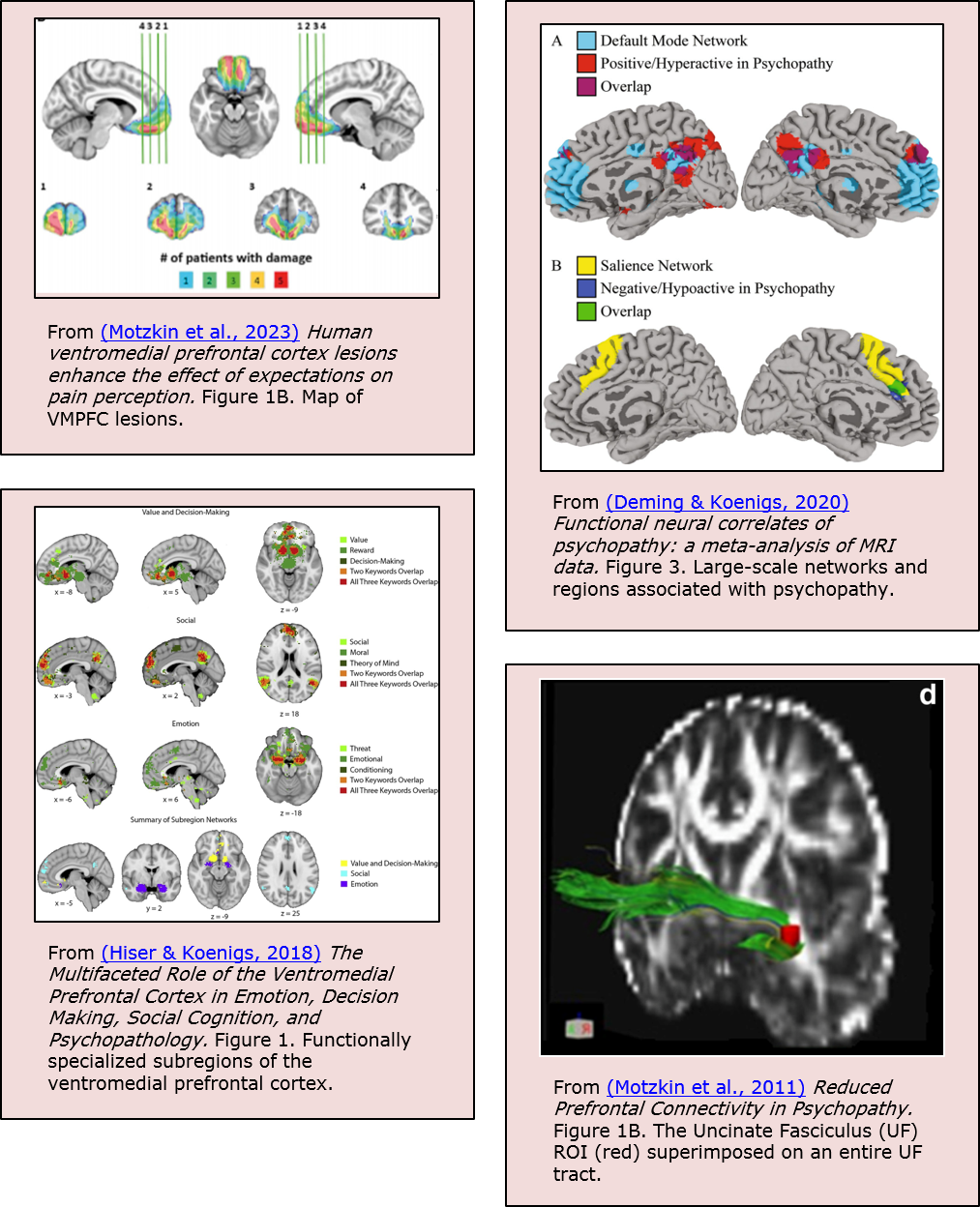
Dr. Mike Koenigs is a Professor in the Department of Psychiatry at the University of Wisconsin–Madison, where he leads the Incarceration & Mental Health Lab. His research focuses on improving mental healthcare and well-being for currently and formerly incarcerated individuals through community engagement, intervention development, and clinical trials. He collaborates extensively with the Wisconsin Department of Corrections and individuals with lived incarceration experience. University: University of Wisconsin–Madison School: School of Medicine and Public Health Department: Department of Psychiatry Academic Rank: Professor Dr. Koenigs' research integrates neuroscience, clinical psychology, and community-based methodologies. His work explores emotion processing, decision-making, psychopathy, and trauma in forensic populations. He employs fMRI, lesion studies, and behavioral assessments to understand the neurobiological underpinnings of psychopathology. His lab also conducts clinical trials of psychotherapies such as Cognitive Processing Therapy (CPT) within prison settings. His recent publications (2020–2025) show a strong focus on psychopathy, neural correlates of emotion, community-academic partnerships, and mental health interventions in incarcerated populations. Key trends include the use of machine learning in recidivism prediction, functional connectivity in psychopathy, and the role of lived experience in research design. Dr. Koenigs mentors graduate students through both the Clinical Psychology and Individualized Graduate Major (IGM) PhD tracks. He values qualities such as empathy, collegiality, and commitment to marginalized populations in his advisees. He has advised numerous PhD and master’s students, including Mickela Heilicher, Tatiana Ray, Phil Deming, and Julian Motzkin, among others. His lab emphasizes community engagement, partnering with peer specialists and advisory boards composed of formerly incarcerated individuals to co-develop and co-lead mental health interventions.
Melvina Sumter is Associate Professor of Sociology and Criminal Justice at Old Dominion University. Her research focuses on correctional systems, examining prisoner reentry challenges, correctional officer safety, and therapeutic interventions in carceral settings, with international work in Trinidad and Tobago. She has secured significant grant funding for initiatives addressing prison violence prevention and community reintegration programs. Her pioneering studies on meditation benefits in corrections have influenced rehabilitative practices across multiple jurisdictions. Diversity of Champions Award, ODU (2016) Multiple NABJC awards for criminal justice scholarship