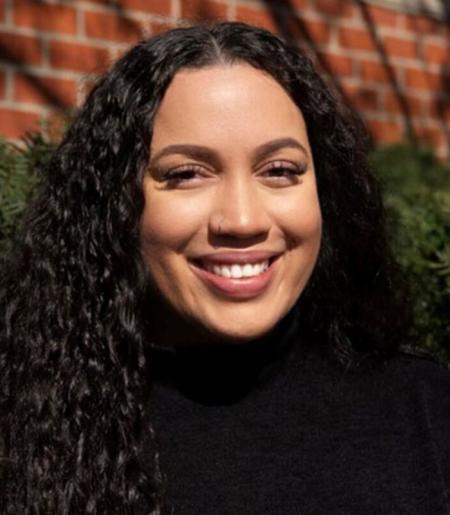
Dr. Jessica Grosholz is an Associate Professor in the Department of Criminology at the University of South Florida's Sarasota-Manatee campus. She holds leadership roles as Campus Chair, Director of the Masters in Criminal Justice program, and Research Administration Faculty Fellow. Research Interests: Dr. Grosholz specializes in prisoner reentry, recidivism, health-crime intersections, human trafficking, and qualitative field research. Her work often examines marginalized populations, including LGBTQ+ individuals, older prisoners, and Latinx communities, while addressing systemic issues in corrections and public policy. Recent Publications (2023-2025): Her research explores diverse topics such as white supremacist music, prison reforms in Panama, health disparities among incarcerated populations, employment barriers for formerly incarcerated individuals, and gendered dynamics of strain theory. These works reflect interdisciplinary approaches bridging criminology, public health, and cultural studies. Awards: USF Sarasota-Manatee Student Government Association Outstanding Professor Award (2018) Faculty Senate Excellence in Community Engagement Award (2018) University-wide Outstanding Community-Engaged Teaching Award (2020)
Professor Jana Grekul is a Professor of Sociology at the University of Alberta specializing in criminology, gender studies, and Indigenous justice. She directs the Bachelor of Arts in Criminology Program and has received multiple teaching awards including the Rutherford Award for Excellence in Undergraduate Teaching (2018). Her research examines: Gendered pathways into/out of criminal justice systems Indigenous incarceration experiences Gang desistance processes Intersection of victimization and criminalization Pedagogical innovations in criminology Recent publications focus on prisoner reentry, Indigenous gang involvement, and adapting criminology education during the pandemic. Her work demonstrates strong commitment to community-engaged research and experiential learning. Scientific Awards: McCalla Professorship (2018) Rutherford Award for Teaching Excellence (2018) Faculty of Arts Undergraduate Teaching Award (2017) Professor Grekul collaborates with community organizations including REACH Edmonton and develops project-based learning initiatives that bridge classroom instruction with real-world justice challenges.
Dr. Leanne F. Alarid is a Professor in the Department of Criminal Justice at The University of Texas at El Paso, College of Liberal Arts. She earned her Ph.D. in Criminal Justice from Sam Houston State University and focuses on gender and crime, corrections policy, and mental health intersections with the justice system. Research Focus: Gender-specific analysis of criminal behavior, correctional treatment strategies, and mental health policy Current Project: Lead Evaluator for Bureau of Justice Assistance grant on jail-based reentry programs Editorial Roles: Member, Corrections: Policy, Practice and Research , Women and Criminal Justice , and Criminal Justice Policy Review Her recent publications emphasize community corrections , prison reentry , and gender dynamics in criminal justice , with a focus on implementation science and policy evaluation. She has contributed to journals like Justice Quarterly and The Prison Journal , alongside authoring major textbooks such as Community-Based Corrections and Corrections . Scientific Awards: 2011 Founder’s Award, Academy of Criminal Justice Sciences Dr. Alarid teaches courses including Correctional Systems, Community Corrections, Criminology, and Study Abroad programs in London. She actively evaluates correctional interventions and contributes to public policy discussions on decarceration and mental health diversion.
Yasser Arafat Payne is a Professor of Sociology & Criminal Justice at the University of Delaware's College of Arts & Sciences, with a joint appointment as an associate professor in the Department of Africana Studies. His academic work focuses on street ethnographic research examining policing and reentry, economic well-being and educational inequality, and gun violence with street-identified Black Americans through the innovative Street Participatory Action Research (Street PAR) framework. Payne earned his Ph.D. and M.Phil. from the City University of New York Graduate Center, an M.A. from Seton Hall University, and a B.A. from Wagner College. His educational background has informed his distinctive approach to studying marginalized communities through the lens of those who live within them. Payne's research program challenges dominant arguments in the literature by asserting that all of the streets of Black and Brown America are resilient. His work focuses on racial identity, street identity, school violence, physical violence, Gangster Rap music and culture, and the methodology of street participatory action research. He has developed Street PAR as a framework that includes three essential features: research orientation, intervention for Street PAR members, and a vehicle for action and activism in local communities. His recent publications reveal a consistent focus on violence exposure, police-community relations, reentry challenges, and resilience among street-identified Black populations. Payne's work spans multiple disciplines including criminology, sociology, public health, and urban studies, with particular attention to the intersection of structural inequality and individual experience. Payne actively engages with media on issues of policing and structural violence, as evidenced by his July 2024 commentary on stop-and-frisk policies for NBC News and his August 2023 presentation to the Wilmington Reparations Task Force. He co-authored the book 'Murder Town, USA: Homicide, Structural Violence and Activism in Wilmington' (Rutgers University Press, 2023), which has become a key resource for understanding gun violence in urban communities. As an educator, Payne teaches specialized courses on street ethnography, Gangster Rap Music and Culture, Racial Stratification, and core courses on Race, Class & Gender and Race, Gender & Poverty. His teaching philosophy centers on bringing the lived experiences of street-identified populations into academic discourse through innovative pedagogical approaches. Payne leads a research lab focused on Street PAR methodology, training community members to document experiences of street-identified Black populations through surveys, interviews, and dual interviews. His approach emphasizes community ownership of research and the transformative potential of participatory methodologies in addressing structural violence.
Kathryn Nowotny is an Associate Professor in the Department of Sociology at the University of Miami, College of Arts and Sciences. Her work focuses on the intersection of public health and mass incarceration, particularly addressing health inequities among criminal legal-involved populations. Current faculty at University of Miami Director of Miami Health and Justice Lab Research centers on carceral systems and health outcomes Her research examines HIV prevention, reproductive justice, maternal health disparities, and trauma-informed interventions in carceral settings. She collaborates with interdisciplinary teams to implement community-engaged strategies. Recent publications highlight her work on peer-led programs in jails, structural barriers to healthcare during reentry, and the impact of mass incarceration on birth outcomes. Her lab's interventions in Mexico City use projection mapping for harm reduction education. Notable methodologies include community-based participatory research, ecological modeling, and flexible diary-interview approaches. She advocates for policy reforms to address systemic inequities linked to incarceration.
Elsa Y. Chen is Professor and Chair of the Political Science Department at Santa Clara University, where she teaches and conducts research on criminal justice policy, sentencing reform, and prisoner reintegration. Research Interests Professor Chen’s scholarship centers on the intersection of law, politics, and public policy, with particular attention to criminal sentencing, racial/ethnic disparities, and the implementation of reform legislation such as California’s Three-Strikes Law and Proposition 36. Her recent work explores innovative measures of reentry success beyond simple recidivism, the role of courtroom workgroups in shaping sentencing outcomes, and the lived experiences of individuals seeking record clearance. Publication Trends Across more than three dozen publications from 1998 to 2025, Professor Chen has consistently examined how structural and procedural factors in the criminal legal system affect outcomes for defendants and returning citizens. Her 2020 edited volume Beyond Recidivism epitomizes this trajectory, offering new conceptual frameworks and methodological tools for evaluating reentry programs. Recent articles (2024–2025) extend this agenda with mixed-methods studies on online recruitment of justice-impacted interviewees and coalition-building behind automatic expungement laws. Advising & Grants No specific funded grants or named student advisees appear in the provided text; further details may be accessible via SCU’s internal systems. Laboratory & Research Teams No dedicated research lab is mentioned; however, as Department Chair, Professor Chen likely oversees collaborative projects within the Political Science Department and across the university’s interdisciplinary centers focusing on justice and policy studies.
Timothy C. Brown is an Associate Professor in the Department of Sociology at San Diego State University's College of Arts and Letters. He holds a PhD in Sociology from Louisiana State University. His research examines how social, individual, and environmental inequalities influence criminality, victimization, and criminal justice experiences, with a focus on marginalized communities. Key research areas include rural Southern gangs, female law enforcement experiences, and racial disparities in justice systems. Dr. Brown's research explores: Crime impacts on minority groups Contextual inequality's role in violence Community-gang dynamics in rural settings His publications frequently analyze violence patterns, correctional system challenges, and policing environments. He has received awards including the UALR Bright Spot Award and Outstanding Graduate Student Award. Advising includes supervision of 15+ graduate students on topics ranging from bumblebee habitats to prison financial literacy. Grant funding exceeds $120,000 from agencies including FINRA and the Bureau of Justice Assistance. Dr. Brown leads research collaborations on rural gang dynamics and correctional education, serving on editorial boards for Deviant Behavior and American Journal of Criminal Justice .
Stephanie Hartwell (known as Steffi) is Dean of the College of Liberal Arts and Sciences at Wayne State University, Detroit, and holds academic appointments as Professor of Sociology and Adjunct Professor of Psychiatry. Her research focuses on urban transitions, trauma resilience, and community engagement for vulnerable populations, particularly formerly incarcerated individuals and gun violence survivors. She has secured $8 million in grants and published over 50 peer-reviewed works. Education: Ph.D. in Sociology, Yale University (1995) B.A. in Sociology and Art History, Bucknell University (1990) Her work bridges sociology, mental health, and environmental justice, examining how Detroit's periphery neighborhoods—marked by blight and service deserts—exacerbate health disparities and social decay. She emphasizes university-community partnerships like Auntie Na’s Village, a model for addressing trauma, resource gaps, and structural inequities through grassroots collaboration. Scholarly trends show her leadership in studying institutional-to-community transitions, with a focus on policy design, data harmonization, and behavioral health outcomes. Her 2020s research on post-incarceration education pipelines and trauma interventions underscores systemic solutions for marginalized groups. Scientific Awards: Chancellor's Medal for Distinguished Teaching (UMass Boston, 2012) Gary Burnstein Community Health Center Esteemed Woman of Michigan Grants & Collaborations: She led Kresge-funded projects creating Detroit community gardens, walking tracks, and tutoring spaces. Her lab teams partner with Auntie Na’s Village to address food insecurity, digital divides, and trauma resilience in underserved neighborhoods.
Mark Halsey is a Professor and Research Section Head for Criminology and Criminal Justice in the College of Business, Government and Law at Flinders University. He joined Flinders in 2000, with an interim period teaching at the University of Melbourne (2005-2007). As Joint Chief Editor of the Australian and New Zealand Journal of Criminology , he shapes scholarly discourse in the field. His research focuses on youth justice, incarceration cycles, and Aboriginal social exclusion, supported by five successive Australian Research Council grants. Education: PhD, University of Melbourne MCrim, University of Melbourne BA(Hons), University of Adelaide Research Focus: Halsey investigates youth offending trajectories, desistance mechanisms, and systemic barriers to rehabilitation. His landmark longitudinal study (2004-2013) on young male offenders produced the award-winning book Young Offenders: Crime, Prison and Struggles for Desistance . Current projects examine Aboriginal imprisonment and illicit firearms markets, emphasizing community-centered solutions. Publication Trends: Recent articles analyze desistance theory, correctional reform, and Indigenous justice, reflecting sustained engagement with rehabilitation frameworks and policy impacts. Methodologically, his work prioritizes qualitative depth, biographical narratives, and socio-material analysis of crime. Awards: Christine M Alder Book Prize (2017) ANZSOC David Biles Award (2024) Flinders CBGL Research Group Award (2020) Teaching commendations (Melbourne, 2005-2006) Chancellor's PhD Prize (Melbourne, 2003) Leadership & Grants: Halsey directs major ARC-funded initiatives, including Reducing Aboriginal Imprisonment (2017-2021) and Understanding Gun Violence (2015-2017). He mentors PhD candidates exploring prison art, motor-vehicle culpability, and drug-use ethics. His consultancy work informs state policies on graffiti management, therapeutic justice, and prisoner reintegration. Professional Engagement: Serves on editorial boards for Routledge's International Series on Desistance and the International Journal for Crime and Justice . Regularly advises government agencies including SA Department for Correctional Services and Attorney-General’s Department.
Anita Heber is a full Professor and Director of Studies for the Advanced Level in Criminology at Stockholm University's Department of Criminology. She leads the Victimological Research Group, established in 2021. Her work focuses on victimology, organized crime, trafficking, and crime policy, with over two decades of teaching and research experience. Research Interests : Victimology, policing and desistance, masculinities and victimhood, migration-crime linkages, media representation of crime, and policy analysis. Current projects include Policing Gang Desistance (qualitative study of police-led programs) and Men as Victims (courtroom masculinity and victim credibility). Recent Contributions : 2024 articles in British Journal of Criminology and International Review of Victimology analyze victim credibility and sex trafficking narratives. Earlier work includes studies on drug networks and Swedish crime policy bills. Teaching : Supervises two PhD students and teaches victimology, criminological theory, and media-crime intersections. Courses include Victimology (7.5 ECTS) and Media and Crime (advanced level). Visiting Positions : Held fellowships at Monash University (2015), Oxford University (2009), and Keele University (2003).
Douglas Evans is a Professor of Criminology and Criminal Justice at Fairleigh Dickinson University (FDU) , with appointments in the Social Sciences and History division. He maintains active research and teaching programs focusing on criminal stigmatization, reentry challenges, and mass incarceration impacts. His work spans collaborations with correctional facilities and policy analysis initiatives. PhD in Criminal Justice from Indiana University BA in Criminal Justice from Indiana University Evans’ research portfolio examines: Racial and social class impacts on criminal justice system contact Correctional education programs and their efficacy Stigma management for justice-involved populations Quasi-experimental evaluations of alternative sentencing The 15 most recent publications demonstrate a consistent focus on criminal stigma across multiple domains including: Dating app discrimination against justice-involved individuals College admission barriers for formerly incarcerated persons Housing discrimination studies Sex offender registration impacts Prison design effects Victim/perpetrator identity dynamics Evans teaches both traditional university courses and prison-based college programs through partnerships like: Hudson Link for Higher Education (Sing Sing and Taconic Correctional Facilities) NJSTEP Consortium (Northern State Prison and East Jersey State Prison) His methodological approach emphasizes quasi-experimental designs and audit research methods to measure systemic discrimination patterns in education, housing, and relationship contexts.
Michael Leo Owens is a Professor of Political Science at Emory University, with courtesy appointments in African American Studies and Religion. He holds a Ph.D. from the State University of New York at Albany (2001). His research focuses on urban politics, criminal punishment policies, governance, religion, and African American political empowerment. He has authored God and Government in the Ghetto and is completing a book on carceral citizenship and felony rights. His work appears in journals like Perspectives on Politics and Journal of Urban Affairs . Key research interests include police militarization, wrongful conviction compensation, and the civic consequences of mass incarceration. He served as Governing Board Chair of the Urban Affairs Association (2013–2015) and advises organizations like the Georgia Justice Project. Awards include the Urban Affairs Association’s Best Paper Award (2013) and a Public Voices Fellowship (2012–2014). Teaching spans urban politics, criminal justice policy, and African American political participation. He has directed undergraduate studies in Political Science at Emory and leads initiatives on community engagement. His applied research includes evaluations of prisoner reentry programs and housing policies.
Norair Khachatryan serves as an Assistant Teaching Professor in the School of Criminology and Criminal Justice at Northeastern University's College of Social Sciences and Humanities, where he instructs core courses including Criminology, Introduction to Criminal Justice, Psychology of Crime, and Organized Crime. Education: PhD in Criminology from the University of South Florida BA in Psychology from the University of Cincinnati His research program centers on juvenile homicide offender typologies, recidivism patterns, prisoner reentry dynamics, and hate crime victimization. Through empirical analyses of longitudinal datasets, he examines developmental trajectories, risk assessment methodologies, and desistance mechanisms among juvenile homicide offenders, with particular attention to gender differences, racial disparities, and cyber-related homicide contexts. His work bridges criminological theory with practical criminal justice applications. Recent publications reveal a concentrated focus on latent class analyses of juvenile homicide offenders (2021-2025), examining subtypes through 37 years of national arrest data while exploring intersections with cybercrime and adoptive family violence. The research consistently addresses recidivism prediction, post-release outcomes, and policy implications for juvenile justice systems.
Professor Ian Brunton-Smith is a leading academic in Criminology and Advanced Quantitative Methods at the University of Surrey, Department of Sociology. He holds the role of Professor of Criminology and Research Methods, with affiliations including the Surrey Centre for Criminology and editorial positions at journals such as Sociology and the Journal of the Royal Statistical Society Series A . His research focuses on improving crime measurement, multilevel modeling, Bayesian statistics, and the public understanding of science. He has led projects like the ADR UK Data First Evaluation Fellowship and Re-counting Crime, addressing issues like police under-counting and crime data reliability. He currently supervises PhD student Megan Georgiou and teaches on the MSc Social Research Methods program. His work bridges criminological theory and methodological innovation, with notable contributions to topics like hate crime impacts, prisoner reentry outcomes, and interviewer effects in surveys. He has served on the 2021 REF panel for Sociology and advisory groups for police funding formulas. Education: Holds a PhD in Sociology, with prior academic roles at the University of Warwick (Director of the Warwick Q-Step Centre). His research integrates quantitative rigor with real-world policy applications, particularly in crime prevention and data accuracy. Grants and Projects: Principal Investigator for projects such as 'Re-counting Crime: New Methods to Improve the Accuracy of Estimates of Crime' (ESRC, £299,261) and 'ADR UK Data First Evaluation Fellowship' (£177,202). Collaborations include work on synthetic crime data and carbon footprint analysis of crime prevention measures. Awards and Recognition: While no explicit awards are listed, his extensive editorial roles and leadership in high-impact research initiatives reflect his scholarly influence. Labs and Teams: Co-director of the Surrey Centre for Criminology and involved in cross-disciplinary teams analyzing crime data, survey methodology, and environmental criminology.
Sadé Lindsay is an Assistant Professor of Public Policy and Sociology at Cornell University, affiliated with the College of Arts and Sciences. Her work bridges criminal justice, public policy, and racial inequality, focusing on systemic consequences of incarceration and policy reform. Education: The Ohio State University (BA, MA, PhD) Her research examines how criminal justice policies—such as drug laws, collateral sanctions, and prison education programs—shape racial disparities in social mobility, employment, and health equity. She employs mixed-method approaches, including qualitative analysis of institutional practices and quantitative studies of state-level policy impacts. Recent publications in Criminology and Social Problems explore: Racialized labor market outcomes for formerly incarcerated individuals Media framing of mass violence through racial lenses Intersectional risks for LGBTQ+ and trans prisoners She has been recognized with awards from the American Sociological Association, American Society of Criminology, and Society for the Study of Social Problems. Supported by grants from the National Science Foundation, National Institute of Justice, and Robert Wood Johnson Foundation, Lindsay also serves as a W.E.B. Du Bois Fellow and Health Equity Scholar.