Chantal David is a Professor in the Department of Mathematics and Statistics at Concordia University. Her research focuses on number theory and its intersections with mathematical statistics. Formal Affiliation: Concordia University, Department of Mathematics and Statistics Email: chantal.david@concordia.ca Office: Library Building, LB 927.09 Research Interests revolve around Number Theory , particularly: L-functions and their non-vanishing properties Elliptic curves over finite fields and function fields Statistics of group structures and root numbers Connections to random matrix theory and metaplectic functions Extremal primes and Frobenius distributions Drinfeld modules and supersingular reductions Article Trends show a focus on cubic and quartic L-functions, non-vanishing phenomena, and statistical properties of elliptic curves over finite fields. Recent work explores metaplectic theta functions, extreme value distributions, and one-level density analysis. Labs & Teams : She is affiliated with the Montreal Number Theory Group (CICMA) .
Sug Woo Shin is a Professor of Mathematics at the University of California, Berkeley ( Math Genealogy , MathSciNet Profile ). His research focuses on Number Theory and Automorphic Forms, with significant contributions to the Langlands Program, Shimura varieties, and cohomology of arithmetic spaces. Editorial roles: Astérisque , Manuscripta Mathematica , Journal of the Korean Mathematical Society Recent research explores cohomological properties of locally symmetric spaces, tempered A-packets for classical groups, and modularity of symplectic Galois representations Collaborators include Ana Caraiani, Mark Kisin, Arno Kret, and Peter Scholze He has supervised PhD theses on topics like affine Deligne-Lusztig varieties, specialization maps in Scholze's category of diamonds, and statistical properties of automorphic representations. Teaching includes graduate courses on Number Theory (254A/254B), undergraduate Linear Algebra (110), and Calculus (1A), as well as seminars on global Langlands reciprocity and p-adic cohomology theories. Co-organized conferences include the BIRS workshop on Langlands programs (2025), PRIMA algebraic number theory sessions (2022), and KAST Symposium on automorphic forms (2021). His work appears in journals like Annals of Mathematics, Duke Mathematical Journal, and Compositio Mathematica.
James Maynard is a Professor of Number Theory at the University of Oxford , holding a Title IV Professorship equivalent to a UK chair or US full professor. He has held prestigious positions including Membership at the Institute for Advanced Study (Princeton, 2017), Research Membership at MSRI (Berkeley, 2017), and a Clay Research Fellowship (2015-2018). His research focuses on analytic number theory , particularly prime numbers and sieve methods , with groundbreaking work on prime gaps and Diophantine approximation. EDUCATION DPhil in Mathematics (2009-2013), Balliol College, Oxford Part III Mathematics (2008-2009), Queens’ College, Cambridge BA Mathematics (2005-2008), Queens’ College, Cambridge Maynard’s research explores the structure of prime numbers, including prime distribution , digital properties of primes , and norm form representations . His work has revolutionized understanding of bounded prime gaps and extremal prime spacing using advanced sieve techniques and probabilistic methods. Maynard’s publications (15 most recent) span analytic number theory , prime distribution , and Diophantine approximation . Key subfields include Bounded Gaps Between Primes , Digital Restrictions in Primes , Probabilistic Methods in Number Theory , and Algorithmic Sieve Optimization . Scientific Awards Fields Medal (2022) Cole Prize in Number Theory (2020) ERC Starting Grant (€1.5m, 2020-2025) Compositio Prize (2019) Wolfson Merit Award (2017) EMS Prize (2016) Erdős $10,000 Problem Prize (2016) Clay Research Fellowship (2015-2018) Whitehead Prize (2015) Ramanujan Prize (2014) Maynard has advised no explicitly named students but collaborates extensively in number theory. His grants include the ERC Starting Grant (2020-2025) and Wolfson Merit Award (2018-2023) . He has contributed to collaborative projects like the Polymath group and served as a Summer Consultant at GCHQ/Heilbronn Institute (2008-2012).
Ghaith Hiary is a Professor and Vice Chair for Graduate Recruitment in the Department of Mathematics at The Ohio State University. He holds a PhD from the University of Minnesota (2008). His research focuses on computational and analytic number theory, with emphasis on the Riemann zeta function, L-functions, random matrix theory, and asymptotic analysis. Hiary's work bridges theoretical mathematics and high-performance computation. He develops efficient algorithms (e.g., amortized-complexity methods) to evaluate zeta functions at extreme heights (e.g., near t=10 28 ), implemented in C++/Mathematica. His research uses random matrix models to study zeta-function moments and employs techniques like van der Corput estimates and hybrid methods for explicit bounds. His publications demonstrate consistent focus on zeta-function computations, factorization algorithms, and arithmetic biases. Recent work (2022-2025) explores invariant measures, Lehman's method generalizations, and sign changes in random multiplicative functions, maintaining strong ties to analytic and probabilistic number theory. Hiary shares code and datasets via GitHub, including implementations of T 1/3 algorithms for zeta computations. He collaborates with institutions like the University of Waterloo and maintains numerical databases of zeta zeros.
Ben Green is the Waynflete Professor of Pure Mathematics at the University of Oxford and a Fellow of Magdalen College. His work spans additive combinatorics, analytic number theory, harmonic analysis, ergodic theory, discrete geometry, and group theory, with a focus on interdisciplinary approaches. Research Interests: Additive combinatorics and its applications to primes Analytic number theory (prime distribution, L-functions) Harmonic analysis (Fourier methods, spectral theory) Ergodic theory and its combinatorial applications Discrete geometry (ordinary lines, convex structures) Group theory (approximate groups, expansion) Article Trends: His recent work emphasizes multiplicative functions, Ramsey-type problems in number theory, expansion in finite groups, and extremal set theory. Themes include prime gaps, arithmetic progressions, and interactions between analysis and algebra. Scientific Awards: Clay Research Award (2004) Ostrowski Prize (2005) Whitehead Prize (2005) Leverhulme Prize (2007) European Mathematical Society Prize (2008) Royal Society Fellow (2010) Sylvester Medal (2014) Senior Whitehead Prize (2019) Advising: Ben has supervised numerous D.Phil students across additive combinatorics, analytic number theory, and related fields. Past students hold postdoctoral and academic positions globally.
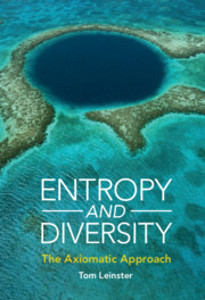
Tom Leinster is a mathematician at the University of Edinburgh, specializing in category theory, metric geometry, and their applications to areas such as algebra, topology, and mathematical biology. His research focuses on the concept of magnitude, a measure for metric spaces and enriched categories, as well as entropy and diversity. He has authored influential books including *Basic Category Theory* and *Entropy and Diversity: The Axiomatic Approach*. Leinster's work bridges foundational mathematics with interdisciplinary applications, emphasizing the interplay between abstract structures and concrete problems. His research interests span category theory, metric geometry, algebraic topology, and mathematical biology. Key contributions include foundational work on magnitude and its connections to geometric measure theory, entropy characterization, and categorical frameworks for diversity measurement. Leinster also engages in mathematical education and ethics, advocating for responsible research practices. Notable publications include recent advancements in magnitude homology of Euclidean sets, extremal magnitude in metric spaces, and entropy modulo primes. His work often highlights interdisciplinary applications, such as biodiversity quantification and information-theoretic foundations.
Gyujin Oh is a Ritt Assistant Professor in the Department of Mathematics at Columbia University's Faculty of Arts and Sciences. He received his PhD in mathematics from Princeton University in 2022 under the supervision of Christopher Skinner and Akshay Venkatesh. Prior to joining Columbia, he was a postdoctoral member of the SLMath/MSRI program Algebraic Cycles, L-Values, and Euler Systems in Spring 2023. Dr. Oh's research spans multiple areas of number theory and arithmetic geometry. His primary interests include Algebraic Number Theory, the Langlands Program, Modular Forms, Galois Representations, and Arithmetic Geometry. His work often bridges classical number theory with modern geometric approaches, exploring connections between automorphic forms, cohomology theories, and arithmetic structures. He has made contributions to understanding rigid local systems, the Néron-Ogg-Shafarevich criterion, and various aspects of the Langlands correspondence. His recent publications demonstrate a strong focus on advanced topics in number theory, particularly exploring the intersection of modular forms, Shimura varieties, and Galois representations. His work on generalized Whittaker models, moduli stacks of crystals, and arithmetic quantum local systems reflects his interest in both classical and cutting-edge approaches to number-theoretic problems. The pattern in his research shows a consistent theme of connecting geometric structures with arithmetic phenomena. Dr. Oh is an active educator who has developed comprehensive lecture notes for both undergraduate and graduate courses in Algebraic Number Theory. In Spring 2025, he is teaching Graduate Algebraic Number Theory (MATH GR6657) at Columbia University, covering local and global class field theory, Langlands program connections, and related advanced topics. He has also been involved in organizing and participating in numerous learning seminars including the Moduli of Langlands Parameters seminar, Theta learning seminar, and Deformation theory learning seminar.
Christopher Ramsey is an Associate Professor and Interim Chair of the Department of Mathematics and Statistics within the Faculty of Arts and Science at MacEwan University in Edmonton, Alberta. He holds a PhD in Pure Mathematics from the University of Waterloo (2013), an MMath from Waterloo, and a BSc Honours from the University of Regina. Dr. Ramsey's research centers on operator algebras and functional analysis, with particular emphasis on non-selfadjoint operator algebras and multivariable operator theory. His work explores connections between analysis and algebra, studying algebras of infinite matrices and their applications to group theory, dynamical systems, free probability, and quantum information theory. He also investigates aperiodic order and its mathematical structures. His recent publications (2020-2025) demonstrate a consistent focus on operator algebras, with significant contributions to C*-algebras, tensor algebras, and their applications. The research spans theoretical foundations in functional analysis while connecting to diverse fields including symbolic dynamics, aperiodic structures, and quantum information. His work often bridges abstract algebraic structures with concrete analytical problems. Dr. Ramsey has received notable recognition including an NSERC Discovery Grant (2019), a MacEwan University Project Grant (2019), and an NSERC Postdoctoral Fellowship (2013). He serves as Editor-in-Chief of the MacEwan University Student eJournal (MUSe) and Associate Editor of the Canadian Transactions of Operator Theory. As an educator, Dr. Ramsey teaches various mathematics courses and supervises senior students' independent studies. His academic service includes editorial work and active participation in the Canadian Mathematical Society. His research program continues to develop connections between operator algebras and their diverse applications across mathematical disciplines.
Leo Goldmakher is an Associate Professor of Mathematics at Williams College, where he teaches courses in cryptography, topology, Fourier analysis, measure theory, and analytic number theory. He holds a B.A. in Mathematics from Princeton University (2004) and a Ph.D. in Mathematics from the University of Michigan (2009). Research interests Teaching areas Publications His research focuses on number theory, including topics such as Gauss sums, character sums, multiplicative functions, and analytic methods. He has contributed to refinements of classical theorems like Lagrange’s four-square theorem and Artin’s primitive root conjecture. His recent publications explore bounds on character sums, spectral properties of random graphs, and algebraic structures in number theory. The work demonstrates a strong emphasis on analytic and algebraic techniques. Leo has been affiliated with Williams College’s Department of Mathematics and Statistics, which received the 2014 Exemplary Department Award from the American Mathematical Society. He has taught advanced courses such as Cryptography, Topology, and Analytic Number Theory, though these were not offered in the 2025/26 academic year.
Brad Rodgers is an Associate Professor in the Department of Mathematics and Statistics at Queen's University. He holds a Ph.D. from the University of California Los Angeles. His research focuses on the intersection of analytic number theory, probability, and random matrix theory, particularly exploring connections between prime number distributions and statistical physics models. He investigates randomness in discrete mathematical structures and the implications of these for open problems in number theory. Education: Ph.D., University of California Los Angeles Research Interests: Rodgers examines quantitative questions in number theory using tools from analysis and probability. His work bridges analytic number theory with random matrix theory, a field emerging from studies on the Riemann zeta-function's zeros. He explores how randomness manifests in discrete mathematical systems, including applications to statistical physics. Awards/Grants: No specific awards or grants listed in available information. Labs/Teams: No dedicated lab or team affiliation explicitly mentioned.
Nathan Ng is a Professor in the Department of Mathematics and Computer Science at the University of Lethbridge , Canada, and has served as the PIMS Site Director since 2019. His research lies at the intersection of analytic number theory and L-functions, with a particular focus on the Riemann zeta function, prime number distribution, and multiplicative number theory. Education: He earned a B.Sc. from the University of British Columbia (1994), an M.Sc. from the University of Toronto (1995), and a Ph.D. from UBC (2000). His doctoral thesis, Limiting Distributions and Zeros of Artin L-functions , laid the groundwork for his subsequent research. Research Interests: His work spans a wide range of topics in analytic number theory, including: Mean values and moments of L-functions Non-vanishing of L-functions Distribution of zeros of the Riemann zeta function Prime number races and comparative prime number theory Chebotarev density theorem and applications Convolution sums of arithmetic functions Publications: He has published extensively in leading journals such as Proceedings of the London Mathematical Society , Duke Mathematical Journal , and Advances in Mathematics . His recent work includes studies on the sixth and eighth moments of the Riemann zeta function, subconvexity bounds for L-functions, and effective versions of Chebotarev's density theorem. Awards and Honors: He received the Canadian Mathematical Society Doctoral Prize in 2001 for his outstanding doctoral dissertation. Student Supervision: He has supervised or co-supervised numerous graduate students and postdocs, including: Ph.D. Students: Farzad Aryan (2016), Sourabhashis Das (ongoing), Quanli Shen (ongoing) M.Sc. Students: Allysa Lumley (2014), Majid Shahabi (2012) Postdocs: Lee Troupe, Peng-Jie Wong, Alia Hamieh, Timothy Trudgian, Brandon Fodden Seminar and Conference Organization: He is an active organizer of the Lethbridge Number Theory and Combinatorics Seminar and has co-organized major conferences such as the Canadian Number Theory Association (CNTA XII) meeting in 2012 and the Analytic Number Theory and Diophantine Approximation Summer School in Ottawa (2008). Labs and Teams: He is affiliated with the Lethbridge Number Theory Group , a vibrant research collective within the department that fosters collaboration and supports graduate training in number theory.
Professor Jörn Steuding holds the Professorship for Number Theory at the University of Würzburg since 2006, where he is affiliated with the Institute of Mathematics within the Faculty of Mathematics and Computer Science. His academic career includes a Ramon y Cajal research position at Universidad Autónoma de Madrid (2004-2006), postdoctoral work at the University of Frankfurt under Professors W. Schwarz and J. Wolfart (1999-2004), and completion of his habilitation at Frankfurt in 2004. His educational background includes a PhD from the University of Hannover in 1999 under Prof. G.J. Rieger, where he also served as an assistant from 1996-1999, and undergraduate studies in mathematics at Hannover from 1991-1995. Professor Steuding's research spans multiple areas of number theory, with particular focus on Zeta and L-functions (including zero distribution, universality properties, and connections to Random Matrix Theory), Diophantine analysis (covering approximation theory, equations, and the abc conjecture), elliptic curves and modular forms , algebraic number theory (including arithmetically equivalent fields), and elementary number theory with applications to primality testing and factorization. His work often bridges theoretical foundations with historical perspectives, as evidenced by his research on the Hurwitz brothers' contributions to complex continued fractions. His publication record demonstrates consistent contributions to leading journals in number theory, with research trends showing evolution from foundational work on Riemann zeta function zeros to broader investigations of L-functions in the Selberg class, Diophantine problems over quadratic fields, and historical aspects of number theory. His publications appear in prestigious journals including Mathematische Annalen, Acta Arithmetica, and the Bulletin of the American Mathematical Society. Professor Steuding has authored significant monographs including Diophantine Analysis (CRC Press/Chapman-Hall, 2005), Value distribution of L-functions (Springer Lecture Notes in Mathematics 1877, 2007), and Elementary Number Theory: A Gentle Introduction to Higher Mathematics (Springer Spektrum, 2015, co-authored with N. Oswald). He serves as the Erasmus Coordinator for his department alongside Dr. Jens Jordan, facilitating international academic exchanges. His research collaborations span multiple institutions, with notable co-authors including N. Oswald, M. Technau, H. Nagoshi, and L. Pankowski. Professor Steuding leads the Number Theory team at the University of Würzburg, maintaining an active research group focused on contemporary problems in analytic and algebraic number theory. His work continues to explore connections between classical number theory and modern mathematical physics through Random Matrix Theory applications.
Vincent John Mooney III is an Associate Professor at the School of Electrical and Computer Engineering and an Adjunct Associate Professor at the School of Computer Science, Georgia Institute of Technology. His research focuses on Hardware-Software Co-Design , Cyber Physical Systems Security , and Low-Power Architectures . He has authored numerous publications on topics such as probabilistic computing, hardware security, and embedded systems design. Dr. Mooney has received prestigious awards including the NSF Career Award , National Semiconductor Fellowship , and ARCS Best Paper Award . Education: Ph.D. in Electrical Engineering (1998), Stanford University MA in Philosophy (1997), Stanford University MS in Electrical Engineering (1994), Stanford University Certificate of Graduate Study (1992), University of Navarra BS in Electrical Engineering and Computer Science (1991), Yale University Research interests span hardware/software codesign, cybersecurity in embedded systems, and synthesis of reconfigurable architectures. His recent work includes Gridtrust for decentralized supply chain cybersecurity and COPPER for computation obfuscation. Dr. Mooney has supervised numerous Ph.D. students and held leadership roles in conferences such as HOST and CASES . Scientific awards include NSF Career Award (2000) National Semiconductor Fellowship (1997-1998) AT&T Engineering Scholarship Program (1987-1991) NCAA Postgraduate Scholar (1991) Senior Member, IEEE (2003) ARCS 2012 Best Paper Award Advising and grants highlight his mentorship of students like Jun Cheol Park and Yudong Tan , along with grants such as the U.S. Air Force Summer Faculty Fellowship (2007). He leads the Hardware/Software Codesign for Security Group at Georgia Tech and has contributed to advancements in real-time operating systems and deadlock detection algorithms.
Dr. Jiseong Kim serves as a Visiting Assistant Professor in the Department of Mathematics at the University of Mississippi, affiliated with the College of Liberal Arts. His research focuses on Analytic Number Theory , exploring advanced topics such as divisor functions, Hecke eigenvalues, and Goldbach conjectures. He teaches core courses including Unified Calculus & Analytic Geometry I, III, IV, and Elementary Differential Equations. His recent work emphasizes applications of zero-free regions, shifted sums, and ergodic averages in number-theoretic contexts. Research Interests: Analytic Number Theory with specializations in additive problems, distribution of arithmetic functions, and L-functions. His studies often involve advanced techniques from modular forms and automorphic representations. His publications (2021–2024) reveal a focus on primes in short intervals, divisor function behavior, and Hecke eigenvalue distributions. While no awards are explicitly listed, his active publication record indicates strong scholarly engagement. Teaching responsibilities include foundational calculus and differential equations courses. No grants or student advisees are currently documented.
Vitaly Bergelson is a Professor of Mathematics and Physical Sciences at The Ohio State University, affiliated with the Department of Mathematics within the College of Arts and Sciences. His work focuses on Ergodic Theory , Combinatorics , Ergodic Ramsey Theory , Polynomial Szemerédi Theorems , and Number Theory . He holds a PhD from the Hebrew University of Jerusalem (1984). His research explores the interplay between ergodic systems, combinatorial structures, and number-theoretic phenomena. Notable contributions include polynomial extensions of Szemerédi's theorem and foundational work on ergodic Ramsey theory. Recent articles address topics like multiplicative functions, Diophantine approximations, and quasirandom group structures. His work often bridges abstract mathematical frameworks with concrete combinatorial problems, yielding applications in additive combinatorics and symbolic dynamics. Publications highlight advancements in recurrence properties, uniform distribution, and the structure of algebraic dynamical systems. Collaborations with scholars like A. Leibman, N. Hindman, and J. Moreira underscore his interdisciplinary approach. His research is disseminated through top-tier journals such as Inventiones Mathematicae and Journal d'Analyse Mathématique .