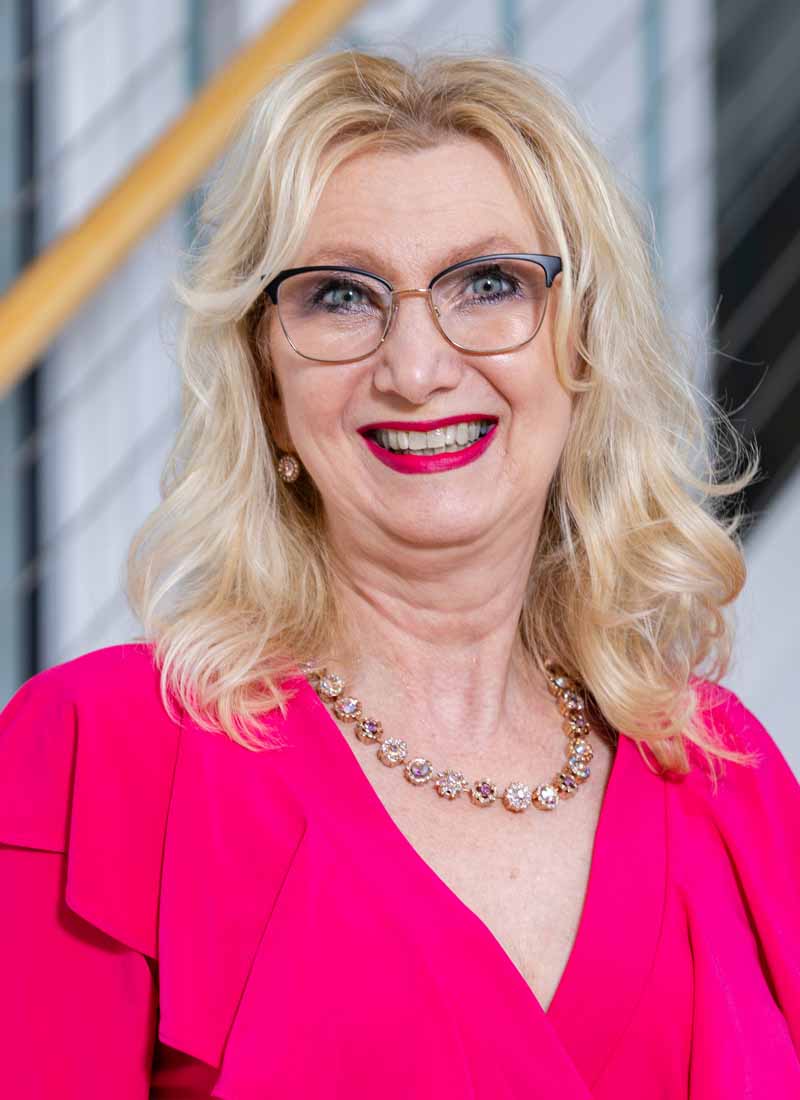
Dr. Brenda Douglass (DNP, APRN, FNP-C, CDCES, CNE, CTTS) is an Assistant Professor and Associate Director of the DNP-AP Program – Project Focus at Johns Hopkins University School of Nursing. Her work bridges clinical expertise in endocrinology, primary care, and chronic disease management with leadership in competency-based education (CBE) and nursing policy. Research Focus: Competency-Based Education in DNP programs Evidence-based practice and healthcare transformation Leadership development and professional identity in advanced nursing Chronic disease management, diabetes care, and aging Innovation in nursing education and technology Scientific Contributions: She has published extensively on DNP curriculum redesign, interprofessional education, and primary care workforce challenges. Her work emphasizes systems thinking, academic-practice partnerships, and quality improvement. Awards & Honors: Maryland Higher Education Commission Academic Nurse Educator Certification Award (2024) New Nursing Faculty Fellowship (2023) Sigma Theta Tau International Honor Society inductee (2006, 2011) Teaching Excellence Awards at Drexel University (2018, 2021, 2023) Mentorship & Leadership: Dr. Douglass serves as a mentor for DNP students and faculty, leads national committees on nursing education, and has developed initiatives to strengthen academic-practice partnerships.
Patrick T. Dowling, M.D., M.P.H., is the Kaiser Permanente Endowed Professor of Community Medicine and Chair of the UCLA Department of Family Medicine. He holds dual degrees from the Medical College of Ohio (1974) and the University of Michigan School of Public Health. Dr. Dowling's career spans over four decades in family medicine, residency training, and health policy advocacy, with a focus on underserved populations. He has directed residency programs at Cook County Hospital, Brown University, and Harbor-UCLA Medical Center before leading UCLA's Family Medicine department since 1998. His research emphasizes health policy, chronic disease management, cross-cultural medicine, and integrating substance abuse treatment into primary care. He co-founded UCLA's IMG pathway program to train bilingual (English-Spanish) international medical graduates for underserved areas. Dr. Dowling has advised the National Health Service Corps and LA County Public Health Commission, and currently serves on Drew University's Board of Trustees. Publications highlight systemic barriers to healthcare access, physician practice location determinants, opioid epidemic responses, and community-based participatory research. His work bridges medical education innovation with socioeconomic health equity, reflecting lifelong commitment to universal healthcare access inspired by his early work with Cesar Chavez's United Farm Workers Clinics.
Ada M. Fenick, MD, is a Professor of Pediatrics (General Pediatrics) at Yale School of Medicine. She holds multiple leadership roles including Associate Director for Pediatrics in the Biopsychosocial Approach to Health clerkship, Medical Director of School-Based Health Centers, and Medical Director of the Medical-Legal Partnership Project. Her clinical practice focuses on economically disadvantaged pediatric populations, emphasizing developmental aspects of child health and addressing toxic stress impacts. Education: BS in Biomedical Sciences (University of Michigan, 1990), MD (University of Michigan, 1993), Pediatric Residency (Weill-Cornell/NY Medical Center, 1996) Research: Centers on pediatric primary care innovations such as group well-child care models, medical-legal partnerships, and obesity prevention. Key themes include health equity, social determinants of health, and curriculum development. Her recent work emphasizes leveraging medical student experiences to improve curricula addressing social drivers of health. Over 20 peer-reviewed publications since 2020 focus on topics like electronic phenotyping algorithms for obesity screening and frameworks for group pediatric care implementation. Awards: Includes Howard A Pearson MD Teaching Award (2013) and multiple institutional recognitions for clinical excellence and innovation. She leads initiatives like the Yale Primary Care Pediatrics Curriculum and collaborates with community organizations to enhance access to early intervention services for vulnerable children. Her work integrates clinical care, education, and policy advocacy to promote holistic child health outcomes.
Anu Sepp is a Senior Lecturer in Music Pedagogy at the Estonian Academy of Music and Theatre (part-time since 2019) and a University Lecturer in Music Education at the University of Eastern Finland (full-time since 2023). Her career includes roles as a post-doctoral researcher at the University of Helsinki, Associate Professor at EAMT, and extensive experience as a secondary school music/English teacher and choir conductor in Estonia and Finland. Education: PhD in Education, University of Helsinki (2008–2014) Master of Educational Sciences, Tallinn Pedagogical University (1999–2001) English Teacher Certification, Tallinn Pedagogical University (1992–1994) Music Teacher & Choir Conductor Diploma, Tallinn State Conservatoire (1981–1986) Her research explores music pedagogy, teacher training, curriculum innovation, and technology in education, with a strong focus on comparative studies between Estonia and Finland. She investigates interactive teaching methods, equity in music education, and the development of sustainable pedagogical frameworks. Her publications (2018–2023) predominantly analyze music teacher education, piano pedagogy, technology-enhanced learning, and curriculum design. Trends include longitudinal studies on student-teacher development, comparative education models, and integrating traditional pedagogical values with digital innovation. Scientific Awards: Riho Päts Foundation Laureate (2015) DKG International Scholarship (2013) Kristjan Jaagu Scholarship (2012) Ministry of Education Awards (2010, 2001) Teacher of the Year (1996) She has supervised 9 master’s theses and contributed to national curriculum reforms in Estonia. As a choir conductor, she led award-winning ensembles (1987–2023). She serves on committees for ISME, EAMT’s Scientific Board, and co-organizes international conferences like MISTEC.
Mehran Sahami is the James and Ellenor Chesebrough Professor in the School of Engineering and Tencent Chair of the Computer Science Department at Stanford University. He holds the academic rank of Teaching Professor of Computer Science and is also a Senior Fellow by courtesy at the Freeman Spogli Institute for International Studies. As a Bass University Fellow in Undergraduate Education, he has made significant contributions to computer science education at Stanford. Dr. Sahami earned both his undergraduate and PhD degrees from Stanford University's Computer Science Department. After completing his PhD, he worked as a Senior Engineering Manager at Epiphany before joining Google as a Senior Research Scientist from 2002-2007, while also teaching as a Lecturer at Stanford. In 2007, he joined the Stanford faculty full-time, continuing to consult part-time at Google until 2010. Professor Sahami's primary research interests focus on computer science education, machine learning, and information retrieval on the Web. His work has significantly influenced how computer science is taught globally, particularly through his leadership in the ACM/IEEE-CS Joint Task Force on Computing Curricula 2013 (CS2013). He has pioneered approaches to teaching introductory programming and probability theory for computer scientists, with a particular emphasis on analyzing student performance trends as CS enrollments have grown dramatically. His recent publications demonstrate a strong shift toward educational research while maintaining connections to technical expertise in machine learning and data analysis. Bass University Fellow in Undergraduate Education Professor Sahami serves as the ACM Steering Committee Chair for the CS2013 effort to define international curricular guidelines for undergraduate computer science programs. He is also the founder and first Chair of the Symposium on Educational Advances in Artificial Intelligence (EAAI), an annual meeting for researchers and educators to discuss pedagogical issues in teaching AI. He has received significant grant funding through these initiatives and has been instrumental in shaping national and international computer science curriculum standards. At Stanford, he teaches CS106A: Programming Methodology and CS182: Ethics, Public Policy, and Technological Change, with his educational materials widely distributed through the Stanford Engineering Everywhere initiative. Professor Sahami maintains connections to the startup ecosystem through advisory board positions and has published a book on Text Mining with Ashok Srivastava. His career trajectory from industry researcher to academic educator gives him a unique perspective on practical applications of computer science education.
John C. Doyle is the Jean-Lou Chameau Professor of Control and Dynamical Systems, Electrical Engineering, and BioEngineering at the California Institute of Technology (Caltech), where he holds appointments in the Division of Engineering and Applied Science with primary affiliation in the Control and Dynamical Systems Department. His research bridges theoretical foundations with applications across biological, technological, medical, and ecological networks. He earned a BS and MS in Electrical Engineering from MIT (1977) and a PhD in Mathematics from UC Berkeley (1984), followed by consultancy at Honeywell Systems and Research Center (1976-1990). MIT: BS & MS in Electrical Engineering (1977) UC Berkeley: PhD in Mathematics (1984) Doyle's research centers on universal laws and architectures in complex systems, emphasizing robustness-efficiency tradeoffs, speed-accuracy tradeoffs (SATs), diversity-enabled sweet spots (DeSS), bowtie/hourglass structures, and evolvability. His work pioneers System Level Synthesis (SLS) for control systems with sparse, local, saturating, delayed, noisy, quantized, and distributed (SLSDNQD) components, integrating control theory, computation, communication, and machine learning to address challenges from neural networks to infrastructure resilience. Key concepts include virtualization, horizontal transfer, and virality in multiscale systems. Analysis of his publication trends reveals consistent interdisciplinary impact across neuroscience (brain connectivity modeling), systems biology (metabolic oscillations), network science (internet topology), and physics (turbulence, earthquakes), with recurring themes of robust-efficiency limits and architectural principles governing complex networks. His work demonstrates exceptional translation from abstract theory to practical tools like the Matlab Robust Control Toolbox and Systems Biology Markup Language (SBML). His scientific recognition includes: 1990 IEEE Baker Prize (ranked among top 10 most important mathematics papers 1981-1993) Three IEEE Automatic Control Transactions Awards (1998, 1999, 2021) ACM Sigcomm Paper Prize (2004) and Test of Time Award (2016) IEEE Control Systems Field Award (2004) Multiple early-career honors including IEEE Centennial Outstanding Young Engineer (1984) Doyle has mentored generations of students whose contributions include foundational software tools adopted globally. His research has secured sustained funding from NSF, NIH, and other agencies supporting theoretical advances in control frameworks and their applications to biomedical systems, network infrastructure, and environmental modeling. The SBML initiative exemplifies his group's impact in standardizing computational biology research. He leads a highly collaborative research ecosystem at Caltech that integrates engineers, biologists, neuroscientists, and computer scientists to develop universal principles for complex networks. Current efforts focus on translating theoretical insights into health technologies, resilient infrastructure, and climate-responsive systems through the application of robust-efficiency frameworks to emerging challenges in cyber-physical and biological domains.
Professor John Powell is a Professor of Digital Health and NIHR Senior Investigator at the University of Oxford's Nuffield Department of Primary Care Health Sciences. He holds a Senior Research Fellowship at Jesus College and serves as a Consultant Public Health Physician. His roles include leading digital health research initiatives, advising national agencies like NICE and MHRA, and co-directing the MSc in Applied Digital Health. Powell has dual degrees from the University of Cambridge (Social and Political Sciences and Clinical Medicine) and advanced qualifications from the London School of Hygiene and Tropical Medicine. Research Focus: Digital health transformation, AI in healthcare, patient feedback systems, and evaluation of digital health technologies. His work explores how digital tools reshape patient-clinician interactions and improve service delivery in the NHS. Notable projects include NHS App evaluations, social media's health impact, and frameworks for medical education in digital competencies. Recent Contributions: Key publications analyze NHS App adoption patterns, social media influencers' health impact, and challenges in AI ethics. He leads the Digital Health Theme in NIHR ARC and HRC, driving translational research. Powell's work bridges academia and policy, with past roles including Clinical Director of NHS Choices and Editor-in-Chief of major health technology assessment journals. Honors & Roles: Fellowships in Public Health and Clinical Informatics, Honorary Professor at University of Bristol, and former Warwick Professor of Public Health. Active in global health policy through roles like senior clinician at NICE.
Brett Gilley is an Associate Professor of Teaching in the Department of Earth, Ocean and Atmospheric Sciences at The University of British Columbia (UBC), Vancouver Campus. His primary affiliation is within the Faculty of Science. He specializes in geoscience education with a focus on inclusive fieldwork practices, collaborative learning strategies, and accessibility in STEM education. He is currently not accepting students for advising. His research interests span geology and geoscience education, with a strong emphasis on making field experiences accessible for students with disabilities, developing innovative teaching methodologies, and fostering inclusive learning environments. Gilley has contributed to projects like the Earth Science Experiential and Indigenous Learning (EASEIL) initiative, which integrates Indigenous knowledge and community partnerships into curriculum design. Notable trends in his publications include advancing universal design in geoscience field courses, evaluating collaborative testing strategies, and exploring the impact of technology (e.g., ChatGPT) on student research practices. His work often bridges pedagogical innovation with practical implementation in large undergraduate science programs. While no formal awards are listed, his contributions to inclusive education and curriculum development reflect a commitment to equitable STEM education. His professional activities include mentoring faculty through UBC’s evidence-based pedagogy graduate course and participating in interdisciplinary curriculum development teams.
Ricardo Filipe da Silva Pocinho is an academic researcher affiliated with the Higher School of Education and Social Sciences (ESECS) at the Polytechnic Institute of Leiria, Portugal. He joined the faculty in March 2022 and holds the role of Assessor in the Regional Health Administration of the Center (ARS Centro). His primary research focuses on educational evaluation , social competence development , and pedagogical innovation , with emphasis on school-based interventions and socioemotional learning programs. He has supervised five doctoral students and published extensively on topics including family involvement in education, pandemic impacts on teaching, and workplace happiness initiatives. His work integrates interdisciplinary approaches, combining educational psychology with social work methodologies. Recent publications highlight projects like the 'Smiling Team' workplace well-being program and evaluations of educational interventions for youth transitioning from residential care. He collaborates closely with institutions like the University of Coimbra and has presented at major conferences such as TEEM20 and the International Conference on Childhood and Adolescence. Key contributions include designing programs to promote socioemotional competencies in schools and analyzing social policies during pandemics. His research emphasizes practical applications, evidenced by projects like the 'Third Age Universities' study in Portugal and Brazil, and pedagogical innovations in technical director training.
Niamh Pattwell is Associate Professor and Head of School at the School of English, Drama and Film, University College Dublin. She holds a PhD from Trinity College Dublin and has been a faculty member at UCD since 2004, progressing from Lecturer in Old and Middle English to her current role. Her academic leadership extends to curriculum development, postgraduate teaching, and serving on university committees, including the Board of Trustees for UCD Volunteer Overseas. Her educational background includes a BA, H.Dip.Ed., H.Dip.T.Rel.Ed., and MA from University College Cork, and a PhD from Trinity College Dublin. She taught secondary school in Co. Wexford and Co. Cork before transitioning to higher education, holding teaching fellowships at Queen’s University Belfast and Trinity College Dublin. Niamh Pattwell's research focuses on the circulation and transmission of vernacular religious prose in the late Middle Ages. She has developed expertise in codicology, palaeography, and manuscript fragment studies, particularly through her work with Marsh's Library and the Index of Middle English Prose at Trinity College Dublin. Her scholarship explores the production, readership, and theological context of both orthodox and Wycliffite texts. Her recent publications show a consistent focus on Middle English religious prose, manuscript provenance, and the material culture of books. She has contributed to the Year's Work in English Studies and published on fragments, personal notebooks, and devotional texts, reflecting a deep engagement with the material and spiritual dimensions of medieval manuscripts. National Digital Learning Resources Award (2012) Broad Curriculum Post-doctoral Teaching Fellow, Trinity College Dublin (2003–2004) Irish Research Council for the Humanities and Social Sciences Postgraduate Scholarship (1999–2002) Niamh Pattwell has successfully supervised postgraduate students to MA and PhD completion and has led curriculum innovation at UCD, including the development of research-based modules on medieval manuscript fragments. She has secured internal research grants such as the HoS Research Support Scheme and has been actively involved in organizing major academic events, including the Early Book Society Biennial Conference in 2019 and 2023. Her teaching includes modules on King Arthur, medieval literature, and animal narratives, emphasizing student engagement with primary texts. She collaborates with institutions such as Marsh's Library and Trinity College Dublin and has contributed to public engagement through radio appearances and public lectures. Her work bridges academic research, teaching innovation, and cultural heritage preservation.
Prof. Dr.-Ing. Lars Linsen is a full Professor of Computer Science at the Westfälische Wilhelms-Universität (WWU) Münster, leading the VISualization & graphIX (VISIX) group. His primary affiliation is the Institute of Computer Science within the Faculty of Mathematics and Computer Science. He holds adjunct professorships at Jacobs University, Bremen, and has held previous academic roles including Full Professor at Jacobs University (2012–2017) and Associate/Assistant Professor roles in Germany and the U.S. His research focuses on interactive visual analysis, medical visualization, and scientific visualization, with applications in life sciences and engineering. Education: PhD (Dr.-Ing.) in Computer Science from Universität Karlsruhe (2001), M.Sc. (Diplom) in Computer Science (1997), B.Sc. (Vordiplom) in Computer Science (1994). Awards: IEEE Visualization Design Contest Winner (2008, 2022, 2018), Preis des Fördervereins des Forschungszentrum Informatik (2002). Research Highlights: Develops visualization tools for medical imaging (e.g., mass spectrometry imaging, MRI data analysis) and physical simulations (e.g., wildfire spread analysis, asteroid impact modeling). Active in EU-funded projects like Pig-Pro-QuO (surface coatings) and cells-in-motion initiatives. Supervised over 20 PhD/MS advisees, including notable graduates in medical visualization and simulation ensemble analysis. Publications: Over 100 peer-reviewed articles in top venues like IEEE Transactions on Visualization and Computer Graphics, Computers & Graphics, and EuroVis. Key works include SciVis contest-winning wildfire analysis frameworks and medical visualization tools for stenosis detection. Teaching: Offers courses on visualization, computer graphics, and computational science. Actively involved in thesis supervision and curriculum development at both WWU Münster and Jacobs University. Grants & Collaborations: Principal investigator on DFG-funded projects (e.g., hemodynamics simulations, ensemble visualization) and industry collaborations (e.g., Tascon GmbH for coating quality analysis). Member of the Cells-in-Motion Interfaculty Centre and CDH board at WWU.
Professor Anna Traianou is a distinguished academic at Goldsmiths, University of London, where she serves as Professor of Education and Director of the Centre for Identities and Social Justice. Her work spans multiple dimensions of educational research with a particular focus on the intersection of policy, practice, and ethics in contemporary educational contexts. Her research interests center on culture, learning and teacher 'expertise' in contemporary policy and politics; the contestation of education policy in contemporary Europe, austerity and the changing form of the education state; and philosophical perspectives on ethics and their implications for researcher autonomy. She has published extensively on these topics, with notable works including 'Understanding Teacher Expertise in Primary Science: a sociocultural approach' (2006) and 'Ethics in Qualitative Research: Controversies and Contexts' (2012) co-written with Martyn Hammersley. More recently, she co-edited 'Austerity and the Remaking of European Education' (2019) with Ken Jones. Her recent publications reveal a strong focus on education policy under austerity conditions, particularly in Greece, where she has examined the role of trade unions in education reform and the intricacies of conditionality in policy implementation. She has also made significant contributions to research ethics, particularly regarding the concept of vulnerability in social research and its application to studies involving political elites. Professor Traianou teaches on the BA (Honours) Education Culture and Society, MA Education: Culture Language and Identity, and MPhil/PhD Education programmes. Her doctoral supervision focuses on education policy, particularly the interplay between supranational policy influence and national traditions; learning and teacher 'expertise' in contemporary policy and politics; and research ethics as situated practice. She has secured significant research funding, including from the British Academy (2019-2022) for research on structural adjustment in Greece (2010-2018) and from the National Education Union (NEU) for her current project on teachers' curriculum autonomy. Her recent report 'Are you on slide 8 yet?' examines the impact of standardized curricula on teacher professionalism.
Prof. Dr. Johanna Heitzer is a University Professor for Mathematics Education at RWTH Aachen University since 2011. She leads the Teaching and Research Area of Mathematics Education within the university's mathematics department. Her office is located in Room 352 of the Kreuzherrenstraße 2 building in Aachen. She serves as co-editor of the journal 'mathematik lehren,' co-author of the 'Mathematics - New Ways' textbook series, and holds numerous committee positions including membership in the Faculty Advisory Board and Structural Commission of the Center Council. 1989: High school diploma 1989-1994: Mathematics and Physics Teacher Training at RWTH Aachen 1994-1996: Traineeship at Aachen Teacher Training College 1997: Research assistant at University of Münster 1998-2007: Mathematics and Physics teacher at Korschenbroich Gymnasium 2007-2010: Scientific assistant and doctorate at RWTH Aachen 2011-present: University Professor at RWTH Aachen Professor Heitzer's research focuses on the training and further education of mathematics teachers, development of contemporary teaching materials, applied and interdisciplinary mathematics, and the transition from school to university. Her work emphasizes concept formation, linguistic communication in mathematics, and the historical development of mathematical ideas as teaching resources. She investigates mathematics-specific learning and cognitive processes through multiple research projects including the Aachen school-university project iMPACt. Her recent scholarly output demonstrates a strong trend toward integrating digital technologies in mathematics education, particularly 3D printing and e-learning tools. She has increasingly focused on the social relevance of mathematics, exploring concepts of fairness, sustainability, and citizen empowerment through mathematical modeling. Her work bridges theoretical mathematics education with practical classroom applications, maintaining a strong connection to both historical perspectives and contemporary educational challenges. Special prize from Sparkasse Bad Hersfeld-Rotenburg for best mathematics Abitur (1989) Borchers Plaque for doctoral examinations passed with distinction (2011) DMV honor as Mathemaker of the Month (2013) Brigitte Gilles Prize 2013 for the MINT-L4 Center Professor Heitzer has supervised numerous doctoral students, serving as primary or secondary advisor for at least nine PhD dissertations between 2016-2021. Her research projects include the School-University Project MathePlus Aachen (iMPACt), e-Learning 'Mathematics for Civil Engineers,' and the development of mathematics items for StudiChecks NRW. She has secured funding through the Quality Initiative for Teacher Education (both phases) and participates in the ComeIn project focused on digitalization in teacher training. Her grants consistently emphasize practical applications of mathematics education research with direct impact on classroom practice. As a founding member of the MINT-L4@RWTH center and initiator of the working group Mathematical Education for Sustainable Development, Professor Heitzer has established significant collaborative structures. She participates in the Subject Didactics Forum at the Teacher Training Center of RWTH Aachen and has served in leadership roles including Chair of the Center Council (2014-2016) and Board member of the Teacher Training Center (2014-2017). Her work connects with national and international networks through her membership in the Society for Mathematics Education (GDM), the German Association for Mathematics and Science Education (MNU), and the German Mathematical Society (DMV).
Associate Professor Helen Adam is a leading academic in the School of Education at Edith Cowan University (ECU), specializing in culturally responsive pedagogy and the role of children’s literature in fostering equity and inclusion. She holds a PhD in Early Years Education (2019) and has extensive experience in primary education and literacy research. Her career includes roles as a teacher, researcher, and leader in teacher education, particularly in addressing systemic inequities through literature. She is Board President of the Primary English Teaching Association of Australia (PETAA) and actively contributes to national and international educational initiatives. Research interests focus on diverse children’s literature, social-emotional development, and dismantling prejudice through books. Notable projects include a Churchill Fellowship (2022) exploring global practices in children’s literature and equity-driven education. Her work has been recognized with awards such as the 2023 Churchill Fellowship and multiple ECU research accolades. Helen supervises postgraduate research in literacy and diversity, including projects on postmodern picturebooks and culturally diverse family representation. She collaborates with institutions like ECU’s Kurongkurl Katitjin Centre for Indigenous Education, emphasizing allyship and support for marginalized groups.
Professor Victor Callan AM is Professor of Leadership and Organisational Change at the University of Queensland Business School within the Faculty of Business, Economics and Law. With over 300 publications to his name, including 179 journal articles, 60 conference publications, and 17 books, he is one of Australia's most recognized researchers in organizational change, leadership performance, and employee training. His influential work has shaped public policy in workforce development, vocational education, and organizational change management. Education: Bachelor (Honours) of Arts, University of New South Wales Doctor of Philosophy, Australian National University Professor Callan's research focuses on two primary areas: organizational change and leadership, with special interest in employees' and leaders' experiences with large-scale change; and employee skills, capabilities and training, examining effective responses to skills development and shortages. His work explores adaptation levels, personal capabilities, communication dynamics, and team processes during organizational transitions. He has pioneered research on maverickism in organizations, investigating how positively deviant change agents drive radical organizational transformations. His recent publications reveal a strong trend toward gender equality research, Indigenous knowledge integration, and maverick leadership. These works span multiple disciplines including organizational behavior, human resource management, vocational education, and leadership studies. His research on workplace gender inequality employs wicked problems frameworks, while his work on Indigenous knowledge holders emphasizes co-creation and positioning as expert researchers. Major Awards and Recognition: Fellow of the Academy of Social Sciences in Australia Fellow of the Queensland Academy of Arts and Sciences Fellow of the Australian Institute of Company Directors Member (AM) of the Order of Australia for significant service to higher education University's Award for Excellence in Higher Degree Research Supervision Two UQ Excellence in Leadership Awards Professor Callan has supervised numerous PhD students across diverse topics including leadership ascension, maverickism, CEO appointments, and organizational change. He has secured substantial research funding, including his 14th Australian Research Council project in 2025 focusing on Indigenous women environmental rangers. His advisory work spans over 100 projects for government departments and international organizations across South Africa, Ghana, Tanzania, Indonesia, Bhutan, Brunei, New Zealand, PNG, and South Pacific countries, addressing employee skills, vocational education, industry closures, and workforce development. He actively contributes to executive education for senior managers globally and has developed strong research, consulting, and industry partnerships. His current teaching focuses on MBA programs and the Bachelor of Advanced Business Honours program at UQ.