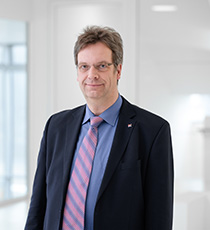
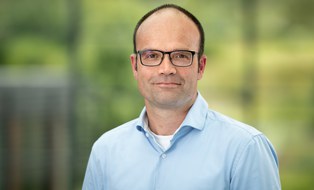
Prof. Dr. Matthias Weidlich is a faculty member at Humboldt University of Berlin within the Institute of Computer Science under the Faculty of Mathematics and Natural Sciences . His research focuses on Process Mining , Complex Event Processing , and Data Privacy with applications in Business Process Management and Scientific Workflows . Research Interests: Business Process Management and Process Mining Complex Event Processing and Stream Data Analysis Data Privacy and Security in Process Systems Scientific Workflow Systems and User Behavior Heterogeneous Network Embeddings Algorithm Design and Optimization Recent Publications (2023-2025) demonstrate expertise in: Efficient stream processing techniques Privacy-preserving process mining frameworks Scientific workflow analysis tools Graph neural network applications Multi-modal data integration Adaptive querying systems Contact: Office: Unter den Linden 6, 10099 Berlin Phone: 030 2093-41277 Email: matthias.weidlich@hu-berlin.de Web: hu.berlin/data
Viktória Dabóczi is a lecturer in the Department of German Studies at the University of Siegen, Faculty I. She holds a doctorate from the University of Siegen (2016) and has been actively involved in teaching and research in German linguistics since 2012. Her current academic role as AOR aZ (Akademische Oberrätin auf Zeit) began in June 2025, indicating a senior academic position. She teaches courses such as Introduction to German Linguistics, Grammatical Variation, and Language Acquisition. Research Interests: Her work focuses on word classes, spoken language, grammar theory, language acquisition, and lexical change in German, often with comparative insights from Hungarian. She investigates how words are conceptualized in speech and writing, the evolution of discourse markers, and grammatical variation in contemporary usage. The analysis of her recent publications (2005–2025) reveals a consistent focus on theoretical and applied German linguistics, with increasing attention to sociolinguistic phenomena such as pandemic-related neologisms and ideological word formations. Her research bridges empirical analysis, cognitive linguistics, and language teaching, often in interdisciplinary or contrastive frameworks. Reviewed works on German morphology and grammar Contributed to international projects like EuroGr@mm and ProGr@mm Participated in interdisciplinary conferences on ellipsis and language processing Advising and Grants: While no formal students are listed, her editorial and collaborative roles suggest mentorship and academic leadership. She has been involved in long-term research projects, including EuroGr@mm (2004–2012), indicating sustained grant-supported activity. Her current role at Siegen reflects ongoing institutional support for her research and teaching. Labs and Teams: She has collaborated with researchers at Justus Liebig University of Giessen, University of Szeged, and IDS-Mannheim. Her work with the Diskursmonitor research group and participation in interdisciplinary conferences highlight her integration into active research networks in German linguistics.
Prof. Dr.-Ing. André Nitze is a faculty member at the Brandenburg University of Technology in the Department of Economics . His research focuses on Internet of Things (IoT) , Digital Business Models , Software Architectures , Cloud Computing , Mobile Computing , and Predictive Analytics . He leads research projects on municipal LoRaWAN infrastructure, rural on-demand transport systems, and user-centered digitalization for sustainable development. Area of Expertise: IoT Applications, Software Engineering, Digital Transformation Current Research: Sustainable Municipal LoRaWAN, Rural Mobility Solutions Projects: risKI - KatKomm (2024-2026): Protocol development for disaster communication InNoWest (2023-2027): Subproject leader for digital sustainability OSLO (2023): Rural on-demand transport software architecture Awards: Best Paper Award at ICDS 2024 for work on LoRaWAN infrastructure Education & Supervision: M.Sc. and B.Sc. in Business Informatics Supervised over 15 theses including topics on GIS analysis, sensor networks, and AI applications
Marlon Dumas is a leading researcher in business process management and process mining at the University of Tartu, Estonia. With over 467 publications spanning from 1997 to 2025, his work has significantly advanced methodologies in business process analysis, simulation, and optimization. His research bridges theoretical foundations with practical applications, developing tools and frameworks that enable organizations to analyze and optimize operational processes. Dumas's primary research interests include business process management, process mining, business process simulation, prescriptive process monitoring, and data-aware business processes. He has pioneered methods for modeling resource availability, activity delays, and waiting times in business processes. His work on prescriptive process monitoring addresses critical challenges such as resource constraints, uncertainty in predictions, and causal effect estimation for interventions. Recent publications reveal a strong trend toward integrating artificial intelligence with business process management, particularly exploring the application of large language models to process optimization, monitoring, and redesign tasks. His research demonstrates consistent innovation, with publications appearing in top venues including Information Systems, Data & Knowledge Engineering, and the International Conference on Business Process Management. Dumas has developed several influential tools including SIMOD for automated discovery of business process simulation models, Optimos for simulation-driven process optimization, and Kairos for prescriptive monitoring. His collaborative network is extensive, featuring frequent co-authorship with prominent researchers including Marcello La Rosa, Luciano García-Bañuelos, Fabrizio Maria Maggi, and Wil M. P. van der Aalst. His work on privacy-preserving process mining, particularly regarding differentially private release of event logs, addresses critical challenges in applying process mining techniques while maintaining data privacy and compliance with regulations like GDPR. Dumas's research continues to push boundaries, with recent work exploring the integration of large language models with business process management systems, suggesting an ongoing commitment to advancing the field through innovative applications of emerging technologies.
Prof. Bianca Maria Colosimo is a faculty member at Politecnico di Milano in the Department of Mechanical Engineering. Her research focuses on in-situ sensing and monitoring of metal additive manufacturing (AM) processes, particularly Laser Powder Bed Fusion. She develops statistical data mining techniques for defect detection and process control, integrating big data streams into quality assurance systems. Her work aims to advance smart AM technologies through real-time monitoring and digital twin methodologies. Key research interests include: Metal Additive Manufacturing Statistical Process Control Image Data Analysis Laser Powder Bed Fusion In-situ Monitoring Smart Manufacturing Systems Publications highlight her contributions to layerwise imaging , plume signature analysis , and spatial statistical modeling for AM processes. Contact: Department of Mechanical Engineering, Politecnico di Milano.
Prof. Dr. Jürgen Seitz is a full Professor and Head of the Business Information Systems programme at the Baden-Württemberg Cooperative State University (DHBW) in Heidenheim, Germany. Since April 2001 he has shaped the university’s applied informatics curriculum and serves as data-protection liaison and German Informatics Society (GI) trustee. Internationally, he is Associate Editor for several journals and chairs tracks at conferences such as WHICEB and Bled eConference. Education 1988–1991 Diplom-Betriebswirt (BA), Berufsakademie Stuttgart (now DHBW) – focus on data processing 1992–1996 Diplom-Ökonom, University of Hohenheim – economics 1998 Dr. rer. pol., Europa-Universität Viadrina – dissertation on the impact of IT on banking structures Research Interests Seitz’s research integrates business informatics with pressing societal challenges. Key themes include: e-Finance & FinTech: cryptocurrency literacy, blockchain sustainability, digital payment futures e-Health & Health Telematics: barrier-free e-kiosk design, telematics infrastructure for electronic health cards, pandemic digital health solutions Data Management & Analytics: heterogeneous data-warehouse integration, big-data approaches to agriculture, water-quality prediction, renewable-energy forecasting IT Management & Modeling: business-model evaluation, Industry 4.0 architectures, enterprise system integration Publication Trends Across more than 150 peer-reviewed works (1998–2024), Seitz demonstrates a shift from foundational studies in e-commerce and digital watermarking to cutting-edge applications of AI, blockchain, and data analytics in finance, health, and sustainability. Recent articles emphasize machine-learning techniques (k-means, ARIMA, PCA) applied to global agriculture, renewable-energy growth, and gendered cryptocurrency adoption, reflecting a commitment to data-driven, cross-disciplinary impact. Editorial & Scientific Service Associate Editor: International Journal of Networking and Virtual Organisations (IJNVO) , Journal of Cases on Information Technology (JCIT) , International Journal of Cases on Electronic Commerce (IJCEC) Editorial Board Member: International Journal of Global Sourcing and Management (IJGSM) , Journal of Digital Marketing (JDM) , Journal of Internet Banking and Commerce (JIBC) , among others Conference Chair/Co-Chair: WHICEB (Wuhan International Conference on E-Business), Bled eConference eHealth Track Technical Programme Committee Member: IEEE ICDMAI, IEEE IEMCON, IEEE UEMCON, CCWC External examiner & guest lecturer in China, India, USA, Australia, Malaysia, Jordan, Poland, UK, Belarus Advising & Collaborative Networks While individual student names are not disclosed, Seitz mentors within the DHBW cooperative-education model and supervises industry-linked capstone projects. He is a key liaison for German industry partners and international universities, facilitating funded research on FinTech adoption, e-health feasibility, and sustainable IT architectures. His leadership of the Business Informatics programme positions him to coordinate grants and consortia across Europe and Asia. Laboratories & Teams At DHBW Heidenheim, Seitz steers the Business Informatics Lab —a hub for applied R&D projects with corporate partners such as Landesbank Baden-Württemberg and health-sector IT providers. The lab focuses on prototyping blockchain-based e-prescription systems, evaluating FinTech business models, and deploying predictive-maintenance analytics in automotive supply chains. Interdisciplinary student teams work under his guidance to translate academic insights into market-ready solutions.
Lars Bernard is Full Professor for Geoinformatics at the Faculty of Environmental Sciences, Technische Universität Dresden since 2015. He also holds the position of Chief Digitalization and Information Management Officer (CDIO) at TU Dresden since 2020 and serves as member of the TUD Rectorate. PhD in Geoinformatics (University of Münster, 2001) Diploma in Physical Geography (University of Münster, 1995) His research focuses on (Geo-)Information Infrastructures , Distributed Geoprocessing , and Smart Environmental Monitoring . He has extensive experience in developing geospatial standards through roles in AGILE, EuroSDR, and INSPIRE initiatives. His publications demonstrate a consistent emphasis on: Metadata provision and data quality frameworks Interoperability solutions for geospatial systems Climate information service architectures User-driven provenance mechanisms As co-chair of RFII (2020-) and spokesperson for NFDI4Earth (2019-), he leads major German research data initiatives. He has advised numerous students and coordinated TU Dresden's Master Geoinformation Technologies program until 2018. Current leadership roles include serving on scientific editorial boards for Environmental Modelling & Software and International Journal of Spatial Data Infrastructures Research .
Prof. Dr. Gorden Sudeck serves as Full Professor for Sport Science (W3) with focus on Health Education at the University of Tübingen's Faculty of Economics and Social Sciences, Department of Social Sciences, Institute of Sports Science. His research team includes David Victor Fiedler, Stephanie Rosenstiel, Katja Dierkes, Daniel Haigis, and Leon Matting. His research spans health education , exercise therapy , and biopsychosocial responses to physical activity , with particular emphasis on mental health applications. Current projects include the ImPuls study on exercise interventions for psychiatric outpatients and development of health competence assessment tools like the PAHCO questionnaire. His publication analysis reveals strong trends in transdiagnostic mental health applications of exercise (2022-2024), health literacy measurement development, and affective determinants of exercise behavior. Notable methodological strengths include pragmatic randomized controlled trials and mixed-methods process evaluations. Associate Editor, German Journal of Exercise and Sport Research Faculty Member, LEAD Graduate School & Research Network Member, Committee for Exercise and Health (German Society of Sport Science) Speaker, Working Group for Exercise Therapy (German Association of Rehabilitation Science) As an ad-hoc reviewer for over 20 journals spanning sport science, health, psychology, and education domains, he contributes significantly to academic quality control. His research team actively investigates physical activity promotion across diverse populations including psychiatric patients, nursing home residents, and adolescents.
Dr. Stephan Fahrenkrog-Petersen is a Researcher at the Institute of Computer Science , Humboldt University of Berlin , affiliated with the Faculty of Mathematics and Natural Sciences . He works on privacy-preserving process mining and business process management at the Weizenbaum Institute, Berlin. Email: stephan.fahrkrog-petersen@hu-berlin.de Address: Hardenbergstr. 32, 10623 Berlin His research focuses on data privacy , event log anonymization , and control-flow reconstruction in process mining. Recent work explores EU taxonomy compliance , human-centric BPM , and multi-perspective privacy mechanisms. Key article trends include privacy-preserving frameworks for process discovery, semantic anonymization techniques, and sustainable BPM . Publications span 2018–2025, with collaborative efforts in privacy-aware analysis and data generalization .
Dr. Isabel Stolz is a researcher at the Institute of Movement and Neurosciences of the German Sport University Cologne. Her work focuses on diagnostics and assessment in sport and exercise science, with emphasis on technology-driven analysis and movement interventions. PhD graduate from the Institute for Movement Therapy and Movement-oriented Prevention and Rehabilitation Active in metabolic load analysis for elite para-dressage athletes Research Interests : Dr. Stolz investigates motor development in children, performance diagnostics, and application of movement-based therapies for diverse populations. Her projects span from hippotherapy in multiple sclerosis patients to AI-driven running training optimization. Publication Trends : Recent studies highlight metabolic load differences between Olympic and Paralympic dressage athletes, hippotherapy applications, neuroathletic interventions in stroke rehabilitation, and digital health tools in sports training. Scientific Awards : Best Presentation Award (2021) Hochschullehre Prize (2020) Digital Health Monitoring Recognition (2022-2023) dvs Promotionspreis Third Place (2023) Collaborations & Activities : Active in international conferences (Hungary, Germany), peer-review processes, and academic networks. She co-developed a global research strategy for digital measurement of equine-assisted interventions using WHO standards.
Leif Meier is a Professor of Business Informatics with a specialization in Supply Chain Management at Hochschule Westfalen, Faculty of Informatics and Communication (FB 3). He serves as Vice Dean and leads research in digital logistics, data intelligence, and quantitative compliance. His research interests include: Supply Chain Management and Digitalization Quantitative Compliance Data Analysis and Management Logistics and IT Integration Modeling and Simulation Entrepreneurship in Digital Operations Prof. Meier's recent publications reflect a strong focus on smart ports, container terminal optimization, prescriptive analytics, and fraud detection using data science. His work bridges operational research with real-world applications in logistics, transportation, and tourism, emphasizing digital transformation and resilience in supply chains. He actively contributes to major international conferences such as the European Conference on Operational Research (EURO), INFORMS, and the World Conference on Transportation Research. Prof. Meier supervises academic projects and collaborates with industry partners, though specific student names are not listed. He is involved in applied research initiatives related to smart port technologies and sustainable logistics. He is based in office A4.2.08 at Neidenburger Str. 43, 45897 Gelsenkirchen, and can be reached by appointment. Contact is available via phone at 0209/9596-482.
Hans Weytjens is a postdoctoral researcher at the Technical University of Munich (TUM) and a guest professor at KU Leuven in Belgium. He holds a Ph.D. in Machine Learning for Predictive and Prescriptive Process Monitoring, an M.Sc. in Business and Information Science, and an MBA in Finance. His current academic role at TUM involves research in the Department of Information System Development and Operation. Ph.D., KU Leuven (2023) M.Sc., KU Leuven (1990-1991) MBA, University of Chicago (1990-1991) Hans Weytjens specializes in Machine Learning applications for Business Processes , with a focus on Prescriptive Process Monitoring , Generative AI , and Autonomous Enterprise systems. His work bridges theoretical advancements with practical implementations in process optimization and AI-driven decision-making frameworks. Hans Weytjens' publications span topics like Event Log Dynamics , Reinforcement Learning , and Time Series Forecasting , reflecting his expertise in integrating Uncertainty Quantification and Visual Analytics into process mining methodologies. At TUM, Hans contributes to the Chair of Information System Development and Operation , advancing research on AI-driven enterprise automation and predictive process analytics.
Hannah Marchi is a researcher at the Department of Empirical Methods within the Faculty of Economics at the University of Bielefeld . Contact: hannah.busen@helmholtz-muenchen.de . Research Interests: Data science applications in economics and medicine Scientific collaboration network analysis Clinical decision support systems Proteomics and respiratory disease MRI-based disease scoring systems Publication Trends: Her work bridges data science with medical research , focusing on antibiotic stewardship , lung disease modeling , and interdisciplinary collaboration using statistical and machine learning approaches. Key Collaborations: Active in hematology (MPN studies), neonatology (UNSEAL BPD scoring), and rheumatology (referral optimization).
Andreas Metzger is an Adjunct Professor at the University of Duisburg-Essen and a leading researcher in Software Systems Engineering . He has held significant leadership roles, including Vice Chair of the European Technology Platform NESSI , Deputy General Secretary of the Big Data Value Association , and Technical Coordinator of the EU lighthouse project TransformingTransport . His research focuses on Artificial Intelligence applications in Software Engineering and Business Process Management , with domain expertise in Cloud , Fog Computing , Mobility , and Logistics . Metzger’s work integrates Reinforcement Learning for Self-Adaptive Systems , emphasizing Data Protection and Runtime Adaptation . The 15 most recent articles highlight his contributions to Explainable AI , Decentralized Coordination of adaptive systems, ML-Based Fault Prediction , and Prescriptive Process Monitoring . His publications span top-tier venues like IEEE Transactions , ACM , and Springer , often addressing Big Data Challenges and Trustworthy IoT Systems .
Dominik Rottenkolber serves as Professor of Health Economics and Health Policy at Alice Salomon University of Applied Sciences Berlin (ASH Berlin), a position he has held since 2018. He leads the Management and Quality Development in Healthcare M.Sc. program and holds several institutional roles including Chairman of the Training Commission of Department II, member of the ASH Budget Committee, and member of the Deutschlandstipendium selection committee. Professor Rottenkolber's research spans health economics, health policy, digitalization in healthcare, and healthcare innovations. His work focuses on pharmaceutical economics, health economic evaluation methods, decision-analytical modeling, and management within healthcare institutions. His scholarly contributions demonstrate particular expertise in analyzing healthcare financing models, prescription drug policies, nursing administration, and the economic aspects of healthcare delivery systems. His extensive publication record shows consistent scholarly activity with significant contributions to understanding bundled payment systems, prescription drug regulation, nursing workforce economics, and healthcare system resilience. Recent work addresses contemporary challenges including digital health market access, pandemic response implications, and migration in nursing professions, reflecting his engagement with evolving healthcare policy debates. Professor Rottenkolber maintains active teaching responsibilities with all courses conducted in-person during scheduled times. His consultation hours are by appointment only, emphasizing structured academic engagement with students and colleagues.