Assoc. Prof. Weena Lokuge is an Associate Professor in Civil Engineering at the University of Southern Queensland's School of Engineering, affiliated with the Centre for Future Materials. Her expertise spans construction materials, composite materials, infrastructure resilience, and structural rehabilitation. She has over 15 years of academic and industry experience, including roles as a Structural Engineer and Postdoctoral Researcher. Research interests include geopolymer concrete, FRP composites, floodway design, and material degradation under extreme conditions. She has secured major grants like the ARC Industrial Transformation Research Hub and Bushfire & Natural Hazards CRC funding, emphasizing collaboration with industry and international institutions. Holding Ph.D. (Monash), MEng (Asian IT), and PGCertTertT&L (USQ), she teaches courses like Engineering Statics and Advanced Prestressed Concrete. Supervision focuses on HDR students in areas like sustainable materials, infrastructure resilience, and FRP applications. Awards include the 2021 VC's Excellence Award for Women in STEM. Professional memberships include the Concrete Institute of Australia and Australasian Association for Engineering Education. She has authored over 100 papers in materials/structural engineering, with an H-index of 22.
Dr. Ross Mitchell is Professor and Alberta Health Services Chair in AI in Health at the University of Alberta's Faculty of Medicine & Dentistry, with adjunct appointments in Computer Science. As a Canada CIFAR AI Chair and Fellow of the Alberta Machine Intelligence Institute, he leads research on AI applications in healthcare, particularly in medical imaging and cancer informatics. His work focuses on developing machine learning algorithms for improved cancer detection, treatment planning, and outcome prediction. Research Focus: Federated learning for multi-institutional medical collaborations AI algorithms for brain tumor segmentation and analysis Natural language processing of clinical reports Radiomics and radiogenomics for cancer characterization Awards and Honors: Top Achievement Award, H. Lee Moffitt Cancer Center (2021) Outstanding Researcher Designation, US Citizenship and Immigration Service (2015) Alumni Crowning Achievement Award, University of Regina (2011) Dr. Donald Paty Career Development Award (2006) Collip Medal, Western University (1996) Leadership Roles: Senior Program Director of Artificial Intelligence Adoption, Alberta Health Services Former Inaugural AI Officer, H. Lee Moffitt Cancer Center Former Director of Medical Imaging Informatics, Mayo Clinic Arizona
Davood Rafiei is a Professor in the Faculty of Science at the University of Alberta, specializing in the Department of Computing Science. His research bridges databases, natural language processing, and web technologies, with current projects on large language models and data integration. He holds a B.Sc. in Computer Engineering from Sharif University of Technology (1990), an M.Sc. in Computer Science from the University of Waterloo (1995), and a Ph.D. from the University of Toronto (1999). His work explores semantic annotation, table transformations, and adversarial analysis in social media. Recent publications emphasize applications of LLMs to structured data tasks like text-to-SQL conversion and knowledge graph integration. Research trends show consistent innovation in NLP-driven data management solutions, with collaborations spanning Google, Kyoto University, and the University of Paris. No awards, grants, or lab/team details are documented.
Dr. Lauren Sugden is an Assistant Professor of Statistics at Duquesne University and serves as the faculty director for the Data Science B.S. program within the School of Science and Engineering. Her work bridges population genetics and machine learning, emphasizing interpretable models. She holds a Ph.D. in Applied Mathematics from Brown University (2014) and a B.A. in Mathematics and Physics from Wesleyan University (2008). Research interests focus on advancing statistical methods for biological data interpretation, particularly in genomic adaptation and neural network applications. Dr. Sugden actively mentors undergraduate and Master’s students, fostering collaborative projects presented at national meetings and co-authored publications. Her recent work explores preprocessing impacts on neural networks and genomic analyses in African populations. Publications span machine learning applications in genomics, medical statistics, and neuroscience. Notable contributions include studies on chromatin accessibility, RNA editing in Drosophila, and cortical learning dynamics. Despite significant academic output, no specific awards are listed in her profile. Advising and grant activities are centered on student-led research initiatives, with no explicit mentions of external grants. She teaches courses like Data Exploration, Biostatistics, and Statistical Computing, reflecting her commitment to interdisciplinary education.
Dr. Jerome A. Darsey is a Professor of Chemistry at the University of Arkansas at Little Rock (UALR) since 1996, holding prior ranks of Associate Professor (1993-1996) and Assistant Professor (1990-1993). He serves as Director of the Center for Molecular Design and Development, focusing on computational and physical chemistry research. His expertise includes molecular modeling, artificial neural networks, and biomedical applications. Education: PhD in Physical Chemistry, Louisiana State University (1990) BS in Physics, Louisiana State University Research Interests: Dr. Darsey develops computer modeling techniques to study atomic/molecular systems, with applications in material property prediction, drug design (e.g., Parkinson’s disease treatments), and medical diagnostics. His work bridges chemistry, computer science, and healthcare, leveraging artificial intelligence for interdisciplinary solutions. Awards: Marquis Who’s Who in the World (2001-2018) Organizing Chairman, Regional American Chemical Society Meeting (2008) Elected to Sigma Xi and Phi Lambda Upsilon honor societies Grants & Collaboration: His research has been published in journals like Journal of Magnetic Resonance Imaging and AIP Conference Proceedings , often involving collaborations with institutions globally. He also contributed to tuberculosis diagnosis models and proton MR spectroscopy advancements. Labs/Teams: Leads the Center for Molecular Design and Development, fostering innovation in computational chemistry and molecular modeling.
Professor Korbinian Strimmer holds the Chair in Statistics at the University of Manchester. His research bridges statistics, biostatistics, and bioinformatics, focusing on high-dimensional data analysis in genomics and proteomics. He has held academic positions at Imperial College London and Universität Leipzig. His educational background includes an Emmy Noether Group Leadership at the University of Munich. He develops statistical methods for gene expression analysis, mass spectrometry data (MALDIquant package), and omics data integration. Professor Strimmer was recognized as a Highly Cited Researcher from 2014 to 2017. He contributes to Digital Futures research initiatives and develops open-source tools for statistical genomics. His recent work investigates protein interactions in circadian rhythms using quantitative methods.
Samuel Madden is the Faculty Head of Computer Science and Distinguished College of Computing Professor at MIT's Department of Electrical Engineering and Computer Science (EECS). He joined MIT in 2004, earning a PhD from UC Berkeley (2003) and BS/MEng from MIT (1999). His research focuses on database systems, machine learning integration, and high-performance data processing. He co-leads the Data Systems for AI Lab and Data Systems Group. Key achievements include co-founding Cambridge Mobile Telematics, receiving ACM Fellow (2020), and awards like the NSF CAREER Award and SIGMOD Codd Innovations Award. His work bridges database systems with modern AI applications, emphasizing scalable and efficient data processing. Research interests span database analytics, query processing, cloud computing, and applying machine learning to system design. He has published extensively on topics like query optimization (e.g., Abacus, Kairos), AI-driven data systems (Palimpzest, Symphony), and scalable analytics (RITA, Cackle).
Michael Yeomans is an Assistant Professor in Strategy and Organisational Behaviour at the Department of Management and Entrepreneurship, Imperial College Business School. He holds affiliations with the Artificial Intelligence Network and the Centre for eXplainable Artificial Intelligence (XAI). His research focuses on understanding conversational decisions, leveraging natural language processing (NLP) to study high-stakes interactions, conflict expression, and relationship-building dynamics. He has developed open-source R packages such as politeness , doc2concrete , and DICE-M , which analyze linguistic features like politeness, concreteness, and conflict in text. His work spans organizational behavior, social psychology, and computational social science, with applications in education, conflict resolution, and AI ethics. Research Interests: Conversational goal frameworks, NLP applications in decision-making, MOOC engagement, and behavioral interventions. Software Contributions: Politeness detection, concreteness measurement, and conflict expression tools. Affiliations: Imperial College Business School, AI Network, and XAI Centre. His recent publications address question-asking effects, planning tactics in online learning, and scalable behavioral interventions. His work bridges behavioral science and computational methods, emphasizing practical applications in organizational and educational settings.
Thomas Vidick is a Professor of Computing and Mathematical Sciences at the California Institute of Technology (Caltech). As of 2022–2023, he held a visiting position at the Weizmann Institute in Israel. He earned his Ph.D. from the University of California, Berkeley in 2011. His research focuses on quantum information, complexity theory, and cryptography, with a particular emphasis on applying complexity-theoretic tools to quantum computing challenges. Notably, his work resolved Tsirelson's problem and demonstrated that MIP* = RE, a landmark result in computational complexity and operator algebras. Research Interests: Quantum information and its intersections with complexity theory Entanglement in multi-prover interactive proofs and device-independent cryptography Quantum verification, cryptography, and protocols Applications of semidefinite programming and approximation algorithms in quantum contexts Awards and Honors: Simons Investigator (2021) NSF CAREER Award (2015) AFOSR Young Investigator Award (2015) Presidential Early Career Award for Scientists and Engineers (2016) Okawa Research Grant (2014) Teaching and Academic Contributions: Regularly teaches courses such as Analysis and Design of Algorithms (CMS/CS/IDS 139) and Introduction to Cryptography (CS 152) at Caltech. Co-organizes the TCS+ online seminar series and contributed to QIP 2022 as a host. Research activities include collaborations on quantum-proof extractors, certifiable randomness, and cryptographic protocols.
Elham Amini is a Lecturer in the School of Information at the University of Michigan, specializing in data science and machine learning. She holds a Master of Science in Information with a Data Science track from the University of Michigan (2020-2021), an MBA from Alzahra University (2016-2018), and a Mechanical Engineering degree from Iran University of Science and Technology. Her research interests span AI, Machine Learning, Information Visualization, Data Mining, and Natural Language Processing, with a strong focus on practical applications. Ameini has developed several notable projects including a vertical search engine for airplane crashes using Python and BM25 ranking, predictive models for ride-hailing trip pooling with 80% f-1 score, song lyrics generation with GPT-2, and 3D object detection for autonomous vehicles. Her publications demonstrate expertise across multiple domains, with recent work focusing on search engine development, ride-sharing prediction, autonomous vehicle perception, and AI-generated content. She has developed end-to-end machine learning solutions including feature selection on high-dimensional datasets, model deployment using MLflow, and creating interactive visualizations. As an educator, she brings real-world industry experience from her data science internship at UnitedHealth Group where she conducted uplift modeling to predict marketing campaign effectiveness. Her technical skills include Python, SQL, Machine Learning, Altair, Flask, HTML5, Web Scraping, Pandas, and NLP frameworks.
Hassan Khosravi is an Associate Professor in Data Science and Learning Analytics at The University of Queensland with primary appointment in the School of Electrical Engineering & Computer Science. He additionally holds affiliate Associate Professor positions in the Faculty of Humanities, Arts and Social Sciences, specifically with the School of Education and Humanities and Social Sciences. His academic work bridges computer science with educational innovation, focusing on how artificial intelligence can transform learning experiences and enhance student outcomes. Dr. Khosravi earned his PhD from Simon Fraser University and has built an extensive teaching career across three leading institutions: Simon Fraser University, University of British Columbia in Canada, and The University of Queensland in Australia. He has coordinated 30 different course offerings across 10 distinct courses for approximately 7,000 students, with class sizes ranging from 50 to 700. His teaching portfolio spans introductory programming, data structures and algorithms, artificial intelligence, database management systems, and graduate-level data science courses. His research program focuses on the intersection of data science, learning analytics, and educational technologies. Dr. Khosravi draws on theoretical insights from learning sciences and techniques from human-centered AI to develop technological solutions that enhance student learning. Key research areas include: Educational Technologies and Learning Analytics Human-AI Interaction in educational contexts Explainable AI for educational applications Crowdsourcing approaches to educational system development Statistical-relational learning applications in education Peer assessment and feedback systems enhanced by AI Analysis of Dr. Khosravi's recent publications (2024-2025) reveals a significant shift toward practical applications of generative AI in educational settings. His work demonstrates increasing focus on large language models for feedback systems, peer assessment enhancement, and student content creation. His research shows expanding interdisciplinary reach, connecting computer science with chemistry education, cognitive psychology, and research ethics. The publications indicate a clear progression from foundational machine learning work toward applied educational technologies that address real classroom challenges. Dr. Khosravi has been recognized with a Senior Fellowship from the Higher Education Academy, awarded in recognition of his contributions to effective teaching approaches and his coordination, supervision, management, and mentoring of others in educational contexts. As a research supervisor, Dr. Khosravi currently advises four PhD students as principal or associate advisor, with research topics spanning dataset building, cyber safety education for seniors, complex problem-solving with GenAI, and learning analytics applications in chemistry education. He has successfully completed supervision of seven PhD students whose work focused on synergizing learning sciences with analytics, insightful action recommendations in dashboards, AI for peer review improvement, and language learning behaviors. His supervision approach emphasizes interdisciplinary collaboration, often working with co-advisors from education, psychology, and domain-specific fields. Dr. Khosravi is actively engaged in major research funding initiatives, currently as a key participant in the ARC Training Centre for Information Resilience (2021-2026). Previously, he contributed to an ARC Discovery Grant focused on data analytics tools for self-regulated learning (2022-2025) led by Monash University. His work is organized around developing practical educational technologies, particularly through the RiPPLE platform and other systems that leverage learnersourcing and adaptive learning approaches to create scalable educational solutions.
Dr. Mohammad Javad Davoudabadi is an academic staff member at The University of Sydney, affiliated with the School/Department not explicitly stated but likely within environmental or agricultural sciences. His research focuses on environmental modeling, Bayesian statistical methods, soil carbon sequestration, and signal processing techniques. He has contributed to advancing state-space models for soil carbon dynamics and developed novel preprocessing methods for big data using fuzzy-wavelet approaches. His research interests integrate Bayesian computational methods with environmental science challenges, particularly in agricultural systems. He also explores applications of fuzzy logic and wavelet transforms in signal denoising and data analysis. His work bridges statistical modeling and ecological processes, with notable contributions to carbon cycle understanding and predictive modeling under data limitations. Publications highlight trends in Bayesian approaches for complex environmental systems and innovative signal processing techniques. Despite no awards listed, his work demonstrates impactful contributions to environmental and computational fields. No advising/grants information available. Research likely involves collaborations in soil science, statistics, and data science domains.
Md Kamrul Hasan is an Assistant Professor of the Practice of Computer Science at Vanderbilt University's School of Engineering, Department of Electrical Engineering and Computer Science. His research focuses on smartphone-based non-invasive medical diagnostics, particularly blood constituent measurement and point-of-care tools for global health applications. He holds a Ph.D. in Computational Sciences from Marquette University and an M.S. in Computer Sciences from the University of Trento. Dr. Hasan has held postdoctoral positions at Marquette University and Vanderbilt University Medical Center, supported by prestigious fellowships including the Northwestern Mutual Postdoctoral Fellowship and Arthur J. Schmitt Leadership Fellowship. His work bridges computer science with healthcare, emphasizing mHealth technologies, medical imaging, and machine learning applications in clinical settings. Key research contributions include smartphone-based hemoglobin level measurement systems, prenatal education apps for preterm birth risks, and deep learning approaches for medical image analysis. His publications span non-invasive diagnostics, wearable sensor systems, and healthcare accessibility in resource-limited environments. Awards include the Japanese Government Monbukagakusho Scholarship and Opera Universitaria Scholarship. His interdisciplinary approach addresses critical challenges in global health through innovative mobile technology solutions.
Yurui Gao is a Research Professor of Biomedical Engineering at Vanderbilt University's School of Engineering. His work focuses on small animal and human MRI imaging, particularly diffusion/functional MRI, and medical image processing/analysis. He holds a Ph.D. from Vanderbilt University and M.S. and B.A. degrees from Southeast University. Research interests emphasize white matter BOLD signal dynamics, functional connectivity in aging and Alzheimer’s disease, and neuroimaging techniques. Recent work includes studies on white matter tract orientation, vascular geometry, and machine learning approaches for disease classification (e.g., BrainVAE model). Publications highlight advanced methods in spatial smoothing, functional correlation tensors, and connectome analysis. His work addresses Alzheimer’s biomarkers, cognitive decline mechanisms, and the integration of structural/functional brain networks. Affiliated with Vanderbilt’s Biomedical Imaging and Biophotonics group and Surgery/Engineering collaborations. No listed awards or grants, though active in large-scale imaging database preprocessing pipelines (e.g., automatic white matter fMRI analysis).
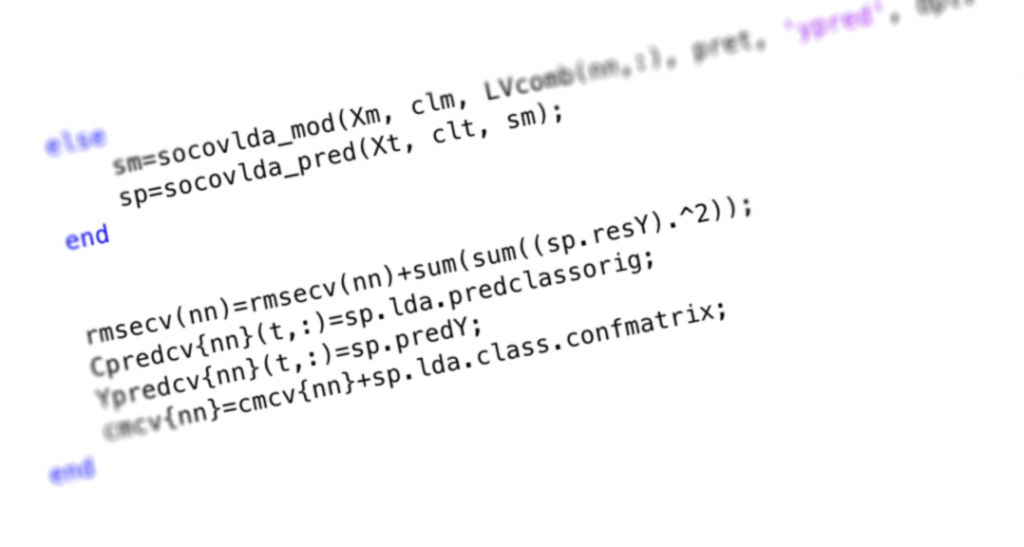
Federico Marini is a Full Professor at the Department of Chemistry, University of Rome La Sapienza. He holds editorial roles including Editor-in-Chief of *Chemometrics and Intelligent Laboratory Systems* and membership in multiple journal boards. His research focuses on chemometrics, particularly method development and application in food chemistry, metabolomics, and multi-block data analysis. He has authored over 300 publications and edited books like *Chemometrics in Food Chemistry* (Elsevier 2013). Education: PhD in Analytical Chemistry (University of Rome La Sapienza, 2004) with Marie Curie Fellowship (2000–2004). Postdoctoral roles included visiting positions at universities in Copenhagen, Stellenbosch, and Lille. Research interests span advanced chemometric methods for food authentication, omics data processing, and non-linear modeling. Notable contributions include SO-PLS(-LDA) algorithms and multi-block fusion strategies. He coordinates the Chemometrics Task Group of DAC-EuCheMS and serves as Vice President of the Italian Society of NIR Spectroscopy. Awards include the 2006 Young Researcher Award (Italian Chemical Society) and 2012 Chemometrics Award. His work bridges analytical chemistry with data science, addressing real-world problems in agriculture, food safety, and biomedicine through innovative spectroscopic and statistical techniques.