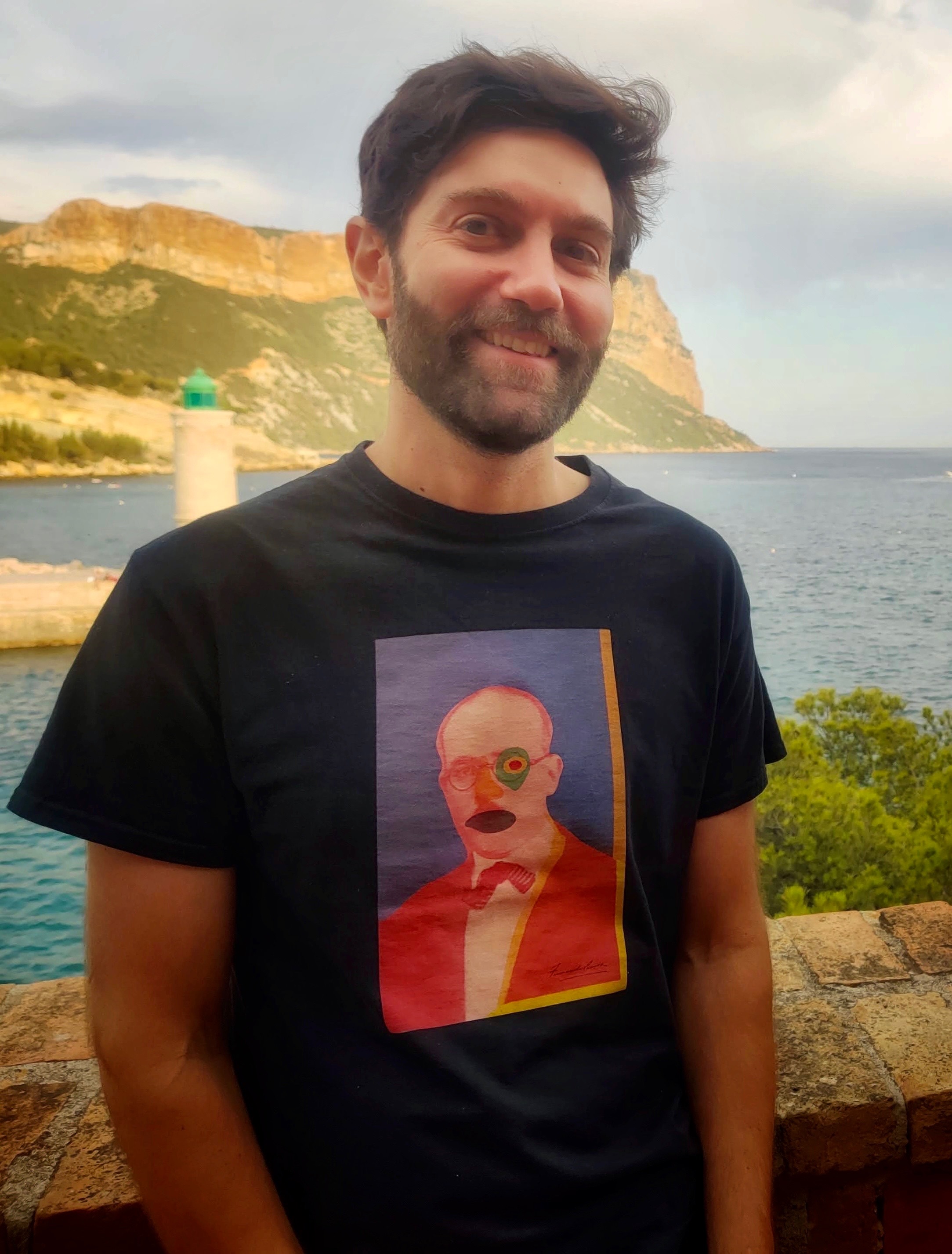
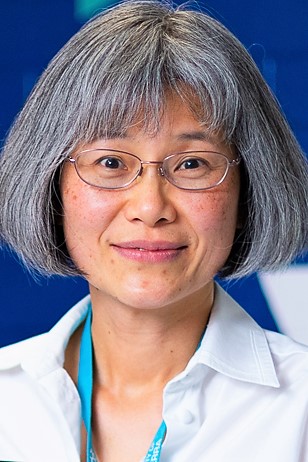
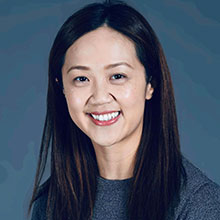
Mark Mayer is an Assistant Professor in the English Department at Skidmore College. He holds a B.A. from Brown University, an M.F.A. from the Iowa Writers’ Workshop, and a Ph.D. from the University of Denver. His office is located in Palamountain Hall 309. Education: B.A., Brown University M.F.A., Iowa Writers’ Workshop Ph.D., University of Denver Teaching & Research Interests: Mark specializes in fiction writing, narrative theory, and literary form. His work bridges practical writing techniques with theoretical explorations of storytelling structures. Publications: Notable publications include the 2025 guide About, Above, Around: 50 Prepositions and the 2019 short story collection Aerialists: Stories , reflecting his focus on language experimentation and narrative innovation. Scientific Awards: American Library in Paris Scholar of Note George Garrett Fiction Prize William Saroyan International Writing Award (shortlist) Michener-Copernicus Fellowship R. P. Dana Emerging Writer (Cornell College)
Ewa Ciszek-Kiliszewska is an Associate Professor at Adam Mickiewicz University in Poznań, affiliated with the Faculty of English and the Department of the History of English. She holds the academic title of Dr. hab. (D.Litt.) in English, awarded in 2019, and maintains an active research profile in historical linguistics with particular focus on Old and Middle English language structures. Her institutional contact is via Collegium Heliodori Święcicki, room 160, with the university email evac@amu.edu.pl and phone number (+48) 61 829 1030. Ewa Ciszek-Kiliszewska earned her academic credentials at Poznań institutions: MA in English (2002), Ph.D. in English (2005), and D.Litt. in English (2019). Her professional development includes specialized training such as the 'Effective Assessment of Learning Achievement' project led by Prof. Kristin Stang at California State University, Fullerton (2016), and multiple AMU Teaching Workshops on presentation techniques and institutional visits (2017-2018). Her research interests center on historical aspects of the English language, particularly Old and Middle English word formation, semantics, morphology, morphosyntax, lexis, and dialectology. She has made significant contributions to understanding grammaticalization processes, suffixal development, and prepositional systems in medieval English. Her scholarly work demonstrates deep engagement with corpus linguistics methodologies and historical textual analysis. Analysis of her publication record reveals consistent focus on Middle English linguistic structures, particularly prepositions, adverbs, and derivational morphology. Her research demonstrates methodological rigor through corpus-based analysis of Middle English texts, with particular attention to dialectal variation, semantic development, and grammaticalization processes. The temporal pattern shows sustained scholarly output from 2002 through 2018 across multiple prestigious journals in historical linguistics. Prime Minister's Award for Doctoral Dissertations (2006) Professor Ciszek-Kiliszewska has served as a peer reviewer for multiple academic journals including Medieval English Mirror, Token: A Journal of English Linguistics, Poznań Working Papers in Linguistics, Studia Anglica Posnaniensia, and Research in Language. She has held editorial positions as Guest Editor of Studia Anglica Posnaniensia (2014) and Assistant to the Editor for Medieval English Mirror (2004-). Her professional service includes membership on organizing committees for international conferences such as SELIM, Young Linguists' Meetings, and Medieval English Studies Symposia. Her scholarly activities extend to active participation in professional organizations including Societas Linguistica Europea and the Polish Association for the Study of English (PASE). She has presented research at numerous international conferences worldwide and delivered guest lectures at institutions including the University of La Coruña, University of Warsaw, and University Jaume I. Her research collaborations and academic engagements demonstrate strong international connections within the historical linguistics community.
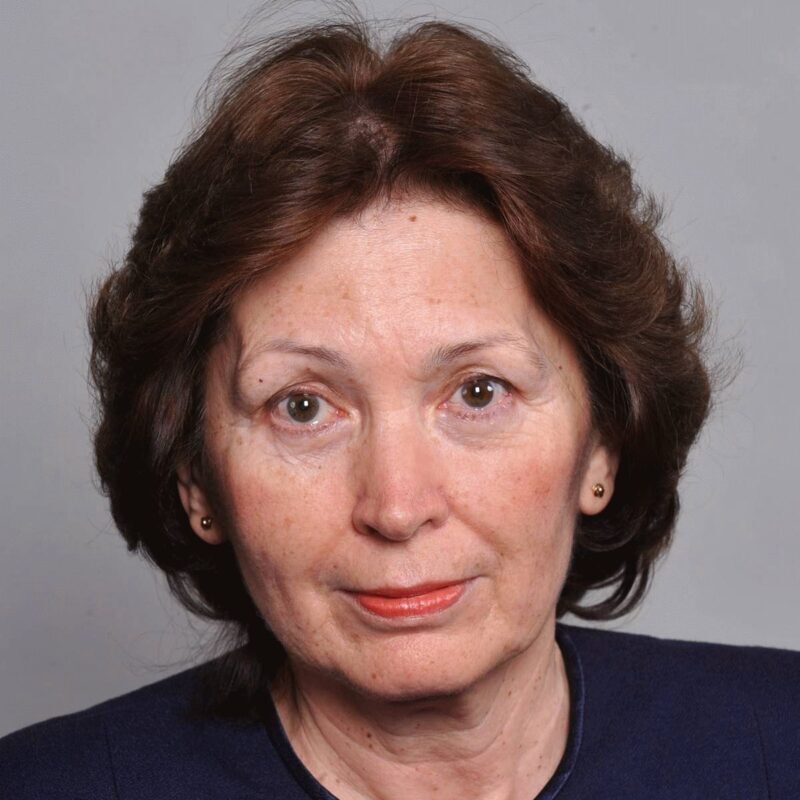
Katalin É. KISS is a Research Professor at the Institute for Historical and Uralic Linguistics at Eötvös Loránd University and a distinguished member of the Hungarian Academy of Sciences. Her academic career spans over five decades with extensive contributions to the field of linguistics, particularly in syntactic theory, diachronic syntax, and Uralic languages research. She maintains an active research profile with numerous publications appearing through 2025. Professor KISS's research interests encompass syntactic theory, diachronic syntax, the syntax of Hungarian and Uralic languages, the evolution of finite subordination in Uralic, information structure, and the emergence of structural focus positions in Old Hungarian. Her work bridges theoretical linguistics with historical language change, demonstrating how grammatical structures evolve across centuries. She has made significant contributions to understanding the relationship between word order, information structure, and grammaticalization processes in Hungarian and related languages. Her recent publications reveal a consistent focus on diachronic syntactic change, particularly examining Hungarian dialects (especially Moldavian Hungarian), Uralic language comparison, and grammaticalization phenomena. The pattern across her work shows a sophisticated integration of theoretical syntax with historical linguistics, often drawing connections between seemingly disparate phenomena in language change. Her research frequently addresses how language contact influences grammatical development, with particular attention to Balkan linguistic influences on Hungarian varieties. Member of the Hungarian Academy of Sciences Professor KISS has been instrumental in establishing the Diachronic and Comparative Syntax Research Group at the Institute for Historical and Uralic Linguistics. Her work has significantly shaped Hungarian linguistic scholarship, including co-authoring the influential New Hungarian Grammar with Ferenc Kiefer and Péter Siptár. She has supervised numerous academic projects focused on documenting endangered Uralic languages and analyzing historical Hungarian texts. Her research continues to explore the intricate relationships between syntax, information structure, and historical change across language families. Professor KISS maintains strong connections with international linguistic communities through the Uralic Information Centre and has extensive collaborations with scholars across Europe. Her laboratory work focuses on comparative syntactic analysis of Uralic languages, with particular emphasis on documenting grammatical structures in endangered varieties. Current projects include the Hanti database (KhDB) and continued investigation into the evolution of focus and topic marking in Hungarian historical stages.
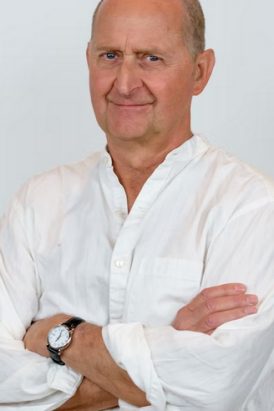
Jim Cogswell is an Arthur F. Thurnau Professor at the Stamps School of Art & Design at the University of Michigan, where he has been faculty since 1990. His artistic practice uses painting and drawing as foundational knowledge while exploring diverse media languages through interdisciplinary collaborations. His educational background includes an M.F.A. in Painting and Drawing from the University of New Mexico (1982) and a B.A. in English Literature from Rhodes College (1971). Born and raised in Japan, Cogswell's work reflects his international perspective and literary background. Cogswell's research interests focus on sequence and pattern as cognitive triggers, exploring how humans translate perception into meaning. He develops anthropomorphic alphabets as generative systems for visual narratives, drawing from brain maps, astronomical models, and archaeological artifacts. His work investigates the mystery of human cognition and our relationship with the unexplained. An analysis of his recent artistic output reveals a consistent exploration of interdisciplinary connections, particularly between art, science, and language. His installations frequently transform architectural spaces through vinyl window works, while maintaining a strong foundation in painting and drawing techniques. The evolution from individual paintings to large-scale environmental installations demonstrates his growing interest in audience interaction and spatial experience. His significant recognition includes: Arthur F. Thurnau Professor (2008) Senior Fellow in the Michigan Society of Fellows (2014) Michigan Arts Award (2000) Charles P. Brauer Faculty Fellow at U-M Institute for the Humanities (1992-93) Cogswell has received numerous grants from the Office of the Vice-President for Research and the Horace P. Rackham School of Graduate Studies. His interdisciplinary approach has led to collaborations with cosmologists, astronomers, poets, dancers, and engineers, resulting in innovative projects like Jeweled Net of the Vast Invisible which visualized dark matter. He has lectured internationally at universities and conferences across six continents. His creative practice operates through multiple interconnected teams including collaborations with the Kelsey Museum of Archaeology, University of Michigan Museum of Art, and international partners like the Michael Cacoyannis Foundation in Athens. His studio practice integrates traditional painting techniques with digital technologies and scientific data visualization.
Chengzhi Chu is an Associate Professor of Chinese and Senior Program Advisor (Chinese) at the University of California, Davis. He is affiliated with the Graduate Group in Linguistics and holds a Ph.D. from the University of Hawaii. His research focuses on Chinese linguistics, cognitive semantics, second language acquisition, and the application of technology in language instruction. He has authored/co-authored multiple textbooks, including the Chinese Breeze graded reader series, and developed the ChineseTA software for language teaching materials. His work integrates theoretical linguistics with practical pedagogy, emphasizing cognitive approaches to language structure and learning. Dr. Chu's research explores topics such as motion event semantics, figure-ground relationships in Chinese, and the design of effective language-teaching resources. He has published extensively on prepositions, reflexives, and mood particles in Mandarin, as well as the historical interplay between Chinese script and language. Notably, he co-developed the Corpus of Chinese Interlanguage (CCI 1.0), a foundational resource for studying learner language. His teaching spans advanced Chinese language courses, classical Chinese, and research methodologies. He has contributed to edited volumes on Chinese pedagogy and instructional materials. While no formal awards are listed, his impactful contributions to applied linguistics and language education are evident through his scholarly output and educational tools. As an advisor to graduate students, Dr. Chu supports research in linguistics and language education. His work bridges computational linguistics with traditional language studies, exemplified by software like ChineseTA and his corpus-based research. He is actively involved in the North American Conference on Chinese Linguistics and other academic networks.
Rev. Andrzej Piwowar is a Professor at the Department of Exegesis of the Historical, Prophetic and Sapiential Books within the Faculty of Theology of the John Paul II Catholic University of Lublin. His academic journey includes foundational studies in philosophy and theology at the Higher Theological Seminary of the Warmian Metropolis Hosianum (1989–1995), specialized biblical training at the Pontifical Biblical Institute in Rome (Bachelor of Biblical Sciences, 2001), and a doctorate in Biblical Theology from the Pontifical Gregorian University (2006). He earned habilitation in 2017 and was promoted to full professor in 2021. His research centers on Biblical Greek linguistics and wisdom literature of the Old Testament , particularly the Book of Sirach. He explores themes like divine justice, medical ethics in antiquity, cosmic theology, and syntactic structures of Biblical Greek. His recent publications demonstrate a strong focus on interdisciplinary analysis of wisdom texts, merging philology, theology, and cultural history. Professor Piwowar has received multiple Rector's Awards for scholarly excellence: a Third Degree Award (2011) for textbook authorship and organizational leadership; a Second Degree Award (2018) for his Greek syntax manual; a Third Degree Award (2020) for science popularization; and a First Degree Award (2022) for original research contributions. He holds editorial roles in several academic journals, including The Biblical Annals and Verbum Vitae , and participates in faculty committees overseeing curriculum development and research quality.
Dr. Stephen Fafulas is Associate Professor of Spanish and Linguistics in the Department of Modern Languages at the University of Mississippi. He serves as Director of the Study of Communities, Involvement & Outreach and Linguistics (SoCIOLing) Lab, which collaborates with scholars, trains students, and raises awareness about cultural and linguistic diversity across bilingual zones of the Americas. Dr. Fafulas holds a PhD in Hispanic Linguistics from Indiana University with a specialization in the intersection of Second Language Acquisition and Sociolinguistics. His educational background has prepared him for extensive research in language variation, contact linguistics, and bilingual communities. Dr. Fafulas's research incorporates current theories and methodologies in Sociolinguistics and Second Language Acquisition to examine morpho-syntactic and phonetic variation in native, learner, and contact varieties of language. He employs quantitative methods to uncover the social, linguistic, and cognitive factors that shape languages at individual and societal levels. His fieldwork spans various speech communities throughout the Americas and Europe, with particular focus on language shift and bilingualism in distinct settings, including investigations of the ethnolinguistic vitality of minority languages in the Amazon (Bora, Yagua and Ocaina) as well as Spanish in the USA. Dr. Fafulas's scholarly work demonstrates a consistent focus on language variation in contact situations, with particular attention to Amazonian Spanish varieties, Southern US Spanish dialects, and second language acquisition phenomena. His research bridges theoretical linguistics with community engagement, documenting emerging language varieties while addressing practical needs of bilingual communities. Dr. Fafulas has received notable recognition for his work, including: University of Mississippi's inaugural Faculty Laureate program Fulbright award to Spain (2022) Graduation from the Engagement and Outreach Scholars Academy at East Carolina University Dr. Fafulas is dedicated to cross-disciplinary scholarship that integrates community stakeholders in project design. He has secured funding from prestigious agencies including the National Science Foundation, Fulbright, and the National Endowment for the Humanities. As Director of the SoCIOLing Lab, he mentors undergraduate and graduate students, leading research initiatives with bilingual communities globally. He also co-founded the SEC Spanish Consortium, which promotes cross-disciplinary scholarship and cross-institutional collaborations aimed at documenting diversity among Latinx communities in the U.S. South. Through the SoCIOLing Lab, Dr. Fafulas collaborates with scholars across disciplines and institutions to document linguistic diversity in bilingual communities. His lab provides research opportunities for students and serves as a hub for community engagement, particularly focused on Latinx populations in the U.S. South. Current initiatives include documenting Latinx populations in Mississippi through oral histories, student mentoring, and bilingual education initiatives.
Henrik Ågren is a Professor at the Department of History, Uppsala University, specializing in Early Modern Cultural and Social History. He has held various academic positions across Swedish institutions, including Senior Lecturer roles at Gävle University (2000-2012), Uppsala University (2014-2015), and Linköping University (2012-2014), where he was also a Visiting Professor in 2014. His current work focuses on the historiography of Scandinavian saint kings in Protestant contexts, alongside broader themes of social stratification and the evolution of historical methodology. PhD in History (1998) Docent at Uppsala University (2011) Director of Studies, second cycle (2018-2020) Head of Department of History (2020-2023) Henrik Ågren's research examines the intersection of cultural practices and social order in Early Modern Sweden, particularly the role of titles in stratification and the shifting perception of saints like St. Erik within national identity. His recent publications analyze the political and religious symbolism of historical figures, alongside methodological debates in historiography. Key article trends include: Analysis of social hierarchy through title systems (17th-18th centuries) Evolution of saint veneration in Protestant Sweden Historiographical critiques of national identity Digital humanities and methodological innovation Comparative studies of Scandinavian and Nordic history writing Interdisciplinary approaches to cultural and political history Henrik Ågren actively contributes to academic discourse through editorial work and conference participation, though no formal scientific awards are documented in his profile.
Assoc. Prof. Irina Georgieva, PhD is an academic at New Bulgarian University , specializing in Modern Russian Language , Intercultural Communication , and Linguistic Worldview . She teaches courses such as Russian for Business , Intercultural Communication , and Practical Russian at the undergraduate level. PhD in Slavic Languages (Modern Russian) from Sofia University (2003) Master's in Russian Philology from Moscow State Pedagogical University (1987) Her research focuses on temporal structures in Russian and Bulgarian, including prepositional semantics , linguistic models of time , and cultural semiotics . She has authored over 36 publications, including monographs and conference proceedings, exploring topics like daily time cycles and intercultural communication . Recent publications highlight her expertise in comparative linguistics and cognitive linguistics , with a focus on daily time perception and cultural metaphors in Slavic languages. Georgieva has participated in international research projects, including studies on Russian language acquisition through karaoke and collaborative programs with Moscow State Linguistic University. She serves as Deputy Chairman of the Sofia Society of Russian Scholars in Bulgaria and has presented at European universities under the Erasmus+ program.
Mark Tutton is a Senior Lecturer in French and Francophone Studies at the School of International Studies and Education, University of Technology Sydney. With dual Australian and French citizenship, he coordinates the French language and culture program and has extensive experience in linguistics education across Australia and France since 2004. PhD in Linguistics (University of New South Wales, 2010) Graduate Diploma of Teaching and Learning (University of Southern Queensland, 2018) MA in Linguistics (University of Lille, 2005) MèsL (BA equivalent) in Linguistics (Sorbonne Nouvelle, 2004) BA in Communication and International Studies (UTS, 2001) His research focuses on spatial language and multimodal communication, particularly comparing English and French locative expressions through gestural and cognitive frameworks. Recent work explores foreign language anxiety in online learning environments and the impact of AI on language pedagogy. Articles span topics in spatial semantics, English-French contrastive linguistics, and technology-enhanced language learning. Key themes include metaphorical resource conceptualization, prospective location in motion verbs, and static/motion-framed locative expressions. Mark teaches French language and culture at all levels (A1-C1 ECFR) while advocating for concrete, relatable explanations of abstract linguistic concepts to enhance student learning experiences.
Bryan Koronkiewicz serves as Associate Professor of Spanish Linguistics within the Department of Modern Languages & Classics at the University of Alabama. His academic profile bridges theoretical linguistics and practical language education with specialized expertise in bilingual speech phenomena. His educational trajectory includes: PhD in Hispanic Studies (Linguistics), University of Illinois at Chicago (2014) MA in Hispanic Studies (Linguistics), University of Illinois at Chicago (2010) BA in Spanish / Communication Arts, University of Wisconsin-Madison Dr. Koronkiewicz's research centers on Spanish-English code-switching through experimental and quantitative lenses, examining syntactic constraints in heritage speakers' language production. His work interrogates phenomena like preposition stranding, adverb placement, and inalienable possession while addressing methodological challenges in bilingualism research. This interdisciplinary approach connects theoretical syntax with second language acquisition and heritage language pedagogy, emphasizing empirical validation of linguistic constraints. Analysis of his 13 publications (2013-2023) reveals consistent focus on experimental code-switching research using acceptability judgments and corpus methods. Key trends include systematic investigation of syntactic boundaries in bilingual speech, methodological innovations in data collection, and expansion into language pedagogy through studies of social media integration and writing assessment. His work demonstrates strong alignment with contemporary debates in bilingual syntax while maintaining practical relevance for heritage language education. No scientific awards or fellowships were documented in the source material. Dr. Koronkiewicz teaches across the curriculum from first-year language courses to graduate seminars in bilingualism, syntax, and second language teaching methods. While departmental highlights reference French PhD students (Awodirepo, Lambon, Dafong), no specific advisees in Spanish linguistics are identified. The text contains no mention of grant funding or research team leadership. No dedicated laboratories or research collectives are associated with his profile in the available documentation.
Dr. Keith Atkinson serves as an Honorary Associate Professor in the School of Languages and Cultures at the University of Queensland, where he maintains an active scholarly presence despite his honorary status. His career spans over five decades with continuous contributions to medieval studies, specializing in the transmission and interpretation of Boethius's philosophical works through vernacular lenses. His research centers on Medieval French Literature and Romance Philology, with deep expertise in Boethius's Consolatio Philosophiae and its medieval French translations. He examines linguistic structures of Old French, manuscript traditions, and cultural adaptations of classical texts, particularly focusing on how medieval translators navigated philosophical concepts through regional vernaculars like Walloon. His work bridges philological precision with literary analysis to reconstruct intellectual history. Analysis of his 15 most recent publications (2002-2017) reveals persistent engagement with Boethian scholarship, demonstrating evolving methodologies from textual criticism to linguistic analysis. His research trajectory shows increasing attention to regional variations (especially Walloon translations), manuscript materiality, and the interplay between Latin philosophical frameworks and vernacular poetic expression in medieval France.
Dr. Jinny K. Choi is an Associate Professor of Spanish and Spanish Linguistics at the University of Texas at Arlington (UTA), where she has served since 1998. She holds a Ph.D. in Spanish Linguistics from Georgetown University and an M.A. in Hispanic Linguistics from the University of California, Irvine. Her research focuses on sociolinguistics, bilingualism, language and identity, and Spanish dialectology, with a particular emphasis on transnational communities in South America and the U.S. Dr. Choi’s academic journey includes roles such as Spanish Section Head (2008–2011) and coordinator of language programs at Georgetown University. She has advised numerous graduate students and contributed to curriculum development, including co-authoring an open-access textbook for Spanish heritage learners. Her work explores topics like Korean communities in Paraguay and Argentina, language contact phenomena, and the sociopolitical dimensions of bilingual education. She has received multiple awards, including grants from the Mellon Foundation and UTA’s College of Liberal Arts. Dr. Choi actively participates in academic service, serving on committees for research, curriculum, and faculty governance. She is also involved in community initiatives, such as refugee support and educational outreach. Her teaching spans advanced Spanish language courses, linguistics, and dialectology. She regularly presents at international conferences, addressing themes like language attitudes, diaspora identity, and bilingualism in multilingual societies.
Dr. Siew Imm Tan is a Senior Lecturer and Academic Program Director (TNE) in the Faculty of Education at the University of Canberra. She holds a PhD in Linguistics from the University of Hong Kong, alongside MA and BA (Hons) degrees from Universiti Sains Malaysia. Her research focuses on contact linguistics, world Englishes, corpus linguistics, and second-language acquisition. Dr. Tan has taught in Australia, Singapore, Hong Kong, Malaysia, and China, specializing in linguistics, applied linguistics, teacher education, and intercultural communication. She is the author of Malaysian English: Language Contact and Change (2013) and has pioneered corpus-based studies on Malaysian English and Aboriginal English literature. Currently, she analyzes the 1.9-billion-word GloWbE corpus to trace Chinese linguistic influences on global English. Research highlights include compiling the first Malaysian English corpus and studying Aboriginal worldviews through literature. Recipient of the 2022 Citation for Outstanding Contributions to Student Learning and a National Institute of Education Start-up Grant. Her work bridges sociolinguistics with applied corpus methods, emphasizing language contact, cultural conceptualizations, and global English variation.
Dr Ivy Wong serves as a Bowland Research Fellow at the Department of Education, University of York, while concurrently holding an Assistant Professor position at Hong Kong Shue Yan University (currently on sabbatical). Her research program centers on second language acquisition, specifically investigating how cognitive linguistics-inspired instruction enhances grammar learning through innovative digital tools and pedagogical frameworks. Her academic credentials include: PhD in Applied English Linguistics, The Chinese University of Hong Kong (2015-2018) MPhil in Applied English Linguistics, The Chinese University of Hong Kong (2013-2015) BA in English, The Chinese University of Hong Kong (2011-2013) Dr Wong's research bridges cognitive theory with practical language pedagogy, specializing in concept-driven grammar instruction for challenging structures like prepositions and conditionals. She pioneers computer-assisted methodologies using animated schematic diagrams and Bayesian statistical modeling to analyze individual learning trajectories. Her work emphasizes open science practices, with research materials publicly accessible via Gorilla platform. Recent publications reveal a methodological evolution toward Bayesian approaches in replication studies and neurocognitive investigations, while maintaining consistent focus on translating theoretical linguistics into classroom applications. Key themes include technology-enhanced grammar instruction, cross-linguistic influences on L2 acquisition, and evidence-based material development. Her scholarly recognition includes: Bowland Research Fellowship (2023-2025) Fulbright Visiting Scholar award (2017-2018) Dr Wong has secured substantial research funding including the SCOLAR Language Fund (£110,203; 2021-2023) for developing the English Preposition Tutor and the Bowland Fellowship for her current conditional acquisition project. Her teaching portfolio spans undergraduate modules in Psycholinguistics and Second Language Acquisition to postgraduate courses in Cognitive Linguistics, demonstrating comprehensive mentorship across academic levels. She actively contributes to the Centre for Advanced Studies in Language and Education (CASLE) at York, collaborating on interdisciplinary projects that integrate computational methods with language education research.