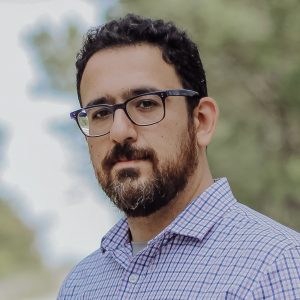
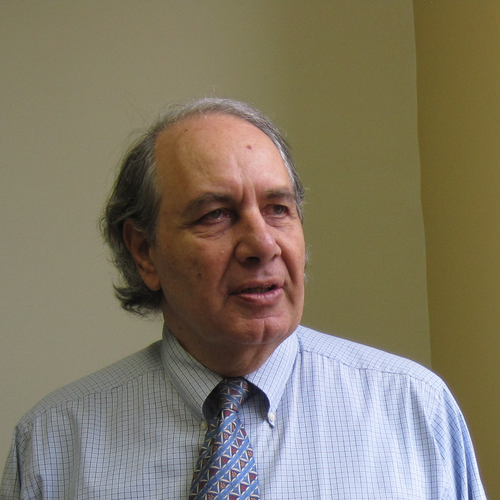
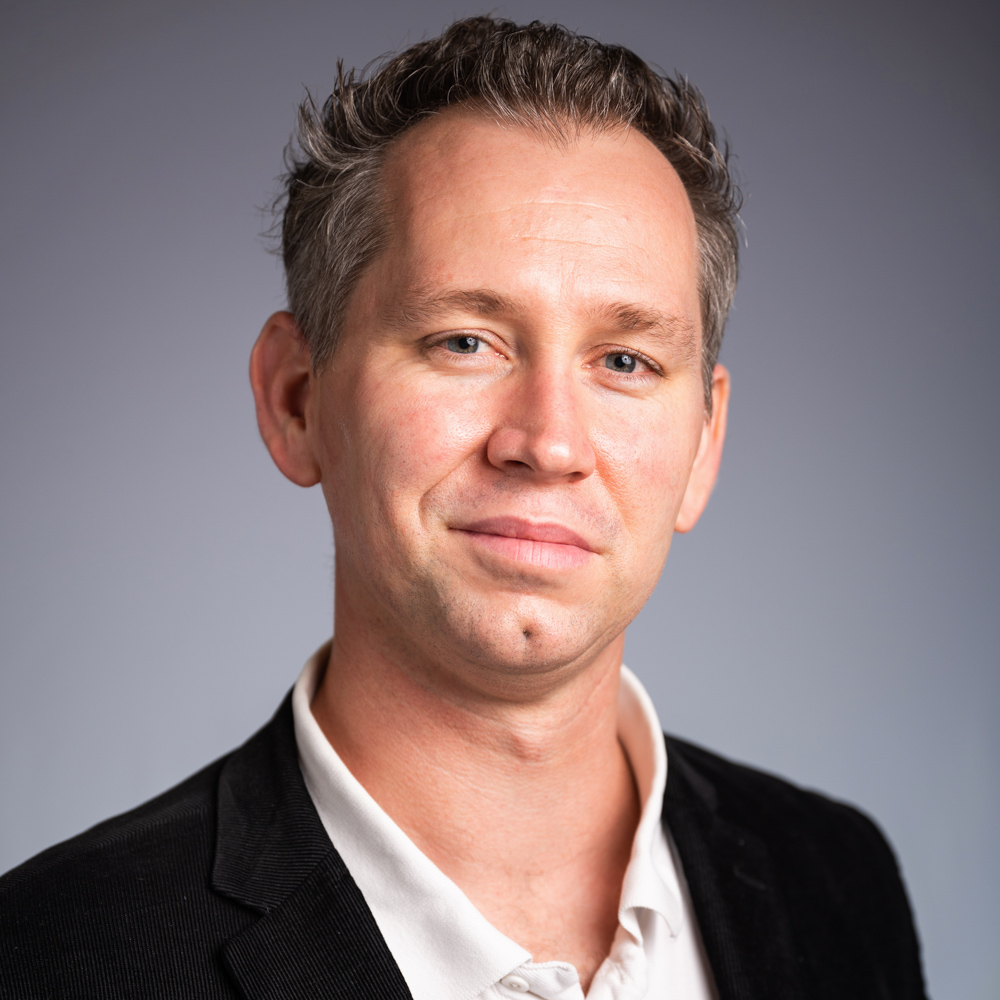
Ali Karjoo-Ravary is the Richard W. Bulliet Assistant Professor of Islamic History at Columbia University, specializing in the intellectual, social, and visual histories of premodern Islam through Arabic, Persian, and Turkic sources. His research intersects historical writing, cosmology, Sufism, and multilingual poetry in the Islamic East (Mashriq). Education: Ph.D., University of Pennsylvania (2018) M.A., University of Pennsylvania (2016) B.A., SUNY Stony Brook (2011) His current book project, Muhammad’s Song: Politics, Performance, and Cosmology in the Fourteenth Century , examines post-Mongol Islamic monarchy through Kadi Burhaneddin's life and rule. He also explores Sufi visual iconography, science fiction's relationship to religion, and architecture's role in evolving Islamic discourses. Scientific Awards and Fellowships: Bard Graduate Center Visiting Fellow (Fall 2020) Wolf Humanities Center Graduate Research Fellow (2016-2017)
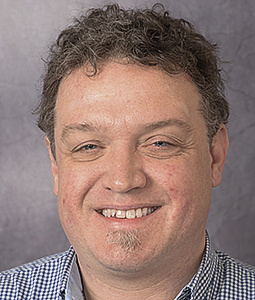
Noah D. Gardiner serves as Associate Professor and Director of Undergraduate Studies in the Department of Religious Studies at the University of South Carolina's College of Arts and Sciences. His academic journey includes a Ph.D. in Near Eastern Studies from the University of Michigan (2014), followed by positions as Lecturer in Islamic Studies at Michigan and a postdoctoral fellowship at Annemarie Schimmel Kolleg, Rheinische Friedrich-Wilhelms Universität Bonn. Gardiner's scholarly focus centers on Islamic thought and culture with particular emphasis on Sufism, esotericism, occult sciences, and manuscript culture in the 12th-15th century Arabic-speaking Mediterranean. His research explores the 'science of letters and names' (ʿilm al-huruf wa-al-asmaʾ), religious cosmology, and apocalypticism, examining how mystical ideas move between religious margins and centers. His work reveals significant connections between Islamic occult traditions and other esoteric systems like Jewish Kabbalah. His extensive publication record includes the monograph Ibn Khaldūn versus the Occultists at Barqūq's Court (2020), co-editing the special issue Islamicate Occultism: New Perspectives (2017), and numerous articles in leading journals. His current research focuses on the 13th-century Sufi occultist Aḥmad al-Būnī and the broader occult renaissance in 14th-15th century Cairo. Gardiner actively contributes to the scholarly community through his role as co-organizer of the international online workshop 'Islamic Occult Studies on the Rise' and administrator of the scholarly resource site islamicoccult.org, which showcases emerging scholarship in Islamic esotericism. He teaches courses spanning foundational religion studies to specialized topics including Islam, Qur'an, Hadith, Islamic Theology, Sufism, and Religion and the Fantastic.
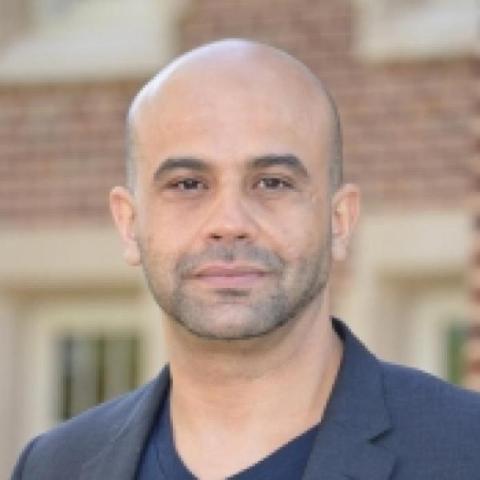
Nizar F. Hermes serves as Associate Professor and Department Chair in the Department of Middle Eastern and South Asian Studies at the University of Virginia, concurrently holding the position of Director of Graduate Studies. His office is located in 141 New Cabell Hall, with Spring 2025 office hours held Tuesdays from 12:00-3:00 PM. He maintains dual professional email contacts through the university system. His academic foundation includes: PhD in Comparative Literature, University of Toronto Dr. Hermes' research program centers on North African and Mediterranean literary traditions, with deep specialization in premodern Arabic-Islamic cultural production. His work investigates poetic representations of urban spaces, cross-cultural encounters between the Islamic world and Europe, and the transmission of literary heritage across the Mediterranean. Particular attention is given to Maghribī poetic imagination, elegiac traditions, and the intersection of literature with food history and refugee experiences. His methodological approach combines close textual analysis with historical contextualization to reveal continuities in Arab literary consciousness. Analysis of his recent publications (2014-2025) reveals three dominant scholarly trajectories: 1) The literary reconstruction of North African cities through poetic elegies, 2) Cross-cultural encounters documented in Arabic travel literature and folk poetry, and 3) The representation of European 'others' in medieval Arabic texts. His 2024 monograph 'Of Lost Cities' synthesizes these threads while his edited volume 'The City in Arabic Literature' (2018) establishes foundational frameworks for urban studies in Arabic literary criticism. No scientific awards or fellowships were documented in the source materials. While his role as Director of Graduate Studies indicates active mentorship responsibilities, specific student advisees and grant funding details were not provided in the available documentation. His scholarly output demonstrates sustained engagement with graduate education through publications on teaching methodologies for Arabic humanistic literature. No dedicated research laboratories or formal collaborative teams were referenced, though his co-edited volumes and multi-author publications suggest active participation in scholarly communities focused on Mediterranean studies and comparative literature.
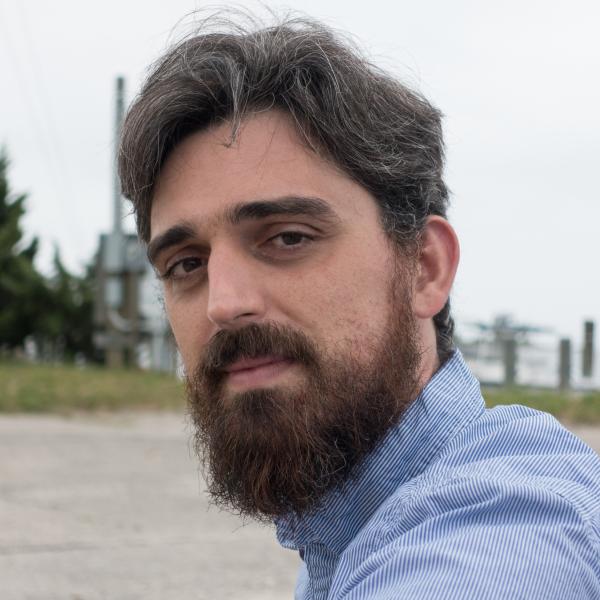
Thibaut d’Hubert is an Associate Professor at the University of Chicago in the Department of South Asian Languages & Civilizations . His research focuses on Middle Bengali poetry and Indo-Persian literature , with an emphasis on textual criticism, literary hermeneutics, and multilingualism in premodern South and Southeast Asia. Specializes in Bengali-Persianate literary interactions Co-organizer of Middle Bengali language/literature retreats Recipient of Zukunftsphilologie fellowship (2013-14) His monograph In the Shade of the Golden Palace (2018) examines Middle Bengali poet Ālāol’s translation practices, while Meaningful Rituals (2022) explores Persian-Arabic-Bengali multilingualism through the Nūrnāma tradition. Current projects include critical editions of Ālāol’s epic Saẏphulmuluk Badiujjāmāl (supported by NEH grant) and annotated translations of Persian ghazals. Supervises students in premodern South Asian literature Teaches courses on Bengali/Sanskrit/Persian literatures Works on musicology and text performance His research interests span: Perso-Arabic poetics in Bengal History of literary multilingualism Sufi and Gauḍīẏa Vaiṣṇava literature Cultural interactions between South/Southeast Asia Traditional philology and scribal practices Didactic/ritual uses of Persian texts in rural Bengal Key scientific awards : Zukunftsphilologie fellowship (2013-14) NEH Scholarly Editions and Translations grant
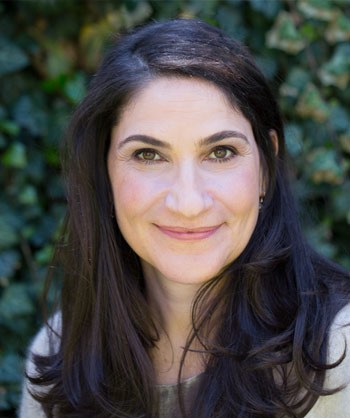
Dana Sajdi is an Associate Professor of History at Boston College, affiliated with the Morrissey College of Arts and Sciences. She holds a B.A. from the American University in Cairo and a Ph.D. from Columbia University. Her research focuses on premodern social and cultural history of the Arabic-speaking Eastern Mediterranean, with a current project, In Defense of Damascus , exploring the city’s history through local descriptions from the 12th to 20th centuries. She pioneered the Podcasting the Ottomans course, establishing a History Department Pod Studio, enabling undergraduates to produce scholarly podcasts. This initiative has been featured on the Ottoman History Podcast. Her work bridges academia and public engagement, emphasizing interdisciplinary approaches to history. Key publications include analyses of Syrian sacred landscapes (2022), responses to historical theory (2021), and studies on Ottoman Levant literacy and urban life (2020). Her scholarship integrates textual analysis, spatial history, and cultural critique, reflecting her commitment to innovative historical methodologies.
Nabil Matar is a Professor at the University of Minnesota, holding the Presidential Professorship in the President’s Interdisciplinary Initiative on Arts and Humanities and the Samuel Russell Chair in the Humanities. He teaches in both the English and History departments and contributes to the Religious Studies Program. Educated at the American University of Beirut (B.A., M.A.) and Cambridge University (Ph.D., 1976) Former Department Head at Florida Institute of Technology (1997-2007) Recipient of postdoctoral grants from the British Council and Fulbright His research focuses on early modern Euro-Islamic interactions , particularly examining Arab-European travel literature, captivity narratives, and religious exchanges. He has authored a foundational trilogy on Islam in Britain and comparative studies on Mediterranean encounters. Key publication trends include Anglo-Ottoman relations , cross-cultural identity formation , and premodern globalization , with works spanning from 1998 to 2018. His scholarship bridges religious studies , literary analysis , and cultural history . Building Bridges award (University of Cambridge, 2012) Kuwait Foundation for the Advancement of Sciences Award (2017) Matar has secured major grants including a National Endowment for the Humanities Conference on 'Shared Cultural Spaces' and has contributed to curricular development in religious and interdisciplinary studies.
Marina Rustow is the Khedouri A. Zilkha Professor of Jewish Civilization in the Near East and Professor of History at Princeton University. She serves as Director of the Princeton Geniza Project , focusing on medieval Middle Eastern history through documentary sources, particularly the Cairo Geniza . Her work bridges Islamic law , Jewish history , and material culture . Education : BA in Literature, Yale College PhD in History, Columbia University (advisor: Yosef Hayim Yerushalmi) Her research explores how medieval Jewish communities in Egypt and Syria navigated state power, social cohesion, and religious identity. She has pioneered the study of Fatimid state documents preserved in the Geniza, challenging assumptions about premodern Islamic archival practices. Her books include The Lost Archive (2020) and Heresy and the Politics of Community (2008). Recent projects include editing and translating Indian Ocean trade documents from the Geniza (2024 NEH grant). Her publications span Islamic legal documents , geniza fragment analysis , and medieval Jewish-Muslim interactions . Scientific Awards : MacArthur Fellowship (2015) Guggenheim Fellowship (2014) Rome Prize (2006-7) NEH and ACLS grants She advises PhD students in medieval Middle Eastern and Jewish history , emphasizing collaborative learning in Princeton’s Geniza Lab. Her work also intersects with digital humanities and manuscript studies .
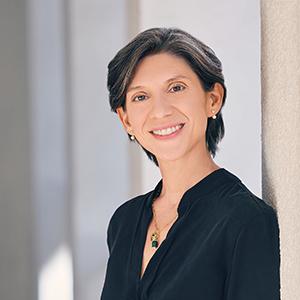
Ayesha Ramachandran is an Associate Professor of Comparative Literature at Yale University, specializing in early modern European literature and cultural history. Her research examines transnational encounters, globalization, and the interplay between literature, science, and visual culture. She holds affiliations with the Faculty of Arts and Sciences and actively participates in interdisciplinary initiatives. Her first major work, The Worldmakers (2015), won prestigious awards including the MLA Scaglione Prize and the Sixteenth Century Studies Association’s Founder’s Prize. Current projects explore lyric form’s role in shaping selfhood and modernity, bridging early modern and modernist writing. Supported by a Mellon New Directions Fellowship (2016), she expands her work into Persian and South Asian materials. Teaching spans comparative literature, maps in literary imagination, skepticism, and race/class/gender studies. Notable courses include co-taught seminars on modernities and critical theory. Recognized with the Poorvu Family Award for Interdisciplinary Teaching (2016), she emphasizes collaborative and visually engaged pedagogy. Her scholarship integrates global perspectives, with recent publications addressing African and Asian influences on Renaissance studies, lyric poetry’s philosophical dimensions, and early modern epistemologies. Awards reflect her impact on comparative literature, while her Mellon-funded research highlights methodological innovation.
University of California , Santa Barbara (UCSB)United States
Heather Badamo is an Associate Professor of Art History at the University of California, Santa Barbara (UCSB), affiliated with the College of Letters and Science. Her research focuses on Byzantine and East Christian arts, Coptic art, and Mediterranean studies during the Global Middle Ages. She explores intersections between Christian and Islamic visual cultures, particularly object circulation in the eastern Mediterranean, and examines how artistic forms and beliefs evolved in multi-faith contexts. Education: Ph.D. in Art History, University of Michigan (2011) B.A., Lafayette College Her work investigates premodern globalism, violence's impact on visual culture, and strategies for communal identity through art. She has conducted fieldwork in Egypt, Lebanon, Syria, Georgia, and Turkey. Notable projects include a 2005–2006 conservation project with the American Research Center in Egypt and the Coptic Museum in Cairo. Current research explores the 'Coptic Arabic Renaissance' and how sacred arts sustained the Coptic Church under Islamic rule. Funding & Support: Getty Research Institute Fulbright Foundation American Research Center in Egypt Metropolitan Museum of Art Dumbarton Oaks Research Library Publications: Includes Saint George Between Empires (2023) and contributions to The Medieval Globe and RES: Journal of Anthropology and Aesthetics . She also engages in public scholarship via Smarthistory.
Raissa von Doetinchem de Rande is an Assistant Professor of Religious Ethics and Islamic Studies at the University of Chicago, affiliated with the College. She is also an Affiliated Faculty member at the Center for Middle Eastern Studies and the MacLean Center for Biomedical Ethics at the Pritzker School of Medicine. PhD in Religion, Princeton University (2021) BA, University of Oxford (2012) MAR, Yale Divinity School (2014) Her research focuses on premodern Islamic ethical and political thought, particularly the Qurʾanic concept of human nature and its reception in early Islamic philosophy. She explores methodological questions in comparative religious ethics and Islamic studies, with additional interests in Christianity, medieval history, and science and medicine of the first millennium. Professor de Rande authored the book The Politics of Islamic Ethics: Human Nature and Hierarchy in the Philosophical Tradition (Cambridge University Press, 2025). She is currently working on a project examining the ethical, political, and religious thought of al-Fārābī (d. 950). She serves as President of the Society for the Study of Muslim Ethics (SSME) and has published in journals such as Arabic Sciences and Philosophy , The Journal of Religious Ethics , and The Journal of the Royal Asiatic Society .
Anna Ayse Akasoy is a Professor at the City University of New York (CUNY) Graduate Center, affiliated with the Comparative Literature, History, Liberal Studies, Medieval Studies, Middle Eastern Studies, and Global Early Modern Studies departments. She holds an M.A. and Ph.D. from Johann Wolfgang Goethe-University, Frankfurt. Her research focuses on Islamic intellectual history History of philosophy and science History of falconry and veterinary medicine Cultural and religious contacts Entangled and global history Akasoys work bridges disciplines such as ethics, epistemology, and cultural history, with a particular emphasis on cross-cultural exchanges between the Islamicate world and other regions. Her recent projects include a cultural history of falconry in the Middle East, Muslim-Buddhist contacts, and philosophical narratives of decision-making in the Islamic world. She has published extensively on medieval Islamicate literature, philosophy, and intellectual history, contributing to edited volumes and journals. Her collaborations with scholars like Charles Burnett and Ronit Yoeli-Tlalim highlight her interdisciplinary approach to historical and cultural studies.
Dr. Alexandra Montero Peters is an Assistant Professor in the Department of History at Texas State University, specializing in medieval Mediterranean intellectual exchange between Iberia, North Africa, and the Near East. Her work examines how textual and intellectual traditions traversed religious, cultural, and racial boundaries through Arabic and Castilian manuscripts. She will join Northwestern University in Fall 2025. Previously, she taught at Bowdoin College. Education: Ph.D. in Medieval History, University of Chicago (2022) M.A. in Medieval History, University of Chicago B.A. in Medieval Studies and History, University of Chicago Research focuses on Alfonso X el Sabio's 13th-century Libro de los Juegos , medieval race-craft, and interfaith intellectual networks. She investigates how Castilian rulers used representations of Black peoples and Mongols in art to articulate political power. Her current book project explores Alfonso X's engagement with Islamic traditions. Publications emphasize manuscripts as sites of cross-cultural dialogue. Recent works include a Brill chapter reinterpreting Mongol depictions in the Libro de los Juegos and an article on Blackness in Alfonsine art, both forthcoming in 2024. Her research is supported by AAUW, Erasmus+, SSRC-Mellon Mays, and Mellon Mays Fellowships. Teaching includes courses on medieval race, Spanish history of three religions, and reframing medieval power. She has presented at prestigious venues like the Medieval Academy of America (2025) and the Society for the Medieval Mediterranean (2024).
Rama Alhabian is an Assistant Professor of Arabic at Hamilton College, specializing in modern and medieval Arabic literature with interdisciplinary connections to postcolonial studies and Islamicate world literatures . Her research bridges medievalist and postcolonial methodologies to re-examine Arabic literary histories through transnational frameworks. Teaches courses in geopoetics, petrocriticism, postcolonial modernity, and Indian Ocean literary archives Focuses on transcending nationalist paradigms through literature and arts Expertise in multilingual Islamicate languages: Judaeo-Arabic, Hebrew, Swahili Research Themes explore intersections of: 19th-century Arabic maqamat within global literary comparison Colonial modernity and oil's cultural impact ('Petrofictions') Island studies and maritime literary networks Translation theory and genre evolution Recent Publications analyze sensory history, translingual poetics, and textual criticism of foundational Arabic works. She has received multiple grants including the Andrew Mellon Fellowship and President's Travel Fund for her scholarly activities. Awards & Recognitions: John R. Hatch Excellence in Teaching Award (2023) Dean of Faculty Work in Progress Grant (2023) School of Criticism and Theory Fellowship (2015) Kathryn Davis Fellowship for Peace (2014) Actively involved in institutional committees including the Student Fellowships Committee and Language Center Advisory Committee. Professional memberships span Modern Language Association and Middle East Studies Association.
Matthew Thomas Miller is an Assistant Professor of Persian Literature and Digital Humanities at the Roshan Institute for Persian Studies, University of Maryland, College Park. He serves as Director of the Roshan Initiative in Persian Digital Humanities (PersDig@UMD) and co-PI for the Open Islamicate Texts Initiative (OpenITI) and the Persian Manuscript Initiative (PMI). His research spans Sufism, digital humanities, and the history of sexuality in premodern Islamic contexts. He has secured major grants from Mellon Foundation, NEH, and NSF. Research Interests: Sufi epistemology and affect theory Medieval Persian poetry and rogue lyric traditions Open-source Arabic/Persian OCR advancements Digital tools for manuscript studies Critical engagement with Orientalism Grants/Awards: Lead on $2.6M+ in Mellon grants for OpenITI projects NEH HTR grant for Persian/Arabic manuscript transcription NSF support for machine learning in Islamic manuscript analysis Labs/Teams: OpenITI multi-institutional initiative Roshan Institute digital humanities projects Maryland Institute for Technology in the Humanities (MITH)
Jillian Stinchcomb is an Assistant Professor in the Department of Philosophy and Religious Studies at Towson University, with affiliations in the Department of History and the Baltimore Hebrew Institute. She holds a Ph.D. in Religious Studies from the University of Pennsylvania and specializes in the reception history of biblical texts and figures across Jewish, Christian, and Muslim traditions. Ph.D., Religious Studies, University of Pennsylvania, 2020 M.A.R., Second Temple Judaism, Yale Divinity School, 2014 B.A., Program of Liberal Studies and Classical Civilizations, University of Notre Dame, 2012 Her research focuses on biblical reception history, particularly the evolving portrayal of powerful women such as the Queen of Sheba across religious traditions. She explores how cultural values shape the reinterpretation of ancient narratives, with emphasis on ancient Mediterranean religions, women in antiquity, and interfaith relations . Her multilingual scholarship engages Hebrew, Aramaic, Arabic, Greek, Latin, and Ge'ez sources to trace textual transmission and transformation. Her recent publications and ongoing book project, The Queen of Sheba between the Bible and the Kebra Nagast , reflect a strong thematic focus on reception history, cross-cultural textual antiquity, and religious identity formation . These works span disciplines including Religious Studies, Biblical Studies, Gender Studies, and Medieval History, often analyzing how sacred figures are reimagined in national and religious mythologies. Her scientific recognition includes: Florence Levy Kay Postdoctoral Fellow, Brandeis University (2020–2022) Postdoctoral Fellow, Institute for Advanced Study, Princeton (2022–2024), on the 'Interactive Histories, Co-Produced Communities' project Dr. Stinchcomb has advised emerging scholars and contributed to collaborative research initiatives, though no formal advisees are currently listed. Her work has been supported by prestigious fellowships and institutional grants. She teaches courses in Hebrew Bible, ancient history, and Jewish Studies, contributing to interdisciplinary academic programs. She is actively involved in research networks focused on comparative religion and ancient textual cultures, particularly through her postdoctoral work at the Institute for Advanced Study. Her current and future research continues to explore the intersections of religion, gender, and cultural memory in the premodern world.