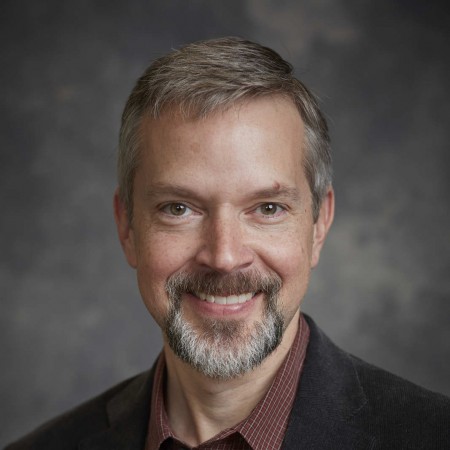
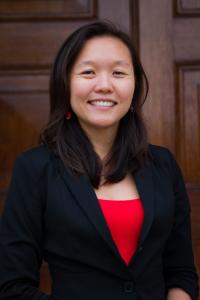
Jeffrey P. Prestemon is an Adjunct Professor at North Carolina State University's Department of Forestry and Environmental Resources within the College of Natural Resources. He holds a Ph.D. from the University of Wisconsin-Madison and conducts research at the USDA Forest Service Southern Research Station. His work focuses on forest economics, particularly wildfire economics, invasive species impacts, and international forest trade. Prestemon is affiliated with the Forest Economics and Policy Research Work Unit (RWU-4804), addressing policy implications of forest disturbances and market dynamics. Education: B.S. (Iowa State University, 1983), M.S. (NC State, 1989), Ph.D. (Wisconsin-Madison, 1994). His research spans forest product markets, hurricane effects, and the interplay between forests and crime. He contributes to the Forest Inventory and Analysis (FIA) program, providing critical data on U.S. forest resources. Prestemon collaborates on projects like QUIC-Fire, enhancing prescribed fire planning, and evaluates economic shocks affecting timber and lumber markets. His recent publications (2025) address topics such as hydrological modeling, bat hibernation patterns, and deforestation monitoring under EU regulations. Prestemon actively engages in policy discussions, emphasizing sustainable forest management and ecosystem resilience post-disasters.
Clint Peinhardt is UT System Regents Distinguished Teacher Professor of Political Science, Public Policy and Political Economy at the University of Texas at Dallas (UT Dallas), located within the School of Economic, Political and Policy Sciences . Since joining the university in 2005, he has progressed from Assistant to Associate to full Professor, earning the Regents’ Outstanding Teaching Award in 2012 and induction into the UT System Academy of Distinguished Teachers in 2024. Education Ph.D. in Political Science, University of Michigan (2004) M.A. in Politics of Development, Institute of Social Sciences (1996) B.A. in International Studies, Birmingham-Southern College (1993) Research Interests Peinhardt’s scholarship lies at the intersection of international political economy , international law , and multinational enterprise strategy . He investigates how sovereign governments and multinational corporations interact under conditions of political risk, focusing on bilateral investment treaties (BITs) , investor-state arbitration , and international financial liberalization . Additional themes include public opinion and economic policymaking and the application of game-theoretic models to understand treaty design, dispute resolution, and investment flows. Publication Trends Across more than forty peer-reviewed works (2004–2025), Peinhardt’s publications reveal a consistent emphasis on institutional design and legal-economic interaction . Recent articles pivot toward contemporary geopolitical crises (e.g., Ukraine-Russia BIT), environmental provisions in trade agreements, and firm-level datasets that allow granular analysis of political risk insurance and FDI location choices. Scientific Awards & Honors UT System Regents Distinguished Teacher Professor UT System Academy of Distinguished Teachers Fellow (2024) Regents’ Outstanding Teaching Award, University of Texas System (2012) Teaching, Advising & Service Peinhardt teaches undergraduate and graduate courses such as International Political Economy , Game Theory for Political Scientists , and Politics in Business (MBA). He pioneered a student-authored open-access textbook, Open International Political Economy , updated annually by enrolled students. He has chaired or served on numerous university committees (e.g., Committee on Educational Policy, Graduate Council) and reviews for over twenty journals and funding agencies, including the U.S. National Science Foundation. Labs & Teams While no formal lab is named, Peinhardt mentors graduate researchers and collaborates extensively with co-authors across institutions, generating large-N datasets on investment treaties and firm-level political risk.
Konstantin Zuev is a Teaching Professor of Computing and Mathematical Sciences at the California Institute of Technology (Caltech), affiliated with the Division of Engineering and Applied Science. He holds dual Ph.D.s in Mathematics (Lomonosov Moscow State University) and Civil Engineering (Hong Kong University of Science & Technology). Zuev is also the Undergraduate Option Representative for Information and Data Sciences and Graduate Minor Advisor for the same field. His research focuses on statistical data analysis, network science, machine learning, and computational methods for complex systems. His teaching includes courses like Applied Linear Algebra, Probability Models, and Statistical Inference. Zuev has received multiple prestigious awards, including the 2023 ASCIT and GSC Teaching Awards, the 2021 Humboldt Research Fellowship, and the 2019 Northrop Grumman Prize for Excellence in Teaching. His work spans interdisciplinary topics such as financial market dynamics, epidemiological modeling, and academic curriculum analysis through network theory. Zuev’s research has been published in journals like *Proceedings of the National Academy of Sciences*, *Scientific Reports*, and *Physical Review E*. He is actively involved in consulting projects with organizations like Virtualitics, Inc., focusing on applications in healthcare and network analytics. Beyond academia, he advises student groups like the Caltech Chess Club and Karate Club, reflecting his passion for fostering community engagement and mentorship.
Woan Foong Wong is an Assistant Professor in the Department of Economics at the University of Oregon, with affiliations as a Faculty Research Fellow at the National Bureau of Economic Research (NBER), Research Affiliate at CEPR (International Trade and Regional Economics), and Research Affiliate at CESifo (Global Economy). She serves as an Associate Editor for the Journal of International Economics and Economic Inquiry. Education: Ph.D., Economics, University of Wisconsin-Madison (2017) M.A., Economics, University of Wisconsin-Madison (2013) B.A., Economics with Mathematical Concentration, Oberlin College (2009) B.M., Music Composition, Oberlin Conservatory of Music (2009) Her research focuses on International Trade and Transportation Economics , analyzing how trade frictions (transportation technology, policies) shape economic activity, firm outcomes, and global trade networks. She has led studies on export opportunities' employment effects, multimodal transport systems, and the evolution of global supply chains. Recent work includes quantitative analyses of trade network structures, transport cost dynamics, and policy frameworks for preferential trade agreements. Key trends involve integrating geographic modeling with trade theory (e.g., Global-TRANSIT) and exploring hub-and-spoke trade systems (e.g., Entrepôt). Awards: Sundaran Memorial Prize for Young Malaysian Researchers (2018-19), World Bank Grants from the National Science Foundation (NSF), NBER, United States Department of Transportation, and Economic Research Institute for ASEAN and East Asia (ERIA) have supported her research.
William Johnson is a Professor in the Department of Geology & Geophysics at the University of Utah's College of Engineering, with a 30-year track record in colloid transport research and trace element biogeochemistry. He directs advanced facilities including ICP-MS and light scattering laboratories while maintaining active collaborations in environmental engineering, hydrology, and contaminant dynamics. Current research focuses on multi-scale colloid transport mechanisms in porous media Investigates mercury and selenium cycling in aquatic systems like Great Salt Lake Develops groundwater remediation strategies for mining-impacted environments His recent publications demonstrate theoretical advances in colloid filtration theory, including interception history models and nanoscale heterogeneity impacts. Over $5M in research grants from NSF, EPA, and state agencies support his work on contaminant transport, with particular emphasis on mercury isotope tracing and polymer-modified remediation materials. Mentoring 12 PhD and 34 MSc students, he maintains active teaching roles in graduate geochemistry and contaminant hydrology courses. Fundamental contributions to non-exponential transport behavior Established mercury source apportionment frameworks for saline lakes Developed lateral channel filtration for placer mining mitigation His research website (www.wpjohnsongroup.utah.edu/research.html) provides additional details about current projects and instrumentation capabilities.
Dr. John Pomeroy is a distinguished researcher and academic specializing in hydrology and climate change impacts. He holds the prestigious position of Canada Research Chair in Water Resources and Climate Change and serves as Director of the Centre for Hydrology at the University of Saskatchewan. His research focuses on understanding and predicting hydrological processes in cold regions, with particular expertise in snow physics, water resource management, and climate change impacts on hydrological systems across Canada and globally. Dr. Pomeroy's research interests span multiple critical areas of hydrological science. He has made significant contributions to understanding snow hydrology, climate change impacts on water resources, and the prediction of extreme hydrological events such as floods and droughts. His work integrates field observations, advanced modeling techniques, and innovative measurement technologies to address pressing water resource challenges in cold regions. He has pioneered research on snow physics, ecohydrology, and the complex interactions between land use, climate, and hydrological processes. Dr. Pomeroy's research has direct applications for water resource management, climate adaptation strategies, and improving flood and drought prediction capabilities across diverse landscapes from the Canadian Rockies to the Arctic. The body of Dr. Pomeroy's published work demonstrates consistent focus on cold regions hydrology, with particular emphasis on snow processes, climate change impacts, and water resource prediction. His recent publications show increasing integration of advanced modeling techniques, field measurements, and interdisciplinary approaches. There is a clear trend toward addressing practical water management challenges through scientific research, with growing attention to the societal implications of hydrological changes in a warming climate. His work spans from fundamental snow physics to applied water resource management solutions. Canada Research Chair in Water Resources and Climate Change Global Water Futures Program Leadership International Network for Alpine Research Catchment Hydrology (INARCH) Leadership Extensive research funding for cold regions hydrology studies Dr. Pomeroy has mentored numerous graduate students and early-career researchers, as evidenced by the many co-authored publications with asterisked names (a common notation for students in academic publications). He has received substantial research funding from Canadian federal agencies and international sources to support his work on snow hydrology, climate change impacts, and water resource management. His leadership in the Global Water Futures initiative, Canada's largest university-led research program, demonstrates his commitment to developing practical solutions for water security challenges in a changing climate. As Director of the Centre for Hydrology, Dr. Pomeroy leads a multidisciplinary team conducting cutting-edge research on cold regions hydrology. His work involves extensive field studies in locations including the Canadian Rockies, prairie regions, and Arctic environments. The research group utilizes advanced technologies including remote sensing, unmanned aerial vehicles, and innovative measurement techniques for snow and water monitoring. Dr. Pomeroy collaborates with numerous national and international research teams, contributing to global efforts to understand and address water resource challenges in a changing climate.
Vincent Rouilly is a researcher at Institut Pasteur , Paris, specializing in systems immunology and infectious disease diagnostics. He is a key member of the Milieu Intérieur Consortium , focusing on standardized immunomonitoring techniques and host-pathogen interactions. Current projects analyze TLR4-IFNβ-IL-12p70 signaling in tuberculosis and SARS-CoV-2 infections Led development of next-generation diagnostic tools like TruCulture assays His research spans: Immunology : Innate/adaptive immunity, cytokine networks Infectious Diseases : Tuberculosis, SARS-CoV-2, Mycobacterium tuberculosis Systems Biology : Transcriptional profiling, nCounter assays Microbiota : Diet-gut-immune axis Inflammatory Disorders : TNF-blocker mechanisms in spondyloarthritis From 2015–2022, his publications demonstrate expertise in standardized whole blood stimulation, digital ELISA integration, and multi-center immunomonitoring. Collaborations include teams studying HIV-1, Aspergillus, and antibiotic resistance.
Michele Iovieno is an Associate Professor in the Department of Mechanical and Aerospace Engineering (DIMEAS) at the Polytechnic University of Turin. He is a member of the College of Mechanical, Aerospace and Automotive Engineering and teaches courses in Aerospace Engineering at both undergraduate and graduate levels. His academic career spans multiple doctoral cycles (28th through 40th) in Aerospace Engineering and Fluid Dynamics programs. Dr. Iovieno's research focuses on fluid dynamics, particularly turbulence and particle-laden flows. His work explores fundamental aspects of turbulent heat transfer, direct numerical simulation (DNS) of turbulent flows, and Large Eddy Simulation (LES) techniques. His research lines include particle-laden streams, mixed convection phenomena, and non-isothermal turbulent flows with suspended particles. His work aligns with broader societal goals including climate action, quality education, and industry innovation. Analysis of his recent publications (2023-2025) reveals a strong focus on heat transfer mechanisms in particle-laden turbulent flows, with particular attention to thermal feedback effects, particle clustering phenomena, and mixed convection regimes. His research demonstrates sophisticated numerical approaches to studying complex multiphase flow phenomena, often employing direct numerical simulation techniques to examine fundamental fluid-particle interactions at high resolution. Dr. Iovieno actively supervises PhD students in the Aerospace Engineering program, with current advisees working on topics including particle-laden channel flows, heat transfer in non-isothermal turbulent flows, and mixed convection phenomena. His teaching portfolio includes courses on Fluid Dynamics for the Environment and Energy, Aerodynamics, and Thermofluid Dynamics across multiple academic years. He is affiliated with research groups focused on Fluid Dynamics and Boundary Layer Flow within DIMEAS, contributing to the department's expertise in computational fluid dynamics and turbulence research. His work connects theoretical fluid mechanics with practical applications relevant to aerospace engineering and environmental fluid dynamics.
John Schoeneman is an Assistant Professor at Oklahoma State University within the School of Global Studies. He serves as Associate Director for Research at the Wes Watkins Center for International Trade Development and as a fellow at the Hamm Institute for American Energy. His research integrates international economic and political networks with methodological expertise in social network analysis, text analysis, and machine learning. PhD in Social Data Analytics and Political Science from Pennsylvania State University (2019) MS in International Economics and Development from University of California, San Diego (2015) MS in International Political Economy from London School of Economics and Political Science (2011) His work examines international trade volatility, foreign direct investment (FDI) networks, and the impact of global crises on economic systems. Recent studies analyze pandemic-induced trade disruptions, nation branding effects on FDI flows, and corporate network connections in lobbying activities. Methodologically, he employs exponential random graph models (ERGM) and social network analysis to map structural dependencies. Key article themes include international trade network dynamics (6/14), FDI relationship analysis (4/14), and pandemic economic impacts (3/14). Broad disciplines span Network Analysis (14/14), International Economics (10/14), and Political Economy (8/14). His teaching portfolio encompasses Global Trade Economics, Research Design for Global Studies, and Master’s Thesis supervision. Research interests align with Sustainable Development Goals: Reduced Inequalities (SDG 10), Decent Work (SDG 8), Affordable Energy (SDG 7), and Innovation Infrastructure (SDG 9).
Dr. Karlis Kukemilks is a researcher in the Geology Division of Department VI - Spatial and Environmental Sciences at the University of Trier, Germany. He leads a major DBU-funded project developing sustainable cement alternatives through alkali-activated geopolymers, positioning him at the forefront of low-carbon construction materials research. His research spans four interconnected domains: Geomechanics : Advanced slope stability modeling and excavation shoring techniques Sustainable Materials : Transforming industrial waste (clay sludge, silicate dusts) into eco-cements Hydrogeology : Dewatering systems and groundwater flow modeling for construction Geophysics : Resistivity tomography and self-potential methods for subsurface characterization Current work focuses on the DBU project (2024-2026) creating geopolymers that eliminate conventional cement's high-temperature processes. These materials demonstrate exceptional acid/heat resistance and aesthetic versatility while utilizing 100% regional industrial byproducts. The project actively collaborates with SMEs to implement findings in real-world construction applications. Dr. Kukemilks directs a well-equipped research unit utilizing: GIS : ArcMap, QGIS for spatial analysis Geomechanics : GeoStudio, Rocscience, Plaxis for stability modeling Hydrogeology : HydroGeoSphere, MODFLOW, PEST for flow simulation His methodology integrates field investigations with advanced numerical modeling to solve practical engineering challenges while reducing environmental impact.
Karsten Høgh Jensen is a Professor of Hydrology and Water Resources at the University of Copenhagen's Department of Geosciences and Natural Resource Management. He has held this position since 2002, following previous professorships at the Technical University of Denmark (1999-2002). His extensive academic career includes serving as Director of the Center for Catchment Hydrology (HOBE) from 2007-2021 and Director of the International Research School of Water Resources (FIVA) from 2002-2014. Dr. Jensen's research focuses on hydrological processes across multiple scales, with particular expertise in unsaturated flow and transport, multiphase flow and remediation, groundwater flow, catchment modeling, and climate change impacts. His work integrates experimental, theoretical, and modeling approaches to address complex hydrological challenges. Recent research demonstrates increasing interdisciplinary connections, including applications of machine learning to hydrological problems and collaborations with medical researchers examining field conditions and sports injuries. His scholarly impact is evidenced by over 365 research outputs with an H-index of 53 (Google Scholar) and more than 8,650 citations. Dr. Jensen currently serves as Co-Editor of Vadose Zone Journal and has held editorial positions for Water Resources Research, Journal of Hydrology, and Hydrogeology Journal. Helmholtz International Fellow Award (2018) G.A. Andrup's Groundwater Prize ($4,000) (2012) Overseas Outstanding Scholar, China (2010) R.W. Jorck's award for extraordinary scientific achievements ($22,000) (1999) Dr. Jensen has secured substantial research funding, including multiple grants from the Danish Fellowship Center (totaling over 25 million DKK for projects in Uganda, South Africa, and India), the Villum Foundation (64.8 million DKK), and EU Innovative Training Networks. He has supervised 16 postdocs, 42 PhD students, and 125 MSc students, demonstrating his commitment to developing the next generation of water scientists. His current service includes membership on the standing expert committee for the Global Water Futures Observatories in Canada and evaluation committees for Innovation Fund Denmark and the Canadian Foundation for Innovation.