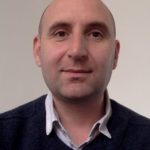
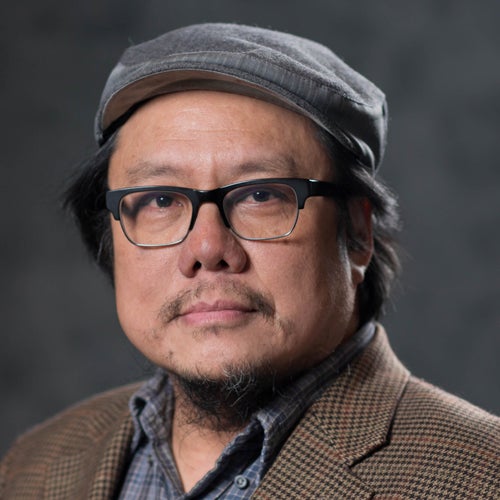
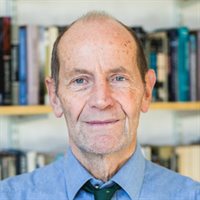
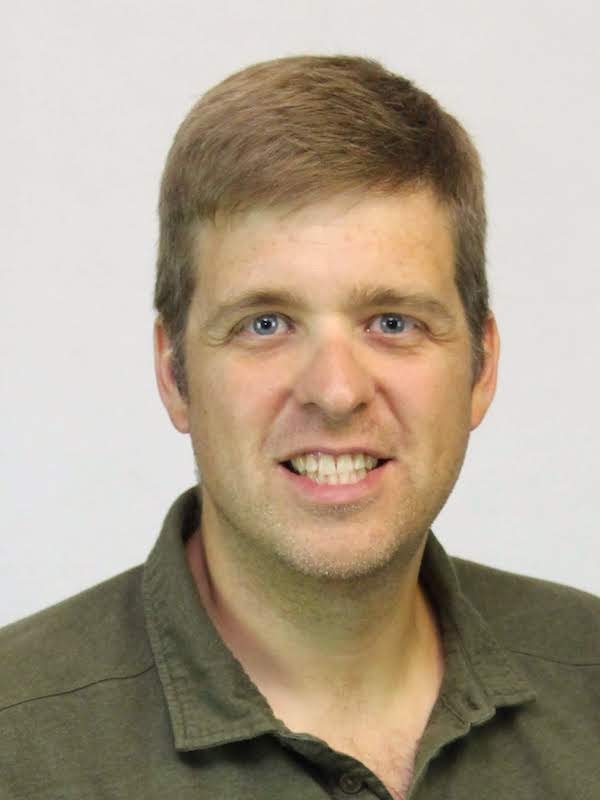
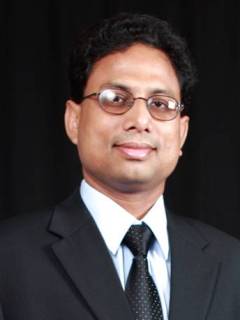
Greg Corning serves as Professor of Political Science and Director of the Asian Studies Program at Santa Clara University, based in Vari Hall, Room 237 with contact number 408-554-4336. His institutional affiliation centers within the Department of Political Science under the broader university structure. Professor Corning's research specializes in international political economy with concentrated expertise in Asia-Pacific trade and investment frameworks. His work examines Japan's evolving role in regional economic integration, ASEAN's institutional responses to digital trade governance, and the diffusion of regulatory standards like the GDPR across Southeast Asia. He frequently employs theoretical lenses including path dependence, techno-globalism, and regulatory convergence to analyze trade negotiation dynamics and institutional evolution in the region. Analysis of his publication trajectory (1989-2024) reveals consistent focus on East Asian economic architecture, with recent scholarship pivoting toward digital governance challenges. His work demonstrates particular attention to how bilateral agreements (TPP, JEEPA) interact with multilateral frameworks, and how historical path dependencies shape contemporary regulatory outcomes in trade and data privacy regimes.
Vincent Rouilly is a researcher at Institut Pasteur , Paris, specializing in systems immunology and infectious disease diagnostics. He is a key member of the Milieu Intérieur Consortium , focusing on standardized immunomonitoring techniques and host-pathogen interactions. Current projects analyze TLR4-IFNβ-IL-12p70 signaling in tuberculosis and SARS-CoV-2 infections Led development of next-generation diagnostic tools like TruCulture assays His research spans: Immunology : Innate/adaptive immunity, cytokine networks Infectious Diseases : Tuberculosis, SARS-CoV-2, Mycobacterium tuberculosis Systems Biology : Transcriptional profiling, nCounter assays Microbiota : Diet-gut-immune axis Inflammatory Disorders : TNF-blocker mechanisms in spondyloarthritis From 2015–2022, his publications demonstrate expertise in standardized whole blood stimulation, digital ELISA integration, and multi-center immunomonitoring. Collaborations include teams studying HIV-1, Aspergillus, and antibiotic resistance.
Torben Obel Sonnenborg serves as an Adjunct Professor in the Department of Geosciences and Natural Resource Management (Geology section) at the University of Copenhagen, with concurrent affiliation at the Geological Survey of Denmark and Greenland (GEUS). Contact details include phone +4591333635 and emails tso@ign.ku.dk , tso@geus.dk , located at Øster Voldgade 10, 1350 København K. His research expertise spans: Hydrogeology Groundwater Modeling Environmental Hydrology Water Resources Management Geological Modeling Urban Hydrology Specializing in numerical modeling and uncertainty analysis, his work integrates machine learning with hydrostratigraphic data to address urban groundwater challenges and agricultural contamination risks. Analysis of his 2022-2024 publications reveals a methodological emphasis on quantifying interpretation uncertainties in 3D geological models, developing data-driven approaches for urban groundwater prediction, and assessing climate impacts on coastal aquifers. His collaborative work frequently appears in leading hydrology journals including Hydrology and Earth System Sciences and Water Resources Research , demonstrating cross-disciplinary integration of field measurements with simulation frameworks. No scientific awards or student mentoring activities are documented in available sources. Research funding details remain unspecified despite active project involvement evidenced by recent field-based studies. He contributes to integrated research teams at the University of Copenhagen and GEUS, focusing on Denmark's groundwater sustainability challenges including saltwater intrusion mapping, urban hydrogeology, and land-atmosphere interaction modeling through initiatives like cosmic-ray neutron soil moisture monitoring.
Virginie PEZ serves as Professor of Management Sciences at Paris-Panthéon-Assas University, holding dual leadership roles as Vice-President for Partnerships and Professional Relations and Vice-President of the Panthéon-Assas Foundation. She directs the university's Marketing and Sales program, overseeing the Master in Marketing and Communication (MC2) and Master in Marketing and Digital Technologies (MTD) tracks, while actively contributing to the Laboratoire de recherche en sciences de gestion Panthéon-Assas (LARGEPA). Her academic credentials include: Habilitation à Diriger des Recherches (HDR) from Université Panthéon-Assas (2018) Doctorate from Université Paris-Dauphine (2010) National Agrégation in Management Sciences (2021-2022) PEZ's research centers on consumer psychology in digital ecosystems, with signature contributions to loyalty program dynamics, customer experience design, and ethical implications of data-driven marketing. Her work uniquely bridges consumer resistance theory with emerging technologies, examining how AI and VR reshape customer journeys while addressing critical gaps in hierarchical loyalty structures and status perception effects. Current investigations focus on responsible customer management frameworks amid increasing datafication. Her publication trajectory since 2012 reveals evolving specialization from foundational consumer resistance studies toward integrated digital-physical (phygital) experience design, with 2021-2025 works emphasizing design science methodology and augmented customer strategies. Key thematic clusters include loyalty program optimization (2017-2024), VR flow state conceptualization (2023), and ethical boundaries of preferential treatment (2012-2017), demonstrating consistent focus on behavioral mechanisms in marketing technology adoption. Her scientific recognition includes: Grand Prix de l'innovation pédagogique en sciences de gestion (FNEGE, 2021) Lauréate « Femmes en Vue » (Vox Femina, 2017) Prix du Cercle du Marketing Direct (2007) Trophée Syntec des Etudes (2007) As program director for two master's tracks, PEZ shapes next-generation marketing curricula while consulting for public institutions and private enterprises. Her external engagements include editorial board membership for Décisions Marketing, elected service in the French Marketing Association, and frequent media commentary on consumer trends across radio, television, and press platforms. Current research initiatives explore AI implementation ethics in CRM systems and cross-cultural validation of phygital experience frameworks. Within LARGEPA, PEZ leads collaborative projects on data ethics in customer management, coordinating interdisciplinary teams examining algorithmic bias in loyalty programs and developing measurement tools for responsible customer experience. Her upcoming 2025 Marketing Management edition (with Kotler et al.) synthesizes these threads into actionable frameworks for digital-age practitioners.
Dr. Sharon Billings is a University Distinguished Professor at the University of Kansas. Her research focuses on biogeochemical cycling in terrestrial ecosystems, particularly nitrogen, carbon, and water fluxes influenced by environmental change. She examines processes across scales from microbial activity to whole ecosystems, integrating tools from ecosystem ecology, soil science, and ecophysiology. Her work emphasizes soil structure, hydrological dynamics, and the impact of climate, vegetation, and land use changes. Recent studies investigate woody encroachment effects, subsurface water dynamics, and soil carbon protection mechanisms. She collaborates on interdisciplinary projects like the CZNet Geomicrobiology initiative and contributes to refining land surface models for improved climate predictions. Awards and grants are not explicitly listed, but her research has been featured in prominent venues. Advising and mentorship details are not provided in available texts. Her research spans forests, grasslands, and montane systems, with a focus on mechanisms linking biotic and abiotic factors in the Critical Zone. She explores how root systems influence soil development and carbon sequestration, with recent attention to land use legacies and climate variability impacts. Her work integrates field data, isotopic analyses, and modeling to address global challenges in soil health and ecosystem resilience.
Prof. Gerald Willmann, Ph.D., is a Professor at the Faculty of Economics of Bielefeld University, specializing in Department of Business Administration and Economics . His research focuses on International Trade , Political Economy , and Immigration Economics . Research Trends : His work spans theoretical and empirical analyses of trade policy stability, protectionist dynamics, and immigration's labor market effects. Key themes include preferential trade agreements , skill-biased technological change , and private label trade intermediation , with a strong emphasis on economic efficiency and policy implications . Scientific Awards : Funded by the German Research Foundation (DFG) for projects on trade agreements and immigration economics. Recipient of European Union funding for the QEM project. Advising and Collaborations : He collaborates extensively with European institutions, including the University of Oxford and Southern Methodist University, and co-authors like Emily Blanchard and Giovanni Facchini. His work appears in journals such as Journal of International Economics and working papers from Bielefeld University.
Zhiyuan Wang is an Associate Professor of Political Science at the University of Florida. He previously held positions as an Assistant Professor at Texas A&M University-Commerce and a Visiting Assistant Professor at Bryn Mawr College. He earned his PhD in Political Science from the State University of New York at Binghamton in 2016. His research focuses on international and comparative political economy, examining the interplay between globalization, international institutions, and domestic governance. Key themes include how states adapt policies to preserve regulatory autonomy, the impact of globalization on governance, and the political economy of China’s foreign policy and economic statecraft. His work also explores conflict political economy and legal changes in transitioning systems. Wang’s research has been published in leading journals such as International Studies Quarterly , Political Research Quarterly , and New Political Economy . His book (SUNY, 2023) analyzes state policy responses to globalization. Current projects address labor rights in trade agreements, the effects of Chinese foreign aid, and judicial independence in globalized contexts. His articles reflect a broad engagement with globalization’s multifaceted impacts, from trade policies and institutional design to conflict dynamics and legal frameworks. Wang’s interdisciplinary approach bridges political theory, empirical analysis, and institutional studies. No specific awards are listed, though his prolific publications highlight scholarly impact. He advises no listed students but contributes to graduate and undergraduate education in political science. His research is supported by institutional affiliations at the University of Florida.
Gregg Davidson is a Professor of Geology and Geological Engineering at the University of Mississippi. His research focuses on hydroecology of cypress wetlands, groundwater-surface water interactions, and the intersection of science and Christian faith. He holds a B.S. in Geology from Wheaton College (1985), and M.S. and Ph.D. in Hydrology from the University of Arizona (1989, 1995). His expertise includes surface-groundwater interaction, wetland hydroecology, isotope hydrology, and managed aquifer recharge. Notable research topics include oxbow lakes as aquifer recharge sources, levee seepage dynamics, and geochemical tracing of groundwater flow. He also engages in science outreach addressing science-religion dialogue and ethics in scientific communication. Davidson has contributed to studies on sedimentation in flood-control reservoirs, heavy metal mobility in wetlands, and the long-term fate of contaminants. His work bridges environmental hydrology with societal impacts, including post-pandemic education trends and unintended consequences of diversity initiatives. He is affiliated with the Department of Geology and Geological Engineering, contributing to programs like the B.S. in Geology and M.S./Ph.D. in Engineering Science. His research emphasizes practical applications in water resource management and ecological sustainability.
Stephen Moysey is an Adjunct Professor of Geological Sciences at East Carolina University and Director of the ECU Water Resources Center. He holds a Ph.D. from Stanford University in Geophysics, an MS in Hydrology from the University of Arizona, and a BS in Environmental Physical Science from the University of Alberta. His professional experience includes positions at Clemson University and Stanford University. Research interests focus on hydrogeophysics, environmental sensing, and geospatial applications in water resource management. His work integrates field measurements with computational modeling to understand subsurface processes. Publications demonstrate consistent focus on vadose zone hydrology, geoscience education innovation, and contaminant transport modeling. Recent studies employ advanced imaging techniques to visualize preferential flow pathways in heterogeneous media. Moysey has co-directed interdisciplinary initiatives including the NRT program in Resilient Infrastructure and Environmental Systems at Clemson and the Center for Geospatial Technologies.
Chjan Lim is a Professor in the Department of Mathematical Sciences at Rensselaer Polytechnic Institute. His research spans vortex dynamics, statistical mechanics, and network science, with a focus on applications in fluid dynamics, social systems, and celestial mechanics. He has contributed to understanding complex phenomena such as planetary atmospheres, nonlinear systems, and consensus formation in social networks. His work often integrates mathematical modeling, computational methods, and theoretical analysis. Key research areas include the statistical mechanics of vortices, phase transitions in fluid systems, and the dynamics of opinion formation. Lim’s studies on barotropic flows, energy-enstrophy theory, and Monte Carlo simulations have advanced geophysical fluid dynamics and plasma physics. His recent work explores network evolution through preferential attachment models and the role of committed minorities in social consensus. Lim holds a prominent position at RPI, contributing to both academic and applied research. His publications frequently bridge interdisciplinary topics, from celestial mechanics to social computing, reflecting his broad expertise in mathematical sciences.
Stephen Woolcock is Visiting Associate Professor in the Department of International Relations at LSE, where he established the International Trade Policy Unit in 1999. Previously worked on trade policy at Chatham House and private sector positions. Research focuses on regulation of integrating markets through preferential and multilateral trade agreements. Expertise covers WTO governance, EU trade diplomacy, and economic aspects of international negotiations. Regularly consults for European Parliament, OECD, Commonwealth Secretariat, and national governments. Research emphasizes practical policy applications bridging academic analysis and real-world economic diplomacy.
Peter Knappett is an Associate Professor in the Department of Geology & Geophysics at Texas A&M University, with a visiting professorship at the Swiss Federal Institute of Aquatic Science and Technology. His research examines groundwater contamination mechanisms, particularly arsenic and fluoride mobility in aquifers, and groundwater-surface water interactions. Educational background includes: PhD, Earth & Planetary Sciences, University of Tennessee at Knoxville (2010) Masters of Applied Science, Civil Engineering, University of Waterloo (2006) Honours Bachelor of Science, Earth Science Minor, University of Waterloo (2001) Research focuses on predicting impacts of intensive groundwater pumping on water quality, with emphasis on geogenic contaminants and anthropogenic pollution. Fieldwork spans Bangladesh, Mexico, and US aquifers, employing geochemical analysis and custom modeling software. Publications demonstrate consistent focus on hydrogeochemistry, contaminant transport mechanisms, and water resource vulnerability in overexploited aquifers across diverse geographical regions. Awards include: Arts & Sciences Divisional Achievement Award (2018) Kohout Early Career Award (2014) H. Gordon Award (2010) Interdisciplinary Research Award (2009) Active grants involve: NSF Collaborative Research on arsenic fate (2019-2022) Permian Water Management project (2020-2022) NSF REU in Costa Rica (2017-2020) Leads field research teams investigating vulnerable aquifer systems globally and maintains the Mexico research blog documenting fieldwork.
Binayak Mohanty is a Regents Professor and COALS Chair in Hydrologic Engineering & Sciences at Texas A&M University, affiliated with the College of Agriculture & Life Sciences and the College of Engineering. He holds a B.S. from Orissa University of Agriculture & Technology (1985), M.E. from Asian Institute of Technology (1987), and Ph.D. from Iowa State University (1992). His research focuses on water, heat, and chemical transport measurement/modeling in variably-saturated porous media, hydraulic properties, and preferential flow in macroporous systems. He leads the Vadose Zone Research Group via his lab website http://vadosezone.tamu.edu/ . Affiliated with Texas A&M AgriLife Research, his work contributes to agricultural and environmental engineering solutions. No specific grants or advisees are listed here.
Nuno G. A. B. M. Limao is the Wallenberg Chair Professor at Georgetown University's Edmund A. Walsh School of Foreign Service, where he holds a primary academic appointment. He joined the university in 2023, bringing extensive expertise in international economics and policy. His research bridges theoretical and empirical approaches to address critical issues in global trade and political economy. His research interests center on international trade and political economy, with a strong emphasis on trade policy formation, redistribution mechanisms, and the interplay between multilateral and preferential trade liberalization. He investigates how geographic factors and trade costs influence trade flows and policy outcomes, and his current work explores the impact of policy uncertainty on firms and consumers, as well as the role of international institutions in mitigating such uncertainty. Professor Limão is actively engaged in the academic community through his affiliations with leading economic research institutions. He is a research associate at both the National Bureau of Economic Research (NBER) and the Kiel Institute for the World Economy, reflecting his influence and scholarly contributions. Additionally, he serves as an Associate Editor for the Journal of International Economics , contributing to the peer-review and dissemination of high-quality research in the field. He earned his Ph.D. from Columbia University, completing his doctoral studies in 2001. This foundational training has supported a distinguished career focused on rigorous economic analysis and policy-relevant research. Research Associate, National Bureau of Economic Research Research Associate, Kiel Institute for the World Economy Associate Editor, Journal of International Economics
Dr. Sreenivasulu Chadalavada is a Conjoint Senior Lecturer at the Global Centre for Environmental Remediation (GCER) within the College of Engineering, Science and Environment at the University of Newcastle, where he has been employed since 2016. He serves as Program Coordinator for two major research programs funded by the Department of Defence and BHP at CRC CARE, which is headquartered at the University of Newcastle. His work focuses on demonstrating cost-effective remediation solutions for contaminated sites across Australia. Dr. Chadalavada completed his Ph.D. research at the Centre for Environmental Risk Assessment and Remediation (CERAR) at the University of South Australia. His doctoral research focused on simulation-optimization modeling approaches to identify unknown groundwater pollution sources, which led to the development of a novel software tool in hydrogeological modeling. Prior to joining the University of Newcastle, he worked as an Adjunct Research Fellow/Senior Hydrogeologist at the University of South Australia and as a Research Associate at the Indian Institute of Technology Kanpur. Dr. Chadalavada's research career over the past decade has centered on cutting-edge groundwater modeling and hydrogeology, with a focus on efficient characterization of potentially contaminated sites. His expertise spans mathematical modeling of groundwater flow and contaminant transport in contaminated aquifers, vapour intrusion modeling, and simulation-optimization methods. He has developed specialized knowledge in applying genetic algorithms to environmental remediation problems and has extended his research to include climate change impacts on groundwater systems. His current and future research focuses on developing mathematical models to simulate various hydrogeological processes and vapour migration pathways. Analysis of Dr. Chadalavada's recent publications reveals a strong interdisciplinary approach combining environmental engineering, hydrogeology, and computational methods. His work spans traditional hydrogeological modeling, climate change impacts on water resources, and increasingly incorporates artificial intelligence and machine learning techniques for environmental prediction and monitoring. There is a clear progression toward more sophisticated computational approaches in his recent work, with applications ranging from water quality index prediction to construction damage detection following natural disasters. Dr. Chadalavada has secured significant research funding through CRC CARE, including a $758,318 project on electrokinetic remediation of hydrocarbon-contaminated soils, a $533,848 project on natural attenuation of vapors, and a $481,835 project on co-disposal of contaminated soils with mine waste. His research has resulted in numerous high-impact publications in environmental science and engineering journals. As an academic supervisor, Dr. Chadalavada has co-supervised multiple PhD students working on diverse environmental remediation topics including vapour intrusion modeling, climate change impacts on groundwater, and electrokinetic remediation techniques. His teaching responsibilities include courses in Hydrogeology and environmental remediation. Dr. Chadalavada works within the Global Centre for Environmental Remediation, a specialized research center focused on developing practical solutions for contaminated site management. His role as Program Coordinator for the Department of Defence and BHP research programs places him at the forefront of translating research into practical applications for major industrial and government stakeholders.