Julien Mayor is a Professor at the Department of Psychology, University of Oslo , specializing in Language Acquisition , Infant Speech Perception , and Computational Modeling in Psychology . His work bridges cognitive development with bilingualism and dialect exposure, focusing on how infants learn words through parental speech patterns. He leads the BabyLing project, developing tools like TLex for unbiased language screening.
Anne Marit Føreland is an Associate Professor at the Department of Health and Nursing Science, University of Agder, affiliated with the Faculty of Health and Sport Sciences. Her work combines clinical expertise in neonatal intensive care with academic roles in research and teaching. She holds a Master’s degree and is a Specialist in Clinical Nursing. Education: Bachelor’s in Nursing (1982–86), Specialist in Clinical Nursing (2009), Master’s (2012–2014) Certifications: Pediatric Nursing (UiA 2002–2003), Counseling (Pedagogy 2005–06), Facilitator/Train-the-Trainer in Medical Simulation (2023) Her research focuses on neonatal care, including pain management, phototherapy, kangaroo care, and neonatal transport. Notable projects include studies on early skin-to-skin contact for preterm infants and the impact of non-separation approaches post-birth. She has contributed to over 15 peer-reviewed articles and collaborates with hospitals like Oslo University Hospital and Sørlandet Hospital. Teaching responsibilities include the Bachelor of Nursing and Master’s in Pediatric Nursing programs, emphasizing simulation-based learning and clinical supervision. She leads research groups like HEIFA (Health and Quality of Life in a Family Perspective) and actively disseminates findings via articles, interviews, and public lectures. Key contributions include co-authoring works on neonatal care practices and maternal experiences, with recent publications in Global Qualitative Nursing Research and Tidsskriftet Sykepleien . Her work highlights interdisciplinary approaches to improving neonatal outcomes and maternal well-being.
Robert Morris Gray Jr. is an Associate Professor at the University of Bergen's Department of Education, affiliated with the UiB Learning Lab and co-leading the Teaching and Learning in Higher Education (TeLEd) research group. His work focuses on transforming pedagogical practices through digital innovation and critical educational frameworks. Research Interests: Dr. Gray explores the intersection of technology and pedagogy, specializing in blended learning environments, meaningful interaction design, and digital assessment frameworks. His innovative Writerly Framework reconceptualizes learning as an interpretive act, drawing from literary theory to enhance student engagement. Additional research examines social justice in digital competence frameworks and pandemic-induced educational transformations. Publication Trends: Gray's recent work demonstrates a strong focus on theoretical frameworks for digital pedagogy (Writerly Framework), critical analyses of educational technology policy, and empirical studies of pandemic-era teaching adaptations. His publications consistently address transformative approaches to assessment, online interaction design, and discipline-specific pedagogical innovations in medicine and higher education. Projects & Grants: HyComm: AI-Enriched Hyflex Learning Community (Erasmus+) CABUTE: Capacity Building for Teacher Education in Uganda (NORHED II) Teaching and Learning in the Digital Age (Norgesuniversitetet) Mobile in Black and White documentary on racial dynamics Teaching: Develops and instructs graduate pedagogy courses including UPED650 (Online and Blended Learning), UPED651 (Instructional Video Production), and UPED691 (Supervision Practices), emphasizing active learning and critical pedagogy across disciplines.
Eeva Mauring is an Associate Professor at the Department of Economics, University of Bergen, and affiliated with the University of Vienna and the Centre for Economic Policy Research (CEPR). She holds a PhD from University College London (UCL) awarded in 2016. Her research focuses on microeconomic theory, industrial organisation, and information economics, with particular emphasis on search theory, market dynamics, and platform economics. Her work explores topics such as price discrimination in online markets, competitive search equilibria, and the role of information in shaping market outcomes. Notable contributions include analyzing platform learning from consumer choices, Coasian dynamics in sequential search, and the social value of public information in search markets. She has also studied adverse selection in dynamic matching markets and evolutionary stable pricing strategies. Eeva's research bridges theoretical frameworks with practical applications in digital markets, consumer behavior, and market design. Her affiliations with leading institutions reflect her international standing in the field. No awards are explicitly listed, but her extensive publication record underscores her scholarly impact. She has not listed advisees or grants in the provided materials.
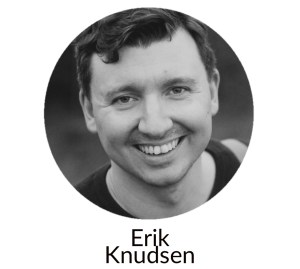
Dr. Erik Knudsen is an Associate Professor at the Department of Information and Media Studies, University of Bergen , specializing in media use and audience research . He leads the NEWSREC project on news recommenders' democratic impact and co-leads a work package at the MediaFutures Research Centre . His research focuses on quantitative audience analysis , media polarization , and trust in journalism . Education : PhD from UiB, Postdoc at DIGSSCORE Research Interests : Selective exposure, affective polarization, media effects, conjoint analysis, political communication, and framing theory Awards : Recipient of the Research Council of Norway's Research projects for young talents fellowship He serves as editor-in-chief of Norsk medietidsskrift and chairs NordMedia23 . His work appears in Journal of Communication , Political Communication , and Digital Journalism , with 2022's Modeling news recommender systems being highlighted. He founded the Norwegian Journalism Panel and leads DIGSSCORE's Political Behavior and Communication Research Group . The summary includes his Ted-talk, PechaKucha presentation, and Forsker Grand Prix participation.
Helga Dis Isfold Sigurdardottir is a researcher at Nord University, specializing in digital game-based learning, ICT in education, gender and diversity in technology, and feminist pedagogy. Her work bridges educational theory, digital culture, and social equity, with a strong focus on empowering women and girls in game development and creative IT fields. Her research interests include: Digital Game-Based Learning (DGBL) ICT integration in education Gender, diversity, and inclusion in technology Professional development for educators Online cultures and social media Feminist theory in educational contexts Social-emotional learning and AI literacy Her recent publications show a clear trend toward integrating emotional and ethical dimensions into digital education, particularly through narrative reviews on AI literacy and social-emotional competencies. She also explores gamification, teacher adoption of digital tools, and student perceptions of digital learning environments. Her work often involves collaborative projects with colleagues such as Robin Munkvold and Adam Palmquist. Scientific contributions include: Narrative reviews on AI and education Studies on gender and game-based learning Design and evaluation of educational games Analysis of online activism and hashtags Teacher perspectives on digital tools She actively contributes to educational outreach through workshops on gamification, role models in IT, and initiatives to attract girls to technological fields. Her work emphasizes both research and practical application in schools and communities.
Professor Lars Kyte serves at the Department of Health and Caring Sciences , Western Norway University of Applied Sciences. He is actively involved in teaching Anatomy, Physiology, Biochemistry, Microbiology (subject responsible for SYKF130) and Pathology and Pharmacology (subject responsible for SYKF140) across multiple semesters. Academic Focus: Medical education pedagogy and digital learning tools Recent Research Themes: 2024 publications emphasize educational video development, vocational rehabilitation coordination, and hybrid learning methods.
Erik Arntzen is a Professor in the Department of Behavioural Science within the Faculty of Health Sciences at Oslo Metropolitan University (OsloMet). His office is located at Pilestredet 38, 0166 Oslo (Office W225), and he can be reached via email at erik.arntzen@oslomet.no or by phone at +47 672 36 442. Dr. Arntzen's research focuses on behavioral science with psychology, particularly examining complex human behavior through experimental methodologies. His work spans multiple psychology subfields including cognitive psychology, clinical psychology, developmental psychology, and geriatrics. A significant portion of his research investigates stimulus equivalence, conditional discrimination procedures, and verbal behavior phenomena. Analysis of his recent publications (2023-2025) reveals a strong emphasis on experimental studies of complex human behavior, particularly examining how individuals form equivalence classes, discriminate between similar stimuli, and transfer learning across contexts. His work bridges theoretical behavioral principles with practical applications in clinical settings, particularly for populations with cognitive challenges including Alzheimer's disease. Dr. Arntzen leads the Experimental Studies of Complex Human Behavior research group and is currently involved in the project 'Teaching problem solving skills to enhance complex human behavior – vocal mediating strategies.' His collaborative work spans multiple countries, with co-authors from Norway, Brazil, Iceland, and other European nations, demonstrating an international research network focused on behavioral analysis.
Kjetil Kåre Haugen is a Professor in logistics and sport management at Molde University College, Faculty of Business Administration and Social Sciences. His research spans game theory, economic theory, and algorithmic development with applications in sports—particularly football—focusing on doping, gambling, corruption, and uncertainty of outcome. He is an active member of the Sport Management Research Group (SpM). Research Interests: Haugen’s work integrates economic modeling and game theory to analyze sports phenomena such as doping behavior, tournament design, referee decisions (e.g., VAR), and fan engagement. He also explores philosophical and satirical dimensions of economics and academia, often publishing critiques of higher education systems and performance metrics. The recent articles (2020–2025) demonstrate a strong trend in applying mathematical and game-theoretic models to real-world sports issues, especially in football. Topics include cheating detection in chess, doping incentives, penalty kick dynamics, and the economic implications of tournament structures. His interdisciplinary approach bridges economics, computer science, and sports science, with a recurring emphasis on fairness, integrity, and strategic behavior. Scientific Contributions: Extensive publication record in journals like Mathematics for Applications , Scientometrics , and Sports Economics Review . Author of books on event logistics and game theory in soccer. Regular contributor to public discourse via Panorama , Subjekt.no , and The Guardian . Advising and Public Engagement: While no formal students are listed, Haugen frequently collaborates with researchers such as Knut Peder Heen, Harry Arne Solberg, and Alex Krumer. He actively engages in academic and public debates on sports policy, higher education reform, and ethical issues in research. His work has not been linked to specific grants in the provided text, but his consistent output suggests ongoing research activity. Laboratories and Teams: He is affiliated with the Sport Management Research Group (SpM) at Molde University College, which serves as his primary research team for interdisciplinary projects in sports economics and management.
Carlo Michael Knotz is an Associate Professor of Political Science at the University of Stavanger, affiliated with the Department of Media and Social Studies in the Faculty of Social Sciences. His research addresses public attitudes toward welfare, immigration, technological change, and political behavior, with a strong methodological focus on surveys and experiments. His educational background includes studies in Mannheim, Barcelona, and Konstanz, followed by a PhD from Lund University. He held postdoctoral positions in Bremen and Lausanne before joining the University of Stavanger in 2021. Since August 2024, he has served as the coordinator of the B.A. Political Science program and the Digital Society Research Group. Knotz's research spans several interconnected areas: the political effects of AI and technological vulnerability, particularly among the higher-educated; public attitudes toward immigrants and welfare chauvinism; and societal responses during the COVID-19 pandemic, including vaccine allocation and triage ethics. He frequently uses data from the OECD's 'Risks that Matter' survey and has conducted original public opinion research in Switzerland. His recent publications reveal a consistent trend toward understanding how economic and social insecurities—whether from technology, migration, or health crises—shape political preferences and policy attitudes. His work often involves large-scale comparative data and experimental designs, contributing to debates on welfare deservingness, labor market integration, and digital transformation. Reviewed for journals such as Comparative Political Studies , European Sociological Review , Journal of European Public Policy , and Social Science & Medicine . Presented at major conferences including the International Conference of Europeanists and the Norwegian Political Science Conference. Co-edited a special issue in the Journal of European Social Policy on immigration and the welfare state. He teaches upper-level courses on welfare state politics and co-teaches an introduction to quantitative methods. He has developed the R package 'bst290' and online tutorials to support student learning in data analysis. He is also active in public discourse through blog posts and social media, discussing topics such as AI, inequality, and research transparency.
Paal Engelstad is a Professor at Oslo Metropolitan University's Faculty of Technology, Art and Design, Department of Computer Science. His research focuses on Cloud computing , Cybersecurity , and Software Engineering , with significant contributions to Graph Neural Networks (GNNs) and their applications in network analysis, renewable energy forecasting, and telecom systems. Research interests span Applied Artificial Intelligence and Autonomous Systems and Networks . Recent publications address spatio-temporal wind forecasting , GNN propagation schemes , and 5G network security . He contributes to advancements in renewable energy integration and telecom protocol analysis .
Tatiana Wara is an Associate Professor at the Department of Teacher Education and Pedagogy, UiT The Arctic University of Norway. Her work focuses on gender studies, migration, and pedagogy, particularly examining the experiences of Russian female migrants in Northern Norway and educational practices in Arctic contexts. She collaborates on interdisciplinary projects related to social sustainability and democratic preparedness. Current projects: DEMBRA (Democratic Preparedness against Racism), RFFVEST (The Founder’s Track for Refugees), Ukrainian Refugees’ Health Services Use Research groups: ICred (Education and Social Sustainability), Sted Makt Mobilitet, LIFT (Teacher Education in Changing Times) Her recent research explores: Gender hierarchies in Arctic landscapes Impact of social media on Arctic youth well-being Using film as a pedagogical tool for discomfort and human rights Cultural adaptation through narratives of Norwegianization Intersectional approaches to critical diversity in education She has published extensively on these topics in journals and book chapters, often collaborating with scholars like Mai Camilla Munkejord, Marcela Douglas Aranibar, and Tove Beate Jensen.
Ida Friestad Pedersen is an Associate Professor in the Department of Mathematics and Statistics at UiT The Arctic University of Norway. She teaches beginner mathematics courses and supervises master's and PhD students in subject didactics. She serves as the program chair for Associate Professor in Science grades 8-13, demonstrating her commitment to teacher education across multiple educational levels. Her research focuses on mathematics didactics, with special emphasis on exploratory mathematics teaching , formative assessment , student-active teaching methods , and the transition from school to university . Her work bridges theory and practice, connecting classroom observations with educational research to improve mathematics instruction. She investigates how inquiry-based approaches affect students' mathematical beliefs and motivation, and examines the challenges students face when transitioning between educational levels. Her recent publications demonstrate a strong focus on the SUM project, which examines inquiry-based mathematics teaching and its effects on both teachers and students. Her research shows how exploratory teaching methods can be effectively implemented, how to assess students' mathematical beliefs and motivation, and how to improve the continuity between secondary school and university mathematics education. Her scientific contributions include: Development of survey instruments for assessing mathematical beliefs and motivation Analysis of exploratory teaching methods and their implementation Research on the transition challenges between school and university mathematics Studies on formative assessment and student-active learning approaches Investigations into students' choices of learning resources in STEM education Dr. Pedersen is an active member of the Mathematics Didactics research group and the Science Didactics in Higher Education group at UiT, where she contributes to advancing research in mathematics education. Her teaching portfolio includes courses for engineering students (Mat-1052, Mat-1060, Mat-2050), teacher education (MAT-6101), and preparatory programs (Tek-0002), demonstrating her versatility across different educational contexts and student populations.
Simone Valerie Häckl-Schermer serves as Associate Professor of Economics in the Department of Economics and Finance at the University of Stavanger's School of Business. She is actively affiliated with the Synapse Lab—an interdisciplinary research collective focused on motivation and learning interventions in educational and workplace contexts—where she organizes the Synapse Lab Research Seminar series. Education: Ph.D. in Economics, WU - Vienna University of Economics and Business (May 2020) Her research program centers on behavioral and experimental economics, investigating individual decision-making through lenses of intrinsic motivation, overconfidence, and grit. Recent work emphasizes field experiments in educational interventions (e.g., gender STEM gap reduction) and organizational economics (e.g., leadership behavior impacts), often employing randomized controlled trials in real-world settings like elementary schools and corporate environments. Analysis of her 2021-2025 publications reveals consistent methodological rigor in experimental design across finance, labor economics, and education policy domains. Key thematic threads include gender dynamics in labor markets, ESG investment behaviors, and the causal effects of supportive leadership on employee outcomes, demonstrating interdisciplinary reach while maintaining behavioral economics as the unifying framework. Scientific Awards: No scientific awards were documented in the provided materials Advising and Grants: While specific student advisees or grant awards aren't enumerated, her leadership in Synapse Lab initiatives and policy-oriented dissemination (e.g., mentoring scheme research for 2025 implementation) suggests active mentorship and applied research funding engagement. Conference presentations at SOLE, Advances with Field Experiments, and ESA World Meeting indicate robust scholarly networking. Labs and Teams: As a core Synapse Lab member, she contributes to developing evidence-based interventions for motivation enhancement. Her organization of the lab's research seminar series facilitates cross-institutional collaboration on educational and workplace behavioral challenges, with recent projects spanning elementary school STEM interventions to corporate leadership training evaluations.
Irēna Upeniece is an Associate Professor at Riga Stradiņš University’s Department of Health Psychology and Paedagogy. Her research focuses on educational strategies, physical activity habits, and interdisciplinary approaches in health-related fields. She has contributed to studies on teacher training, parent-child interactions in physical education, and nursing students’ wellness during the pandemic. Education: Holds an Expert qualification in Educational sciences from the Latvian Council of Science (2022–2025). Research Interests: Combines pedagogical methods with health psychology, emphasizing practical applications like mobile applications in health education and cross-sectional studies on student behaviors. Her work aligns with UN Sustainable Development Goals related to education and health. Recent Articles: Recent publications explore teaching strategies in music/dance education, factors influencing outdoor course enrollment during pandemics, and the role of physical activity in neurodegenerative diseases. Her 2025 study on collaborative teaching methods highlights innovation in educator training. Awards/Grants: No specific awards listed, though her research has received attention with 2 citations and media features like “Galvenais ir vispār kustēties” in Diena (2023). Activities: Actively participates in academic conferences (e.g., 18th International Scientific Conference in 2024) and editorial reviews. Engaged in professional development programs like RSU’s outdoor activity initiatives.