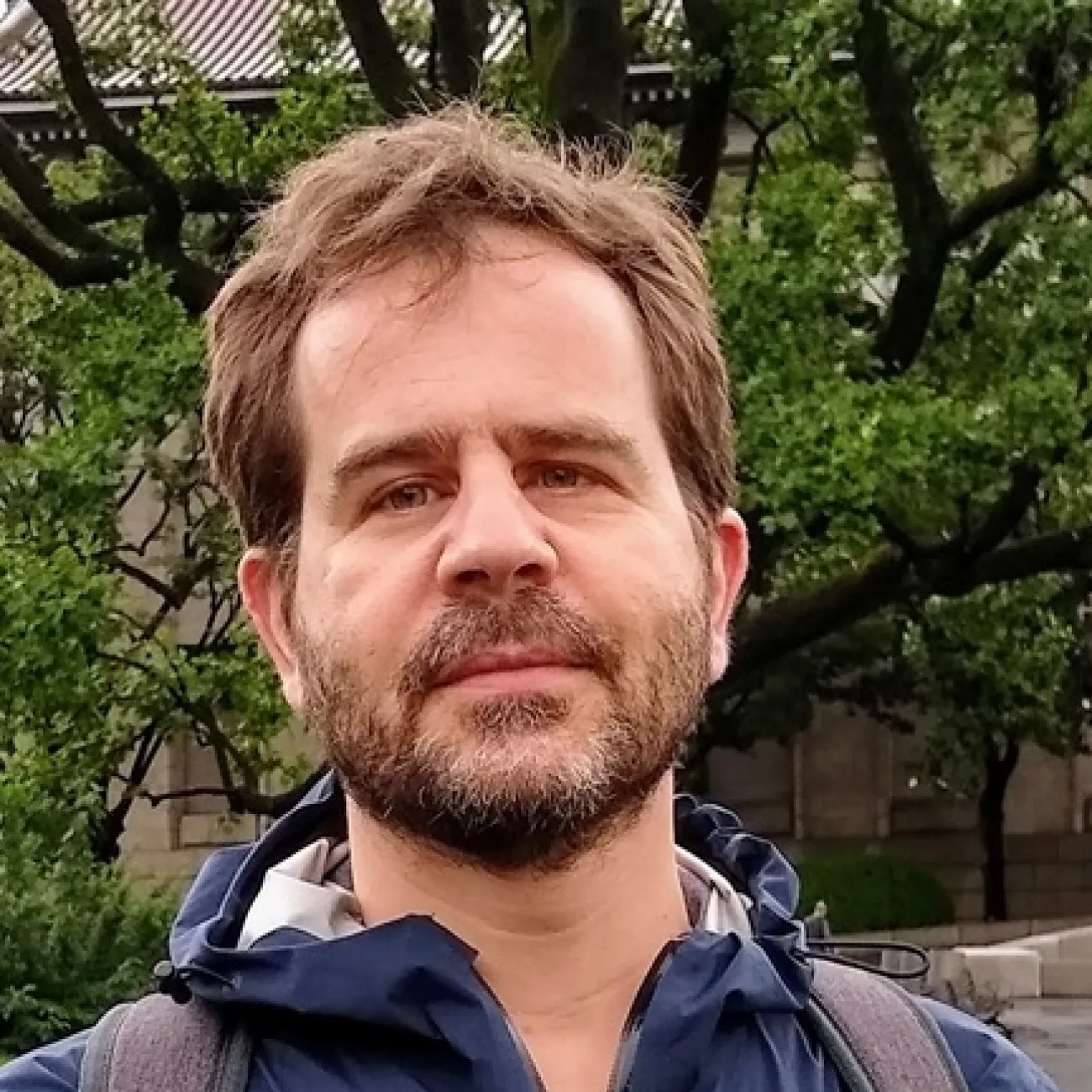
Dr. Andrea Lecchini Visintini is an Associate Professor at the School of Electronics and Computer Science , University of Southampton. He specializes in systems modelling and control with applications in aerospace engineering and biomedical domains, utilizing Monte Carlo methods for stochastic optimization. Cyber-Physical Systems Research Group Institute for Life Sciences Research Focus: His work bridges computational methods with practical applications in: Neurovascular coupling and brain tissue pulsation analysis Advanced control strategies for aerospace systems Stochastic optimization in machine learning and fault detection Medical imaging and diagnostic protocol development Publication Trends: Recent work emphasizes interdisciplinary approaches combining computational neuroscience with engineering, focusing on brain hemodynamics, MIMO system control, and data augmentation techniques for imbalanced datasets. Supervision: Currently supervising PhD student Xuankun Cai in Computer Science.
Zion Zibly, MD, MBA is an Associate Professor in the Department of Neurosurgery at Yale School of Medicine . He holds multiple leadership roles including Director of the Center of Neuromodulation , Director of the Center of Neurosurgical Cancer Pain , and Head of Stereotactic & Functional Neurosurgery and the Focused Ultrasound Institute . Previously served as Chair of Neurosurgery at Sheba Medical Center after graduating from Technion’s Faculty of Medicine (MD) and Coller School of Management (MBA). Research Interests: Specializes in Neuromodulation for movement disorders (Parkinson’s, tremors, dystonia), Deep Brain Stimulation , Gene Therapy for pediatric neurodegenerative conditions, Oncological Neurosurgery , and Neurological Pain Management . Combines Functional Neurosurgery with Focused Ultrasound technology. Scientific Contributions: Participated in pioneering Alzheimer’s brain stimulator procedures and Gene Therapy applications. Active member of the North American Association of Functional Neurosurgery and Israeli Neurosurgical Society . Clinical Expertise: Implantation of electrostimulators for Parkinson’s and essential tremor, treatment of Benign/Malignant CNS Tumors , and management of Neurological Pain Conditions . Affiliated with Yale Cancer Center and Center for Brain & Mind Health .
Du Changwen is a Researcher (Professor) at the Nanjing Institute of Soil Science, Chinese Academy of Sciences, serving as Deputy Director of the National Engineering Laboratory for Soil Nutrient Management. He supervises doctoral and master's students in soil science and agricultural technology development. His academic journey includes: Bachelor's degree from Huazhong Agricultural University's College of Resources and Environmental Science (1997) Master's degree from Huazhong Agricultural University's Trace Element Laboratory (2000) PhD from Nanjing Institute of Soil Science, Chinese Academy of Sciences (joint program with Technion - Israel Institute of Technology) (2003) Dr. Du's pioneering research focuses on precision fertilization technologies, particularly polymer-coated controlled-release fertilizers developed through model membrane and water-based reaction film-forming techniques. His work integrates Fourier Transform Infrared spectroscopy (ATR and PAS modes) with engineering mathematics to monitor nutrient release dynamics, soil chemistry processes, and plant nutrition in real-time. This interdisciplinary approach bridges agricultural chemistry, materials science, and environmental engineering to optimize fertilizer efficiency while minimizing ecological impact. Analysis of his 2015-2017 publications reveals a consistent emphasis on spectroscopic methods for soil-plant system analysis, with dominant themes in controlled-release fertilizer development, soil organic matter characterization, and in-situ nutrient monitoring. His work demonstrates strong cross-disciplinary integration between agricultural technology, analytical chemistry, and environmental science. His scientific recognition includes: Special Award of the First China Agricultural Science and Technology Innovation and Entrepreneurship Competition First Prize of Jiangsu Science and Technology Award First Jiangsu Youth Entrepreneurship Award Second Prize of Chinese Academy of Sciences Science and Technology Contribution Award First Prize of China Agricultural Science and Technology Award Dr. Du has secured major research funding including National Natural Science Foundation projects (key, general, youth), National '973' Basic Research Program, '13th Five-Year' R&D Plan sub-projects, '863' High-tech Program sub-projects, and Jiangsu Provincial Science and Technology Support Plan initiatives. His leadership in the National Engineering Laboratory for Soil Nutrient Management drives innovation in fertilizer technology, with significant outputs including 198 academic papers (89 SCI, 35 EI), 6 monographs, 1 international patent, 8 national patents, and 2 software copyrights. His laboratory specializes in advanced spectral analysis of soil-plant systems, utilizing FTIR-ATR and FTIR-PAS technologies for real-time monitoring of nutrient dynamics and polymer membrane reactions. Current research focuses on next-generation controlled-release fertilizers, machine learning-enhanced spectral analysis, and precision nutrient management systems for sustainable agriculture.
Matthieu Cord is a Professor at Sorbonne University and Scientific Director of valeo.ai, leading research in computer vision, deep learning, and computational cooking. He heads the MLIA team at ISIR Lab, focusing on multimodal models, transformers, and efficient architectures. Research areas include computer vision, large language models with vision, and AI-driven food analytics. Key projects: VISA-DEEP AI chair, Foundation VaViM models, and SmolVLA collaboration with Hugging Face. His recent work examines scalable multimodal models , trajectory prediction , and diffusion-based segmentation , with studies on in-context learning and biased shortcut learning in visual question answering. Articles highlight DeiT variants , fishr for OoD generalization , and STEEX for counterfactual explanations . Scientific awards include IUF Honorary Membership (2009), BMVC 2017 Best Paper, and ICIP 2018 Best Paper. As an advisor, he supervised PhD theses on topics like GAN editing , semantic segmentation , and multimodal retrieval . Current roles involve mentoring the 'Research Band' at MLIA and leading EU-funded initiatives like SCAPE. His work bridges theoretical AI exploration with practical applications in autonomous driving and food technology.
Joseph Tao-yi Wang is a Distinguished Professor in the Department of Economics at National Taiwan University (NTU). He holds a PhD from UCLA and previously served as a Postdoctoral Scholar and Visiting Associate at Caltech. His research spans experimental economics, neuroeconomics, game theory, and behavioral economics, with a focus on strategic decision-making, market design, and learning in games. Wang directs the Taiwan Social Sciences Experimental Laboratory (TASSEL), which hosts large-scale experimental research and conferences like the 2017 APESA. His work integrates eye-tracking, pupillometry, and machine learning to study cognitive processes in economic decisions. Wang is also active in educational innovation, developing flipped classroom models with experiments for economics courses. His publications consistently explore behavioral deviations from game-theoretic predictions, such as overcommunication in sender-receiver games and learning patterns in auctions. Recent work emphasizes reproducibility in management science and AI applications in education. Wang’s research uses diverse methodologies—from neuroimaging to field experiments—to test economic theories in real-world contexts. Wang mentors through NTU’s Berkeley Economics Student Assistant Program (BESAP) and organizes mini-courses for high school students. He has not received scientific awards per the available data.
Ramina Sotoudeh is an Assistant Professor of Sociology at Yale University with a secondary appointment in Statistics & Data Science. Her research bridges sociogenomics, the sociology of culture, and social inequality, focusing on how genetic and social environments interact to shape human behavior. Education : BA in Social Research and Public Policy from NYU Abu Dhabi, PhD in Sociology from Princeton University Postdoctoral Experience : Fellow at Nuffield College, University of Oxford Ramina’s work in sociogenomics examines how institutional, relational, and genetic contexts influence health outcomes, such as smoking behavior and peer interactions. Her sociology of culture projects use relational methods to explore cultural frameworks underlying attitudes toward science, religion, politics, and marriage. She also investigates health disparities and inequality through interdisciplinary lenses. Her most recent publications analyze genomic population structure, behavioral plasticity, and computational approaches to algorithm selection. Earlier works focus on cultural attitudes, behavioral diffusion in networks, and genetic correlations with education and longevity. These studies span journals like American Sociological Review , PNAS , and Demography .
David Gesbert serves as Professor and Director of EURECOM, a leading research institution in Sophia Antipolis, France, specializing in digital sciences. Previously heading the Communications Systems Department, he now directs EURECOM while leading the Foundations & Algorithms research group within the Communication Systems Department. His leadership spans institutional administration and cutting-edge research supervision. Dr. Gesbert's research portfolio demonstrates exceptional depth across communications theory and wireless networking: Communication theory and information theory fundamentals Signal processing for wireless networks with emphasis on robustness Machine learning applications for decentralized network optimization Connected robotics and UAV-enabled flying radio access networks 6G wireless architecture with focus on AI integration Distributed decision making under information uncertainties His publication trajectory reveals a strategic evolution from classical communication theory toward AI-integrated wireless systems, particularly focusing on UAV-aided networks and connected robotics for 6G. Recent work emphasizes learning-based approaches for network optimization under asymmetric information conditions, with growing emphasis on sustainability and green communications. Dr. Gesbert's scientific recognition includes: Fellow of IEEE (2011) and Asia Pacific Artificial Intelligence Association (2021) Thomson-Reuters List of Highly Cited Researchers in Computer Science Multiple Best Paper Awards at IEEE conferences (EW 2017, ICC 2019) ERC Advanced Grant recipient for the PERFUME project on Smart Device Communications 3IA Chair funding for AI for future IoT Networks 2019 Winner of 'Fundamental research project of the year' by French SCS He actively mentors PhD students and researchers, welcoming collaboration in his research domains. His group secures substantial research funding including ERC grants, 3IA Chairs, and participation in major European projects like the WINDMILL ITN Marie Curie project on Machine Learning in Wireless Communications. Dr. Gesbert serves on editorial boards and regularly delivers keynotes at premier international conferences, establishing himself as a thought leader in next-generation wireless communications.
Nicolas Federico Martin is an Associate Professor in the Department of Crop Sciences at the University of Illinois at Urbana-Champaign, with additional appointments as Associate Professor in the Center for Latin American and Caribbean Studies, Center for Digital Agriculture, and the National Center for Supercomputing Applications (NCSA). His interdisciplinary work bridges traditional agricultural science with cutting-edge computational approaches. Dr. Martin's research focuses on the intersection of agriculture and data science, with particular emphasis on: Precision agriculture and on-farm experimentation methodologies Machine learning applications for crop management and yield prediction Nitrogen and nutrient management optimization Soybean and corn breeding and production systems Remote sensing and UAV applications in agriculture Sustainable agricultural practices including cover crop management His publication record demonstrates a clear trajectory toward increasingly sophisticated integration of artificial intelligence with agricultural science. Recent work shows heavy emphasis on using machine learning algorithms (particularly reinforcement learning, convolutional neural networks, and generalized additive models) to solve practical farming challenges related to crop management decisions, yield prediction, and resource optimization. This research has significant implications for both scientific understanding of crop-environment interactions and practical farm management. Dr. Martin actively collaborates across disciplines and institutions, as evidenced by his extensive co-authorship network spanning agronomy, computer science, environmental science, and economics. His work has garnered attention from numerous news outlets and social media platforms, indicating its relevance to current agricultural challenges. He is a key contributor to the Data-Intensive Farm Management project, which aims to transform agronomic research through on-farm precision experimentation. His affiliation with NCSA provides access to high-performance computing resources essential for processing large agricultural datasets. Additionally, his work in Latin American agriculture (particularly in Mexico and Argentina) reflects his commitment to addressing global food security challenges.
Juan Camilo Gómez is an Associate Professor with tenure at the University of Washington Bothell's School of Business, specializing in game theory, bargaining, and microeconomic theory. He earned his Ph.D. in Economics from the University of Minnesota and his B.Sc. in Mathematics from Universidad de los Andes in Colombia. Education: Ph.D. Economics (1998–2003), University of Minnesota, Minneapolis, MN B.Sc. Mathematics (1990–1996), Universidad de los Andes, Bogotá, Colombia Research Interests: His research focuses on foundational and applied aspects of game theory, including bargaining models, coalition formation, cooperative solution concepts, and general equilibrium. He explores how efficiency can be achieved in strategic interactions, especially when agents may behave manipulatively or when traditional balance conditions do not hold. His work contributes to understanding how coalitions form and how outcomes can be predicted or designed to ensure equitable and efficient allocations. He also investigates the implications of reference points in bargaining and the role of aspirations in shaping cooperative behavior. Publications Overview: Across his publications, a clear trajectory emerges from foundational theoretical work—such as axiomatizing core extensions in cooperative games—to applied models that predict coalition formation and bargaining outcomes. His research consistently bridges rigorous mathematical frameworks with practical economic questions, including market interpretations of cooperative solutions and strategic pricing models like 'Pay What You Want'. Awards and Honors: 2010 MBA Professor of the Year, University of Washington Bothell Teaching and Advising: Gómez has taught a wide range of courses from undergraduate calculus and mathematical economics to graduate-level game theory and quantitative methods for business. He has held teaching roles at institutions including Macalester College, University of Copenhagen, Universidad de los Andes, and University of Minnesota. He has also co-directed undergraduate theses, such as that of Santiago Saavedra, and served on numerous academic committees including MBA Admissions and faculty hiring. Labs and Teams: While no specific lab is mentioned, his collaborative working papers with researchers like Camelia Bejan and P.V. Balakrishnan suggest active participation in research networks focused on game theory and economic modeling.
Rui Li is an Associate Professor in the Ph.D. program at Rochester Institute of Technology's Golisano College of Computing and Information Sciences. She directs the Lab for Use-inspired Computational Intelligence (LUCI), focusing on AI applications in computational biology and medical imaging. Education includes: B.Sc. in Computer Science, Harbin Institute of Technology M.Sc. in Computer Science, Tianjin University of Technology Ph.D. in Computing and Information Sciences, RIT Research integrates statistical machine learning with computational biology, medical image analysis, and human visual attention modeling. Current projects include deep learning for histopathology, multimodal medical image registration, and gene network inference. Publications demonstrate consistent focus on medical AI applications, with recent advances in unsupervised image registration, interactive segmentation, and multimodal fusion techniques. Key trends include self-supervised learning, uncertainty-aware models, and human-AI collaboration frameworks. Awards include the NSF CAREER Award for developing adaptive machine intelligence systems. Advises multiple PhD students on projects spanning deep learning architectures, biomedical image analysis, and biological network modeling. Leads several NSF-funded projects including human-centered image understanding systems and gene-protein network inference tools. Directs LUCI lab investigating machine learning for healthcare applications and teaches graduate courses in Statistical Machine Learning and Deep Learning.
Dr. Chitraleema Chakraborty is an Assistant Professor in the Departments of Materials Science and Engineering and Physics and Astronomy at the University of Delaware. Her research focuses on solid-state quantum emitters, 2D materials, and quantum optics, aiming to develop quantum technologies for computing, communication, and sensing. She combines computational and experimental approaches to predict, fabricate, and image quantum emitters integrated with photonic devices. Education: Ph.D. in Materials Science, University of Rochester (2018) Dual MS and MTech in Nanophysics and Nanostructures, University of Delhi and Joseph Fourier University, Grenoble (France) BSc Honors in Physics, Jadavpur University, Kolkata (2009) Research interests include quantum emitters in 2D materials, integrated photonics, and hybrid quantum systems. Her work bridges theoretical predictions and experimental validation to advance applications in quantum information and nanoscale sensing. Publications highlight advancements in strain-tunable quantum emitters, on-chip photonic integration, and room-temperature ferromagnetism in van der Waals materials. Recent trends emphasize scalable synthesis methods and defect engineering for quantum technologies. Awards: Carl E. Anderson Outstanding Doctoral Thesis Finalist (2019) Rising Star in EECS (2019) Outstanding Dissertation Award, University of Rochester (2018) Best Student Speaker at MRS Fall Meeting (2017) Egide Scholar, France (2010-2011) Her research group actively explores nanoscale confinement effects and electrical tuning of quantum systems. Collaborations focus on integrating 2D materials with photonic platforms for scalable quantum devices. Ongoing projects aim to develop robust quantum emitters for real-world applications.
Phillip J. Ansell is an Associate Professor in the Department of Aerospace Engineering at the University of Illinois at Urbana-Champaign (UIUC), affiliated with the Grainger College of Engineering. He directs the Center for Sustainable Aviation and the Center for High-Efficiency Electrical Technologies for Aircraft. His academic positions include Assistant Professor (2015–2021) and current role as Associate Professor since 2021. He teaches courses such as AE 416 (Applied Aerodynamics), AE 419 (Aircraft Flight Mechanics), and AE 515 (Wing Theory). Education: BS, The Pennsylvania State University, Aerospace Engineering, 2008 MS, UIUC, Aerospace Engineering, 2010 PhD, UIUC, Aerospace Engineering, 2013 Research Interests: Focuses on applied aerodynamics, sustainable aviation, distributed propulsion, flow control, and aircraft electrification. His work integrates experimental fluid mechanics and computational models to advance aviation sustainability. Key projects include hydrogen propulsion systems, cryogenics in aviation, and unsteady aerodynamics for rotorcraft. Research Contributions: Authored/co-authored books like Aircraft Cryogenics (Springer, 2024). His articles address sustainable aviation frameworks, hydrogen-electric propulsion, and high-lift aerodynamics. Recent trends emphasize decarbonization pathways and system-of-systems analysis. Awards & Honors: Dean's Award for Excellence in Research (2025) NASA Innovative Advanced Concepts Fellow (2025) AIAA Associate Fellow (2024) Forbes 30 Under 30 (2016) Advising & Grants: Advises graduate students on propulsion and aerodynamics. Secured grants from AFOSR, ARO, and NASA. Active in AIAA committees, including Electrified Aircraft Technology Technical Committee (Chair, 2020–2023). Labs & Teams: Leads the Aerodynamics and Unsteady Flows Research Group, using UIUC’s wind tunnel facilities. Collaborates on projects like the Five Circles of Sustainable Aviation framework and cryogenic propulsion systems.
Tomiko Yoneda is an Assistant Professor in the Department of Psychology at the University of California, Davis. Her research focuses on understanding how personality traits, social relationships, and lifestyle factors influence health and cognitive outcomes in older adults. She employs interdisciplinary methods, including longitudinal studies and coordinated data analyses, to explore topics like personality-cognition links, social determinants of health, and aging disparities. Dr. Yoneda is also committed to fostering inclusive academic environments and mentoring students from diverse backgrounds. Her work spans multiple domains: (1) Personality dynamics in aging, examining traits like neuroticism and conscientiousness as predictors of health and longevity; (2) Social relationships' impact on physiological health (e.g., cortisol regulation in couples); and (3) Cross-cultural studies of aging in Japan and North America. Notable contributions include systematic reviews on personality-allostatic load relationships and meta-analyses linking personality to mortality risks. Received EDITOR'S CHOICE recognition in Psychoneuroendocrinology (2024) and Journal of Personality and Social Psychology (2022) Principal investigator of the Yoneda Lab at UC Davis Dr. Yoneda emphasizes translational research that bridges psychological and biomedical perspectives. She collaborates internationally on projects analyzing cognitive healthspan, dementia risk factors, and interventions to promote healthy aging. Her teaching focuses on lifespan development and research methodologies.
Christof Bigler is an Adjunct Professor at ETH Zurich's Department of Environmental Systems Science, where he also serves as Deputy Group Head of the Professorship of Forest Ecology and Senior Scientist. He leads the ETH Tree-Ring Laboratory and teaches courses in dendroecology, applied statistics, and forest ecology. His research focuses on tree mortality, climate impacts on forests, disturbance ecology, and phenology, with a strong emphasis on quantitative methods and long-term data analysis. Bigler holds a PhD in Forest Ecology from ETH Zurich (2003), awarded the ETH Medal for his thesis on tree mortality modeling. He has conducted postdoctoral research in Switzerland and the University of Colorado Boulder, exploring disturbance interactions and dendroecology. He has supervised numerous PhD and master's students, contributing to over 150 publications in top journals like Nature Climate Change and Ecology . His work integrates dendrochronological techniques with statistical modeling to understand forest responses to climate change, including drought effects, tree competition, and mortality patterns. He serves on editorial boards for journals like Agricultural and Forest Meteorology and reviews proposals for national and international science foundations. His research also includes managing forest reserves and studying natural forest dynamics in the Alps and beyond. Education: PhD in Forest Ecology, ETH Zurich (2003) Postdoctoral Research: University of Colorado Boulder (2004–2005) Diploma in Biology, ETH Zurich (1998) Key Awards: ETH Medal for PhD thesis (2003) Professional Roles: Member of the Tree-Ring Society, Editor for Frontiers in Forests , and Commission for Phenology and Seasonality (KPS). Bigler's lab and fieldwork emphasize long-term datasets, including analyses of tree-ring records from Swiss National Park and other reserves. His research highlights the critical role of historical climate data in predicting future forest resilience and adaptation strategies.
Mark P. Kritzman is a Senior Lecturer in Finance at the MIT Sloan School of Management. He concurrently serves as President & CEO of Windham Capital Management LLC and Senior Partner at State Street Associates. His roles include board memberships at the Institute for Quantitative Research in Finance, Investment Fund for Foundations, and editorial boards of journals like the Journal of Investment Management and Financial Analysts Journal. Education: MBA from New York University and Chartered Financial Analyst (CFA) designation. His research focuses on investing strategies , risk management , and predictive analytics , with recent work addressing federal spending's impact on inflation, bubble detection, and NBA draft prospect evaluation. He has authored six books, including Puzzles of Finance and The Portable Financial Analyst . Key publications from 2023–2025 explore themes like transparent predictive modeling, volatility forecasting, and algorithmic alternatives to neural networks. His work bridges academia and industry, emphasizing practical applications of quantitative methods. Awards : 2025 James R. Vertin Award, 2013 Peter L. Bernstein Award, multiple article honors. Grants/Advising : No explicit student advisees listed; professional contributions focus on institutional advisory roles. He leads Windham Capital Management and actively contributes to editorial boards, shaping discourse in finance and quantitative research.