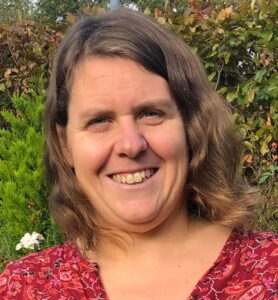
Øyvind Wiig Petersen is an Associate Professor at the Department of Structural Engineering, Norwegian University of Science and Technology (NTNU). His research focuses on bridge dynamics, wind and wave loading, inverse force identification, structural monitoring, and machine learning applications in structural mechanics. He works extensively with long-span suspension bridges and floating bridge systems. Current research areas include vortex-induced vibrations, Kalman filter applications, wind tunnel testing, and finite element model updating. He has published in leading journals like Journal of Wind Engineering, Mechanical Systems and Signal Processing, and Engineering Structures. His work integrates experimental data with computational models for structural condition assessment and load estimation.
Dr. Jonas Biehler is a Research Fellow at the Chair of Numerical Mechanics within the Institute for Computational Mechanics at the Technical University of Munich (TUM). His work focuses on computational methods for biomechanical systems, with expertise in uncertainty quantification, high-performance computing, and machine learning applications in respiratory and cardiovascular modeling. Education: PhD in Mechanical Engineering, Technical University of Munich, 2016 His primary research spans Computational Biomechanics, Computational Solid Mechanics, and Experimental Biomechanics, with specialization in Inverse Problems and Uncertainty Quantification. He integrates High-performance parallel computing with Machine Learning and Bayesian Optimization to advance Respiratory Mechanics and Semantic Segmentation of medical images. His methodologies address complex challenges in patient-specific modeling where experimental validation is constrained. Analysis of his 2021-2025 publications reveals dominant themes in respiratory system modeling (35%), uncertainty quantification frameworks (30%), and cardiovascular biomechanics (25%). Key trends include the development of open-source tools like QUEENS for solver-independent analyses, physics-informed machine learning for drug delivery optimization, and multi-fidelity approaches that reduce computational costs by 40-60% in large-scale simulations. His work increasingly bridges computational models with clinical applications in ARDS and pulmonary fibrosis. No scientific awards were documented in the provided materials. Dr. Biehler has supervised 15+ student projects with emphasis on methodological innovation and experimental validation: Deep Neural Networks as Surrogate Models for Uncertainty Quantification Multi-Level Monte Carlo Schemes for Uncertainty Quantification Experimental and Numerical Analysis of Nonlinear Anisotropic Polymer Membranes Uncertainty Quantification for Human Respiratory System Models Biaxial Measurement of Porcine Aorta Mechanical Properties He operates within the LNM (Lehrstuhl für Numerische Mechanik) research ecosystem at TUM, which maintains high-performance computing clusters and biomechanics testing facilities. The group collaborates extensively with clinical partners at Klinikum rechts der Isar on translational projects involving abdominal aortic aneurysms and respiratory mechanics, with current efforts focused on integrating real-time patient data into computational frameworks.
Professor Spiridon Penev is a faculty member at the School of Mathematics & Statistics , University of New South Wales (UNSW), Sydney. After completing his PhD in Mathematical Statistics at Humboldt University, Berlin, he worked at Technical University of Sofia (Bulgaria) for 10 years, becoming Associate Professor in 1991. He joined UNSW in 1992, progressing from Lecturer to Professor in 2019. His teaching focuses on Statistical Inference , Multivariate Analysis , Longitudinal Data Analysis , and related advanced courses. Research Interests: Wavelet Methods in Non-Parametric Curve Estimation, Edgeworth Expansions, Saddlepoint Approximation, Structural Equation Models, Inference in Semiparametric Models, and Stochastic Risk Modelling. Article Trends: His work spans from foundational wavelet methods (pre-2010) to modern applications in climate model ensembles , portfolio optimization , marine engineering , and machine learning . Keywords include Statistics, Finance, Climate Science, Structural Health Monitoring, and Optimization. Awards: DAAD Award, Elected Member of the International Statistical Institute (ISI). Grants: Led ARC Discovery Project (2016–2018), ARC Linkage Project (2018–2022), and industry collaborations like SCA water quality analysis (2014–2019). Location: School of Mathematics and Statistics, UNSW Sydney, Room 1038, The Red Centre.
Randal Barnes serves as an Associate Professor and Director of Undergraduate Studies for Civil Engineering and Geoengineering at the University of Minnesota's Department of Civil, Environmental, and Geo-Engineering. He holds the distinguished title of Distinguished University Teaching Professor, recognizing his exceptional contributions to education. His research traverses mathematical modeling in geological and civil engineering with three primary foci: geostatistical site characterization (optimal sample design and engineering decision-making under spatial variability and parameter uncertainty), incorporation of uncertainty into quantitative modeling for geoengineering, and computational aspects of the Analytic Element Method. His work spans civil infrastructure, geotechnical applications, and environmental engineering, with particular emphasis on uncertainty quantification in engineering systems. Barnes' recent publications demonstrate a strong trend toward integrating machine learning techniques with traditional engineering modeling, particularly in uncertainty quantification for both civil infrastructure and environmental applications. His work bridges civil engineering with data science approaches, showing increasing focus on neural network applications for engineering problems. Distinguished University Teaching Professor Barnes has served as Principal Investigator and Co-Investigator on significant transportation research projects funded by the Minnesota Department of Transportation, including the MnROAD Data Mining project and PCC Pavement Thickness Variation study. His research has garnered substantial academic attention with multiple publications receiving double-digit Scopus citations. His work contributes to UN Sustainable Development Goals related to sustainable infrastructure development and environmental protection through improved engineering modeling and decision-making under uncertainty.
Kevin MICHENEAU is a Teacher-Researcher at CESI School of Engineering, affiliated with the LINEACT research laboratory in Guipavas, France. His work bridges building energy systems and experimental particle physics, focusing on data-driven optimization of smart buildings and dark matter detection. Education: PhD in Subatomic Physics, University of Nantes (2018): "Study of residual electrons in the XENON100 experiment" Master's degree in Research in Subatomic Physics, University of Nantes (2014) Research Focus: Dr. MICHENEAU develops advanced models for building energy performance with emphasis on occupancy behavior impact and smart control systems . His methodology combines sensor fusion and multi-objective optimization to balance energy efficiency with occupant comfort. Previously, he contributed to XENON dark matter experiments through signal reconstruction and background modeling. Publication Evolution: His research trajectory shows a strategic pivot from particle physics (2017-2019) to building energy systems (2024), applying rigorous data analysis techniques across domains. The 2024 MPC optimization study demonstrates transferable methodology from high-precision physics to sustainable engineering. Mentorship: Currently supervising PhD candidate BOURGOIN on "Towards modeling the impact of occupancy on the energy behavior of smart buildings" (2023-2026). Research Ecosystem: Member of the "Engineering and Digital Tools" team within LINEACT, teaching Computer Science, Mechanics, and Physics across preparatory and engineering cycles while contributing to PhD training at University of Nantes.
Guillaume Puel is a Professor at Universite Paris-Saclay and a researcher at the Laboratory Paris-Saclay Mechanics (LMPS). His work focuses on inverse problems, parameter identification, and homogenization techniques in structural dynamics and mechanical engineering. His research bridges computational modeling with experimental validation, particularly in railway noise, vibro-acoustic coupling, and fatigue simulation of materials. He employs multi-scale methods, adaptive meshing, and regularization to solve transient nonlinear models with contact phenomena. Recent publications highlight trends in medium-frequency computing platforms (e.g., pyTVRC), time homogenization for fatigue analysis, and Trefftz methods for railway noise prediction. His collaborations include Denis Aubry, Andrea Barbarulo, and Nhat Quang Ta. Labs and teams: LMPS laboratory at Universite Paris-Saclay, where he contributes to advanced mechanical modeling and railway engineering applications.
Distinguished Professor Jie Lu AO is an internationally renowned scientist in computational intelligence at the University of Technology Sydney, where she serves as Associate Dean (Research Excellence) in the Faculty of Engineering and Information Technology and Director of the Australian Artificial Intelligence Institute (AAII), the largest AI hub in Australia with 35 researchers and 230 PhD students. She has been a Professor at UTS since 2007 after serving as Associate Professor from 2004-2006. Professor Lu earned her PhD from Curtin University, Perth, Australia. Her research focuses on computational intelligence with significant contributions to fuzzy transfer learning, concept drift, data-driven decision support systems, and recommender systems. She has developed machine learning models, intelligent recommender systems, and AI-driven decision support systems through collaborations with industry partners including Optus, Sydney Trains, Domain Holdings Australia Ltd, and Workforce Health Assessors Transport NSW. Her recent publications demonstrate a strong focus on addressing challenges in non-stationary environments, out-of-distribution detection, multi-stream concept drift, and applying AI to healthcare applications such as stroke risk prediction and cancer risk assessment. She has pioneered approaches combining traditional AI techniques with large language models for more robust and explainable systems, particularly in legal case recommendation and women's health applications. Officer of the Order of Australia (AO) IEEE Fellow, IFSA Fellow, Australian Computer Society Fellow Australian Laureate Fellow in AI and Industry Laureate Fellow in AI-for-Health UTS Chancellor's Research Medal for Research Excellence (2019) IEEE Transactions on Fuzzy Systems Outstanding Paper award (2019, 2022) Australian Most Innovative Engineer award (2019) NeurIPS 2022 Paper Award Australasian AI Distinguished Research Contribution Award (2022) Australian NSW Premier Prize on Excellence in Engineering (2023) Professor Lu has supervised 60 PhD students to graduation and serves as Editor-In-Chief for Knowledge-Based Systems journal. She has secured 47 ARC grants and over 110 industry projects since 2017, with funding from ARC Discovery projects, ARC Laureate Fellowships, and industry partners. Her leadership has established UTS as a leading center for AI research in Australia, with significant impact across multiple sectors including transportation, telecommunications, healthcare, and education. As Director of the Australian Artificial Intelligence Institute, Professor Lu has built a thriving research ecosystem that bridges academic research with practical industry applications. Her work on concept drift and transfer learning addresses fundamental challenges in adapting machine learning models to changing environments, with direct applications to real-world problems requiring continuous learning and adaptation.
Dr. Erhan Yumuk is a researcher at Ghent University and an alumnus of Istanbul Technical University , where he earned his Ph.D. in Control and Automation Engineering . He has served as a lecturer and deputy head of the department at Istanbul Technical University. His research focuses on: Fractional order control systems Anesthesia depth and hemodynamic control Pharmacokinetics/pharmacodynamics modeling Industrial control laboratory development Remote access control education Artificial intelligence in biomedical applications Recent publications (2024-2025) demonstrate expertise in fractional order PID controllers for time-delay systems, obesity-specific drug distribution models, and AI-enhanced pain monitoring during anesthesia. His work spans mathematical control theory, clinical implementation, and industrial applications. Scientific Recognition: Best Paper Award, IEEE Control System Society (2015) Erhan Yumuk contributes to Journal of Process Control , IFAC Journal of Systems and Control , and Applied Sciences , with emerging leadership in postdoctoral research at Ghent University.
Xiaolin Hu is a Professor in the Department of Computer Science at Georgia State University within the College of Arts & Sciences. His research focuses on modeling and simulation theory with applications in complex systems science, agent-based systems, and advanced computing environments. Ph.D. in Electrical and Computer Engineering, University of Arizona (2004) NSF CAREER Award recipient Senior member of IEEE and Society for Modeling and Simulation International (SCS) Associate editor for ACM Transactions on Modeling and Computer Simulation (TOMACS) and other journals SIMULATION: Transactions journal and International Journal of Modeling, Simulation, and Scientific Computing (IJMSSC) Dr. Hu's research spans three major areas: Dynamic Data-Driven Simulation (DDDS): Development of simulation frameworks that assimilate real-time data, particularly applied to wildfire spread prediction and autonomous systems. Multi-Agent Systems: Study of adaptive behaviors and coordination mechanisms for unmanned aircraft and social/public health systems. Advanced Computing: Implementation of parallel and cloud computing solutions for large-scale simulations. His recent publications (2025-2023) demonstrate a strong focus on integrating real-time data from UAVs and satellite systems into wildfire simulations, utilizing Bayesian methods for sequential data assimilation, and developing cloud-based simulation services. These works bridge computational modeling with environmental science applications. Scientific recognitions include: National Science Foundation (NSF) CAREER Award Dr. Hu has chaired multiple international conferences in modeling and simulation and leads the SIMS Lab at Georgia State University, which specializes in simulation technologies and their applications in diverse domains.
Andrei Volodin is a Professor in the Department of Mathematics and Statistics at the University of Regina, Canada. He serves as the Co-op Work/Study Coordinator and has an extensive publication record spanning probability theory, statistical inference, and applied statistics. His research focuses on limit theorems, bootstrap methods, and distributional analysis with applications to quality control and healthcare economics.
Rafael Ruiz is an Assistant Professor of Mechanical Engineering at the University of Michigan-Dearborn. His research develops computational methods for uncertainty quantification and optimization of mechanical systems, with applications in energy harvesting and structural dynamics. Research domains include: Stochastic modeling of material behavior Bayesian inference for engineering systems Vibration-based energy harvesting Multifunctional metamaterials His publications demonstrate strong emphasis on probabilistic approaches for piezoelectric energy harvester design, particularly for infrastructure monitoring applications. Recent work integrates machine learning with physical models for improved reliability predictions.
Cristina L. Archer is a Professor and Unidel Howard Cosgrove Career Development Chair in Environment at the University of Delaware. She holds a split appointment between the Department of Geography and Spatial Sciences and the Department of Mechanical Engineering. Her roles include Director of the Center for Research in Wind (CReW) and Faculty Director of the Eco-Entrepreneurship certificate program. She earned her Ph.D. in Civil and Environmental Engineering from Stanford University (2004), an M.S. in Meteorology from San Jose State University (1998), and an M.S. in Civil and Environmental Engineering from Politecnico di Milano (1995). Her research focuses on renewable energy, wind power, meteorology, climate change, air quality, and numerical modeling of atmospheric processes. She leads the Atmosphere and Energy Research Group (AERG), advising numerous PhD students and postdocs. Her work explores wind energy impacts on climate, air quality, and hurricane dynamics, with contributions to wind farm optimization and energy-food nexus studies. Dr. Archer’s research has been published in journals like *Monthly Weather Review*, *Environmental Research Letters*, and *Applied Energy*. She serves on editorial boards for *Meteorological Applications* and *Bulletin of the Atmospheric Science and Technology*. Her lab, CReW, investigates technical, environmental, and policy dimensions of wind energy deployment. Grants & Funding: Extensive support for wind energy research, including studies on offshore wind impacts, hurricane mitigation via turbines, and climate modeling. Labs/Teams: Center for Research in Wind (CReW), Atmosphere and Energy Research Group (AERG). Advising: Mentored over 20 graduate students and postdocs since 2012, with notable contributions to wind farm modeling, air quality, and energy policy.
Hang Zhou is a Post-Doctoral Scholar at the University of California, Davis, specializing in advanced statistical and computational methodologies. His research focuses on functional and high-dimensional data analysis, complex-structured data including manifold and Wasserstein types, and ODE/PDE modeling. He is affiliated with the Mathematical Sciences Building at UC Davis. His research interests encompass functional data analysis, high-dimensional statistics, and the integration of differential equations into modeling frameworks. He explores complex-structured data such as manifold and Wasserstein geometries, advancing methodologies for analyzing distribution-valued processes and error detection in numerical data. Zhou’s recent work bridges machine learning and statistical theory, exemplified by studies on deep regression for repeated measurements and event-attended graph ODE frameworks. His research also emphasizes conformal inference and optimal transport representations, reflecting a focus on robust statistical methods and interdisciplinary applications in data science. As a postdoctoral researcher, Zhou has not yet listed advisees or grants in the provided information. His website ( https://hg-zh.github.io/ ) provides additional details on his ongoing projects and collaborations.
Roozbeh Kiani is a Professor of Neural Science and Psychology at New York University's College of Arts and Science. His research focuses on decision-making processes and their neural underpinnings, combining electrophysiological recordings, fMRI, and computational modeling. He holds a Ph.D. from the University of Washington (2009) and leads a lab studying perceptual and mnemonic decision mechanisms. Key areas include neural integration of sensory evidence, confidence estimation, and the role of prefrontal and parietal cortices. Education: Ph.D. in Neuroscience, University of Washington (2009). Research emphasizes understanding how the brain integrates information to form decisions, with applications to cognitive disorders. His lab employs advanced techniques like single-neuron recordings and causal manipulation of neural circuits to dissect decision dynamics. Current projects explore hierarchical decision-making, neural representations of choice confidence, and the impact of perturbations on circuit function. Students advised include Isabella Rischall (PhD student) and Chenghao Zhou (Master’s student). Collaborations span computational neuroscience, biomedical engineering, and cognitive psychology. Publications highlight topics like recurrent neural circuit compensation (2024), functional causal flow predictions (2023), and Bayesian models of perceptual confidence (2021). His work bridges cellular mechanisms with behavioral outcomes, aiming to inform treatments for cognitive impairments.
Dr. Natalie Harvey is a Senior Research Scientist at the Department of Meteorology, University of Reading. She specializes in atmospheric transport processes, volcanic ash dispersion modeling, and uncertainty quantification in natural hazard forecasts. Her work focuses on improving volcanic ash forecasting through advanced model techniques and satellite data integration. She is affiliated with projects like R4Ash, IMPALA, and RACER, addressing volcanic hazards and climate-related risks. Her research interests include boundary layer dynamics, remote sensing applications, and decision-making under uncertainty. She has contributed to over 30 peer-reviewed articles, analyzing volcanic eruptions such as Raikoke 2019 and Grímsvötn 2011. Her methods enhance forecast accuracy by integrating ensemble meteorology and source inversion techniques. Notably, she explores how AI models compare to traditional physics-based approaches in weather prediction, highlighted in a 2024 study on Storm Ciarán. Dr. Harvey holds a PhD from the University of Reading (Boundary-layer type classification and pollutant mixing) and has developed classification algorithms for atmospheric layers using Doppler lidar. She collaborates with institutions like the Met Office and has received international recognition for her work in volcanic ash transport and dispersion modeling.