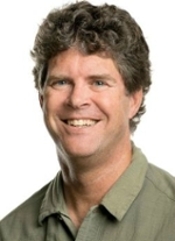
Mark Lewis is the Kennedy Chair in Mathematical Biology at the University of Victoria, holding joint appointments in the Departments of Mathematics and Statistics and Biology. His research focuses on spatial ecology and mathematical modeling, addressing ecological challenges such as animal movement, invasive species, and disease dynamics. Lewis earned his D.Phil. in Mathematical Biology from the University of Oxford and has been elected a Fellow of the Royal Society UK. His work integrates mathematical analysis, field studies, and interdisciplinary approaches to solve ecological problems. Current projects include modeling polar bear populations, cyanobacteria dynamics, and the impact of climate change on wildlife. Lewis supervises students across both UVic and his former University of Alberta lab. Education: D.Phil. in Mathematics (Mathematical Biology), University of Oxford Awards: Royal Society Fellowship, CRM-Fields-PIMS Prize, and Okubo Prize Key Research Areas: Animal movement modeling, aquatic ecology, wildlife disease, and invasive species management Publications highlight his contributions to understanding disease spread, parasite dynamics, and ecological responses to environmental changes. Lewis collaborates widely, applying mathematical tools to real-world conservation and health challenges.
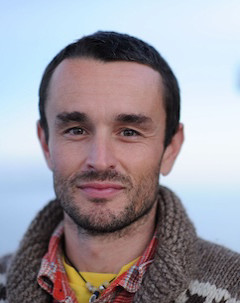
Chris Darimont is a Professor and Raincoast Research Chair in Applied Conservation Science within the Department of Geography at the University of Victoria's Faculty of Social Sciences. His work bridges natural and social sciences to address urgent conservation challenges, with a geographic focus on British Columbia's Central Coast (Great Bear Rainforest) but designed for global relevance. His research spans three primary domains: landscape ecology at the marine-terrestrial interface, conservation biology of harvest management, and conservation ethics. Darimont maintains deep collaborations with First Nations communities and conservation organizations like the Raincoast Conservation Foundation (where he previously served as Science Director) and Hakai Institute. His work frequently integrates Indigenous Knowledge with scientific methods, exemplified by projects like the Nuxalk Sputc (Eulachon) initiative and Heiltsuk bear monitoring. Darimont's publication record shows consistent focus on human-wildlife interactions, particularly bear-salmon ecosystems, trophy hunting ethics, and Indigenous-led conservation. His highly cited 2009 PNAS paper "Human predators outpace other agents of trait change in the wild" and 2015 Science paper "The unique ecology of human predators" established foundational frameworks in conservation science. Recent work increasingly emphasizes decolonial approaches and Two-Eyed Seeing methodologies. As an educator, he teaches GEOG 391 (Contemporary Topics in Coastal Conservation) and GEOG 353 (Coastal and Marine Resources), prioritizing student mentorship as his "favourite form of outreach." His research is regularly featured in high-profile media including National Geographic and The New York Times, reflecting his commitment to science communication and public engagement.
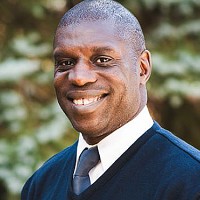
Lawrence Goodridge is a Professor and Director of the Canadian Research Institute for Food Safety (CRIFS) at the University of Guelph's Ontario Agricultural College. He holds the Leung Family Professorship in Food Safety and leads research at the intersection of food safety, antibiotic resistance, and One Health principles. His work focuses on applying genomic technologies to study foodborne pathogens (E. coli, Salmonella, Listeria, Cronobacter) and leveraging wastewater surveillance for infectious disease outbreak prediction. Academic History: BSc Microbiology (University of Guelph, 1995), MSc Food Microbiology (2003), PhD Food Microbiology (2002), followed by post-doctoral training in Food Safety at the University of Georgia (2002). Joined CRIFS in 2003. Research Interests: Genomic analysis of pathogen emergence, wastewater-based epidemiology, bacteriophage applications, and consumer education strategies for food safety. His lab develops innovative methods for rapid pathogen detection in food systems and environmental samples. Articles Trends: Over 100 peer-reviewed publications emphasize genomic surveillance of foodborne pathogens and SARS-CoV-2, with a focus on wastewater sampling innovations. Recent work explores multi-modal data integration for public health forecasting and ethical data protection frameworks for surveillance programs. Awards: While no specific prizes are listed, his $50M+ research funding from Canadian/international sources underscores recognition of his impactful work. Grants support projects like phage-based sanitization and antimicrobial resistance tracking. Advising & Labs: Leads CRIFS laboratory operations and collaborates globally on food safety initiatives. His research has informed food industry guidelines and policy frameworks for mitigating pathogen risks in agricultural and environmental systems.
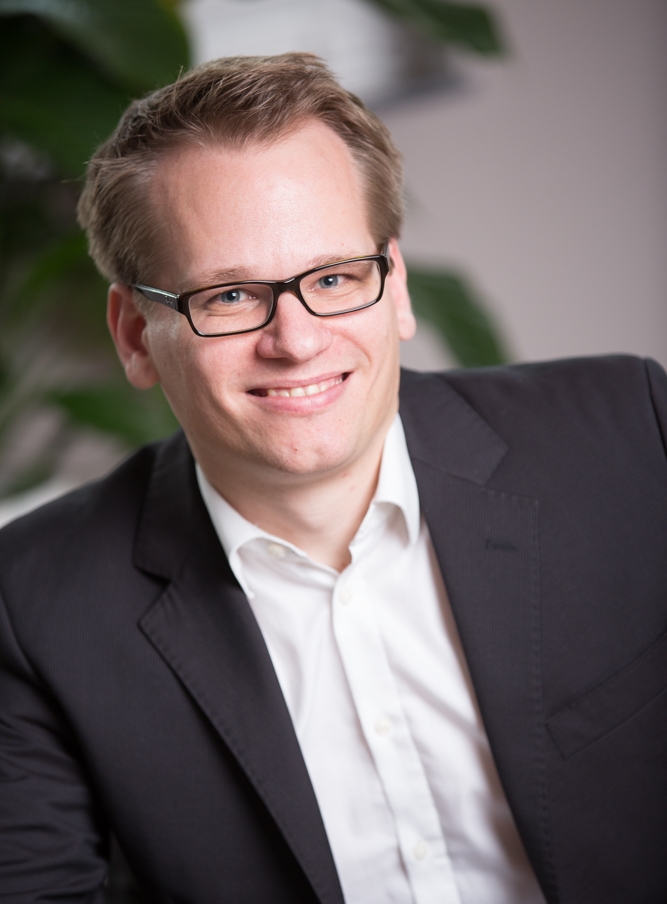
Dr. Markus Brinkmann is an Associate Professor in the School of Environment and Sustainability at the University of Saskatchewan, Canada, and Director of the Toxicology Centre. He holds the Centennial Enhancement Chair in Mechanistic Environmental Toxicology. His research focuses on exposure and risk assessment modeling, toxicokinetic modeling, and aquatic ecotoxicology, with an emphasis on understanding contaminant effects under realistic environmental conditions. Affiliations: Associate Professor, University of Saskatchewan Director, Toxicology Centre Member, Global Water Futures Program Member, Global Institute for Water Security Education: Ph.D. (Biology) - RWTH Aachen University, Germany (2015) M.Sc. (Ecotoxicology) - RWTH Aachen University, Germany (2011) B.Sc. (Biology) - RWTH Aachen University, Germany (2009) Research Interests: Dr. Brinkmann develops computational models to predict contaminant uptake, effects, and cross-species extrapolation. His work integrates toxicology, environmental chemistry, and hydrology to address challenges like flood-related contaminant remobilization and dioxin-like compound toxicity. Key areas include: Mechanistic toxicology of emerging contaminants (e.g., 6PPD-quinone, PFAS alternatives) Sediment toxicity and bioavailability Wastewater surveillance for public health monitoring Grant Highlights: Global Water Futures Program (2018-2023): Hydrological-exposure models for environmental risk assessment Genome Canada (2016-2020): EcoToxChip for chemical prioritization Banting Postdoctoral Fellowship (2016-2018) Awards: Friedrich-Wilhelm-Award (2016) SETAC GLB Young Scientists Award (2016 PhD, 2012 MSc) Borchers medal (2016) Leadership: He advises on strategic research partnerships between Canada and Germany and collaborates globally on projects like the EcoToxChip and Project House Water . His work bridges academic research with practical environmental management solutions.
Pascale Biron is a Professor in the Department of Geography, Urban Planning and Environment at Concordia University, Montreal. She holds a Ph.D. in Geography from Université de Montréal (1995) and has been with Concordia since 1998. Her research focuses on river dynamics, stream restoration for fish habitat, flood modeling, and climate change impacts. She specializes in hydrogeomorphology, river management in agricultural watersheds, and numerical modeling of fluvial processes. Research Interests: Her work includes river restoration strategies, flood risk assessment using LiDAR technology, and the 'river freedom' concept promoting ecosystem resilience. She collaborates closely with government agencies to translate research into practical river management policies. Professional Affiliations: Canadian Geomorphology Research Group, Canadian Association of Geographers, American Geophysical Union, GRIL (Limnology Research Group), and RIISQ (Quebec Flood Risk Network). Publications & Research: Recent studies address global salmonid biomass patterns, fluvial hazard detection via machine learning, and large-scale flood modeling. She supervises 19 graduate students in Ph.D./M.Sc. programs in Geography and Environmental Studies, focusing on topics like river confluence hydraulics and agricultural stream restoration. Grants & Funding: Active projects include river dynamics in fish habitats, flood modeling for road infrastructure vulnerability, and computational fluid dynamics simulations of river flows. She also leads research on societal dimensions of river restoration and policy frameworks for flood resilience.
Brian Leung is an Associate Professor at McGill University, jointly affiliated with the Department of Biology and the Bieler School of the Environment . He holds the prestigious UNESCO Chair for Dialogues on Sustainability and serves as Director of the McGill Neotropical Environment Option (NEO) , a collaborative program with the Smithsonian Tropical Research Institute. His work bridges ecological theory, computational modeling, and environmental policy. Dr. Leung earned his PhD in Biology from Carleton University and completed postdoctoral research at the University of Cambridge and the University of Notre Dame. His academic journey at McGill began in 2004 as an Assistant Professor, advancing to Associate Professor in 2010. His research centers on predictive ecology , particularly modeling biological invasions and sustainability challenges . He develops and applies mathematical, statistical, and computational models to understand invasion dynamics across terrestrial, aquatic, and marine systems. His recent work includes the Panama Research and Integrated Sustainability Model (PRISM) , a spatially explicit framework for sustainability science in the Global South. His research spans scales from local to global and integrates ecological, economic, and social factors. His recent publications show a strong focus on invasion risk assessment , species distribution modeling , economic costs of invasions , and ecological forecasting . He frequently publishes in top journals such as Nature , Ecology Letters , and Global Ecology and Biogeography , emphasizing data-driven decision-making and policy relevance. Dr. Leung has received significant recognition through invitations to contribute to major reports and has co-edited influential works on invasive species economics. While specific named awards are not listed, his leadership roles and publication record reflect high scientific esteem. He actively mentors a dynamic research group, supervising multiple Ph.D. and M.Sc. students on projects related to invasion modeling, mangrove conservation, forest pest dynamics, and urban ecology. His lab emphasizes quantitative skills and interdisciplinary collaboration. He has secured research funding to support these projects, though specific grants are not detailed in the text. He leads the Leung Lab , which focuses on predictive modeling in ecology and sustainability. The lab collaborates with institutions such as the Smithsonian Tropical Research Institute and environmental firms like Habitat. Current projects include multi-species connectivity modeling, mangrove ecosystem services, and forecasting forest pest outbreaks.
Gunnar Blohm is an Assistant Professor in the Department of Biomedical and Molecular Sciences at Queen's University, affiliated with the School of Medicine and Faculty of Health Sciences. His research focuses on sensorimotor neuroscience, particularly 3D sensorimotor control, eye-hand coordination, and computational modeling of neural processes. He holds a Ph.D. from Université Catholique de Louvain and has held postdoctoral positions at York University and his alma mater. Cross-appointed to the School of Computing, Department of Psychology, and Department of Mathematics and Statistics, he is also Vice-Director of the Connected Minds initiative. His research integrates behavioral experiments, brain imaging (MEG/EEG), and patient studies to understand how sensory information is transformed into goal-directed actions. Key areas include visuomotor transformations, multisensory integration, and Bayesian processes in neural computations. Blohm leads the Computational Sensorimotor Neuroscience Lab, emphasizing collaborative projects like Neuromatch Academy and contributions to open science initiatives. Affiliated with Queen's Centre for Neuroscience Studies and Ingenuity Labs, his work bridges computational approaches with clinical applications, aiming to develop frameworks for understanding brain dysfunction and clinical tools. His recent articles explore topics like saccade dynamics, pupil responses, and generative adversarial collaborations in scientific discourse.
Dr. Saman Razavi is an Associate Professor at the University of Saskatchewan, holding dual appointments in the School of Environment and Sustainability (SENS) and the Department of Civil, Geological and Environmental Engineering in the College of Engineering. He is a member of the Global Institute for Water Security and leads the Razavi EnviroFutures Lab. His research focuses on hydrological modeling, water resources management, climate change impacts, and the integration of machine learning with environmental science. Dr. Razavi has earned a PhD in Civil and Environmental Engineering from the University of Waterloo. Education: PhD in Civil and Environmental Engineering, University of Waterloo MS in Civil and Environmental Engineering, Amirkabir University, Iran BS in Civil Engineering, Iran University of Science and Technology Research interests include hydrologic model development, optimization, uncertainty quantification, climate change analysis, and socio-hydrological modeling. He emphasizes interdisciplinary approaches to address water challenges through integrated frameworks that bridge natural science, engineering, and socio-economic factors. Award: Walter L. Huber Civil Engineering Research Prize from ASCE (2024) Advising & Grants: Dr. Razavi leads the Integrated Modelling Program for Canada under Global Water Futures, focusing on transboundary water systems. His work involves developing decision-support tools for flood/drought management and climate adaptation. Labs/Teams: The Razavi EnviroFutures Lab advances research on water-human systems, leveraging AI and big data to enhance resilience against water-related hazards. Current projects include flood-prone area mapping, drought prediction, and socio-hydrological modeling in transboundary basins.
Dr. Ryan Ziels is an Associate Professor in the Department of Civil Engineering at the University of British Columbia's Faculty of Applied Science. His research focuses on sustainable biological wastewater treatment and resource recovery through advanced microbial biotechnologies, with affiliations to the BioProducts Institute and Clean Energy Research Centre. Education: PhD and MSE in Civil and Environmental Engineering, University of Washington BS in Environmental Resources Engineering, Humboldt State University Research Focus: Ziels pioneers microbial ecology studies in engineered waste treatment systems, employing multi-omics approaches to optimize anaerobic digestion for biomethane production and biological nutrient removal. His work targets recovery of water, nutrients, and bioenergy while enhancing human and environmental health through microbial community engineering. Publication Trends: Recent publications (2022-2025) reveal intensified focus on metaproteomics for syntrophic metabolism characterization, high-throughput sequencing for microbial community analysis, and wastewater-based epidemiology for pathogen surveillance. His research increasingly integrates ethical frameworks for public health applications while advancing fundamental understanding of microbial processes in anaerobic systems. Academic Engagement: Ziels teaches core courses including Fundamentals of Environmental Engineering (CIVL 204), Environmental Lab Analysis (CIVL 407), and Environmental Biotechnology (CIVL 569). He supervises graduate students in Civil Engineering and Genome Science and Technology programs through UBC's Graduate and Postdoctoral Studies, directing the EMBERr Lab for microbiome engineering research.
Dr. Pascale Biron is a Professor in the Department of Geography, Planning and Environment at Concordia University, Montreal. Her research focuses on river dynamics, stream restoration, flood modeling, and climate change impacts. She has been at Concordia since 1998 and holds professional affiliations with key organizations like the Canadian Geomorphology Research Group and the American Geophysical Union. Education: PhD from Université de Montréal and Leeds University (fluvial geomorphology) Research Interests Her work integrates fluvial geomorphology, computational fluid dynamics, and societal aspects of river management. Key themes include: River restoration for fish habitat Floodplain modeling using LiDAR Climate adaptation strategies Socio-hydrological dimensions of restoration Hydrodynamic processes at river confluences Recent Research Trends Recent publications emphasize global salmonid habitat analysis, machine learning for fluvial hazard detection, and the socio-environmental impacts of urban flooding. Her work bridges technical hydrology with policy-relevant solutions for sustainable water management. Grants & Advising Supervises over 15 graduate students (PhD/MSc) in topics ranging from flood modeling to bioengineering. Active in collaborative projects like the 'Freedom Space for Rivers' initiative and large-scale floodplain mapping. Labs & Teams Member of GRIL (Limnology Research Group) and RIISQ (Quebec Flood Network), contributing to interdisciplinary water security research.
Dr. Lauren Emberson (she/her/hers) is an Associate Professor in the Department of Psychology at the University of British Columbia, Faculty of Arts. She directs the Baby Learning Lab, which is part of UBC's Early Development Research Group, a consortium focused on infant and child development. Prior to her position at UBC, Dr. Emberson was an Assistant Professor at Princeton University where she co-founded and co-directed the Princeton Baby and Princeton Kid Labs. Education: Postdoctoral Associate, University of Rochester (PI Aslin) Ph.D, Cornell University (PIs Amso, Goldstein, Spivey) B.Sc, University of British Columbia Dr. Emberson's research focuses on learning, perception (audition, vision, crossmodal or multisensory), language development, face/object perception, and attention in infants. She investigates these capacities using behavioral and neuroimaging techniques, particularly fNIRS (functional near infrared spectroscopy), working primarily with very young infants (birth through 1 year) and preterm/premature infants. Her work examines how infants' learning capacities contribute to rapid development of perception in ecological contexts, with implications for understanding how early life experiences affect later outcomes. Analysis of Dr. Emberson's recent publications reveals a consistent focus on infant perception, learning mechanisms, and neuroimaging methodology. Her work increasingly incorporates advanced fNIRS techniques while maintaining focus on fundamental questions about how infants learn from their environment. There's a growing emphasis on individual differences, cross-cultural comparisons, and applications to infants facing developmental challenges. Dr. Emberson serves on the editorial board of Infancy (journal of the International Congress of Infancy Studies) and is a consulting editor for the Journal of Cognitive Neuroscience . Her research has been published in top journals including PNAS, Current Biology, Psychological Science, Cognition, Developmental Science, and the Journal of Neuroscience. Dr. Emberson has secured significant research funding from prestigious organizations including the Bill and Melinda Gates Foundation, James S. McDonnell Foundation, Natural Sciences and Engineering Research Council (NSERC), Canadian Institutes of Health Research (CIHR), and the National Institutes of Health (NIH). She collaborates with clinicians at BC Women's and Children's Hospitals to understand how different early life experiences impact learning and brain development. Dr. Emberson is currently accepting graduate students into her research program. The Baby Learning Lab, under Dr. Emberson's direction, is part of UBC's Early Developmental Research Group and collaborates with multiple institutions. The lab strives to provide interactive research experiences for infants and families while advancing scientific understanding of early cognitive development. The lab acknowledges that it operates on the traditional, ancestral, and unceded territory of the xʷməθkʷəy̓əm (Musqueam) people.
Sibel Alumur Alev is an Associate Professor and Associate Chair of Graduate Studies at the University of Waterloo. Her research focuses on logistics network design, hub location optimization, and sustainable transportation systems. She actively contributes to the fields of operations research and supply chain management, with a strong emphasis on addressing uncertainty in network design and strategic infrastructure planning. Her work spans applications in autonomous mobility systems, electric vehicle charging infrastructure, healthcare logistics, and pandemic response. She has published extensively on hub-and-spoke network models, reverse logistics for environmental sustainability, and multi-period resource allocation strategies. Notable areas of interest include the integration of stochastic and robust optimization methodologies into real-world logistics challenges. Dr. Alev’s research also bridges academic and industrial needs, addressing practical problems such as optimal testing center locations during pandemics and strategic freight hub expansions. Her contributions have been featured in peer-reviewed journals and conference proceedings, reflecting her commitment to advancing both theoretical and applied aspects of logistics and operations research.
Katja Fennel is a Professor in the Department of Oceanography at Dalhousie University, Faculty of Science. Her research focuses on coupled physical-biogeochemical modeling to understand marine ecosystems, carbon and nutrient cycling, and climate change impacts. She specializes in coastal and open ocean dynamics, with expertise in hypoxia, ocean deoxygenation, and carbon sequestration. Fennel holds significant academic roles including Killam Professorship (2019-2024) and former Co-editor-in-Chief of Biogeosciences (2013-2021). She has led projects on ocean prediction, marine carbon dioxide removal (CDR), and coastal acidification. Education: PhD in Marine Biology and Diploma in Numerical Mathematics from University Rostock, Germany Affiliations: Adjunct roles at University of Maryland Center for Environmental Science, University of Maine, and Rutgers University Research Interests: Development of high-resolution coupled models to study biogeochemical processes in shelf and open ocean systems. Key areas include the impact of climate change on marine ecosystems, hypoxia formation mechanisms, and the role of ocean alkalinity enhancement in carbon removal. Fennel's work integrates observational data with advanced modeling to address ecological and climate challenges. Publications highlight contributions to understanding coastal-ocean carbon dynamics, biogeochemical forecasting, and Arctic carbon uptake. Recent focus includes expanding Argo float networks and evaluating marine CDR strategies like ocean alkalinity enhancement (OAE). Awards: AGU Fellow (2024), CMOS President's Prize (2023)
Keunhyun (Keun) Park is an Assistant Professor of Urban Forestry at the University of British Columbia (UBC), affiliated with the Department of Forest Resources Management . He also holds an Adjunct Professor position at Utah State University in the Department of Landscape Architecture and Environmental Planning. Education: BSc and MSc in Landscape Architecture from Seoul National University; PhD in Urban Planning and Design from the University of Utah Research Lab: Faculty lead of the Urban Nature Design Research Lab ( under_lab ) His research focuses on designing healthy, just, and resilient cities through urban nature , with particular emphasis on: Environmental justice and equitable access to urban green spaces Human behavior in public spaces using drone/sensor/VR technology Smart growth urban design impacts on public health and ecological systems Recent publications demonstrate expertise in GIS applications , pedestrian behavior analysis , and urban planning across 20+ studies from 2013-2025. Collaborations include the Vancouver Park Board , Metro Vancouver , and Wasatch Front Regional Council .
Sapna Sharma is a Full Professor in the Department of Biology at York University's Faculty of Science. Her research focuses on predicting the effects of environmental stressors—such as climate change, invasive species, and habitat alteration—on lakes and aquatic ecosystems. She leads the Sharma Lab, emphasizing big data and machine learning to address global change biology challenges. Her work explores lake ice dynamics, water quality, and biodiversity responses to climate shifts, with a focus on Arctic and Northern Hemisphere lakes. Key research areas include cryosphere studies, aquatic ecology, and climate modeling. She has developed quantitative frameworks to predict ecosystem responses and collaborates on long-term projects like the Community Lake Ice Collaboration, spanning over 1,000 lakes. Her lab's contributions include datasets like the Global Lake area, Climate, and Population (GLCP), enhancing global environmental monitoring. Sharma's research highlights societal impacts of environmental changes, such as reduced lake ice safety and economic consequences for communities. She advocates for interdisciplinary approaches to limnology and emphasizes freshwater biodiversity conservation. Her work bridges ecological and social sciences, addressing climate adaptation and policy implications. Contact details: Email sharma11@yorku.ca , Office: Lumbers Building 326. She is eligible to supervise graduate students in the Biology Graduate Program at York University.