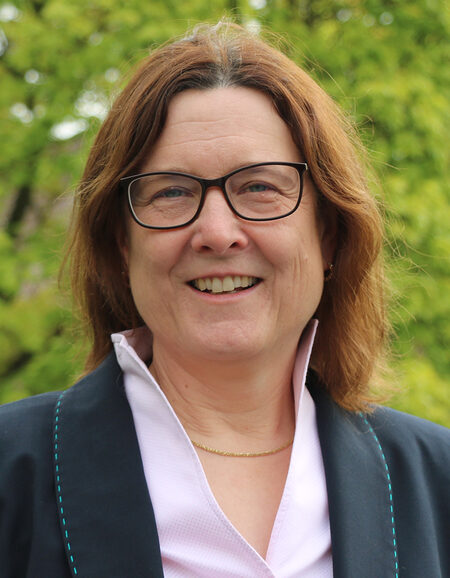
Sebastian Niehaus is a Doctoral Researcher affiliated with the Max Planck Institute for Human Cognitive and Brain Sciences and TU Dresden. His work bridges Neuroscience and Machine Learning , focusing on Medical Informatics and Statistical Computing . He develops scalable AI applications for clinical workflows through standardized data harmonization pipelines.
Yuankai Wu is a Researcher at the Chair of Media Technology , Technical University of Munich , focusing on Human Activity Understanding and Computer Vision . He received a B.Sc. in Electrical Engineering (2017) from Ruhr West University of Applied Sciences and an M.Sc. in Electrical Engineering and Information Technology (2020) from TUM. His work explores Human-Object Interaction Understanding and 3D Geometric Features for Assistive Robotics . Education : B.Sc. (Ruhr West), M.Sc. (TUM) Affiliation : Chair of Media Technology, TUM Research Themes : Human activity modeling, vision-driven robot assistance, action anticipation His publications (2022–2025) address topics like TSCL for action segmentation, MistSense for mistake detection, and Neural Painted Radiosity Fields for 3D reconstruction. Collaborative projects span embodied interaction , contextual alignment , and scan-to-CAD estimation .
Laura Lützow is a Researcher at the Technical University of Munich (TUM), affiliated with the Faculty of Informatics and the Cyber Physical Systems group. She earned her bachelor's degree in Mechatronics from TU Ilmenau (2020) and a master's degree in Robotics, Cognition, and Intelligence from TUM (2022). Her work focuses on enhancing the safety and reliability of autonomous systems through set-based system identification, uncertainty quantification, and conformance checking. B.Sc. in Mechatronics, TU Ilmenau (2020) M.Sc. in Robotics, Cognition, and Intelligence, TUM (2022) Laura's research emphasizes formal methods for analyzing and improving the safety of autonomous systems. Her work includes developing mathematical frameworks for reachability analysis and uncertainty quantification, particularly in dynamic environments with complex constraints. Laura's publications highlight advancements in reachability analysis, system identification, and uncertainty quantification. Key themes include conformal prediction for autonomous systems, zonotope reduction techniques, and motion planning under dynamic obstacles. Her work bridges theoretical control systems research with practical applications in robotics and AI safety. She has taught courses on verification, controller synthesis, formal methods, and fundamentals of artificial intelligence at TUM. Additionally, she was a visiting researcher at Stanford University's Intelligent Systems Laboratory (January-July 2025).
Prof. Martin Dichgans is Director and Chairman of the Institute for Stroke and Dementia Research (ISD) at Ludwig-Maximilians University (LMU) Munich and Klinikum der Universität München. A leading figure in stroke genetics and vascular neurology, he has pioneered research on cerebral small vessel disease (SVD), atherosclerosis, and neurodegenerative mechanisms in stroke. Research Focus: Genetic and molecular mechanisms of SVD (e.g., HTRA1, COL4A1, FOXF2) Role of HDAC9 in atherogenesis and vascular inflammation Translational approaches combining human studies, genome editing, and mouse models Development of biomarkers for stroke risk and outcomes Recent Publication Themes include genetic risk scores for stroke, neuroimaging standards for SVD, inflammatory pathways in atherosclerosis, and vascular contributions to dementia. His work spans genomics, proteomics, and clinical trials (e.g., TREAT-SVDs). Awards & Leadership: President of the European Stroke Organisation (2020–present) and German Stroke Society (2016–2020), Coordinator of the Leducq Trans-Atlantic Network of Excellence, and key role in major international consortia (METASTROKE, MEGASTROKE). Training & Collaboration: Mentors PhD/MD students and postdocs in projects spanning bioinformatics, lab mechanistic studies, and clinical research. Leads interdisciplinary teams in projects like SyNergy (DFG Cluster of Excellence) and ImmunoStroke (DFG Collaborative Research Centre).
Amiram Ariel is an Associate Professor specializing in immunology with a focus on inflammation resolution mechanisms. He serves as Associate Editor for Inflammation at Frontiers in Immunology and Review Editor for Molecular Innate Immunity, demonstrating active scholarly engagement. His research centers on macrophage biology and pro-resolving mediators, investigating their roles in treating inflammatory disorders, fibrosis, cancer metastasis, and diabetic wound healing. Key contributions include elucidating interferon-stimulated neutrophil functions in immunotherapy response and JMJD3/STING pathway interactions in tissue repair. Recent publications (2021-2024) reveal consistent themes: leveraging resolution-phase macrophages against dormant tumor cells, IFN-β-mediated anti-fibrotic effects, and inflammation resolution strategies for COVID-19 pathogenesis. These works bridge molecular immunology with translational applications in oncology and regenerative medicine. No scientific awards are documented in the available materials. While his 53 publications indicate significant scholarly output, details regarding student mentorship, grant funding, or laboratory structure are absent from the provided text. His professional network includes 79 followers and 49 researchers he follows, reflecting active academic collaboration. Dr. Ariel's educational background includes studies at Hebrew University, though specific degrees and years remain unspecified in the source material.
Prof. Dr. rer. nat. Lutz Engisch is a Professor of Materials Science at the Faculty of Computer Science and Media, Leipzig University of Applied Sciences. Since 2024, he serves as Vice Dean for Research and Director of the Institute iP³ Leipzig. His research focuses on gravure engraving, digital printing systems, sustainable materials, and smart packaging.
Jutta Billino serves as Associate Professor in the Department of General Psychology at the Faculty of Psychology and Sports Science, Justus Liebig University Giessen, where she has held academic positions since 2008. Her research examines interindividual differences in visual perception and sensorimotor control across the adult lifespan, with particular focus on how sensory, motor, cognitive, and motivational processes interact in healthy aging and neurological conditions. Her academic background includes a Diploma in Psychology from Justus Liebig University Giessen and University of Utah (1992-1998), state certification as Psychological Psychotherapist (1999-2002), Clinical Neuropsychology certification (1999-2005), and PhD (Dr. rer. nat.) from JLU Giessen in 2009. Her doctoral work investigated motion processing pathways in humans under Prof. Karl Gegenfurtner. Professor Billino's research program explores visual perception and sensorimotor control through behavioral experiments with healthy adults and neurological patients. Her work reveals how aging affects visual confidence, tactile suppression during movement, and multisensory integration, demonstrating that cognitive control capacities mediate age-related differences. Current projects examine memory for unexpected objects in real-world scenes and cross-modal metacognition, highlighting preserved abilities in older adults through compensatory mechanisms. Recent publications (2018-2023) show consistent focus on aging and perception, with key contributions in visual confidence mechanisms, sensorimotor predictions, and multisensory integration. Her work spans experimental psychology, cognitive neuroscience, and clinical neuropsychology, frequently employing eye-tracking, behavioral paradigms, and patient studies to uncover lifespan trajectories in perceptual processing. Her scientific recognition includes: DFG Graduate College Fellowship (2004-2008) in 'Neuronal Representation and Action Control' As academic supervisor, she guides PhD candidates in perceptual aging research and secures third-party funding for her laboratory investigations. Her teaching integrates clinical neuropsychology with experimental methods, reflecting her dual expertise in research and clinical practice. She maintains active collaborations across European institutions, particularly in motion perception and aging research networks. Professor Billino leads a research group within the Department of General Psychology focused on visual perception across the lifespan. Her team employs behavioral testing, eye-tracking, and patient studies to investigate how sensory, motor, and cognitive processes interact during aging. Current projects examine confidence calibration in multisensory tasks and neural mechanisms underlying preserved perceptual abilities in older adults, with implications for healthy aging interventions.
Elisa Orrù is a Senior Researcher at the Max Planck Institute for the Study of Crime, Security and Law, Department of Public Law, and holds a venia legendi in philosophy from the University of Freiburg. She previously served as a visiting professor for Modern/Economic Philosophy at the University of Freiburg in the summer semester of 2023. Her academic journey spans multiple prestigious institutions including the University of Milan, University of Pisa, Husserl Archive at the University of Freiburg, and Princeton University. Dr. Orrù's educational background includes: Doctorate in Law from the University of Pisa (Italy), supervised by Prof. Danilo Zolo, with a dissertation on legitimacy issues of international tribunals Philosophy studies at the University of Milan (Italy) Her research focuses on the intersection of digitalization, security, and fundamental rights. Dr. Orrù explores how emerging security paradigms, particularly those employing algorithmic approaches, impact democratic values, the rule of law, and individual autonomy. She examines privacy in the digital age, ethics of artificial intelligence, and the philosophical foundations of security policies within the European context. Her work bridges legal theory, political philosophy, and practical policy concerns, with particular attention to how security measures affect marginalized groups and democratic processes. Dr. Orrù's publication record reveals a consistent focus on the tension between security imperatives and fundamental rights in the digital age. Her work spans privacy theory, algorithmic governance, EU security policy, and the philosophical implications of emerging technologies. A significant portion of her research examines the work of historical figures like Olympe de Gouges to inform contemporary debates about rights, autonomy, and security. Her interdisciplinary approach combines insights from law, philosophy, and political science to address pressing challenges in digital governance. Dr. Orrù serves on the editorial team of the journal "Jura Gentium" and acts as an external ethics advisor for the ERC project EXTREME ("The Rise and Fall of Populism and Extremism," PI Maria Petrova). She regularly reviews research proposals for the European Commission and the German Research Foundation (DFG). Her research projects include: FreiburgRESIST – Safe Living in Freiburg: Resilience Management for the City (with Ralf Poscher) Algorithmic security and human autonomy (as project leader) Dr. Orrù is actively involved with the transdisciplinary Centre for Security and Society at the University of Freiburg, where her work intersects with information technology, law, sociology, ethics, and politics.
Christine Sutter serves as a University Professor at the German Police University, specifically within Department II, Subject Area II.4 of the Department of Internal Security. Her academic career spans over 15 years with continuous research output demonstrating expertise at the intersection of cognitive psychology and practical police applications. Professor Sutter's research interests center on traffic psychology , cognitive aspects of police work , and human-machine interaction . Her work bridges theoretical cognitive science with practical applications in law enforcement, particularly focusing on how sensory processing affects decision-making in high-stakes situations like traffic enforcement and tactical operations. She has made significant contributions to understanding how automation impacts road safety and how police officers process information in complex environments. Analysis of her publication trends reveals a consistent focus on applying cognitive psychology to real-world police contexts, with recent work emphasizing predictive policing, traffic safety analytics, and the psychological aspects of human-automation interaction. Her research portfolio shows a clear evolution from basic cognitive mechanisms to applied police contexts, particularly in traffic safety applications. Professor Sutter has been actively involved in numerous research projects related to road traffic safety, police decision-making, and human factors in law enforcement. She has organized multiple academic symposia and delivered numerous invited presentations to both academic and law enforcement audiences. Her laboratory work focuses on applying cognitive psychology methods to police training scenarios, particularly examining visual attention, decision-making under pressure, and the impact of technological tools on police performance. Current research directions appear to be exploring the integration of mindfulness techniques in high-reliability police organizations and the psychological implications of automated vehicle technology on traffic safety.
Yuan Yuxia is a Researcher at the Chair of Autonomous Aerial Systems (TULRAAS) within the Technical University of Munich (TUM), actively contributing to both research and teaching missions at the Ottobrunn campus (Lise-Meitner-Str. 9). Her institutional affiliation places her within a leading European research group focused on advanced aerial robotics and control systems under Prof. Ryll's leadership. Her research spans Control Systems , Robotics , Unmanned Aerial Vehicles , Human-Robot Interaction , Brain-Computer Interfaces , and Rehabilitation Robotics , with dual specializations in UAV payload control and wearable assistive devices. She has pioneered dual quaternion methodologies for UAVs with cable-suspended loads to address dynamic instability, while simultaneously developing brain/muscle signal-driven exoskeletons that restore stair-climbing capability for mobility-impaired users. Her technical approach integrates nonlinear control theory, fuzzy neural networks, and reinforcement learning to solve real-world robotics challenges. Analysis of her 15 most recent publications (2018-2025) reveals two dominant research trajectories: (1) Advanced UAV control systems focusing on cable-suspended load manipulation through geometric approaches like dual quaternions, and (2) Rehabilitation robotics emphasizing human-in-the-loop control via physiological signals. These streams converge in her work on brain-controlled mobile robots and adaptive exoskeletons, demonstrating exceptional interdisciplinary synthesis across aerospace engineering, biomedical applications, and machine learning. Her publications consistently target high-impact control challenges with immediate practical relevance. Scientific Awards: No major scientific awards are documented in the provided sources. Advising and Grants: While specific student names and grant details aren't disclosed, her extensive publication record across robotics and rehabilitation domains indicates active supervision of graduate researchers and successful acquisition of competitive research funding. Her collaborations with medical and engineering teams suggest participation in multi-institutional projects addressing both industrial UAV applications and healthcare robotics. Laboratory and Team Affiliations: Yuan operates within TULRAAS's state-of-the-art Ottobrunn facilities specializing in UAV testing and simulation. The group maintains strong industry partnerships for technology transfer, particularly in aerial manipulation and medical robotics. Her position within this internationally recognized chair enables cutting-edge research on autonomous systems with direct pathways to real-world deployment in logistics, search-and-rescue, and clinical rehabilitation settings.
Lukas Malburg is a researcher at the German Research Center for Artificial Intelligence (DFKI) Trier Branch and a research assistant/postdoctoral researcher at the Department of Business Information Systems II, University of Trier, since 2019. His work focuses on integrating Artificial Intelligence with Cyber-Physical Systems and IoT for advanced Workflow and Process Management . He is particularly known for his research in Case-Based Reasoning and AI Planning . University of Trier - Business Information Systems II DFKI - German Research Center for Artificial Intelligence Research Interests Case-Based Reasoning (CBR) for workflow adaptation AI Planning in industrial IoT contexts Knowledge graph integration for predictive maintenance Data quality challenges in IoT-enhanced systems Publication Trends : Lukas’s recent work (2025) emphasizes AI-driven solutions for industrial systems, combining knowledge graphs with data-driven anomaly detection and addressing IoT data quality in process management. His research often leverages case-based reasoning frameworks for iterative system design. Projects : He contributes to the EASY project , which develops energy-efficient analytics and control processes in dynamic edge-cloud continuum environments for industrial manufacturing.
Prof. Dr. Ralph Bergmann is a full professor at the University of Trier since 2004 and leads the Experience-Based Learning Systems research group. Since 2020, he serves as topic-field leader for experience-based learning systems at the Trier Branch of the German Research Center for Artificial Intelligence (DFKI) . He has directed approximately 35 EU/DFG/BMBF-funded projects and authored over 200 papers (h-index 40) with four books and 13 edited proceedings. Academic Rank: Professor (Business Information Systems II) Key Collaborations: DFKI, KI-AIM, KIAFlex, DZW (Digital Twins), myRPA, SPELL Ralph Bergmann's research focuses on hybrid AI systems that combine data-driven methods (machine learning, case-based reasoning) with semantic technologies (ontologies, knowledge graphs). His work addresses knowledge-intensive processes like emergency call handling, healthcare discharge management, smart factory automation, and political argumentation analysis. He explores similarity assessment, workflow flexibility, and context-sensitive reasoning through frameworks like ProCAKE and CBRkit . Recent publications highlight IoT data integration (SensorStream, DataStream XES), large language models for knowledge engineering, and graph neural networks for similarity ranking. Application domains span Industry 4.0 , oncology decision support, water resource management, and clinical guideline conformance checking. His teaching includes courses on Data Mining , Semantic Technologies , and Research Internships in business informatics, with consultation hours held both in-person and online. Current projects like KI-AIM and SPELL emphasize AI anonymization in medicine and semantic platforms for control centers .
Yongchao Wang is a Professor in the Department of Automatic Control Engineering at Technische Universität München (TUM). He has an extensive academic background, including a Ph.D. from TUM (2019-2022) and Xidian University (2016-2018), an M.Sc. (2013-2016), and a B.Sc. (2009-2013), all in Control Science and Engineering. B.Sc., Control Science and Engineering, Xidian University (2013) M.Sc., Control Science and Engineering, Xidian University (2016) Ph.D., Control Science and Engineering, Technische Universität München (2022) & Xidian University (2018) His research focuses on Backstepping Control , Optimal Control , and Robotics , particularly in developing robust control strategies for high-dimensional robotic systems. Recent work includes advancements in Reinforcement Learning , Model Predictive Control (MPC) , and Adaptive Control for robotic tracking and stability. Key publication trends include: Application of Reinforcement Learning to robotic control optimization Development of robust and singularity-free MPC techniques Innovations in adaptive and sliding mode control for uncertain systems Time-delay estimation and concurrent learning approaches for stability Currently, no scientific awards or explicit student advising records are documented in available sources.
Dr.-Ing. Tim Brüdigam is a researcher affiliated with the Chair of Automatic Control Engineering at the Technical University of Munich . His work focuses on stochastic model predictive control (MPC) for systems with uncertainty, particularly in autonomous driving applications. He received the 2nd Prize IEEE ITSS Germany – Best PhD Dissertation Award for his research on safety and efficiency in MPC under uncertainty. 2024: Best PhD Dissertation Award (2nd prize), IEEE ITSS Germany His research bridges control theory , transportation systems , and uncertainty quantification , with recent publications addressing constraint tightening, collision avoidance, and distributed control strategies. Articles demonstrate a focus on stochastic MPC algorithms for autonomous vehicles, integrating machine learning and multi-granularity models to enhance safety and computational efficiency. Key scientific contributions include advancements in probabilistic constraint handling , event-based maneuver planning , and scenario-based uncertainty representation . His work has implications for urban automated driving , vehicle platooning , and high-speed autonomous racing .
Moustafa M. Nasralla is a researcher with extensive contributions to wireless communications, IoT systems, and machine learning applications. His work spans LTE/5G/6G network optimization, medical video streaming, smart education systems, and security frameworks for IoT environments. Notable collaborations with Haleem Farman, Sohaib Bin Altaf Khattak, Nikumani Choudhury PhD from Kingston University (2015) on quality-driven video scheduling over LTE Research Interests include: Deep learning for IoT security and intrusion detection Millimeter wave antenna design for 5G/6G vehicular networks Context-aware scheduling in heterogeneous LTE networks Machine learning applications in healthcare and education Digital transformation of nursing education Reinforcement learning for smart city infrastructure Technical Expertise encompasses network security, quality of service (QoS) optimization, medical video transmission, edge computing, and collaborative learning systems.