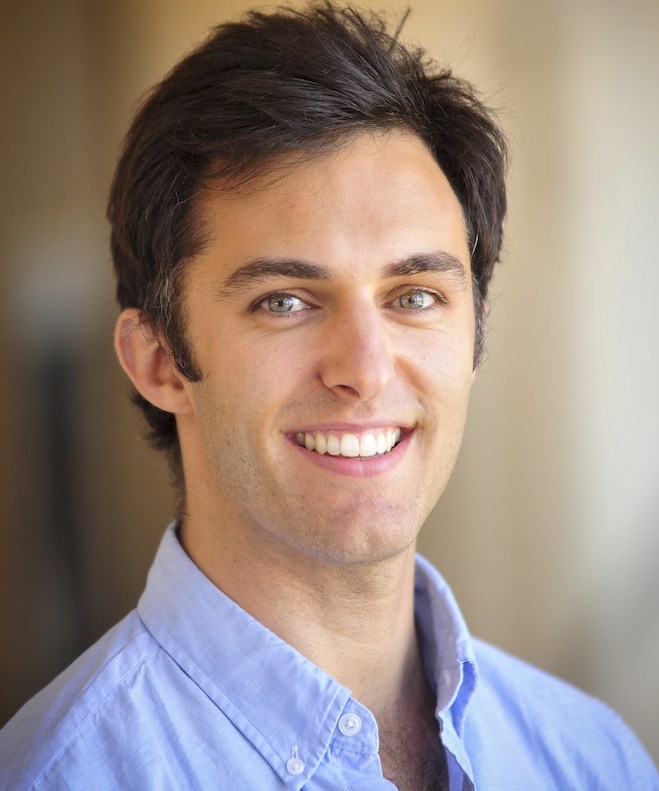
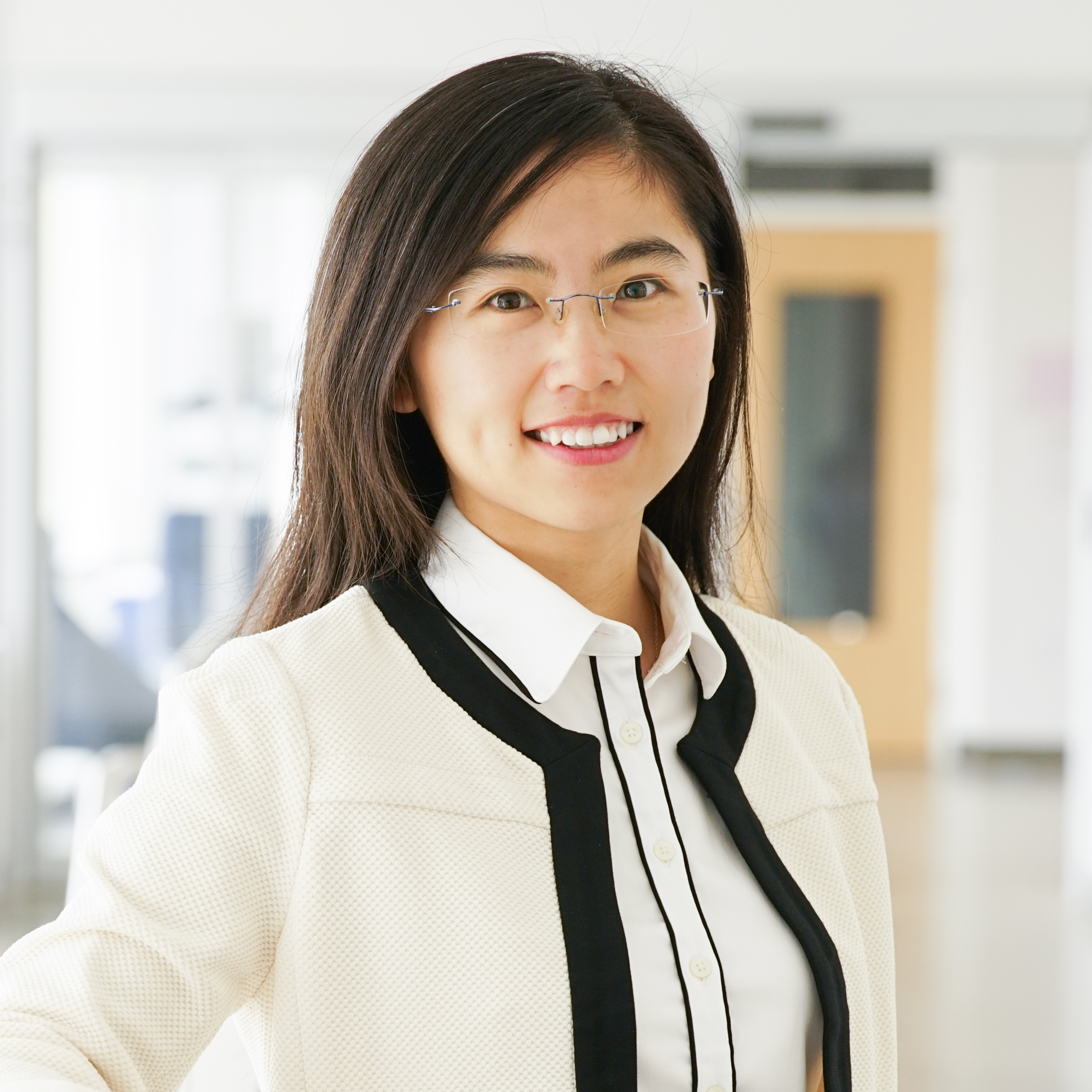
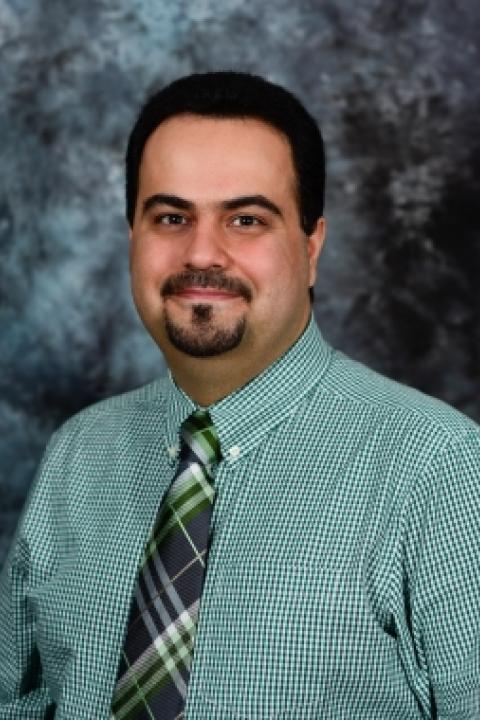
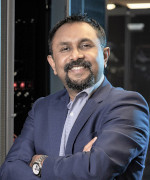
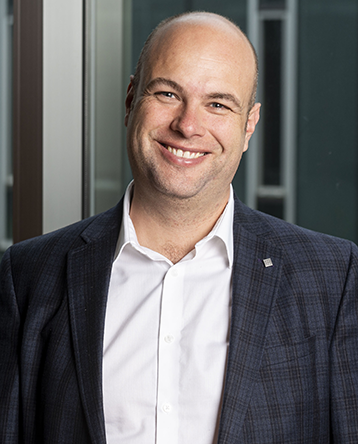
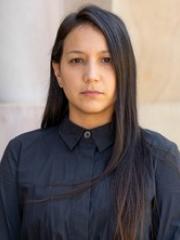
Daniel M. Roy is a Full Professor at the University of Toronto, with cross-appointments in the Department of Computer Science, Department of Statistical Sciences, and Department of Electrical and Computer Engineering. He serves as Research Director at the Vector Institute and holds the CIFAR Canada AI Chair. Research Focus: Foundational principles of prediction, inference, and decision-making under uncertainty across machine learning, statistics, mathematical logic, applied probability, and computer science. Scientific Contributions: Key work in learning theory, statistical network analysis, probabilistic programming, and information-theoretic frameworks for generalization. Awards: ICML 2024 Best Paper Award for "Information Complexity of Stochastic Convex Optimization" and promotion to Full Professor in 2024. Student Advising: Actively mentors Ph.D. candidates and postdoctoral researchers with strong quantitative backgrounds, particularly at the intersection of machine learning, statistics, and computer science. Email: daniel.roy@utoronto.ca
Maria Gorlatova is an Associate Professor of Electrical and Computer Engineering at Duke University's Pratt School of Engineering, where she leads the Intelligent Interactive Internet of Things (I3T) Lab. She also holds a secondary affiliation as Faculty Network Member of the Duke Institute for Brain Sciences and has previously served as Assistant Professor of Computer Science. Dr. Gorlatova earned her Ph.D. in Electrical Engineering from Columbia University (2013), following M.Sc. and B.Sc. (Summa Cum Laude) degrees in Electrical Engineering from University of Ottawa, Canada. Prior to joining Duke, she was an Associate Research Scholar in the Electrical Engineering Department and Associate Director of the Princeton EDGE Lab at Princeton University (2016-2018). She also has industry experience with Telcordia Technologies, IBM, and D. E. Shaw Research. Her research focuses on advancing intelligent behavior in Internet of Things systems and applications, particularly in mobile pervasive systems and the Internet of Things. Her work crosses traditional discipline boundaries, requiring thinking across multiple layers of system and protocol stacks. Current research themes include breaking barriers for technologies that enable fundamentally new deployments and experiences, such as energy harvesting, artificial intelligence adapted to IoT constraints, and augmented reality. Her lab specifically develops edge- and IoT-enabled intelligent augmented reality platforms, with applications in healthcare and human-robot collaboration. Analyzing her recent publications reveals a strong focus on augmented reality systems, particularly for medical applications. Her work spans computer vision for AR, spatial tracking, SLAM systems, vision-language models for AR security, and VR/AR applications in neurosurgery and rehabilitation. A significant portion of her recent work addresses challenges in mixed reality for medical procedures, demonstrating the translational impact of her research. Google Anita Borg USA Fellowship Canadian Graduate Scholar CGS NSERC Fellowships Columbia University Presidential Fellowship Columbia University Jury Award for Outstanding Achievement in Communications ACM SenSys Best Student Demonstration Award IEEE Communications Society Young Author Best Paper Award IEEE Communications Society Award for Advances in Communications Best Research Artifact Award, IEEE IPSN (2020) N2 Women Rising Star, Networking Networking Women (N2Women) (2019) Dr. Gorlatova's research has been supported by various funding sources that enable her work on edge computing for augmented reality, IoT systems, and medical applications. She actively mentors graduate students who frequently appear as first authors on her publications, indicating strong student involvement in her research. Her I3T Lab at Duke focuses on creating human-facing pervasive mobile computing platforms that enable transformative applications, with recent emphasis on creating advanced augmented reality platforms that integrate edge computing and IoT technologies. The I3T Lab is developing next-generation AR systems with capabilities in edge AI, collaborative spatial awareness, AR user cognitive context sensing, and AR QoS/QoE evaluation. Current projects include applications in healthcare (particularly neurosurgery guidance and rehabilitation) and human-robot collaboration scenarios, demonstrating the lab's focus on real-world impact of pervasive computing technologies.
Fei Fang is an Associate Professor in the Software and Societal Systems Department at Carnegie Mellon University (CMU) , where she explores the intersection of artificial intelligence and multi-agent systems . Her work integrates machine learning with game theory to address challenges in security , sustainability , and mobility , aligning with the AI for Social Good mission. Ph.D. in Computer Science, University of Southern California (2016) B.Eng. in Electronic Engineering, Tsinghua University (2011) Recent research focuses on reinforcement learning , large language models (LLMs) , and human-AI collaboration . Her team’s work has been recognized with 15+ awards across prestigious venues like IAAI, AAAI, and IJCAI. Notable accolades include the 2023 Allen Newell Award , 2022 Sloan Fellowship , and NSF CAREER Award (2021) . She actively contributes to educational initiatives , including teaching "Demystifying AI for Everyone" at CMU, and has sought part-time teaching assistants for course development. Her research spans 15+ domains , including AI ethics , cyber defense , traffic optimization , and public health .
Andreas Vlachos is a Professor of Natural Language Processing and Machine Learning at the Department of Computer Science and Technology, University of Cambridge, and holds the Dinesh Dhamija Fellowship at Fitzwilliam College. His research spans dialogue modeling, automated fact-checking, imitation learning, semantic parsing, biomedical text mining, and trustworthiness in AI systems. PhD in Computer Science, University of Cambridge (supervised by Ted Briscoe and Zoubin Ghahramani) Lecturer at University of Sheffield Postdoctoral roles at UCL, University of Cambridge (NLIP group, Stephen Clark), and University of Wisconsin-Madison (Mark Craven) Current research focuses on evaluating and mitigating biases in language models, advancing fact-checking methodologies, and improving model robustness through interpolation, reinforcement learning, and causal reasoning. His work integrates natural logic, knowledge graphs, and multimodal evidence for verification tasks. Recent publications address uncertainty quantification, temporal planning benchmarks, and ethical framing of NLP artifacts. Grants from ERC, EPSRC, Facebook, Google, and the Alan Turing Institute fund his research team. Collaborations include Sebastian Riedel, Stephen Clark, and Mark Craven. Key projects explore disinformation detection, long-form generation, and confidence calibration in AI systems.
Zhun Deng is a tenure-track Assistant Professor at the Department of Computer Science, University of North Carolina at Chapel Hill. His research bridges machine learning, statistics, and theoretical computer science, focusing on rigorous frameworks for responsible AI systems. He previously held postdoctoral positions at Columbia University and completed his Ph.D. at Harvard's Theory of Computation group under Cynthia Dwork. Ph.D. in Computer Science, Harvard University (2022) B.Sc. in Mathematics, Chu Kochen Honors College, Zhejiang University His research spans theoretical foundations of machine learning, including: Quantile-based risk control and conformal prediction Fairness guarantees in algorithmic decision-making Uncertainty quantification for LLMs Copyright frameworks for generative AI Physics-informed hybrid models Multi-agent reinforcement learning with constraints Recent work analyzes LLM alignment through distribution-free methods (ICML 2025), explores performativity challenges (ICML 2025), and develops calibration techniques (ICLR 2024). Collaborations include research interns from Stanford, MIT, and NYU. Students in his group include: Ruomeng Ding (Ph.D., UNC) Xiaowei Yin (Ph.D., UNC) Kaicheng Zhang (Ph.D., UNC)
Christopher Potts is Professor and Chair of Linguistics at Stanford University, with a courtesy appointment as Professor of Computer Science. He serves as Director Emeritus of the Stanford Center for the Study of Language and Information (CSLI) and leads the Pragmatic Enrichment & Contextual Interface Lab. His work bridges theoretical linguistics and computational approaches to language understanding. Education: B.A. in Linguistics from New York University (1999) Ph.D. in Linguistics from University of California, Santa Cruz (2003) Potts' research focuses on how computational methods can illuminate linguistic phenomena, particularly in the areas of semantics, pragmatics, and sentiment analysis. His work explores how emotion is expressed in language and how linguistic production and interpretation are influenced by context. He has made significant contributions to understanding conventional implicatures, sentiment analysis frameworks, and the application of neural networks to linguistic problems. His recent work has increasingly focused on the interpretability of large language models and the development of frameworks like DSPy for building reliable AI systems. An analysis of Potts' recent publications reveals a strong trend toward the intersection of linguistic theory and practical AI applications. His work spans theoretical linguistics (e.g., compositionality, preposing constructions), neural network interpretability, and practical NLP systems (e.g., ColBERT, DSPy). The research demonstrates consistent focus on making language models more transparent, controllable, and linguistically informed, with particular attention to how context shapes meaning. Scientific Awards: Best Paper Award at 2024 ACL for 'Mission: Impossible Language Models' Outstanding Paper Award at 2024 ACL for 'CausalGym' ACL Test of Time Award 2023 Dean's Award for Distinguished Teaching (2015-2016) Best New Data Set or Resource Award at 2015 EMNLP Potts has secured numerous research grants as PI or Co-PI from major organizations including Google, Amazon, NSF, Office of Naval Research, and Stanford's HAI institute. His current projects focus on evaluation of retrieval-augmented generation systems, LLM-mediated communication in organizations, interpretability techniques for language models, and frameworks like DSPy for building next-generation AI systems. He has mentored numerous researchers who have gone on to make significant contributions in NLP and computational linguistics. As Director of CSLI (2013-2020) and current Chair of Linguistics at Stanford, Potts has played a key leadership role in shaping interdisciplinary research at the intersection of language, computation, and cognition. His Pragmatic Enrichment & Contextual Interface Lab continues to be a hub for innovative research combining formal linguistic theory with cutting-edge computational methods.
Lexing Xie is a Professor in Computer Science at the Australian National University. He leads the ANU Computational Media Lab ( http://cm.cecs.anu.edu.au ) and the ANU Integrated AI Network. His work focuses on the intersection of machine learning, social media analysis, and multimedia understanding. Dr. Xie's research broadly focuses on innovative design and use of machine learning algorithms, especially on large-scale graph data and collective behaviour. His recent work spans several key areas: Popularity in social media -- understanding, predicting, and optimization Multimedia knowledge graphs, vision and language integration Humanising machine intelligence through better understanding of social dynamics His publications reveal a strong trend toward understanding information diffusion patterns in social media, particularly through visual content. He has made significant contributions to the study of visual memes, popularity prediction using point processes, and multimodal learning that connects vision with language. His work often bridges theoretical machine learning with practical applications in social media analysis. Dr. Xie has received recognition for his research, including an Honourable Mention at CSCW 2019 for his work on attention flow in online video networks. His research has been supported by collaborations with major institutions including IBM Research and Columbia University. As an advisor, Dr. Xie has mentored numerous students who have gone on to contribute significantly to publications in top-tier conferences. His lab, the ANU Computational Media Lab, serves as a hub for interdisciplinary research connecting computer science with social sciences.
Florian Tramèr is an Assistant Professor in the Department of Computer Science at ETH Zurich, Switzerland, leading research at the intersection of machine learning security, privacy, and AI safety. His work focuses on identifying and mitigating security vulnerabilities in machine learning systems, particularly in large language models and other AI systems. Tramèr's primary research interests include adversarial machine learning, membership inference attacks, privacy-preserving AI, and the security implications of large language models. His work has significantly advanced our understanding of how machine learning models memorize training data, how this memorization creates privacy risks, and how to evaluate the robustness of machine learning systems against various attacks. His recent publications demonstrate a strong focus on practical security challenges in deployed AI systems, including data extraction from language models, adversarial attacks against generative AI, and developing more rigorous evaluation methodologies for machine learning security. Tramèr's research has been published in top venues including ICLR, NeurIPS, ICML, and IEEE Security & Privacy. Tramèr is actively collaborating with leading researchers in the field including Nicholas Carlini, Matthew Jagielski, and Javier Rando, contributing to important initiatives like the International AI Safety Report. His work bridges theoretical security concepts with practical implications for real-world AI deployment.
Ram Rajagopal is an Associate Professor of Civil and Environmental Engineering and Electrical Engineering at Stanford University, and a Senior Fellow at the Precourt Institute for Energy. He leads the Stanford Sustainable Systems Lab (S3L), focusing on large-scale monitoring, data analytics, and stochastic control for infrastructure networks, particularly power systems. His research emphasizes renewable energy integration, smart distribution systems, and demand-side data analytics. Education: PhD in Electrical Engineering and Computer Sciences & MA in Statistics (UC Berkeley), MS in Electrical and Computer Engineering (UT Austin), and BEng in Electrical Engineering (Federal University of Rio de Janeiro). Research interests include power grid optimization, renewable energy systems, and data-driven approaches to infrastructure challenges. He has pioneered work in grid flexibility, distributed energy resources, and machine learning applications for energy systems. His lab develops technologies like Smart Dim Fuses and the EV-EcoSim platform for EV charging infrastructure optimization. Received NSF CAREER Award, Powell Foundation Fellowship, and Berkeley Regents Fellowship Over 30 patents and best paper awards Advises/founded companies in sensor networks, power systems, and data analytics Labs/Teams: Stanford Sustainable Systems Lab (S3L), Powernet Project. His work spans grid resilience, energy equity, and scalable energy solutions.
Majid Ghayoomi is a Professor and Civil Engineering Undergraduate Coordinator in the Department of Civil and Environmental Engineering at the University of New Hampshire's College of Engineering and Physical Sciences. His research focuses on geotechnical engineering and geomechanics, particularly unsaturated soil mechanics and geotechnical earthquake engineering. He teaches courses such as Soil Mechanics, Engineering Behavior of Soils, and Geotechnical Modeling. Dr. Ghayoomi holds a Ph.D. from the University of Colorado at Boulder, an M.S. from Sharif University, and a B.S. from the University of Tehran. His research interests include bioremediation, hazards mitigation, soil-structure interaction, and materials testing. He leads the Geotechnical Modeling and Innovation lab, advancing bio-inspired solutions and remote sensing applications in geotechnical systems. His recent work emphasizes climate change impacts on seismic resilience, microbial stabilization of soils, and satellite-based soil moisture monitoring. Key contributions include studies on liquefaction mitigation, seismic site response, and infrastructure vulnerability in dynamic environments. His research spans theoretical, experimental (centrifuge modeling), and computational approaches to address complex geotechnical challenges.
Dr. Anwar Haque is an Associate Professor in the Department of Computer Science at Western University, Canada, and a Faculty of Science Distinguished Research Professor. He holds a Ph.D. in Electrical and Computer Engineering and an M.Sc. in Computer Science from the University of Waterloo. Prior to academia, he was Associate Director at Bell Canada. His research focuses on 5G networks, IoT, cybersecurity, AI, and autonomous systems, with over 100 peer-reviewed publications and $15M in collaborative grants. Dr. Haque leads the Western Information & Networking Group (WING) Lab and is the founder/CEO of Bamboo Innovations Inc., a tech startup developing socially responsible smart technologies. Leadership roles include industry expert-in-residence in the Faculty of Science, Undergraduate Chair of the Computer Science Department, and member of Western’s Senate. He has delivered over 30 keynote talks and media features include BBC Earth and The Globe and Mail. Awards include the IEEE CCECE Leadership Award and multiple grants from NSERC, MITACS, and Bell Canada. His work spans network reliability, smart grids, and cybersecurity, with industry partnerships like the Bell-Western 5G Research Centre.
Dr. K. Max Zhang is a Professor in the Sibley School of Mechanical and Aerospace Engineering at Cornell University. He is the director of the Energy and the Environment Research Laboratory (EERL) and a fellow at the Atkinson Center for a Sustainable Future. His research is deeply interdisciplinary, focusing on sustainable energy systems, air quality, and environmental justice, with significant impacts on policy and community development in New York and beyond. Ph.D., Mechanical Engineering, University of California-Davis, 2004 B.S., Thermal Engineering, Tianjin University, 1998 B.A., English Language, Tianjin University, 1998 Dr. Zhang’s research centers on the integration of energy and environmental systems. He investigates air pollution dynamics using advanced numerical models like CTAG, with applications in near-source pollution, indoor air quality, and environmental justice. His work on renewable energy systems includes designing sustainable solar farms and managing distributed energy resources such as heat pumps to enhance grid flexibility. He also leads a pioneering initiative to create the first statewide public IoT network in the U.S., enabling hyperlocal weather forecasting and microclimate monitoring. His recent publications reflect a strong trend toward agrivoltaics, peer-to-peer energy markets, and IoT-based environmental monitoring. These works demonstrate a consistent focus on data-driven modeling, community-scale energy solutions, and the integration of social considerations into technical systems. The keywords across his articles highlight expertise in sustainability, machine learning, air quality, and energy transition. Cornell Town-Gown Achievement Award (2022) Engaged Scholar Prize, Cornell University (2017) People's Choice Sign of Sustainability Award, Sustainable Tompkins (2016) Scientific and Technological Achievement Award, Environmental Protection Agency (2015) Fellow of the American Society of Mechanical Engineers Dr. Zhang is actively involved in mentoring students and securing research grants from agencies such as the National Science Foundation (NSF) and the New York State Energy Research and Development Authority (NYSERDA). His projects often involve interdisciplinary collaboration across eight Cornell colleges and 16 academic departments. He has led initiatives such as the Cornell Atkinson Academic Venture Fund projects and the development of a county-level energy roadmap for Tompkins County. He also teaches courses in engineering thermodynamics, future energy systems, and air quality, emphasizing experiential and community-based learning. Dr. Zhang leads the Energy and the Environment Research Laboratory (EERL) and collaborates with the Atkinson Center for a Sustainable Future. His lab functions as a hub for innovation in sustainable communities, combining advanced modeling with real-world applications. Through partnerships with community organizations, government agencies, and industry, his team develops science-driven solutions to urban and rural sustainability challenges.
Sebastian Scherer is an Associate Research Professor at the Robotics Institute (RI), Carnegie Mellon University (CMU), where he leads cutting-edge research in autonomous aerial systems and robotics. His work focuses on enabling unmanned rotorcraft to operate safely and efficiently in cluttered, low-altitude, and extreme environments. Education: Ph.D. in Robotics, Carnegie Mellon University (2010) MS in Robotics, Carnegie Mellon University (2007) BS in Computer Science (Minor in Robotics), Carnegie Mellon University (2004) His research interests span robotics, artificial intelligence, autonomous navigation, obstacle avoidance, SLAM, visual-inertial odometry, energy infrastructure, and public policy . He has made seminal contributions to UAV autonomy, including the first obstacle avoidance for micro aerial vehicles in natural environments (2008) and the first automatic landing zone detection and landing on a full-size helicopter (2010). His recent publications (2023–2025) demonstrate a strong focus on resilient autonomy, multi-robot exploration, foundation models for robotics, and large-scale dataset development. His team has released key datasets like TartanGround , BETTY , and SubT-MRS , and simulation tools like Pegasus Simulator , indicating a systems-level approach to advancing real-world autonomy. The research trends emphasize self-supervised learning, robust perception, risk-aware planning, and multi-modal fusion for off-road and urban environments. Scientific Awards: Popular Science Best of What's New 2010 Award AIAA@Infotech Best Paper Runner-up Award (2010) Siebel Scholar Dr. Scherer has advised numerous students and leads a vibrant research group focused on high-impact robotics applications. He has secured significant grants related to UAV autonomy, energy infrastructure, and urban air mobility. His lab develops experimental infrastructure such as AIrTonomy for testing next-generation autonomous aerial vehicles. He is actively involved in advancing SLAM and localization in extreme environments, notably through participation in the DARPA Subterranean Challenge. His team develops large-scale datasets and benchmarking frameworks to push the boundaries of robustness and generalization in mobile robotics.
Tapio Schneider is the Theodore Y. Wu Professor of Environmental Science and Engineering at the California Institute of Technology. His research focuses on atmospheric dynamics across Earth and other planets, climate modeling innovations, and geophysical turbulence analysis. He contributes to the Climate Modeling Alliance (CliMA) and develops advanced computational tools for climate prediction. Albert-Ludwigs-Universität Freiburg (Vordiplom, 1993) Princeton University (M.Sc. 1997, Ph.D. 2001) University of Washington, Seattle (Visiting Graduate Student, 1994-1995) His research spans climate dynamics , atmospheric turbulence , and AI-enhanced climate modeling , addressing challenges in cloud dynamics, extreme weather patterns, and planetary climate systems. Current work emphasizes hybrid machine learning-physical models and computational acceleration for high-resolution simulations. Recent publications highlight trends in AI integration for climate science, with applications in hydrology , cloud microphysics , ocean circulation , snowpack modeling , and climate tipping points . His team develops open-source tools like ClimateMachine for GPU-accelerated simulations. Scientific Recognition: Fellow, American Geophysical Union (2022) Rosenstiel Award (2019) World Economic Forum Young Scientist (2012) David and Lucile Packard Fellow (2005-2010) Alfred P. Sloan Research Fellow (2004-2006) Tapio leads climate dynamics research at Caltech, directs the Linde Center for Global Environmental Science (2011-2012), and serves as Editor for the Journal of Advances in Modeling Earth Systems . His group collaborates with NASA Jet Propulsion Laboratory (2016-2024) and Google Research (2022-present).
Dr. Gloria Milena Monsalve Bravo is an Advanced Queensland Industry Research Fellow and lecturer at The University of Queensland's School of Chemical Engineering, where she develops novel multiscale simulation techniques combining molecular simulations with macroscopic physics-based modeling to solve complex energy and environmental problems. Her interdisciplinary work bridges applied mathematics and engineering to improve understanding of phenomena in complex systems across chemical, biomedical, and ecological applications. Her research focuses on: Multiscale simulation techniques for complex systems Molecular simulations coupled with macroscopic modeling Gas permeation and separation in mixed-matrix membranes Uncertainty and sensitivity analysis in mathematical models Applied mathematics for engineering problems Dr. Monsalve Bravo's publication record demonstrates a strong trajectory in membrane technology and computational modeling. Her recent work has advanced understanding of gas transport in novel membrane materials, particularly mixed-matrix membranes, with applications in carbon capture and hydrogen storage. She has made significant contributions to theoretical frameworks for modeling permeation in finite-sized composite systems and developed Bayesian approaches for analyzing parameter uncertainty in sorption predictions. Her research bridges fundamental science with practical applications in energy and environmental engineering. Her scientific contributions have been recognized through research funding including: ARC Research Hub for Value-Added Processing of Underutilised Carbon Wastes (2024-2029) Tailor-made composite membranes for greenhouse gas capture (2023-2026) through Advance Queensland Industry Research Fellowships Dr. Monsalve Bravo actively mentors PhD students on cutting-edge projects related to membrane technology, catalyst development, and waste conversion. She collaborates extensively across disciplines, as evidenced by her diverse publication record spanning chemical engineering, materials science, and environmental applications.