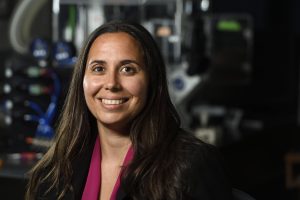
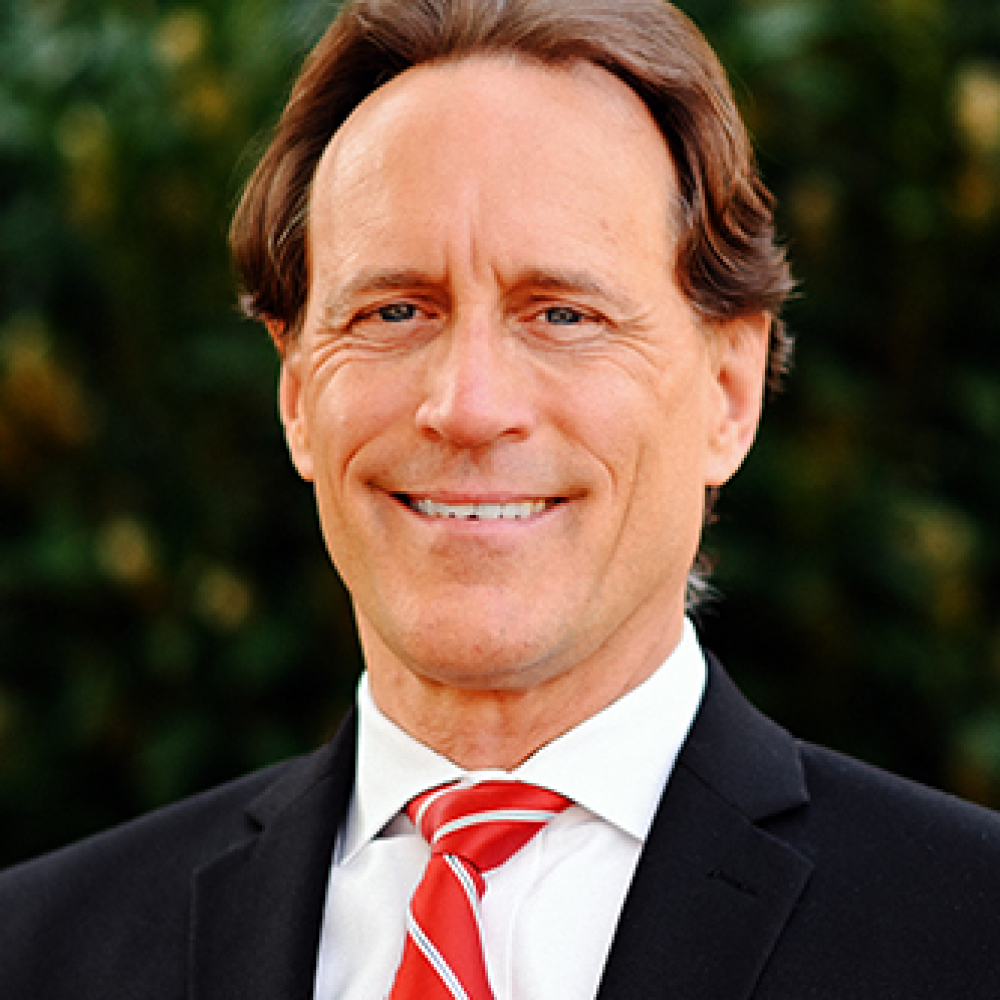
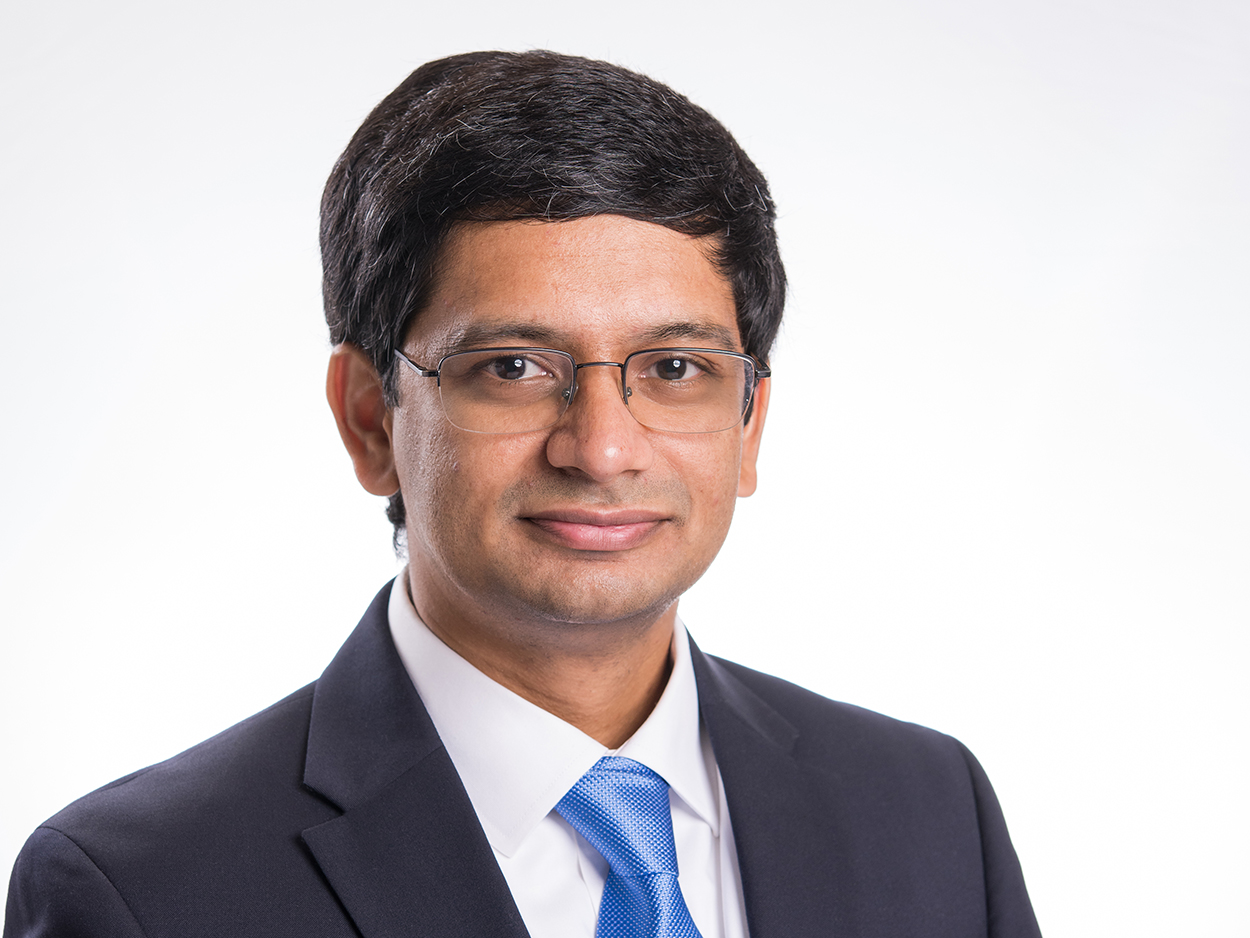
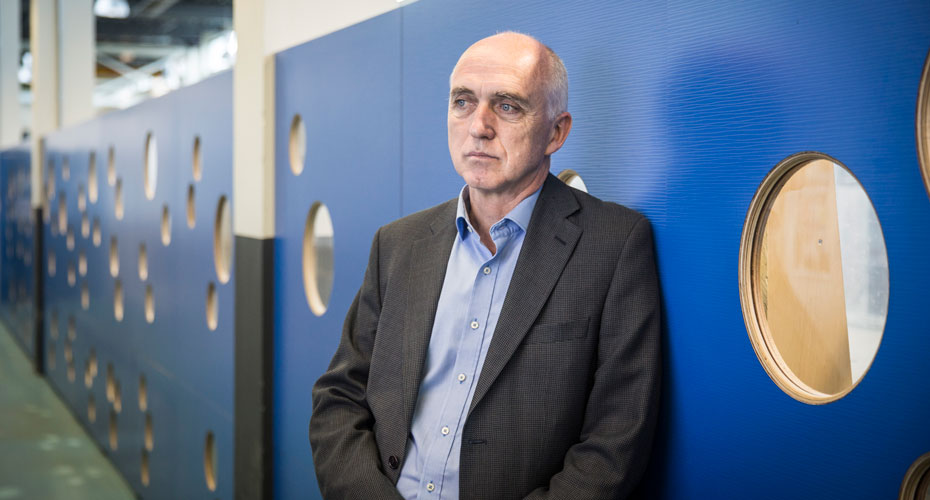
Javier Alonso-Mora is a Professor in the Department of Mechanical Engineering at Delft University of Technology, specializing in Learning & Autonomous Control. His research focuses on autonomous systems, robotics, motion planning, and transportation logistics, with applications in mobile manipulation, dynamic environments, and urban mobility. He leads key projects such as INTERACT (Intuitive Interaction for Robots among Humans) and ACT (Perceptive Acting Under Uncertainty), exploring human-robot interaction, autonomous vehicles, and healthcare robotics. Notable achievements include an ERC Starting Grant (2022) and a Veni Grant (2017). His work addresses challenges in robot navigation, control systems, and fleet optimization, with contributions to both theoretical advancements and practical implementations. Projects like TRiLOGy focus on sustainable water transportation, while HARMONY advances assistive robotics in healthcare. Alonso-Mora’s research leverages geometric fabrics for motion planning, probabilistic modeling for dynamic environments, and multi-agent coordination. He collaborates internationally and contributes to open-source frameworks for robotics. His recent publications emphasize safety-aware control, instance-aware semantic mapping, and adaptive systems for cluttered environments.
Rebecca Schulman is an Associate Professor in the Department of Chemical and Biomolecular Engineering at the Whiting School of Engineering, Johns Hopkins University. She holds secondary appointments in Chemistry and Computer Science and is affiliated with multiple interdisciplinary institutes, including the Institute for NanoBioTechnology, the Hopkins Extreme Materials Institute, the Chemistry-Biology Interface Program, the Center for Cell Dynamics, and the Laboratory for Computational Sensing and Robotics. She currently co-directs the Passport to Future Technology Leadership program for PhD students. Research Interests: Schulman's research lies at the intersection of DNA nanotechnology, synthetic biology, and smart materials. Her group develops intelligent, adaptive biomolecular materials and nanostructures by integrating concepts from materials science, biochemistry, circuit design, and soft matter physics. The team focuses on engineering dynamic self-assembly processes using DNA to create reconfigurable materials, molecular circuits, and autonomous soft micro-robots. Key themes include self-healing nanostructures, feedback-regulated crystallization, programmable hydrogels, and synthetic genetic networks for materials control. Publication Trends: Her recent publications demonstrate a consistent focus on using DNA-based chemical reaction networks to program spatial and temporal behavior in materials. The work spans from fundamental mechanisms like catalytic polymerization and crystal growth regulation to applications in soft robotics, self-wiring circuits, and synthetic pattern formation. The research is highly interdisciplinary, combining synthetic biology with materials engineering to achieve life-like functionalities in non-living systems. Scientific Awards: AIMBE Fellowship Award Vannevar Bush Faculty Fellowship Award Hartwell Individual Biomolecular Research Award President’s Early Career Award in Science and Engineering (PECASE) DARPA Young Faculty Award DARPA Directors Fellowship NSF CAREER Award Turing Scholar Award DOE Early Career Award Advising and Grants: Schulman mentors graduate students and leads a vibrant research group focused on next-generation biomolecular engineering. Her work is supported by major federal grants, including the NSF CAREER, DOE Early Career, DARPA, and the Vannevar Bush Fellowship—a prestigious Department of Defense award for basic research. She is actively involved in training future leaders through programs like the Passport to Future Technology Leadership. Labs and Teams: The Schulman Lab at Johns Hopkins is a multidisciplinary team working on DNA-powered materials and molecular programming. The lab is embedded within several collaborative centers, enabling strong cross-departmental and cross-institutional research. Their work combines experimental biochemistry with theoretical modeling to design and implement complex molecular systems.
Jeffrey Schall is a Full Professor of Biology and Program Director of the Visual Neurophysiology Centre at York University. He holds the Canada Research Chair in Translating Neuroscience. His research focuses on neural mechanisms underlying behavior, integrating neurophysiological and computational approaches across multiple scales. Schall is a core member of the Centre for Vision Research and the Canada First Research Excellence Fund Connected Minds initiative. Education: PhD in Anatomy (University of Utah School of Medicine, 1986), postdoctoral training at MIT. Awards include the Troland Research Award, Sloan Foundation Fellowship, and AAAS Fellowship. He served as Vision Science Society President in 2019. Research interests include visual attention, executive control, error monitoring, and translational neuroscience applications in law. His work bridges basic science with applied studies in clinical populations like schizophrenia patients. Collaborative projects involve EEG/MEG analysis, cortical microcircuitry modeling, and neuromodulation techniques. Teaching: YU_NRSC 2100 Systems, Behavioral, and Cognitive Neuroscience. Active in interdisciplinary initiatives linking neuroscience with legal systems through scholarship and policy engagement.
Professor Emily So serves as Deputy Head of the School of Arts and Humanities at the University of Cambridge and directs the Cambridge University Centre for Risk in the Built Environment (CURBE). A chartered civil engineer with extensive field experience, she holds leadership roles in the Open-Oxford-Cambridge AHRC Doctoral Training Partnership and chairs the Faculty EDI Committee. Her research focuses on urban risk and resilience , particularly in earthquake-prone regions. Combining structural engineering with epidemiological approaches, she develops innovative casualty estimation models and engages directly with affected communities worldwide. Her work spans seismic safety, disaster epidemiology, and remote sensing applications for rapid damage assessment. Professor So's publication trends reveal strong emphasis on machine learning for disaster risk modeling , with recent work featuring graph neural networks, deep clustering for urban morphology, and LSTM-based population forecasting. Her research bridges engineering, social sciences, and data science to address resilience in developing nations. 2010 Shah Family Innovation Prize (Earthquake Engineering Research Institute) Fellow of the Institution of Civil Engineers (FICE) Scientific Advisory Group for Emergencies (SAGE) member advising UK government As Director of CURBE, she leads interdisciplinary collaborations with EEFIT, Global Earthquake Model (GEM), World Bank, and USGS. Her field investigations following major earthquakes inform practical solutions for vulnerable communities, notably contributing to the 2017 World Building of the Year design in China. Current work includes sabbatical research for 2025-2026 focused on decolonizing architectural approaches to disaster resilience. Professor So maintains active roles in professional organizations and international disaster response frameworks, with her CURBE team developing methodologies now implemented globally for seismic safety improvements.
Professor Ernest Foo is a distinguished academic at Griffith University's School of Information and Communication Technology, specializing in cybersecurity with a focus on industrial control systems and cryptographic protocols. With over 15 years of experience in computer networking, he has established himself as a leading expert in SCADA security and smart grid cybersecurity. His research has significant practical applications in critical infrastructure protection, and he has developed hands-on security training programs that have trained professionals from major Australian utilities and government agencies. Professor Foo's educational background includes: Bachelor of Engineering with Honours in Electronic and Computer Engineering from University of Queensland Doctor of Philosophy from Queensland University of Technology Professor Foo's research interests center around secure cryptographic protocols with specific applications in industrial control system security and cyber physical systems. His work spans SCADA security, smart grid protection, wireless sensor network security, and post-quantum cryptography. He has made significant contributions to understanding vulnerabilities in industrial protocols like Modbus and DNP3, and has pioneered the application of process mining and data mining techniques for attack detection in critical infrastructure systems. His research bridges theoretical security concepts with practical implementations in real-world industrial environments. Professor Foo's recent publications demonstrate a clear trajectory toward increasingly sophisticated security frameworks for critical infrastructure. His work shows a progression from foundational SCADA security research to advanced applications of artificial intelligence, machine learning, and formal methods in cybersecurity. A notable trend is the integration of zero trust principles with industrial control systems, alongside growing emphasis on post-quantum cryptographic solutions. His publications span high-impact journals and conferences in cybersecurity, with increasing focus on anomaly detection in cyber-physical systems and the application of graph-based machine learning techniques to network security challenges. Professor Foo's notable scientific achievements include: Best paper award at the 2nd International Cyber Resilience Conference for "Gap analysis of Intrusion Detection in Smart Grids" Professor Foo has secured significant research funding including an ARC Linkage grant with Powerlink Queensland focused on cyber security for electricity sub-stations. He currently leads multiple research projects including Westpac Micro-Credentials in Financial Crime Investigation, Digital Banking Micro-credentials with ANZ, and research on quantum-safe cryptography. As a dedicated educator, he serves as Program Director for multiple cybersecurity programs including the Master of Cyber Security, and has supervised numerous doctoral and masters students. His Cyber Security: Industrial Control System course, conducted annually from 2013-2018, featured innovative hands-on training with real-world participants from major Australian utilities. Professor Foo has been instrumental in establishing the SCADA security research laboratory with multiple vendor system miniatures running industrial PLCs. His work bridges theoretical security concepts with practical implementations, making significant contributions to the security of industrial control systems and critical infrastructure worldwide.
Joydeep Biswas is an Associate Professor in the Computer Science Department at the University of Texas at Austin, where he serves as the Director of the Autonomous Mobile Robotics Laboratory (AMRL). He is also affiliated with Texas Robotics, the UT Machine Learning Laboratory, and UT Good Systems. Previously, he was an Assistant Professor in the College of Information and Computer Sciences at the University of Massachusetts Amherst. Dr. Biswas earned his PhD in Robotics from Carnegie Mellon University in 2014 and his B.Tech in Engineering Physics from the Indian Institute of Technology Bombay in 2008. His educational background has provided him with a strong foundation in both theoretical and applied aspects of robotics and artificial intelligence. Dr. Biswas's research focuses on enabling long-term autonomy for mobile robots operating in human environments. His work spans robot perception, motion planning, control systems, and AI, with the ultimate goal of creating self-sufficient autonomous mobile robots that can perform tasks accurately and robustly in real-world settings. He is particularly interested in perception, planning, and failure recovery for autonomous mobile robots, which supports his vision of having autonomous service mobile robots deployed at campus-to-city scale, both indoors and outdoors, performing assistive tasks over deployments spanning years. His IJCAI 2019 Early Career Spotlight talk summarizes much of his research to date and ongoing interests. His recent research has shown a strong trend toward social navigation, human-robot interaction, and the application of machine learning techniques to robotics problems. There's a clear progression from fundamental robotics research toward more complex, real-world applications that require robots to understand and navigate human social spaces effectively. His work increasingly integrates large language models and other advanced AI techniques with traditional robotics approaches, as evidenced by his recent publications on topics like preference-conditioned navigation, social navigation benchmarks, and instruction-following navigation systems. Dr. Biswas has received numerous prestigious awards including the NSF CAREER Award (2021), J.P. Morgan Faculty Research Award (2019), Amazon Research Award (2019), and a grant from Northrop Grumman Mission Systems (2018). These awards recognize his innovative contributions to the field of robotics and autonomous systems. As a dedicated educator and mentor, Dr. Biswas actively supervises PhD and master's students, with his PhD student Sadegh Rabiee winning the student poster award at the Northrop Grumman University Symposium 2019. He has secured significant grant funding from the National Science Foundation for projects including 'Introspective Perception and Planning for Long-Term Autonomy' and 'Interactive Synthesis and Repair For Robot Programs,' demonstrating his ability to secure competitive research funding and his commitment to advancing the field. Dr. Biswas leads the Autonomous Mobile Robotics Laboratory (AMRL), which serves as a hub for interdisciplinary research in mobile robotics. The lab has developed notable resources such as the UT Campus Object Dataset (CODA) for 3D perception research and SOCIALGYM, a framework for benchmarking social robot navigation. His team regularly deploys robots on the UT Austin campus and in urban environments to test and refine their approaches in realistic settings, bridging the gap between simulation and real-world application.
Zhonghai Lu is a Professor of Electronic Systems Design (specializing in Dependable and Autonomous Systems) at KTH Royal Institute of Technology, part of the Department of Electrical Engineering in the School of Electrical Engineering and Computer Science (EECS). He serves as Program Director for KTH's Embedded Systems master's program and Director of Studies at the Division of Electronics and Embedded Systems. His research focuses on Network-on-Chip (NoC), computer architecture, embedded systems, and Prognostics and Health Management (PHM) of power electronics. He leads a research group exploring in-network processing and embedded intelligence, transforming passive networks into active computational frameworks. Lu holds a BSc from Beijing Normal University (1989), MSc and PhD from KTH (2002, 2007), and an MBA in Innovation and Growth from the University of Turku (2012). He has authored over 240 scientific papers, including journal articles and peer-reviewed conferences, with notable recognitions such as Best Paper Awards at NOCS’2015 and EU HiPEAC, and a Featured Paper in IEEE Transactions on Computers (2020). He serves as Associate Editor for ACM Transactions on Architecture and Code Optimization (TACO) and has chaired major conferences like HiPEAC’2017 and NOCS’2018. His research group’s recent work includes integrating AI into hardware acceleration, fault-tolerant neural networks, and RUL estimation for power electronics using recurrent neural networks. Lu has secured grants from the Swedish Research Council and Intel Corporation and developed courses like IL2230 (Hardware Architectures for Deep Learning) and IL2233 (Embedded Intelligence), pioneering embedded AI education at KTH. Education: BSc (Beijing Normal University), MSc/PhD (KTH), MBA (University of Turku) Awards: Best Paper Awards (NOCS, EU HiPEAC), Swedish Research Council Grants, Intel Research Gifts Labs/Teams: Research Group on In-Network Processing and Embedded Intelligence
John P. O'Doherty serves as the Fletcher Jones Professor of Decision Neuroscience within Caltech's Division of Humanities and Social Sciences, holding continuous faculty appointments since 2004 (Assistant Professor 2004-07, Associate Professor 2007-09, Professor 2009-present, Fletcher Jones Professor 2021-present). He previously directed the Caltech Brain Imaging Center (2013-17) and maintains affiliations with the T&C Chen Center for Social and Decision Neuroscience. His educational background includes a B.A. from University of Dublin, Trinity College (1996) and D.Phil. from University of Oxford (2000). His research focuses on computational and neural mechanisms of reward-based learning and decision-making , employing fMRI, intracranial recordings, and mathematical modeling to investigate how the brain solves complex decision problems through evolutionarily conserved algorithms. Key areas include Reinforcement learning systems (model-based/model-free arbitration) Observational and social learning mechanisms Neural representation of value, risk, and uncertainty Computational phenotyping of mental disorders Temporal dynamics of goal persistence Analysis of his 2023-2025 publications reveals dominant trends in computational psychiatry (problem gambling, autism traits), hierarchical decision-making, and neuroeconomic modeling of social behavior. His work consistently integrates cross-species computational frameworks with human neuroimaging to identify transdiagnostic mechanisms. While specific awards beyond his endowed professorship aren't detailed, his leadership as Brain Imaging Center Director and prolific high-impact publications demonstrate significant recognition. Current advising includes graduate researcher Sneha Aenugu on goal-persistence projects, with administrative support from Mary A. Martin (mmartin@caltech.edu). His active research program continues to pioneer computational approaches to understanding decision pathologies.
Thomas Hacker is a Professor in the Department of Computer and Information Technology at Purdue Polytechnic Institute, Purdue University. His research focuses on cloud computing, high-performance computing, operating systems, computer networking, and cyber infrastructure . He holds a Ph.D. and M.S. in Computer Science & Engineering from the University of Michigan, along with dual B.S. degrees in Computer Science and Physics from Oakland University. Education: PhD (Computer Science & Engineering), University of Michigan (2004) MS (Computer Science & Engineering), University of Michigan (1993) BS (Computer Science, Mathematics Minor), Oakland University (1989) BS (Physics), Oakland University (1989) Dr. Hacker's research spans cloud and grid computing, operating systems, and distributed systems , with applications in earthquake engineering data systems and AI-driven infrastructure analysis. His recent work explores extended layer 2 networking for bare-metal provisioning ( 2023 IEEE Cloud Summit ) and machine-supported bridge inspection using artificial intelligence ( Transportation Research Record, 2023 ). Notable scientific contributions include 15+ publications on topics like cyberinfrastructure for earthquake engineering, container-based virtualization, and data-intensive systems. His work has been recognized with awards such as the NSF CAREER Award (2010) and multiple Purdue Seed for Success Awards . Key Scientific Awards: NSF CAREER Award (2010) Purdue Seed for Success Awards (2008-2013) ASEE Information Systems Division Best Paper Award (2012) College of Technology Outstanding Faculty in Discovery Award (2010) He has held leadership roles at Purdue, including Department Head (2018-2021) and Interim Department Head (2011-2016) . His career spans academic positions at Indiana University, University of Michigan, and industry roles at Storage Technology Corporation.
Paul Larson is a Professor of Mathematics at Miami University. His research focuses on set theory, topology, and model theory, with particular expertise in forcing axioms, descriptive set theory, and infinitary logic. He holds a Ph.D. in Mathematics from the University of California, Berkeley. His work bridges foundational mathematical logic with applications in topology and combinatorics. Key contributions include studies on canonical models under fragments of the Axiom of Choice, polar forcings, and cardinal characteristics. Larson has collaborated extensively with leading researchers such as Saharon Shelah and Jindřich Zapletal. His publications span prestigious journals like the Annals of Pure and Applied Logic and Transactions of the American Mathematical Society. Beyond research, he contributes to the academic community through editorial work and expository writings on historical developments in determinacy theory. Education: Ph.D., Mathematics, University of California, Berkeley Research interests emphasize foundational questions in set theory with applications to topology and model theory. His recent work explores advanced forcing techniques, square principles in Pmax extensions, and combinatorial properties of cardinal invariants. Publications reflect interdisciplinary engagement, including crystal structure prediction in high-pressure chemistry and operator theory in functional analysis. Despite an extensive publication record, no specific scientific awards are documented here. His advising and grant activities remain unspecified in the provided texts. Collaborations span international institutions, reflecting his role as a central figure in contemporary set theory research.
Deian Stefan is an Associate Professor at the University of California San Diego (UCSD) in the Department of Computer Science and Engineering . His research spans security , programming languages , and systems , with a focus on building principled and practical secure systems. He has served as a co-founder and Chief Scientist at Intrinsic (acquired by VMWare) and contributed to standards bodies like the W3C WebAppSec and Node.js Security Working Groups . His research interests include: Secure Systems : Web frameworks, browser designs, sandboxing, runtime systems Language-Based Security : Constant-time programming, memory safety, information flow control Verification : Security verification, static/symbolic analysis tools WebAssembly and JavaScript JITs security Deian Stefan has received multiple scientific awards , including several Distinguished Paper Awards at venues like POPL, ICFP, and USENIX Security, as well as the IEEE Cybersecurity Award for Practice (2022) and CSAW 2020 First Place for Applied Research. He has taught courses on Computer Security (CSE 127, CSE 227) and advanced topics in Building Secure Systems (CSE 291) using Rust, WebAssembly, and blockchain security. His work has been supported by collaborations with industry and academia, including projects like RLBox and COWL .
Julian McAuley is a Professor in the Department of Computer Science and Engineering at the University of California, San Diego's Jacobs School of Engineering. His research spans recommender systems, machine learning, natural language processing, music information retrieval, and multimodal learning. He maintains an active research group with numerous PhD students and postdocs working on cutting-edge AI problems. His research interests focus on developing advanced algorithms for personalized recommendation systems, with particular emphasis on sequential recommendation, multimodal learning, and integrating large language models with traditional recommendation approaches. His work bridges the gap between theoretical machine learning and practical applications across multiple domains including e-commerce, music, and healthcare. McAuley has published extensively in top-tier conferences including NeurIPS, ICML, KDD, SIGIR, and ACL, with his most recent work exploring the intersection of large language models and recommendation systems. His publications reveal a strong trend toward multimodal approaches that combine text, vision, and audio for more comprehensive understanding and recommendation. He has received significant research funding from major technology companies including Google, Amazon, Facebook, Adobe, and Samsung, as well as government agencies like the National Science Foundation and Department of Defense. His work has practical applications across multiple industries, with a focus on improving user experience through better personalization. McAuley advises numerous PhD students who have gone on to successful careers at leading technology companies and academic institutions. His former students include Wang-Cheng Kang and Jianmo Ni at Google DeepMind, Chris Donahue and Zachary Lipton as assistant professors at CMU, and Ruining He at Google Deepmind.
Elliott Ash is an Associate Professor of Law, Economics, and Data Science at ETH Zurich's Center for Law & Economics. He holds a Ph.D. in Economics and J.D. from Columbia University, a B.A. in Economics, Government, and Philosophy from the University of Texas at Austin, and an LL.M. in International Criminal Law from the University of Amsterdam. His research focuses on empirical legal studies using econometrics, NLP, and ML, examining topics like judicial behavior, legislative impact, and AI-driven governance. He has been funded by the ERC, Swiss NSF, and others. Research Interests: Elliott explores automation of legal decisions, text-as-data analysis in law, and the intersection of AI with legal systems. He develops tools like BallotBot and LePaRD to enhance legal transparency and public understanding. His work bridges law, economics, and computer science, with publications in top journals like the American Economic Journal and Review of Economics and Statistics . Teaching: Courses include Building a Robot Judge , Natural Language Processing for Law , and Big Data for Public Policy . He co-organizes the Zurich Workshop in AI+Economics and Monash-Warwick-Zurich Text-as-Data Workshops. Awards: European Research Council Starting Grant, Swiss National Science Foundation Grant, and multiple grants from U.S. and Swiss institutions. His work has been featured in NPR , VoxEU , and Georgetown Law Journal . Labs/Teams: Leads the Swiss AI Initiative's Human-AI Alignment team, collaborates with the CEPR on Political Economy research, and serves as an Economic Journal Associate Editor.
Professor Eugene O'Brien serves as Professor of Civil Engineering within the School of Civil Engineering at University College Dublin's College of Engineering and Architecture. His research focuses on critical structural assessment methodologies for long-span bridges, with particular expertise in traffic load modeling and bridge safety evaluation. His research interests center on structural engineering challenges related to bridge infrastructure, specifically traffic load assessment for long-span bridges , structural health monitoring systems , and sustainable infrastructure management . Professor O'Brien pioneered camera-based monitoring techniques to overcome limitations of traditional Weigh-in-Motion sensors during congested traffic conditions, enabling more accurate safety assessments of aging bridge infrastructure. His work addresses the critical gap in quantifying traffic loading on bridges with spans up to 2 kilometers, where conventional methods fail during stop-and-go traffic scenarios. Analysis of his 15 most recent publications reveals a consistent research trajectory focused on probabilistic modeling of traffic loads, with increasing sophistication in handling extreme events and long-term infrastructure performance. His work spans fundamental statistical methods for load effect prediction, practical applications in real-world bridge assessments, and environmental considerations regarding infrastructure carbon footprints. The research demonstrates strong methodological evolution from basic traffic modeling to comprehensive lifetime assessment frameworks incorporating sustainability metrics. As co-founder and director of Roughan O'Donovan's subsidiary Innovative Solutions (ROD-IS), Professor O'Brien has translated research into practice through significant projects including the Malahide Railway Viaduct assessment (2009), EU-funded bridge lifespan simulation tools (2011), vibration reduction systems for bridge cables, and structural assessments for major international projects including the Ting Kau Bridge in Hong Kong, the Forth Road Bridge in Scotland, and the Chacao Channel Bridge in Chile. His consultancy work demonstrates direct application of academic research to critical infrastructure challenges worldwide. Professor O'Brien's research group operates at the intersection of structural engineering and sustainable infrastructure management, with particular emphasis on extending bridge service life through accurate safety assessment. Their work on the Chacao Channel Bridge demonstrates practical implementation of traffic monitoring systems using toll data to manage truck loads, while their environmental impact analysis shows how accurate safety assessments reduce unnecessary bridge replacements, thereby lowering the carbon footprint of transportation infrastructure through extended service life of carbon-intensive materials like concrete and steel.
Maher Elshakankiri is an Assistant Professor, Teaching Stream at the University of Toronto's Faculty of Information. He holds a Ph.D. in Computer Engineering from Ain Shams University (Egypt), followed by a postdoctoral fellowship at the University of Regina. His research focuses on IoT, Wireless Sensor Networks (WSN), and pedagogical integration of technology and gaming. He has supervised over 100 student projects and authored a book on WSNs. Education: Ph.D. in Computer Engineering, Ain Shams University, Egypt M.Eng., B.Eng. in Engineering, Ain Shams University, Egypt Postdoctoral Fellowship, University of Regina, Canada Research Interests: IoT in healthcare, agriculture, and sports Active learning classrooms and technology in education Wireless communication protocols (V2V, UAV, RFID) Leadership & Grants: Director, Bachelor of Information (BI) Program (2024–present) Coordinator, Information Systems and Design (ISD) Concentration (2023) SSHRC Grant: 'Gaming in teaching towards a more inclusive class' (2022–2023) Professional Activities: Member, SCC IoT & Digital Twins Standards Committee Reviewer for journals including Wireless Networks , Telematics and Informatics , and Computational Intelligence Technical Program Committee member at multiple conferences Teaching: Courses include INF1340 (Programming for Data Science), INF1005/1006 (IoT Workshops), and INF452 (Information Design Coding).