Simon Moxon is an Associate Professor in Bioinformatics at the University of East Anglia (UEA), part of the School of Biological Sciences. His research focuses on applying next-generation sequencing (NGS) technologies to study biological problems, particularly small RNA bioinformatics and mechanisms of gene regulation at transcriptional and post-transcriptional levels. He has developed tools like miRCat2 and the UEA sRNA Workbench for miRNA detection and analysis. Notable collaborations include projects funded by the British Heart Foundation, NIH, and the Natural Environment Research Council, exploring topics such as chromatin landscapes, microRNA biogenesis, and epigenetic reprogramming. His work spans plant genomics, developmental biology, and molecular mechanisms in diseases like cancer. Recent publications highlight advancements in understanding miRNA regulation in plants and animals, epigenetic marks during zygotic reprogramming, and antimicrobial resistance in Bacillus species. Moxon actively mentors PhD students and contributes to editorial roles in journals like Frontiers in Molecular Biosciences.
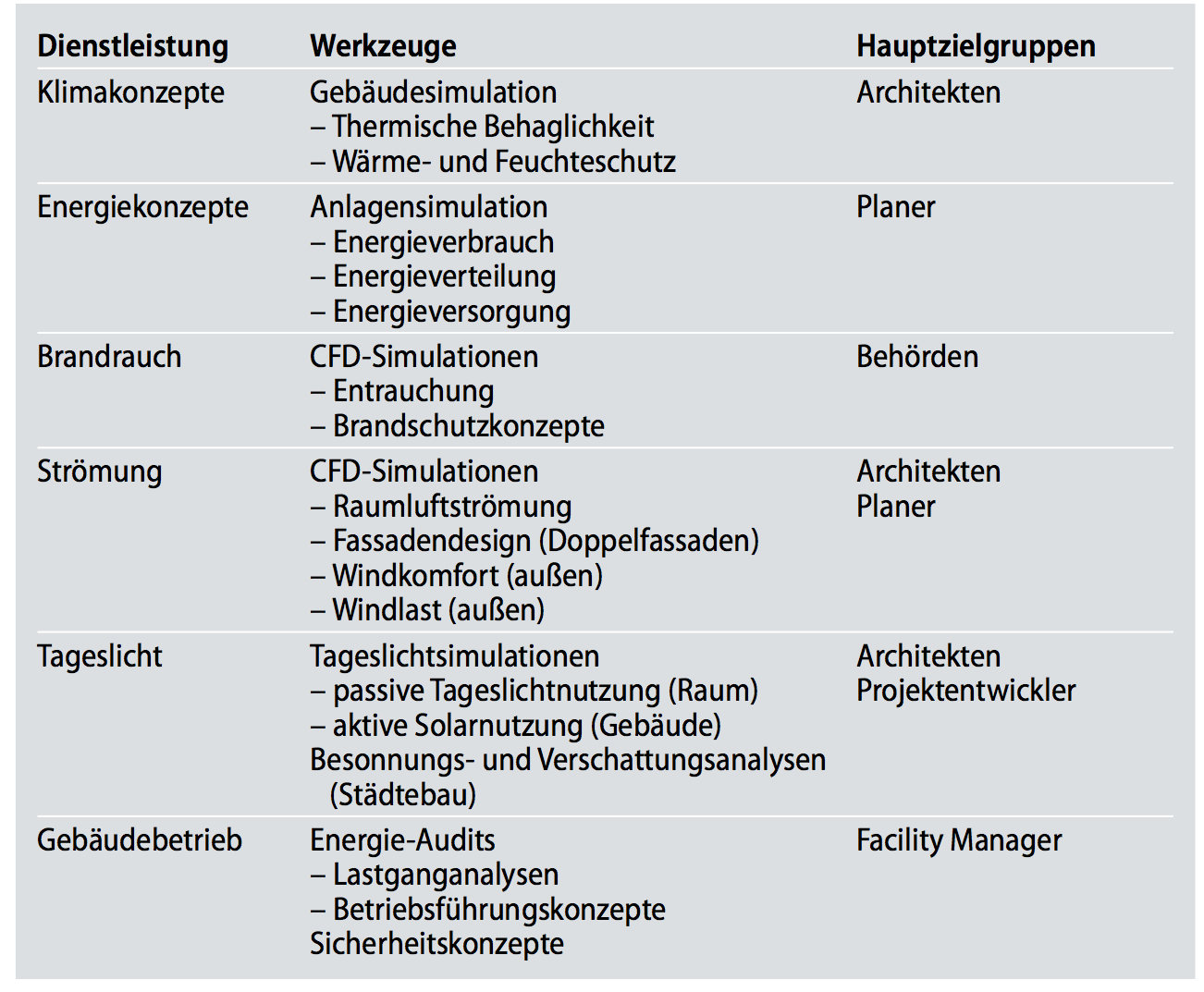
Axel Seerig is Professor of Building Climate and Building Technology at the Department of Technology and Architecture of Lucerne University of Applied Sciences and Arts (HSLU). He works at the Institute of Building Technology and Energy (IGE) and the Center for Integrated Building Technology, where he leads research and teaching in sustainable building concepts. With over 25 years of experience in building simulation and sustainable energy concepts for buildings, areas, and regions, he has established himself as a leading expert in climate-responsive building design. Seerig completed his studies in Process Engineering and earned his PhD in Thermodynamics at the Technical University of Berlin. His academic journey includes leadership roles as program director for Building Technology at the Austrian University of Applied Sciences Burgenland and senior researcher positions at AIT (Austrian Institute of Technology) and AEE-intec. His research focuses on the development of sustainable energy concepts using computer simulations for building climate control. He applies scientific principles of thermodynamics, heat transfer, and fluid mechanics through dynamic simulations in the disciplines of building climatic engineering and building simulation. His work emphasizes maximizing natural resources and user exposure to the outdoors through natural air conditioning, ventilation, and lighting, with human well-being as the central focus of planning. Current research includes energy efficiency in engineering systems for Central Asia, climate change adaptation in building design, and advanced data analysis for building performance assessment. His publication record shows a consistent focus on building energy efficiency, climate-responsive design, and simulation methods. Recent work emphasizes the integration of data analysis techniques like Monte-Carlo methods and artificial neural networks with traditional building simulation approaches. His research addresses critical challenges including climate change impacts on building performance, uncertainty in occupancy patterns, and the development of robust building concepts that maintain performance throughout their lifecycle. Seerig serves as an advisor in the Master of Science program MSE in Building Technologies and for doctoral studies at Middlesex University in London. He has received research funding through projects like SCCER FEEB&D (Swiss Competence Center for Energy Research) and has consulted internationally for the German Society for International Cooperation (GIZ) in Central Asia and Africa. He is an active member of the building science community, serving on the board of the International Building Performance Simulation Association (IBPSA), as a reviewer for the Austrian Research Promotion Agency (FFG), and as a member of professional organizations SIA and VDI. His work connects academic research with practical building projects, including notable collaborations with firms like Gruner AG on buildings such as the Roche OPAL office building, Siemens Headquarters Austria, and the Vienna Central Station.
Pengfei Li is a prolific researcher affiliated with multiple academic institutions, including Harbin Medical University, Yale University, Beihang University, Zhejiang University, and others. His work spans interdisciplinary domains such as machine learning, robotics, remote sensing, and biomedical engineering. Research interests focus on Machine learning and deep learning for industrial and medical applications Signal processing and sensor technologies Remote sensing and geospatial data analysis Robotic control systems and exoskeleton design Code search and software engineering optimization His recent publications highlight trends in FPGA-based real-time systems, multimodal machine learning, and AI-driven diagnostics. While awards and student advising details are absent in the provided data, his contributions to IEEE journals and conferences underscore his expertise in algorithm design and applied informatics.
Pedro Henriques is Professor of Computer Science at University of Minho, where he coordinates the Language Processing group at Algoritmi Research Center. With a PhD in Formal Languages and Attribute Grammars, he teaches compiler design and programming language engineering. His research develops: Formal methods for software analysis Educational tools for programming pedagogy Ontology-driven computational thinking frameworks AI applications in agriculture and healthcare Recent work includes neuroeducation-informed frameworks (OntoCnE) and Programming Cocktails methodology for optimizing cognitive load in code instruction. He has supervised 14 PhD dissertations and authored the foundational text "XML & XSL: da teoria a prática". Current EU projects explore VR cognitive rehabilitation and olive cultivar identification using deep learning.
Robyn Lutz is a Distinguished Professor of Computer Science and Faculty Member in Bioinformatics and Computational Biology at Iowa State University. She directs the Laboratory for Software Safety (LSS) and co-directs the Laboratory for Molecular Programming (LAMP). Her research focuses on software engineering for safety-critical systems, molecular programming, and formal methods. She has held roles such as ACM Distinguished Scientist and IEEE Fellow. Her work spans federally funded projects including NASA’s safety-aware ecosystems for unmanned systems and NSF initiatives on molecular programming and software dependability. She has authored influential publications on safety assurance cases, chemical reaction networks, and requirements engineering for nanoscale systems. Dr. Lutz has served on program committees for major conferences like ICSE, RE, and FSE, and delivered keynotes at venues like SAFECOMP and RE 2016. Her contributions include advancements in safety-critical software design, molecular systems verification, and interlocking safety frameworks for autonomous systems. She teaches courses such as Software System Safety and Requirements Engineering, and has developed tools like PLFaultCAT for safety analysis. Her labs focus on bridging software engineering principles with emerging domains like synthetic biology and nanotechnology.
Gordon Kindlmann is an Associate Professor of Computer Science at the University of Chicago, affiliated with the Systems Group research community. His work bridges computational imaging science and visualization theory, focusing on biomedical applications and machine learning integration. He leads projects in diffusion MRI analysis, surgical planning tools like SlicerDMRI, and theoretical advancements in visualization design. Research Interests: Biomedical Image Analysis Scientific Visualization Theory High Performance Computing Medical Imaging Algorithms Machine Learning Applications Recent Articles Trends: His work emphasizes cardiovascular modeling (e.g., aortic dissection prediction) and visualization validation techniques. Recent collaborations include optimizing visualization tools for scalability and accuracy in threaded data exploration. Awards: None explicitly listed in provided text. Grants/Advising: Involved in CDAC Discovery Grants (2019) and actively supports student research, though specific advisees are not listed here. His lab develops open-source tools like Diderot for tensor field visualization. Labs & Teams: Member of the Systems Group, a collaborative environment advancing systems research, programming languages, and software engineering.
Xiangyang Li is a Professor at the University of Science and Technology of China, School of Computer Science and Technology. His work spans interdisciplinary domains including computer science, machine learning, and geoscience. Research Focus: Machine Learning, Recommender Systems, Blockchain, and Computer Vision. Key Contributions: Development of novel algorithms for UWB positioning, code information retrieval benchmarks, and vision-language models. Recent publications highlight trends in large language model (LLM) integration for recommendation systems, quantum-inspired optimization, and cross-chain consensus models. His 2025 work includes collaborations on semantic-driven inference, prompt tuning, and hybrid BFT consensus for blockchain scalability.
Marcel Bastiaansen, PhD, is a researcher at the Max Planck Institute for Empirical Aesthetics working within the Department of Neuroscience. His research focuses on neural oscillatory dynamics as measured through EEG and MEG, specifically examining how different frequency bands correlate with language processing mechanisms. His primary research interests include: Neural Oscillations in cognitive processing Language comprehension mechanisms Theta-band, beta-band, and gamma-band dynamics Predictive coding frameworks in neuroscience EEG/MEG measurement techniques Dr. Bastiaansen's work investigates how oscillatory brain activity reflects the coupling and uncoupling of neuronal networks during language comprehension, with particular attention to how different frequency bands relate to specific linguistic processes like lexical retrieval and sentence integration. His research suggests that low-frequency oscillations (theta-band) relate to lexical retrieval, while high-frequency dynamics (beta/gamma) correspond to sentence-level integration of lexical items, with potential interpretations within predictive coding frameworks.
Olaf Spinczyk is a Professor in the Department of Computer Science 12 at Technische Universität Dortmund, leading the Embedded System Software Group. Previously, he held positions at Friedrich-Alexander-Universität Erlangen-Nürnberg and the University of Magdeburg. His research focuses on embedded systems, aspect-oriented programming, and operating system design. Affiliations: Technische Universität Dortmund: Head of Embedded System Software Group Former roles: University of Erlangen-Nürnberg (Dept. of Computer Science 4) and Magdeburg University Research Interests Spinczyk specializes in tailor-made operating systems , embedded systems , and aspect-oriented programming . His work emphasizes software product lines for embedded environments, fault tolerance, and energy-efficient system design. Key projects include: CiAO: Aspect-oriented OS product line AspectC++: AOP extension for C++ FAME-DBMS: Database management system family FAIL*: Fault-injection framework Recent Work Recent research explores energy-aware device drivers, cyber-physical system reliability, and virtualization strategies for industrial applications. He has contributed to frameworks like vGridLab for smart grid testing and PhyNetLab for IoT-based warehouses. Awards & Activities No explicit awards listed, but notable contributions include leadership roles in EuroSys and conference organization (e.g., PLOS workshops, AOSD tutorials). Active in academic service, including program committees for AOSD and MMB. Labs & Teams Leads the Embedded System Software Group at TU Dortmund, collaborating on projects involving automotive systems, real-time computing, and cloud federation strategies.
Yanwu Ding is an Associate Professor in the Department of Electrical and Computer Engineering at Wichita State University's College of Engineering. His research focuses on signal processing, satellite communications, wireless networks, and electromagnetic interference mitigation. He holds a Ph.D. and has published extensively on topics such as Doppler-based localization, channel estimation, and interference detection in satellite and terrestrial systems. Research interests include optimizing satellite navigation systems, developing robust algorithms for EMI geolocation, and enhancing wireless network performance through advanced signal processing techniques. His work spans both theoretical contributions (e.g., Doppler signatures, Kalman filter applications) and practical applications (e.g., 5G channel modeling, RIS-aided systems). Recent publications emphasize satellite-borne localization, semi-passive RIS systems, and distributed antenna array optimizations. No awards or grants are explicitly listed, though his prolific output indicates significant scholarly contribution. No advising or student information is provided. His work contributes to improving satellite communication reliability, EMI detection capabilities, and next-generation wireless infrastructure design.
Anirvan Nandy is an **Assistant Professor of Neuroscience and Psychology** at **Yale University School of Medicine**, with joint appointments in the **Department of Neuroscience** and **Department of Psychology**. His research focuses on the neural mechanisms underlying attention, visual perception, and social cognition, particularly the role of cortical layer dynamics in information processing. **Education**: PhD in Psychology (University of Southern California, 2010), MS in Electrical Engineering (National Technological University, 2002), BTech in Electrical Engineering (Indian Institute of Technology, 1994). Postdoctoral training at the Salk Institute for Biological Studies. **Research Interests**: Investigates how sensory cortical systems select relevant stimuli while ignoring distractors, with a focus on layered cortical circuits in primates. Uses electrophysiology, optogenetics, and computational modeling to study attention, visual crowding, and social behavior. **Awards**: Recipient of the **Yale Orthwein Scholar Award for Visual Science (2017)** and **NARSAD Young Investigator Award (2017)**. Notable recognition includes the **Kavli Postdoctoral Fellowship (2023)**. **Lab**: Directs the **Nandy Lab**, collaborating with researchers like Dr. Monika Jadi and Dr. Steve Chang. Current projects include studying cooperative behavior in marmosets and laminar organization of visual attention. **Grants & Funding**: Supported by awards from the Orthwein Foundation and Brain & Behavior Research Foundation. Active in interdisciplinary initiatives at the Wu Tsai Institute and Swartz Program in Theoretical Neurobiology.
Dr. Rebecca Poulos is an NHMRC Early Career Fellow and Conjoint Lecturer at the Children’s Medical Research Institute, University of Sydney. Her research focuses on cancer genomics, proteomics, and data science, particularly integrating multiomic data to uncover cancer biomarkers and drug response mechanisms. She holds a BBus, BSc (Hons) with a University Medal, and a PhD from UNSW Sydney. Key research interests include cancer driver mutations, proteogenomics, and machine learning for multi-omics integration. Notable achievements include an NHMRC Early Career Fellowship and the Cancer Institute NSW Rising Star PhD Student Award. Her work spans pediatric cancer proteomics, drug response prediction, and reproducible large-scale proteomics. Recent studies highlight her contributions to cancer pathway modeling (DeePathNet), pediatric cancer molecular signatures, and proteomic stratification of prostate cancer. She leads projects funded by NHMRC and Sydney Cancer Partners, advancing precision medicine through proteomics. Her lab is embedded in the Cancer Data Science Group (ProCan), collaborating on pan-cancer proteomic maps and clinical applications.
Associate Professor Sonika Tyagi leads the Digital Health and Bioinformatics research lab at RMIT University's School of Computing Technologies. She is an affiliate Machine Learning scientist at Monash University and holds leadership roles in the Australasian Institute of Digital Health (AIDH) and Australian Research Council (ARC). Her research focuses on integrating machine learning with genomics and healthcare data to address clinical challenges, such as preterm birth prediction and antibiotic resistance. Research Interests: Multimodal data integration for personalized medicine AI-driven genomics and healthcare analytics Biomedical data standardization and infrastructure Natural language processing of unstructured medical data Key Projects: EHR-QC and EHR-ML pipelines for clinical outcome prediction GenomicBERT for genomic sequence analysis SuperbugAI flagship project on antibiotic resistance Awards: Healthcare Innovator Award 2024 (AI in Health) Women in AI (WAI) Awards Finalist 2022 Brilliant Women in Digital Health 2023 Grants & Funding: NHMRC grants (2017-2025) AISRF EMCR Fellowship (2020) Industry and university grants for equitable AI resources She advises diagnostic startups and collaborates with clinical institutions to translate research into practical solutions. Her lab trains over 30 students, focusing on interdisciplinary data science and computational biology.
Affiliations & Roles Michele Albano is an Associate Professor at the Department of Computer Science, Aalborg University, Denmark. He is affiliated with The Technical Faculty of IT and Design, focusing on research in IoT, Cyber-Physical Systems, and Edge Computing. He leads the Productive4.0 project (2017–2020), funded by Horizon Europe, addressing Industry 4.0 challenges in product lifecycle management. His work integrates formal verification tools like Uppaal with real-world applications in robotics, energy systems, and blockchain-based platforms. Research Interests Albano's research spans IoT architecture optimization , energy-efficient systems , and model-driven engineering . He develops tools for autonomous exploration algorithms (MAES), edge-cloud resource orchestration, and fault-tolerant computation offloading. His work bridges theoretical models (e.g., Uppaal SMC) with practical implementations in smart grids and robotic systems. Recent projects include blockchain-based crowdsourcing for machine learning and energy-aware thermal dynamics estimation in buildings. Collaborations & Impact He collaborates with the European Industry 6.0 community, contributing to the Arrowhead Framework for interoperable IoT systems. His research outputs include 112 publications, with 2025 highlights in human-inspired robotics and cognitive cloud frameworks. Media coverage in 2024–2025 highlights his work on green IT and secure API generation. Albano advises students on system modeling (e.g., ACSmt plugin development) and edge computing optimization. Labs & Teams His research group focuses on Cyber-Physical Systems and Smart Grids , with contributions to tools like RoutesMobilityModel and FlexHousing. He actively participates in workshops on New Trends in Software Architecture (SATrends '24) and IEEE conferences on Industrial Informatics.
Jiayi Wang is an Assistant Professor of Statistics in the Department of Mathematical Sciences at the University of Texas at Dallas (UT Dallas), affiliated with the Erik Jonsson School of Engineering and Computer Science. He holds a PhD in Statistics from Texas A&M University (2022) and a B.S. in Statistics from Zhejiang University (2017). His research focuses on nonparametric statistics and machine learning, particularly in causal inference, functional data analysis, reinforcement learning, low-rank modeling, and matrix completion. He has contributed to methodological advancements in areas such as treatment effect estimation, offline reinforcement learning, and statistical theory for complex data structures. Key achievements include the ASA Section on Nonparametric Statistics Student Paper Award (2020). His work has been published in prestigious journals like the Journal of the American Statistical Association and conferences such as NeurIPS and ICML. He has also developed open-source code for methods like PCATE balancing weights, available on GitHub. Teaching experience includes instructing courses in statistical learning, probability, and applied statistics at both Texas A&M University and UT Dallas. His research group actively explores interdisciplinary applications, including climate science and criminal justice, demonstrating a commitment to bridging statistical theory with real-world problems.







-square-medium.jpg)