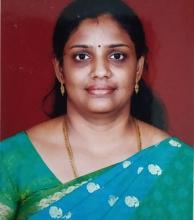
Kathleen Murphy is a Professor in the Department of Water Environmental Technology at Chalmers University of Technology, specializing in the application of spectroscopic techniques to analyze dissolved organic matter in water systems. Her research focuses on fluorescence-based methods for distinguishing water sources, detecting quality changes, and optimizing water treatment processes. She has developed influential open-source tools like the drEEM toolbox and OpenFluor database. Her work spans natural aquatic systems (freshwater/oceanic) and technical systems (drinking water, wastewater, ballast water). Current projects include improving water treatment sensors, UV disinfection indicators, and carbon management strategies. Funding sources include Formas, VINNOVA, and industry grants. Key research themes include fluorescence spectroscopy applications, organic matter reactivity, and biofilter optimization. Her interdisciplinary approach addresses global water quality challenges, with over 37 peer-reviewed publications and 10 active research projects since 2018.
Dr. B.Bharathi is a Professor in the Department of Computer Science and Engineering at Sathyabama Institute of Science and Technology, with nearly 20 years of teaching experience. She specializes in areas such as Performance Evaluation, Software Architectures, and Machine Learning. As an academic leader, she coordinates the Centre for Distance and Online Learning and previously headed the Entrepreneurship Development Cell. Dr. Bharathi is a Certified Internal Auditor for ISO 9000:2008 and has established the Testing Centre of Excellence in collaboration with Virtusa Inc. She is actively involved in accreditation processes, including NBA, NAAC, AICTE, and ABET, and serves as an expert in Outcome-Based Education (OBE) implementation. Her contributions extend to guest lectures on design thinking and OBE, and she holds memberships in IEI, ISTE, IAENG, ACEEE, IACSIT, and UACEE societies. Research Interests: Performance Evaluation, Software Testing, Predictive Analytics Achievements: 3 Published Patents, 1 Design Patent Granted, Cambridge University Teaching Methodology Training Key Roles: Coordinator of National Accreditation Processes, Founder of Testing Centre of Excellence
Truls Nyberg is an Industrial Postdoc at TRATON Group, affiliated with the Division of Robotics, Perception and Learning (RPL) at KTH Royal Institute of Technology. His research focuses on foundation models and vision-language models for decision-making and motion planning in autonomous vehicles, addressing critical challenges in occlusion handling and risk assessment. His academic background includes: PhD in Computer Science (Robotics, Perception and Learning) from KTH Royal Institute of Technology (2025), with thesis "Mind the Unknown: Risk- and occlusion-aware motion planning for autonomous vehicles" supervised by Jana Tumova and co-supervised by Patric Jensfelt MSc in Control and Information Systems from Linköping University BSc in Applied Physics and Electrical Engineering from Linköping University Nyberg's research centers on autonomous driving systems where occlusions create safety risks. He develops risk-aware motion planning algorithms using sequential reasoning about hidden objects, vehicle-to-everything (V2X) communication, and foundation models to enhance decision-making in complex traffic. His work bridges theoretical robotics with industrial applications, emphasizing real-world safety specifications and uncertainty handling in urban and highway scenarios. Analysis of his publications reveals a clear trajectory from fundamental risk-aware planning (2021) to advanced occlusion reasoning using V2X (2024). His research consistently targets safety-critical gaps in autonomous driving, with growing emphasis on cooperative perception and language-integrated vision models. Key trends include formal safety guarantees, real-time contingency planning, and leveraging hidden object predictions for proactive vehicle control. Nyberg was funded by the Wallenberg AI, Autonomous Systems and Software Program (WASP) during his doctoral studies. While no current student advising is documented, his industry-academia role at TRATON Group demonstrates strong collaboration between KTH and automotive manufacturing. His research directly addresses industrial challenges in commercial vehicle automation. As part of KTH's Robotics, Perception and Learning division, Nyberg contributes to Sweden's leading autonomous systems research environment. His work leverages state-of-the-art robotics labs and industry partnerships to translate academic innovation into practical solutions for next-generation autonomous vehicles.
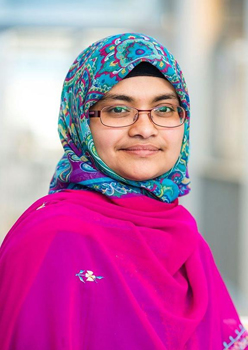
Shahina Begum is a Professor in Artificial Intelligence at Mälardalen University (MDU), leading the Artificial Intelligence and Intelligent Systems group. She focuses on developing intelligent systems for medical and industrial applications, with expertise in multimodal machine learning, explainable AI, and decision support systems. She holds a PhD in AI from MDU (2011) and has led numerous research projects, including initiatives funded by the Swedish Knowledge Foundation and KK-Stiftelsen. Her teaching roles include designing and leading over 21 courses/learning modules in AI and machine learning, both on-campus and distance-based. She is the main responsible for AI content in MDU's 'Bachelor program in Applied AI' and has spearheaded MOOC courses like 'Basic Knowledge on ML' and AIClass. She also leads industrial collaboration projects such as IntoDeep, KIT, and PROMPT, addressing Industry 4.0 challenges. Research interests span sustainable AI development, trustworthy AI systems, and AI for manufacturing/predictive maintenance. She has received notable recognition, including the Prospect grant (2011) and inclusion in the Royal Swedish Academy's top 100 sustainable AI researchers (2020). Her work emphasizes bridging academic research with industry needs through collaborative initiatives. She has published extensively on multimodal learning, explainable AI, and applications in transportation, healthcare, and manufacturing. Her awards include the Best Paper Award at the 2024 conference for work on second-order learning. She actively contributes to academic governance, serving on evaluation committees, conference organizing committees, and funding review boards.
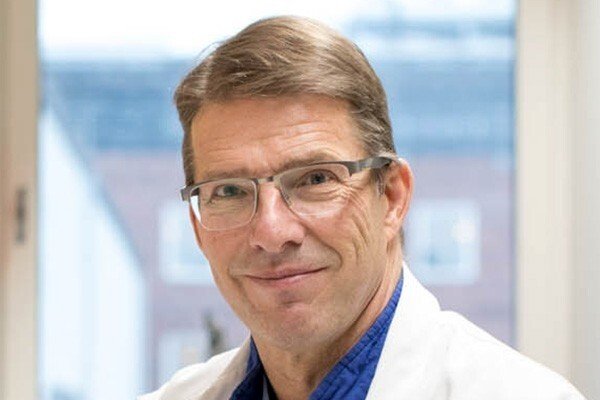
Professor Ulf Hedin is a distinguished vascular surgery researcher and clinician at Karolinska Institutet, where he serves as Professor and Chief Physician in the Department of Molecular Medicine and Surgery. He leads the Vascular Surgery research group at Karolinska University Hospital's Department of Vascular Surgery and maintains extensive collaborations with cardiovascular research groups at CMM, clinical physiology, cardiology, neurology, nuclear medicine, clinical chemistry, and clinical pharmacology departments. His research spans vascular biology, atherosclerosis, carotid stenosis, stroke prevention, and peripheral vascular disease. The research group has built a comprehensive platform integrating advanced cell and molecular biology, animal models, and patient-centered studies to investigate central processes in vascular disease including thromboembolism in carotid stenosis and stroke, aortic aneurysm development, and vascular wall repair processes following surgical interventions. The group also includes translational research in traumatology with multiple specialized teams focusing on specific aspects of vascular disease. Professor Hedin's publication record demonstrates consistent contributions to understanding atherosclerotic plaque instability, vascular wall biology, and innovative approaches to vascular disease diagnosis and treatment. His work combines molecular approaches with clinical applications, particularly in developing biomarkers for unstable atherosclerosis and targeted therapies to prevent stroke and other vascular complications. Alexander W. Clowes Distinguished Lecturer 2025 Professor Hedin actively supervises doctoral students including Marko Bogdanovic, Antti Siika, Maria Talvitie, and Ulrika Hahn-Lundström. His research is supported by significant funding including a 22.5 million SEK grant from MedTechLabs for research on peripheral vascular disease, which he leads jointly with Christian Gasser from KTH. His research group consists of specialized teams including the Carotid Stenosis and Stroke team and the Translational Vascular Medicine team, which apply integrative analyses combining bioinformatic and clinical data studies with murine models of vascular injury. The research group maintains a world-unique Biobank of Karolinska Endarterectomies (BiKE) containing over 1,400 tissue and blood samples from patients who have undergone carotid artery surgery, which serves as a foundation for many of their molecular investigations. They also develop innovative imaging diagnostics using software like vascuCAP to visualize plaque components associated with unstable atherosclerosis.
Frank Dignum is a Professor at Umeå University's Department of Computing Science, leading a research group in socially aware AI. He also serves as Director at the Centre for Transdisciplinary AI and maintains affiliations with Utrecht University and the University of Melbourne as an honorary researcher. Wallenberg Chair in Socially Aware AI (2019-present) Research focus: Computational models of social aspects (norms, values, practices) Applications: Policy impact simulation, natural disasters, medical chatbots His research explores creating more realistic social simulations to predict societal responses to change, and developing natural human-AI dialogues for training medical professionals. Recent work emphasizes context-sensitive deliberation , value-based decision making , and emotional agent modeling in AI systems. Key publication trends show strong focus on agent-based modeling (65%), human-AI interaction (20%), and game AI applications (15%), with increasing emphasis on ethical considerations and cross-cultural factors in recent years. Wallenberg Chair in Socially Aware AI Honorary Principal Research Fellow at University of Melbourne Contributions to United Nations AI governance panel Professor Dignum's research group actively develops simulation tools for societal challenges, with ongoing projects spanning 2023-2028. His work combines technical AI development with deep understanding of social dynamics and ethical implications.
Katrin Jonsson is an Associate Professor at the Department of Informatics, Umeå University and has served as Head of Department since 2018. She is a member of the Swedish Center for Digital Innovation and leads the Internet of Things Research Group . Academic Focus: Digital transformation, IoT, smart services, remote diagnostics, and sociomateriality. Leadership: Oversees personnel, finances, and quality initiatives at the department level. Editorial Roles: Editor-in-Chief of the Scandinavian Journal of Information Systems since 2022. Her research examines how digitalized products reshape industrial and public sector practices, with a focus on sensor-driven smart services and institutional dynamics. Scientific Awards: AIS Senior Scholars Award for Best IS Journal Paper (2009) Paper of the Year Award in Information & Organisation Best Paper Award at IRIS 27 Conference She has managed numerous projects on IoT adoption in municipalities and industry, contributing to journals such as European Journal of Information Systems and Journal of Information Technology .
Maurice Lamb is a researcher at the University of Skövde , affiliated with the Interaction Lab (ILAB) and the School of Informatics . His work bridges digital human modeling (DHM) , virtual reality , and human-robot interaction (HRI) with applications in automotive design and cognitive science . Research interests include: Automated design optimization using simulation-based multi-objective methods Collaborative tools for remote design reviews and CAD integration Cognitive implications of inverse kinematics solvers (FABRIK) in motor planning Impact of XR technologies on motor skill learning and human-agent coordination Methodological challenges in NARS (Negative Attitude toward Robots Scale) application Key projects include PLENUM (Vinnova-funded) and OKAVIM (AFA Insurance-funded), focusing on remote collaboration , ergonomics , and cognitive support in VR/XR . His publications span IEEE , Springer , and Elsevier journals, often co-authored with experts like Francisco Garcia Rivera, Erik Billing, and Dan Högberg.
Joakim Edsjö is a Professor of Theoretical Physics at the Department of Physics (Fysikum) , Stockholm University , focusing on astroparticle physics and dark matter research. He actively participates in both research and education, serving as section dean for the mathematical-physical section at the Faculty of Science since 2024. Research Interests: Dark Matter, Supersymmetry, Neutrino Detection, Gamma-Ray Astronomy, Computational Physics Teaching: Quantum Mechanics Summer Course (FK5033) Projects: Co-developer of DarkSUSY , WimpSim , and GAMBIT software packages Research Trends: His publications focus on dark matter annihilation signals across multiple astrophysical contexts, including solar neutrino analysis, gamma-ray phenomenology, and computational tool development for beyond-standard-model physics. Key methodologies involve Monte Carlo simulations, cross-experiment data fitting, and neutrino oscillation modeling. Leadership: Previously chaired the Natural Sciences Area's undergraduate education committee (2016-2023) and leads pandemic-era teaching transformation studies comparing global university responses.
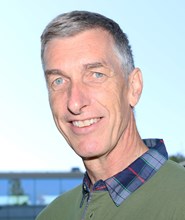
Karl Meinke is a Professor at KTH Royal Institute of Technology, where he serves as Head of the Computer Science Department and Head of the Division of Theoretical Computer Science within the School of Electrical Engineering and Computer Science. His research focuses on applying machine learning techniques to software testing, particularly for safety-critical systems like autonomous vehicles and embedded systems. His research interests span machine learning, software testing, safety critical systems, embedded systems, autonomous driving, digital pathology, and graph neural networks. Meinke has developed innovative approaches like Learning-Based Testing that combine machine learning with formal methods for system validation. His work bridges theoretical computer science with practical applications in automotive systems and medical diagnostics. His recent publications show a strong trend toward applying graph neural networks to diverse domains including program analysis, digital pathology, and autonomous vehicle testing. His research demonstrates a consistent focus on solving the test oracle problem and generating meaningful test cases for complex systems where traditional testing approaches fall short. Meinke actively collaborates with Karolinska Institutet (KI), indicating interdisciplinary work between computer science and medical research. He is responsible for Masters level education in software testing at KTH and serves as examiner for several advanced courses including Degree Projects in Computer Science and Software Reliability. His research group has developed tools like LBTest for learning-based testing of reactive systems, and he has secured funding for projects such as the ITEA3 Testomat Project focused on next-level test automation. His work has significant implications for validating autonomous systems where safety is paramount. Meinke leads research in using machine learning to address fundamental challenges in software testing, particularly for systems where traditional test oracles are unavailable or impractical. His approach of combining active learning with formal specifications has created new pathways for validating complex cyber-physical systems.
Erik Lindahl is a Professor of Theoretical Chemistry at the Department of Biochemistry and Biophysics, Stockholm University. His research group is primarily located at the Science for Life Laboratory, a joint research environment for Stockholm University, KTH Royal Institute of Technology, and Karolinska Institutet. Lindahl serves as deputy director of the Swedish e-Science Research Center (SeRC), sits on the steering committee for the national program in Data-driven Life Sciences at SciLifeLab, and is program manager for Stockholm University's part of a joint master's program in molecular techniques for the life sciences. He also serves as vice section dean for chemistry and is involved in creating a Swedish node within CECAM. Lindahl's research focuses on understanding the structure and function of ligand-gated ion channels, particularly in the human nervous system. His group combines experimental and computational approaches, including bioinformatics for building receptor models, molecular dynamics simulations to understand molecular interactions, and experimental techniques like electrophysiology and spectroscopy. They have made significant contributions to understanding how voltage-gated and ligand-gated ion channels function, including determining molecular mechanisms of channel opening and identifying binding sites for molecules that modulate neural signaling. The group is also a leader in developing computational tools for life sciences, particularly the widely used GROMACS software package for molecular dynamics simulations and methods for cryo-electron microscopy data analysis through the RELION program. Analysis of Lindahl's recent publications reveals a strong focus on structural biology of membrane proteins, particularly ligand-gated ion channels. His work integrates cutting-edge computational methods like molecular dynamics simulations, AlphaFold predictions, and cryo-EM data analysis to understand protein conformational dynamics and ligand binding. Key research themes include the structural basis of ion channel function, lipid-protein interactions that stabilize membrane proteins, and computational methods for biomolecular simulation and structural biology. His publications demonstrate a consistent interdisciplinary approach that bridges computational chemistry, structural biology, and neuroscience. Lindahl leads an active research group with multiple postdocs, researchers, and PhD students working on various aspects of membrane protein structure and function. His research is supported by diverse funding sources including the Swedish Research Council, European Research Council, Knut and Alice Wallenberg Foundation, and several EU programs. He plays significant leadership roles in major computational infrastructure initiatives including BioExcel (an EU-funded center of excellence for computational biomolecular research), PRACE (the European computing infrastructure), and EuroHPC. The Lindahl research group operates primarily at the Science for Life Laboratory, where they have access to advanced computational resources and experimental facilities for structural biology. The group collaborates extensively with researchers across Stockholm University, KTH, Karolinska Institutet, and international partners through EU-funded projects. They are particularly active in developing and maintaining open-source software tools that are widely used in the computational biology community.
Shafiullah Soomro serves as Associate Professor in the Department of Artificial Intelligence at Quaid-e-Awam University of Engineering Science and Technology, Pakistan. He completed his Ph.D. in Application Software from Chung-Ang University, South Korea (2018), where he was honored as Best PhD Graduate. Ph.D., Application Software, Chung-Ang University (2018) His research spans medical image segmentation, computer vision, and AI applications in environmental monitoring. Specializing in automatic segmentation techniques using machine learning, he combines theoretical frameworks with practical biomedical implementations. Recent work integrates Swedish National Forest Inventory data with airborne laser scanning for forest attribute prediction. Current research projects include ForestMap (global forest cartography), AI-driven tree volume measurement (Sweden-Brazil collaboration), and machine learning models for predicting mechanical properties of oxynitride glasses. Best PhD Graduate, Chung-Ang University Dr. Soomro has mentored multiple MS students across Korea and Pakistan while supervising 2 Master's and 1 PhD students currently. His teaching portfolio includes 11 undergraduate, 2 MS, and 1 PhD courses such as Artificial Intelligence, Digital Image Processing, and Advanced Image Processing/Computer Vision. He actively contributes to academic curriculum design and research community development within the Computer Science and Artificial Intelligence department.
Peter Lind is an Associate Professor at the Department of Molecular Biology, Umeå University, Sweden. He leads the Lind Lab, focusing on experimental evolution and mathematical modeling of bacterial biofilm formation and antibiotic resistance, particularly in Pseudomonas and Acinetobacter species. His work bridges evolutionary biology with clinical applications to address antimicrobial resistance challenges. Contact: Email peter.lind@umu.se , Phone +46 90 786 89 80 Location: 6K/6L, Hospital Area, Umeå University Research Interests: The group studies evolutionary pathways in bacteria under stressors like antibiotics, aiming to predict and redirect evolution toward dead ends. Key areas include: Biofilm dynamics and extracellular matrix formation Antibiotic resistance mechanisms and multi-resistance evolution Mathematical modeling of molecular networks Clinical translation for infection biology and drug development Publication Trends: Over the past five years, his work spans hyperbaric oxygen therapy applications (for ARDS, long COVID, and ulcerative colitis), diving medicine (barotrauma, pulmonary edema), and advanced imaging techniques (PET, MRI, Doppler ultrasound). The research emphasizes interdisciplinary approaches combining clinical practice, computational modeling, and experimental evolution. Labs & Collaborations: Lind Lab collaborates with clinical teams at Umeå University Hospital, contributes to the UCMR program as education director, and develops open-source tools for diving-related medical diagnostics. Their work informs antibiotic stewardship and evolutionary prediction frameworks.
Professor Leif Eriksson is a leading computational chemist in the Department of Chemistry and Molecular Biology at the University of Gothenburg, holding his professorship since 2011 after positions at NUI Galway and Dalhousie University. His research group comprises 1 research engineer, 2 postdocs, 1 doctoral student, and multiple Master's researchers focusing on AI-driven drug discovery. His educational background includes: Chemistry studies at Stockholm University and University of Sussex PhD in Quantum Chemistry, Uppsala University (1992) Postdoctoral Fellowship at Dalhousie University, Canada (1992-93) Research centers on theoretical biophysical chemistry with emphasis on computational modeling of DNA damage, cancer mechanisms, and antibiotic development. The group pioneers AI-based tools (MolAI, iScore) for ultrafast drug discovery, studying stress response pathways in glioblastoma/TNBC and developing inhibitors through multi-scale simulations from QM/MM to molecular dynamics. Recent work targets protein-protein interactions, membrane diffusion, and drug-loaded liposomes using integrated computational-experimental approaches. Publication trends (2022-2025) reveal strong focus on cancer therapeutics (35%), antibiotic discovery (25%), and AI-driven drug design (40%), with increasing integration of machine learning for ADMET prediction and target validation. Key journals include Journal of Chemical Information and Modeling (30%), Biochemistry (20%), and Scientific Reports (15%). Scientific recognition includes: Göta Student Union's Pedagogical Prize (2017) 300+ scientific papers and 20+ review chapters Patents for skin cancer/glioblastoma drugs leading to spin-offs (ANYO Labs, C26 Bioscience, Cell Stress Discoveries) Advising involves direct supervision of doctoral/postgraduate researchers with strong industry-academia pipelines. Grant funding is sustained through: National: Swedish Research Council, Swedish Cancer Society, Lawski Foundation International: Wenner-Gren Foundations, GBM Foundation, EU H2020 MSCA-RISE The lab maintains active collaborations with UGOT CARe for antibiotic resistance research and international networks for cancer drug validation. Research infrastructure leverages national supercomputing resources (via NAC leadership) and integrates wet-lab validation through spin-off partnerships. Current projects focus on translating computational discoveries into patentable therapeutics for aggressive cancers and antimicrobial resistance, with multiple compounds in preclinical development phases.