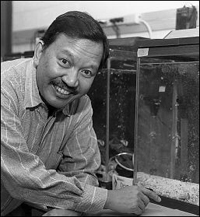
Baldomero Olivera is a Professor in the Department of Biological Sciences at the University of Utah. His research focuses on molecular neuroscience, conotoxins, ion channels, and non-opioid pain therapeutics. He is affiliated with the Molecular Biology and Biological Chemistry Programs. Education: B.S., University of the Philippines Ph.D., California Institute of Technology Olivera's lab investigates venom peptides from predatory cone snails (Conus) as tools to study nervous system function. These peptides target specific ion channels and receptors, offering insights into synaptic signaling, pain pathways, and chemotherapy-induced neuropathy . His work includes developing non-opioid analgesics like the FDA-approved drug Ziconotide (ω-conotoxin MVIIA), which blocks calcium channels to treat severe pain. Key research directions involve constellation pharmacology to analyze multi-channel interactions, TRPA1 channel studies for cold sensitivity, and α9α10 nicotinic receptor inhibition to prevent chemotherapy side effects. His lab has characterized over 50,000 peptides across 700 Conus species. Selected Recent Publications (2019-2015) highlight work on peptide engineering, venom evolution, and clinical applications . These studies span neuropharmacology, structural biology, and evolutionary ecology of cone snails. Collaborative Networks: Olivera collaborates with institutions like the University of Utah, NIH-funded programs, and international researchers on venom-based drug discovery.
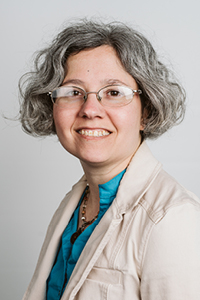
Dr. Liz Freedman Fowler is the Faculty Senate Dean and an Assistant Professor of Biological and Earth Sciences at Dickinson State University's School of Applied Sciences. Her research focuses on dinosaur paleontology, particularly the evolution and ecology of ceratopsians, hadrosaurs, and theropods. She has conducted extensive work on North American and Mongolian Cretaceous formations, exploring topics such as stratigraphic correlations, ontogenetic morphology, and predatory behavior. Her academic roles include administrative leadership and undergraduate teaching in biological and earth sciences. Education: Ph.D. in Earth Science, Montana State University B.A. in Geoscience, Franklin and Marshall College Her research interests emphasize understanding dinosaur evolution through stratigraphic and morphological analyses. Key areas include transitional evolutionary forms in ceratopsids, functional morphology of predatory dinosaurs, and population biology of herbivorous dinosaurs like Maiasaura. She has contributed to reevaluations of taxonomic misidentifications and explored the origins of avian flight through studies of Deinonychus. Her publications analyze Cretaceous ecosystems, including studies on the Judith River and Hell Creek formations. They highlight trends in dinosaur diversity, predatory adaptations, and the interplay between morphology and ecological roles. Dr. Freedman Fowler’s work integrates field paleontology with statistical methodologies, advancing our understanding of Mesozoic vertebrate communities. She actively engages in paleontological outreach and undergraduate research mentorship.
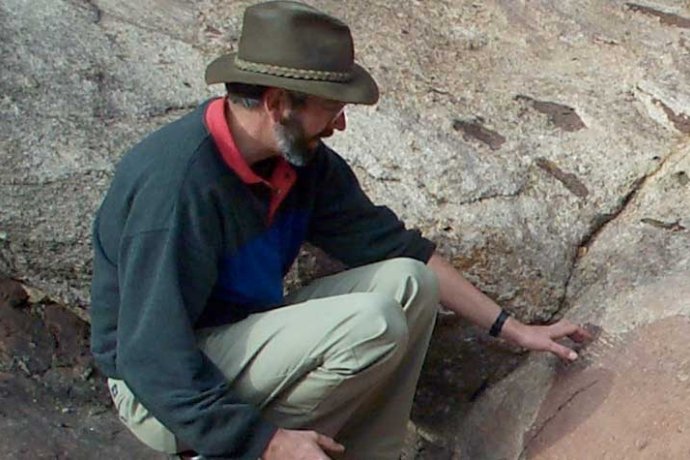
Mark McMenamin is a Professor of Geology at Mount Holyoke College, known for groundbreaking theories like the 'Hypersea' concept challenging traditional views on land-based evolution and the discovery of Ediacaran fossils in Mexico suggesting convergent evolution. He is on leave for the 2024-2025 academic year. Education: Ph.D. in Geology from the University of California, Santa Barbara (UCSB), and B.S. from Stanford University. His research focuses on evolutionary biology, Cambrian explosion dynamics, Proterozoic environments, and paleontological fieldwork in locations like Nevada, Mexico, and Massachusetts. Key Contributions: Hypersea theory (life on land as a 'second ocean') Discovery of 600-million-year-old Mexican fossils indicating extinct life forms with nervous systems Proposed Carthaginian voyages to America in 350 BC Recent finds include a Jurassic dinosaur and pterosaur in New England Awards: Presidential Young Investigator Award (1988), Sigma Xi National Lecturer (1992-1993). Research interests span Ediacaran biota, Cambrian diversification, and the interplay between environment and evolution. Recent studies include Permian vertebrate pigmentation and Triassic clam paleobathymetry. His work frequently integrates field discoveries with theoretical frameworks, such as 'environmental convergence' and 'hypertopia' models. McMenamin's labs and fieldwork teams have produced notable findings, including the first direct evidence of Permian vertebrate coloration and a Jurassic neotheropod in Massachusetts. His publications bridge paleontology with broader ecological and philosophical questions about life's evolution and potential beyond Earth.
Kevin Kapuscinski is a Professor at Lake Superior State University , serving as Assistant Director of Research and affiliated with the Center for Freshwater Research & Education within the School of Natural Resources under the College of Great Lakes Ecology & Education . His work focuses on freshwater ecology, fisheries management, and aquatic ecosystem conservation. Research interests include: Fish population dynamics and genetics Habitat restoration for native species Invasive species impacts on aquatic ecosystems Trophic interactions in riverine and lake environments Evaluation of stocking and supplementation programs Microbiome studies in aquaculture Recent publications highlight his work on Muskellunge and Atlantic salmon ecology, Great Lakes habitat restoration, and invasive cyprinid dynamics. Collaborative projects span multiple regions, including the St. Marys River, Niagara River, and Lake Superior. His research frequently addresses conservation strategies and ecosystem management challenges.
Micahis (Mike) Mihalitsis is a Research Fellow and PhD graduate from James Cook University (JCU), Queensland, Australia. He is currently a Postdoctoral researcher at the University of California - Davis. His research focuses on the feeding ecology of predatory fishes and coral reef resilience under climate change. He completed his BSc in Biology at the University of Copenhagen, Denmark, followed by a MSc and PhD at JCU. Research interests include understanding predator-prey dynamics, coral reef ecosystem services, and multi-scale reef dynamics from population to macroevolutionary scales. His work examines how climate change impacts marine biodiversity and human societies, particularly in tropical regions. Key contributions include studies on coral reef adaptation using DNA techniques and analyses of climate change effects on fisheries and vulnerable communities. His research is affiliated with the ARC Centre of Excellence for Coral Reef Studies at JCU.
Dr. Roy L. Caldwell is a Professor of the Graduate School at the University of California, Berkeley, specializing in invertebrate behavior and marine ecology. His research focuses on stomatopod crustaceans and cephalopods across the tropical Indo-Pacific region, with field programs in Lizard Island, Moorea, and Indonesia. Behavioral ecology of stomatopods Mating systems and sensory ecology Biomechanics of mantis shrimp strikes Coral reef rehabilitation after blast fishing Genetic structure of marine populations Current work expands to octopus behavior, remipede biology, and mid-water squid inking mechanisms. His lab encourages diverse studies beyond stomatopods while maintaining focus on invertebrate behavior. Publications from 2000-2008 span marine biomechanics, polarization vision, coral reef conservation, and cephalopod adaptations. Research integrates fieldwork, laboratory analysis, and interdisciplinary collaborations.
Nia Whiteley is a Professor in the School of Environmental and Natural Sciences at Bangor University, where she has been a faculty member since 1998. She previously held positions as Senior Lecturer (2010) and Reader (2016). Her academic journey began with a BSc in Zoology from the University of Hull and a PhD in Comparative Physiology from the University of Birmingham, followed by postdoctoral research in crustacean and fish physiology. Her research centers on the physiological and metabolic responses of aquatic organisms—especially crustaceans—to environmental stressors such as temperature, salinity, oxygen, and CO₂ fluctuations. She investigates acid-base balance, ion regulation, respiratory gas exchange, and protein turnover, integrating laboratory and field studies with transgenerational experiments to assess ecological implications under climate change. Her work explores the energetic costs of physiological adjustments, including osmoregulation and responses to ocean acidification and warming, often through collaborative projects like the Saloa Project. Recent publications (2018–2020) in journals such as Scientific Reports , Marine Environmental Research , and Proceedings of the Royal Society B highlight her focus on multi-stressor impacts, maternal effects, and species-specific tolerance mechanisms. Her research trends emphasize transgenerational plasticity, environmental physiology, and the interplay between metabolic costs and fitness outcomes in marine invertebrates. Developing Anti-racism Action in Climate Change, Environment and Rural Affairs Policy Fellowship (2024–2026) Climate change and the costs of survival in marine crustaceans (2012–2016) Impacts of ocean acidification on key benthic ecosystems (2013–2014) She mentors PhD students in marine physiological ecology and holds a Teaching Fellowship and Postgraduate Certificate in Teaching in Higher Education. Her work contributes to UN Sustainable Development Goals in education and environmental sustainability. She is active in research dissemination via ResearchGate and Google Scholar.
David Gruber is a Distinguished Professor of Biology and Environmental Sciences at the City University of New York, with affiliations at Baruch College and the CUNY Graduate Center. He is also the Founder and President of Project CETI, a nonprofit interdisciplinary initiative focused on decoding sperm whale communication using advanced machine learning and robotics. His work bridges marine biology, climate science, animal communication, and bio-inspired technology. Education and Professional Background: Ph.D. in Biology (specific institution not mentioned in text) Postdoctoral training likely in marine molecular biology or biophysics (inferred from research) National Geographic Explorer and Emerging Explorer (2014) Principal Investigator, Project CETI (Audacious Project, 2020) Research Interests: David Gruber's research is deeply interdisciplinary, focusing on the intersection of marine life and technology. He investigates biofluorescence and bioluminescence across diverse species—from corals and eels to sharks and sea turtles—discovering over 200 glowing organisms. His lab explores the molecular basis of these phenomena, identifying novel fluorescent proteins with potential biomedical applications. A major focus is animal communication , particularly in sperm whales, where he applies AI and natural language processing to decode vocalizations. He also studies coral resilience to climate change and deep-sea ecosystems. Recent Research Trends: Gruber’s recent publications reveal a strong shift toward integrating artificial intelligence with marine bioacoustics. His team uses convolutional neural networks to classify sperm whale clicks and identify individuals with high accuracy. There is a growing emphasis on unsupervised machine translation to interpret non-human communication, suggesting a future where interspecies dialogue may be possible. His work increasingly combines soft robotics, genomics, and real-time underwater sensing to enable non-invasive study of fragile deep-sea life. Scientific Awards and Recognition: National Geographic Emerging Explorer (2014) Multiple National Geographic Grants (2010–2020) Audacious Project Funding for Project CETI (2020) Leader in the global movement for ocean conservation and interspecies communication Advising and Grants: As a principal investigator and professor, Gruber mentors students and early-career scientists in marine biology, genomics, and bio-inspired technology. He has secured significant funding from National Geographic and other sources to support deep-sea exploration, coral research, and whale communication studies. His grants emphasize innovation in wildlife technology , including the development of gentle, on-whale sensors and soft robotic samplers. These projects often involve collaboration with engineers, computer scientists, and conservationists, reflecting his commitment to interdisciplinary science. Labs and Teams: Gruber leads a multidisciplinary research group that collaborates with the Harvard Microrobotics Laboratory, the Dominica Sperm Whale Project (led by Shane Gero), and institutions worldwide. His lab develops cutting-edge tools such as the 'shark-eye camera' and soft robotic grippers for delicate marine organisms. Project CETI brings together over 50 scientists from more than 15 institutions, forming one of the largest collaborative efforts in cetacean communication research.
Dr. Heiner Kuhl is a Scientific Staff member in the Department of Fish Biology, Fisheries and Aquaculture at the Leibniz Institute of Freshwater Ecology and Inland Fisheries (IGB Berlin). His research focuses on molecular fish physiology, genetics, and evolution, particularly in sex determination, genome analysis, and aquatic species adaptation. Affiliation: IGB Berlin, Department of Fish Biology, Fisheries and Aquaculture Role: Researcher His research spans comparative genomics, polyploidy, and biodiversity genomics, with a strong emphasis on aquatic vertebrates. Recent projects highlight his work on sex chromosome evolution and genome stability in invasive species. Dr. Kuhl has contributed to major publications in journals like Nature Communications , Molecular Ecology , and Philosophical Transactions of the Royal Society . His work often involves interdisciplinary collaborations, particularly in genome assembly and evolutionary biology.
Dr. Matthew James Hansen is a postdoctoral researcher at the Leibniz-Institute of Freshwater Ecology and Inland Fisheries (IGB) in Berlin, Germany. His work spans animal behavior, social dynamics, and marine ecology , focusing on predator-prey interactions in group-living species. Currently, he leads a DFG-funded project on multi-predator aggregations in the open ocean and previously conducted DFG-funded research on striped marlin hunting behavior. PhD in Animal Behaviour (2012-2015), University of Sydney, Australia Post-doctoral Research Associate, Fangue Laboratory, UC Davis (2016-2018) Hansen's research integrates behavioral assays, biomechanics, and ecological modeling to study collective cognition in aquatic species. His publications explore topics such as group hunting strategies, predator interference, and sensory adaptations in billfishes. Recent work highlights the role of social context in anti-predator responses and evolutionary trade-offs in foraging behavior. Scientific awards include a Humboldt Research Fellowship and multiple DFG Individual Research Grants . He collaborates with institutions like the University of Sydney, UC Davis, and IGB, and his expertise spans group movement, foraging, and predator-prey interactions . Hansen's projects often bridge applied conservation challenges (e.g., salmon entrainment mitigation) with fundamental questions in behavioral ecology.
Ramazan YAZICI is an Associate Professor at the Department of Veterinary Medicine, Çiçekdağı Vocational School, Kırşehir Ahi Evran University, Turkey. His academic career spans roles such as Research Assistant (2013–2021), Assistant Professor (2021–2024), and currently Associate Professor (2024–present). He has also held administrative positions including Department Chair (2020–2022), Institute Deputy Director (2022–2024), and Vocational School Director (2025–). PhD in Biology, Ahi Evran University, 2013–2018 MSc in Biology, Ondokuz Mayıs University, 2011–2013 BSc in Secondary Science and Mathematics Education, Ondokuz Mayıs University, 2006–2011 Ramazan YAZICI’s research focuses on freshwater and marine ecosystems, with a strong emphasis on fish biology, ecological adaptation, and environmental health. His work explores age determination methods , otolith biometry , fish condition factors , and feeding strategies across species like Wels Catfish, Pike, and invasive Prussian Carp. He integrates machine learning and multivariate statistics to assess water quality and ecological risks. His recent publications highlight trends in invasive species dynamics , morphometric relationships , and environmental impacts on aquatic communities. Awardee of the 2023 Yayın Teşvik Award (TÜBİTAK), he has contributed to 59+ publications and led multiple research projects on dam lakes and coastal ecosystems. Collaborative efforts with colleagues like Okan Yazıcıoğlu and Mahmut Yılmaz span 46+ joint works.
Brad J. Gemmell is a Professor in the Department of Integrative Biology at the University of South Florida's College of Arts and Sciences. His research focuses on marine biomechanics, particularly the hydrodynamics of gelatinous zooplankton locomotion and feeding mechanisms. Gemmell employs advanced techniques including high-speed video, particle image velocimetry (PIV), and in situ imaging to study animal-fluid interactions in marine environments. His research interests span marine biology, biomechanics, fluid dynamics, and animal locomotion. Gemmell's work primarily investigates how jellyfish, ctenophores, polychaetes, and other gelatinous organisms move through water with remarkable efficiency. He has made significant contributions to understanding passive energy recapture mechanisms, metachronal swimming patterns, and the hydrodynamics of propulsion in marine invertebrates. His research bridges fundamental biological principles with potential engineering applications in bioinspired robotics. Gemmell's publication record demonstrates consistent research productivity since 2013, with a clear trend toward increasingly sophisticated methodologies and broader ecological implications. His work has evolved from basic hydrodynamic measurements to complex field studies of oceanic organisms, with recent publications focusing on movement ecology, prey capture efficiency, and biohybrid robotics applications. The research shows a progression from laboratory-based studies to in situ ocean observations, reflecting growing recognition of the ecological importance of gelatinous zooplankton. Gemmell maintains a highly productive collaborative network, most notably with Sean Colin of Roger Williams University and John H. Costello of the Marine Biological Laboratory. This long-standing collaboration has produced numerous high-impact publications across marine biology and biomechanics journals. His research has significant implications for understanding ocean ecosystems, developing bioinspired engineering solutions, and advancing fundamental knowledge of animal locomotion principles.
Walden Bjørn-Yoshimoto serves as Assistant Professor in the Department of Biomedical Sciences within the Faculty of Health and Medical Sciences at the University of Copenhagen. His research focuses on molecular cardiology and membrane proteins, with specialization in cone snail peptides and their interactions with human neuropeptide systems. Education: PhD in Pharmaceutical Sciences (2017), University of Copenhagen MSc in Biochemistry (2010), University of Copenhagen BSc in Biochemistry (2007), University of Copenhagen Dr. Bjørn-Yoshimoto's research centers on cone snail peptides (conopeptides) that mimic endogenous neuropeptides, employing bioinformatics algorithms and functional pharmacological assays to identify novel sequences. His work particularly examines conopeptides that interact with G protein-coupled receptors (GPCRs), including somatostatin-mimicking peptides with non-opioid analgesic properties. This research has significant implications for developing alternatives to traditional opioids with fewer side effects and lower abuse potential. Research Trends: Analysis of recent publications reveals a strong focus on venom evolution, peptide-receptor interactions, and therapeutic applications of conopeptides. His work bridges evolutionary biology, neuropharmacology, and drug discovery, with particular emphasis on non-opioid pain management solutions and metabolic regulation mechanisms. Awards: 1st prize for best pitch and business concept (December 2, 2022) Dr. Bjørn-Yoshimoto actively mentors students and welcomes research project inquiries through his laboratory. His work has garnered significant attention with coverage by 72 news outlets, mentions on 45 X (Twitter) accounts, references in Wikipedia, and substantial academic readership on Mendeley. His research group collaborates extensively internationally, with notable connections to researchers studying cone snail venoms and neuropeptide systems. The researcher maintains laboratory facilities within the Molecular Cardiology and Membrane Proteins research section at the University of Copenhagen, with additional collaboration through the website https://helenasafavi.com . His work combines computational approaches with experimental pharmacology to advance understanding of peptide-based drug development.
Barbara Klump is an Assistant Professor in the Department of Behavioral and Cognitive Biology at the Faculty of Life Sciences. Her research focuses on animal behavior, tool use, and cognitive ecology, with a particular emphasis on corvids, sea otters, and cockatoos. She investigates how animals innovate, adapt tools, and interact within ecological and social contexts. Her work spans behavioral innovation, bioacoustics, and conservation biology. Notable projects include studying tool use in New Caledonian crows and sea otters, analyzing vocalization synchronization through the callsync R package, and exploring the cultural spread of foraging techniques in urban parrots. Klump also examines human-animal interactions, such as innovation arms races in urban environments and LGBTQIA+ inclusivity in wildlife research. Recent studies highlight tool use’s impact on dental health in sea otters and the context-dependent kin relationships in cockatoos. Her research integrates computational tools (e.g., deep learning for signal detection) and field experiments to uncover mechanisms behind animal cognition and adaptation. Klump has secured funding for projects like the Land Conservancy of New Jersey Environmental Scholarship and the Interplay between Cognition and Ecology in Extractive Foraging Behaviors . Her contributions span over 15 peer-reviewed articles and include collaborations with international teams.
Professor Emily Rayfield is a Professor of Palaeobiology at the University of Bristol's School of Earth Sciences. Her research focuses on biomechanics, functional morphology, and evolutionary processes in vertebrate and invertebrate fossils. She uses advanced techniques like finite element analysis and computed tomography to study anatomical adaptations in extinct species. Rayfield holds a B.A. from the University of Oxford (Oxon) and a Ph.D. from the University of Cambridge (Cantab.). Her work bridges paleontology with engineering and computational methods, addressing questions about how form and function evolve across major transitions, such as the fish-to-tetrapod transition. She collaborates with experts in biomechanics, geology, and computer science to reconstruct ancient ecosystems and organismal behaviors. Key projects include analyzing jaw mechanics in dinosaurs, pterosaurs, and early mammals, as well as investigating the ecological drivers of morphological diversification. Rayfield’s contributions extend to methodological advancements, including the validation of finite element models and the application of artificial intelligence in fossil analysis. She is affiliated with the Life Sciences Building in Bristol and maintains active research partnerships with institutions globally. Her research has implications for understanding evolutionary innovation, biomechanical constraints, and the interplay between form and ecology in deep time.