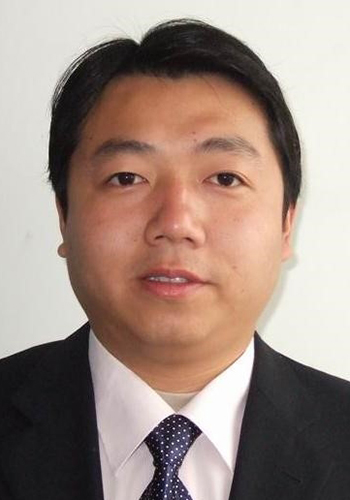
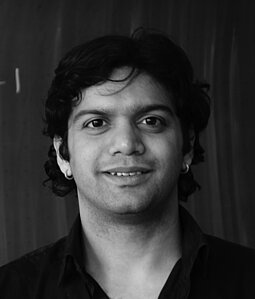
Dr. Yunpeng (Jack) Zhang is an Associate Professor in Information Science Technology at the University of Houston's Cullen College of Engineering. He directs the Network, Software and System Laboratory and serves as Center Director for the USDOT Tier-1 Transportation Cybersecurity Center (CYBER-CARE). His research focuses on cybersecurity foundations for critical infrastructure with emphasis on blockchain, IoT security, and vehicular systems. Zhang has developed novel cryptographic protocols, intrusion detection frameworks, and access control models for transportation networks. Honors: 50-in-5 Major Grant Recipient (2024) IEEE Senior Member Best Paper Finalist (IDSTA2022) New Faculty Award (2015) Education Leadership: Designed courses in Data Science for Cybersecurity, Cryptography, and Intrusion Detection. Supervised 75+ graduate students.
William Montevecchi is a John Lewis Paton Distinguished University Research Professor at Memorial University of Newfoundland, affiliated with the Departments of Psychology, Biology, and Ocean Sciences within the Faculty of Science. His interdisciplinary research focuses on seabird behavioral ecology, environmental change, and conservation, with a global collaborative network. He holds a B.A. from Northeastern University, M.Sc. from Tulane, and Ph.D. from Rutgers. Research interests include seabird responses to environmental shifts, Arctic and Boreal ecosystem dynamics, and seabirds as ecological indicators. Key projects involve bycatch mitigation, Leach’s Storm-Petrel population decline, and tracking seabird foraging strategies. Supported by NSERC, DFO, and WWF, his work integrates oceanography, fisheries science, and conservation. Publications exceed 230 peer-reviewed articles, with contributions to marine policy and risk assessments. Recipient of the John Lewis Paton Distinguished Professorship, recognizing academic excellence. Collaborates with international institutions across North America, Europe, Australia, and Africa. His lab conducts fieldwork in Newfoundland’s Ecological Reserves, emphasizing applied conservation solutions. Outreach includes media engagements and public education on seabird ecology and environmental challenges.
James Roth is a Professor in the Department of Biological Sciences at the University of Manitoba's Faculty of Science. His research focuses on Arctic and sub-Arctic ecosystems, with a particular emphasis on food web dynamics, predator-prey interactions, and the ecological roles of ecosystem engineers like red and Arctic foxes. He employs stable isotope analysis and geospatial technologies to study nutrient cycling, population responses to climate change, and cross-habitat interactions. Key Research Areas: Food web dynamics, ecosystem engineering, predator-prey relationships, stable isotope ecology, Arctic marine and terrestrial systems Recent publications highlight his work on marine-terrestrial subsidies, beluga whale energetics, and fox-mediated vegetation changes. Roth is affiliated with the Churchill Fox Project, using innovative methods like satellite imagery and drone technology for wildlife monitoring.
Dr. Yvan Russell is a Senior Lecturer in Psychology at Middlesex University's Faculty of Science and Technology. His research focuses on evolutionary psychology, behavioral economics, and animal behavior studies. He holds a PhD in evolutionary and comparative psychology, with expertise in social behavior mechanisms across species. His work bridges disciplines like economics, biology, and cognitive science, exploring topics such as cooperation dynamics, reputation systems, and decision-making under uncertainty. Key research areas include: cooperative strategies in common-pool resource games, AI's capacity to model human cooperation, and the role of biophilia in sustaining ecological resources. He has published extensively on topics like vaccine hesitancy drivers, childhood social homophily, and interdisciplinary research challenges. His experimental work spans primatology (e.g., chimpanzee grooming reciprocity) and avian kleptoparasitism patterns. Recent projects analyze how GPT models operationalize prompts for altruism/competitiveness and examine environmental vs social uncertainties' impact on resource appropriation. Russell also investigates how evolutionary principles apply to modern human behavior through experimental economics frameworks. His academic contributions span over 30 peer-reviewed articles and book chapters, with active supervision of postgraduate research. He maintains a lab focused on interdisciplinary behavioral studies, combining field observations with computational modeling.
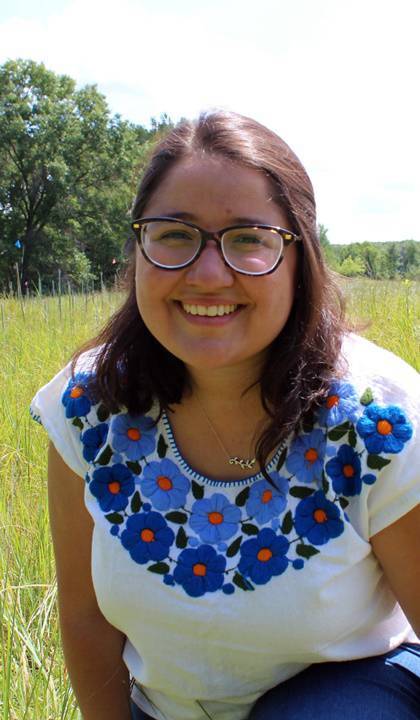
Cristy Portales-Reyes is an Assistant Professor in the Department of Biology at Saint Louis University (SLU), within the College of Arts and Sciences. She holds a Ph.D. from the University of Minnesota and leads the Portales Biodiversity Lab. Her research focuses on understanding plant community and ecosystem responses to global change, particularly biodiversity loss in grasslands and restoration strategies. She employs long-term field experiments, observational datasets, and greenhouse studies, collaborating internationally on distributed experiments and synthesis projects. Current leadership includes a synthesis group examining irreversible ecosystem transitions under anthropogenic pressures. She teaches General Ecology and advises students in ecological research. Research interests emphasize mechanisms reinforcing biodiversity decline, restoration solutions, and global change impacts. Key themes include grassland dynamics, climate variability, and ecosystem resilience. Her lab integrates experimental and synthetic approaches, with a focus on scalable solutions for biodiversity conservation. The lab’s work is detailed at portalesbiodiversitylab.com . Publications highlight global biodiversity synthesis, drought impacts, spatial-temporal ecosystem dynamics, and trophic interactions. Collaborations span institutions worldwide, reflecting her commitment to interdisciplinary science. No awards are explicitly listed, but her contributions to global change ecology are evidenced through high-impact publications and leadership roles. Lab facilities include field sites for long-term experiments and greenhouse setups. Future work prioritizes synthesizing global ecological data to inform conservation under climate change. Students and researchers are encouraged to join her group for hands-on, collaborative research experiences.
Dr. Mark Hixon is the Sidney & Erica Hsiao Endowed Professor of Marine Biology at the University of Hawaii at Manoa, Department of Biology. He specializes in marine ecology and conservation biology, particularly coral reefs and invasive species management. With academic degrees from the University of California, Santa Barbara (BA 1973, MA 1974, PhD 1979), his career includes roles at Oregon State University (1984–2012) before joining UH in 2013. His research focuses on coral reef resilience, lionfish invasion impacts, and fisheries ecology. Notable projects include the Fish Flow Project tracing fish lifecycle dynamics and the REEFrame Project developing coral nurseries in Waikiki. He has served on editorial boards for major journals and advised federal marine conservation committees. Key publications address lionfish predation effects, coral reef restoration, and ciguatera toxin risks. Awards include recognition as the most cited coral reef ecologist (2004), International Coral Reef Society Fellowship (2016), and a 2023 Lifetime Achievement Award. His lab has mentored numerous graduate students and collaborates on interdisciplinary marine conservation efforts.
Dr. Suzanne MacDonald is a Professor in the Department of Psychology at York University. Her research focuses on animal cognition and behavior, with a particular emphasis on spatial memory, wildlife interaction with humans, and conservation biology. She conducts fieldwork in Kenya and Canada, studying species such as primates, vervet monkeys, hyenas, lions, and urban wildlife like raccoons and turtles. Research Themes: Animal welfare, invasive species ecology, citizen science, and habitat restoration Key Projects: Orangutan cognition during pandemic lockdowns, desert habitat engineering, urban turtle populations, and predator-prey dynamics in Kenya Her work integrates behavioral experiments with ecological conservation, often involving interdisciplinary collaborations. Recent studies include using social media for turtle nest monitoring and evaluating lignocellulosic materials for desert habitats. She advises multiple graduate students exploring topics from primate psychology to reptile population dynamics. Her lab actively collaborates with institutions like the Lewa Wildlife Conservancy and Langara University, focusing on both captive animal welfare and wild population management. Projects emphasize practical solutions for human-wildlife coexistence and endangered species recovery.
John Dower is Professor of Biology at the University of Victoria, leading field-based research in biological oceanography. His Fisheries Oceanography and Zooplankton Ecology Laboratory investigates how bottom-up processes affect marine food webs in coastal British Columbia and the North Pacific. Research examines zooplankton production dynamics as key trophic links between primary production and higher predators, including fish, seabirds, and marine mammals. Current projects assess impacts of ocean climate change (warming, acidification) on ecosystem structure and function. Field studies combine ship-based sampling with ecological modeling to understand how environmental variability drives seasonal and interannual changes in marine productivity. Recent work also investigates microplastic contamination in marine food webs.
Francis Juanes is Professor of Biology at the University of Victoria and holds the Liber Ero Chair for Fisheries Research. His lab studies fish ecology, marine acoustics, and conservation through field experiments and computational modeling. Research examines predator-prey interactions in marine ecosystems, salmon migration ecology, bioacoustic monitoring techniques, and anthropogenic noise impacts on aquatic life. Work integrates behavioral ecology with conservation applications for sustainable fisheries. Publications emphasize marine soundscape analysis, innovative acoustic monitoring methods, and evidence-based marine protected area design. Recent articles address global patterns in underwater acoustics and noise mitigation strategies. Awarded the Liber Ero Chair for leadership in conservation-focused fisheries research. Supervises graduate students in marine ecology and maintains field research stations across British Columbia.
Vanessa Cowan is an Assistant Professor in Veterinary Biomedical Sciences at the Western College of Veterinary Medicine (WCVM), University of Saskatchewan. She holds a BSc (Honours) in Toxicology (2014), PhD in Toxicology (2020), and DVM (2023), all from the University of Saskatchewan. Her research focuses on mycotoxin exposure in livestock, specifically ergot alkaloid toxicity, and epidemiology of veterinary toxicoses such as lead poisoning in cattle and strychnine poisoning in dogs. Her work integrates clinical diagnostics, epidemiological analysis, and toxicological studies to address real-world challenges in livestock and wildlife health. Key contributions include investigations into ergot's subclinical effects on cattle reproduction and cardiovascular systems, as well as retrospective studies on poisoning incidents in domestic and wild animals. Methodological advancements in grain contamination detection and toxicant quantification further highlight her interdisciplinary approach. Recent publications emphasize the ecological and agricultural impacts of mycotoxins, with a focus on improving feed safety protocols and understanding toxin distribution patterns in Western Canada. Her research bridges laboratory science with field applications, directly informing veterinary practices and public health strategies.
Nicholas K. Dulvy is a Distinguished Professor in the Department of Biological Sciences at Simon Fraser University (SFU). He holds a BSc (Honours) from the University of Birmingham and a PhD from the University of East Anglia. His research focuses on marine biodiversity conservation, shark and ray population dynamics, and the impacts of overfishing. He leads the Marine Biodiversity & Conservation lab, emphasizing interdisciplinary approaches to address global marine extinction risks. Roles: Professor, Shark Specialist Group member, conservation policy advisor Affiliations: SFU Department of Biological Sciences, IUCN SSG, Global Shark Trends Project Research Interests: Marine Conservation Biology , Thermal Biology of Fishes , and Ecosystem Function . Recent work highlights global shark population declines (50% since 1970) and the need for science-based fisheries management. Awards: 2023 Le Cren Medal, Highly Cited Researcher (2012-2022), multiple conservation leadership recognitions.
Zofia Baumann is an Associate Research Professor in the Department of Marine Sciences at the University of Connecticut's College of Liberal Arts and Sciences. Her research investigates biogeochemical cycling of contaminants—particularly mercury—in marine ecosystems, examining bioavailability mechanisms, trophic transfer, and environmental drivers of methylmercury production. Baumann's work establishes connections between nutrient dynamics, dissolved organic matter chemistry, and mercury bioaccumulation across terrestrial-marine interfaces. Recent publications document contaminant distribution in marine plankton over tidal cycles, mercury partitioning in bivalve tissues, and dam-induced alterations in contaminant transport. Field sites include Long Island Sound, subarctic peatlands, and the Hackensack estuary. She leads oyster restoration initiatives and secured funding for the New Generation of Marine Scientists and Stewards Fellowship. Current graduate advisees include Gunnar Hansen and Wes Huffman. Her laboratory develops innovative approaches for monitoring contaminant mobility in coastal food webs.
Dr. Michael Steinke is a Senior Lecturer in the School of Life Sciences at the University of Essex. His research focuses on biogenic volatile organic compounds (BVOCs) in aquatic organisms, sensor technologies for bivalve behavior (e.g., the Non-invasive Oyster Sensor, NOSy), and shellfish ecology. He investigates BVOC roles in physiology, ecology, and atmospheric interactions, with applications to climate science and fisheries management. Dr. Steinke holds a Dr. rer. nat. in Marine Biology from the University of Bremen. He has led numerous academic programs including the MSc in Marine Science and Sustainable Development, Integrated MSci in Tropical Marine Biology, and BSc Marine Biology. His administrative roles span Directorships for taught postgraduate programs and Theme Leadership in the ARIES Doctoral Training Partnership. Collaborations include global research networks and fisheries agencies, focusing on stress physiology of harvested species in warming oceans. His work bridges fundamental research with applied challenges, such as microplastic impacts and climate change mitigation strategies in coastal ecosystems. Publications emphasize BVOC cycling, microplastic toxicity, and plankton-microbe interactions, with over 70 peer-reviewed articles since 1995. He actively mentors students and welcomes collaborative projects in marine science, particularly in volatile metabolomics and sensor development.
Prof. Dr. Chaitanya Gokhale is a Professor of Theoretical Biology at the Center for Computational and Theoretical Biology (CCTB) at the University of Würzburg, Germany. His research spans eco-evolutionary processes from subcellular systems to societies, focusing on interactions and hierarchies of organization. He leads a translational program rooted in theoretical biology, aligning with the Max Planck principle of "Insight preceding application." Education: PhD in Natural Sciences (2011, Christian Albrechts University), Master's in Bioinformatics (2008, Sikkim Manipal University), Bachelor's in Zoology/Biotechnology (2005, Fergusson College). Prior Roles: Group Leader at the Max Planck Institute for Evolutionary Biology (2016–2023), Postdoctoral Researcher at Massey University (2014–2016) and Max Planck Institute (2011–2014). Research Interests include evolutionary dynamics, game theory, population genetics, and eco-evolutionary applications in agriculture and medicine. His work bridges mathematical models with biological complexity, emphasizing cooperation, resistance evolution, and translational frameworks. Recent Articles (2025–2023): Focus on gene drives, fungal resistance, circadian rhythms, and cooperation in complex environments. These studies highlight interdisciplinary approaches integrating mathematical biology, computational ecology, and synthetic systems. Group Members: Dharanish Rajendra (PhD Student), Luis Alejandro Villanueva Hernandez (Postdoc), Carla Schuh (Student Assistant). Advising and Collaborations span eco-evolutionary dynamics and theoretical biology, with grants from institutions like the Max Planck Society and New Zealand Institute for Advanced Study. His lab explores how evolutionary principles can inform sustainable practices and microbial interactions.
Dr. Justin Yeakel is Associate Professor and Biology Program Chair at UC Merced's School of Natural Sciences, with a joint appointment as External Professor at the Santa Fe Institute. He leads the Quantitative EcoDynamics (QED) research group investigating ecological and evolutionary constraints on trophic interactions. His research examines physical and biological constraints shaping species interactions through theoretical and empirical approaches, including nonlinear dynamics, stable isotope analysis, paleontological data, and historical records. Key research areas include food web stability, extinction risk patterns, isotopic niche space, and behavioral evolution. Dr. Yeakel has extensively published on ecological networks, megafauna extinctions, and population dynamics. Recent work explores mass-dependent extinction thresholds, coarse-grained food web dynamics, and mortality patterns in megafauna. He mentors graduate students and postdoctoral researchers in eco-evolutionary studies.