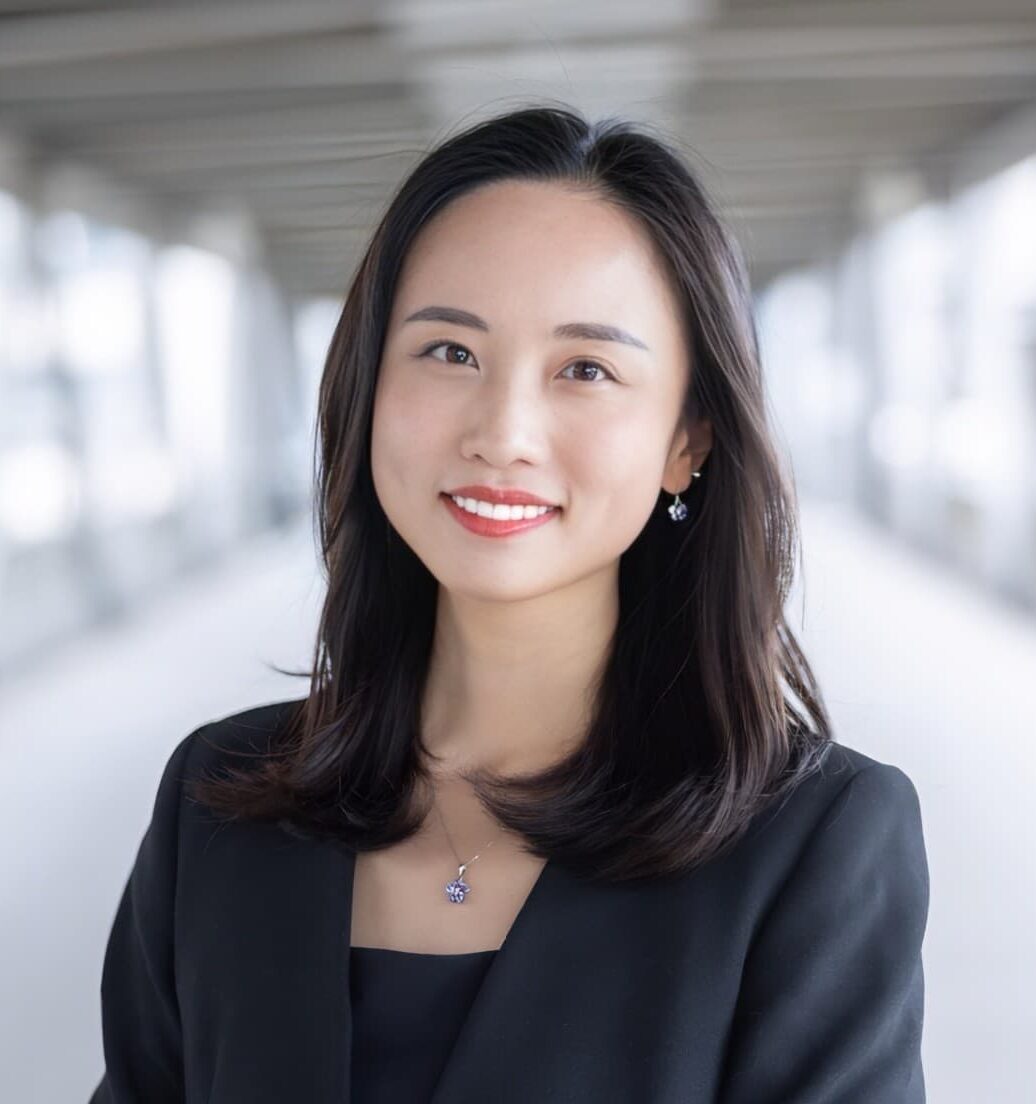
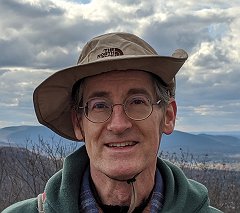
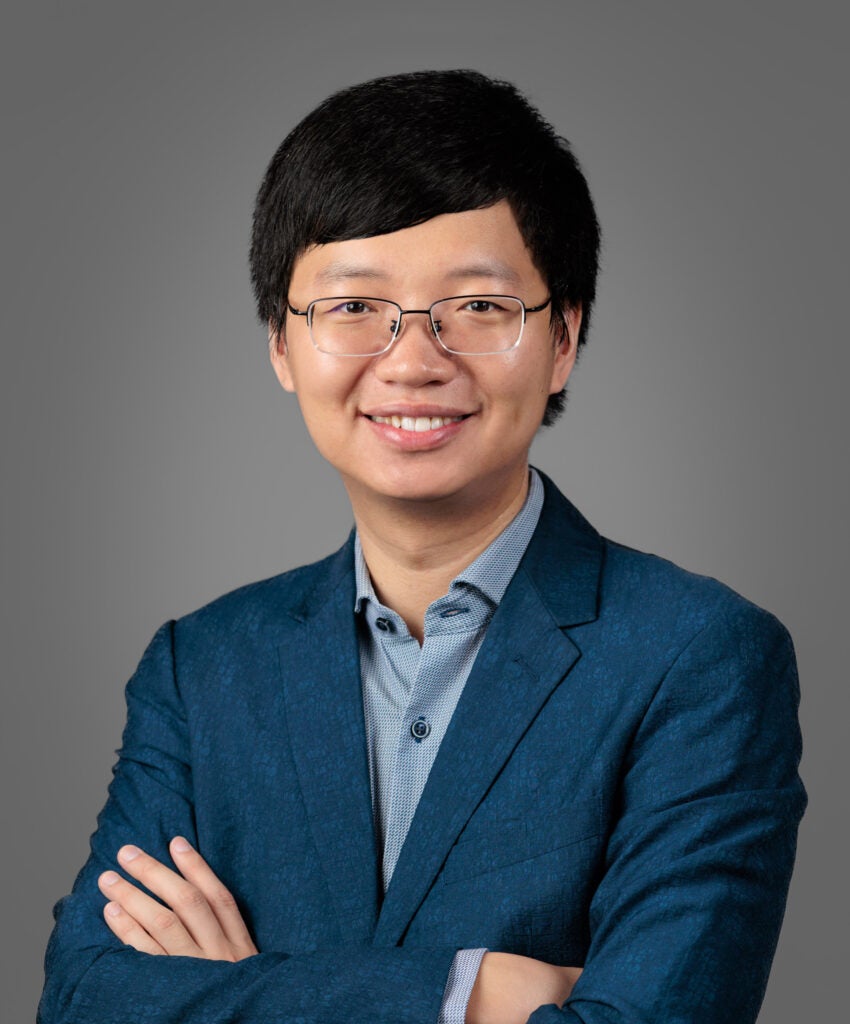
Dr. Vineet Bharti is a Senior Research Associate at the School of Physics, University of Bristol, with a focus on quantum engineering and ultrafast dynamics. He holds a BSc, MSc, and PhD, and is affiliated with the Quantum Engineering Technologies research group. Education: BSc, MSc, PhD Current Role: Senior Research Associate Research Focus: Quantum physics, ultrafast atomic interactions His work explores Rydberg atoms, electromagnetically induced transparency (EIT), coherent population trapping (CPT), and quantum many-body systems. Recent research includes ultrafast dynamics in optical lattices and polarization-dependent spectroscopy. Dr. Bharti’s publications highlight advancements in quantum optics and atomic physics. For detailed information on his projects, grants, and future research, refer to his full description below. He can be contacted via vineet.bharti@bristol.ac.uk or viewed on ORCID .
Saleh Javadi is a Senior Lecturer at the Department of Mathematics and Natural Sciences at Blekinge Institute of Technology (BTH) in Karlskrona, Sweden. He is actively engaged in research and teaching within the field of systems engineering. His educational background includes: B.Sc. in Electrical-Control Engineering from Amirkabir University of Technology (2009) M.Sc. in Electrical, Electronic and Systems Engineering from The National University of Malaysia (2013) Ph.D. in Systems Engineering from Blekinge Institute of Technology (BTH) (2021) Saleh Javadi's research focuses on signal processing, machine learning, and computer vision , with applications spanning remote sensing, intelligent transportation systems, and AI-driven industrial optimization. His work bridges theoretical advancements with practical implementations, particularly in SAR imagery analysis, drone-based agricultural monitoring, and traffic surveillance systems. His recent publications demonstrate a strong focus on remote sensing technologies, particularly Synthetic Aperture Radar (SAR) image processing and analysis. There's a clear trend toward applying machine learning techniques to solve complex problems in aerial and satellite imagery, traffic monitoring, and agricultural applications. His research shows interdisciplinary connections between computer vision, signal processing, and practical engineering applications. Saleh Javadi has received significant recognition for his innovative work: Innovator of the Year award (SKAPA – Innovation Prize in Memory of Alfred Nobel) in Blekinge for innovative efforts in optimizing and reducing energy consumption in industries by using artificial intelligence ÅForsk Entrepreneur's prize at the Swedish Innovation Council Day – Swedish Incubators & Science Park's annual conference in May 2019 Dr. Javadi is involved in practical applications of his research through projects such as "Artificiell intelligens AI kan reducera ogräsfrön i utsäde" (ongoing) and "Bekämpa Renkavle med hjälp av drönare och Artificiell Intelligens (AI)" (completed). His work demonstrates a strong commitment to translating academic research into real-world solutions that address industrial and environmental challenges. His research appears to be conducted within a collaborative framework, working with colleagues on drone technology, SAR image analysis, and AI applications across multiple domains including agriculture, maritime monitoring, and transportation systems.
Andrei Y. Khodakov is a Research Director (Professor equivalent) at the Unité de Catalyse et de Chimie du Solide (UCCS), UMR CNRS 8181, affiliated with University of Lille. He serves as Coordinator of the CEMOP research team (Catalysis for Energy and Synthesis of Platform Molecules) within the Heterogeneous Catalysis Department. His academic journey began with a Master's in Chemistry from Lomonosov Moscow State University (1987), followed by a PhD from the Zelinsky Institute of Organic Chemistry (1991), and a Dr. Sci. (Habilitation) from University of Sciences and Technologies of Lille (2002). Khodakov's research focuses on heterogeneous catalysis, with particular expertise in Fischer-Tropsch synthesis, syngas conversion to fuels and platform molecules, photocatalysis, CO 2 utilization, and methane valorization. His work bridges fundamental catalyst design with practical applications for sustainable energy and chemical production. He has pioneered research on nanoconfined catalysts, mobile promoters, and single-atom catalytic systems, with significant contributions to understanding reaction mechanisms and kinetics. His publication record spans over 122 papers since 2008, with recent work emphasizing CO 2 hydrogenation, photocatalytic methane conversion, and advanced catalyst design using nanoreactors and single-atom techniques. The research shows a clear trajectory toward sustainable catalytic processes for renewable feedstocks and carbon-neutral chemical production. CNRS Prize of Excellence (2011) CNRS Ph.D. and Research Supervising Bonus (2016) Special Invited Scientist of the Brazilian Government (2013-2016) Khodakov has supervised 27 PhD students and 14 post-doctoral researchers, demonstrating strong commitment to academic training. He teaches at Centrale Lille and University of Lille's Biorefinery Master's program, and organizes international summer schools for Chinese and Brazilian students. His research is supported by 4 ANR projects, 3 European projects, and over 20 industrial contracts, reflecting both academic excellence and industrial relevance. His laboratory focuses on catalyst design for sustainable chemical production, with particular emphasis on reactor engineering, in-situ characterization techniques, and development of catalysts for renewable feedstocks conversion.
Hokyung Kay Chung, PhD is an Assistant Professor in the Department of Cell Biology and Physiology at the University of North Carolina at Chapel Hill School of Medicine and a member of the UNC Lineberger Comprehensive Cancer Center. Her research program integrates synthetic biology, immunology, and cancer biology to engineer T cells for enhanced anti-tumor efficacy. Dr. Chung's research focuses on harnessing synthetic biology to reprogram T cell differentiation states for cancer immunotherapy. Her laboratory employs protein engineering, next-generation sequencing, CRISPR screening, and bioinformatics to develop three core platforms: (1) Transcription factor recipes for T cell programming using multiomics atlas-based analysis and in vivo CRISPR screening; (2) Synthetic toolkits for designer immunity including drug-inducible transcription factor circuits and signal rewiring platforms; (3) Hijacking tumors via engineered oncolytic viruses to encode immune modulators. Her work aims to create context-specific cell state programming that enhances T cell therapy efficacy across diverse cancer types. Her publication portfolio demonstrates significant contributions to synthetic immunology, with high-impact papers in Science, Nature Chemical Biology, Cell, and Immunity covering protease-based control systems, T cell differentiation engineering, and tumor microenvironment remodeling. Recent work includes developing sonogenetic CAR-T cells controllable by ultrasound and elucidating metabolic mechanisms of T cell exhaustion. K01 Research Scientist Development Award, NIH, 2023 Keystone Symposia Future of Science Fund Scholarship, 2020 Damon Runyon Fellowship Award, 2019 Salk Women & Science Special Award, 2019 Hans Neurath Outstanding Promise Travel Award, 2017 Dr. Chung leads the Chung Lab at the UNC Lineberger Comprehensive Cancer Center, where she directs research on synthetic T cell engineering. Her lab utilizes advanced techniques including single-cell CRISPR screening, protein engineering, and oncolytic virology to develop next-generation immunotherapies. Current projects focus on creating artificial T cell differentiation pathways and engineering the tumor microenvironment to support persistent anti-tumor immunity.
Jingyi Chen is a Professor in the Department of Chemistry and Biochemistry at the University of Arkansas. She serves as Vice Chair in the College of Arts & Sciences and leads the Chen Research Group focused on rational design and synthesis of functional nanomaterials for energy conversion and human-health applications. PhD, Chemistry & Nanotechnology – University of Washington (2006) MA, Chemistry – State University of New York College at Buffalo (2002) BS, Chemistry – Sun Yat-sen University (1997) Her research spans three major projects: Project I: Developing cost-effective catalysts for fuel cell applications through precise synthesis of copper-based bimetallic nanocrystals. Project II: Surface modification of nanoparticles with polydopamine for bio-related applications like low-friction coatings. Project III: Creating nanoplatforms for targeted drug delivery against antibiotic-resistant infections and cancer. Recent publications focus on nickel phosphide nanoparticles (2024), perovskite oxide oxygen evolution catalysts (2023-2024), and silver nanoparticle antimicrobial mechanisms (2020-2023). Her group has produced 15+ recent publications in journals like ACS Nano , J. Phys. Chem. C , and ACS Infectious Diseases . Award highlights include: Thomson Reuters Top 1% Highly Cited Researcher (2015-2018) Arkansas Research Alliance Fellow (2018) Women’s Giving Circle Award (2014) Ralph E. Powe Junior Faculty Enhancement Award (2011) She has mentored over 20 graduate and undergraduate students , including Ryan Manso (PhD 2022), Isabelle Niyonshuti (PhD 2021), and David Thompson (DOE SCGSR awardee 2022). Her lab (CHBC 304/306/309) employs advanced tools like synthesis setups , electrochemical stations , and laser irradiation systems .
David Naumann is Professor and Department Chair of Computer Science at Stevens Institute of Technology. His leadership in the department and active research program positions him as a key figure in programming languages and formal methods research. Naumann's research focuses on formal methods and software security, with particular emphasis on relational and hyperproperty verification , fine-grained confidentiality/integrity policies , and program analysis and verification . His work bridges theoretical foundations with practical applications in security-critical systems. He has developed novel program logics and verification techniques that enable precise reasoning about information flow and security properties. His recent publications (2022-2025) reveal a strong trend toward modular relational verification techniques with applications to pointer programs, distributed systems, and concurrent applications. The research spans theoretical foundations (algebraic structures for alignment) to practical tools (WhyRel prototype), demonstrating both depth and breadth in addressing verification challenges. Naumann has served as program committee co-chair for IEEE Computer Security Foundations Symposium (2021-2022) and has been active on committees for POPL, CCS, CSF, ECOOP, and other top venues. His editorial service includes ACM Transactions on Programming Languages and Systems, Formal Aspects of Computing, and Journal of Object Technology. He leads the Cypress research group at Stevens Institute of Technology and has secured significant funding from NSF, Microsoft Research, and Siemens. His mentoring extends to numerous PhD students who have gone on to successful careers in academia and industry.
Adilson Motter is the Charles E. and Emma H. Morrison Professor of Physics and Astronomy and (by courtesy) Engineering Sciences and Applied Mathematics at Northwestern University. He serves as Director of the Center for Network Dynamics (CND) and has been a faculty member since March 2006. His academic appointments include affiliations with the Chemistry of Life Processes Institute (CLP), Molecular Biophysics Program, NSF-Simons National Institute for Theory and Mathematics in Biology (NITMB), Paula M. Trienens Institute for Sustainability and Energy, Graduate Program in Applied Physics, Center for Interdisciplinary Exploration and Research in Astrophysics (CIERA), Institute for Quantum Information Research and Engineering (INQUIRE), and Northwestern Institute on Complex Systems (NICO). Professor Motter received his Ph.D. in 2002 from UNICAMP (University of Campinas), Brazil, where he worked with Professor Patricio S. Letelier. Prior to joining Northwestern, he held positions as Guest Scientist at the Max Planck Institute for the Physics of Complex Systems in Germany and as Director's Funded Postdoctoral Fellow at the Center for Nonlinear Studies at Los Alamos National Laboratory. Professor Motter's research focuses on the dynamical behavior and control of complex systems and networks. His work spans theoretical and computational approaches to understanding phenomena in physical, biological, and engineered systems. Key research areas include: Cascading dynamics and network resilience Spontaneous synchronization and symmetry phenomena Network control theory and applications Quantum networks and information transfer Machine learning applications to network science Data-driven discovery in complex systems Applications to quantitative biology, biomedical research, renewable energy, smart power grids, microfluidics, and metamaterials Analysis of Professor Motter's recent publications reveals a strong interdisciplinary focus spanning physics, engineering, biology, and computer science. His work demonstrates consistent innovation in network science, with recent contributions advancing quantum networking architectures, understanding power grid limitations for electric vehicle integration, developing machine learning approaches for genetic analysis, and exploring fundamental synchronization phenomena. A notable trend is the increasing application of his theoretical frameworks to real-world challenges in energy systems, biomedical research, and quantum information technology. Professor Motter has received numerous prestigious awards and honors: Alfred P. Sloan Research Fellowship (2009) Weinberg Award for Excellence in Mentoring Undergraduate Research (2009) Northwestern-Argonne Early Career Investigator Award for Energy Research (2010) NSF Faculty Early Career Development (CAREER) Award (2011) Erdös-Rényi Prize in Network Science (2013) Fellow of the American Physical Society (2013) Simons Foundation Fellowship in Theoretical Physics (2015) Fellow of the American Association for the Advancement of Science (2015) Scialog Fellow (2015) Outstanding Referee, American Physical Society (2016) Fellow of the Network Science Society (2020) Senior Scientific Award, Complex Systems Society (2022) Professor Motter has demonstrated exceptional commitment to mentoring, as evidenced by the Weinberg Award for Excellence in Mentoring Undergraduate Research. His research group has received significant funding through multiple NSF grants, including his CAREER award, and collaborations with Argonne National Laboratory. Current research directions include mechanical metamaterial networks, quantum network science, and other areas of complex systems. The group has been actively recruiting postdoctoral researchers and has seen students recognized with awards and research grants. As Director of the Center for Network Dynamics (established September 2023), Professor Motter leads a multidisciplinary team exploring network phenomena across various domains. The Center has hosted significant events including the 'Brain Architecture and Computing 2024' workshop and is organizing the 2025 CDC Workshop on Neurocomputation and Dynamics in Rio de Janeiro. The Motter Group maintains active collaborations with experimentalists and researchers from diverse disciplines, facilitating the translation of theoretical insights into practical applications.
Dr Chris Carignan serves as Programme Director for the Language Science MSc at University College London's Division of Psychology and Language Sciences within the Faculty of Brain Sciences. His research focuses on the intricate mechanisms of human speech production, particularly through cross-linguistic phonetic studies and articulatory dynamics using advanced imaging technologies. PhD in Speech Science Specializes in the intersection of language heritage and phonetic research Develops innovative methodologies for speech data collection and analysis His work spans multiple areas including nasal coarticulation , real-time MRI of vocal tract movements , and cross-linguistic phonetic analysis . He has contributed significantly to understanding how speakers produce complex speech sounds across different languages through comparative studies. Dr Carignan's research has led to the development of open-source tools for speech production analysis and pioneered new approaches for ultrasound articulography . His work on vowel nasalization and sibilant contrasts has been particularly influential in speech science. As Programme Director, he oversees a comprehensive curriculum that provides students with methodological training , statistical expertise , and hands-on research experience while allowing specialization through optional modules. His teaching philosophy emphasizes the importance of curiosity-driven research and interdisciplinary approaches in advancing language sciences.
Claudia Crocini is a DZHK junior research group leader at the Max Rubner Center for Cardiovascular Metabolic Renal Research, Charité - Universitätsmedizin Berlin. Her work bridges cardiac physiology, epigenetics, and sex-specific medicine to address critical gaps in cardiovascular research where female hearts have been historically neglected. Her research program centers on sex-dependent differences in human cardiac cells, investigating how biological sex influences contractility, ionic currents, gene expression, and epigenetic regulation. By leveraging induced pluripotent stem cell technology, tissue engineering, and computational modeling, her lab identifies fundamental mechanisms underlying sex-specific cardiac responses to disease. This approach integrates cardiac mechanobiology with molecular analysis to uncover targets for precision medicine. Analysis of her publication record reveals a consistent trajectory toward understanding sex-dimorphic cardiac function, with recent work emphasizing sarcomere mechanics, RNA splicing, and nuclear mechanosensing. Her methodology combines voltage/calcium imaging, contractility assays, and next-generation sequencing to establish sex-specific biomarkers and therapeutic pathways. Dr. Crocini's scientific contributions have been recognized through competitive awards: First prize: Best Postdoc at the MDC (2022) Marie Skłodowska-Curie Fellowship for 'TiGER: Titin can govern epigenetic remodelling' (2021) American Heart Association Postdoc Fellowship (2020) Biophysical Society Travel Award (2020) HSFP Long-Term Fellowship (2017) As principal investigator of her DZHK-funded research group, she directs projects examining sex-dependent cardiac adaptation mechanisms while securing major grants including the Marie Skłodowska-Curie and American Heart Association fellowships. Her work directly addresses the urgent need for sex-inclusive cardiac research to improve clinical outcomes. The Crocini Lab operates within the Max Rubner Center, utilizing stem cell differentiation platforms, engineered cardiac tissues, and advanced imaging to dissect sex-specific cardiac physiology. Current projects focus on translating cellular findings into clinically relevant insights for sex-tailored cardiovascular therapies.
Juan Zhai is an Assistant Professor in the Manning College of Information & Computer Sciences (CICS) at University of Massachusetts Amherst, where she co-directs the Laboratory for Advanced Software Engineering Research (LASER) and participates in the UMass NLP group. Her academic career spans over 7 years of active service including program committee roles at top-tier conferences like ICSE, FSE, and ASE. Her research focuses on Software-AI Synergy with core areas including: Formal Specification Synthesis for precise software behavior definition Comment Generation and Maintenance using LLMs Trustworthy AI through bias detection and framework testing Deep Learning Infrastructure Reliability Recent work demonstrates strong emphasis on practical tools for AI safety and software dependability. Her publication trends show consistent output in top software engineering venues (ASE, ICSE, FSE) with increasing focus on AI/ML conferences (ACL, CVPR, ICLR). Key themes include metamorphic testing for deep learning frameworks, bias analysis in LLMs, and formal methods for specification synthesis. She actively serves the community through: Program committees for 13 major conferences Reviewing for 5 top journals including TOSEM and TSE 40+ total reviews across SE and AI venues Juan mentors PhD students including Gehao Zhang (research focus: Software Engineering, AI Safety) and teaches graduate courses like CS520 (Theory and Practice of Software Engineering) and CS692P (Hot Topics in SE Research). She leads the LASER lab which develops tools like C2S, CPC, and DevMuT for software reasoning and AI infrastructure testing.
Professor Phil King leads a research group within the School of Physics and Astronomy at the University of St Andrews, where he is part of the Centre for Designer Quantum Materials. His research focuses on the electronic structure and many-body interactions of quantum materials using electron spectroscopy, particularly angle-resolved photoemission (ARPES), and creating new designer quantum materials through atomic layer-by-layer growth. King's research interests center on quantum materials, with particular emphasis on topological matter, transition-metal oxides, and 2D quantum materials. His group investigates strain and pressure tuning of quantum materials, photoemission spectroscopy of correlated systems, and engineering band structures in 2D conductors. They develop methods to exploit strong electronic interactions in 2D systems to create new functional materials with tunable properties. Their approach combines experimental screening of candidate materials, bottom-up atomic assembly of custom heterostructures, and advanced spectroscopic feedback. Analysis of King's recent publications reveals a strong focus on the electronic structure of quantum materials, particularly transition metal dichalcogenides, delafossite metals, and topological systems. His work frequently examines charge density waves, spin-orbit coupling effects, Van Hove singularities, and quantum phase transitions. A notable trend is the integration of materials synthesis with advanced spectroscopic characterization, enabling precise control over electronic properties through strain engineering, doping, and heterostructure formation. King actively supervises PhD students on projects related to quantum materials, including probing elastic coupling in exotic magnets, angle-resolved photoemission from tailored mesostructures, thermodynamics and spectroscopy, oxide metals, and gate tuning of 2D quantum materials. His research is supported by major funding sources that enable access to cutting-edge equipment and international facilities. The King Group operates advanced experimental facilities including a high-resolution lab-based ARPES system with multiple light sources, and two DCA R450 molecular-beam epitaxy systems optimized for transition-metal oxides and chalcogenides. They are developing the UK's first spin-resolved ARPES capability. The group regularly utilizes major international facilities including Diamond Light Source, Elettra, SOLEIL, and HiSOR synchrotrons, as well as the ARTEMIS facility for time-resolved studies.
Peter Zijlstra is a Full Professor in the Department of Applied Physics at Eindhoven University of Technology (TU/e), leading the Molecular Plasmonics group. His research focuses on single-molecule sensing using plasmonic and nanophotonic approaches to study biomolecular interactions in complex environments. He is a core member of the Institute for Complex Molecular Systems at TU/e, collaborating across disciplines like chemistry, biomedical engineering, and mathematics. Education: MSc in Applied Physics, University of Twente (2005) PhD from Swinburne University of Technology (2009), studying plasmonic nanoparticles in optical data storage Postdoctoral fellowship at Leiden University under Prof. Michel Orrit Research Interests: Developing novel sensing concepts via nanophotonics and super-resolution microscopy. Key areas include plasmon-enhanced fluorescence, real-time biomolecular dynamics, and applications in cancer management. His work contributes to UN Sustainable Development Goals through advancements in biosensing technologies. Awards: 2013 NWO Vidi Award for research on plasmonic imaging of enzymes in living cells Teaching & Activities: Teaches courses like Advanced Optical Microscopy and Electromagnetism Supervised 32 academic works Contributed to conferences and editorial roles for journals like npj Biosensing Labs & Collaborations: Molecular Plasmonics group website: www.molecular-plasmonics.nl Marie Curie ITN SuperCol project: www.supercol.eu
Wout Joseph is a Professor in the domain of Experimental Characterization of wireless communication systems at Ghent University (Belgium), where he has been working since October 2009. He is also an IMEC Principal Investigator since 2017. His research is conducted within the wireless, acoustics, environment & expert systems (WAVES) research unit at the Department of Information Technology (INTEC). Dr. Joseph was born in Ostend, Belgium on October 21, 1977. He received his M.Sc. degree in electrical engineering from Ghent University in July 2000. From September 2000 to March 2005 he was a research assistant at the Department of Information Technology (INTEC), where his scientific work focused on electromagnetic exposure assessment around base stations for mobile communications related to health effects. This work led to his Ph.D. degree in March 2005. Professor Joseph's research expertise spans multiple domains within wireless communications and bioelectromagnetics. His primary research interests include electromagnetic field exposure assessment, in-body electromagnetic field modeling, electromagnetic medical applications, propagation for wireless communication systems, IoT, antennas and calibration. He also specializes in wireless performance analysis, industry 4.0 applications, wireless localization, and Quality of Experience metrics. His work is particularly notable for its focus on dosimetric studies in the radiofrequency range, where his research is ranked first in number of peer-reviewed studies. His research has practical applications in wireless network planning, occupational safety, and public health policy related to electromagnetic fields. His extensive publication record (over 886 publications with an h-index of 45 in ISI Web of Science and 66 in Google Scholar) demonstrates a clear trajectory from fundamental electromagnetic field measurements to applied research in industrial wireless networks and bioelectromagnetic applications. Recent work shows a strong emphasis on 5G exposure assessment across multiple European countries, millimeter-wave channel modeling, and the application of machine learning techniques to exposure assessment and wireless localization. EBEA council board member (2015-2018) EBEA board member at large (2019) Bioelectromagnetics Society board member (2022) Bioelectromagnetics Society board member (2024) 24 research awards Professor Joseph leads significant research efforts in electromagnetic field exposure assessment, with particular emphasis on developing measurement methodologies and computational models for real-world exposure scenarios. His work bridges theoretical electromagnetic modeling with practical applications in wireless communications and bioelectromagnetics. His research group within the WAVES unit is highly active in both theoretical and experimental aspects of wireless communications and bioelectromagnetics, with current projects focusing on 5G exposure assessment across Europe, millimeter-wave channel modeling for data centers and industrial environments, and the development of novel exposure assessment methodologies using advanced signal processing and machine learning techniques.
Dr. Mehrdad Moallem is a Professor and Graduate Student Supervisor in the Department of Mechatronic Systems Engineering at Simon Fraser University (SFU). He holds a Ph.D. in Electrical & Computer Engineering from Concordia University (1997), an M.Sc. from Sharif University (1988), and a B.Sc. from Shiraz University (1986). His research focuses on control systems in sustainable energy, power electronics, energy harvesting, robotics, and embedded systems. He has authored/co-authored four technical books and serves on editorial boards for journals like IEEE/ASME Transactions on Mechatronics. Dr. Moallem has held academic roles at Duke University and the University of Western Ontario. His teaching includes courses on real-time control systems, mechatronics design, and microprocessors. Research interests span embedded control systems, nonlinear dynamics, and applications in renewable energy and robotics. Recent work includes IoT-enabled lighting systems for agriculture, RF cavity control, and smart energy harvesting. He emphasizes hands-on student projects and industry collaboration, such as the Siemens Certification Program and Industry 4.0 bootcamps. Dr. Moallem's lab develops innovative solutions for energy efficiency and automation, with a focus on sustainable systems and smart manufacturing. He actively advises graduate students on advanced topics like grid-connected inverters, motor drives, and vibration control.
Dr. Changsheng Wu is a Professor at the National University of Singapore (NUS), leading the Lab for Intelligent Sensing, Harvesting and Actuation (LISHA). He holds a Bachelor's from NUS and a PhD from Georgia Tech, with postdoctoral research at Northwestern University. His work focuses on wireless wearables, bioelectronics, energy harvesting, and advanced manufacturing for sustainable solutions. Education: Bachelor in Engineering Science (First Class Honours), NUS PhD in Materials Science and Engineering, Georgia Institute of Technology Postdoctoral Research, Querrey Simpson Institute for Bioelectronics, Northwestern University Research Interests: Wireless bioelectronics for clinical health monitoring Energy harvesting via nanogenerators Soft skin-electronics interfaces using metastructures Programmable materials for adaptive systems Advanced manufacturing techniques for wearable devices Key Achievements: Over 50 publications and 5 patents Recipient of TechConnect 2018 Innovation Award and 56th R&D 100 Award Developed wireless implantable sensors for tissue monitoring and bioresorbable medical devices Teaching: MLE5220: Finite Element Method in Materials MLE5238: Bioelectronics Laboratory: His LISHA lab pioneers innovations in self-powered systems, wearable health monitoring, and biohybrid robots. Current projects include metamaterial-based sensors and sustainable energy conversion materials.