Katie Burnham is a Researcher at the Wellcome Sanger Institute , affiliated with the Human Genetics Programme. She previously held a Postdoctoral Research Fellowship at the University of Oxford's Knight group and earned her PhD in Clinical Medicine from the Wellcome Centre for Human Genetics, Oxford. Her research focuses on functional genomics and host immune response variations in sepsis, integrating genomic , transcriptomic , and clinical data to identify disease subgroups (endotypes) for precision medicine applications. Key contributions include defining endotype-specific treatment responses in clinical trials like VANISH and uncovering genomic drivers of sepsis heterogeneity. Notable trends in her peer-reviewed work (2025–2020) include: Application of multi-omics integration (genomics, transcriptomics, proteomics) to critical care medicine Development of transcriptomic signatures for sepsis stratification and outcome prediction Exploration of genetic determinants Analysis of immunological archetypes and regulatory networks in acute infections Her work has been published in journals such as Nature Genetics , Science Translational Medicine , and The Lancet Respiratory Medicine .
Antonio Riva leads the Liver Immunology & Alcohol (LI&A) Research Group at the Foundation for Liver Research, which operates within the Roger Williams Institute of Liver Studies at King's College London. He holds the position of Adjunct Lecturer at King's College London and possesses a PhD in 'Molecular Medicine, Immunology and Inflammation' along with qualifications as a Statistician. His research interests focus on liver immunology, alcohol-related liver disease, molecular medicine, inflammation pathways, and statistical applications in medical research. Dr. Riva's work bridges clinical observations with molecular mechanisms, particularly examining immune dysfunction in liver conditions. His recent publications (2023-2024) demonstrate a strong focus on liver disease mechanisms, with particular emphasis on alcohol-related liver conditions, immune regulation in liver failure, cortisol metabolism, and advanced research methodologies including precision-cut liver slices and NMR spectroscopy. His work spans both basic science investigations and clinical applications. Dr. Riva serves as Associate Editor for Immunological Tolerance and Regulation and for Inflammation at Frontiers in Immunology, and as Review Editor for Gene and Cell Therapy at Frontiers in Medicine, indicating his significant standing in the immunology research community. His research group (LI&A) appears to be actively investigating the intersection of alcohol consumption, liver immunology, and inflammatory responses, with recent work exploring potential interventions for reducing alcohol-related harm through nutritional approaches and alternative beverage development.
Dr. Fabian Wunderlich is a Researcher at the German Sport University Cologne, working within the Institute for Training Science and Sports Informatics in the Department of Sports Informatics and Sports Game Research. His office is located in IG II, Room 115, and he can be contacted via email at f.wunderlich@dshs-koeln.de or by phone at +49 221 4982-4845. Previously, he completed his doctoral studies at the same institution. Wunderlich's research focuses on the intersection of sports science and data analytics, with particular emphasis on football/soccer analysis. His work spans several key areas including sports forecasting, machine learning applications in sports, artificial data generation, and the analysis of gambling markets in sports contexts. His research fingerprint shows strong concentrations in forecasting (100%), sport (90%), gambling (44%), and artificial data (44%), reflecting his methodological approach to sports analytics. Analysis of his recent publications reveals a consistent trend toward applying advanced data science techniques to sports performance analysis, particularly in football. His work frequently examines patterns in game events, player movements, and scoring opportunities using machine learning and statistical methods. A significant portion of his research investigates data sparsity issues in sports forecasting and develops methods to handle incomplete datasets through imputation and artificial data generation. Wunderlich has been actively involved in multiple research projects, including 'Datenbasierte Ansätze zur Analyse von Fußballspielen aus der e-science Perspektive' (ongoing since 2020), 'How does spectator presence affect football?' (a funded project examining home advantage during the COVID-19 pandemic), and 'Nutzung von Big Data Analysen in Vorhersagemodellen im Sport' (2017-2022). His primary collaborator appears to be Daniel Memmert, with whom he has 29 joint publications and 4 joint projects. His work has gained attention in academic circles with 12 readers on Mendeley for some publications and pickup by news outlets, particularly for research on Twitter data analysis during football matches and the effects of spectator presence on performance. Wunderlich's research demonstrates strong connections between theoretical data science approaches and practical applications in sports performance analysis.
Prof. Dr. Barbara A. J. Lechner is a Professor of Functional Nanomaterials at the Technical University of Munich (TUM), holding her position within the Department of Chemistry at the TUM School of Natural Sciences. Appointed as a Rudolf Mößbauer Professor in October 2020, she leads an active research group investigating dynamic processes in functional nanomaterials under realistic conditions. Her work bridges surface science, catalysis, and nanotechnology with significant funding through prestigious grants including an ERC Starting Grant. Prof. Lechner's educational background includes a Mag. rer. nat. in Chemistry from the University of Innsbruck (2008) followed by a PhD in Physics from the University of Cambridge. Her postdoctoral work was conducted at the Lawrence Berkeley National Laboratory under Prof. Miquel Salmeron before she became a group leader at TUM's Chair of Physical Chemistry in 2016. Her research program focuses on understanding dynamic restructuring processes in functional nanomaterials, particularly model catalysts in reactive gas atmospheres. Using time- and space-resolved scanning tunneling microscopy directly in gas mixtures, her group investigates how metal particle and oxide support structures change and influence material functionality. A key innovation is their use of size-selected clusters with precisely defined atom counts to isolate specific structural effects. Her group also employs synchrotron-based X-ray photoelectron spectroscopy for complementary chemical information. Analysis of Prof. Lechner's recent publications reveals a strong focus on atomic-scale dynamics in catalytic systems, with particular emphasis on iron oxide and platinum-based catalysts. Her work increasingly combines advanced microscopy techniques with computational approaches to understand restructuring mechanisms. Notable trends include investigations of strong metal-support interactions (SMSI), cluster encapsulation effects, and the role of lattice oxygen in catalytic processes. Her 2023-2025 publications demonstrate growing interest in 2D materials and their stability on metal surfaces. Dozentenpreis des Fonds der Chemischen Industrie (2023) ERC Starting Grant (2019) Stipendium im Jungen Kolleg der Bayerischen Akademie der Wissenschaften (2018) Marie Skłodowska Curie Stipendium (2017) Max Auwärter Preis (2016) Springer Thesis Prize (2013) Prof. Lechner leads two major research projects: TACCAMA (Atomic-Scale Motion Picture: Taming Cluster Catalysts at the Abyss of Meta-Stability, 2020-2026), an ERC-funded project focusing on atomic-scale motion in cluster catalysts, and CRC1441 (Tracking the Active Site in Heterogeneous Catalysis for Emission Control, 2021-2024), which investigates active sites in catalytic emission control systems. Her teaching includes experimental methods in physical chemistry and research practicums, indicating active student mentorship though specific advisees aren't listed in the available materials. Her laboratory specializes in advanced surface characterization techniques, particularly movie-rate scanning tunneling microscopy (STM) capable of operating at elevated temperatures and near-ambient pressures. This unique capability allows her team to observe dynamic processes in reactive gas atmospheres, providing unprecedented insights into catalyst restructuring during operation. The group also maintains strong collaborations with synchrotron facilities for complementary X-ray photoelectron spectroscopy measurements.
Omid Abdi is a Postdoctoral Researcher at the Department of Forest Sciences, University of Helsinki, Finland. He specializes in geoinformatics and remote sensing applications in forestry, focusing on precision harvesting, forest disturbance monitoring, and GNSS-based forest operations. His research integrates advanced technologies like LiDAR, Sentinel-2 satellite data, and machine learning for environmental analysis. Research Interests: His work spans Remote sensing of forest ecosystems Geospatial data processing Automated forest monitoring systems Wildfire detection algorithms Forest infrastructure mapping Positioning accuracy in boreal forests Scientific Contributions: Recent publications analyze GNSS logging track automation, vegetation recovery after fires, and super-resolution imaging for canopy analysis. Active in the EU Horizon Europe OptiForValue project (2024-2028) developing sustainable forest technology solutions.
Kenji Sugioka is an Assistant Professor in the Department of Zoology, University of British Columbia , where he leads an interdisciplinary lab investigating the developmental patterning of cell division. Combining live-imaging, genetics, and tissue engineering, his group uses the 959-cell nematode C. elegans to uncover fundamental rules that orchestrate embryonic morphogenesis. Education & Training BSc – University of Tokyo MSc – University of Tokyo PhD – Kobe University / RIKEN Post-doctoral fellow – University of Oregon (Human Frontier Science Program) Research Focus The Sugioka laboratory studies how environmental cues and cell-cell communication precisely pattern the orientation and timing of cell divisions to sculpt tissues and organs. Specific interests include: Causal relationships between extrinsic/intrinsic cues and division patterns. Molecular mechanisms underlying symmetry-breaking of cytokinesis. Contribution of cell-surface flows to division patterning. Publication Trends Over the past decade Dr. Sugioka has published extensively on cell polarity, cytokinesis mechanics, and Wnt-mediated asymmetric divisions in C. elegans . His work spans high-impact journals ( Nature Communications, Developmental Cell, Cell, PNAS ) and integrates quantitative imaging with genetic dissection, revealing how cortical myosin flows, spindle forces, and cadherin dynamics shape early embryos. Scientific Awards & Funding Human Frontier Science Program post-doctoral fellowship Advising & Mentorship Dr. Sugioka currently mentors two graduate students in his UBC lab: V. Juciute L. Zhou Contact & Lab Email: kenji.sugioka@ubc.ca Office: 604-822-4628 Lab website: https://www.zoology.ubc.ca/~sugioka
Prof. Dr.-Ing. Volker K. S. Feige is a Professor at the Faculty of Electrical Engineering & Information Technology at Düsseldorf University of Applied Sciences (Hochschule Düsseldorf), where he has been teaching since March 2012. He teaches Electronic Components, Circuit Design, Sensor Systems & Signal Processing, and Manufacturing Measurement and Testing Technology. His research focuses on non-destructive testing methods using electromagnetic Terahertz waves, enabling more resource-efficient and sustainable manufacturing processes. Since August 28, 2023, Prof. Feige has also served as a member of the University Council of Düsseldorf University of Applied Sciences. Education: Vocational training as Energieelektroniker - Betriebstechnik (1988-1992) College entrance qualifications and bridge courses (1992-1993) Diploma in Electrical Engineering, Bergische Universität Wuppertal (1993-1998) Doctorate at Bergische Universität Wuppertal (2003) Prof. Feige's research centers on Terahertz technology applications for non-destructive testing and quality control. His work spans electronic components, circuit design, sensor systems, and signal processing with practical applications in corrosion protection of steel bridges and quality control of industrial coatings. He has developed innovative approaches for multilayer thickness measurements using reflection-mode Terahertz time-domain spectroscopy, particularly for challenging industrial environments. His research addresses real-world manufacturing challenges through precise, non-contact measurement techniques that improve sustainability and resource efficiency. Analysis of Prof. Feige's publication history reveals a clear research evolution from fundamental Terahertz measurement techniques toward integrated industrial solutions. His recent work increasingly incorporates robotics and machine learning for automated quality inspection systems, with growing applications in additive manufacturing and 3D printing. The consistent theme across his publications is the development of practical non-destructive testing methods that solve specific industrial challenges, particularly in coating thickness measurement across various substrates and multi-layer systems. Research Leadership: Principal investigator for multiple Terahertz technology research projects Contributor to VDI/VDE guidelines on Terahertz systems standardization Collaborator with industry partners on practical measurement solutions Lead on patents for 3D interferometric position measurement systems Prof. Feige directs research in the Electronics Laboratory at Düsseldorf University of Applied Sciences, where his team develops semi-mobile robotized Terahertz systems for automated quality inspection. His research group maintains strong industry connections, translating fundamental measurement technology into practical industrial applications for non-destructive quality control in manufacturing processes.
Dr. Kevin Worrall is a Senior Lecturer in Robotics and Control at the University of Glasgow's School of Engineering, Aerospace Sciences division. He holds affiliations with both the Space Engineering and Technology group and the Centre for Medical and Industrial Ultrasonics. His academic journey includes a BEng in Electronics and Electrical Engineering from Glasgow (2003), an MSc in Robotics and Embedded Systems from the University of Essex (2004), and a PhD from Glasgow (2008) focusing on optimization algorithms for mobile robot guidance. Research interests span mechatronic systems for extreme environments (space, underground, Antarctica), precision medical applications, and agricultural robotics. His work integrates control theory, machine learning, and hardware development across: Spacecraft attitude control and satellite systems Ultrasonic drilling and granular material handling Medical ultrasound classification using ML Autonomous planetary exploration technologies Publications demonstrate strong focus on aerospace control systems (inverse simulation, attitude control), planetary drilling technologies, and medical imaging AI. Recent work shows increasing emphasis on machine learning applications in both space systems and healthcare diagnostics. Grant leadership includes: ERC: Interglacial Collapse of Ice Sheets (£339k, CoI) ESA: Drill for Extensive Exploration of Planetary Environments (£253k, CoI) UKSA: Roving with Rosalind (£30k, CoI) EC H2020: Robot for Underground Operations (£477k, CoI) Multiple PI-led industry collaborations in positioning systems and image testing Current PhD supervision covers fault-tolerant space algorithms, planetary rover navigation, spacecraft plume interactions, and infrastructure monitoring. He leads research within the Space Engineering and Medical Ultrasonics research groups.
Dr. Caitlin Moore is a Senior Lecturer at the School of Agriculture and Environment at The University of Western Australia (UWA), where she conducts research at the intersection of ecosystem processes, climate change, and sustainable agriculture. Her work focuses on understanding how native and managed ecosystems respond to environmental stressors through advanced measurement and modeling techniques, with particular emphasis on Western Australian ecosystems. Education: PhD in Environmental Science from Monash University (Australia), focusing on tropical savanna productivity Honours Degree of Bachelor of Science in Geographical Science from Monash University Bachelor of Science in Geography and Environmental Science Dr. Moore's research centers on ecosystem processes across multiple scales, from leaf to landscape. She employs sophisticated measurement techniques including leaf gas exchange, eddy covariance, micrometeorological observations, and hyperspectral sensing (LIDAR, sun-induced chlorophyll fluorescence) to monitor ecosystem dynamics. Her work addresses critical challenges in native ecosystem monitoring, bioenergy sustainability, food security through high-throughput phenotyping, and tropical savanna ecology. She has established herself as a leading researcher in understanding how ecosystems respond to climate variability and stress through integrated measurement and modeling approaches. Analysis of her recent publications reveals a strong focus on climate change impacts, bioenergy crop sustainability, and advanced measurement techniques. Her work spans ecosystem monitoring in Western Australia, carbon dynamics in bioenergy systems, and innovative approaches to measuring photosynthesis and vegetation responses to environmental stress. The research demonstrates increasing integration of remote sensing technologies with ground-based measurements to understand ecosystem responses at multiple scales. Scientific Recognition: School of Agriculture and Environment Mid-Career Research Award (2022) Dr. Moore actively secures research funding through multiple significant grants, including projects with the ZNE-Ag CRC, Department of Industry, Science and Resources, and Western Australian government funding. She serves as an investigator on numerous active research projects totaling millions in funding, with research spanning from 2024 to 2033. Her external roles include Regional Ambassador for the Terrestrial Ecosystem Research Network, Regional ECR Ambassador for the Fluxnet Community Council, and Communications Officer for OzFlux. She has supervised multiple research students and contributes significantly to national research infrastructure through her work with TERN (Terrestrial Ecosystem Research Network). Dr. Moore leads research within UWA's Centre for Water and Spatial Science and is actively involved with the Leverhulme Centre for Climate Change Mitigation as a Collaborator. Her work connects with multiple research networks including OzFlux, Fluxnet, and the Terrestrial Ecosystem Research Network, positioning her at the forefront of ecosystem monitoring and climate change research in Australia and internationally.
Mahesh (Max) Parmar serves as Professor of Medical Statistics and Epidemiology and Director of both the MRC Clinical Trials Unit at UCL and the Institute of Clinical Trials and Methodology at University College London. With over 700 peer-reviewed publications, his work has directly influenced healthcare policy and clinical practice globally. His leadership has positioned the Unit as a world leader in resolving internationally important questions in infectious diseases, cancer, and neurodegenerative diseases. His educational background includes: BSc (Hons) Mathematics from University of Exeter (1979-1982) MSc Fluid Mechanics and Statistics from University of Nottingham (1982-1983) DPhil from Oxford University (1983-1986) Professor Parmar's research focuses on improving patient outcomes through innovative clinical trial design and methodology. He has pioneered multi-arm multi-stage platform trials, most notably through the STAMPEDE protocol, which has accelerated improvements in cancer treatment. His work spans cancer, infectious diseases, and neurodegenerative conditions, with emphasis on translating scientific research into patient benefits through methodological advances in study design, conduct, and analysis. He has made significant contributions to meta-analysis techniques and statistical methodologies for clinical trials. Analysis of his recent publications reveals consistent focus on innovative trial design, particularly multi-arm multi-stage approaches across various disease areas. His work demonstrates strong emphasis on improving cancer treatment protocols, optimizing screening methods for early detection, and developing statistical methodologies for non-inferiority trials. The Bradford Hill Medal he received in 2024 recognizes his substantial contributions to medical statistics and epidemiology. Order of British Empire Medal (OBE) 2019 Bradford Hill Medal 2024 As Director of the MRC Clinical Trials Unit at UCL, Parmar has led numerous major international trials that have directly impacted clinical practice. His leadership in the National Cancer Research Network significantly increased patient participation in cancer studies across England. He actively contributes to methodological development in clinical trials, with particular focus on adaptive designs and statistical approaches that accelerate therapeutic development. Parmar also plays a key role in training the next generation of clinical trialists through UCL's educational programs. The MRC Clinical Trials Unit under Parmar's direction operates across multiple research themes including Cancer, Infections, Neurodegenerative Diseases, and Methodology. The Unit has been instrumental in developing and implementing innovative trial designs that have transformed how clinical research is conducted in multiple disease areas. Their work on the STAMPEDE platform trial has served as a model for numerous subsequent studies worldwide.
Dr. Karol Kyslan serves as Associate Professor and Vice-Dean for Research at the Faculty of Electrical Engineering and Informatics, Technical University of Košice, where he leads research initiatives and doctoral education programs. His academic profile centers on advanced control systems for electrical drives, with institutional affiliation deeply rooted in industrial automation applications. His research expertise spans sensorless control of Permanent Magnet Synchronous Motors (PMSM) , finite control set model predictive control , and sliding mode observers , addressing critical challenges in low-speed operation, fault tolerance, and industrial implementation. Key application domains include material processing lines, rotary shears, and steel production systems, where his work bridges theoretical control algorithms with practical machinery dynamics. Analysis of his 2021-2025 publications reveals a strategic evolution toward integrating machine learning for fault diagnosis while maintaining core focus on high-frequency signal injection techniques. Recent work demonstrates increasing sophistication in torque ripple compensation and real-time optimization, with growing emphasis on multiphase machine control and hardware-in-the-loop validation for industrial deployment.
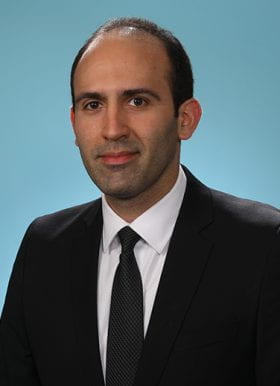
Borna Maraghechi is a Clinical Physicist in the Department of Radiation Oncology at Washington University School of Medicine, St. Louis, MO. He completed his academic and professional training in Iran, Canada, and the U.S., including a residency in Therapy Medical Physics at WashU. BSc in Physics (2009), Amirkabir University of Technology, Tehran, Iran MSc in Physics (2012), Laurentian University, Sudbury, Canada PhD in Biomedical Physics (2016), Ryerson University, Toronto, Canada Residency in Therapy Medical Physics (2020), Washington University School of Medicine His research focuses on advanced radiotherapy techniques, particularly MR-guided adaptive therapy, dosimetry innovation, and quality assurance for emerging treatment modalities. He develops methods for precision radiation delivery in complex anatomical regions, with emphasis on gastrointestinal and pancreatic cancers. His recent work spans 2020–2025, addressing challenges in cone-beam CT for proton therapy, toxicity prediction models, and automated quality assurance. Key themes include medical imaging integration, treatment personalization, and safety protocols for adaptive radiation therapy. Certified by the American Board of Radiology in Therapeutic Medical Physics (2021)
Cynthia Ann Toth is the Joseph A.C. Wadsworth Distinguished Professor of Ophthalmology at Duke University, with additional appointments as Professor of Ophthalmology and Professor of Biomedical Engineering. Her extensive career has positioned her as a leading authority in vitreoretinal diseases and surgery, particularly in the development and application of optical coherence tomography (OCT) technologies for both adult and pediatric patients. She has made significant contributions to retinal imaging, with a special focus on retinopathy of prematurity and age-related macular degeneration. Joseph A.C. Wadsworth Distinguished Professor of Ophthalmology Professor of Biomedical Engineering Specialist in Vitreoretinal Diseases & Surgery Director of advanced imaging research programs Dr. Toth received her M.D. from Drexel University in 1983, followed by ophthalmology training at Geisinger Medical Center (1984-1987) and the University of California, Davis, School of Medicine (1989-1991). Her educational background provided the foundation for her pioneering work in retinal imaging technologies. Dr. Toth's research primarily focuses on advancing optical coherence tomography for clinical and surgical applications. Her work spans several critical areas including: development of handheld OCT devices for infant and pediatric imaging; intraoperative OCT for vitreoretinal surgery; OCT angiography for microvascular assessment; and application of OCT in retinopathy of prematurity and age-related macular degeneration. She has been instrumental in translating OCT technology from research settings to clinical practice, particularly for vulnerable patient populations like premature infants who require bedside imaging. Her publication record demonstrates a clear trajectory from foundational OCT technology development to sophisticated clinical applications. Recent work shows increasing integration of artificial intelligence, robotics, and novel optical clearing techniques with OCT systems. The research consistently bridges engineering innovation with immediate clinical needs, particularly in pediatric ophthalmology and retinal surgery. ARVO/Alcon Keynote (2022) Gertrude Pyron Award from American Society of Retina Specialists (2021) Scientific Achievement Award from Women in Ophthalmology (2019) Wacker Prize from Club Jules Gonin (2018) Paul Henkind Award and Lecture from Macula Society (2018) Rockefeller Foundation Academic Writing Residency (2017) As a mentor, Dr. Toth has guided numerous students and junior faculty in ophthalmic research, with particular emphasis on imaging technology development. Her research has been supported by significant grant funding from NIH and other organizations, enabling her team to develop innovative imaging approaches that have transformed clinical practice in retinal diseases. She has been particularly active in collaborative research efforts, often leading multi-center studies that establish standards for retinal imaging and diagnosis. Dr. Toth leads a multidisciplinary research team that includes ophthalmologists, biomedical engineers, computer scientists, and clinical researchers. Her laboratory focuses on developing next-generation imaging technologies that can be deployed at the bedside for infants and during surgery for precise guidance. The team has pioneered several handheld OCT systems specifically designed for pediatric use and has developed novel image processing techniques that extract maximum diagnostic information from OCT scans.
Kevin MICHENEAU is a Teacher-Researcher at CESI School of Engineering, affiliated with the LINEACT research laboratory in Guipavas, France. His work bridges building energy systems and experimental particle physics, focusing on data-driven optimization of smart buildings and dark matter detection. Education: PhD in Subatomic Physics, University of Nantes (2018): "Study of residual electrons in the XENON100 experiment" Master's degree in Research in Subatomic Physics, University of Nantes (2014) Research Focus: Dr. MICHENEAU develops advanced models for building energy performance with emphasis on occupancy behavior impact and smart control systems . His methodology combines sensor fusion and multi-objective optimization to balance energy efficiency with occupant comfort. Previously, he contributed to XENON dark matter experiments through signal reconstruction and background modeling. Publication Evolution: His research trajectory shows a strategic pivot from particle physics (2017-2019) to building energy systems (2024), applying rigorous data analysis techniques across domains. The 2024 MPC optimization study demonstrates transferable methodology from high-precision physics to sustainable engineering. Mentorship: Currently supervising PhD candidate BOURGOIN on "Towards modeling the impact of occupancy on the energy behavior of smart buildings" (2023-2026). Research Ecosystem: Member of the "Engineering and Digital Tools" team within LINEACT, teaching Computer Science, Mechanics, and Physics across preparatory and engineering cycles while contributing to PhD training at University of Nantes.
Juan Antonio Leñero Bardallo is a Professor at the University of Seville, Faculty of Physics, Department of Electronics and Electromagnetism. His research focuses on bio-inspired microelectronics, event-driven vision sensors, and CMOS integration techniques. Research Group: MICROELECTRÓNICA ANALÓGICA Y DE SEÑAL MIXTA Key Projects: SAMANTA2 (robotic vision), CAVIAR (event-based vision), VULCANO (event-driven imaging) His work spans asynchronous image sensors, thermography for medical diagnostics, stacked diodes for energy harvesting, and neuromorphic engineering. Recent publications highlight low-power sun sensors, self-powered imaging systems, and thermographic applications in dermatology. He has contributed to books on analog electronics and radiation detection. Patents include solar position sensors and electron energy detectors for scanning electron microscopy. His teaching subjects cover experimental techniques, integrated sensor design, and bio-inspired algorithms.