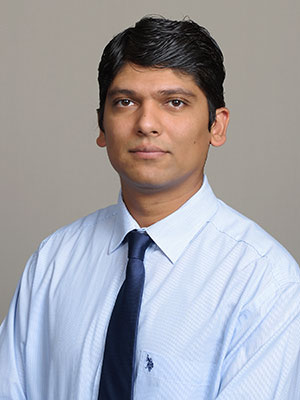
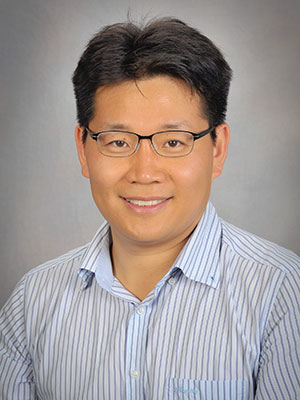
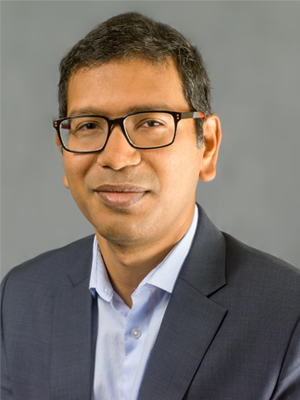
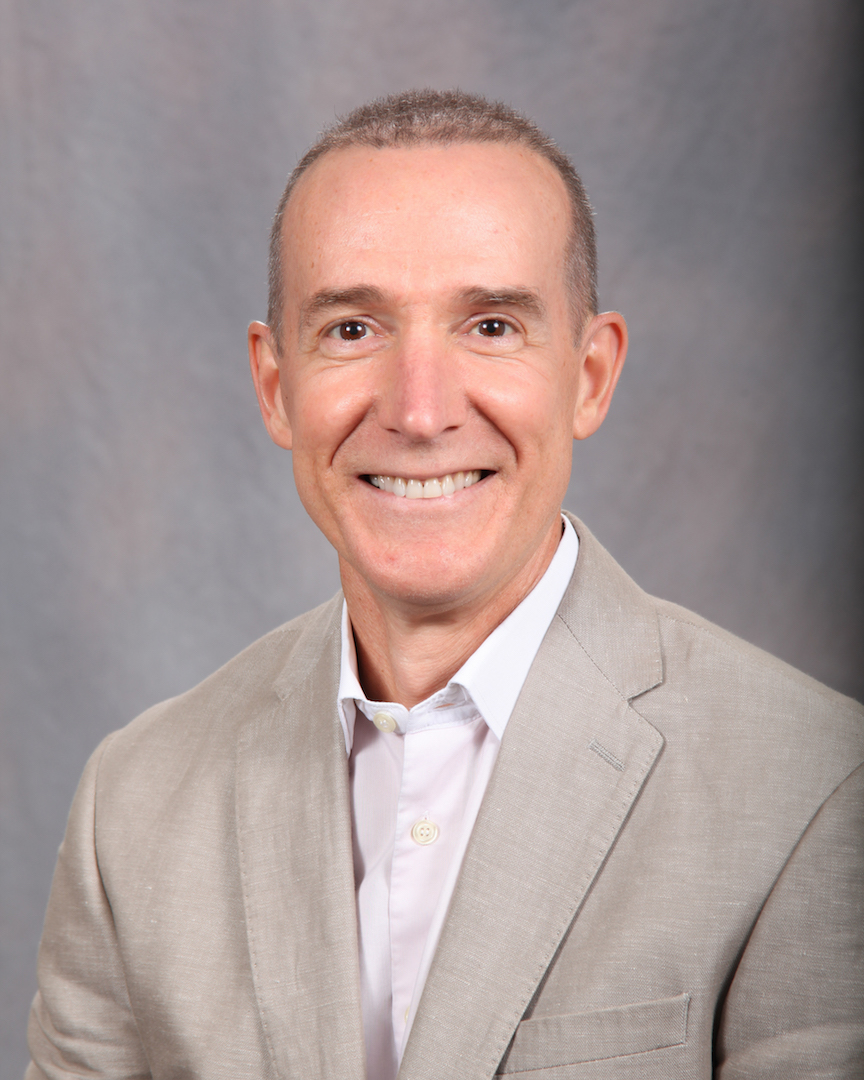
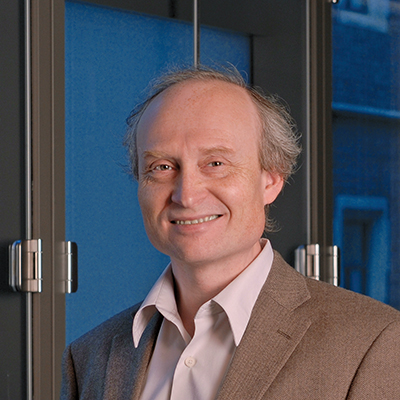
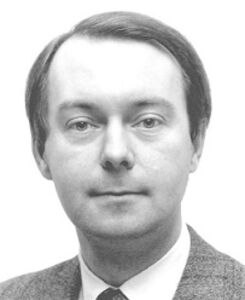
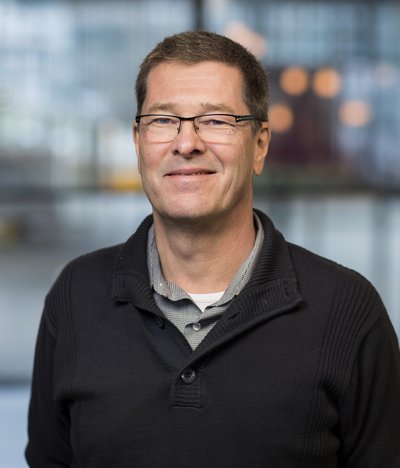
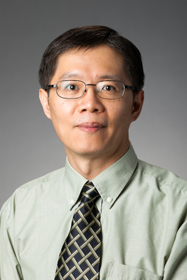
Dr. Sara Sharifzadeh is a Senior Lecturer in Computer Science at Swansea University. Her research applies machine learning to spectral/satellite data analysis, human activity recognition, and robotic sensor systems. Education PhD in Computer Science (Technical University of Denmark, 2015). Research Focus She develops AI models for healthcare (e.g., rehabilitation assessment), agriculture (crop mapping), and industrial diagnostics (bearing fault detection), leveraging radar, infrared, and satellite data. Publication Trends Her 15 most recent articles (2021–2025) emphasize deep learning for sensor-based applications: radar activity monitoring, satellite crop classification, and healthcare robotics. Methodologies include transformers, GANs, and reinforcement learning. Collaborations She has led EPSRC/Danish Council-funded projects with industry partners and reviews for high-impact AI journals.
Hasnain Zohaib is an Assistant Professor in the Department of Mechanical Engineering at Texas A&M University. His research develops computational and experimental frameworks for autonomous systems, aerospace applications, and robotic perception. Education: Ph.D. Aerospace Engineering, University of Maryland (2014) M.S. Aerospace Engineering, University of Maryland (2012) B.S. Aerospace Engineering, University of Maryland (2008) Research integrates machine learning with fluid dynamics for aerospace challenges, including lunar landing systems and high-speed autonomy. Robotic perception work advances damage assessment algorithms using 3D point clouds. Recent projects focus on sim-to-real transferability and extraterrestrial infrastructure development. Publications demonstrate expertise in computational modeling of particulate flows, robotic localization in low-feature environments, and adaptive aerospace structures. Applied research supports NASA lunar missions through erosion mitigation and landing technologies. Leads projects funded by aerospace and robotics consortia, collaborating with industry partners on space exploration and terrestrial automation.
ChaBum Lee is an Associate Professor and Morris E. Foster Faculty Fellow in Mechanical Engineering at Texas A&M University. His research advances metrology and inspection for semiconductor manufacturing and precision systems. Research focuses on interferometry, 3D imaging, machine tool metrology, robotic machining, and optical spectroscopy. Key innovations include diffraction-based via inspection, autonomous wafer defect detection, and non-contact surface profiling. Recent publications emphasize semiconductor metrology advancements, including through-silicon via characterization, wafer edge inspection, and machine learning-driven quality control. Articles demonstrate integration of optics, sensors, and AI for manufacturing applications. Awards include: ASME Blackall Machine Tool Award (2020) Institute of Physics Emerging Leader (2021) ASPE Best Researcher (2017) Leads the Precision Metrology and Instrumentation Group (PMIG), collaborating with semiconductor industry partners including Samsung and Honeywell. Teaches courses in precision engineering and instrumentation.
Srikanth Saripalli is Professor and Director of the Center for Autonomous Vehicles and Sensor Systems at Texas A&M. His research develops autonomous navigation systems for UAVs and ground vehicles, specializing in vision-based control, sensor calibration, and path planning algorithms for GPS-denied environments.
Stavros Kalafatis is an Associate Department Head and Professor of Practice in the Department of Electrical and Computer Engineering at Texas A&M University, part of the College of Engineering. He holds an M.S.E.E. from the University of Arizona (1991) and a B.S.E.E. from the University of Surrey (1989). His research focuses on datacenter system optimization, SDI/SDN/SDS improvements for server efficiency, robotics in manufacturing, and sensor systems for agricultural applications. He has received multiple awards, including the Intel Achievement Award (2005) and repeated Intel Divisional Recognition Awards (1993, 2000–2010). His work spans cutting-edge technologies like precision agriculture robotics, network performance optimization, and machine learning-driven systems for hydroponics and wildfire prediction. Recent publications emphasize interdisciplinary solutions in agriculture, networking, and environmental modeling. Kalafatis is affiliated with the Computer Engineering and Systems Group at Texas A&M and contributes to advancing practical applications of engineering and computing. Education: M.S.E.E., University of Arizona, 1991 B.S.E.E., University of Surrey, 1989 Awards: Intel Achievement Award (Lynnfield Team), 2005 Intel Divisional Recognition Award (multiple years) His research trends highlight innovations in smart systems, including digital twins for manufacturing, AI-driven crop monitoring, and network optimization for data centers. While no grants or advising records are explicitly listed, his publications reflect active collaboration with industry and academic partners.
Research Professor at University of Pennsylvania leading projects on cyber-physical systems safety. Directs DARPA-funded research in assured autonomy and attack-resilient control systems. Education: PhD in Computer Science from SUNY Stony Brook (1996). Research: Develops formal methods for runtime monitoring and verification of embedded systems. Current projects include medical device interoperability and physiological closed-loop control. Created MaC runtime verification framework and contributed to AADL standardization. Teaching: Advises PhD students in real-time systems and formal verification. Teaches courses on mathematical foundations of computer security. Awards: Best Paper, IEEE/ACM CPS Week (2014) Best Student Paper, RTAS (2012) Labs & Projects: Member of PRECISE Center. Leads DARPA projects on assured autonomy and SPARCS. Collaborates with FDA on medical device safety frameworks.
Jian Liu is an Associate Professor in the Department of Systems and Industrial Engineering at the University of Arizona, College of Engineering, and an affiliated faculty member in the Statistics Graduate Interdisciplinary Program. He has been with the university since 2008, first as a faculty member from 2008–2014 and continuing in his current role since 2014. PhD in Industrial and Operations Engineering and Mechanical Engineering, University of Michigan, Ann Arbor (2008) MS in Statistics, University of Michigan, Ann Arbor (2006) MS in Industrial and Operations Engineering, University of Michigan, Ann Arbor (2005) MS in Mechanical Engineering, Tsinghua University, Beijing (2002) BS in Precision Instruments & Mechanology, Tsinghua University, Beijing (1999) Dr. Liu’s research centers on data analytics and system informatics, with a focus on integrating engineering knowledge, optimization, and statistical learning to model system performance, prognostics, diagnostics, and risk management. His work applies to manufacturing, civil, chemical, and software systems, emphasizing multi-source, multi-scale data fusion in hierarchical and distributed environments. Key research areas include reliability modeling, quality engineering, machine learning, and decision-making under uncertainty. His recent publications demonstrate a strong trend in applying advanced statistical and machine learning methods to real-world systems such as autonomous vehicles, water distribution networks, UAV/UGV surveillance, and healthcare monitoring. The integration of DDDAS (Dynamic Data-Driven Application Systems) frameworks, tensor decomposition, Bayesian modeling, and digital twins reflects a multidisciplinary approach spanning engineering, computer science, and data science. Honorable Mention for the Best Paper in the 2020 IISE Transactions Focus Issue on Quality and Reliability Engineering Honorable Mention for the Best Paper Award, International Conference on Industrial Engineering and Engineering Management, 2020 Outstanding Associate Editor Award, Journal of Manufacturing Systems, Spring 2019 Dr. Liu has secured research funding from the US National Science Foundation, US Department of Homeland Security, and US Air Force Office of Scientific Research. He has collaborated with domain experts on projects related to machining/assembly process improvement, water system service enhancement, and software reliability. He has advised students and contributed to professional leadership as a council member, board director, and currently as president of the Quality Control and Reliability Engineering (QCRE) Division of IISE. He is actively involved in research teams and labs focused on system informatics, data fusion, and reliability engineering, often employing simulation, sensor networks, and real-time data analysis in applications ranging from manufacturing to public health.
Rolf Johansson is a Professor of Control Science at the Department of Automatic Control, Faculty of Engineering, Lund University, Sweden. He also serves as Director of the Robotics Laboratory and has held a dual affiliation with the Faculty of Medicine, Lund University Hospital, since 1987. He has held numerous visiting appointments at institutions including UC Berkeley, Caltech, Tsinghua University, and NTNU, reflecting his international stature in control systems and robotics. Research Interests: His research spans system and control theory , robotics , adaptive control , system identification , biomathematics , and automotive systems . He has made significant contributions to human balance and postural control , diabetes modeling , and industrial robotics . His work bridges engineering and medicine, particularly in applying control theory to physiological systems. Publication Trends: His recent publications focus on physical human-robot collaboration, learning-based control for engines and fuel cells, real-time trajectory generation using MPC, and sensorless force control in robotic assembly. These reflect a strong integration of machine learning, optimization, and robust control in both industrial and biomedical applications. Scientific Awards: IEEE Fellow (2012) Ebeling Prize (1995) ICRA2012 Best Automation Paper Award EURON Technology Transfer Awards (2004, 2007) Russell S. Springer Visiting Professor at UC Berkeley (2004) Fellow of the Royal Physiographic Society (2007) Advising and Grants: He has supervised over 25 PhD students across engineering and medicine. His research has been funded by major agencies including the Swedish Research Council (VR), EU Framework Programs (FP5–H2020), SSF, VINNOVA, and industry partners like ABB and Volvo. Key projects include SMErobotics, LCCC, DIAdvisor, and KCFP. Labs and Teams: He leads the Robotics Laboratory at Lund and has co-led the Balance Laboratory at Lund University Hospital. He is central to the LCCC (Linnaeus Center for Control of Complex Engineering Systems) and has coordinated multiple EU projects in robotics and control.
Björn Olofsson is an Associate Professor and Senior Lecturer in the Department of Automatic Control at Lund University's Faculty of Engineering. He also serves as the Director of First and Second Cycle Studies and is a Project Manager. He is affiliated with major research initiatives including ELLIIT (the Linköping-Lund initiative on IT and mobile communication) and WASP (Wallenberg AI, Autonomous Systems and Software Program). His academic affiliations span Lund University and Linköping University, where he was appointed Docent in 2020. He holds an M.Sc. in Engineering Physics and a Ph.D. in Automatic Control, both from Lund University. His academic journey reflects a strong foundation in engineering and control systems. His research focuses on the autonomy of robots and vehicles, with emphasis on motion planning and optimal motion control. He explores applications in ground vehicles, unmanned aerial and surface vehicles, and industrial robotics. His work intersects with key global challenges, including sustainable transport and digitalization, aligning with UN Sustainable Development Goals related to technology and health. The 15 most recent publications analyzed show a consistent trend in autonomous systems, predictive control, and robotics. Topics include uncertainty-aware motion planning, human-robot collaboration, maritime autonomy, and learning-based control. The research integrates AI, machine learning, and advanced control theory, applied across aerial, marine, and terrestrial domains. Björn actively supervises multiple PhD students and has led numerous research projects, such as ELLIIT B14 and the Center for Construction Robotics. He is involved in organizing academic events like Robotics Week for Schools and manages the RobotLab LTH infrastructure. He has taught a range of courses including Applied Robotics, Autonomous Vehicles, and graduate-level courses on motion planning and optimal control. He also supervises Master’s theses in Automatic Control and Vehicular Systems.
Frank Sperling is a lecturer and program manager at Eindhoven University of Technology's High Tech Systems Center (HTSC), which he helped establish in 2014. He focuses on innovation at the intersection of 'market pull' and 'technology push,' coordinating multidisciplinary research collaborations across departments and industrial partnerships. His expertise spans advanced motion control, thermal-mechanical modeling, and mechatronic system design. He lectures on Mechatronic Design in the Mechatronic System Design (MSD) PDEng program. Previously, he held roles at Philips Research, SKF, ASML, and Nobleo Technology, combining research, management, and consulting in high-tech mechatronics. Education: Master’s in Mechanical Engineering (Systems and Control) from Delft University of Technology (1983) His research emphasizes precision motion systems, particularly in optical lithography and semiconductor manufacturing. He has extensive experience in industrial valorization, system design, and T-shaped engineer education for industry needs.
Chih Lai is a Professor in the Graduate Program in Software at the University of St. Thomas. He holds a PhD from Oregon State University and has extensive industry experience, including leading software engineering projects at Garmin and Medtronic. His research focuses on AI/ML applications in healthcare, multimedia data analysis, and precision agriculture, supported by grants from NSF, Amazon, and industry partners. Education: PhD in Computer Science (Oregon State University, 1999), MS in Computer Science (Oregon State University), BA in Fu-Jen Catholic University, Taiwan. Research interests include AI-driven medical imaging, counterfeit detection, and brain neural connectome analysis. His work on in-memory analysis of brain connectivity graphs was supported by Amazon and SAP HANA. Awards : Medtronic Idea Disclosure Contributor Award (2013) Best Paper Award in ACM Multimedia Data Mining (2006) Aerospace Industry Pioneer Award (2000) Deutsch Fellowship (2019) Grants & Collaborations : $1.3M+ funding from NSF, Minnesota State, German government, and Amazon Projects with Mayo Clinic, University of Minnesota, and Medtronic Amazon Cloud Research Grants for brain connectome and in-memory computing Labs & Teams : Collaborates with the Helmholtz-Zentrum für Umweltforschung (Germany) and leads interdisciplinary teams at UST's Center for Applied AI.
Dr. William Robertson is a Senior Lecturer in the School of Electrical and Mechanical Engineering at the University of Adelaide, specializing in electromagnetics and biomechanics. His research focuses on advancing magnetic levitation (maglev) systems for vibration isolation, wave energy conversion, and actuator design through the AUMAG research group. He is a proponent of open science, emphasizing tool and data sharing. His work integrates fundamental physics with applied engineering solutions. Key research areas include magnetic force modeling, quasi-zero stiffness mechanisms, and biomechanical gait analysis. He supervises Honours, Masters, and PhD students, fostering innovation in both mechanical systems and human movement studies. The AUMAG group collaborates with industry on projects like maglev elevators and energy harvesting devices. His biomechanics work involves developing low-cost 3D scanning methods for musculoskeletal modeling and sports equipment optimization. Recent projects include non-contact force measurement techniques in maglev systems and gait recognition algorithms using force platforms. His work spans interdisciplinary applications from robotics to environmental modeling, with a focus on precision engineering and data-driven methodologies.
Rémy Pawlak is a Senior Researcher at the Department of Physics, University of Basel, working in the group of Prof. Ernst Meyer. His research focuses on scanning probe microscopy (AFM/STM) and surface science, particularly investigating 2D materials, molecular systems, and quantum phenomena at the atomic scale. He specializes in cryogenic and ultra-high vacuum environments, exploring tribological, electronic, and quantum properties of surfaces. Key areas include single molecule manipulation, superconductivity, magnetism, and energy dissipation mechanisms in nanoscale systems. Education: BSc, MSc, and PhD in Physics from Aix-Marseille University. Current projects involve on-surface synthesis of graphene-based materials, friction studies in layered systems, and plasma-surface interactions for fusion technology. Active in social media (Twitter/LinkedIn/Instagram) and collaborative initiatives like the SNI network. Open to PhD candidates in KPFM, plasma thin films, and quantum device characterization. Notable contributions include work on Yu-Shiba-Rusinov states in radical molecules, thermal behavior of supramolecular networks, and frictional dynamics in moiré superlattices. Instrument development includes advanced force microscopy techniques. Collaborations span institutions like SISSA Trieste and ETH Zurich.
Marco Cattaneo is a Research Fellow at the University of Helsinki's Particle Physics and Astrophysics department. He is actively involved in the Doctoral Programme in Particle Physics and Universe Sciences as a HelTeq Supervisor, contributing to training the next generation of researchers. His research focuses on quantum information science, open quantum systems, and quantum computing with applications in molecular physics and quantum thermodynamics. Cattaneo participates in the EU-funded QTIndu project (2023-2025), developing quantum technologies curricula for industry applications. His work bridges theoretical and experimental quantum physics, addressing topics like quantum measurement techniques, thermalization in large systems, and noise characterization in quantum hardware. Recent projects include analytical solutions for open quantum models and leveraging collective effects in quantum electrodynamics systems. He collaborates extensively internationally, particularly in Europe, focusing on quantum technology and foundational quantum mechanics questions. Key contributions include advancing quantum metrology protocols for molecular energy estimation and exploring symmetry properties in collision models. Cattaneo's research also intersects with quantum foundations, e.g., applying quantum information principles to consciousness models. His publications demonstrate strong interdisciplinary connections between quantum theory, statistical mechanics, and applied quantum technologies.
Rodrigo Gutiérrez Moreno is an Assistant Professor in the Department of Electronics at Universidad Autónoma de Madrid (UAM), affiliated with the Robesafe research group focused on Service Robotics and e-Safety Technologies. His work bridges robotics, autonomous systems, and AI applications in transportation and healthcare. He collaborates extensively with the CARLA simulator for autonomous driving research. Research interests include autonomous vehicle decision-making, reinforcement learning integration with classical control, motion prediction, and human-robot interaction. His group explores hybrid control systems, V2X communication validation, and ethical considerations in autonomous systems. Recent projects address lane change maneuvers, urban scenario navigation, and driver behavior analysis using gaze tracking and vehicle data. Publications span multimodal sensor fusion, graph-based prediction models, and modular autonomous driving architectures. His work emphasizes transitioning simulation-based algorithms to real-world implementations while maintaining safety and reliability standards. Active in open-source tools like ROS for robotic development, he also investigates healthcare robotics and biomedical engineering applications.