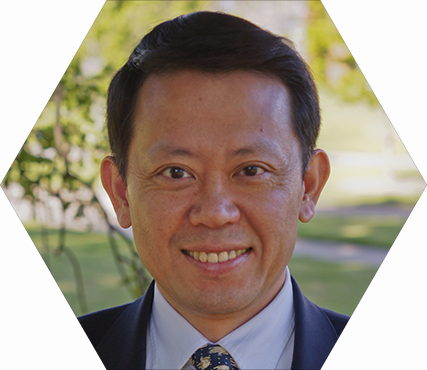
Kevin Chetty is a Professor of Wireless Sensing at University College London (UCL), leading the Urban Wireless Sensing Lab within the Department of Security and Crime Science. His work bridges radar technology, machine learning, and healthcare applications, with a focus on passive sensing systems. Education: PhD in Medical Ultrasound Physics (Imperial College London, 2004-2007), MRes in Image and X-Ray Physics (King's College London, 2003), BSc in Physics (King's College London, 1999) Research spans radar micro-Doppler signature analysis for human behavior classification, software-defined radar development, and integrated communication-sensing systems, with applications in security, healthcare, and smart environments. Recent work emphasizes privacy-preserving technologies and edge processing for real-time operations. Scientific awards include the 2022 IET Radar Systems Best Paper Runner-Up, 2022 IEEE Radar Conference 2nd Place, and 2015 National Instruments Engineering Impact Award. He has received funding from government and industry sectors in telecommunications, IoT, security, and healthcare. Teaching roles: Programme Convener for MSc Crime Science and IEP Minor in Crime and Security Engineering; Module Convener for Security Technologies and Crime Mapping & Spatial Analysis Consultancy: Huawei Technologies (2020-2022), Metropolitan Police Service (2019)
Steven Y. Liang , Regents' Professor at the Georgia Institute of Technology 's Woodruff School of Mechanical Engineering, focuses on precision manufacturing , additive manufacturing , and materials-driven process optimization . His research program bridges materials science and computational mechanics to develop predictive models for advanced manufacturing systems. Ph.D., University of California, Berkeley (1987) M.S., Michigan State University (1984) B.S., National Cheng-Kung University, Taiwan (1980) Dr. Liang's work emphasizes physics-based modeling of thermal-mechanical interactions in machining and additive manufacturing, particularly for Ti6Al4V and Inconel 718 alloys. Recent publications highlight tool wear prediction , laser-assisted micro-milling , and residual stress modeling using machine learning and analytical mechanics. His research has been recognized with the ASME Milton C. Shaw Manufacturing Research Medal (2016) , SME Gold Medal (2021) , and Outstanding Lifetime Service Award of NAMRI/SME (2021) , among others. Funded by federal agencies and aerospace/automotive industries, his work provides scientific foundations for process planning and optimization.
Professor Kristopher Kilian is Director of the Laboratory for Advanced Biomaterials & Matrix Engineering (LAB&ME) with a joint position across the School of Chemistry and the School of Materials Science & Engineering in the Faculty of Science at UNSW Sydney. He serves as co-Director of the Australian Centre for NanoMedicine (ACN) and is a member of the Adult Cancer Program in the Prince of Wales Clinical School. His interdisciplinary research focuses on unraveling 'matrix structure-cell function' relationships through innovative biomaterial design. After completing his PhD at the University of New South Wales, Kilian pursued NIH postdoctoral training at the University of Chicago before faculty positions at the University of Illinois at Urbana-Champaign (2011-2018). He returned to UNSW in 2018 as a Scientia Fellow, establishing his current leadership roles. Research Focus: Design of model extracellular matrices and dynamic hydrogels for cell and tissue engineering Fundamental studies in cell plasticity and matrix-directed cell fate Development of synthetic tumor microenvironments for drug testing iPSC-derived organoid bioengineering 4D biofabrication techniques Tissue engineering approaches for lab-grown meat applications His extensive publication record demonstrates consistent focus on hydrogel mechanics, dynamic biomaterials, and the role of physical cues in directing cell behavior. Recent work emphasizes mechanochemistry, spatial control of cell differentiation, and the development of sophisticated tumor models that replicate the complexity of cancer microenvironments. Scientific Recognition: Cornforth Medal (2008) NIH Ruth L. Kirchstein Award (2008) Kavli Fellow (2014) NSF CAREER Award (2015) Australian Research Council Future Fellowship (2018) Eureka Prize finalist (2023) Kilian's research program bridges fundamental cell biology with translational applications, particularly in cancer modeling and regenerative medicine. His laboratory develops innovative biomaterial platforms that enable precise control over cellular microenvironments, facilitating discoveries in cell plasticity and tissue engineering. The group's work on dynamic hydrogels and mechanochemical systems represents a significant contribution to the field of biomaterials science. As Director of LAB&ME, Kilian leads a multidisciplinary team that integrates nano- and micro-fabrication techniques with synthetic chemistry to create biomimetic materials. The laboratory's approach centers on the concept that cell state and fate are governed by inherent cell plasticity within specific multivariate signaling contexts.
Paul Rothemund is a Visiting Associate in Computing and Mathematical Sciences and Computation & Neural Systems at the California Institute of Technology . His research focuses on expanding the toolkit of DNA nanotechnology , particularly through the development of DNA origami and its integration into fields like biological engineering and translational research . He is part of the Biology and Biological Engineering divisions and collaborates with the Winfree and Qian labs. B.S., Caltech (1994) Ph.D., University of Southern California (2001) Research Interests Rothemund’s work centers on programmable molecular systems , with a focus on DNA origami for creating nanoscale shapes, RNA nanostructures , and lipid nanodiscs . His lab develops methods for molecular self-assembly , nanophotonic architectures , and single-molecule assays . Key applications include hybrid nanodevices , precision biomolecular placement , and dynamic DNA/RNA systems . Publication Trends Over 15 recent articles, Rothemund’s research spans DNA/RNA origami , lipid bilayer engineering , nanoarray fabrication , and biomolecular sensing . Themes include modular design , co-transcriptional folding , and programmable nanoscale materials . Scientific Recognition Beckman Senior Research Fellow (2001-04) Bryan R. Coles Prize (2017) Advising & Collaborations Rothemund has advised doctoral students and postdocs such as Anya Mitskovets (now at KLA) and Tyler Ross (MIT/Harvard). His lab forms a DNA nanotechnology supergroup and engages in interdisciplinary collaborations.
Dr. Amarjeet Bassi is a Professor of Chemical and Biochemical Engineering in the Faculty of Engineering at Western University. He holds a Ph.D. and is a Professional Engineer (P.Eng). His research group has made significant contributions to environmental engineering, particularly in developing the world's first circulating fluidized bed ion exchange chromatography system. Dr. Bassi has established strong industry partnerships, including with Renix Inc. for commercializing his UIX technology and with Stanton Farms for phycoremediation research. Dr. Bassi's research interests focus on innovative environmental and bio-separation technologies. His work spans micro-algal applications for clean water and value recovery, integrated technologies for water refining and nutrient and energy recovery using biological systems, bio-separations, and biosensors. His research group pioneered the circulating fluidized bed ion exchange chromatography system (UIX), which is now being commercialized by Renix Inc. He has also developed significant expertise in phycoremediation, particularly for treating wastewater from dairy farms and greenhouse industries. Dr. Bassi's publication record demonstrates a strong focus on sustainable water treatment technologies, bioenergy production, and biodegradation of plastics. His recent work shows increasing attention to microplastic pollution, hydrothermal liquefaction of microalgae for bio-crude oil production, and innovative approaches to wastewater treatment using microbial systems and phycoremediation. Distinguished Speaker Award from IChE (2007) Engineering Science Prize for Outstanding Teaching at Western University (2000) SPIE Optics East Best Paper Award (2006) Dr. Bassi has graduated over 45 highly qualified personnel (PhDs, M.E.Sc and PDFs/Research Associates) and supervised more than 50 undergraduate research students. His research has been supported by significant grants from Canada Foundation for Innovation, NSERC Strategic Project grants, OMAFRA New Directions, and other funding agencies. He has served in leadership roles including President of the Canadian Society for Chemical Engineering (2014-2015) and as Associate Editor for the Canadian Journal of Chemical Engineering. Dr. Bassi leads an active research group focusing on innovative environmental technologies. His lab has developed the world's first circulating fluidized bed ion exchange chromatography system and has established successful industry partnerships, particularly with Renix Inc. for commercializing the UIX technology. His research group maintains strong collaborations with Stanton Farms for phycoremediation research and works with various industry partners on wastewater treatment and bioenergy projects.
Drew Higgins serves as an Associate Professor in the Department of Chemical Engineering within the Faculty of Engineering at McMaster University. His research profile demonstrates extensive scholarly activity with numerous publications spanning electrocatalysis, CO 2 conversion technologies, and energy storage systems. Higgins leads research initiatives focused on converting carbon emissions to usable fuels and has secured significant funding, including McMaster's $4.2M award for critical minerals research. His research interests center on electrocatalysis for sustainable energy technologies, with particular emphasis on CO 2 reduction, nanoscale catalyst development, and advanced characterization techniques. Higgins' work bridges fundamental electrochemical principles with practical applications for addressing climate change through carbon capture and utilization. His research group employs sophisticated in situ characterization methods including X-ray spectroscopy and transmission electron microscopy to understand catalyst behavior under operating conditions. The publication trends reveal a strong focus on electrochemical CO 2 conversion, with recent work exploring tandem catalysis systems, membrane electrode assemblies, and catalyst reconstruction phenomena. His research spans both fundamental catalyst design and practical engineering applications for energy conversion systems. Higgins has made significant contributions to understanding the atomic-scale mechanisms behind electrocatalytic processes, particularly for carbon dioxide reduction and nitrogen cycle electrochemistry. Higgins teaches core chemical engineering courses including Electrochemistry and Electrochemical Engineering (CHEMENG 4EC3/6EC3) and Chemical Engineering Principles I (CHEMENG 2D04). His scholarly impact is evident through extensive citation metrics, with multiple publications picked up by news outlets, referenced in patents, and widely read across academic platforms like Mendeley.
Heidi Ottevaere is a Professor at the Faculty of Engineering of the Vrije Universiteit Brussel (VUB) since October 1, 2009. She serves as the head of the Instrumentation and Metrology platform at the Photonics Innovation Center and leads the 'biophotonics' research unit of the Brussels Photonics Team (B-PHOT), which is chaired by Prof. Hugo Thienpont. Her work focuses on the design, fabrication, and characterization of photonic components and systems for diverse applications in medical diagnostics, environmental monitoring, and industrial processes. Dr. Ottevaere earned her Electrotechnical Engineering degree with majors in Photonics from Vrije Universiteit Brussel in 1997 and completed her PhD in Applied Sciences at the same institution in 2003. Her doctoral research focused on 'Refractive microlenses and micro-optical structures for multi-parameter sensing: a touch of micro-photonics.' Professor Ottevaere's research spans multiple cutting-edge areas of photonics with particular emphasis on biophotonics, micro-optics, and optical metrology . Her work bridges fundamental science with practical applications, developing novel photonic components and systems that address real-world challenges. She has pioneered research in miniaturized optical systems for medical diagnostics, environmental monitoring, and industrial applications. Her current research focuses on advancing lab-on-a-chip technologies, microfluidic optical sensors, and novel optical fiber systems for biomedical applications. She has developed microminiaturized, integrated plastic detection units for absorbance and laser-induced fluorescence measurements in microfluidic channels, enabling portable, robust, and disposable diagnostic systems. Her recent publications demonstrate a strong trend toward integrated optical sensing systems with applications in medical diagnostics and environmental monitoring. There's a clear progression from fundamental optical component design to complete system integration, with increasing emphasis on artificial intelligence for data analysis and computational imaging techniques. Her work bridges photonics with biomedical engineering, materials science, and data science, reflecting the interdisciplinary nature of modern photonics research. Dr. Ottevaere has been recognized with several prestigious awards: Best Application award (2008) Educational award - Bronze (2019) MOC09 Contribution Award Winners (2009) As an educator and mentor, Professor Ottevaere has promoted 9 PhD students and supervised numerous master's theses. She has secured substantial research funding from diverse sources including the Fund for Scientific Research Flanders (FWO), the Institute for the Promotion of Innovation by Science and Technology in Flanders (IWT), and multiple European Framework Programs. Her current portfolio includes projects on miniaturized biosensors for drinking water screening, precision manufacturing, and photonics education initiatives in Uzbekistan. She has coordinated multiple strategic research and networking projects with regional, national, and international funding bodies. Professor Ottevaere leads the biophotonics research unit within the Brussels Photonics Team (B-PHOT), one of Europe's leading photonics research groups. Her team includes researchers working on optical metrology, micro-optics fabrication, and biophotonic applications. She collaborates extensively with industry partners including Melexis, Umicore, and Anteryon, as well as academic institutions across Europe through various EU-funded projects. She has been instrumental in developing the interuniversity engineering curriculum 'Master in Photonics' which received the EC Erasmus Mundus quality label in 2006, and continues to be the driving force behind photonics education at VUB.
Lauri Rautkari is an Associate Professor in the Department of Bioproducts and Biosystems at Aalto University, Finland. His research focuses on water interactions in biomaterials, particularly wood, with an emphasis on developing advanced analytical methods for water vapor sorption, creating novel low-sorption materials, and investigating hygroscopicity and fungal decay resistance in modified wood systems. Research Highlights: Gas-phase ozone treatment for improved wettability, thermal and chemical wood modification, hyperspectral imaging for moisture prediction, bioinspired coatings for fungal protection, and interlaboratory studies on sorption data quality. Recent Publications: Key contributions to understanding lignin's role in moisture interactions, acetylation reversibility, and the impact of fungal degradation on heat-treated wood. The trend in his publications reflects a strong focus on hygroscopicity, chemical modification techniques (acetylation, melamine-formaldehyde impregnation), advanced imaging methods (hyperspectral, neutron scattering), and the development of sustainable wood-based materials for construction and acoustic applications. Collaborative interlaboratory efforts dominate his work, ensuring standardized methodologies for moisture analysis.
Dr. Adrian Fazekas is a Lecturer at the Institute of Highway Engineering, RWTH Aachen University, and collaborates with the Federal Highway Research Institute (BASt). He holds a Dr.-Ing. in Computer Science from RWTH Aachen (2005–2011), specializing in Media Engineering. His professional trajectory includes roles as a Research Assistant at RWTH Aachen and industry experience as a Software Developer at Continental AG. Research interests focus on traffic data acquisition , microscopic traffic flow simulation , and intelligent transportation systems . Key projects include: DROVA: Drone-based traffic analysis for infrastructure optimization ESIMAS: Real-time tunnel safety management Digital Twin Road: Physical-informational mapping of future highways AUTUKAR: Automated tunnel monitoring systems His publications emphasize real-time traffic detection , safety analytics , and data-driven modeling , with recent work exploring thermal-camera nudging systems and weigh-in-motion accuracy. He actively contributes to the Research Association for Roads, Earth and Tunneling (SETAC). No awards or student advising roles are documented.
Lukas Einhaus is a Researcher and PhD student in the Embedded Systems department at the University of Duisburg-Essen since April 2020, affiliated with the Intelligent Embedded Systems (IES) research group and contributing to initiatives including Elastic AI and the IoT Garage. His academic background includes: Bachelor of Science from University of Duisburg-Essen, thesis focused on programming abstractions for concurrent embedded systems Master of Science from University of Duisburg-Essen, specializing in distributed and reliable systems with thesis research on quantizing neural networks Einhaus's research centers on designing neural networks for efficient hardware implementation on FPGAs, with primary expertise in quantized or low-precision neural networks that reduce bit depth (typically 1-3 bits) for computations and information flow. This work enables energy-efficient AI solutions for embedded and IoT devices where resource constraints are critical. His publication record from 2021-2025 reveals consistent innovation in FPGA-based neural network optimization, with applications spanning fluid flow estimation, time-series analysis, and real-time stream processing. Core themes include Elastic AI for adaptive systems, precomputation techniques for convolutional layers, and hardware-aware neural architecture design. He previously contributed to the BMBF-funded project "KI-Sprung: LUTNet" (until March 2022), developing energy-efficient AI networks using elementary lookup tables for FPGA deployment. Einhaus actively mentors students through the IoT Garage initiative, supervising practical projects including drink-mixing machines, exoskeletons, and ball-challenge systems.
Helmut Meiss serves as an Assistant Professor at the University of Lorraine's University Institute of Technology (IUT) Nancy-Brabois, where he directs the DUT Biology with Agronomy option study program. His research focuses on conservation biological control of crop pests and weeds through natural enemies within innovative cropping systems, bridging ecological science and agricultural practice. Dr. Meiss's work emphasizes biological pest control and weed management in sustainable agriculture, investigating how landscape features, crop rotations, and biodiversity enhance ecosystem services. His research integrates field studies with predictive modeling—particularly machine learning—to develop practical tools for farmers, as evidenced by his leadership in the ARENA project which establishes observation networks for natural pest regulation. Analysis of his 15 most recent publications reveals consistent themes in cereal aphid regulation, weed dynamics in cropping systems, and data-driven approaches to agri-environmental indicators. His work demonstrates a strong trajectory toward generic predictive models for pest control and the integration of biocontrol into farm-level decision-making, with increasing emphasis on ecosystem service quantification since 2017. Dr. Meiss co-supervises PhD candidate Eric STELL on predicting conservation biological pest control in cereal crop mixtures. His involvement in the ARENA project indicates collaborative grant-funded research, though specific funding sources aren't detailed in available materials. He actively contributes to farmer advisory systems through biodiversity indicators and crop management tools. As part of a multidisciplinary research group organized around three thematic axes, he participates in the ARENA network for pest biocontrol assessment and engages in public outreach including school workshops, biodiversity exhibitions, and science-society initiatives like the 'Grand Nancy Terre de pollinisateurs' project.
Sophia Lunt is a Professor in the Department of Biochemistry & Molecular Biology and Chemical Engineering & Materials Science at Michigan State University , where she has been since 2015 (Assistant Professor 2015-2021, Associate Professor 2021-2025, Professor 2025-present). She leads the Lunt Lab , focusing on cancer metabolism , particularly metabolic reprogramming in tumor proliferation, heterogeneity, and metastasis . Her work combines mass spectrometry , genetic cancer models , cell biology , and fluorescent agents to develop targeted cancer therapies . Ph.D. (2010) & B.S. (2005) in Chemistry Postdoctoral Fellow at MIT (2010-2015) NSF CAREER awardee (2019) 20+ peer-reviewed publications since 2007 Research Focus : Cancer metabolism (Warburg effect, PHGDH heterogeneity, TIGAR regulation) Photodynamic therapy (counterion-tuned agents, metal halide nanoclusters) Metabolomics (tumor-immune interactions, microbiome effects) Selected Scientific Awards : 2022 MSU College of Natural Science Teacher-Scholar Award 2022 MSU BMB Teaching Award 2020 MANA Young Investigator Award 2019 NSF CAREER & METAvivor Early Career Investigator Awards Her teaching includes BMB 101: Frontiers in Biochemistry (curriculum overhaul for freshman success) and BMB 461: Advanced Biochemistry I , covering metabolic regulation and pathways.
Zachary Tatlock is an Associate Professor at the Paul G. Allen School of Computer Science & Engineering at the University of Washington, where he leads the Programming Languages & Software Engineering Group (PLSE) and the SAMPL Group. His research spans programming languages, formal verification, compilers, and computational fabrication. He is also an Amazon Scholar with AWS's Automated Reasoning Group and previously advised OctoML. Tatlock's work bridges theoretical foundations with practical systems, focusing on making it easier to write tricky code while ensuring correctness through rigorous proofs and measurements. PhD in Computer Science & Engineering, University of California, San Diego (2014) Thesis: Reducing the Costs of Proof Assistant Based Formal Verification Advisor: Sorin Lerner BS in Computer Science (Honors) and Mathematics, Purdue University (2007) Professor Tatlock's research focuses on the intersection of programming languages, formal methods, and systems. His work in compilers and formal verification aims to make it easier to write tricky code while ensuring correctness through rigorous proofs. He explores computational fabrication techniques that bridge digital design with physical manufacturing. His recent work on equality saturation (via the egg framework) has transformed program optimization and synthesis. Tatlock also investigates floating-point numerics, distributed systems verification, and hardware/software co-design, always seeking to balance theoretical rigor with practical implementation. Tatlock's recent publications demonstrate a strong focus on equality saturation techniques (egg framework), computational fabrication, and verified systems. His work increasingly integrates machine learning with program analysis and synthesis. There's a clear trajectory toward more practical applications of formal methods in real-world systems, particularly in numerical computing and fabrication. His research group has made significant contributions to e-graph technology, floating-point accuracy, and the verification of distributed systems. Distinguished Paper Award for Rewrite Rule Inference Using Equality Saturation (OOPSLA 2021) Spotlight Paper Award for Dynamic Tensor Rematerialization (ICLR 2021) Distinguished Paper Award for egg: Fast and Extensible Equality Saturation (POPL 2021) Faculty Appreciation for Career Education & Training (FACET) Award (2020) NSF CAREER Award: Verifying Distributed System Implementations (2017) Distinguished Paper Award for Automatically Improving Accuracy for Floating Point Expressions (PLDI 2015) Distinguished Teaching Award Nomination (2015) Professor Tatlock has advised numerous doctoral, master's, and undergraduate students who have gone on to prominent positions in academia and industry, including faculty positions at the University of Utah and Brown University, and leadership roles at companies like OctoML and Certora. His research is supported by significant funding from NSF, DARPA, DOE, and industry partners, totaling millions of dollars. Current grants include projects on computer-aided reasoning, formal verification, computational fabrication, and machine learning systems. He has served on numerous program committees and organized workshops including FPTalks, EGRAPHS, and PNW PLSE. As co-leader of the Programming Languages & Software Engineering (PLSE) research group and affiliate of the SAMPL Group at the University of Washington, Tatlock has developed influential tools including egg (an equality saturation toolkit), Carpentry Compiler, and Odyssey. His group actively collaborates with industry partners including Amazon Web Services, where he serves as an Amazon Scholar. The group has made significant contributions to equality saturation, floating-point accuracy, program synthesis, and computational fabrication, with applications ranging from compiler optimization to 3D printing.
Leijun Li, PhD, P.Eng., is a Professor in the Department of Chemical and Materials Engineering at the University of Alberta, where he also serves as Chair. With a career spanning institutions including Rensselaer Polytechnic Institute, University of Northern Iowa, and Utah State University, he specializes in physical metallurgy , welding metallurgy , and additive manufacturing . His research focuses on microstructure characterization, mechanical properties, and modeling of non-equilibrium phase transformations during welding and AM processes. Current affiliations: University of Alberta, American Welding Society, ASM International Research themes: Additive manufacturing of alloys, Corrosion science, Pipeline metallurgy, Phase transformations, Welding robotics He has received multiple AWS Hobart Awards (4 times) and Savage Awards (2 times) for his work on pipeline welding and metallurgy. His group has published extensively on topics including delta-ferrite retention in Grade 91 steel, inverse bainite transformations , and welding defect analysis . Recent projects include NSERC Alliance Missions Grant for rare earth mineral recovery and Alberta Innovates Ecosystem Program for advanced manufacturing. Key collaborators: Dr. Tom Lienert, Dr. Xiaoying Fang, Dr. P-Q Xu Labs: Rooms 2-158/3-133 (CME Building), Office 12th Floor DICE Building
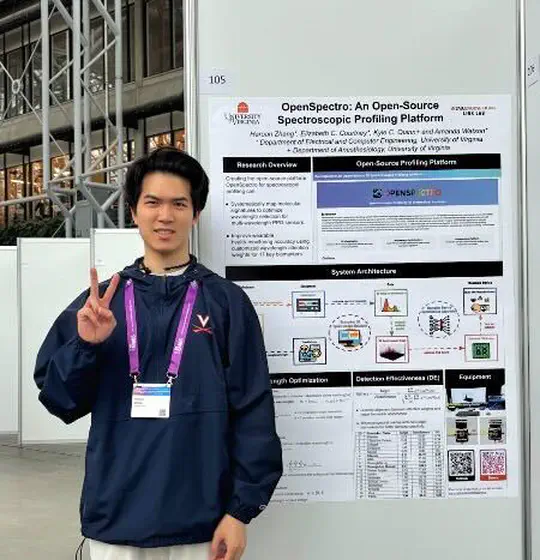
Amanda Watson is an Assistant Professor in Electrical and Computer Engineering at the University of Virginia, with joint appointments in Computer Science. She leads the Watson Research Lab within the UVA Link Lab, a multidisciplinary center for Cyber-Physical Systems (CPS) and Internet of Medical Things (IoMT) research. Her work bridges wearable technology with healthcare and athletic performance applications, focusing on noninvasive monitoring, physiological signal analysis, and safety-critical medical devices. She is also the cofounder and CEO of Luminosity Wearables, commercializing a noninvasive continuous glucose monitor. Education: PhD in Computer Science (2020) - College of William & Mary MSc in Computer Science (2016) - College of William & Mary Bachelors in Computer Science and Mathematics (2014) - Drury University Her research spans multiple domains including: Wearable spectroscopy for nutrition and skin health Machine learning for drug overdose and fall risk detection Biomechanical monitoring in sports medicine Wearable support for visual and neurological impairments IoMT device integration and analytics Recent publications (2024-2025) show strong emphasis on calibration-free physiological monitoring systems, with technical contributions in spectral analysis , multi-wavelength sensing , and rapid prototyping for healthcare wearables. Applications range from maternal health to gerontological social isolation detection. Lab and Team: The Watson Research Lab at UVA develops wearable solutions for clinical and athletic contexts, with ongoing collaborations in the PRECISE Center at University of Pennsylvania and LENS lab at William & Mary alumni network. She works with multidisciplinary teams including engineers, clinicians, and data scientists.