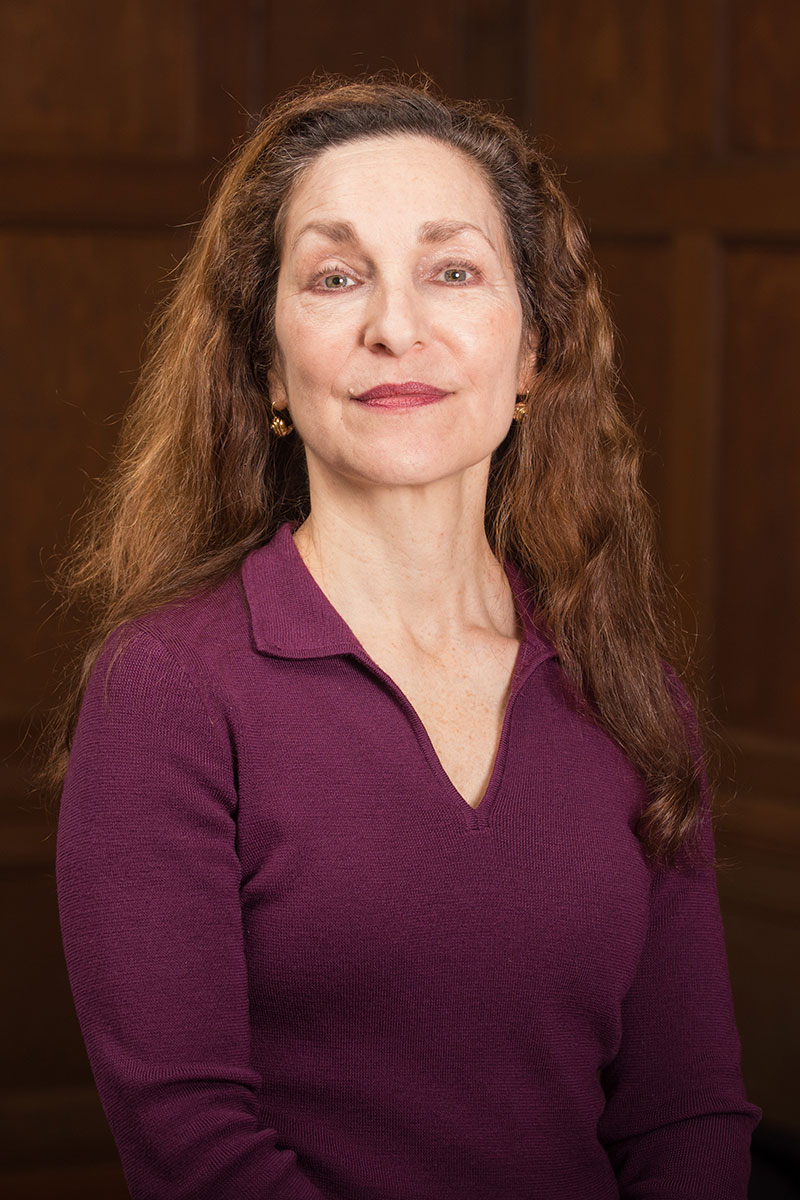
Dr. Kathryn Ready is a Professor in the Department of English at the University of Winnipeg. Her research focuses on eighteenth- and early nineteenth-century British literature, with specialized expertise in women writers, gender studies, religious and political discourse, and intersections between science and literature. Research Interests: Eighteenth-century British literary culture Dissenting intellectual traditions Gender and sexualities in Romanticism Anglo-French sociability networks Science-literature interplay in Enlightenment thought Awards: SSHRC Standard Research Grant for Aikin family monograph Teaching Areas: Eighteenth-century studies, novel development, women’s writing, and science-literature interdisciplinary approaches. Notable Trends in Recent Publications: Her scholarship reveals a sustained engagement with Dissenting family networks (e.g., Barbauld/Aikin), gendered critiques of political economy, and the epistemological intersections between literary imagination and scientific inquiry during the Enlightenment and Romantic periods. Articles also highlight her interdisciplinary methodologies, connecting visual culture, cartographic metaphors, and philosophical debates to literary analysis.
Kate Mitchell is a Professor of Literary Studies and Director of the Research School of Humanities and the Arts at Australian National University. She specializes in 19th- and 20th-century literary and cultural history, with a focus on neo-Victorian fiction, historical memory, and the intersection of art and narrative. Her work examines how fictional narratives reconstruct marginalized or contested pasts, particularly through Victorian and colonial contexts. Education: PhD (Literary Studies) from the University of Melbourne; BA (Hons) from ANU. Research interests include neo-Victorian fiction, historical fiction, Victorian Gothic, Jane Austen adaptations, and the ethics of representing past events. Her current project explores artistic representations in Victorian-themed contemporary fiction, focusing on figures like the Pre-Raphaelites. Her publications include History and Cultural Memory in Neo-Victorian Fiction and co-edited volumes like Reading Historical Fiction . She has contributed to journals such as Neo-Victorian Studies and Victoriographies . Awards: None explicitly listed. Editorial roles include the Neo-Victorian Series (Brill Rodopi) and Encuentros: Culturas y Literatura . Supervision: Active in guiding research students in literary studies. Advocates for the humanities' role in societal discourse.
Kim Larsen is a Lecturer at the Department of English, Faculty of Arts, Kwantlen Polytechnic University. They hold a BA from the University of Alberta and an MA in English Literature from McGill University, with a Ph.D. in progress at the University of Alberta. Kim has taught diverse undergraduate courses, including composition, contemporary Canadian women's fiction, Romantic and Victorian literature, Pre-Raphaelite poetry, and Gothic literature. Research Interests focus on Victorian literature and visual art, particularly the Pre-Raphaelites; women's literature; Gothic traditions; and theoretical frameworks of haunting. Their scholarly work intersects literary analysis with interdisciplinary studies in art and cultural history. Scientific Awards Shortlisted for Governor General's Award for Non-Fiction (2006) for Christine Wiesenthal's The Half-Lives of Pat Lowther Contact Email: kim.larsen@kpu.ca
Prof. Dr. Hans Rudolf Velten is a Professor of Medieval Studies at the University of Siegen, specializing in German Medieval Literature and its contemporary reception. Appointed to his position in 2014, he serves as Subproject Manager for "B04 Popular Middle Ages: Narratives and inventories of fantasy in the media network" and participates in multiple working groups including "Theories of the Popular," "Gender and Intersectionality," "Global Dimension of Popularity," and "Case studies." His institutional affiliation is with the Department of German Studies at the University of Siegen, where he contributes to various Collaborative Research Groups including "Popularizing the Past" and "Attribution practices and logics in popularization processes." Velten received his broad education in philology and historical sciences, studying in Frankfurt am Main, Charleston, and Naples. After completing his doctorate on German autobiography in the 16th century (1995), he worked as a DAAD exchange lecturer for German language and literature at the University of Pisa, followed by research associate positions in DFG research networks in Osnabrück, Potsdam, and Berlin. His work with the Berlin Collaborative Research Center "Cultures of the Performative" significantly shaped his approach to pre-modern literature as a form of knowledge embedded in historical-anthropological frameworks. Professor Velten's research focuses on the intersection of medieval literature and contemporary popular culture, particularly examining how medieval narratives are updated in modern fantasy literature and media. His work explores vulgarities and transgressive elements in late medieval culture, the visual representation of medieval themes in fantasy aesthetics, and the conceptual differentiation between medievalism, mediävalismus, and neomediävalismus. He investigates laughter, comedy, and bodily expressions in medieval literature and theater, building on his influential 2017 book "Scurrilitas. Das Lachen, die Komik und der Körper in Literatur und Kultur des Spätmittelalters und der Frühen Neuzeit." His recent scholarship examines the "popular Middle Ages" phenomenon, analyzing how medieval narratives function in contemporary fantasy novels and performances, with particular attention to the role these representations play in present-day cultural discourse. Velten's extensive publication record reveals a consistent focus on medieval reception studies, with recent work emphasizing the visualization of medieval themes in fantasy literature and art. His scholarship spans conceptual analyses of medievalism, examinations of vulgarities in late medieval culture, studies of medieval laughter and comedy, and investigations into the representation of medieval themes in contemporary fantasy. A notable trend in his recent work is the systematic exploration of how medieval narratives are adapted and transformed in modern popular culture, particularly through fantasy literature and visual media. His research demonstrates interdisciplinary engagement with performance studies, cultural history, visual culture, and conceptual history. Among his notable recent publications are the 2024 book "The Popularity of Others – Vulgarity at the End of Pre-Modernity" (co-authored with Joseph Imorde and Michael Multhammer), "Fantasy Aesthetics. Visualizing Myth and Middle Ages, 1880–2020" (2024, co-authored with Joseph Imorde), and "The Middle Ages and Popular Culture: Reception – Appropriation – Attention" (2024, co-authored with Theresa Specht). His 2017 monograph "Scurrilitas" established him as a significant voice in medieval laughter studies. As an academic advisor and researcher, Velten has supervised numerous collaborative projects focusing on medieval reception in popular culture. His current work with the Collaborative Research Center examines how medieval narratives function within contemporary media networks, particularly through fantasy literature and performance. He has developed research frameworks for analyzing the "popular Middle Ages" phenomenon, investigating both the historical roots of medieval narratives and their contemporary transformations. His methodological approach combines textual analysis with cultural theory, performance studies, and conceptual history to provide comprehensive examinations of medieval reception patterns. Professor Velten is actively involved with several research groups that examine different dimensions of popularity and medieval reception. His work with the "Popularizing the Past" Collaborative Research Group explores how historical narratives become popularized, while his participation in the "Gender and Intersectionality" working group brings critical perspectives to medieval reception studies. These collaborative efforts have produced significant interdisciplinary research at the intersection of medieval studies, cultural studies, and media studies.
Wendy Graham is Professor and Chair of English at Vassar College, specializing in British and American literature with expertise in gender theory, Victorian studies, and modernism. Her seminal works include Henry James’s Thwarted Love (1999), examining James through psychological and anthropological frameworks, and Critics, Coteries, and Pre-Raphaelite Celebrity (2017), analyzing Victorian artistic networks. Research explores: 19th-century constructions of sexuality and class Pre-Raphaelite media representation Modernist narrative innovation Publications focus on Henry James' literary evolution, economic themes in American realism, and Pre-Raphaelite cultural dynamics. Teaching integrates sociological frameworks like Veblen's leisure class theory with literary analysis.
Richard C. Harris is a Professor of Humanities at Webb Institute, where he has served since 1996 as Assistant Dean, Director of the Humanities Program, and Coordinator of Assessment. He previously held faculty positions at SUNY-Maritime College and Hofstra University, and his academic career spans over four decades. Ph.D. in English, UNC-Chapel Hill (1974) M.A. in English, UNC-Chapel Hill (1968) A.B. in English with Honors, Phi Beta Kappa, UNC-Chapel Hill (1967) Harris’s research focuses on Willa Cather’s literary works, particularly the interplay between historical contexts, chivalric traditions, and artistic influences in One of Ours . He explores connections between literature and visual arts, World War I narratives, and the cultural frameworks shaping Cather’s fiction. His recent publications analyze Cather’s use of medieval architecture, Wagnerian motifs, and editorial correspondence, reflecting trends in interdisciplinary scholarship and historical recovery. Harris has presented extensively at national and international conferences, including the International Willa Cather Seminar and Western Literature Association meetings. Certificate of Special Congressional Recognition (2019) John J. McMullen Professor of Humanities (2007) Distinguished Scholar, Willa Cather Scholar’s Summit (2004) Certificate of Commendation from AASLH (2002) Harris has chaired multiple committees at Webb Institute and co-edited the Scholarly Edition of Willa Cather’s One of Ours . He coordinates the Zeien Lecture Series and advises students on professional communication, blending pedagogy with administrative leadership.
Gayle Seymour is a Professor and Associate Dean affiliated with the University of Central Arkansas (UCA). She holds positions in the Department of Art & Design within the College of Arts, Humanities, and Social Sciences. Her research focuses on Art History, with specialization in the Pre-Raphaelites and Public Art. PhD - University of California, Santa Barbara MA - University of California, Santa Barbara BA - University of California, Santa Barbara Her scholarly interests explore the cultural and historical contexts of Pre-Raphaelite movements and the role of public art in society. While no specific publications or grants are listed, her work contributes to the academic discourse within art history.
Michele Martinez is a Senior Lecturer in the English Department at Boston University. She holds an A.B. from Stanford University and M.A./Ph.D. from Yale University, both in English. Education: A.B. in English, Stanford University M.A. and Ph.D. in English, Yale University Her research focuses on interdisciplinary intersections in Victorian culture, particularly analyzing poetry, painting, and photography through the lens of multimediality. She is known for her innovative work on Victorian comics, exemplified by her award-winning 2018 article exploring Dante Gabriel Rossetti’s visual-literary experiments. Teaching interests include dystopian literature and film, family narratives, and Victorian adaptations in contemporary media. Her scholarly contributions bridge literary criticism and visual culture studies. Scientific Awards: Best Essay Prize, Northeast Modern Language Studies Association (2018) Her academic career spans teaching roles at Harvard University and Trinity College, with a consistent focus on integrating historical and visual methodologies into literary analysis.
Andrea Rager is an Associate Professor in the Department of Art History and Art at Case Western Reserve University. She also serves as the Associate Director for Fine Arts at the Center for Medicine, Society and Culture at the CWRU School of Medicine. Education: Ph.D., Yale University (2009) B.A., Pomona College Dr. Rager specializes in 19th- and early 20th-century British and European art, with a focus on Edward Burne-Jones. Her research spans Pre-Raphaelitism, Aestheticism, the Arts & Crafts Movement, history of photography, art and medicine, eco-criticism, and decolonial approaches. Her work interrogates imperial legacies in academia and museums while exploring intersections of art with social justice and environmental issues. Her publications include the 2022 monograph The Radical Vision of Edward Burne-Jones and co-curated exhibitions like Edwardian Opulence (2012) and Shadows and Dreams (2015). Recent projects include the 2019 digital tour The Age of Empires funded by a Mellon Foundation Grant. Scientific Awards & Fellowships: Carl F. Wittke Award for Excellence in Undergraduate Teaching (nomination) John S. Diekhoff Award for Distinguished Graduate Student Teaching (2016) Robert W. Wark Fellowship at the Huntington Library Paul Mellon Centre Junior Fellowship Andrew W. Mellon Fellowship in Humanistic Studies Dr. Rager mentors graduate students in European art of the long 19th century through object-driven social art history across media. Her work extends into medical humanities via the CWRU School of Medicine’s Center for Medicine, Society and Culture.
Jeremy Melius is a Lecturer in the Department of History of Art at the University of York, specializing in modern British art and criticism since the 1840s. His research explores the entanglements of word and image, particularly in anglophone art writing, and examines themes such as affect, ethics, environment, and empire. He joined the university in 2024 and holds a BA from Yale University and a PhD from the University of California, Berkeley. His work has been supported by institutions like the Huntington Library, the American Council of Learned Societies, and the Clark Art Institute. He focuses on figures such as John Ruskin and Walter Pater, alongside topics like the history of connoisseurship and the relationship between photography and sculpture. Current projects include The Invention of Botticelli , reinterpreting the artist’s rediscovery in the 19th century, and a study on Ruskin’s complex engagement with art history. Jeremy’s articles and book projects reflect his interdisciplinary approach, blending art history with literary and cultural studies. He has organized conferences, such as Description and the Art of Response at the University of Oxford and a Study Day on John Ruskin at the Morgan Library & Museum. His invited lectures include the Tomás Harris Lectures at University College London and the Richard McDougall Lecture on British Watercolour at The Courtauld Institute of Art.
Peter Trippi is an Honorary Visiting Fellow in the Department of the History of Art at the University of York. Based in New York City, he is an arts professional with extensive experience in museums, independent curating, fundraising, art journalism, and editing. His career spans leadership roles at major art institutions, independent curatorial projects, and editorial work. Trippi's educational background includes: BA from College of William and Mary, Virginia MA from New York University MA from Courtauld Institute of Art Trippi's primary research focuses on British art from c.1850 to c.1925, particularly members of the Royal Academy who worked in the academic tradition during the late nineteenth century. He has deep expertise in the Pre-Raphaelites, Lawrence Alma-Tadema, and John William Waterhouse. His research also encompasses the history of collecting and museums, the evolution of artists' studio-houses, and connections between British artists and the Paris art world. As Editor-in-Chief of Fine Art Connoisseur magazine, he has developed significant knowledge of contemporary realist art in the United States. Trippi's publications reveal a consistent focus on nineteenth-century British academic art, with particular emphasis on Waterhouse and Alma-Tadema. His work bridges historical scholarship with contemporary art appreciation, showing how Victorian art continues to influence modern movements. His exhibition catalogs and scholarly articles demonstrate expertise in both academic art history and accessible art writing for broader audiences. Among his notable recognitions: Victorian Society in America's William E. Fischelis Prize for best book on Victorian art or architecture (2003) Longlisted for William MB Berger Prize for British Art History (2003) Finalist in the 2017 Global Fine Art Awards program for Best Impressionist and Modern Solo Artist Exhibition Trippi has served as a prominent advisor and collaborator on major international exhibitions, working with institutions including the Groninger Museum, Royal Academy of Arts, Montreal Museum of Fine Arts, Fries Museum, Österreichische Galerie Belvedere, and Leighton House Museum. His fundraising expertise developed during his tenure at the Brooklyn Museum of Art has supported numerous art initiatives. He has held leadership positions in several art organizations including President of the Historians of British Art (2011-2013) and President of the Association of Historians of Nineteenth-Century Art (2013-2019). As Editor-in-Chief of Fine Art Connoisseur Magazine, Trippi leads a publication serving North American collectors of representational art. He is also an associate brother of the Art Workers' Guild (London) and a member of the Century Association (New York), connecting him to vibrant artistic communities on both sides of the Atlantic.
Dr. Anna Antonowicz is an Assistant Professor at the Department of English Literature and Culture, Faculty of Humanities, John Paul II Catholic University of Lublin. She specializes in cultural studies with a focus on Victorian aesthetics, fashion history, and media representations of gender and subcultures. Research Interests: Her work explores the intersection of cultural identity, historical fashion, and societal norms, particularly examining how Victorian design reform, subcultural expressions (punk, dandyism), and media narratives shape perceptions of gender, class, and modernity. Publications Overview: Antonowicz's recent publications analyze Victorian dress reform, industrial aesthetics, and subcultural fashion. Key themes include anti-fashion movements, cultural hierarchies, and the sociopolitical dimensions of design, with recurring explorations of gender performativity and class identity. Awards and Fellowships: Medal of the National Education Commission (2021) Erasmus+ Mobility Fellowships (2017, 2018, 2019, 2021, 2022, 2023) for teaching at institutions like Salem State University, USA Teaching and Advising: She supervises numerous bachelor's and master's theses analyzing cultural representations in film, literature, and subcultures. Topics include gender stereotypes in media, class dynamics in British/American productions, and subcultural identity (punk, metal, hip-hop).
Anne-Florence Gillard-Estrada is a Professor at the University of Rouen Normandy, affiliated with the UFR Letters and Human Sciences and the Department of English. She holds accreditation to supervise research in Anglophone Studies and is a member of ERIAC (Équipe de Recherche Interdisciplinaire sur les Aires Culturelles). Her expertise lies in 19th-century British literature and visual arts, with a focus on the Aesthetic Movement, Hellenism, and Pre-Raphaelitism. Education includes a PhD from the University of Paris VII-Denis Diderot (2002) on Walter Pater’s Hellenism and a doctoral supervision accreditation (2017). She teaches Victorian literature, Gothic studies, and visual arts history. Her research explores intersections between literature, art criticism, and aesthetics, particularly in Victorian contexts. Gillard-Estrada has authored/co-edited numerous volumes, including The Greek Body in Victorian Painting (2024) and Beyond the Victorian/Modernist Divide (2018). She actively contributes to academic governance, serving as Vice-President for Culture at the University of Rouen and as a member of the French National Council of Universities (CNU, 11th section). Her work bridges literary and visual studies, analyzing representations of antiquity, gender, and cultural mythologies in Victorian art. She organizes international conferences, such as the 2024 colloquium on Whistlerism, and collaborates with institutions like the Musée des Beaux-Arts de Rouen.
Dr. Serena Trowbridge is a Reader in Victorian Literature at Birmingham City University (BCU). She holds a Senior Fellowship from the Higher Education Academy and serves as Vice-President of the Pre-Raphaelite Society and Senior Vice-President of the Birmingham & Midland Institute. Previously, she served as Editor of the Review of the Pre-Raphaelite Society from 2004 to 2017. Dr. Trowbridge earned her undergraduate degree in English and Art History from King's College London, followed by an MA in Textual Studies at the University of Birmingham. She completed her PhD, titled ' Christina Rossetti's Fractured Gothic ', at Birmingham City University in 2010 under the supervision of Professor Fiona Robertson. Her monograph Christina Rossetti's Gothic was published by Bloomsbury in 2013. Her research focuses on Gothic literature, graveyard poetry, Pre-Raphaelitism in art and literature, lunatic asylums, ecocriticism, and 18th- and 19th-century literature. She employs interdisciplinary approaches, blending literary analysis with art history and cultural studies. Her work explores themes of gender, identity, and the intersections between literary movements and societal contexts. Senior Fellow of the Higher Education Academy Dr. Trowbridge supervises PhD candidates researching topics such as Pre-Raphaelite women, Walter Bagehot, Swinburne, and weather poetry. She has extensive experience as an external examiner for doctoral theses. While specific grant details are not provided, her research aligns with BCU's themes of Creative Cultures and Equitable Societies, emphasizing cultural heritage and inclusive scholarship. As part of BCU's vibrant academic community, Dr. Trowbridge contributes to interdisciplinary research initiatives within the Birmingham Centre for Media and Cultural Research (BCMCR), though her primary focus remains within literary studies.
Fabio Camilletti is Professor of Italian Studies and Literature at the University of Warwick, where he has taught since 2010. He holds dual PhDs from the Scuola Normale Superiore di Pisa/Paris Sorbonne (Modern Literary Studies) and the University of Birmingham (Italian Studies). His academic journey includes visiting positions at Oxford, Berlin Institute for Cultural Inquiry, IULM Milan, and Università del Piemonte Orientale, with an upcoming Visiting Research Fellowship at the University of London (2024-25). Education: BA/MA in Modern Literary Studies, University of Pisa (1998–2002) Diploma in Philology, Scuola Normale Superiore di Pisa (1998–2003) DEA in French/Comparative Literature, Paris Sorbonne (2002–2003) PhD in Philology/Literary Studies, Scuola Normale Superiore di Pisa/Paris Sorbonne (2003–2006) PhD in Italian Studies, University of Birmingham (2007–2011) Research Interests: Camilletti's work bridges Italian literature, Gothic studies, and occultism. His three primary research clusters are: Italian/Comparative Romanticism (Leopardi, Manzoni), Dante's literary afterlife (Vita Nova translations, Rossetti), and Gothic/Occulture (1960s–2000s Italian media/politics). He explores spectrality, intertextuality, and transnational cultural exchanges. Publication Trends: His recent books (2013–2024) analyze Gothic subversion in canonical Italian texts, Dante's modern reinterpretations, and occult symbolism in postwar culture. Works like Italia lunare (2018) and Spettri familiari (2024) highlight his focus on literary hauntology and metapsychics. Awards: Edinburgh Gadda Prize-Crolla Amato Prize (5th place ex aequo) for Italia lunare (2018) Grants & Advising: Major grants include AHRC Networking Grant (Roman Modernities, 2012–15) and BA/Leverhulme Grant (Fantasmagoriana and the Others, 2018–20). He has supervised 10+ PhD students on topics ranging from Italian Gothic to Leopardi’s visual culture. Professional Networks: He collaborates with the Laboratorio Leopardi (Rome), Leopardi Centre (Birmingham), and REELC/ENCLS. He serves on editorial boards for Italian Culture and Leopardiana and is an honorary fellow at CRLC Sorbonne.