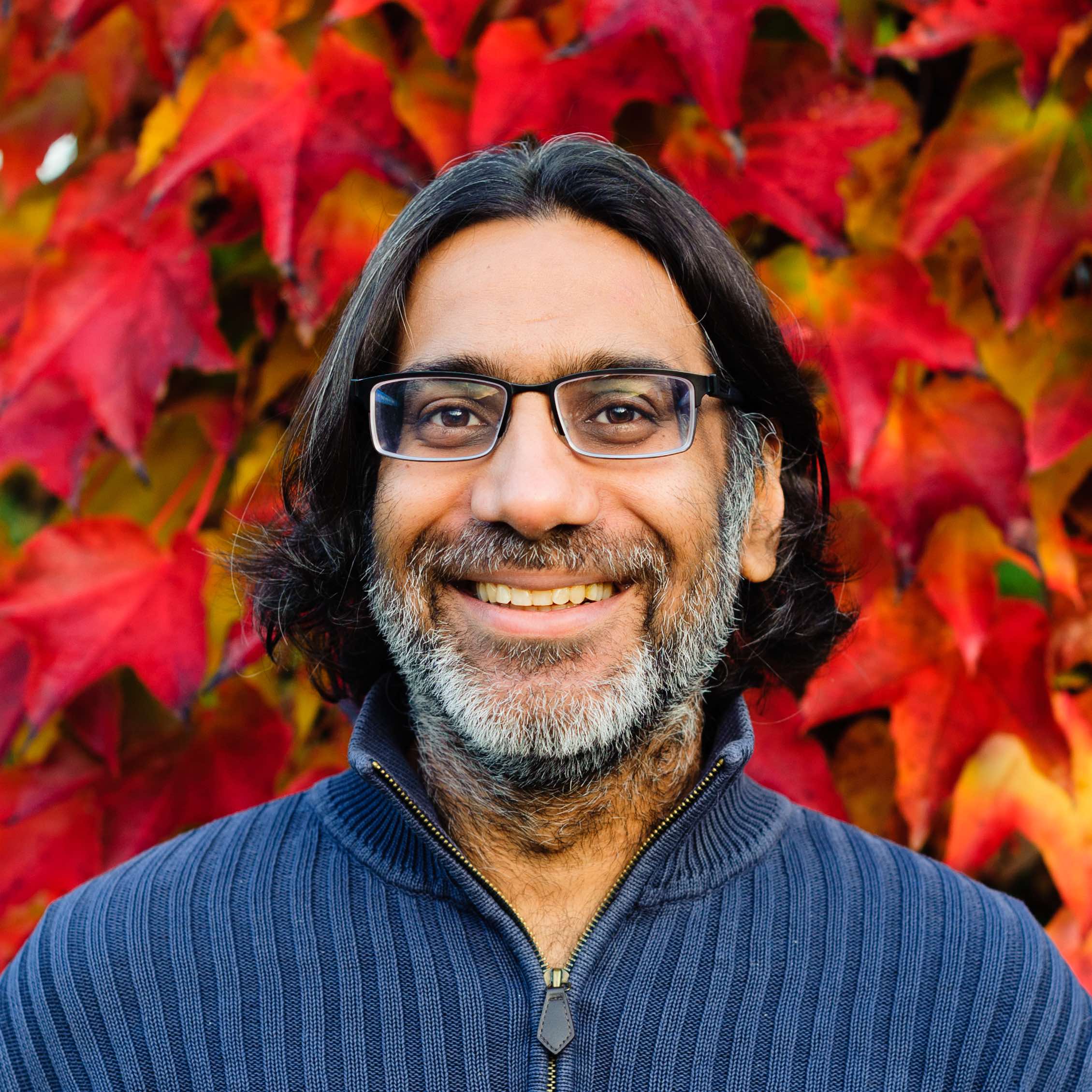
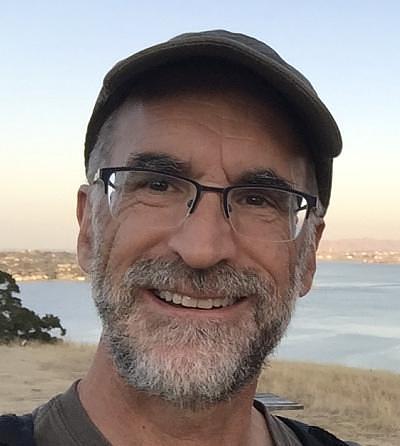
Michael Lucey is the Sidney and Margaret Ancker Chair and Distinguished Professor of French and Comparative Literature at the University of California, Berkeley. His work bridges French literature from the 19th to 21st centuries with social theory, sexuality studies, and linguistic anthropology. He has authored the critically acclaimed What Proust Heard: Novels and the Ethnography of Talk (2022) and Thinking about Sexuality with Novels (forthcoming). As founding director of the Center for the Study of Sexual Culture , he has shaped interdisciplinary research in queer theory and gender studies. Current research focuses on novels as ethnographic tools Specializes in Proust, Balzac, Woolf, and contemporary French fiction Translation work includes Didier Eribon and Édouard Louis His recent articles explore phonetics in narrative, readability frameworks, and sociological implications of literary form. He actively engages with comparative methodologies and critical theory, while his teaching spans British and American literature’s intersections with French modernism. Lucey’s academic leadership includes directing Berkeley’s Center for the Study of Sexual Culture, which supports global discourse through fellowships and conferences. His office hours are held in Dwinelle Hall and via Zoom. Contact: mlucey@berkeley.edu
University of California, Los AngelesUnited States
H. Samy Alim is a Professor and David O. Sears Presidential Endowed Chair in the Division of Social Sciences at UCLA, holding a joint appointment in the Department of Anthropology. He serves as Associate Director of the Ralph J. Bunche Center for African American Studies and leads the UCLA Hip Hop Initiative. Alim’s research focuses on Hip Hop Culture, Black Language, and Culturally Sustaining Pedagogies, with over 25 years of scholarship in these areas. His work bridges academia and activism, emphasizing Hip Hop’s transformative role in global social justice movements. Alim earned his PhD in Anthropology from Stanford University (2003), following MA (2002) and BA (1999) degrees. His academic contributions include twelve authored/edited books, such as Freedom Moves (2023) and Articulate While Black (2012). His research spans Hip Hop’s linguistic innovations, racialized language politics, and its pedagogical potential in education. Key projects include ethnographic studies in Cape Town, South Africa, and collaborative initiatives like the UC Press Hip Hop Studies Book Series. He co-edits the Oxford Handbook of Language and Race and directs the Center for Race, Ethnicity, and Language. Alim has engaged with global Hip Hop artists (e.g., Chuck D of Public Enemy) to co-produce knowledge, emphasizing Hip Hop as a site of theorizing and activism. His teaching and research highlight intersections of language, race, and power, advocating for pedagogies that sustain cultural identities while fostering equity. Collaborations with organizations like Heal the Hood in South Africa reflect his commitment to community-driven scholarship.
Sara Ng is a Visiting Assistant Professor in the Department of Linguistics at Western Washington University. She holds a PhD in Linguistics from the University of Washington (2024) and an MS in Computational Linguistics (2023), alongside a B.A. in Linguistics and B.S. in Applied Mathematics from the University of Utah (2017). Her research focuses on computational models of prosody, speech perception, and their integration with speech technologies like automatic speech recognition (ASR). She investigates how prosody conveys pragmatic meaning, influences conversational dynamics, and impacts listeners with hearing impairments. Her work bridges computational methods and linguistic theory, addressing challenges in clinical and technological applications. Education PhD in Linguistics, University of Washington, 2024 MS in Computational Linguistics, University of Washington, 2023 B.A. in Linguistics (Honors), B.S. in Applied Mathematics, University of Utah, 2017 Research Interests Ng’s research explores computational linguistics, prosody modeling, speech technology, and hearing impairment studies. She develops methods to leverage prosodic cues for tasks like punctuation prediction and investigates the impact of hearing loss on speech perception. Grants & Awards 2024: Nominated for UW Excellence in Teaching Award 2023: Excellence in Linguistic Research Graduate Fellowship 2017: University of Utah Top Scholar Award Teaching Ng teaches courses in phonetics, computational linguistics, and linguistics for honors students. She emphasizes pedagogical innovation and inclusivity, with experience as an instructor of record and teaching assistant at both Western Washington University and the University of Washington. Labs & Collaborations She collaborates with the TIAL Lab (University of Washington), Phonetics Lab, Hearing Aid Laboratory (Northwestern University), and CLILLAC-ARP (Université Paris Cité). Her work intersects with clinical and engineering domains, addressing real-world applications of speech technology.
Elaine Francis is a Professor of English and Linguistics at Purdue University's College of Liberal Arts, where she serves as Associate Head of the Department of English and directs the Experimental Linguistics Lab. She holds additional affiliations as an Affiliate Faculty Member in the Department of Linguistics and a Courtesy Faculty Member in the Department of Speech, Language, and Hearing Sciences. Ph.D. in Linguistics, University of Chicago (1999) B.A. in Linguistics, College of William and Mary (1993) MA in Linguistics, University of Chicago (1995) Former Assistant Professor at the University of Hong Kong (1999-2002) Professor Francis's research focuses on syntax and its interfaces with semantics, discourse information structure, and language processing in production and comprehension. She employs experimental methods to investigate syntactic, semantic, discourse-pragmatic, and cognitive factors underlying complex sentence structures. Her primary research areas include word order alternations, filler-gap dependencies, resumptive pronouns, and grammatical acceptability. She examines how various factors contribute to grammatical alternations in language use and explores how processing pressures in production and comprehension contribute to grammatical conventions. Her recent publication record shows consistent output across multiple linguistic subfields, with a strong emphasis on experimental syntax and psycholinguistics. Her 2022 book, Gradient Acceptability and Linguistic Theory , represents a significant contribution to understanding acceptability judgment tasks in relation to syntactic theory. Her work spans theoretical syntax, experimental linguistics, second language acquisition, and cross-linguistic comparison, often bridging the gap between theoretical frameworks and empirical evidence. Regularly teaches short courses at Linguistic Society of America Linguistic Institutes Member of Linguistic Society of America Ethics Committee Editorial board member of Glossa Psycholinguistics Co-editor of Polymorphous Linguistics: Jim McCawley's Legacy (2005) Co-editor of Mismatch: Form-Function Incongruity and the Architecture of Grammar (2003) Professor Francis actively supervises graduate students in linguistics, though she has indicated she will be unable to take on new graduate students for the 2025-2026 academic year. She has received research support for her experimental work, particularly for investigating syntactic phenomena through controlled experiments and corpus analysis. Her collaborative work extends across multiple institutions and disciplines, including collaborations with researchers in computational linguistics, cognitive science, and clinical linguistics. She directs the Experimental Linguistics Lab at Purdue University, which conducts research on syntactic processing using various experimental methodologies. The lab investigates how speakers produce and comprehend complex sentence structures, with particular attention to how grammatical knowledge interacts with processing constraints. Current projects include research on relative clauses, syntactic islands, and acceptability gradient phenomena across multiple languages.
Jiayi Lu is a PostDoc Researcher at the University of Pennsylvania School of Arts & Sciences, working under the supervision of Dr. Julie Anne Legate. Her research focuses on syntax, psycholinguistics, and Chinese linguistics, with a particular emphasis on grammaticality judgments, satiation effects, and island phenomena. She has contributed to understanding how sentence processing and discourse factors influence syntactic structures. Her research interests encompass syntax, psycholinguistics, and formal semantics, with a focus on exploring grammaticality illusions, the role of discourse in syntactic constraints, and cross-linguistic variations in Chinese. Key areas include the study of extraction islands, coordination effects, and the cognitive mechanisms underlying sentence processing. Her recent work (2020-2024) demonstrates a strong focus on syntactic satiation, island effects, and experimental methods in syntax. Publications analyze both English and Chinese data, investigating how linguistic structures are processed and judged by speakers. Trends include exploring the generalizability of satiation across island types and the interplay between discourse and syntactic constraints. Dr. Lu has not listed any scientific awards or grants in the provided information. Dr. Lu has not listed any advisees or grants in the provided information.
Steven Jackson is a Professor of Information Science and Science and Technology Studies at Cornell University's Bowers College of Computing and Information Science, with additional graduate field appointments in Communication and Public Affairs. Since July 2023, he has served as Vice-Provost for Academic Innovation at Cornell, and previously held leadership positions as Chair of Information Science and Dean of William Keeton House. His work bridges academic research with significant institutional leadership in higher education innovation. Dr. Jackson's research focuses on critical intersections of technology, society, and the environment, with three primary strands: technology ethics, law and policy; maintenance, repair and sustainability; and technology, inequality and global development. His work draws from American pragmatism, political economy, and science and technology studies, integrating methods from sociology, anthropology, philosophy, and media studies. He is particularly interested in how computing practices meet social and material worlds, with implications for infrastructure, collaboration, sustainability, and cultural practice. His recent publications reveal a strong emphasis on repair as both theoretical concept and practical methodology, exploring 'ordinary hope' as a framework for technological engagement and examining unmaking as a necessary counterpart to design. The research spans diverse geographical contexts from the global North to South, addressing caste dynamics in computing, digital authoritarianism, and infrastructure challenges in developing contexts. Dr. Jackson has received significant recognition including an NSF CAREER award and more than twenty paper awards at leading computing and information science venues. His research has been supported by major organizations including the U.S. National Science Foundation, Social Science Research Council, Ford Foundation, Sloan Foundation, World Bank, Intel Research, Atkinson Center for Sustainability, and the Canadian Social Science and Humanities Research Council. As an advisor, Dr. Jackson has mentored numerous graduate students who have gone on to prominent positions at institutions worldwide. He currently advises Jen Liu, Amy Cheatle, Daniel Mwesigwa, Johan Michalove, and Ritik Batra, while his former students include Palashi Vaghela (Assistant Professor at Simon Fraser University), Samir Passi (Responsible AI Researcher at Microsoft), Maggie Jack (Assistant Professor at NYU), and Ranjit Singh (Senior Researcher at Data and Society). Dr. Jackson convenes the Computing On Earth Lab, an experimental collaboration bringing together social scientists, humanists, artists, and engineers to rethink the material and planetary foundations of computing. The lab reflects his commitment to interdisciplinary approaches that address computing's environmental impacts and sustainability challenges.
David Trend is a Professor and former Chair of the Department of Art at the Claire Trevor School of the Arts, University of California, Irvine. He previously served as Dean of Creative Arts at De Anza College and Graduate Program Coordinator at San Francisco State University's Inter-Arts Center. Trend specializes in visual culture, cultural studies, and critical pedagogy, teaching courses like Language and Vision in Everyday Life and Media, Art, and Technology . His research bridges media analysis, education policy, and radical democracy. He has authored over 200 articles and 16 books, including Elsewhere in America and Reading Digital Culture . As a Getty Scholar, his work explores cultural belonging, digital media impacts, and educational innovation. He advises on state arts councils and the National Endowment for the Arts. His academic contributions span visual arts education, media literacy, and the sociopolitical role of art. Education: - MFA in Photography, Visual Studies Workshop Program, SUNY Buffalo - PhD in Curriculum Theory, Miami University Research Interests: Trend's work examines cultural crises of meaning, digital media's societal impact, and the intersection of art with education and activism. He critiques gentrification's artistic drivers, explores identity formation in digital spaces, and advocates for culturally democratic pedagogical frameworks. Publications Trends: Recent works focus on gentrification's artistic dimensions ( 2022 ), creativity crises ( 2020 ), and belonging in fragmented cultures ( 2016 ). Earlier work addressed media violence myths ( 2007 ), digital literacy ( 2001 ), and radical democracy ( 1996 ). His writing spans academic critiques to practical pedagogical solutions. Awards: Getty Scholar Grants & Consulting: Extensive NEA collaborations, foundation advising, and state arts council consultations. His work emphasizes bridging educational institutions with Silicon Valley corporations through multimedia partnerships. Labs/Teams: Affiliated with UCI's University Art Galleries, Institute and Museum of California Art, and Electronic Art + Design programs.
Noah D. Goodman is Associate Professor of Psychology and Computer Science, and Linguistics (by courtesy) at Stanford University. He directs the Computation & Cognition Lab (CoCoLab) at Stanford, where he leads research on computational models of cognition, integrating logic and probability. His work spans cognitive psychology, linguistics, and computer science. Primary Appointment: Psychology Department By Courtesy: Computer Science Department and Linguistics Department Director: Computation & Cognition Lab (CoCoLab) Goodman's research focuses on computational models of cognition, with particular interest in probabilistic approaches to understanding human thought. His work integrates logic and probability to model concepts, categorization, intuitive theories, causal learning and reasoning, social cognition (including reasoning about others' goals, beliefs, and actions), cognitive development (especially acquisition of abstract knowledge), and natural language semantics and pragmatics. He has made significant contributions to the development of probabilistic programming languages as tools for cognitive modeling. His recent publications demonstrate a strong trend toward integrating probabilistic modeling with linguistic theory and social cognition. The articles span computational cognitive science, natural language processing, and artificial intelligence, with a consistent theme of using probabilistic frameworks to understand complex cognitive phenomena. Many papers explore how humans make inferences under uncertainty across different domains. Goodman teaches several courses at Stanford including Language and Thought (Psych 132), Computation and Cognition: the Probabilistic Approach (Psych 204/CS 428), Foundations of Cognition (Psych 205), and Introduction to Cognitive Science. He has also led seminars on topics ranging from natural and artificial intelligence to the science of meditation.
Christopher Potts is Professor and Chair of Linguistics at Stanford University, with a courtesy appointment as Professor of Computer Science. He serves as Director Emeritus of the Stanford Center for the Study of Language and Information (CSLI) and leads the Pragmatic Enrichment & Contextual Interface Lab. His work bridges theoretical linguistics and computational approaches to language understanding. Education: B.A. in Linguistics from New York University (1999) Ph.D. in Linguistics from University of California, Santa Cruz (2003) Potts' research focuses on how computational methods can illuminate linguistic phenomena, particularly in the areas of semantics, pragmatics, and sentiment analysis. His work explores how emotion is expressed in language and how linguistic production and interpretation are influenced by context. He has made significant contributions to understanding conventional implicatures, sentiment analysis frameworks, and the application of neural networks to linguistic problems. His recent work has increasingly focused on the interpretability of large language models and the development of frameworks like DSPy for building reliable AI systems. An analysis of Potts' recent publications reveals a strong trend toward the intersection of linguistic theory and practical AI applications. His work spans theoretical linguistics (e.g., compositionality, preposing constructions), neural network interpretability, and practical NLP systems (e.g., ColBERT, DSPy). The research demonstrates consistent focus on making language models more transparent, controllable, and linguistically informed, with particular attention to how context shapes meaning. Scientific Awards: Best Paper Award at 2024 ACL for 'Mission: Impossible Language Models' Outstanding Paper Award at 2024 ACL for 'CausalGym' ACL Test of Time Award 2023 Dean's Award for Distinguished Teaching (2015-2016) Best New Data Set or Resource Award at 2015 EMNLP Potts has secured numerous research grants as PI or Co-PI from major organizations including Google, Amazon, NSF, Office of Naval Research, and Stanford's HAI institute. His current projects focus on evaluation of retrieval-augmented generation systems, LLM-mediated communication in organizations, interpretability techniques for language models, and frameworks like DSPy for building next-generation AI systems. He has mentored numerous researchers who have gone on to make significant contributions in NLP and computational linguistics. As Director of CSLI (2013-2020) and current Chair of Linguistics at Stanford, Potts has played a key leadership role in shaping interdisciplinary research at the intersection of language, computation, and cognition. His Pragmatic Enrichment & Contextual Interface Lab continues to be a hub for innovative research combining formal linguistic theory with cutting-edge computational methods.
Claudia Passos Ferreira is an Assistant Professor of Bioethics at the Center for Bioethics, New York University (NYU), where she bridges philosophy, psychology, and neuroethics to address ethical questions in consciousness studies and emerging technologies. Education: MA and Ph.D. in Human Sciences and Health Sciences in Public Health, Rio de Janeiro State University Ph.D. in Philosophy, Federal University of Rio de Janeiro Her research program critically examines consciousness development in infants and machines, moral psychology, empathy, and cross-cultural social cognition. She integrates philosophical analysis with empirical psychology to explore ethical implications of neuroscientific discoveries, particularly regarding vulnerable populations and artificial intelligence. Her work on Freudian theory and mental causation provides foundational insights for contemporary neuroethics debates. Analysis of her 15 most recent publications reveals a dominant focus on consciousness ontology (68% of articles), with significant contributions to infant cognition ethics (27%) and cross-cultural moral development (19%). Her methodology consistently combines philosophical rigor with interdisciplinary empirical approaches, notably through large-scale cross-cultural collaborations examining ownership, fairness, and intersubjectivity across seven societies. Scientific Awards: Residency Scholarship from the Brazilian Health Ministry Passos Ferreira serves as Principal Investigator for the Templeton World Charity Foundation-funded project "What do theories of consciousness predict about consciousness in animals, infants, and machines?". Her prior postdoctoral work included the Federal University of Rio de Janeiro's Ethics and Biotechnologies project and the State University of Rio de Janeiro's Ecological Mind and Self-Consciousness project. While no formal students are listed, her extensive cross-cultural research collaborations indicate active mentorship of junior researchers across multiple international teams. Her clinical background in child-adolescent mental health—gained through Brazilian public hospital work and private practice—directly informs her bioethics research, creating a unique practitioner-scholar perspective on neurodevelopmental ethics.
Anna Berge is a Professor of Linguistics at the University of Alaska Fairbanks, directing the Alaska Native Language Archive. She holds a PhD from the University of California, Berkeley (1997), specializing in the documentation, description, and historical analysis of Eskimo-Aleut languages, particularly Unangam Tunuu (Aleut). Her research integrates linguistics with archaeology, genetics, and environmental studies to explore prehistoric language contact and divergence patterns along the North Pacific Coast. Her work focuses on morphosyntax, discourse analysis, and language revitalization for highly endangered languages. She teaches courses in Morphology, Field Methods, Community Language Documentation, and Eskimo-Aleut Linguistics, emphasizing practical skills for language preservation. Berge's multidisciplinary approach addresses Aleut language divergence from Eskimoan branches, leveraging data from multiple disciplines to reconstruct linguistic prehistory. She actively collaborates with Indigenous communities in Russia, Alaska, Canada, and Greenland to archive linguistic materials and support language maintenance initiatives.
Pranav Anand is a Professor in the Department of Linguistics at the University of California, Santa Cruz (UCSC). He currently serves as the Faculty Director of the Humanities Institute at UCSC since July 2023. His research focuses on the interplay between context, interpretation, and grammatical perspective, particularly in areas like de re/de se contrasts, evaluative predication, and indexical shift. He has contributed to studies on narrative structures, evidential restrictions, and the syntax-semantics interface in sluicing. Dr. Anand has taught a variety of courses including Ling 119: Narratives , Ling 231: Semantics A , and special topics like Invented Languages: From Elvish to Esperanto . His work bridges theoretical linguistics with computational methods, evidenced by collaborations in projects such as the Santa Cruz sluicing dataset and analyses of political discourse in online commentary. His research has been published in journals like Linguistics and Philosophy , Language , and Discourse and Society , with a focus on semantics, pragmatics, and narrative linguistics. He has also contributed to computational linguistics initiatives, including the development of annotated corpora for sentiment analysis and argumentation studies. Dr. Anand's academic contributions span both theoretical exploration and applied computational linguistics, reflecting his interdisciplinary approach to understanding language structure and usage.
John MacFarlane is a Professor of Philosophy at the University of California, Berkeley , with affiliations to the Group in Logic and the Methodology of Science and co-organizer roles in the Meaning Sciences Club and Townsend Center Working Group . His research spans philosophy of language, philosophical logic, metaphysics, epistemology, philosophy of mathematics, history of logic , and ancient philosophy , particularly Aristotle . He has held visiting positions at institutions like École des Hautes Études en Sciences Sociales (EHESS), Paris . Education : Ph.D. in Philosophy (2000, University of Pittsburgh), M.A. in Classics (1997) and Philosophy (1994), A.B. summa cum laude in Philosophy (1991, Harvard). Research Interests focus on semantic relativism , particularly assessment sensitivity as explored in his book Assessment Sensitivity: Relative Truth and Its Applications (Oxford, 2014). He investigates how epistemic modals and vagueness interact with truth evaluation. His work in philosophical logic includes a textbook Philosophical Logic: A Contemporary Introduction (Routledge, 2021). Secondary interests include ancient philosophy (Aristotle, Plato), formal logic , and fiddlosophy . Article Trends reveal contributions to relativism , epistemic modals , vagueness , and logicism . His recent work (2025) examines Plato’s Protagoras and belief utility , while 2022–2020 articles address semantic indecision and probabilistic knowledge . Earlier works (2008–2000) include foundational studies on Frege, Kant, and Aristotle . Scientific Awards include a 2023 Residential Fellowship at Wissenschaftskolleg, Berlin (declined), 2016–17 Fellow at IEA Paris , and 2015 American Academy of Arts and Sciences membership . He has received multiple Humanities Research Fellowships at Berkeley (2016, 2008, 2003) and Research Enabling Grants (2000–2009). Advising includes supervising 15+ PhD students in areas like logic, epistemology, and philosophy of language . Notable advisees include Richard Lawrence (2017) and Sophie Dandelet (2021). He also guided honors theses at Berkeley, such as Benjamin Logan’s work on epistemic modals (2018). Labs and Teams involve co-organizing the Townsend Center Working Group in History and Philosophy of Logic, Mathematics, and Science and contributing to the Group in Logic and Methodology of Science . His interdisciplinary approach integrates philosophy, logic, and computational tools , including creating Pandoc for document conversion.
Joyce Y. Chai is a Professor in the Department of Electrical Engineering and Computer Science at the University of Michigan. She is an Associate Director of the Michigan Institute for Data & AI in Society (MIDAS) and affiliated with the Michigan Robotics Institute. Her research focuses on enabling situated communication with embodied AI agents through grounded language processing. Education: Ph.D. in Computer Science from Duke University Her research interests lie at the intersection of natural language processing, embodied AI, and human-robot communication. She investigates how sensorimotor experiences and social interactions shape language learning, aiming to develop pragmatically-rich, cognitively-motivated language technologies for real-world applications. Scientific Awards: EECS Outstanding Achievement Award (2024) University of Michigan Outstanding Paper Award ACL (2023) Honorable Mention Amazon Alexa Prize Simbot Challenge (2023) - SEAGULL Team Winner ACL Fellow (2022) Outstanding Paper Award, EMNLP (2021) William J. Beal Outstanding Faculty Award, Michigan State University (2018) Withrow Distinguished Senior Scholar Award, College of Engineering, MSU (2017) Best Long Paper Award, ACL (2010) NSF Career Award (2004) Joyce Y. Chai has been an influential figure in AI and NLP research, securing significant grants such as the NSF Career Award. She leads the Situated Language and Embodied Dialogue (SLED) research group and has served on the executive board of NAACL. Her teaching includes graduate courses on Natural Language Processing (EECS 595) and Advanced Artificial Intelligence (EECS 692).
Mariška Bolyanatz Brown is an Assistant Professor in the Department of Spanish and French Studies at Occidental College (Oxy), appointed in 2017. She holds a B.A. from Gordon College, an M.A. from the University of Illinois at Chicago, and a Ph.D. from UCLA. Her research focuses on socially conditioned variation in speech production and perception in Spanish, particularly examining the sociolinguistic implications of phonetic features in Chilean and Salvadoran Spanish. She teaches courses such as Introduction to Linguistics, Spanish in the United States, and Spanish Sociolinguistics, emphasizing inclusive pedagogy and data analysis skills. Education: B.A., Gordon College, Massachusetts M.A., University of Illinois, Chicago Ph.D., University of California, Los Angeles (UCLA) Research Interests: Sociolinguistics, Phonetics, Spanish Language Variation, Linguistic Discrimination, Heritage Language Maintenance, and the social meanings of phonetic variation in Spanish. Her work analyzes acoustic and morpho-phonological patterns to explore how speech features correlate with socioeconomic identity and intergroup perception. Publications: Dr. Bolyanatz Brown has published widely on topics such as coda /s/ weakening in Chilean Spanish, cross-dialectal acoustic differences in /s/, and sociophonetic perception of intervocalic /k/ voicing. Her research bridges laboratory-based phonetic analysis with sociolinguistic theory, contributing to debates on sound change and language variation. Teaching Philosophy: Her courses foster critical engagement with language use, encouraging students to connect linguistic patterns to broader societal issues such as racism and education policy. She emphasizes fieldwork and data collection, as seen in her Spanish in the United States course, where students conduct community-based research in Los Angeles. Labs/Teams: No specific lab is mentioned, though her research involves collaborative fieldwork and acoustic analysis projects with colleagues like Brandon Rogers and Franny Brogan.