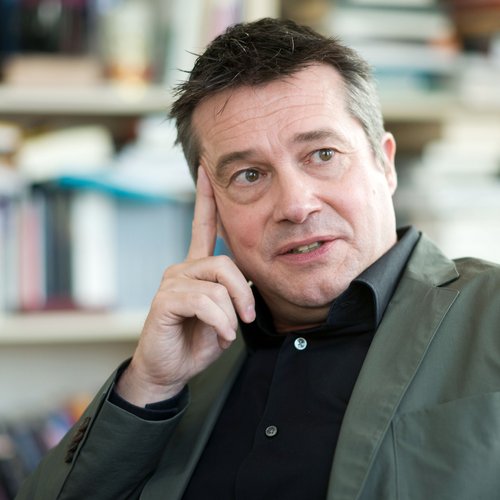
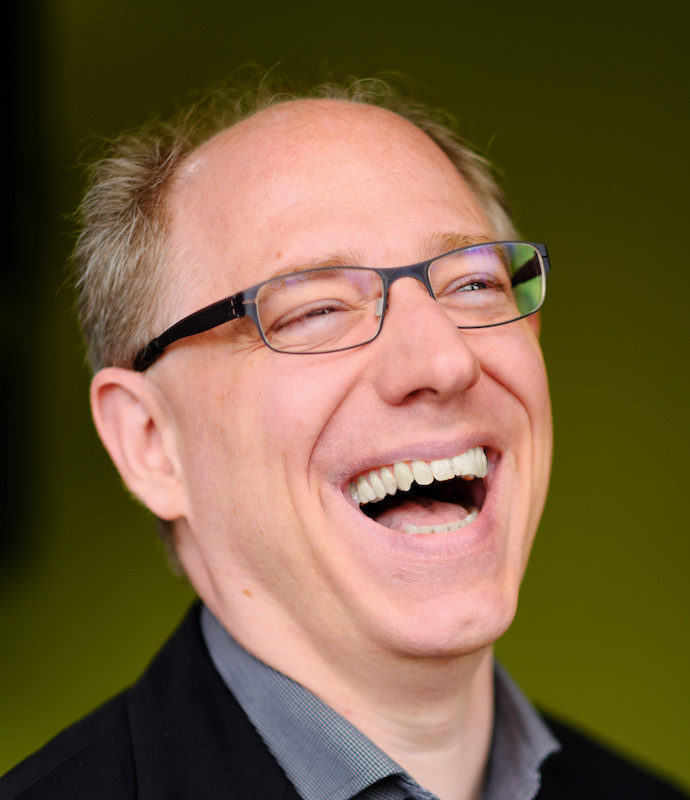
Prof. Stefan Müller is a Professor at the Institute for German Language and Linguistics , part of the Faculty of Languages and Literature at Humboldt University. His research focuses on syntax, formal grammar theories (especially Head-Driven Phrase Structure Grammar), and computational linguistics. He leads the CoreGram Project , developing cross-linguistic grammars using HPSG formalisms. His work includes analyses of German syntax, constituent order, anaphoric binding, and register phenomena. He is also involved in open-access publishing initiatives through Language Science Press . Contact: St.Mueller@hu-berlin.de . Education and academic background details are not explicitly stated in the provided text, but his professional trajectory indicates deep expertise in theoretical linguistics. His research spans multiple languages including German, Mandarin, and Persian, with a focus on grammar implementation and syntax-semantics interfaces. Key contributions include the Head-Driven Phrase Structure Grammar Handbook (2024), analyses of headless nominal structures in German (2022), and exploration of large language models' theoretical implications (2024). He actively engages in interdisciplinary projects bridging formal grammar and computational methods.
Frauke Albersmeier is a Lecturer at the University of Cologne's Faculty of Philosophy. Formerly a Research and Teaching Fellow at Heinrich Heine University Düsseldorf (HHU), she specializes in ethics, animal rights theory, and conceptual analysis. She holds a PhD in Philosophy from HHU (2020) with a dissertation on 'The Concept of Moral Progress.' Her work bridges metaphilosophy, moral theory, and applied ethics, particularly focusing on speciesism, animal rights, and conceptual engineering. Education: PhD in Philosophy, Heinrich Heine University Düsseldorf (2020) Master of Arts in Philosophy, HHU (2013) Bachelor of Arts in Cultural Sciences, FernUniversität Hagen (2011) Research Interests: Her work emphasizes ethical frameworks for nonhuman animals, the nature of moral progress, and the role of language in shaping moral concepts. Key areas include speciesism critiques, solidarity theories, and the methodology of conceptual analysis in philosophy. Recent Work Trends: Recent publications explore animal rights within human rights frameworks, science denialism, and ethical challenges in animal-free research. She frequently addresses interdisciplinary questions at the intersection of ethics and scientific practice. Awards and Grants: Recipient of DFG-funded research projects, including the Collaborative Research Center 991 (2016–2020) and a current project on 'Presuppositions of Frame Theory in the History of Philosophy.' Teaching and Outreach: Leads courses on animal ethics, moral progress, and conceptual theories. Active in popularizing philosophy through workshops and podcasts (e.g., Knowing Animals Podcast, 2022). Key Collaborations: Co-edited special issues on conceptual explication and analysis. Collaborates with institutions like the Centre de recherche en éthique (Montréal) and the University of Pennsylvania.
Ignacio Ojea Quintana serves as Assistant Professor at Ludwig Maximilian University of Munich's Faculty of Philosophy, Philosophy of Science and Religious Studies within the Chair of Philosophy of Science. He joined LMU in 2022 after a three-year research fellowship at the Australian National University's School of Philosophy. His academic foundation includes a PhD in Philosophy from Columbia University (2019), supervised by Philip Kitcher with focus on formal social epistemology, and prior Masters/BA degrees in Philosophical Logic from the University of Buenos Aires where he collaborated with the Buenos Aires Logic Group. Ojea Quintana's research employs formal methodologies to examine digital technologies' impact on knowledge organization across scientific and public spheres. His work intersects Social Epistemology , Philosophy of Data Science , and Autonomous Systems Ethics , with significant contributions to social media network analysis of controversial movements. Current projects analyze Twitter dynamics in racial justice movements, ethical constraints in AI decision systems, and consensus formation in scientific modeling. His 2021-2022 publications reveal an interdisciplinary trajectory bridging philosophy, computer science, and social sciences. Key trends include computational analysis of online discourse, formal modeling of group rationality under uncertainty, and ethical frameworks for AI systems. Works appear in high-impact venues including Nature Humanities and Social Sciences Communications and the AAAI/ACM Conference on AI, Ethics, and Society. Ojea Quintana maintains active collaborations with the "Humanising Machine Intelligence" initiative (formerly at ANU) and the Buenos Aires Logic Group. His research program demonstrates sustained engagement with technology's societal implications through formal modeling approaches and empirical digital trace analysis.
Prof. Dr. Pia Knoeferle is a leading academic at Humboldt-Universität zu Berlin , where she serves as a Professor in the Department of German Language and Linguistics . She is a principal investigator in the Collaborative Research Center (CRC 1412) focused on register phenomena and leads the Reaction Time, Eye-tracking, and EEG Laboratories . Her research spans psycholinguistics , cognitive neuroscience , and computational modeling of language , with a central interest in how real-time language comprehension interacts with social context , formality-register congruence , and morphosyntactic processing . Appointments: Professor at Humboldt-Universität (2024), CRC 1412 member Methodologies: Eye-tracking, EEG, Visual World Paradigm, ERP Her work investigates lifespan language processing (children, adults, older adults) through contextual cue integration , including emotional , spatial , and social context such as gender cues , eye gaze , and facial expressions . Key questions include: How do pragmatic and contextual factors modulate lexical and grammatical processing ? What representations underlie register sensitivity in spoken and written comprehension ? Recent articles (2022-2024) focus on register congruence effects in German sentence processing, age-related differences in formality-register anticipation , and interactions between register and morphosyntactic knowledge . Using eye-tracking and visual world paradigms , her team examines incremental integration of socially-situated context with verb-argument relations and grammatical constraints . Findings suggest subtle late-stage register effects and interference between pragmatic and syntactic processing . Her lab collaborates with researchers like Katja Maquate , Valentina Nicole Pescuma , and Camilo Ronderos , contributing to the Frame text of the Second Phase Proposal for CRC 1412 (2020) and subsequent reviews in Frontiers in Psychology (2023). The work emphasizes complementary methods to model register variability across languages , modalities , and cultural contexts .
Tianmin Shu is an Assistant Professor in the Department of Computer Science at Johns Hopkins University , with a joint appointment in the Department of Cognitive Science . He is the founding director of the Social Cognitive AI (SCAI) Lab and was previously a Research Scientist at MIT, working with Josh Tenenbaum and Antonio Torralba. His research goal is to advance human-centered AI by engineering machine social intelligence —building systems that understand, reason about, and interact with humans in real-world settings. His work is inherently interdisciplinary, integrating machine learning, computer vision, robotics, and social cognition. Research Interests: Theory of Mind Reasoning: Developing models that infer human mental states from multimodal behavioral data. Embodied Assistance: Creating agents capable of assisting humans in physical environments through verbal and non-verbal collaboration. Learning from Human Feedback: Extracting reward-relevant preferences from rich human input to guide agent behavior. Social Scene Understanding: Recognizing and reasoning about group activities and social roles from visual and physical cues. Computational Social Cognition: Modeling how humans perceive and interpret social and physical interactions. Scientific Awards: Outstanding Paper Award at ACL 2024 for "MMToM-QA: Multimodal Theory of Mind Question Answering" Grants & Collaborations: Tianmin Shu has led or co-organized several high-impact workshops and tutorials, including the NeurIPS 2023 Tutorial on "Language Models Meet World Models" and the RSS 2024 Workshop on "Social Intelligence in Humans and Robots". His lab has also developed open-source platforms like VirtualHome-Social and SimWorld for multi-agent interaction research. Lab & Team: As director of the Social Cognitive AI (SCAI) Lab at Johns Hopkins University, Tianmin Shu leads a multidisciplinary team focused on building socially intelligent systems. His lab is located in Malone Hall 213 and collaborates closely with the Departments of Computer Science and Cognitive Science.
Prof. Dr. Gunther Hellmann is a Professor of Political Science at Goethe University Frankfurt, specializing in German and European foreign policy. He serves as a Principal Investigator, Board Member, and Research Field Coordinator at the Cluster of Excellence 'Normative Orders,' and has held leadership roles such as President of the World International Studies Committee (2017–2021) and Dean of the Department of Social Sciences (2004–2005). His academic contributions include co-editorship of the Journal of International Relations (ZIB) and a visiting professorship at Johns Hopkins University’s SAIS Bologna Center. Affiliations: Goethe University Frankfurt, Cluster of Excellence 'Normative Orders,' World International Studies Committee, Aspen Institute Berlin, Transatlantic Academy Education: Political Science, History, and Philosophy at Freiburg, Munich, and Washington, D.C. Research Interests: Hellmann focuses on international relations theory, foreign policy analysis, German and European foreign policy, security and peace policy, and the transformation of global and regional orders. His work emphasizes the interplay between normative expectations and practical diplomacy, with a particular interest in transatlantic relations, strategic dilemmas, and praxis theory. Publications: His recent works examine global order challenges, pragmatism in foreign policy, and the evolution of international practices. Articles from 2024 address normative expectations, economic interdependence, and post-reunification German foreign policy. Earlier works (2022–2020) analyze praxis theory, securitization, and the relevance of theoretical political science to real-world issues. Teaching: He supervises theses and exams in international relations, requiring topics related to foreign policy theory, German/EU policy, and security studies. Students must attend his colloquium and submit detailed outlines.
Rainer Forst is Professor of Political Theory and Philosophy at Goethe University Frankfurt, where he holds positions in both the Institute of Political Science and the Institute of Philosophy. He serves as Director of the Research Center for Normative Orders, Co-speaker of the cluster initiative "ConTrust – Trust in Conflict," Spokesperson of the Leibniz Prize Research Group "Transnational Justice," and Deputy Spokesperson of the Coordinating Institute Frankfurt at the Research Institute for Social Cohesion. Additionally, he is a Permanent Fellow at the Research College for Human Sciences Bad Homburg, Director of the Justitia Center for Advanced Studies, and Head of the Master's program in Political Theory. Since 2017, he has also been a Research Professor of Political Theory at the Social Science Research Center (WZB) in Berlin. Forst received his education studying philosophy, political science, and American studies in Frankfurt/Main, New York, and at Harvard University. His academic journey includes: Ph.D. under Jürgen Habermas with thesis "Contexts of Justice: Political Philosophy Beyond Liberalism and Communitarianism" (1993) Habilitation in 2003 with "Tolerance in Conflict: History, Content, and Present of a Controversial Concept" Professor Forst's research focuses on foundational questions of political philosophy and critical theory. His work centers on justice theory, democracy, toleration, normative orders, and social cohesion. He has developed a distinctive approach he terms "critical constructivism," which builds on Kantian philosophy while engaging with the Frankfurt School tradition of critical theory. His research examines how justification processes form the basis of legitimate political orders and how concepts like solidarity and tolerance function within democratic societies. Forst's work is notable for its systematic integration of historical analysis with normative theory, creating frameworks for understanding contemporary political challenges through the lens of philosophical tradition. His recent publications reveal a growing focus on democratic regression, trust in conflictual societies, and the philosophical foundations of social cohesion. Forst has increasingly addressed the dual crises of democracy - both the political-normative justification crisis and the global structural crisis. His work connects Kantian philosophy with contemporary democratic theory, exploring concepts like the "noumenal republic" as frameworks for understanding justice and legitimacy in complex societies. A consistent thread throughout his scholarship is the examination of how power relations intersect with normative claims in political justification processes. Professor Forst has received significant recognition for his contributions to political philosophy: Gottfried Wilhelm Leibniz Prize (2012), Germany's highest research honor Member of the Berlin-Brandenburg Academy of Sciences and Humanities Corresponding Fellow of the British Academy Permanent Fellow at the Research College for Human Sciences Bad Homburg As an educator and mentor, Forst has directed numerous research initiatives and supervised many doctoral students who have gone on to prominent academic positions. He leads the international MA program in Political Theory funded by the German Academic Exchange Service and has established several significant research centers including the Research Center for Normative Orders, the Leibniz Prize Research Group "Transnational Justice," and the Center for Advanced Studies "Justitia Amplificata." His editorial work includes serving as Associate Editor of Ethics and member of editorial boards for numerous prestigious journals including Political Theory and Constellations. Forst's research infrastructure includes the Research Center for Normative Orders, which he directs, and the cluster initiative "ConTrust – Trust in Conflict," which examines political coexistence under conditions of uncertainty. His Leibniz Prize Research Group "Transnational Justice" investigates justice beyond national borders, while the Justitia Center for Advanced Studies serves as a hub for interdisciplinary research on justice-related topics. These institutions form an integrated network supporting collaborative research across philosophy, political science, and law.
Prof. Dr. Thorsten Sander is an adjunct professor in philosophy at the University of Duisburg-Essen's Institute of Philosophy, within the Faculty of Humanities. His research focuses on philosophy of language, pragmatics, and Gottlob Frege's contributions to semantics. He holds a PhD from Universität Gesamthochschule Essen (2001) and has authored influential works such as Frege's Pragmatics (2025) and Bedeutung als Gebrauch (2018). His work bridges historical analysis of Frege's theories with contemporary issues in semantics and psycholinguistics. Research Interests: Non-at-issue contents (e.g., implicatures) Fregean pragmatics (coloring, side-thoughts) Register differences and use-conditional meaning Meta-ethics and moral semantics Publications highlight his engagement with Frege's legacy, including analyses of modality, presupposition, and pragmatic vs. semantic meaning distinctions. He critiques traditional categorizations like 'epistemic implicature' and advocates for precise semantic profiles tailored to theoretical goals. Prof. Sander's contributions span books, peer-reviewed articles, and reviews. His current projects include exploring pejoratives and Frege's influence on modern psycholinguistics. Office hours are Fridays at 12 noon (email预约).
Professor Alexander Koller is a leading academic in Computational Linguistics at Saarland University's Department of Language Science and Technology. He holds a courtesy appointment in Computer Science and contributes to the Saarland Informatics Campus - one of Europe's premier computer science research centers. He leads the Computational Linguistics group and serves as speaker for the DFG-funded Research Training Group 'Neuroexplicit Models of Language, Vision, and Action'. PhD in Computer Science (Saarland University) Former positions: University of Potsdam, Columbia University, University of Edinburgh Sabbatical experiences: Meta AI (Paris), Allen Institute for AI (Seattle) His research focuses on computational modeling of meaning and reasoning in NLP, combining neural and symbolic approaches. Key contributions include semantic parsing systems like the AM parser and Alto, neurosymbolic models, and the GIVE Challenge for NLG evaluation. His recent work explores LLMs' limitations in problem-solving and compositional generalization. Recent publications highlight diverse applications across semantic parsing, dialogue systems, and LLM evaluation. Awards include ACL 2020 Best Theme Paper and multiple Outstanding Paper recognitions at ACL conferences. 2025 - AI Action Summit keynote speaker 2023 - ACL Outstanding Paper Awards 2022 - ELLIS Faculty appointment He maintains the DialogOS system for spoken dialogue development and teaches advanced computational linguistics topics. His group includes multiple postdocs and PhD students working across LLMs, dialogue systems, and semantic modeling.
Eliese-Sophia Lincke is a Junior Professor at the Department of History and Cultural Studies, Freie Universität Berlin, since May 2022. Her work bridges computational methods with Egyptology, focusing on digital tools for studying ancient texts. Bachelor's and Master's in Egyptology, Humboldt-Universität zu Berlin (2007) PhD in "The Conception of Spaces in Language" (TOPOI Cluster, 2012) Research interests include: Digital Humanities : Developing machine learning models for Hieroglyphic, Demotic, and Coptic text processing Linguistic Typology : Analyzing classifier systems in Ancient Egyptian and Sign Languages Spatial Linguistics : Investigating prepositions and spatial adverbs in Egyptian-Coptic Recent publications focus on Neural Lemmatization , OCR for Coptic , and Classifier Semantics , demonstrating her commitment to computational Egyptology. Scientific awards include the Humboldt-Preis 2008 for best Master's thesis and the Prize for Good Teaching 2014 . She has co-organized workshops like "Wege zum Ägyptischen" and served as Co-Editor for Lingua Aegyptia . Her teaching contributes to the Digital Studies of Ancient Texts Master's program.
Marlen Fröhlich is a Research Fellow at the Department of Palaeoanthropology within the Faculty of Science at Eberhard Karls University of Tübingen. As a primatologist, she leads the Volkswagen Foundation-funded 'Pathways to Language' project (2022-2028) investigating communicative plasticity in joint action coordination. Her research examines the evolution of human language through comparative studies of great ape communication, with fieldwork conducted across multiple sites studying chimpanzees, bonobos, and orangutans. Her primary research explores: Multimodal communication development in primates Plasticity in gestural and vocal signaling Infant-directed communication patterns Cross-species comparisons of communicative behaviors Environmental influences on communication systems Analysis of her 15 most recent publications (2022-2025) reveals strong emphasis on: Individual variation in primate communication Multimodal signal integration Captive versus wild behavior comparisons Maternal investment strategies Evolutionary pathways to language Significant scientific awards include: Freigeist Fellowship, Volkswagen Foundation (2022-2028) DFG Research Fellowship (2018-2021) Christiane Nüsslein-Volhard Foundation Stipend (2020-2022) PhD Thesis Award, German Primate Center (2016) Erhard Höpfner Award for Master's thesis (2012) She coordinates the Palaeoanthropology lab's research activities and maintains collaborations with field sites studying wild populations of great apes. Current work focuses on understanding how communicative plasticity facilitates coordination in joint action tasks.
Prof. Dr. Jakob Leimgruber is Professor of English Linguistics at the University of Regensburg since 2022, where he is affiliated with the Department of English and American Studies within the Faculty of Languages, Literature, and Cultures. Previously, he served as Substitute Professor at the University of Freiburg (2020-2022) and Lecturer at the University of Basel (2018-2022). His academic journey includes a Habilitation in English Philology from the University of Freiburg (2018), a DPhil in English Language from the University of Oxford (2009), and a Licence ès lettres in English Linguistics from the University of Fribourg (2005). Leimgruber's research centers on World Englishes with particular focus on East and Southeast Asia, sociolinguistics, language planning and policy, linguistic landscapes, language contact phenomena, language variation and change, indexicality, and authenticity. His work employs empirical approaches including corpus linguistics, fieldwork, and eye-tracking methodologies to investigate multilingual contexts across Singapore, Montreal, Taiwan, and the UAE. He has made significant contributions to understanding Singapore English, linguistic landscapes in multilingual cities, and language variation in postcolonial contexts. His publication record demonstrates consistent research output across multiple high-impact journals in linguistics, with a strong focus on empirical studies of language variation in specific contexts. Recent work shows increased attention to East Asian Englishes beyond Singapore, including Taiwan, and expanding investigations into the linguistic landscapes of global cities like Dubai. His research often employs collaborative approaches with international scholars across multiple institutions. Leimgruber has been active in academic service through numerous conference presentations including invited talks at institutions worldwide, participation in research workshops, and contributions to edited volumes on World Englishes and multilingual cities. His work bridges theoretical linguistics with practical applications in language policy and education. As an academic leader, Leimgruber has directed research projects examining multilingualism in global contexts, with particular attention to the role of English in shaping linguistic landscapes and identity construction. His recent work has increasingly focused on comparative approaches across different multilingual settings, examining common patterns and context-specific variations in how English functions in diverse sociolinguistic environments.
Prof. Dr. Gisela Zifonun is a retired University Professor of German Linguistics at the University of Mannheim and former Head of the Grammar Department at the Institut für Deutsche Sprache (IDS) until July 2011. She holds a doctorate (1971) and habilitation (1994) in German Linguistics. Her career includes roles as a scientific employee at the IDS (1973–1995), Head of the Grammar Department (1986–1995), and professorships at the Free University of Berlin (1995–1998) and the University of Mannheim (1998–2011). Her research focuses on grammar theory, German syntax/semantics/morphology, language typology, and comparative linguistics. Key projects include the Grammar of German in European Comparison (GDE-N) and the EuroGr@mm initiative. She has authored/co-authored over 130 works, including monographs and edited volumes on German linguistics. Notable publications include Das Deutsche als europäische Sprache (2021) and Grammatik des Deutschen im europäischen Vergleich (2017). Her work emphasizes cross-linguistic analysis and corpus-driven research. Research interests span syntax, morphology, and typological comparisons across German, Romance, and Slavic languages. Recent contributions address gender-inclusive language reform and corpus-based studies. She has supervised numerous academic projects and serves as a key figure in German linguistic infrastructure, including IDS initiatives. No explicit awards are listed, but her extensive bibliography reflects significant scholarly impact. Professional roles include managing the IDS’s Grammar Department and coordinating international collaborations. Her work bridges theoretical linguistics with applied research, contributing to both academic discourse and language policy discussions.
Dr. Tyll Robin Lemke is a researcher at Saarland University in the Department of Modern German Linguistics (Neuere deutsche Sprachwissenschaft). He serves as a scientific staff member in Project B3 of the Collaborative Research Center SFB 1102. His academic focus includes experimental linguistics, syntax, and psycholinguistics, with specialized expertise in ellipsis phenomena and fragment analysis. Lemke's research explores the cognitive underpinnings of language production and comprehension, particularly investigating how predictability, context, and information theory shape linguistic structures. His work employs diverse methodologies including corpus analysis, psycholinguistic experiments, computational modeling, and gamified experimental paradigms to examine ellipsis, fragments, and syntactic phenomena in German. Analysis of Lemke's recent publications reveals consistent themes: the role of predictability in language production, constraints on ellipsis resolution, information-theoretic approaches to language efficiency, and experimental validation of syntactic theories. His research bridges theoretical linguistics with cognitive science through innovative experimental designs. In the upcoming 2025/26 winter semester, Lemke is teaching courses on Experimental Linguistics and Ellipsis in Theory and Experiment. He maintains an active research program within the SFB 1102 collaborative framework and regularly presents at international linguistics conferences.
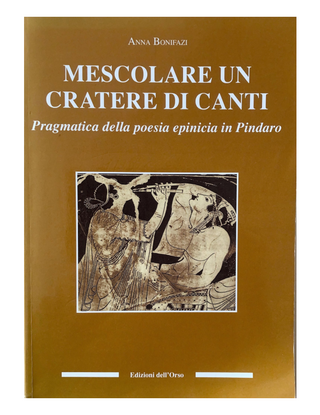
Prof. Anna Bonifazi holds a Professorship in Discourse Studies at the Department of Linguistics, University of Cologne. Her research spans Discourse Analysis, Pragmatics, Cognitive Linguistics, and Multimodal Communication with a focus on Ancient Greek Linguistics and Oral Epic traditions. She investigates phenomena like anaphoric cohesion in long texts, multimodal storytelling in film and oral traditions, and ancient Greek particles' discursive functions. Her work explores how multimodal elements (e.g., visual, musical, gestural) interact in communication, particularly analyzing films (e.g., mystery genres), ancient texts (e.g., Homeric epics), and South Slavic oral narratives. She examines cross-modal iconicity, viewpoint blending, and the cognitive underpinnings of discourse structures. Recent publications address topics like anaphoric strategies in crime stories and syntactic patterns in ancient Greek conversational frameworks. Prof. Bonifazi's research often bridges classical philology and modern cognitive theories, emphasizing embodied cognition and the interplay between language and other semiotic systems. She collaborates internationally on projects involving gesture analysis in storytelling and ancient papyrological studies. Her interdisciplinary work integrates linguistics with musicology, film studies, and cognitive science. Administratively, she oversees the Discourse Studies research group at Cologne and mentors assistants like Dr. Sandra Debreslioska and Madeleine Frings. Her lab focuses on multimodal discourse analysis using experimental and corpus-based methods.